Best albums of 2017

IMG_2717 (2)

This year has been a remarkable one for new music – in fact, I’d go so far as to say it’s the greatest in the history of Say It With Garage Flowers, which launched in the summer of 2009.

Most of my favourite contemporary singer-songwriters and bands unleashed new albums in 2017 and I was lucky enough to interview several of them to find out the stories behind the songs.

Sadly, I haven’t been able to arrange an in-depth chat with the man whose album has made the top-spot in this year’s ‘Best Of’ list, although we did come very close to doing an interview a few weeks ago, but it got postponed at the last minute. I live in hope that we can rearrange it for next year – both of us dearly want it to happen…

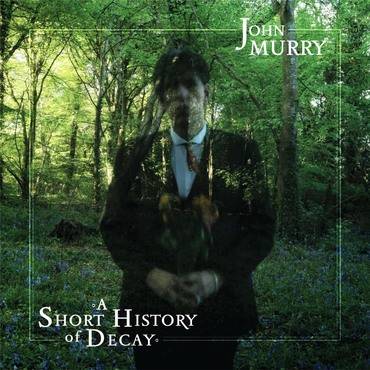
In the meantime, I will have to be content with listening to his latest record, A Short History of Decay, which is my favourite album of 2017.

John_Murry_1400_X1400

The second solo record by John Murry – an American singer-songwriter who was raised in Tupelo, Mississippi, but now lives in Kilkenny, Ireland –  A Short History of Decay is the follow-up to his 2012 masterpiece, The Graceless Age – one of the greatest records of the last few years.

Back in 2012, I said of The Graceless Age: ‘It’s a deeply personal work that deals with the darker side of life, including drug addiction, loss and loneliness –  it’s one of those records that’s meant to be listened to on headphones, alone, late at night, as it draws you in with its lush orchestration, gorgeous, spiralling melodies and twisted tales. Misery seldom sounded so sublime.’

Five years later, Murry finally released its successor. It was always going to be a tough act to follow such a brilliant record as The Graceless Age, but for Murry it was doubly difficult. Since its release, he’d had personal problems and demons to deal with, including family issues and the death of his close friend Tim Mooney, of American Music Club, who had produced his first album.

Michael Timmins from Canadian alt-country act Cowboy Junkies came to Murry’s aid. He’d seen him supporting his band in Glasgow and was captivated by his performance – I’ve seen Murry play live 13 times and he is one of my favourite artists to watch in concert. His shows are intense and extremely powerful – you never know what you’re going to get, but it’s always one hell of a ride. He is an extraordinary performer.

‘It was always going to be a tough act to follow such a brilliant record as The Graceless Age, but for Murry it was doubly difficult – he’d had personal problems and demons to deal with, including family issues and the death of his close friend Tim Mooney’

Timmins and Murry talked about making an album together – Timmins wanted to capture the rawness of Murry’s songs – and the result is A Short History of Decay.

It was recorded over five days in Timmins’ Toronto studio with a band comprising of his brother Peter (Cowboy Junkies) on drums and Josh Finlayson  (Skydiggers, Gord Downie, Lee Harvey Osmond) on bass. John brought along Cait O’Riordan (The Pogues, Elvis Costello), whom he’d met in Ireland – she contributed backing vocals to the album.

Talking about the sessions, Timmins said: “I felt that it was important that John got out of his own way and that we set up a situation where he would just play and sing and the rest of us would just react, no second guessing, just react and capture the moment. It was a very inspired and inspiring week of playing and recording. Very intense. And I think we captured the raw essence of John’s writing and playing”. 

They certainly did – A Short History of Decay is looser and much more raw than its predecessor. The wonderful first single, Under A Darker Moon, has fuzzy, fucked-up guitars and punk-rock sensibilities, but, at its heart, is a killer indie-pop tune.

My favourite track on the album is Wrong Man. A dark, stripped-down, Springsteen-esque ballad that deals with the breakup of Murry’s marriage – “I’m the wrong man to ride shotgun on your murder mile” – it makes for uncomfortable listening, but is such a beautiful song, with a simple, sparse keyboard and guitar arrangement. 

A Short History of Decay has its fair share of gallows humour, too. Despite its title, One Day (You’ll Die) is one of the album’s lighter moments  – a weird, mutated, but very catchy, pop-reggae (!) groove, with a guitar solo that sounds like it’s been lifted from the ’50s rock ‘n’ roll instrumental Sleepwalk by Santo & Johnny.

Similarly, Countess Lola’s Blues (All In This Together) is another song with an irresistible, sing-a-long melody, but when the dirty garage guitar comes in, it kicks ass. 

The album’s closing track is a stunning cover of What Jail Is Like by The Afghan Whigs. I will scratch my way out of your pen, just so that I can claw my way back into it again,” sings Murry, over psychedelic guitar sounds.

It’s great to have him back.

This year also saw the return of another Say It With Garage Flowers favourite. Back in 2014, miserablist duo Pete Fij (Adorable and Polak) and Terry Bickers (The House of Love and Levitation) released their debut album, Broken Heart Surgery, which topped my end of year poll.

2017 saw them follow it up with the brilliant We Are Millionaires – an album that I played to death this year. 

As I wrote back in the summer, ‘like its predecessor, it’s full of deadpan humour and dry wit. With influences including John Barry, The Velvet Underground and Lee Hazlewood, and lyrical nods to movies The Third Man and The Birds, it’s like a soundtrack to an imaginary, downbeat, British, black and white kitchen sink-drama-meets spy-film – part Hancock, part Hitchcock – but this time around, there’s even some optimism.’

And while we’re on the subject of Lee Hazlewood, the legendary moustachioed maverick is a huge influence on Manchester singer-songwriter Nev Cottee, whose third album, Broken Flowers, was another highlight of this year. 

His darkest record to date, it was written in the aftermath of a failed relationship. Nev’s rich, baritone voice is backed by lush, cinematic strings and the album moves from twilight country music to bluesy psych-rock and spacey, hypnotic grooves. First single, Open Eyes, sounded like Lee Hazlewood hanging out in Cafè del Mar.

Staying with Manchester melancholy, Morrissey came back in 2017 with Low In High School – his strongest album in years – but, sadly, the record was overshadowed by controversial comments he made in the press. Songs like the brassy, glam rock swagger of My Love, I’d Do Anything For You, the electro-tinged I Wish You Lonely and the epic Home Is A Question Mark would easily find their place in a list of his greatest tracks. 

Ex-Only Ones frontman Peter Perrett surprised everyone by releasing a superb solo album, How The West Was Won, which was loaded with wry songs in the vein of Dylan and Lou Reed.

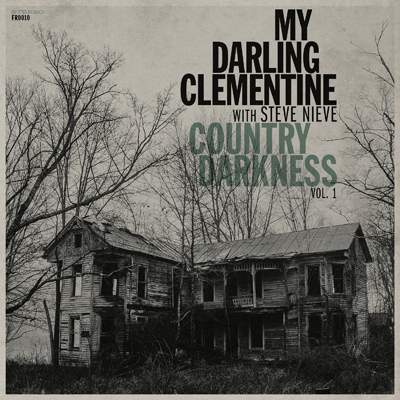
Husband and wife country duo – and Say It With Garage Flowers regulars – My Darling Clementine – returned with the excellent Still Testifying. Their third album saw them building on the Southern soul sound that they explored on their 2013 record, The Reconciliation? More Delaney & Bonnie than George & Tammy, and with gospel leanings and luscious horn arrangements, it could’ve emerged from Memphis, Alabama or New Orleans, but it was actually made in Tooting, South London.

Another husband and wife duo who are no strangers to country music – The Rails – impressed me with their second album, Other People.

Recorded in Nashville and produced by Ray Kennedy [Steve Earle and Lucinda Williams], it was a darker, heavier and more electric record than their critically acclaimed 2014 debut Fair Warning

Moving away from the band’s traditional folk roots – it had ‘psychedelic’ tinges and  ’60s organ –  it wasn’t afraid to speak its mind and deal with modern social issues.

Gravel-voiced Mark Lanegan’s Gargoyle was also high up on my list of 2017 albums of the year. The latest in a long line of great releases by him, it continued to mine the seam of dark, brooding electronic rock he’s explored over his last few records. 

Singer-songwriter Richard Warren – who’s played guitar for Mark Lanegan and Soulsavers – returned with his latest album, Distentangled. It was less dark than some of his previous releases – more soulful and stripped-down – but still with a nod to the ’50s sounds of Sun Records, melancholy, late-night ballads in the vein of Nick Lowe, Roy Orbison and Richard Hawley, and twangy guitar instrumentals that could be soundtracks to arthouse films that don’t exist yet. 

A debut album that I fell in love with this year was This Short Sweet Life by Nottingham’s Torn Sail – coincidentally an act linked to Richard Warren, who played with them in a previous incarnation.

Written and produced by singer-songwriter Huw Costin, it was a haunting and gorgeous record –  sad, but also uplifting and spiritual – an intimate, late-night soundtrack for the lost and the lonely that reminded me of Jeff Buckley at times.

PP

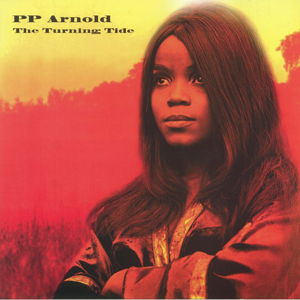
Two of my favourite albums of 2017 weren’t actually from this year! Soul legend P.P. Arnold and Neil Young both released ‘lost’ long-players.

Arnold’s album The Turning Tide was a collection of songs from ’69 and ’70. Produced by Barry Gibb and Eric Clapton, the album was aborted and remained unfinished. Thankfully the master tapes were finally located, the tracks were completed and the album was issued 47 years later. It’s a great collection of groovy soul-shakers – her blistering versions of Traffic’s Medicated Goo and The Stones’ You Can’t Always Get What You Want are guaranteed floor-fillers – and tender ballads, like the lushly-orchestrated gospel song Bury Me Down By The River. 

Young’s intimate Hitchhiker – it’s just vocals, acoustic guitar and harmonica – was recorded in a single night, in Malibu, California in 1976, but didn’t see the light of day until September this year. I’m so glad it did – it’s up there with his best work.

The dark and menacing title track is jaw-dropping – a staggeringly honest autobiographical tale, which sees Neil on a road trip with just his drug stash for company, before things take a turn for the worse and he ends up a paranoid wreck who has to escape from the L.A. rock ‘n’ roll scene and hole up in the countryside…

https://www.youtube.com/watch?v=w0ckHW3MFjk

L.A. is the home of singer-songwriter Marlon Rabenreither, who, under the name Gold Star, released his excellent second album, Big Blue, this year, and, funnily enough, it often sounds like ’70s Neil Young, as well as early Ryan Adams. 

I’d like to say thanks to Alex Lipinski who invited me to his album launch at Pretty Green in London’s Carnaby Street in November this year – I loved his latest record, the raw and bluesy Alex, with its mix of Dylan and the La’s.

And finally, I must mention the UK label Sugarbush, which continues to put out great jangle-pop, power-pop and psych albums on vinyl – both new releases and re-issues. This year saw Scottish guitar band The Carousels, who are on Sugarbush, release their gorgeous second album, Sail Me Home, St.Clair, which was heavily indebted to the sound of the Byrds’ 1968 country-rock cult classic, Sweetheart of the Rodeo

I’m listening to it now, as I write this article and sail off into 2018… 

Here’s a list of my favourite albums of 2017 and a Spotify playlist to go with it:

1) John Murry – A Short History of Decay

2) Pete Fij & Terry Bickers We Are Millionaires

3) Morrissey – Low In High School

4) Mark Lanegan – Gargoyle

5) Nev CotteeBroken Flowers

6) My Darling Clementine Still Testifying

7) Torn Sail This Short Sweet Life

8) The Rails Other People

9) Peter Perrett – How The West Was Won

10) Neil Young – Hitchhiker 

11) PP Arnold The Turning Tide

12) Gold Star – Big Blue

13) Richard Warren Disentangled

14) The Carousels Sail Home, St. Clair

15) Jeff Tweedy – Together At Last

16) The Clientele – Music For The Age of Miracles

17) Ralegh Long – Upwards of Summer

18) Jason Isbell & The 400 Unit – The Nashville Sound

19) Mark Eitzel – Hey Mr Ferryman

20) Alex Lipinksi Alex

21) Little Barrie – Death Express

22) The National – Sleep Well Beast

23) Juanita Stein – America

24) Martin CarrNew Shapes of Life

25) The Dials – That Was The Future

26) Michael Head & The Red Elastic Band – Adios Senor Pussycat

27) Chris Hillman – Bidin’ My Time

28) Liam Gallagher – As You Were

29) William Matheny – Strange Constellations

30) Cotton Mather – Wild Kingdom

31) Matthew Sweet – Tomorrow Forever

32) Daniel Wylie’s Cosmic Rough Riders Scenery For Dreamers

33) The Jesus & Mary Chain – Damage and Joy

34) Duke Garwood – Garden of Ashes

35) Timber Timbre – Sincerely, Future Pollution

36) Luke Tuchscherer Always Be True

37) Frontier Ruckus – Enter The Kingdom

38) Sophia Marshall – Bye Bye

39) Co-Pilgrim – Moon Lagoon

40) GospelBeacH Another Summer of Love

41) Bob Dylan – Triplicate

42) Papernut Cambridge – Cambridge Circus

43) Luna – A Sentimental Education

44) Steelism – Ism

45) The Len Price 3 – Kentish Longtails

46) Wesley Fuller – Inner City Dream

47) Hurricane #1 – Melodic Rainbows [UK version]

48) Alex Lowe – Rancho Diablo

49) The Blow Monkeys – The Wild River

50) Colman GotaFear The Summer


Soul from the Deep South of London

5-MDC-landscape-retro-.jpg

Still Testifying, the new album from husband and wife country duo My Darling Clementine – Michael Weston King and Lou Dalgleish – sees the band building on the Southern soul sound that they explored on their 2013 record The Reconciliation?

More Delaney & Bonnie than George & Tammy, and with gospel leanings and luscious horn arrangements, it could’ve emerged from Memphis, Alabama or New Orleans, but it was actually made in Tooting, South London.

I spoke to Michael to find out more about My Darling Clementine’s love of sweet soul music and get the low-down on the stories behind the songs on Still Testifying

Q & A

On your last album, The Reconciliation?, which was the follow up to your 2011 debut, How Do You Plead? you added some soul to your country sound. With the new record, Still Testifying, you’ve taken that even further and also thrown in some gospel for good measure.

What was your approach to this record? Why have you headed further down the Southern soul road, rather than gone back to your country roots?

Michael Weston King: We had a clear remit with How Do You Plead? – to make an album that sounded like George and Tammy in 1967.

How Do You Plead? was made up of old songs that had been deemed “too country” for either my former band, or my solo albums, along with some new songs written specifically for that album.

We didn’t really think beyond album one, but here we are, on album three, and our remit has changed. We didn’t want to stay still and make the same sounding record again, only with different songs.

We have both always loved soul music, and I have been driving Lou mad with all the old country soul stuff I have been listening to over the years, so it just felt a natural progression for us when making this new album.

We hinted at it with the song Our Race Is Run on our second album, but have given that country soul feel – and style of writing – to more songs on this album

‘We didn’t want to stay still and make the same sounding record again, only with different songs’

There are some great arrangements on the album – it’s a rich and full-sounding record that’s very rewarding.

I love the brass on the opening song, The Embers and The Flame – particularly the ‘bah-bah-bah’ instrumental break halfway through…

MWK: That was originally a guitar solo that I came up with when writing the song, but once we had added the brass to the arrangement, it was only natural they [the horn players] took the solo, too – the melody is the same, though.

The horns on Just A Woman sound like you’ve been listening to some old Burt Bacharach tunes…

MWK: Yes – that was producer Neil Brockbank’s idea and it was brilliantly brought to fruition by horn player and brass arranger Matt Holland.

The original piano and voice demo did not conjure up Bacharach & David to us, but it clearly did to Neil. And once the French Horns and trumpets went on there, well that was it, and we just fully embraced Burt!

Can you talk me through the writing and recording process for the new album? Did you do basic demos and then work out the full arrangements?

MWK: All our songs are demoed very simply, with voice and guitar or voice and piano. We then get together with the main core of the band and work through them. Most of the songs do tend to work themselves out – it is pretty clear how they should go. Also, working with guys that we have worked with for years now, and fully understand what we are striving for musically – and who share the same musical tastes and influences – makes coming up with the right approach and arrangements a lot easier

Did you have definite ideas for arrangements in your head before you went into the studio?

MWK: Yes – certainly for some of them, and then, as I just mentioned, more ideas came from kicking the songs round in rehearsals.

After that, once in the studio, the more fine-tuned arrangement ideas, and what additional instrumentation we felt was needed, came from the producer, Neil Brockbank.

‘Sometimes there was the occasional flounce out and teacups hitting the wall, but, generally, it was a fun album to make’

Was it a fun album to make, or was it difficult? 

MWK: Like with all albums, you go through a roller coaster of emotions – “it’s the greatest record ever made”, or “it’s awful”, but as you get older and the more records you make, you know it will be like this and you just try and let those highs and lows pass you by. Sometimes there was the occasional flounce out and teacups hitting the wall, but, generally, yes, it was a fun album to make.

How do you feel listening back to it now? 

MWK: Very pleased with it – especially its diversity. There really is an eclectic mix of styles on the album, which I love, but it still sounds like the same artist. It is held together by our voices.

MDC new

It sounds like a record that could’ve been made in Memphis, Alabama or New Orleans, but it was recorded in Tooting Bec – it’s Southern soul from South London. How did you capture that authentic vibe in the studio? 

MWK: Like we have done with all our albums – getting the right producer and the right team and the most suitable players. We used British musicians, but ones with a real love and understanding of Stax, Fame, Hi and mid ‘60s- era Atlantic Records. They’re players who, between them, have worked with Ray Charles, Stevie Wonder, Ben E. King, Van Morrison, Dr John and Doug Sahm.

I think too many UK artists want to run off to Nashville to record there – often out of vanity – just to say, “we made an album in Nashville”. I would have been guilty of that years ago.

Yes, there are some great studios and people there, but also lots of mediocrity – just churning out generic stuff. I like the fact we recorded here with the finest of British players and producers and still captured the spirit we wanted.

‘Too many UK artists want to run off to Nashville to record there – often out of vanity – just to say, “we made an album in Nashville”’

What were your main musical influences for this album?

MWK: Delaney & Bonnie, Dan Penn & Spooner Oldham, Mickey Newbury, Jim Ford, Goffin & King, Elvis, Roy Orbison, and, if you listen closely to the middle eight of Since I Fell For You, The Searchers and Helen Shapiro!

Yours Is The Cross That I Still Bear is a gospel-tinged track. What can you tell me about that song?

MWK: It was originally written for the German label, Bear Family Records, which celebrated its 40th anniversary with a triple album box set. They asked us to contribute a track – the caveat being all songs had to have the word ‘bear’ in the title. So I came up with that.

The version used on that album was just piano, guitar and vocals, but it did have a country soul / gospel groove to it, and I always planned to use it on this album. Lou took some convincing, but I think she really digs it now. The song has since been expanded and totally re-worked on our new album.

Lyrically, I had some old friends in mind when I wrote it. A shared history, a time when you did a lot together and then, as you get older, you drift apart and move on to other people and other places, but that bond you forged at an early age stays with you forever – even if you lose regular contact. Those shared times – both the good things and the bad things – are what bind you.

On your last album, there was a song called No Matter What Tammy Said – a retort to Tammy Wynette’s Stand By Your Man – and on this record there’s Jolene’s Story –  a sequel to Dolly Parton’s song Jolene. Your song is written from Jolene’s point of view and we find out that she did take Dolly’s man…

I sense a theme going on. Can you think of any other classic country songs that deserve a follow-up? I feel a My Darling Clementine concept album coming on… 

MWK: On our debut, we had Going Back To Memphis – which kind of picked up where the great Tom T. Hall song, That’s How I Got To Memphis, left off.

I think The Grand Tour by George Jones is rife for a follow-up song. Maybe about the people who bought and moved into the house. Or where the wife is now – the one who “left me without mercy”.

How about a sequel to Bobbie Gentry’s Ode To Billie Joe? Isn’t it about time we found out what was thrown off Tallahatchie Bridge?

MWK: Yes – that could be a good one. Lou has actually performed that song live, and does a rather fabulous version of it, I must say.

Mark Billingham and My Darling Clementine
Mark Billingham and My Darling Clementine performing The Other Half

When we last spoke, in 2015, you’d just released The Other Half album – your music and spoken word collaboration with crime writer Mark Billingham. A couple of songs from that piece of work have ended up on your new record, albeit in slightly different guises – The Embers and The Flame and Friday Night, Tulip Hotel…

MWK: All the songs recorded for The Other Half album, either the older ones re-recorded, or the two ones written for the project, were recorded sparsely and acoustically, just guitars, mandolins, a bit of percussion, piano on one or two, but simple and sparse – the same as we performed them in the live show.

Both the new songs were very well received when played live and we always felt they could be enhanced even more by a fuller arrangement. We didn’t want them to remain just as acoustic recordings.

I am so glad we did that now, as they are both very different to the versions on The Other Half and we have also slightly changed the titles of them too for this album.

The Embers and The Flame was formerly called As Precious As The Flame. The fire burning out is an often-used country music metaphor for a relationship that has lost its spark. We’ll Sweep Out The Ashes In The Morning and After The Fire Is Gone are just two prime examples. We have somewhat inverted it here, suggesting that you don’t always need the spark, the flame or the fire. Sometimes the embers are just as important, perhaps even more so.  

Mark Billingham wrote most of the original lyrics for it. We needed a “happy song” to end the story of The Other Half. The reworked version is bigger and bolder and brassier.

And the secret to a long and happy marriage? According to Mark it is “sticking around, no matter how shitty it gets”.

Friday Night, Tulip Hotel – formerly Friday Night At The Tulip Hotel – was written in the car park of The Golden Tulip Hotel, Rotterdam, while watching a couple check out very early, as indeed we had, though for different reasons. They were trying to be discreet about being there, about being with each other, but it was clearly a case of “same time, same place, next week”. We watched them drive off in opposite directions and drew our own conclusion as to how it ended.

Would you like to do another project in the same vein as The Other Half?

MWK: Yes, absolutely –  we would love to do another, though maybe starting from nothing this time, with all new songs, as well as a brand new story. Oh, that suddenly now sounds like a musical!

There are the usual helpings of infidelity and heartache on Still Testifying that we’ve come to expect from My Darling Clementine songs, but Two Lane Texaco sticks out because it’s more of a political / issues-based song – it deals with the effect of the oil industry on small town America.

Can you tell me more about the background and inspiration for that song? It’s also one of the more ‘traditional’ country songs on the album. I can imagine Nick Cave doing a cover of it…. 

MWK: That would be nice, I must send it to him. The opening verse for it came to me while driving along a very unromantic, English motorway, crawling along, due to roadworks. They were widening the road. The song remained unfinished for quite a while until I was watching the Pixar movie Cars with our daughter Mabel. It was all there –  this small town being bypassed due to a newly built highway and the town just dying.

‘The lyric owes a debt to my love of John Ford films, reading Peter Guralnick’s Lost Highway, and my ongoing obsession with movies set in the ’50s’

The lyric also owes a debt to my love of John Ford films, reading Peter Guralnick’s Lost Highway, and my ongoing obsession with movies set in the ’50s, such as American Hot Wax and American Graffiti, featuring the iconic DJs Alan Freed and Wolfman Jack, respectively.

Overall, the song is a hymn to the demise of small town America. In fact, small towns anywhere – Megawatt Valley is actually in Yorkshire. Towns that have been affected by an industry that was once its heart and soul, making it a thriving community. And then, that industry abandons the town, leaving the people left behind without work and without hope. And with a faith severely tested… “We’ve sold the family silver but there’s gold still buried underground.”

You’ve just come back from touring the States. How was that and where did you go?

MWK: We go to the US every April, during the school holidays, so our daughter Mabel can be with us too. Which is just as well, as she is now very much part of the show. She even made her New York debut this time, playing with us at City Winery, when we opened up for Ray Benson and Dale Watson.

The tour this time was along the eastern seaboard, from Rhode Island down to New Jersey, with some shows a little further west in Chicago, Detroit and over the border to London, Ontario [Canada].

MDC.jpg

You’re currently on a UK tour. What can we expect?

MWK: We are four days into an eight-date run of shows with the full band – they are going great. It’s always a joy, as they are such fine musicians, and for the London show [June 7 –  The Islington] we will have the horn section too. It will be spectacular. Then we’re doing a run of more acoustic shows.

What’s a typical My Darling Clementine tour like? How rock ‘n’ roll are you?

MWK: Not very these days. I have pretty much given up drinking and so has Lou, and touring with your daughter also curtails too many rock ‘n’ roll activities. In fact, she is the one that wants to order room service at 1am and stay up watching TV, while we want to sleep!

Finally, I’m giving you a chance to testify. What would you like to bear witness to?

MWK: Well, my testimony may have been very different had we done this interview a few weeks ago, but in the light of the tragic events in Manchester, a city I love (and I think you do, too), and where two of my children live, and the news a few days ago that Neil Brockbank, who produced this record and our debut album, died suddenly of lung cancer, it is simply this: to cherish as much time with your family, friends and loved ones as possible.

Still Testifying – the new album by My Darling Clementine – is out now on Continental Song City: http://mydarlingclementinemusic.co.uk/

The band’s UK tour dates are: 

June 7 –  The Islington, London 

June 9 –  The Met, Bury

June 10 – The Hut, Corby

June 11 –  The Old Stables, Crickslade

June 28 –  Catstrand, Dumfries

June 29 –  Clark’s On Lindsay, Dundee

July 1 –   Old Fire Station, Carlisle

July 2 –  Birnam Arts, Dunkeld

July 6 – Phoenix Arts, Exeter

July 15 – Americana Weekend, Bristol