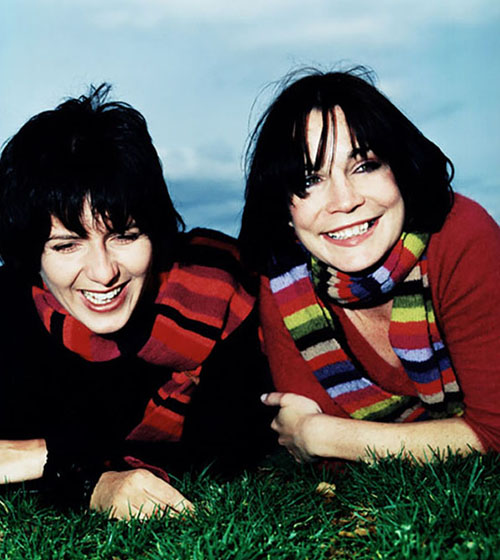
This month sees the rerelease of The Joy of Sing-Sing – the 2001 debut album by indie, dream-pop and electronica duo Sing-Sing, comprising former Lush guitarist, Emma Anderson, and singer Lisa O’Neill.
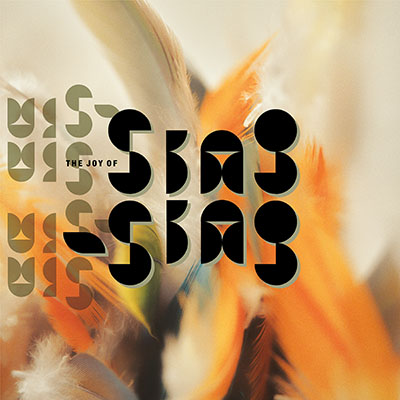
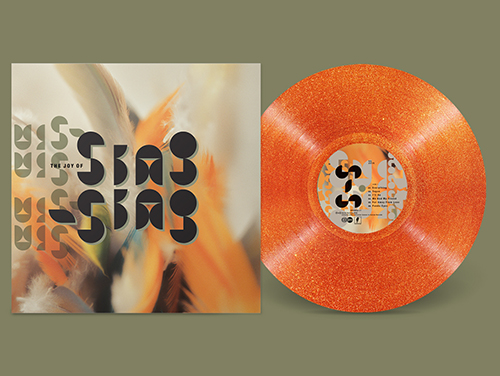
Released on the band’s own Aerial Records, the new version of the album – 2CD or single LP – has been remastered by Kevin Vanbergen (Lush, Pixies, Radiohead) and has new artwork by acclaimed designer Chris Bigg, who is celebrated for his long creative partnership with 4AD graphic artist, Vaughan Oliver.
Working with electronic music producer, Mark Van Hoen, Anderson and O’Neill crafted a colourful, quirky, off-kilter and atmospheric record – rather than revisiting the shoegaze of Lush, The Joy of Sing-Sing mixes classic ’60s pop with elements of trip-hop and electronica to create a distinctive and cinematic sound.
It’s fair to say that the record went under the radar when it came out, but now, 25 years later, it’s ripe for rediscovery, and will hopefully attract a new fanbase thanks to the reissue.
In an exclusive interview, Anderson tells Say It With Garage Flowers how Sing-Sing came together, shares her memories of writing and recording their debut album, and gives us the lowdown on some of her recent musical collaborations.
“My whole time in music has been a bit of an unknown. There’s never been a masterplan, it’s always been, ‘Let’s see what happens,'” she says.
Q&A
So, it’s 25 years since The Joy of Sing-Sing first came out. Does it feel that long?
Emma Anderson: The other day, something came up on my Instagram that was about what kids did 20 years ago… It was all very rudimentary – emails and texting, with little phones and MSN… It’s weird for me because 2000 sort of melds into one… Maybe it’s because I’m older… I’m 59. I think with the advent of email and the Internet and mobile phones, in my head all of that is one big kind of chunk of time. It’s 25 years since 2001 – God, that’s quarter of a century – but in my head, it’s all like now. Does that make sense?
I know what you mean. I think the ‘90s are more easily defined by different musical genres and eras than the Noughties, like Britpop, grunge or trip-hop, whereas the Noughties feels more nebulous.
What are your memories of Sing-Sing coming together? Lush split in 1998, following the death of drummer, Chris Acland, in 1996, so what kind of place were you in at the time? It must’ve been a dark and distressing period in your life…
Well, Lush finished in ’96, really. People say ’98 because that’s when we put an announcement in the press, but Lush finished when Chris died. As some people know, I was very unhappy at the end of Lush – I wanted to leave, but I did want to carry on doing music. It was a way of coping, and it was something to focus on.
I was single, and the scary thing was knowing that I’d probably have to get a proper job at some point. I probably knew that Sing-Sing wouldn’t be a professional band like Lush, with all the touring and stuff… To be honest, it was a bit of an unknown… I think my whole time in music has been a bit like that… There’s never been a masterplan, it’s always been, ‘Let’s see what happens…’
Technically, I was still signed to 4AD [after Lush broke up], so I wrote some songs and they paid for me to do some demos – one of them is on CD2 of the reissue – but Ivo [Watts-Russell, 4AD founder] didn’t like them. Lush was Lush, and I think 4AD wanted the band rather than an individual.
‘My whole time in music has been a bit of an unknown. There’s never been a masterplan, it’s always been, ‘Let’s see what happens…’’
The end of the ‘90s was a weird time as well. Britpop was a bit stale by then… I was looking back when I was doing the Sing-Sing archive stuff – I cut things [from magazines] out, but Lisa had kept copies of the NME, Melody Maker and Select. I was going through them and was like, ‘What was going on in ‘98-’99?’ It was all a bit nothingy… There was a bit of trip-hop and a bit of grunge.
It was a funny time – a bit unsettled. After all the heavy spending by major labels in the ‘90s, it was all starting to crumble. There were all these bands that the majors had signed because they thought they were going to be the next big Britpop thing, but it didn’t come to anything. I suppose I just thought, ‘Well, I’ll just keep going and see what happens…’
 So, I did some demos, and Ivo wasn’t keen, so I parted company with 4AD, and then I met Lisa… It was funny meeting her because it happened in three ways.
She was going out with a guy who lived in the same flat as a guy I was seeing at the time – it was a short-term relationship…
So, I first met Lisa at this flat in Camden, but we didn’t speak… I can remember that she just sat there watching the telly and she had these mad shoes on… I thought, ‘She looks good…’
And then a friend of mine called Bunny Schendler, who is an animator, worked with Lisa at an animation company called Bermuda Shorts, and said: ‘There’s this girl at work who is a singer and she’s looking to do something… blah-blah-blah.’ It turned out to be Lisa, who I’d met in the flat.
And then there was another thing… John Best, who was in PR [Savage & Best], gave me a tape of Morning Light by Locust [aka Mark Van Hoen], and he said that Mark was looking to collaborate with someone at some point. It was a bit vague, but it turned out that Lisa had sung on one of the tracks – the extra track on the Japanese version… So, there were three connections, which made me think that it was somehow meant to be.
You liked the Locust album, Morning Light, didn’t you?
It’s good – totally up my strasse. It’s not a secret, but towards the end of Lush, I wasn’t particularly happy with some of how we were going musically. I was much more into the electronic / trip-hop thing, like Air and Portishead, and I think that comes out… There’s a song on Lovelife [1996 Lush album] called ‘Last Night’, which is my favourite song on the album. I thought that working with an electronic producer could be different.
Did you and Lisa have similar musical influences?
She’s seven years younger than me, so there was a bit of a knowledge gap… She was more into dance music and dance culture, and she used to go to DJ nights… It was quite a cool scene. Sometimes I’d go along and feel a little bit out of place, but it was a nice change from being in a four-piece band and in a rehearsal room. Me, Mark and Lisa would sit around a computer and try out ideas, which was a bit different.
‘Towards the end of Lush, I wasn’t particularly happy with some of how we were going musically. I was much more into the electronic / trip-hop thing, like Air and Portishead’
Did you write songs together for Sing-Sing?
It was more collaborative than I’d previously been used to. A couple of the songs that I did as demos for 4AD did make the cut.
Lisa could play keyboards and guitar a little bit, but – and I’m sure she won’t mind me saying this – she needed some help with chords, so Mark and I helped her with that. Mark was great to work with – he wrote some basslines and keyboard parts. I can’t really play the keyboard.
Lisa would write a backing vocal for one of my songs, and I would try something for one of hers. It’s easier when you’re sitting around a computer because you can just say, ‘delete that…’ or ‘try this…’ It was quite an eye-opener for me.
I guess you were very conscious of wanting to do something that didn’t sound like Lush too…
Yeah – I didn’t want to form another four-piece. Not that there’s anything wrong with that, but I wanted to do something a bit different.
Where did you record the Sing-Sing songs?
We recorded all the basics in Mark’s studio, which was in The Fortress. It was a rehearsal room, in East London, and it was legendary. Primal Scream would have parties there – it was infamous.
Mark had a little room in there, which he rented – he called it Pravda, which means ‘truth’ in Russian. We put a single out on Bella Union that was recorded and mixed by Mark in his studio, and then we got signed to Sanctuary Records.
‘We recorded in Mark’s studio, which was in The Fortress, in East London, and it was legendary. Primal Scream would have parties there – it was infamous’
It wasn’t the coolest label, but they said they would give us a deal and that we could have our own imprint, which was Aerial Records.
Sanctuary had a bit of money, but we still made the bulk of the album in Mark’s little room, but in the Sanctuary building there was a studio called Nomis, which we used.
We recorded some live drums there and Poppy [Gonzalez] playing keyboards. We got in a Hammond organ with a Leslie cabinet, and we recorded some strings there. The album was mixed at Nomis by a guy called Dave Burnham, who I’d never heard of before and haven’t heard of since. What happened to him? He was a really good mixer.
The album ended up coming out on Alan McGee’s Poptones label. How did that happen?
So, we made the album with Sanctuary, and they put out [the singles] ‘I’ll Be’ and ‘Feels Like Summer’, and then they bought a company called Castle Communications. They then said they didn’t need us anymore because they became a catalogue label mainly. They let us take the album – it was mixed and sounded great – so, I went to McGee and he said he’d put it out.
We went from pillar to post with labels. It was a weird time. I even had people saying to me, ‘You’re a bit old now, Emma – you’re over 30, and you were in Lush… You’re a bit of a ‘90s has-been.’
Honestly, that was the way I was viewed at the time. It’s quite weird to think about that now, but I was not in a very good position. I was older, I’d been in a band, and people were looking for 19-year-olds. It was also when The Strokes and The White Stripes were coming out.
‘I had people saying to me, ‘You’re a bit old now, Emma – you’re over 30, and you were in Lush…You’re a bit of a ‘90s has-been’
So, 25 years later, The Joy of Sing-Sing has been reissued on Aerial Records…
Yes – Aerial became a proper label by the time the second Sing-Sing album [Sing-Sing and I] came out. That was self-released – it wasn’t on an imprint on someone else’s label. We’ve resurrected it as a proper label with distribution and all the rest of it.
Does The Joy of Sing-Sing feel like a lost album? Did it go under the radar at the time?
I think it did get a bit lost. Poptones was putting out so many records… It got a couple of reviews, and we played a few gigs, but it was just a bit weird. It was a very different time. I do think it’s a good record.
Hopefully, thanks to the reissue, some people will discover it and hear it for the first time. Did it come out on vinyl back in the day?
It came out in America in 2002, on a label called Manifesto, and they did a vinyl run of it, but in the UK, it was on CD. We had a MySpace page and a website, which Lisa designed, and we had a mailing list.
Let’s talk about some of the songs on the album. It opens with ‘Everything’, which has a lullaby feel and is haunting, otherworldly and dream-like. It’s quite a low-key way to start the record, but then we get ‘Tegan’, which is a trance-like banger…
Yeah, in hindsight, ‘Everything’ was a weird one to start with… and then ‘Tegan’ comes in, and it’s a bit in-yer-face…
‘The album got a bit lost. It got a couple of reviews, and we played a few gigs, but it was just a bit weird. It was a very different time. I do think it’s a good record.’
‘Tegan’ has weird synth sounds, fuzzy bass and psychedelic backwards guitar. It’s very hypnotic…
Oh God, we used some samples on the record, which was a nightmare. Sanctuary’s legal department were very hot – they said we had to declare any samples. I think we took a couple out, but there was one [on ‘Tegan’] that was important for the whole track, as it was built on it.
It was from ‘A Man, A Horse and a Gun’ by Geoff Love and his Orchestra. It was a Spaghetti Western thing… We got clearance for that and the sample on ‘Feels Like Summer’, which was from ‘Mony Mony’ by Tommy James and the Shondells.
There was another one on ‘I’ll Be…’ Lisa had an Enid Blyton record of someone narrating The Twins at St. Clare’s, with a funny little keyboard on it, but we couldn’t find out who played it, so we asked the estate of Enid Blyton [for permission].
‘Feels Like Summer’ is one of my favourite songs on the album. It has a groovy ‘60s pop feel and, like a lot of the album, is cinematic. Is that one of your songs?
Yeah – it might’ve been one of the 4A demos… I think it was.
‘Far Away From Love’ is another one of my favourite tracks – more cinematic pop, but with an Easy Listening feel, thanks to the brass and the ‘60s-sounding, summery ‘bah-bah-bah’ backing vocals…
Yeah – I always have a song like that on my records. There’s ‘Lit Up’ on [Lush album] Split, and ‘Clusters’, which was on Pearlies [solo album.] They’re slightly jazzy and ‘60s.
‘Panda Eyes’ is quite psychedelic and spacey…
The lyrics are about living on another planet, and having been out on the moon the night before… You’re in space, and you wake up with your makeup still on, and you’re hungover.
‘Underage’ was written as a tribute to Chris Acland, wasn’t it?
It was. What can I say?
It’s one of the more reflective moments on the album…
Yes – it’s 30 years this month since Chris died, and it’s kind of coming back into focus.
‘The lyrics are about living on another planet, and having been out on the moon the night before… You’re in space, and you wake up with your makeup still on, and you’re hungover’
The new version of the album has been remastered by Kevin Vanbergen, who’s worked on the Lush reissues…
Yes – that’s how I met him, and he lives up the road from me. He’s a very nice guy and he’s good with catalogue stuff – we remastered The Joy of Sing-Sing from the original tapes.
Let’s talk about some more recent projects. You released your debut solo album, Pearlies, in 2023, and since then you’ve worked with Steve Queralt from Ride on his solo album, Swallow – you sang on the songs ‘Lonely Town’ and ‘Swiss Air.’ What else have you been up to?
Two other things I collaborated on recently were a joint 7in single with Masal called ‘Pause the Rain’, which is on Sonic Cathedral, and I sang on an album called In A Strange Place by Stefano Guzzetti, which is very much in the This Mortal Coil-type vein. I did a Steve Miller Band track called ‘Love’s Riddle.’
How did the Masal collaboration come about?
I met Oz [Özlem Şimşek – harp, theremin, vocals] from Masal at a John Grant gig in Bexhill, in January 2025, and we just clicked and started messaging. I had liked what I had heard of them up to that point – especially what they had created with Andy Bell – and I love the harp as an instrument anyway. I had never worked with a harpist before, so that was exciting for me.
‘I’m very flattered when people ask me to sing with them, as I was never confident before’
I then heard from Al [Alastair Johnson – electronics and synths in Masal] and they just suggested we do a track together. So, I said ‘yes’. I’m very flattered when people ask me to sing with them, as I was never confident before.
Al used to be an electronic artist in the late ‘90s/early Noughties, going under the name of Alien, so that is the kind of direction we pursued – a little more dancey and upbeat than a lot of the stuff they have done together before, and it was great.
They sent me the track, and I wrote the melody and lyrics, and I also suggested some structural changes. I went to Al’s house in Leigh-On-Sea last summer, on a very hot day, to record and had a very nice time. They are lovely people and very easy to work with. It came out very well.
What can you tell us about working with Stefano Guzzetti?
We followed each other on Instagram and started messaging. I think it’s fairly evident that he is quite a big 4AD fan, and he was very familiar with Lush, so he asked me if I would like to sing on the record, which was already well underway, with various other artists having already completed their vocal recordings.
I said ‘yes’ and he asked me which song I would like to do – there were a couple of options; one was ‘Lullaby’ by The Cure and the other was ‘Love’s Riddle’ by The Steve Miller Band.
I wasn’t that familiar with The Steve Miller Band – I’d always just associated them, and him, with ‘Abracadabra’, which came out in the 80s and wasn’t really my thing. But he told me that Ivo, who is a good friend of his and was very much behind the record, had chosen it for someone to do, so, apart from it being a lovely song from the late ‘60s, that was the one I went for, as it gave me a connection to Ivo and This Mortal Coil, as this record is very much channelling that.
Heidi Berry is on the track too…
Heidi, who used to be on 4AD and Creation before that, and who is now a music teacher/lecturer, is an old friend, and she also lives in Hastings, which is where I am.
She has been really great with me and my transition from a backing vocalist to a lead vocalist and she has a little home studio setup, so I asked her if she would record the vocals for the song and she said ‘yes’. She ended up doing some herself too, which was great, so we are both on the track. I think it’s worked out well.
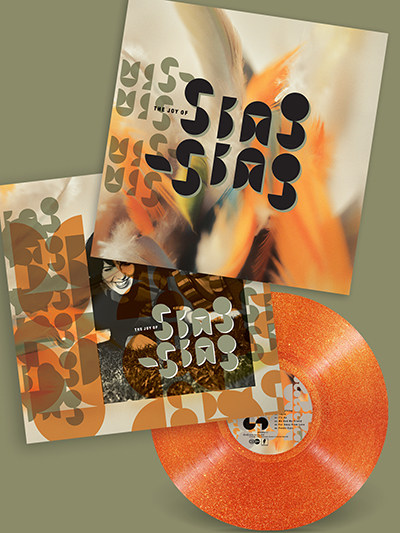
The 25th anniversary version of The Joy of Sing-Sing is released on October 23 (Aerial Records).
- There is a 2CD deluxe edition, featuring the remastered album, plus a bonus disc of B-sides, demos, rare recordings, and a previously unreleased Spanish acoustic radio session.
- There is also a single LP remastered edition on transparent yellow vinyl, and a limited Dinked Archive Edition on transparent orange vinyl, including an obi strip, signed insert and bonus CD.
- The album has been newly remastered by Kevin Vanbergen (Lush, Pixies, Radiohead) and features brand-new artwork by Chris Bigg.
Instagram: @sing_singofficial.
Bandcamp: