‘This album is power pop, or whatever you want to call it, but it’s got a rock and roll spirit…’


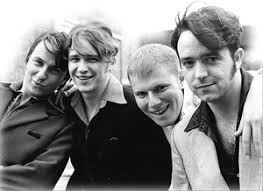
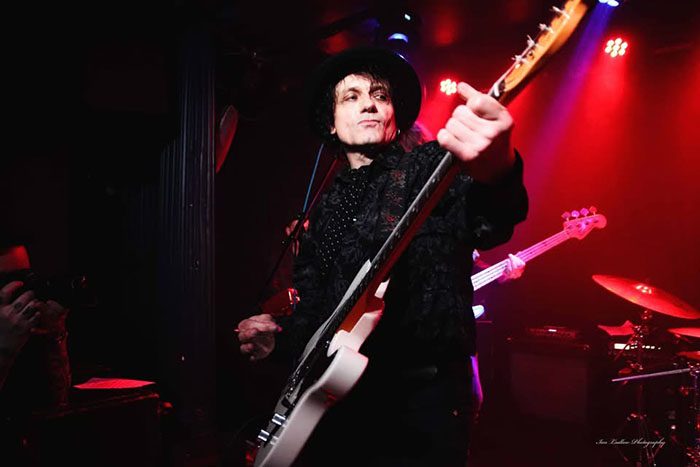
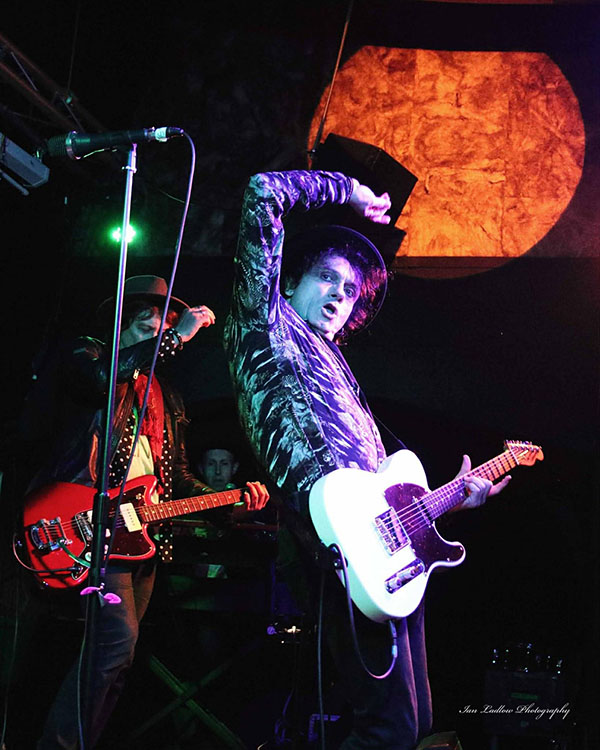
Marc Valentine – photo by Ian Ladlow

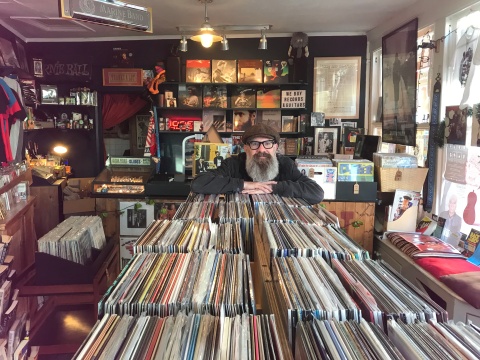
When singer-songwriter, Marc Valentine – aka ‘Norfolk’s prince of power pop’ – joins our Zoom call to talk to us about his brilliant new solo album, Uncommon Side Effects, he is sat in the record shop he owns.

It’s located in the seaside town of Cromer and it’s called Another Planet, taking its name from ‘Another Girl, Another Planet,’ the fantastic 1978 single by elegantly wasted UK band, The Only Ones, who, like Valentine, have written killer power-pop songs with a cool swagger, a raw punk energy, a touch of glamour and a rock and roll spirit in the vein of Lou Reed and The New York Dolls.

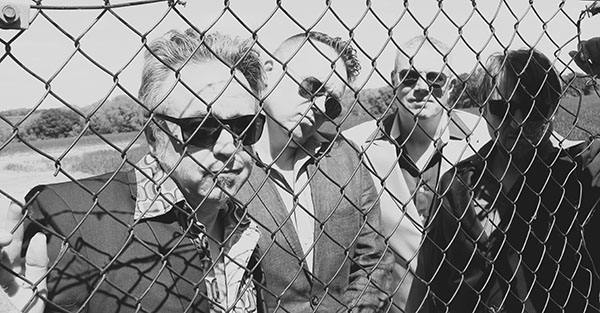
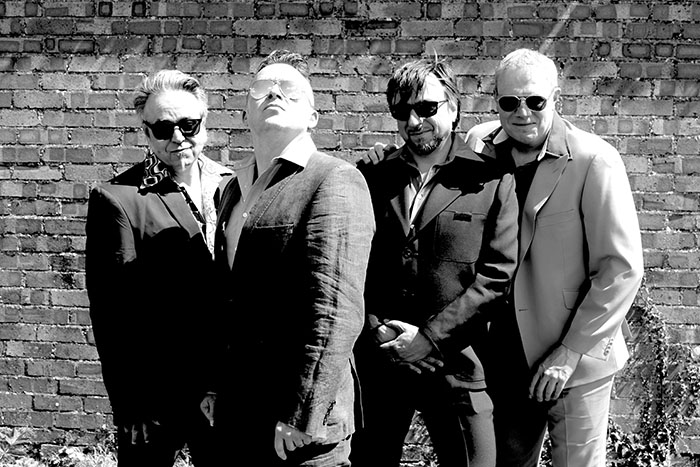
Both of those US acts have had a big effect on Valentine – former frontman of Camden glamsters, Last Great Dreamers – and his band: Richard Davies (guitar), Richie Poynton (bass), Neil Scully (keyboards) and Rik Pratt (drums). 

“Yeah – Lou Reed and The New York Dolls are definitely a big influence on us, and Iggy too,” he says. “Those acts had a great image and presence – when we were growing up, they were the people who stood out. I grew up during punk – I was buying singles when I was about 10. I was a big fan of Buzzcocks and Stiff Little Fingers, and I loved The Damned. They were my early influences. I never got into metal.”

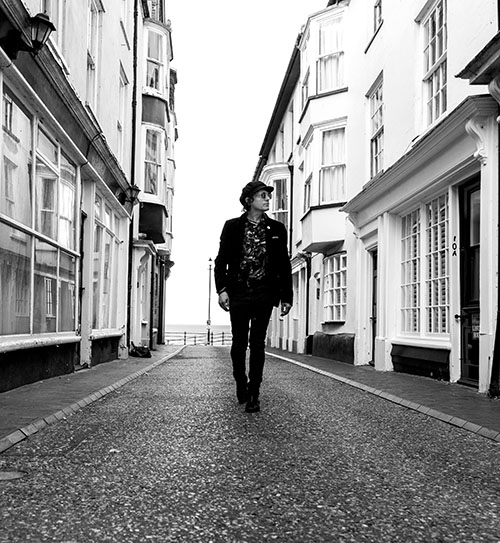
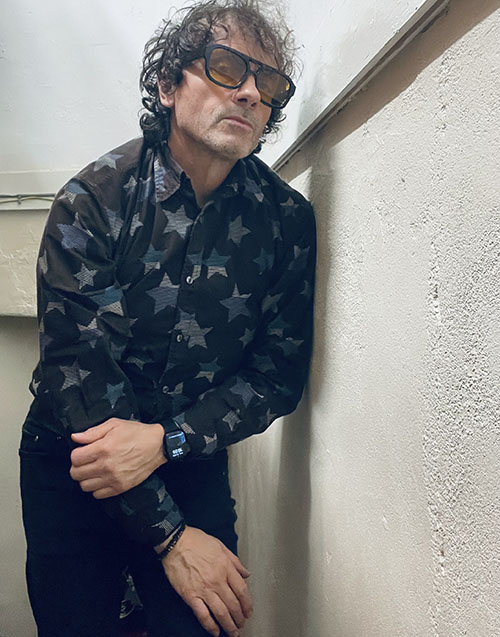
Photo by Will Robinson

He adds: “I then got into The Clash, who are still one of my favourite bands. They were incredible – their output in such a short period of time… It just amazes me.

“As I got older, I went back a bit and got into Mott the Hoople – Ian Hunter is a big influence. I learnt a lot from his songwriting. I’m still delving into the past – as you know, there’s still a lot to discover. I like girl groups and, of course, I love The Beatles and The Stones, and a lot of modern stuff as well.”

Uncommon Side Effects is one of Say It With Garage Flowers’ favourite records of 2026 so far – with its mix of high-octane, punky power pop, sci-fi synths, rock and roll and epic, cinematic ballads, it doesn’t deviate too much from his previous two solo offerings, 2022 debut, Future Obscure, and its follow up, 2024’s Basement Sparks, but it does find time for some folky reflection on the mysterious and pastoral ‘Half Moon Pendant.’ 

“I don’t know how the fans will take to that song, but I hope people will like it,” he says.

Maybe it will cause uncommon side effects… *coughs* 

Q&A

Let’s talk about Uncommon Side Effects – the third in your trilogy of solo albums, after Future Obscure in 2022 and Basement Sparks in 2024…

Marc Valentine: Indeed – one every two years. I’m pretty quick… I think it took my last band about 30 years to make three records!

The new record feels like a companion piece to the previous two – great power pop and rock and roll. For the most part, you haven’t really altered your style across the three albums, have you?

No, I haven’t – I think that’s a good thing in some ways. I’m always experimenting with other stuff, but I talked with my label [Wicked Cool Records – the garage rock label founded by Springsteen guitarist, Little Steven Van Zandt] about trying to make another good pop and rock and roll album. It is power pop, or whatever you want to call it, but obviously it’s got a rock and roll spirit.

‘I do an album every two years I’m pretty quick… It took my last band about 30 years to make three records!’

You’re the first person I’ve spoken to about the new record. Outside of my band, the record company and Gerry [Ranson – MuleFreedom PR], I don’t know anyone else who has heard the album!

Thanks for the exclusive…

It’s great!

So, to make the record you went back to The Old Cider Press studio in Worcestershire and worked with Dave Draper (The Professionals, The Wildhearts, Dodgy) again – he produced your last two albums…

Yes – it’s Dave’s studio. I love working with him – it’s home from home in many ways. When we first met, back in 2020 / 2021, we hit it off. He has a great way of getting the record to sound like how I would imagine it to sound – he’s a big fan of Weezer, like me. They’re a big influence – and the Pixies – but a lot of people don’t reference it. People see me more as a ‘70s guy, but working with Dave is very exciting because we’re both pop kids. We have a shared love of things.

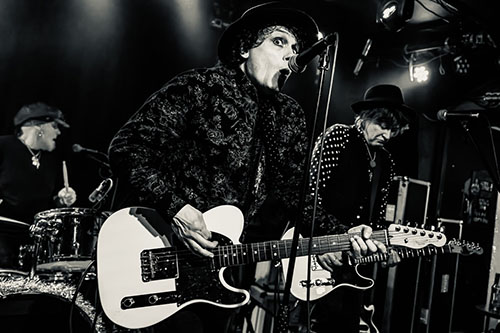
Photo by Ian Ladlow

Big, layered guitars…

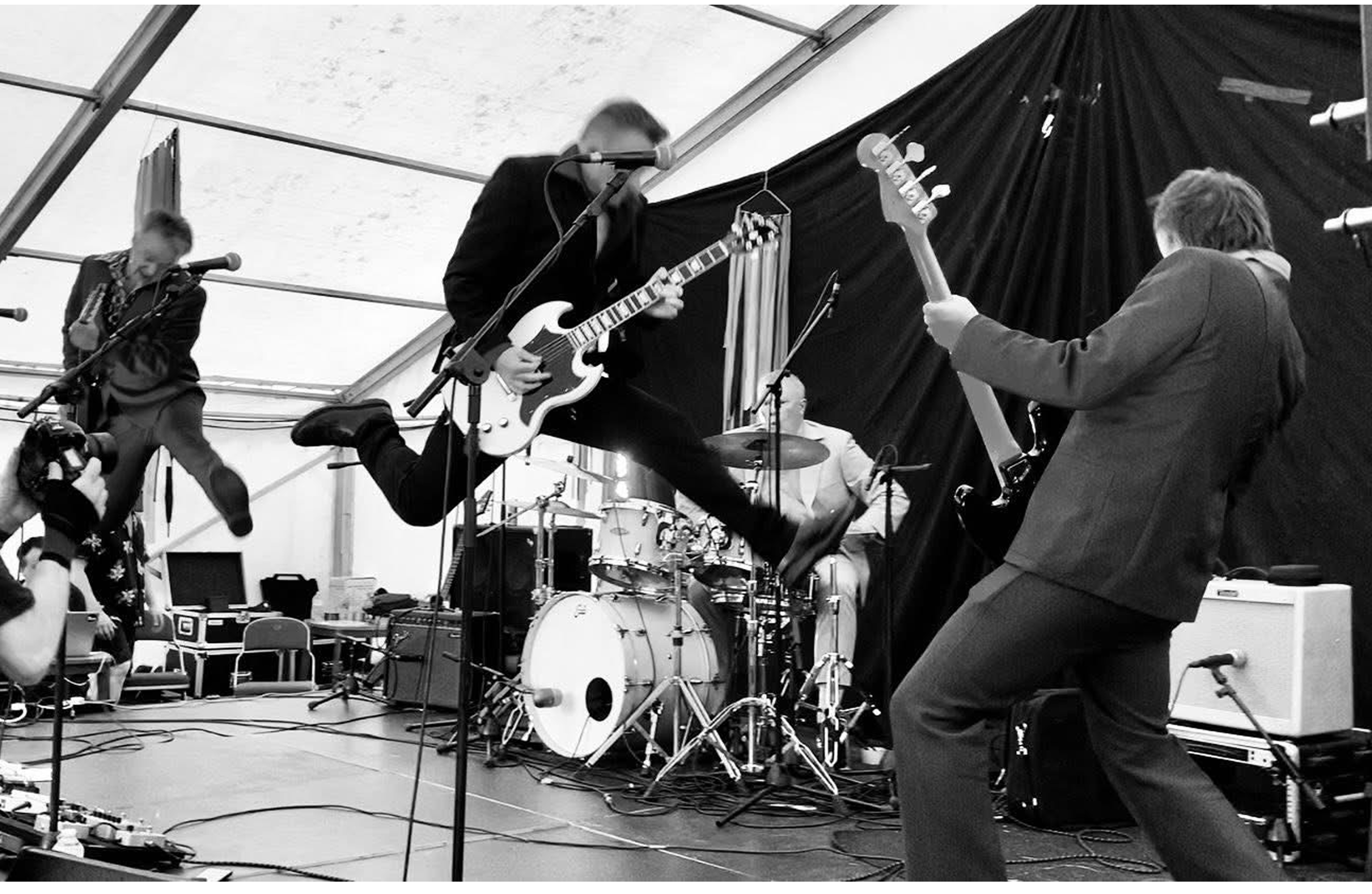
Yeah – we do put a lot of guitars down in the studio, but we can’t reproduce that live… We want it to be separate beasts – we’re very much a live band. We don’t have any backing tapes, but we use a lot of keyboards in the studio. Having Neil [keys player] in the band means we can replicate a lot of what we do in the studio, which is brilliant. I think it’s given it another depth.

 ‘Weezer and the Pixies are a big influence on me  but a lot of people don’t reference it – they see me more as a ‘70s guy’

What’s the recording process like for you and the band?

It’s a mixture of stuff… mainly multitracking… I usually do the demos first in my little studio at home and then we redo it with Dave – he works so fast… I don’t know how he does it, man. He’s incredible and one of a kind. I’ve worked with a lot of guys over the years, but he’s unique – we can make an album in half the time we would’ve done back in the day. This record was piecemeal – we did it over three- or four-months last year, rather than camp out in the studio for two weeks. There are a couple of tracks that we didn’t put on the record – the label wanted it to be a 10-track album. It’s short, punchy and compact.

Yes – it doesn’t mess around; it kicks off with ‘NY UAP’ – a blast of infectious, New York UFO-themed power pop/ rock and roll that seesaws on a big keyboard riff. It came out as a single earlier this year…

I had the basis for the song, but when I came up with the keyboard riff, I knew that was it… I was excited by it – it worked so well with the song. It was inspired by when me and my band went to the States and played on the East Coast, in 2024. The New Jersey lights [mysterious sightings in the sky] were happening – it was in all the headlines, and we were sticking our heads out of the van all the time… It was my first time playing there and it was amazing. People were telling us that they’d come to the shows because they’d heard us on the radio, which was quite unusual and refreshing.

And quite old-fashioned… It’s much more romantic than saying, ‘We heard you on Spotify…’

Definitely – that’s what we grew up with back in the day. It was radio and magazines… When we recorded NY UAP’ we thought it was probably going to be the opener on the album and the label thought the same.

The most recent single from the album was ‘High In The Underground’, which is another full-on power pop / ‘70s-style rock and roll song. I was at the video shoot for it, which was filmed at the Hope & Anchor in North London, after a gig you played there just before Christmas last year…

Yeah – we badly mimed to it… (Laughs). There’s very much a Lou Reed inspiration on that song – it takes vibes from that. It’s a song about chasing the dream when you’re young and all the mistakes you make.

‘It’s a song about chasing the dream when you’re young and all the mistakes you make’

When I saw you play live, I thought you had a cool, ‘70s Lou Reed and New York Dolls look and feel, as well as the Stones’ swagger. All the best bands look like they’re a gang. I’m thinking of The Beatles, The Stones, The Smiths, The Clash… I don’t like it when individual band members all have a different look – a disparate fashion sense. It annoys me…

The image is really important – it makes you look like you have more of a commitment to it.

‘You Are The Jet’ was the first single from the album. It’s a song about having a disconnection from someone else – a relationship breaking up…

Yeah – it is a disconnection song. It’s sending out a message [to someone] that things didn’t work out, but there is something that they need to know – that they’re a special person in many ways and there are things about themselves that they don’t realise.

‘Loneliest Part’ is a slower song – it mentions ‘acid rain’ and it feels like a comment on the state of the world, the human race and how things have gone wrong…

Yeah – indeed… It’s a perception of humanity, and, again, the disconnect that we have, and how it’s spiralling out of control. The idea came from a book called The Purple Cloud [by M.P. Shiel] – it’s early Victorian sci-fi. A guy wakes up and every single person in the world is dead, apart from him. He travels around the world and there’s nobody, but eventually he finds someone… It’s an incredible story of loneliness.

‘Hanging On A Dream’ has an epic, widescreen sound. It feels like a song that’s partly about being on the road…

That’s interesting… We’ve been rehearsing it – we’re going to play that one live for sure. I think you’re spot on with it – it has that Tom Petty vibe.

Yeah – I can hear that…

‘The idea came from a book called The Purple Cloud  – it’s early Victorian sci-fi. A guy wakes up and every single person in the world is dead, apart from him.’

Half Moon Pendant’ stands out, as it’s stylistically very different from the rest of the album. It’s acoustic, folky and reflective – pastoral, haunting and mysterious. It has almost a touch of folk horror…

Yeah – you’ve got that right. I wasn’t sure if that track would make the record – as you say, it really stands out. It’s not like what I normally do, but it was important to have it on there – it’s quite a personal song. Richie – my bass player – played the acoustic on it. I don’t know how the fans will take to that song, but I hope people will like it.

You’ve got to try these things… In complete contrast, it’s followed by ‘Temporary Buzz’, which is the heaviest and punkiest song on the album…

(Laughs). That track was good fun to do – it’s pretty fast. We’ve been rehearsing it to try and get it right!

It’s got a great punk / New Wave feel…

Sure – I’m glad you like it.

The last track on the record, ‘When The Light Has Gone’, is anthemic – it’s a hopeful song about friendship – or love – and being there for someone during the dark times…

Yeah – like you say, it’s not necessarily romantic… It can be about someone who is close to you. It’s just saying that however bad things are, I’m here for you. I’ve played that one acoustically a few times, but it turned out differently on the record. Me and Dave did a version of it for the last record, but we didn’t put it on there. It was a synth version, and it will probably come out on some kind of outtakes record at some point. It’s completely different.

Where did the title Uncommon Side Effects come from?

I had it lying around for a while. I had some unexpected reactions to a couple of things when I was younger and those experiences stayed with me. I had another title that I was playing around with, but the label really liked Uncommon Side Effects, so we went with that.

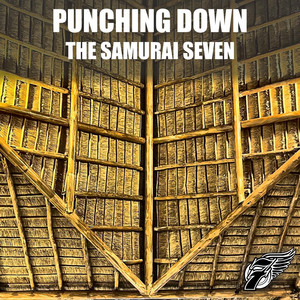
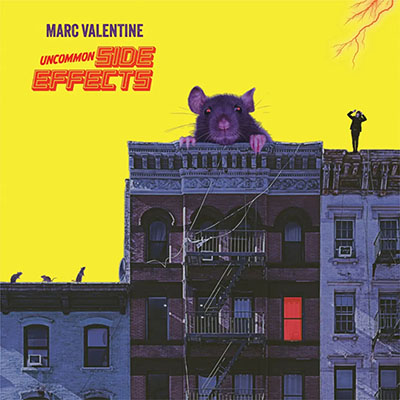
The cover art is fun – you’re stood on top of a tall building, perilously close to a giant, red-eyed rat…

(Laughs). Yeah – that someone further down the street, in the window with the red curtains, has concocted. Where did he come from? Something’s gone wrong here…

You like fun and off-the-wall artwork for your records, don’t you?

Yeah – it’s important for me. As a kid, I would buy records that stood out. If I liked the sleeve, even if I didn’t know the band, I would try it. I want to make that connection with the artwork and the music – it’s a package. I enjoy designing and creating it.

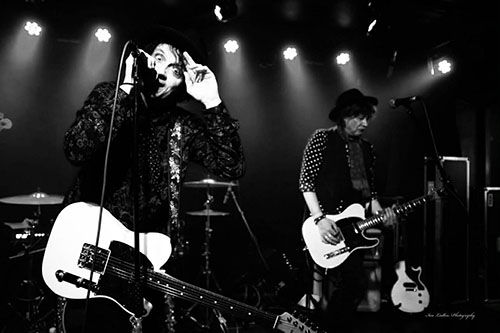
Picture by Ian Ladlow


I’ve seen you play twice with your band – you’re great and you’re building up a good reputation. You’ve been touring a fair bit…

We do as much as we can, but, with the logistics, it’s not always easy – the rest of the guys are all over the country, and everyone has to work and do their own thing… My guitarist, Richard, has his own band [Richard Davies & The Dissidents]. I’d be doing more shows if we could. At the level I’m at, there’s no money in it, of course. We’d love to get on more tours as a support – to get in front of new people and bigger crowds, which is always a challenge. There’s a lot of competition. I have a record label, but I don’t have a manager or an agent. We pretty much do everything ourselves. It’s hard work, man, but I’m lucky to be doing what I do.

The grassroots scene is tough, as is the music industry…

It’s horrible. We all put a brave face on, but it’s bloody tough, man. I don’t want to be pessimistic but… We need young bands, but the concept is different these days – their growth is purely online-generated…

It’s never been easier to get your music online, thanks to streaming platforms, but how do you stand out and get heard? There’s so much competition and music being uploaded to digital platforms all the time…

It’s almost incomprehensible – how do you get it beyond a few people? That’s the challenge that I have – and everybody else… It doesn’t matter how many records you’ve made, getting that next step up is tough, and we’re not a young band, so that works against us. If The Libertines go on tour, they don’t want us to support them – they want a younger, cutting-edge band… and I’d be the same if I was of that status… But, saying that, 30 years ago, you couldn’t be my age [now] and playing in a band. The environment is now much better for older bands.

‘It doesn’t matter how many records you’ve made, getting that next step up is tough’

What’s your songwriting process like? How do you prepare for an album?

It’s interesting and it’s inconsistent. I have a busy life outside of music that can sometimes inhibit my creativity. I sometimes have batches of songs. I’m always writing ideas down or recording snippets – some of them don’t ever make it into full songs, but I think it’s important to keep doing that. I was talking to a friend the other day – he is a writer. He said even if you’re going through a fallow period, or a time when you pick up a guitar, but you hate what you’re doing, you’ve got to do 10 or 20 minutes of writing every day. It doesn’t matter if it’s nonsense – it might never see the light of day – but creativity is a discipline.

For the new record, I wrote a lot of songs close together. I think the last one was ‘Loneliest Part’, which I wrote the night before we were recording. I knew there was one song I wanted to put on the album, but I didn’t know what it was. It turned out OK.

I’m now looking at writing songs for the next record. I have songs that are sitting there, but perhaps I’m going to leave them and go onto some new ideas. Sometimes an idea can sit in the background for a year or two and then I drag it up again. I go through my notes and recordings and think, ‘Oh, yeah – I forgot about that…’ So, I’ll polish it up and bring it to a song. Hopefully when I come off this call to you, I can go and write something, but I don’t know…

Do you write on guitar?

I write mainly on an acoustic guitar and on piano – even though I’m a rubbish pianist… I like using a keyboard, as it brings out different elements of melodies. I can play more chords on a piano than I can on a guitar. I sometimes write on an electric guitar. Whichever tool you use can bring a different result – I sit down with a synth sometimes. I haven’t written anything on a flute yet…

You might have a folk album in you…

That would be cool. It’d be nice to do something completely different – to have a concept and stick to it – but it’s difficult when you’re trying to build a fanbase and expand it. The existing fans want you to do what you do, so you don’t have that leeway to go off-kilter, but I probably will…

Uncommon Side Effects is released on April 10 (Wicked Cool Records).

For Marc Valentine tour dates, records and info, visit: 

‘I wanted to leave the ballads, the Americana and the super-sensitive songs behind and focus on the mid-tempo, folk-rock and power-pop songs’

Nelson Bragg

One of our favourite compilation albums of the year was Mélodie de Nelson: A Pop Anthology – a career retrospective of US singer-songwriter, Nelson Bragg, who has been a fixture of the L.A. guitar pop scene since the early noughties – he moved there in 1999 and, for 14 years, was a percussionist and vocalist in the Brian Wilson Band.

Focusing mostly on power pop and folk rock, the collection is full of super-melodic songs that are influenced by the classic sounds of The Byrds, The Beach Boys and The Kinks, as well as the ’80s indie-rock of R.E.M. and The Smithereens, and early solo records by Bob Mould (Husker Du, Sugar). Bragg also cites Squeeze and XTC as influences.

Mélodie de Nelson: A Pop Anthology, which is on the California-based label, Big Stir Records, includes some of the highlights from Bragg’s three solo albums: Day Into Night (2006), We Get What We Want (2012) and Gratitude Blues (2021)as well as a brand-new track, We’re Gonna Laugh About It – a personal song that talks about his life in the ‘70s and ’80s, but also comes bang up to date to comment on the difficult times in America.

In an exclusive interview, Bragg talks Say It With Garage Flowers through some of the tracks on the new compilation and reflects on his time playing with Brian Wilson, who died in June this year.

“I wanted to leave the ballads, the Americana and the super-sensitive songs behind and focus on the mid-tempo, folk-rock and power-pop songs,” he tells us. “They hang together well on a compilation like this, and I think a lot of people prefer those songs over my singer-songwriter stuff – it makes for a nice listen.”

It certainly does…

Q&A

Let’s talk about your new compilation album, Mélodie de Nelson: A Pop Anthology. I love the title, which is a cheeky nod to Serge Gainsbourg…

Nelson Bragg: Yeah – I kinda had to do it, because the name ‘Nelson’ isn’t anywhere else, except Willie Nelson or the Nelson Brothers… My name is from the ‘60s and the artwork on the cover of the record and the CD is very abstract European – I wanted the whole thing to look very impressionist, and that worked well with the title.

For this album, you wanted to concentrate on your power-pop, pop and folk-rock songs. How did the idea of doing a compilation record come about?

Nelson Bragg: Yeah. I was at the home of Christina Bulbenko [Big Stir Records], hanging out – I think it was on New Year’s Eve – and the subject of doing something with them came up. I said, ‘I don’t really write songs much anymore, but maybe I could do a covers record.’ But they were like, ‘We can’t do that because it would be a lot of licensing money…’ I said, ‘Sure…’ and then they said: ‘What do you think of doing an anthology or a Best Of?’

And I said, ‘Well, I’ve only done three records…’ It seemed a little presumptuous, but, ultimately, my three records came out in like a 20-year window, so, because of that much time, doing a compilation that represents only three records wasn’t weird at all. If I’d put out a record out in 2006, 2007 and 2008, and then put a compilation out in 2010, that would be weird… So, these songs are new to almost everybody – it’s like a new record.

I wanted to leave the ballads, the Americana and the super-sensitive songs behind and focus on the mid-tempo, folk-rock and power-pop songs. They hang together well on a compilation like this, and I think a lot of people prefer those songs over my singer-songwriter stuff – it makes for a nice listen.

You said you hadn’t been writing any new songs, but there is a brand-new song on the record – We’re Gonna Laugh About It, which was the first single to be released from it, digitally. Was that song inspired by Squeeze melodically?

Nelson Bragg: I think so – it’s definitely Difford and Tilbrook, and it also sounds like Andy Partridge [XTC]. It’s a little bit of both – and, as you get into the song, it’s The Smithereens as well. It’s just a power-pop song… When you do an anthology, you have to have one new song for the label, so I agreed to write one and I was amazed that it turned out as well as it did.

It’s a personal song, as it talks about your life in the ‘70s and ’80s – your reflections and memories – but it also deals with contemporary issues…

Nelson Bragg: Yeah – the last verse brings us up to date and is about the status of my country right now. It’s very short – it’s not a whole bunch of words – but it says that we will reach a time where we’re going to laugh about what happened in this country.

I hate to say that we’re going to laugh about all the people that died from COVID-19 because the government decided to ignore it and the remedies, and they were vaccination deniers… I don’t laugh about the people who’ve been deported or will be deported… but, ultimately, a day will come when we will breathe a heavy sigh of relief.


Forever Days, which is on the compilation, is one of my favourite songs of yours. It was written a long time ago for your band Farmhouse, who were from Massachusetts, wasn’t it?

Nelson Bragg: Yeah – it was written in ’92 and it was the first really good song that I wrote for me – you know, my style. I’d written songs for bands that I was in, which were in the style of those bands, and they were good ones, but that was the first song that I ever wrote that was like, ‘I’m on to what I’m going to sound like in the future’ – it was the future of my writing style. There’s a certain kind of folky, Americana vibe about it with the lyrics: ‘Counting steps from Rocky Hill to the farmhouse door.’

It has an R.E.M feel…

Nelson Bragg: R.E.M. were very influential in my life back then, no question. The Document and Green records were definitely a huge influence on my writing, as well as Chris Stamey and Peter Holsapple.

‘Forever Days was written in ’92 and it was the first really good song that I wrote for me – my style’

Forever Days is a song about a long-distance love affair…

Nelson Bragg: Yeah – the days are long when you’re away from the one you love…

So, did you that song come out commercially when you were in Farmhouse?

Nelson Bragg: We did a cassette – we maybe did 300 of them… This was in Northampton, Massachusetts – a great music town… We never released anything other than that. So, it did come out commercially, but only on a cassette. And then fast forward 15 years, and it came out on my first record.

Is it one of your favourite songs of yours?

Nelson Bragg: Most definitely.

I’m In No Mood, from the compilation, has an R.E.M. feel as well – it’s that jangly, 12-string guitar sound…

Nelson Bragg: I would have to say that I’m In No Mood is probably the most R.E.M. thing I ever did – it’s gratuitously R.E.M, but, back then, these songs got written and they accidentally sounded like R.E.M…

That thing that happened with so many bands after R.E.M – they came out in the early ‘80s and the whole college-rock / indie-rock movement was almost spearheaded by them, and 1,000 bands were born because of that band. That sound was invented by R.E.M, and then accidentally adopted by all of us.

‘I’m In No Mood is probably the most R.E.M. thing I ever did – it’s gratuitously R.E.M!’

There’s one cover version on the album – She Used To Love Me, which is a song by The Green Pajamas that’s originally called My Mad Kitty. Is that a song you love?

Nelson Bragg: Yeah – I couldn’t believe it when I first heard it. I took out the title of the song – the refrain ‘My Mad Kitty’ that they sing – and I retitled it She Used To Love Me. It was just my preference – I felt like I didn’t really want that element in the song, even though it’s cool as hell…

Jeff Kelly [The Green Pajamas] was really nice about me doing it – he’s just one of the great unsung heroes of pop music in this country. He’s so prolific – he’s done over 40 records. It’s an incredible odyssey of 40 years of music. They started in ‘82 and they’re still putting out new music – it’s amazing.

Death of Caroline, which is on the CD and the streaming version of the album, but not on the vinyl, is a great song. It’s like the Beach Boys doing baroque pop and Americana – there’s pedal steel on it… 

Nelson Bragg: Yeah – that one and a song called Every Minute of the Day were both influenced by Brian Wilson, as was Whitechapel Girl.

You wrote Whitechapel Girl with Thomas Walsh of Pugwash, while you were in Portobello, London. It was a song you recorded on a portable device, lost and rediscovered 10 years later. You had to piece it together…

Nelson Bragg: Yeah – I found it on this little digital recorder – there were tiny fragments of ideas, and I said, ‘I think there’s a song there…’ Thomas and I had just created enough music for me to actually kind of hear a song.

I knew the subject was going to be about this girl that I was with for a while – she grew up in Whitechapel, which is part of East London, and I needed songs… That was when I was doing my third record, and I almost ran out of music. Thomas said it was like the raising of the Titanic in songwriting, but when I put the fragments together in GarageBand the whole song was there. I couldn’t have done it without Thomas.

It’s a very English-sounding song – like The Beatles and The Kinks – but with a bit of The Beach Boys as well. There’s also a touch of The Bee Gees…

Nelson Bragg: Yeah – the song was most definitely Ray Davies and the Bee Gees. It’s that sort of Carnaby Street music – a music hall kind of thing. I had all these old instruments on it, like a dulcimer, a calliope, a harpsichord and a keyboard with a carousel sound.

You mentioned The Smithereens earlier… Your song The Last Girl I Ever Loved, which is one of the moodier and heavier tracks on the compilation, is, musically, a tribute to Pat DiNizio of The Smithereens, isn’t it?

Nelson Bragg: Yeah, most definitely – in every way possible. I sing like him on the song… I loved Pat – he was a good guy and a great artist.

Were The Smithereens a big influence on you in the early days?

Nelson Bragg: Yeah – I couldn’t believe that band… I liked every song and they were in the middle of the ‘80s, but they didn’t look or sound ‘80s… I was amazed at how successful they became, but their songs were so good that no one could ignore them. They proved that it doesn’t matter how you are aesthetically, if you have great songs that’s all you need.

You’re a keen record buyer, aren’t you?

Nelson Bragg: I’m definitely known for my record-buying habits – I like crate digging in old record stores, getting my hands filthy dirty. I love that process – it’s really exciting to me. I don’t always buy something, but that’s fine – when you do buy something, it’s even better…

We mentioned The Beach Boys earlier… I was sad to hear about the passing of Brian Wilson this year. When did you first start playing with him?

Nelson Bragg: I was with him from 2003 to 2017 – 14 years.

How did you first get involved?

Nelson Bragg: I got it through a friend – Darian [Sahanaja – Wondermints, Brian Wilson]. Mike D’Amico, the percussionist, was unable to tour that year [2003] – but he re-joined later as the main drummer. I replaced him as the percussionist / vocalist on the advice of a couple of friends in the band.

‘I’m definitely known for my record-buying habits – I like crate digging in old record stores, getting my hands filthy dirty’

Have Brian and The Beach Boys always been a part of your life? Did you grow up with their music?

Nelson Bragg: Actually – no. I grew up in the ‘70s and I knew the songs because they were on the radio, but I was never a fan of the music… and then in the ‘90s I heard the Smile bootleg tapes, and those really turned my head.

I moved to L.A. in ’99 and discovered all these people that were playing with Brian, and I investigated much more of his solo music, as well as Pet Sounds and Smile, and found out that it was important stuff. So, I was a late bloomer as far as being a Beach Boys fan.

What are your memories of playing with Brian? It must’ve changed your life…

Nelson Bragg: Yeah – playing with Brian Wilson is a life-changing event. When I posted my eulogy for him [online], I talked about how I paid my dues for so many years – 25 years of playing the drums – and I would’ve played for 35 or 45 years because I was determined that something was going to be my break – where I could make a living professionally – and it was that gig in 2003 that gave me that break…

Nelson Bragg

‘Playing with Brian Wilson is a life-changing event’

It was a beautiful thing, and knowing Brian was wonderful – he was a great guy. He was very much all about love – the classic love and peace kind of guy in the ‘60s. He was a very spiritual and intuitive person, and I was surrounded by and immersed in those incredible songs.

And you got to play them live each night…

Nelson Bragg: I travelled around the world, going to cities and towns and countries that I’ve never been to before, for 14 years.

We played the Royal Albert Hall, Sydney Opera House, Carnegie Hall, the Hollywood Bowl and Glastonbury. That was why I started playing music in 1978, so that one day I would do those things.

Mélodie de Nelson: A Pop Anthology is available now on Big Stir Records.

https://bigstirrecords.com/

https://nelsonbragg.com/