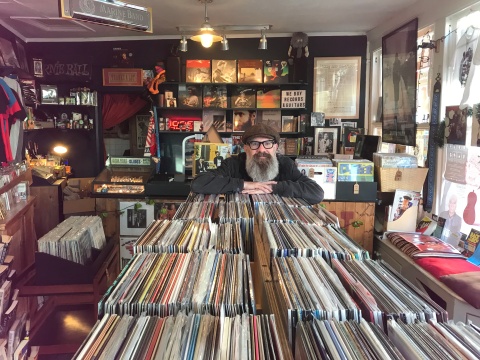

From UK Americana, to Canadian country-blues, Staffordshire psych-pop, Spaghetti Western soundtracks and, er, a concept record about Worcestershire, Say It With Garage Flowers chooses its favourite albums of 2018…
Bennett Wilson Poole have had a great year.
The UK Americana and jangle-pop trio formed by Robin Bennett (The Dreaming Spires), Danny Wilson (Grand Drive, Danny and the Champions of the World) and Tony Poole (‘70s rockers Starry Eyed and Laughing – ‘the English Byrds’), released a critically-acclaimed debut album, played sell-out shows across the UK and were nominated twice in the UK Americana 2019 Awards – for UK Album of the Year and UK Artist of the Year. And if that wasn’t enough, they’ve also scooped the prize for Say It With Garage Flowers’ favourite album of 2018.
When we told Danny Wilson the news, he said: “What an honour! I didn’t think it would be your album of the year… I wouldn’t have dreamed of it! I loved making the album with the other guys and I think it’s a great record.”
It certainly is! When we first heard the record at the start of the year, we said it would undoubtedly find itself high up on Say It With Garage Flowers’ favourite records of the year list come late 2018…
‘High on harmonies and brimming with glorious melodies, it’s a stunning collection of instantly memorable and brilliantly crafted songs that are steeped in classic ‘60s and ‘70s rock and pop, but don’t shy away from tackling contemporary social issues’
Produced by Tony Poole – the king of the 12-string electric Rickenbacker guitar – in his home studio in rural Oxfordshire, it’s a totally cosmic trip that takes in Byrds-meets-Tom-Petty/ Traveling Wilburys jangle-pop (Soon Enough), gorgeous, soulful balladry, (Hide Behind A Smile), mystical country (Find Your Own Truth), sunny Americana (Wilson General Store), shimmering psychedelic sounds (That Thing That You Called Love) and moody, powerful protest rock in the vein of Crosby, Stills, Nash & Young (Hate Won’t Win and Lifeboat (Take A Picture of Yourself).

High on harmonies and brimming with glorious melodies, it’s a stunning collection of instantly memorable and brilliantly crafted songs that are steeped in classic ‘60s and ‘70s rock and pop, but don’t shy away from tackling contemporary social issues.
Speaking to us earlier this year – we were the first publication to interview Bennett Wilson Poole – Tony said: “With our songs, like Hide Behind A Smile, the chords are quite simple and the tunes are quite jangly, but if you dig a little deeper, there’s more under the surface.”
He added: “A lot of people have said that you can keep listening to the album over and over again and you hear new things, which is great – that’s a good sign. If it makes you feel good, we’re adding to the sum of human happiness…”
Here at Say It With Garage Flowers, we totally agree – Bennett Wilson Poole’s long-player has been on heavy rotation on our hi-fi and it’s been our feel-good soundtrack of 2018. And the good news is that there’s a follow-up planned for 2019. It can’t come soon enough…
Another Americana release that impressed us this year was Canadian singer-songwriter Jerry Leger’s Nonsense and Heartache.
Produced by Michael Timmins of Cowboy Junkies, who worked on our favourite album of 2017, John Murry’s A Short History of Decay, it’s a double album, but, essentially it’s two distinct collections of songs.

The first half – Nonsense – is a raw, primal, bluesy, electric rock ‘n’ roll record, while the second instalment – Heartache – is a stripped-down, alt-country affair, with intimate ballads, lap steel, piano and fiddle.
Put them together and you have an album that reminds us of those classic early Ryan Adams long-players Heartbreaker and Gold – yep, it’s that good…
Jerry has a new album due in the autumn of 2019 and will be playing dates in Europe and the UK in the spring.
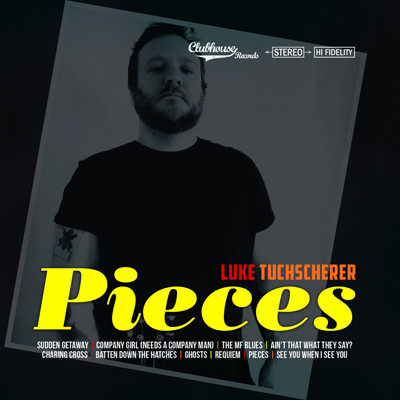
New York-based Brit Luke Tuchscherer , who released his latest album, Pieces, earlier this year, will also be in the UK this spring – he has a London show at the Green Note in Camden, on April 11.
Pieces, Luke’s third solo album, is his best yet. An angry, heavy, often political album, it rocks like Neil Young and Crazy Horse. Batten down the hatches, it’s like a hurricane out there… There’s even a nine-minute, epic rallying call (Requiem), which attacks social injustice in the UK and comes across like Luke’s very own Rockin’ In The Free World…
It’s not all big guitar anthems, though – there are some quieter moments in the eye of the storm, like the apologetic ballad Charing Cross and the sublime, Springsteen-like country-rock song Ghosts, which sees Luke revisiting his childhood haunts.

Luke wasn’t the only US-based, UK singer-songwriter to make a political album this year – Nashville resident Ian Webber brought out Op-Eds, which tackled social issues including women’s rights, fake news, war-torn Syria and the Dakota Access Pipeline controversy.
Musically, it’s a very stripped-down record – mostly just Ian and his acoustic guitar – and it makes for intimate and sometimes uneasy listening, as he shares people’s stories of hardship and struggle.
Opener Follow Me and its parent song, The Regime, are haunting tales inspired by reading news stories about families suffering in Syria, while Frontline is a protest song that has its roots in ’50s rockabilly.
Radio Zero is an ode to the healing power of great music – while the world is going crazy, sometimes you just need to switch off from all the doom and gloom and crank up some classic rock ‘n’ roll tunes. Ian sings the song in a Bowie-like croon that sounds like it’s been beamed in from outer space.
‘Musically, it’s a very stripped-down record – mostly just Ian and his acoustic guitar – and it makes for intimate and sometimes uneasy listening, as he shares people’s stories of hardship and struggle’
Fellow Bowie fan, UK singer-songwriter and Say It With Garage Flowers regular Vinny Peculiar released the latest in a long line of great albums in 2018. Return of the Native was a concept record inspired by moving back to Worcestershire after 23 years living in Manchester.

A brilliant collection of witty, reflective and deeply personal songs, it features a whole host of weird and wonderful characters, including a burnt-out rock star, the ghost of a Civil War re-enactment enthusiast, Eminem hopelessly lost in Droitwich, ’70s M.O.R. singer Clifford T.Ward, DJ Tony Blackburn and comedian Rik Mayall.
Musically, the album takes the listener on a journey through Worcestershire that’s soundtracked by glam-rock, jangle-pop, psych, Pet Shop Boys-style electro and New Order-esque, Northern melancholy.
Jangle-pop and psych sounds both featured heavily on the 2018 albums by London cosmic-country-folk five piece The Hanging Stars and Staffordshire band Alfa 9.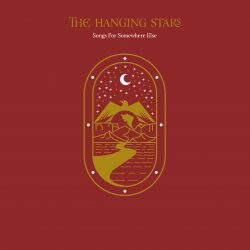
With Songs For Somewhere Else – the follow-up to their 2016 debut, Over The Silvery Lake, which was our favourite album of that year, The Hanging Stars made a record that was even better than its predecessor and was a much more varied and adventurous collection of songs – there was the beguiling and soporific Spiritualized-meets-Byrds groove of On A Sweet Summer’s Day, the heavenly, Big Star jangle-pop of Honeywater, menacing Spaghetti Western soundtrack Mean Old Man, the country-rock romp For You (My Blue Eyed Son) and the woozy and playful 1920s-style jazz-blues of Too Many Wired Hours.
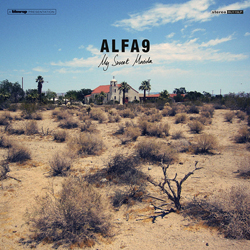
Alfa 9 are also fans of Spaghetti Western soundtracks – their album My Sweet Movida was full of Ennio Morricone influences, retro rock, cosmic-psych-country road trips and ’60s-inspired jangle-pop.
Back in April, guitarist Leon Jones told us: “We love Morricone and that kind of melancholy there is in a lot of his work. I’m fascinated by the Mojave desert in California and the Joshua Tree, particularly. For someone from the Midlands, it’s a very strange environment…”
Another fan of Morricone is Frank Sweeney, whose band of London renegades The Magic City Trio turned in one of the best debut albums of 2018.
Amerikana Arkana has wonderful orchestral arrangements that recall the dramatic ’60s pop of Nancy Sinatra and Lee Hazlewood, (Black Dog Following Me), Morricone’s moody Spaghetti Western soundtracks (Cousins’ War) and Mexican Mariachi music (Trav’ler), but these story songs are also steeped in the dark traditions of murder ballads, old country and folk laments, outlaw tales and hillbilly blues.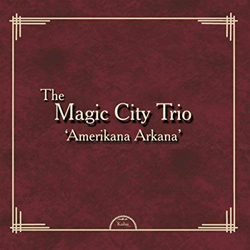
For more Spaghetti Western sounds and gun-slinging action, may we also recommend another great debut album from 2018 – Sarah Vista’s Killing Fever. Look out for an interview with London-based singer-songwriter Sarah on Say It With Garage Flowers soon…

Whether your year has been good, bad or ugly, we hope that you’ll take time to listen to some of the albums that were our soundtrack to 2018.
Here’s the full list of our 35 favourite albums of the last 12 months and a Spotify playlist to go with it*.
See you on the other side…
Say It With Garage Flowers: Best Albums of 2018
- Bennett Wilson Poole – Bennett Wilson Poole
- Jerry Leger – Nonsense and Heartache
- The Magic City Trio – Amerikana Arkana
- The Hanging Stars – Songs For Somewhere Else
- Johnny Marr – Call The Comet
- Paul Weller – True Meanings
- Alfa 9 – My Sweet Movida
- Vinny Peculiar – Return of the Native
- RW Hedges – The Hunters In The Snow
- Gold Star – Uppers & Downers
- Tracyanne & Danny – Tracyanne & Danny
- Mark Lanegan & Duke Garwood – With Animals
- Elvis Costello & The Imposters – Look Now
- Patrick Duff – Leaving My Father’s House
- Spiritualized – And Nothing Hurt
- The Good, The Bad & The Queen – Merrie Land
- Mike Gale – Beachhead Galaxy
- Jeff Tweedy – Warm
- The Magic Numbers – Outsiders
- Luke Tuchscherer – Pieces
- Ian Webber – Op-Eds
- The Senior Service – King Cobra
- Sarah Vista – Killing Fever
- Al Joshua – Out of the Blue
- Richmond Fontaine – Don’t Skip Out On Me
- The Black Delta Movement – Preservation
- Arctic Monkeys – Tranquility Base Hotel & Casino
- Manic Street Preachers – Resistance Is Futile
- Matthew Sweet – Tomorrow’s Daughter
- Matt Deighton – Doubtless Dauntless
- Nick Piunti – Temporary High
- Alan Tyler – El Tapado
- Juanita Stein – Until The Lights Fade
- Dom Mariani & The Majestic Kelp – Hi Seas
- GospelbeacH – Another Winter Alive
[Please note: Patrick Duff’s Leaving My Father’s House and Richmond Fontaine’s Don’t Skip Out On Me aren’t currently available on Spotify].

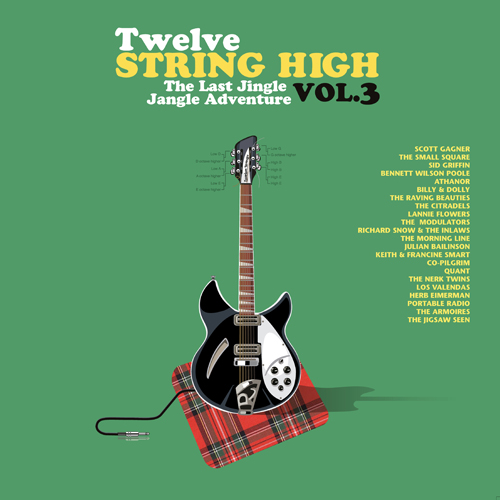 You’ve also recorded a cover version of Phil Ochs’ song Changes for a new compilation album that’s just been released –

