Cosmic Americana Music

hanging-stars-promo-2015-650x400

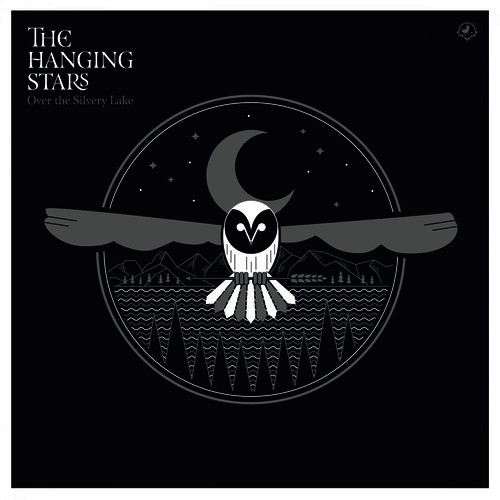
London’s The Hanging Stars have made one of the best albums of this year.

Recorded in LA, Nashville and, er, Walthamstow,  Over The Silvery Lake – their debut record – is a gorgeous psych-folk-pop-country-rock masterpiece that owes a debt to The Byrds and the Cosmic American Music of Gram Parsons, but also Fairport Convention’s pastoral ’60s English tune-smithery.

Willows weep, ships set sail on the sea and songs are laced with pedal steel guitar and shot through with blissed-out harmonies. There are hazy, lazy, shimmering summer sounds  (I’m No Good Without You and Crippled Shining Blues), as well as brooding desert-rock (The House On The Hill], trippy mystical adventures (Golden Vanity) and, on the closing track, the beautiful Running Waters Wide, rippling piano is accompanied by bursts of groovy flute. 

In an exclusive interview, I spoke to singer, guitarist and songwriter Richard Olson (The See See, Eighteenth Day of May) and bassist Sam Ferman (The See See and The Lightshines) about the making of Over The Silvery Lake and found out that its follow-up – due out next year – is almost done and dusted. Cosmic, eh?

Your debut album, Over The Silvery Lake, was released in March 2016. It’s one of my favourite records of the last 12 months. This year has been a bad one for the wider world, but how’s it been for The Hanging Stars?

Sam Ferman: We’re going to be a footnote to Trump…. It feels like 2016’s been a bit of a whirlwind. It doesn’t feel that long ago that Rich had an idea about taking the music that we were doing at the time somewhere different and creating a new band. From recording the album in LA, finishing it off, having it released and going round France and Spain and heading to Germany… We’ve packed a lot in.

Richard Olson: To be honest, I didn’t expect for us to get the kind of reception that we’ve been getting. There were so many bits that fell into place with the album. I’ve been in quite a few bands and projects and the best ones haven’t been too try-hard. Don’t get me wrong, we work very hard, but it’s a natural harmony.
005189101_500

Can you tell me about the songwriting process behind the album? Do you all write songs?

Sam: Most of the record was ideas that Rich brought to us. We had the benefit of spending quite a lot of time working out what we wanted to do with them. Rich was quite keen on taking it somewhere different, which is where the pedal steel, violin and flute got involved. We broadened our horizons and didn’t restrict it to just a three person, guitar pop band. We made it more pastoral, folky and country-infused, which was really exciting.

Are you guys into the classic country-rock bands?

Richard: Of course – I’ve always been obsessed with The Byrds and Gram Parsons. Our guitar player, Patrick [Ralla  – banjo, guitar and assorted instruments] is a real country connoisseur – he really knows his shit.

Sam: It’s been exciting for me. As a kid, I was never that into country stuff – Rich got me into it. Me and Rich and Paulie  [Cobra – drummer] – and, maybe to a lesser extent, Patrick  and Joe  [Harvey White – pedal steel] are interested in psychedelic music. It’s been really interesting trying to see what you can do with a psychedelic twist on the country thing. When I was playing music seven or eight years ago, there were no psych bands around, apart from my one and Rich’s one – now there are dozens. It’s interesting to see how far you can push it and mix it with prog-folk and the Fairport Convention thing.

Richard: As much as we like the Flying Burrito Brothers and Sweetheart of the Rodeo, the English folk revival of the late ‘60s is just as important for us – Fairport Convention, Pentangle and John Renbourn.

Your album was made in LA, Nashville and Walthamstow. Did you have a definite idea of what you wanted it to sound like?

Richard: We went to LA and said, ‘let’s do some recording’.

Sam: A lot of it crystallised there. There was a lot of talking about what we wanted it to sound like – quite often, it’s very easy to stumble into recording a lot of stuff and then it comes together in a patchwork at the end. We had a coherent vision for the album right from the outset.

‘As much as we like the Flying Burrito Brothers and Sweetheart of the Rodeo, the English folk revival of the late ‘60s is just as important for us – Fairport Convention, Pentangle and John Renbourn’


Did you write any of the album in LA?

Sam: We wrote a lot of the parts there. One of the songs – Ruby Red – is based on me and Rich having a jam on a porch in Hollywood. I came up with a riff – we thought it was going to be an acoustic instrumental, but we started messing around with it in rehearsals and it sounded good when it was heavy and electric. Rich went away and wrote the melody and the words.


The House On The Hill is one of my favourite songs on the album. What can you tell me about that track? I love the twangy guitar riff and the Spaghetti Western vibe…

Richard: Our friend Christof [Certik], who is a bit of a LA/San Francisco legend, wrote that riff. The guys went out on the porch and drank beer and smoked weed, while I had to coach him for four hours. It was hard to get it out of him, but once he did it, it was incredible.

Sam: Like every brilliant guitarist, he’s a perfectionist, but we got there in the end.

Crippled Shining Blues is another highlight of the album. It was also featured on an EP with Oxford band The Dreaming Spires earlier this year…

Richard: I’m really pleased with the way that song came out – it was all done in Walthamstow.

Sam: Rich had the two-chord riff at the start and we just jammed over it and he came up with the guitar riff. There’s a lovely complementary pedal steel riff, too.


You’ve been recording your new album? How’s it going?

Richard: We’re almost done – we’re putting the finishing touches to it. We’ve got about 20 songs, we’ll whittle that down to about 11 and then we’ll see if it’s any good…

When do you hope to release it?

Richard: Only the gods know that. Everything is a bit up in the air regarding when the album’s coming out.  It’s a weird time – everything takes absolutely ages, because of bloody Record Store Day. We need to have our stuff out on vinyl. The people who buy our records like vinyl and it’s how we survive on the road – not by eating vinyl, but by selling it.

Your next record will be quite a quick follow-up to your first one…

Sam: I think we started recording the new one before the last one was even out – we like to keep things ticking over. We’ve been busy this year.

What can we expect the new record to sound like?

Richard: I think we’ve found our feet to be honest. The first album was a bit of a stab in the dark and it was very much me, Paulie and Sam…

Sam: We were the genesis of it.

Not the Genesis?

Sam: There’s no Phil Collins…

Richard: Even though I do like Genesis… We’ve taken shape as a live band, with Patrick and Joe on pedal steel. They’ve been very involved with the new album – Patrick’s been co-writing. It’s been much more of a collaborative effort. I do think that the new album is very different, but it’s very much in the same vein musically, I suppose.

The-Hanging-Stars-637x358.jpg

Sam: We’ve done all of it at Bark Studio in Walthamstow, which is where we did about a third of the first album. We’re working with Brian O’Shaughnessy – he’s fantastic. Me, Paulie and Rich live in Walthamstow.

It’s sounding really nice. We had the majority of the album – the core bits – done about nine months ago. We’ve spent the last few months sprinkling the fairy dust on it.  It’s been really nice to see how it’s come together.

Richard: A lot of the recording for the first album was done in LA and we did some overdubs in Nashville. This album has been purely E17, which has been great. Due to the way of the world, it’s so hard to get a two-week chunk of time for recording, so we do a weekend of basics and then we drop in with some other ideas. I’m so chuffed with some of the stuff that we’ve done for the new record. I think it’s bloody good and I really hope that people will be blown away by it.

If you’ll pardon the pun, Christmas is a good time for hanging stars… What are your plans for the festive season?

Sam: Our drummer will be on the other side of the world, but for New Year’s Eve we’ll probably be at the What’s Cookin’ night in Leytonstone, sinking in a Yuletide country vibe.

Richard: We’ll probably be getting slightly off our nuts in some way or another – we don’t mind that at all.


Over The Silvery Lake by The Hanging Stars is out now on The Great Pop Supplement/Crimson Crow.

http://www.thehangingstars.com/

https://thehangingstars.bandcamp.com/


Golden Touch

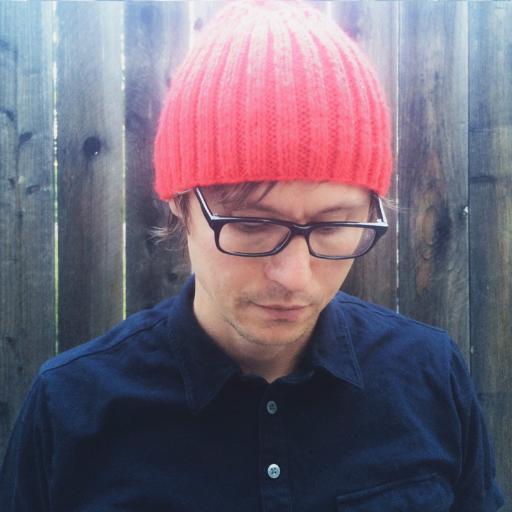
jg

I first stumbled across US singer-songwriter Jacob Golden in 2007, when I reviewed his second album, Revenge Songs, for a London-based music magazine. I was impressed by the record, which, at times, reminded me of Simon & Garfunkel, Cat Stevens, Neil Young and Jeff Buckley.

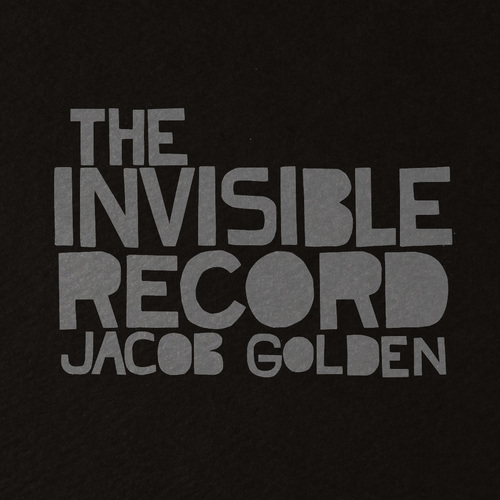
Tipped for big things – Mojo magazine called Revenge Songs, “the most gorgeous break-up record since Beck’s Sea Change”, and his song On A Saturday featured in US teen drama series The O.C. – Jacob was signed to UK indie label Rough Trade (The Smiths, The Fall, Antony and The Johnsons). However, things didn’t work out for him and he dropped off the radar. Until now, that is…. He’s back with a brilliant new album of  “dark folk songs with psychedelic undertones”, The Invisible Record, which he has released on his own label, Zero Integrity Records.

Picking up where Revenge Songs left off, it’s a haunting record, which includes beautiful, fragile ballads (Wild Faye and Horse), perfect guitar pop (Tomorrow Never Knows On The 45), an unsettling torch song (All In A Day’s Work) and a starkly confessional, yet amusing, tale of his success and failure in the music industry, while battling his own personal demons (Bluebird).

Having read my 2007 review, Jacob, who is based in Sacramento, California and describes himself as “an indie singer-songwriter with an equal love for Nick Drake and The National”, dropped me a line to see if I’d like to chat to him about his latest album. How could I turn down this, ahem, Golden opportunity?

You released your last album, Revenge Songs, back in 2007 and then you disappeared – until last year. Where have you been?

Jacob Golden: I went through some low points. I did a lot of creative and professional soul-searching that, ultimately, brought me to a better place. I had to figure out how to – and even if I wanted to – keep pursuing a music career that, although it was exciting at times, could be really soul crushing.

I’m not saying I had it different than anybody else, but a lot of times I felt I was always climbing uphill and I got tied up in a very traditional model of failure and success. I shifted my focus away from my creative process and got more concerned about how other people perceived me, which never is a great place to make art from. I had to untangle that stuff in my head and hide out for a while, so I could find my creative true north again. Once I did, that’s when the new record started to come about.

When I reviewed Revenge Songs all those years ago, I said: ‘At times, Golden sounds like a stripped-down, darker take on Simon & Garfunkel (‘I’m Your Man’), a power-pop Cat Stevens (‘Church of New Song’), Harvest-era Neil Young (‘Shoulders) and Jeff Buckley (‘Love You’). Revenge never sounded so sweet…’

Was that a fair description?

JG: It was certainly a flattering one. I always aspire to the quality of songs of Simon & Garfunkel, as well as The Beach Boys. There is timeless, dark beauty in the sound and lyrics – Bookends [by Simon & Garfunkel] is one of my favourites. I think I absorbed a lot of that great music as a kid, via my mother and father’s record collection. It stuck with me, that sense of space and atmosphere, even as my influences expanded, I’ve always had that as my core. It’s the same with Neil Young and specifically After The Gold Rush, which is such a great vibe of a record.

Jeff Buckley was pretty huge for me when I was learning to sing, as was Thom Yorke. They showed me what was possible with just a voice and as I traced back their influences, I discovered the great Nina Simone, Tim Buckley, The Zombies and Scott Walker. But I can’t ignore Sparklehorse, PJ Harvey and The Flaming Lips, who all brought a great cinematic creativity, as well as intensity, to their records, which are still very influential on me.

One of my favourite tracks on your new album is Tomorrow Never Knows On The 45. It’s a killer pop tune that references The Beatles song from Revolver, which is one of my favourite albums of all time. How did that song come about? What inspired it? Is it about your teenage years?

JG: I do love a great, classic pop hook. I think Revolver may be my favourite Beatles record as well. I also remember discovering Big Star and feeling like I’d found this lost band when I was teenager, working in a record store.  I never heard on them on the radio as I was growing up, but they had such great hooks and melodies.

In general, the song is about that feeling of discovering something new and how you get to revel in that feeling – just you and the music. When I was a kid, I collected 45 records and I loved going down to the shop each week and forking out a couple of bucks for the latest song. It was a visceral joy. I’d pore over every detail of each song. It taught me a lot about music. So the song is about that vibe, but, more specifically, it’s about going into a dark room with a nice set of headphones and getting completely lost – in a good way – either in making, or listening to, music.

Bluebird, from the new album, is an autobiographical song. It references your musical influences and talks about your ‘big break’, when you got discovered by Geoff Travis, who signed you to the record label Rough Trade. It documents your subsequent experiences and how things didn’t work out. How do you feel looking back on those days now? Do you wish you’d been more successful and had hit the big time? Do you have any regrets about that? Why didn’t it work out? Did you really “throw it all away?”, as it says in the song?

JG: I’ve got some conflicting thoughts on that time. I have a lot of great memories and to have been a part of that Rough Trade musical heritage, for at least a little while, was such an honour. Geoff was always super kind to me – we had lots of great talks about music and he gave me good advice.

It’s hard to say what went wrong exactly. I’ve never been the obvious cool guy at the party; I was pretty earnest, maybe too much so. My label mates at the time were The Strokes and The Libertines and I was like this weird American living in Soho, who was obsessed with Sparklehorse and Nina Simone. It was just a weird mix. I was socially awkward and pretty much a loner. It was probably more about fashion and timing than anything else.

I think I had some raw talent, but I hadn’t truly discovered my identity as a solo artist. I could sing my ass off – and still can – but the climate just wasn’t right for me at the time.

Processed with VSCOcam with 5 preset

You’ve self-released the new album and you’re doing all your own PR and bookings. Is that difficult? How’s it working out for you?

JG: What’s that Bright Eyes lyric? “I’d rather make a pay check than win the lottery”.

I’ve had quite a few professional starts and stops over the last 15 years. I just wanted to get back to writing songs and sharing them, and winning fans as honestly as I can. I’m approaching my music more as an artisan small business now, which feels good.

When you hook up with a label – even an indie label – at least, in my experience, there’s always that idea that you could have a hit, and it takes the notions of success and failure to really perverted extremes. I would be signed on tour in some cool foreign country and yet I’d still get these stressed out emails that ‘things weren’t working out on the radio’ or ‘so and so isn’t feeling the record’… It really took me out of the creative process.

It’s hard to not get a lot of other people’s voices in your head too, which, for me, made it challenging to keep my motivations pure. I’ve had to work to get back to that again and again. I guess part of me wants to buy into that idea of success at least at some level. I mean, I look at bands like Spoon or Animal Collective and I think wow, that’s such a cool place and it probably is, but I bet they get a lot of those stressed out emails, too.

I’m just putting myself out there. Sharing my work, emailing people and trying not to be annoying. Self-promotion is probably the most difficult part for me. I’d really rather just play my songs, but, hey, there are worse problems to have.

How did you approach this album? How did you write and record it? What did you want to achieve with it? 

JG: A lot of the songs were actually written quite fast. I have other songwriter friends and we would do these mad 12-hour writing sessions. It’s called the 20 song game. Everyone in the game starts writing songs at 7am in their respective studios. The goal is to write and demo 20 songs in 12 hours, which is no easy task. There’s no time to think, so you are forced to work on instinct, plus there is this friendly competitive part that pushes you on.

Of course, everyone writes some hilariously terrible songs during the day, but I ended up with Wild Faye and All In a Day’s Work, which is actually the recording you hear on the record. Everyone gets together at the end of the day and plays what they came up with and has a laugh.

As for the recording, a lot of the record started while I was living in Portland, Oregon. I had a little basement studio that I spent a lot of time in. A lot of the songs were born there – just me and an old four-track cassette recorder. It’s a homemade record. I made it with pretty modest tools – one decent microphone, my laptop, a four track, and a lot of old speakers and some guitar pedals and a lot of patience and experimenting. I didn’t really know what I was making, I was working on other projects in tandem, but I always ended up coming back it. I knew something was there. I didn’t have a grand vision for it, but each time I went back to it and pulled it up, I heard it differently and I eventually dug in and finished the bastard!

So, are you pleased with it?

JG: Yes, I feel like it’s me in the most definitive sense yet. My first record, Hallelujah World, had some good tunes, but it was sort of a mess, as I was coming out of being in a band. Revenge Songs had much more of my identity, and I feel a lot of those songs still really work. This one, though, feels like the balance between what I do – the songs, the voice and the atmosphere of the record are very definitive. I also feel like this album is a sort of ‘line in the sand’ that I want to build upon.

It’s a very stripped-down record in places. Why did you decide on that approach?

I mostly perform solo and I wanted the album to really represent that. There is still a fair degree of production and atmosphere going on, but I like to keep things understated. I wanted everything to ride on my voice and the songs and guitar. Everything sort of floats around those primary elements and if you took away the orchestration and just left the voice and guitar. the songs would still totally work. I’m not saying that’s how I always want to work, but, for this collection of songs, I feel like it’s the strongest way to present them.

Invisible Record

What music are you currently into – new and old? Who have been your biggest musical influences and what influenced your new album?

JG: Nina Simone, Chet Baker and a lot of the torch singers. What I mostly listen to personally, though, is instrumental music – Nils Frahm, Explosions in the Sky, Four Tet and Clark. I listen to a lot of this music because the approach is very creative and there is space in the music for the words in my head to still flow.

Listening to music is part of my creative process, so I need to leave room to come up with my own narratives. I do love experimental indie rock – Panda Bear, The National, The Notwist, Tame Impala, Deer Hunter and Viet Cong. The band Money, who are from Manchester, are great.

So, how’s 2016 shaping up for you? Can we expect you to play some gigs in the UK? Have you played in the US recently?

JG: Yes – I’ll definitely be coming back to the UK. I still have a lot of love there and the feeling is mutual. I’m still working out my plans for a visit this summer. I’m hoping to get into a cool festival and I’ve been promising folks a bunch of house concerts, which I love to do. I always encourage folks who write to me about wanting to see me live to get some friends together and host a house show. It’s the best way of experiencing what I do.

Finally, what’s next for Jacob Golden?

JG: I’ve been sharing a lot of B-sides and outtakes on my Patreon. It’s one of the ways I really see moving forward. The idea is to basically write my next album ‘in public’, building a community and sharing the new songs as I write them.

It gives folks a peek into my creative process and helps me build a sustainable income by folks pledging a couple of bucks for each song I share. I think it’s a pretty cool way of putting music out and I’m excited to build it and share more there.

Jacob Golden’s new album, The Invisible Record, is out now on Zero Integrity Records.

http://www.jacobgolden.com/