Turn on the neon and look out for the ghost signs, it’s the best albums of 2025…

From cinematic late-night soundtracks and dark disco to jangly Americana, psych-folk, melancholy orchestral pop and retro soul, Say It With Garage Flowers chooses our favourite albums of 2025 and looks at a few of them in more depth.

When Say It With Garage Flowers spoke to Louis Eliot, frontman and songwriter for the newly-reformed cinematic glam popsters Rialto, in early 2024, he told us that there was a possibility that the band could make a new album.

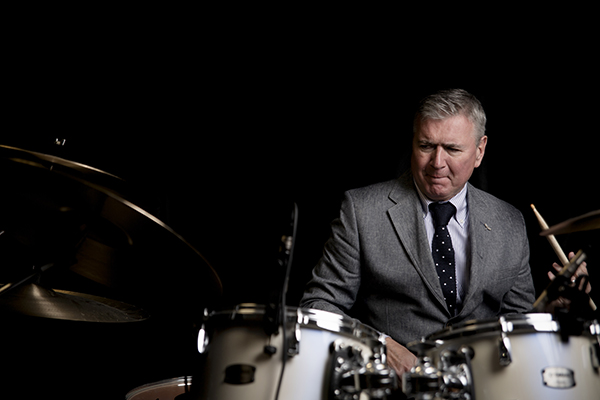
Louis Eliot – picture: Chris Floyd

Fast forward to spring 2025 and that album, Neon & Ghost Signs – the group’s third and their first record in 24 years (!) – saw the light of day, or should that be the dark of night, as, like Rialto’s previous work, it was collection of songs inspired by night-time in the city.

“A lot of it is about searching for thrills,” says Eliot, adding: “But it’s also about heading out into the night to search for the person that you think you might’ve missed out on being… but what you find is some bruises in the morning…”

We’ve all been there… Neon & Ghost Signs is quite possibly Rialto’s finest album, and Eliot agrees, saying: “I genuinely think this album is the best one. It’s a grown-up record but perhaps not a graceful one… I know bands always love the latest thing they’ve made, but I think it’s a good album and that age has helped me write a better record.”

Well, it’s our favourite album of 2025 – a natural step on from its predecessor, 2021’s Night On Earth, which flirted with moody, Bowie-like electronica and Duran Duran-style ‘80s pop, as well as the dramatic, widescreen influences of John Barry and Ennio Morricone, which were all over Rialto’s 1998, self-titled debut album, Neon & Ghost Signs also explored new territory.

Comeback single and album opener, No One Leaves This Discotheque Alive, is a big statement of intent – over handclaps and a pounding disco groove, a lascivious Eliot is on the prowl in a nightclub, playing “the hound of London town, where the sheets are stained with gold.

It’s like a darker, sleazier cousin of Sophie Ellis-Bextor’s Murder on the Dancefloor. The song was partly inspired by Eliot leaving behind a long-term relationship to immerse himself once more in London nightlife.

‘Rialto’s Neon & Ghost Signs was our favourite album of 2025 – a natural step on from 2021’s Night On Earth, which flirted with moody, Bowie-like electronica and Duran Duran-style ‘80s pop, as well as the dramatic, widescreen influences of John Barry and Ennio Morricone, it also explored new territory’

There’s an urgency and a celebratory feel to a lot of the songs on Neon & Ghost Signs – this is down to a near-death experience Eliot had six years ago, when he was rushed to hospital for emergency surgery while on holiday in Spain.

“What you might think is if you have a very close to death experience you want to start looking after yourself,” he says. “I just went chasing full speed after my youth. I was just like, f*** it, I might not be here next week, so I’m just going to dive in!”

I Want You is a glitter-soaked, glam rock stomp, and there’s more epic disco on the shimmering, ABBA-flavoured, Taking The Edge Off Me, with its cascading piano and soaring strings.

Louis Eliot


The edgy and European-sounding, Put You On Hold, is John Barry-meets-the-Bee-Gees, while Cherry is delicious, futuristic robo-funk that struts the same catwalk as Bowie’s Fashion.

There are some reflective moments amidst all the dancefloor shenanigans. The album’s gorgeous title track, which is cocooned in warm, pulsing synths, is a bleary-eyed, comedown ballad that’s one of the best things Eliot has ever written – an ‘us against the world’ love song, like 1998’s The Underdogs.

Sandpaper Kisses is another relationship ballad, but it’s about love gone wrong:Sandpaper kisses, stinging on your lips. The one you want to hold in your arms is slipping from your grip.”  

Eliot juxtaposes the barbed lyric with a charming and nostalgic tune that has echoes of ‘50s instrumental rock and roll duo Santo & Johnny, complete with a great, twangy guitar solo.

The atmospheric and romantic ballad, Remembering To Forget, is so beautiful that Scott Walker could’ve sung it, while second single, the glam strut of Car That Never Comes, is another of Eliot’s songs about escaping and driving through the city under the cover of night – it can be parked alongside The Car That Took My Love Away, from 2000’s mini-album, Girl On A Train, and Drive from Night On Earth.

“I need to come up with some new ideas,” he jokes, adding: “The album wouldn’t be a Rialto record if it didn’t have the things that people liked about Rialto from the past, but there wouldn’t have been a whole lot of point doing it if I hadn’t brought new things to it.”

Here’s hoping he follows it up with a new set of songs soon and, in the meantime, please can we have vinyl reissues of the first two Rialto albums and a compilation, including all the B-sides too?

Cinematic songs played a big part on one of our other favourite albums of 2025 – The Divine Comedy’s Rainy Sunday Afternoon.

For his 13th record, singer-songwriter, Neil Hannon, returned to the grandiose, orchestral pop of previous long-players, such as Absent Friends and Victory for the Comic Muse, and came up with one of his best albums in a career that’s lasted over three decades.

Recorded in 10 days at Abbey Road and written, produced and arranged by Hannon, Rainy Sunday Afternoon, features an orchestra, brass section and choir, as well as a full band, and found him in a melancholy and reflective mood – he describes it as his ‘deep in middle age album’.

Some of the songs were influenced by some troubling moments in his life – The Last Time I Saw the Old Man concerns itself with the death of his father, who suffered from Alzheimer’s disease – as well as the current state of the world.

The stunning opening song, Achilles, has a stirring and mournful string arrangement, and was inspired by soldier and scholar Patrick Shaw-Stewart’s 1915 poem, Achilles in the Trench, which was written about his experience of Gallipoli during World War 1 – Shaw-Stewart died fighting in France in 1917.

The haunting orchestration on I Want You recalls vintage John Barry, while The Last Time I Saw the Old Man is ‘60s-Scott-Walker-meets-late-night-jazz, managing to evoke a similar doomed atmosphere to Elvis Costello’s Shipbuilding, which was covered by Robert Wyatt – Hannon cites the track as an influence on his song.

Despite all the sadness, there are some lighter moments on the album, where Hannon juxtaposes the heavy lyrical subject matter with some playful arrangements.

The delightful title track, which deals with the doom and gloom in society, and having the weight on the world on his shoulders after a fight with his partner, is Bacharach and Carole King-inspired pop, while on the breezy bossa nova of Mar-A-Lago By The Sea, Hannon imagines himself as an imprisoned Donald Trump, pining for his Palm Beach resort in Florida.

All The Pretty Lights is a gorgeous and evocative recollection of a childhood Christmas trip to London, complete with a fairground organ instrumental break, and the atmospheric and yearning ballad, The Heart Is A Lonely Hunter – it takes its title from the novel by Carson McCullers – is a beautiful song about looking for love, but also leaving the past behind, and looking to the future.

‘Despite all the sadness, there are some lighter moments on the album, where Hannon juxtaposes the heavy lyrical subject matter with some playful arrangements’

After all the soul-searching, the album ends on an optimistic and hopeful note with the pastoral Invisible Thread – the lyric centres on a parent letting go of their loved one, as they flee the nest. Fittingly, the track features Hannon’s daughter, Willow, on guest vocals.

Pastoral influences were all over The Instant Garden – the debut album by Blow Monkeys frontman, Dr Robert, and singer-songwriter/ guitarist, Matt Deighton (Mother Earth, Oasis), but it’s not the first time these two talented musicians have collaborated – they worked on the Monks Road Social project, which was overseen by Robert and spawned four albums, one of which featured Paul Weller.

The pair bonded over a mutual love of Tyrannosaurus Rex – they both grew up listening to A Beard of Stars – as well as Fred Neil, Davy Graham, and Nick Drake, which shines through on The Instant Garden – stripped-back, psych-folk, with open-tuned acoustic guitar and impressive and inventive electric playing is very much the order of the day.

Robert and Deighton share lead vocals, as well as acoustic guitar duties and percussion, but Deighton takes care of all the electric guitar work.

The album was recorded and mixed in five days, at Penhesgyn Hall Studio, Anglesey, in North Wales.

Matt Deighton and Dr Robert

Dr Robert takes lead vocals on the soulful and anthemic, Giving Up The Ghost, which brings to mind early Bowie, and he’s also the main singer on Gardening In The Mediterranean Way, which could’ve been inspired by his botanical pursuits at home in Spain – he lives in the mountains, in Andalusia.

There are more green-fingered antics on the title track, with its slow, bluesy-psych groove – it’s like a stripped-back take on Marc Bolan’s Hippy Gumbo, with Robert literally leading us down the garden path: ‘Won’t you come along with me into the instant garden? Won’t you accompany me down in the undergrowth?’

Things take a country turn on the delightful Philosophy, with Robert finding peace in a haven by the sea, and the mesmerising, acoustic-led shuffle, Supernatural Seas, which is sung by Deighton, is a magical and mystical trip – ‘I’m away from the poison breeze / High above supernatural seas’ – with a killer electric guitar break.

The spiralling Endless Circle is a bewitching and autumnal folk ballad written and sung by Deighton that has shades of Paul Weller and Nick Drake, but the Bolan boogie of the playful Superstitious Woman lightens the mood, as Robert tells us how the song’s female protagonist is trying to blow his mind.

‘The spiralling Endless Circle is a bewitching and autumnal folk ballad written and sung by Deighton that has shades of Paul Weller and Nick Drake’

Album closer, Crying Like A Child is one of the record’s more soulful and left-field moments, with Robert repeating the title phrase against a backdrop of guitars – acoustic strumming and some psych-tinged, FX-laden electric work.

It’s a wonderful record – intimate and pastoral, with a sense of mystery and exoticism. Let’s call it a garden of earthly delights – there’s plenty to dig here…

This year was a strong one for Americana records – one of our favourites snuck out just before the end of the year: Faith In Us by singer-songwriter, guitarist and producer, Tony Poole, who was a member of ‘70s English rock band Starry Eyed and Laughing, who were often labelled ‘the British Byrds’, due to their jangly sound – Poole is a wizard with a 12-string electric Rickenbacker.

Poole, who is also one third of Americana trio, Bennett Wilson Poole, released his first ever solo album in late 2025.

Self-produced, it opens with the chiming and existential title track – Poole’s Rickenbacker rings clear and true – a life-affirming and beautiful song about believing in the good in humanity: “If we don’t have faith in us, what is anything worth? If we don’t begin from trust, we’re just some dust blowing round this Earth.”

Next up we’re in lighter territory – on the jaunty and groovy guitar pop of Chelsea Girls (1965), Poole finds himself transported back in time to London’s King’s Road in the Swinging Sixties.

While riding on a No.11 bus heading to Sloane Square, he contemplates how great it is to be alive in 1965, but, with prior knowledge of what lies ahead, he warns of the death of the peace and love era in ’69, and the impending Vietnam War.

It’s a fun and infectious song – Twiggy gets a namecheck, as does the Ready Steady Go! TV show and its host, Cathy McGowan – and it climaxes with a ‘60s psychedelic rock freak out.

The soaring This Slice of Time takes us back to the present day – in a moody and powerful song, which was inspired by a demo Poole was sent by US musician, Nelson Bragg (Brian Wilson), we hear how the Amazon Rainforest is being burned to raise cattle to turn into burgers.

Social and political issues also get a look-in on the brooding Imagine This – specifically the suffering caused to immigrants by Trump’s policy on the U.S.-Mexico border.

The track opens with an ominous psychedelic drone and tribal drums and then heads skywards, driven by Poole’s shimmering Rickenbacker.

There’s a touch of Beatles psych and the sound of the chaos theory butterfly flapping its wings on the anthemic jangle rock of Marcie Dancing (On A Butterfly’s Wings) – musically it’s joyous, but the song comes with a warning: If everybody’s waiting for everybody else to come and save the world, we’ll still be waiting when it’s too late and we’re past the point of no return …”

‘The track opens with an ominous psychedelic drone and tribal drums and then heads skywards, driven by Poole’s shimmering Rickenbacker’

There’s a cinematic feel to Love or Something, which has a different vibe to most of the other tracks – atmospheric ‘80s synths create a ghostly atmosphere on a late-night, jazz-infused song that’s set on the neon-soaked streets of Copenhagen.

Album closer, Film Noir clocks in at just over six minutes – a magnificent and mysterious, Neil Young-style psych-rock epic.

Faith In Us is currently only available on CD – you can order it online at www.starryeyedandlaughing.com – but there are plans for a deluxe double vinyl version in 2026, depending on demand.

One of the other members of Bennett Wilson Poole released a great Americana album this year – Robin Bennett, who, along with his brother, Joe, plus Jamie Dawson (drums), Tom Collison (keys) and Nick Fowler (guitar) – make up The Dreaming Spires.

Their third album, Normal Town, explored themes of home, nostalgia, alienation, escapism and the beauty – and drudgery – of the everyday.

The sublime, nostalgic and atmospheric title track, which was also the first single, pays homage to their hometown of Didcot, which, in 2017, was deemed “the most normal town in England” by a bunch of number-crunching researchers.

The Dreaming Spires – photo by John Morgan

“I don’t want to die in a normal town,” pleads Robin Bennett, over plaintive piano and cinematic twangy guitar.

‘Normal Town is less jangly than their previous albums – no 12-string Rickenbackers were used during the making of this record’

Didcot is also referenced in Cooling Towers – a reflective, bass-driven, country-tinged song inspired by the town’s power station, which was a famous landmark, until it was finally demolished in 2020. 

Less jangly than their previous albums – no 12-string Rickenbackers were used during the making of this record – Normal Town has anthemic and political, Who-like power-rock (Normalisation), which sounds like Big Star covering Baba O’Riley; the Springsteen-esque crime story Stolen Car;  21st Century Light Industrial –  imagine the observational songwriting of Fountains of Wayne but transplanted from New York to a business park in Oxfordshire – the folky travelling song, Coming Home, and the spacey psychedelia of Where I’m Calling From, which is a message beamed in from the future.

“It’s quite a nostalgic album – a lot of the time period I’m talking about is as much about 25 years ago as it is about now,” says Robin Bennett. “You can get to adulthood and be a bit disappointed by it – where’s the transcendent experience we were looking for?” 

That’s a good question – we’ve no idea, but Normal Town is a good place to start.

From Americana to Canadiana… This year’s Waves Of Desire, from Toronto singer-songwriter, Jerry Leger, was a mostly warm sounding set of songs, and was influenced by acts including The Beatles, The Everly Brothers, Roy Orbison, and The Zombies, whose music first inspired Leger as a kid.

“I get a certain feeling from those songs and memories, and I wanted to try and get that same feeling with Waves Of Desire,” he says. “I’m not trying to copy or sound like those songs, but just getting close to the feeling they gave me.”

Made in Germany, during a short break from touring Europe, Waves Of Desire was recorded at Cologne’s historic Maarweg Studios, which began as an EMI studio in the 1950s and still has its main room virtually unchanged, with a mix of vintage and modern gear. Leger’s vocals were all recorded live with the band through an old German microphone.

Suzan Köcher and Jerry Leger – photo by Katie Methot.

Produced by Leger, the album features his longtime group, The Situation, (Dan Mock – bass/vocals), Kyle Sullivan – drums/vocals, and Alan Zemaitis (keys/vocals), as well as contributions from Suzan Köcher (harmony vocals) and Julian Müller (co-production / guitar).

Several of the songs make great use of close harmonies and textured analogue synths – first single, the atmospheric and ‘50s-tinged, It’s So Strange, which is a song about vulnerability and starting over, has doubled acoustic guitars, Mellotron and Everly-Brothers-style harmonies.

Album opener, the jaunty Alcatraz – written about one person leaving a relationship, while the other is left in confusion – is driven by some superb, warm Dylan-style organ. The song’s heavy subject matter is nicely juxtaposed with a breezy, poppy and uplifting backing, which Leger says was inspired by The Shangri-Las.

Let Me See How It Ends – another song influenced by the Everly Brothers –sounds like a long-lost ‘50s breakup ballad – and the organ-drenched Calling A Bluff mixes a sultry, Rolling Stones shuffle on the verses with a big power-pop chorus.

On the ethereal and haunting, We’re Living In This World, Leger envisages the protagonist floating in space – there’s tinkly piano and a Moog synth creates a breathing effect, which adds to the feeling of disconnection: ‘You’re living in this world/ I’m in the twilight zone,’ sings Leger.

Stranded is another song about isolation – Zemaitis plays a spacey synth solo, which heightens the mood – and on the nostalgic and partly autobiographical, Willow Ave, Leger reminisces about childhood walks with his father around Toronto’s East End.

‘On the ethereal and haunting, We’re Living In This World, Leger envisages the protagonist floating in space – there’s tinkly piano and a Moog synth creates a breathing effect, which adds to the feeling of disconnection’

The title track is an upbeat rocker, and the album ends with the reflective, piano-led ballad, Back In Love With Me Again, which opens with the lines: Another day older, another job done…’

It’s been 20 years since Leger’s first solo album – 2005’s Jerry Leger & the Situation. Waves Of Desire sees the start of a new partnership with Hamburg-based label, DevilDuck Records, and next year he will be touring the UK to support the release.

Leger is a fan of vintage soul music, so he’ll probably dig this year’s album by Essex-based band The Milk.

Borderlands, which was  influenced by acts including Brian Wilson, Paul McCartney, Miles Davis and Michael Kiwanuka, is the group’s most ambitious and fully realised record yet – a stunning set of cinematic soul songs.

It’s a melting pot of ‘60s and ‘70s-style soul, modern funk and jazz, and vintage film soundtracks.

Like all the best records, the album takes you on an emotional journey and is designed to be listened to in one sitting – it’s a coherent piece of work that starts with the striking and filmic I Need Your Love and closes with the epic love song, I Saved My Best For You, with its silver screen strings.

“We’re very much into making a body of songs that has a beginning, a middle and an end – that’s how I listen to music at home,” says Rick Nunn, the band’s vocalist and keys player.

‘Like all the best records, the album takes you on an emotional journey and is designed to be listened to in one sitting – it’s a coherent piece of work that starts with the striking and filmic I Need Your Love and closes with the epic love song, I Saved My Best For You, with its silver screen strings’

“I like the commitment of putting a record on and then having 40 or 45 minutes when I don’t need to make another decision.”

He adds: “People who like soul music will hopefully like it, but we also just wanted to make something that was a talking point in itself – even if it’s not your thing, it’s a big-sounding record.”

“We spent about a year arguing about the references and batting ideas around, and eventually we all gave in and said, ‘Let’s make something huge.’”

The Milk

Nunn explains how very few bands have got the resources or the budget to make a high-production, mid-‘70s soul record, but that having their own studio allows the group to have more time and creative freedom, and lets them achieve their ambitions without costing a fortune.

It’s a move that’s certainly paid off – with Borderlands, The Milk men well and truly delivered.

Sounding huge was something that baritone-voiced singer-songwriter and pianist, Tom Hickox, achieved on his long-awaited third album, The Orchestra of Stories.

A grandiose affair, inspired by the lush, dramatic and mysterious sound of Scott Walker’s seminal solo albums of the late ’60s, The Orchestra of Stories is a stunning piece of work – a set of largely story-based songs on which the London-based Hickox collaborated with the Chineke! Orchestra – Europe’s first majority black and ethnically diverse orchestra – and the Onyx Brass ensemble, as well as guitarist, Shez Sheridan, from Richard Hawley’s band.

As if that wasn’t adventurous enough, Hickox produced the album himself, which was a first for him.

“It wasn’t initially my intention to produce it myself,” he says. “I co-produced my first one with Colin Elliot, who works with Richard Hawley, and I produced the last one with a bassist friend of mine called Chris Hill.

“I really enjoy collaborating, because, otherwise, it’s quite lonely, but I met up with a couple of people and talked to them about doing this record, but nothing clicked, so I just started getting on with it myself.”

‘The Orchestra of Stories is a stunning piece of work – a set of largely story-based songs on which Hickox collaborated with the Chineke! Orchestra and the Onyx Brass ensemble, as well as guitarist, Shez Sheridan, from Richard Hawley’s band’

He adds: “As I started getting into it, I realised quite soon it was my vision and that I had to do it because of the way it was forming. It’s a massive production and it took a long time to get together – it required lots of different studios, lots of musicians and lots of money!”

The orchestral arrangements were recorded in London’s AIR Studios, while other parts, including vocals, drums, bass, piano and guitar, were laid down in studios in North and South London and Sheffield.

Opening song, The Clairvoyant, inspired by a tragic tale of a man in the US, who was hustled out of his entire life savings and house by a fraudulent psychic, is the perfect scene setter – Mariachi brass gives way to a piano and Hickox’s deep and rich croon, before a moody string arrangement creeps in and then unfolds. The effect is startling and unsettling – a very powerful start to the record.

The gorgeous Chalk Giants has a lighter touch, with acoustic guitar, stately strings and pastoral horns – the song finds Hickox on a bucolic English road trip, searching for greater meaning in life.

The serene mood doesn’t last for long, though…  Chalk Giants is followed by the dark, brooding and satirical Game Show, with its sleazy, James Bond horns, filmic strings and news audio clips recorded by CNN’s Clarissa Ward, BBC’s Nick Beake and the actor, Rory Kinnear.

For the lyrics, Hickox took inspiration from the Cambridge Analytica and Edward Snowden personal data scandals.

On haunting album closer, The Port Quin Fishing Disaster, we are transported to a small Cornish fishing village, where a tragedy strikes during a raging storm, while in The Failed Assassination of Fidel Castro, Hickox plays the part of Marita Lorenz, who was tasked with seducing the Cuban revolutionary and putting poison in his moisturiser but ended up becoming his lover.

These stories are a gift for a talented and inventive singer-songwriter like Hickox, who has a brilliant eye – and ear – for taking curious tales and turning them into fully-realised and often epic compositions.

In 2024, our favourite album of the year was Good Grief  by Bernard Butler and this year he contributed to another record we loved – the self-titled debut album by supergroup Butler, Blake and Grant, on which he was joined by Norman Blake (Teenage Fanclub) and James Grant (Love and Money).

The trio were formed when a mutual friend in the music industry suggested they play together for a concert in rural Scotland – he had a hunch that they’d work well as a group. That led to some shows in Glasgow, as part of the Celtic Connections festival – Blake and Grant are both Scottish.

Writing and recording for it began at Blake’s home, on the banks of the River Clyde – the group were looking to capture the stripped-back vibe of their concerts, with guitars and vocal harmonies.

“We went up to Norman’s to hang out for a couple of days and see what would happen,” Butler says. “It really worked – there was no set way of doing it – we just sat around in armchairs playing, and James said, ‘I’ve got this tune…’, he started playing a song, and we joined in and started working it out together.”

‘Writing and recording for the album began at Blake’s home, on the banks of the River Clyde – the group were looking to capture the stripped-back vibe of their concerts, with guitars and vocal harmonies’

He adds: “I asked Norman if he had any recording gear and he did, so we got out some mics and set them up in his living room – we had no headphones or isolation. There was no studio set up – just three microphones plugged into a computer. We said we would record everything we did – just press record and leave it. We did a song by James and one of Norman’s, then I wrote something quickly, overnight.”

There were more sessions at Blake’s place, and then Butler took the recordings to his studio in London, where he added overdubs and mixed the tracks.

First single and album opener, Bring An End, which started out as a fragment of an idea on Blake’s phone, is a good indication of what’s to follow – a gorgeous and intimate, autumnal folk song with acoustic strumming, some delightful harmonies, and Butler playing some impressive and inventive electric guitar.

It’s followed by the sublime, One And One Is Two, which is steeped in the chiming folk-rock sound of The Byrds, and was the first song the trio worked on together.

Butler takes lead vocals on his own composition, The 90s, a wry commentary on his past – “We’ve been loving the 90s for far too long”, which is a jaunty tune with a retro-soul feel, thanks to its strings, Blake and Grant’s backing vocals, handclaps and some neat, ‘70s-style guitar work. 

The Old Mortality – another of Butler’s songs – is one of the record’s moodier moments. It’s a dramatic and atmospheric track, with swelling violin by Sally Herbert, and would’ve fitted well on Butler’s Good Grief.

Butler, Blake and Grant will more than likely attract comparisons to Crosby, Stills & Nash, and they channel that on Grant’s, laidback harmony-laden Seemed She Always Knew, which was inspired by Joni Mitchell and has echoes of Laurel Canyon running through it.

As you would expect from the coming together of three such talented musicians, Butler, Blake and Grant is a strong album of well-crafted songs that has an authentic and traditional charm to it. Let’s hope they make another record soon.

One of the other most inspired collaborations of the year was 84-year-old Canadian folk singer, Bonnie Dobson, teaming up with London’s cosmic cowboys, The Hanging Stars, to make a brand-new, eight-track album, Dreams. It was a match made in heaven – you could say it was as if the Stars had aligned…

Dobson’s gorgeous and haunting voice is perfectly complemented by the band’s shimmering, psychedelic Americana sound, like on the first single and album opener, the sublime and hazy Baby’s Got The Blues.

It’s followed by the fun and upbeat, country-tinged Trouble, which recalls ‘60s Nancy Sinatra. In the song, Dobson has a chance encounter with a guy in a club, is attracted to him, but knows trouble when she sees it: “One, two, three, and four, what are you waiting for? Five, six, and seven, eight, come on darling, don’t make me wait.”

On the moody Don’t Look Down there’s more trouble brewing – we’re taken on a trip into the desert for a Spaghetti Western soundtrack, with Mariachi horns and twangy guitar.

On A Morning Like This also has a cinematic vibe. With its lush, ‘60s-style strings – played on a Solina String Ensemble synthesizer – and guest vocals by Hanging Stars frontman, Richard Olson, it evokes the wonderful and slightly spooky-psych pop of Nancy and Lee.

There’s yet more drama on the stunning You Don’t Know, with finger-picked acoustic guitar, French horn and wintry orchestration, it feels haunted by the ghost of Eleanor Rigby.

Friends and family play a big part in the lyrics of the album’s reflective title track, which has Dobson, who lives in the UK, dreaming of Canada, but also singing about walking in Somerset and the hills of Shropshire: “You always can go home again, but you never can go back.”

It’s a truly beautiful and moving song, and, like the rest of the record, the stuff that dreams are made of.

Finally, it would be remiss of me not to mention an album that I contributed to this year – Document by Liverpool singer-songwriter, Edgar Jones. 

I was delighted to be asked by the label AV8 Records to write the sleeve notes for it, based on an interview I did with Jones. 

His 2023 album,  Reflections of a Soul Dimension, was a lavish affair, with strings and brass, and influences including Burt Bacharach and Scott Walker, as well as Motown and Northern Soul, but Document is just him, in a stripped-down style, with a guitar and pedals, captured live to tape.

Based on his current live set, it’s a blistering, soulful and raw-sounding record, with covers, new versions of some old Jones classics, and blueprints for songs that will end up on his future albums. 

Talking about the idea behind it, Jones says: “I don’t sit there and think, ‘Hmmm – what’s my next project going to be?’ I already had two projects on the go – one was a follow up to Reflections of a Soul Dimension called Representations, on Stereopar Records. I’d written all these songs for it and done the demos, building up the rhythm arrangements on which the strings would be added.

‘Based on his current live set, it’s a blistering, soulful and raw-sounding record, with covers, new versions of some old Jones classics, and blueprints for songs that will end up on his future albums’

“With Reflections of a Soul Dimension, I was lucky to catch Steve Parry, the producer and arranger, during some downtime in lockdown – he’s a very busy man – but we still can’t find a window to do the follow up. The incentive is there and so is the love for the project, but it’s about finding the time… It can’t be made cheaply.”

Edgar Jones

He adds: “AV8 Records had been saying to me for years, ‘Let’s do a project’, and I said, ‘Yeah – when I’ve got something…’ It turned out that I did get something – and, again, it was soul music…

“It’s a kind of a vanity project – mid-‘60s Motown stuff. I’m pretending to be a vocal group called the 4Tastics. It was going well, but we hit a wall – everyone in the band had something mad going on. There were personal problems, me included. It’s kind of 90% done now, but when it was 60% done, I was commiserating with [journalist] Lois Wilson, who said that while I was waiting for the two projects to take off, I should go into the studio for a day and bust out as much as I could of what I do live.

“I thought that was a great idea – I could revisit some old classics – put some new life into them, as I’ve been doing on stage – and put down some of the blueprints for Representations and the 4Tastics album.”

This year’s record, Document, is a great, er, document of where Jones is at, and we can’t wait to hear his next two albums when they’re done and dusted.

  • Here’s a list of Say It With Garage Flowers’ favourite albums of 2025 and an accompanying Spotify playlist: please note, as it stands, Tony Poole’s Faith In Us and Edgar Jones’ Document are not available on Spotify.

Say It With Garage Flowers: Best Albums of 2025

  1. Rialto – Neon & Ghost Signs
  2. The Divine Comedy – Rainy Sunday Afternoon
  3. Tony Poole – Faith In Us
  4. Dr Robert & Matt Deighton – The Instant Garden
  5. Bonnie Dobson & The Hanging StarsDreams
  6. The Dreaming Spires – Normal Town
  7. Butler, Blake & Grant – Butler, Blake & Grant 
  8. Kathryn Williams – Mystery Park
  9. Paul Weller – Find El Dorado
  10. Ron Sexsmith – Hangover Terrace
  11. Jerry Leger – Waves of Desire
  12. Tom Hickox – The Orchestra of Stories
  13. The Milk – Borderlands
  14. Andy Bell – Pinball Wanderer
  15. Depeche Mode – Memento Mori: Mexico City
  16. Johnny Marr – Look Out Live!
  17. Sharp Pins – Balloon Balloon Balloon
  18. Nelson Bragg – Mélodie de Nelson: A Pop Anthology
  19. Matt Berninger – Get Sunk
  20. Vinny Peculiar – Things Too Long Left Unsaid
  21. The Delines – Mr. Luck & Ms.Doom
  22. Patterson Hood – Exploding Trees & Airplane Screams
  23. Chris Eckman – The Land We Knew The Best
  24. Emma SwiftThe Resurrection Game
  25. Jake Winstrom – Razzmatazz!
  26. Gary Louris – Dark Country
  27. Luke Tuchscherer – Living Through History
  28. Michael Robert Murphy – Chaos Magick
  29. Edgar Jones – Document
  30. Manic Street Preachers – Critical Thinking
  31. Suede – Antidepressants
  32. Doves – Constellations For The Lonely
  33. Miki Berenyi Trio Tripla
  34. Jeff Tweedy – Twilight Override
  35. Matt Berry – Heard Noises
  36. The Loft – Everything Changes, Everything Stays The Same
  37. Jim Bob –Automatic
  38. Jim Bob – Stick
  39. Drink The Sea – Drink The Sea I
  40. Drink The Sea – Drink The Sea II
  41. The Clang Group – New Clang
  42. All Seeing Dolls – Parallel
  43. The Crystal Teardrop –… Is Forming
  44. Ian M Bailey – Lost In A Sound
  45. Kevin Robertson – Yellow Painted Moon
  46. Future Clouds and Radar – Big Weather
  47. Miniseries – Pilot
  48. Dan Raza –Wayfarer
  49. Dropkick – Primary Colours
  50. Edwyn Collins – Nation Shall Speak Unto Nation
  51. His Lordship Bored Animal
  52. Chrissie Hynde & Pals – Duets Special
  53. Jerry Leger – Lucky Streak (Latent Lounge – Live From The Hanger)
  54. The Autumn Defense – Here and Nowhere
  55. Luke Haines & Peter Buck – Going Down To The River… To Blow My Mind
  56. The Len Price 3 – Misty Medway Magick
  57. GA-20 – Orphans
  58. The Blow Monkeys – Birdsong
  59. Rose City Band – Sol y Sombra
  60. Joe Harvey-Whyte & Bobby Lee – Last Ride
  61. Little Barrie & Malcolm Catto – Electric War
  62. Neil Young and the Chrome Hearts Talkin To The Trees
  63. Star Collector – Everything Must Go!
  64. Montefurado – Heavy Heads

‘We wanted to get back to some ‘60s stuff – good, danceable grooves’

Back To Business is a new collection of groovy, hipshakin’, organ-heavy instrumentals by duo Bangs & Talbot – pioneering acid jazz DJ, musician and producer, Chris Bangs, and mod keyboard wizard and founding member of The Style Council, Mick Talbot.

The two of them have made their first album together in 20 years and it’s a scorcher – just the kind of soundtrack for a long, hot summer.

Talbot lays down some great Hammond, Wurlitzer and Rhodes piano, while bassist and drummer Bangs ensures the tracks always have a great groove – from the jazz club vibe of Sumthin’ Else to the Latino-soul-meets-West-Coast-Beach-Beat-sound of Surf ‘n’ Turf, and the explosive Kookie T, which, with its blaring brass and high-octane Hammond, sounds like the theme to a car chase scene from a Swinging Sixties action-thriller.

Marvin Gaye’s soul classic, How Sweet It Is, has been reinvented as a cool shuffle – Brand New Heavies’ guitarist Simon Bartholomew provides some tasty licks –  while Stingray pays its respects to gospel and evokes the atmosphere of legendary California club P.J’s. 

It’s Alright takes a trip to Detroit, with fuzz guitars, and the jazzy Leela’s Dance has more than a touch of Dave Brubeck’s Take Five about it.

“A lot of our past stuff was influenced by the ‘70s, but Chris wanted to get back to some ‘60s stuff – good grooves that were danceable,” explains Talbot, speaking to Say It With Garage Flowers.

“That’s the great thing about a lot of this album – it’s either head-nodding or dancey. It’s got a lot of different grooves, but most of them are quite immediate.”

He adds: “I’m not always sure what all the influences are because on a lot of the tracks Chris puts an infectious rhythm together – he likes playing bass and he also plays drums, guitar and keyboards. 

“Sometimes he suggests stuff and asks me to adapt it – I’m not precious. He might do a slide on a keyboard on one of his demos,  I’ll get the gist of what he wants me to do and redo it all, and then he’ll say, ‘I really miss my slide!’ So, I say, ‘Put it back then!’ [laughs]

Bangs & Talbot

‘Chris tries to paint a picture with sound – each track is a vignette of a movie’

“Chris does a lot of different things – he’ll give an arrangement to the horn players of him singing what he thinks they should play, so you get a funny demo with him singing, thinking he’s a saxophone.

“He tries to paint a picture with sound – each track is a vignette of a movie. It creates an atmosphere and conjures up an image, but, Chris is so poetic he wants to tell you what that image is.”

Q&A

Did you make the record during lockdown?

Mick Talbot: Yeah – but there were various times when there was a little bit more freedom. We wanted to try and capture the atmosphere of half a dozen people playing in a room, but that wasn’t possible at the time. Chris and I were only in the same room on two occasions – the rest of it was all done [remotely] with musicians we know.

While we were locked down, I did a few remote sessions, but I always go to my friend Ernie McKone’s studio, in Muswell Hill, where a lot of my vintage gear is, like my old Hammond, Wurlitzer, Clavinet and Rhodes –  he maintains them for me.

All those ancient things need care and attention – they get a bit sick if you take them on the road without souping them up – and he’s got the space for them. The colours on my palette are all there – the five or five principal sounds that I gravitate towards.

Mick Talbot

‘All my ancient gear needs care and attention – it gets a bit sick if you take it on the road without souping it up’

I did a remote session for a fella in New York – having been around for quite a while, it’s amazing to me to think I’ve just done something that’s on an album in New York and I didn’t have to go there…

The shenanigans people used to go through when they were doing an international project in the old days – they were scared of putting analogue tape through X-ray machines because you could wipe it quite easily. You couldn’t leave it in your hand luggage. Now I just do a session and, with a little ‘ping’, it’s gone thousands of miles and it’s on someone’s track.

How did you first get into playing keys? Are you self-taught?

MT: I’m a mixture of things. My nan was a piano player and she played by ear. I was quite enchanted by that and I asked her to try and show me some things, and she did, but she couldn’t really show me much because it was hard for her to explain the instinct – she just did it. It felt a bit mystical to me.

She told me there was a lady round the corner who taught piano, but I had the horrors about that because I wanted it to be like how my nan did it – like magic. She said, ‘If you’re keen, you don’t need to stick at it,’ but I did it for three years and it benefited me more than I thought.

Once I’d got the rudiments, and I got more of a personal taste for music, the fact that my teacher was principally a classical one, I wanted to try and apply that to the playing that was on the records I liked to buy. By the time I was about 12, I started trying to form school bands, so I stopped going to piano lessons and tried to develop what I’d learnt.

When you were growing up, were you listening to soul, jazz and funk? Have you always been into that?

MT: I liked all the English ’60s bands as well, but I guess they were R’n’B or soul-influenced. My mum was quite a fan of Motown, so, when I was really small, that was playing a lot.

My dad was more of a modern jazz fan, which I got to understand more as I grew older. He was good at sussing out records that would bring us together – he got me a Sly & The Family Stone album and said, ‘Some people think this bloke is jazz, some think he’s rock and some think he’s soul – they’re having trouble defining him, but I think he’s good and I think you might like him, but I don’t like all your music…’ We bonded over that.

When you and Paul Weller formed The Style Council, people had trouble labelling you too, didn’t they? You embraced so many influences: soul, pop, funk, rap, jazz, house music, European café culture, classical…

The Style Council


MT: We were only drawn to things that we actually liked – it wasn’t a calculated thing. We didn’t come into the studio one day and go, ‘We haven’t done anything that sounds like Kraftwerk yet.’

To me, it all seemed to make sense  – the more you look into music and go a bit deeper… The European influences, for instance – elements of Debussy, Ravel or the Romantic Classicists –  a lot of that music, in turn, influenced people like Duke Ellington, Burt Bacharach and Thom Bell of the Philadelphia sound.

‘The Style Council were only drawn to things that we actually liked – it wasn’t calculated. We didn’t come into the studio one day and go, ‘We haven’t done anything that sounds like Kraftwerk yet’.

Prior to forming The Style Council, you were in mod revival band, The Merton Parkas. When you were growing up and listening to soul, was it then a natural step to becoming a mod? What attracted you to that scene?

MT: When I was really little, I can remember that I liked that look, and then, in London, in the mid-’70s, just prior to the punk thing, there was a real explosion of energy with Dr. Feelgood –  they influenced a lot of the punk bands with their attitude and their look. I liked that on the sleeve of their first album [Down By The Jetty], it almost looked like they were from another time, like the mid-’60s.

Fast forward a couple of years and I saw The Jam just before they got signed to Polydor. I thought, ‘Hold on, this is a band for my generation’ – no pun intended – who were more of my age than Dr. Feelgood and they had some affinity with that ’60s mod thing and they were playing a few soul covers in their set.

I did see a lot of the early punk bands, but I thought their image was artificial on some levels – I knew a lot of weekend punks who dyed their hair green with food colouring and washed it out before they went to their respectable job. I thought it would be nice to be someone you could be all the time, and there’s no doubting that there’s a generation of bands who were so influenced by The Jam.

‘I saw The Jam just before they got signed to Polydor. I thought, ‘Hold on, this is a band for my generation’ – no pun intended’

Of the first five bands that surfaced with New Wave or punk, I felt The Jam were the most honest. A lot of them were trying to say it was Year Zero and that they weren’t influenced by anything, whereas The Jam weren’t shy about saying they were influenced by The Kinks, The Beatles or Wilson Pickett. It wasn’t like they’d just been dropped there by a spaceship in 1976.

‘I knew a lot of weekend punks who dyed their hair green with food colouring and washed it out before they went to their respectable job’

And I guessed you carried that approach through to The Style Council, as on the front cover of your second album, Our Favourite Shop, you had a store featuring memorabilia, books and records from some of your favourite writers and musical artists. You were literally wearing your influences on your sleeve…

MT: The visuals on that record had far-reaching consequences – people were trying to find copies of books that were out of print… I’ve met people who’ve said, ‘I think I’ve got three-quarters of what’s in that shop!’

The nice thing about that sleeve is that 90 percent of what was on it was mine and Paul’s and the rest of it was stuff that we wanted that we got our designer, Simon Halfon, to source. It wasn’t put together by a stylist – it came off our bookshelves or out of our lofts. It felt part of our makeup.

I always love reading about who or what influences the musical artists I’m into – it often sets me off listening to them and discovering new stuff…

MT: It’s the same with me. As a kid, I’d read about The Beatles and thought that maybe I should check out The Everly Brothers or Little Richard – whatever they were talking about. I liked The Rolling Stones as well and they helped me to find out about Howlin’ Wolf and Solomon Burke. It’s a nice process – I guess some bands are more open about that sort of thing.

Are you a record collector? How do you listen to music?

MT: I listen to it on any format because the moment you rely on streaming –  I don’t want to get into the politics of that, but they don’t bloody pay you enough – there’s sometimes a grey area. Things are missing, like you particularly like a B-side of a 7in single, but it’s not on Spotify. Why haven’t they got the one I’m searching for? It’s an anomaly.

‘I’m not a music format snob, but I appreciate there’s something about magnetic, analogue tape and vinyl that is just warm and nice’

https://open.spotify.com/track/5zY9QQzsUBKBNP98u4Dmbu?si=2f908c060b5d4408

Wiggle Wiggle, the B-side of the Bangs & Talbot vinyl single, Sumthin’ Else, is on Spotify… What’s your hi-fi setup at home like? Is it a big system?

MT: No – just normal speakers. My brother-in-law found me an old Dansette – sometimes I like to stack up some singles on that. I don’t do it all the time, but it might be influenced by something, like finding a rare record in a little junk shop, and I think ‘I’ll definitely have to get that red plastic thing out again…’

I’m not a format snob, but I appreciate there’s something about magnetic, analogue tape and vinyl that is just warm and nice.

Mick Talbot in the studio for Monks Road Social

You’ve played with so many acts, including Dexys Midnight Runners, Galliano, Gene, Candi Staton, The Blow Monkeys, The Young Disciples, Monks Road Social, Wilko Johnson, Roger Daltrey, Pete Townshend… Any collaborations that stand out?

MT: It’s really hard to pick out one. It’s whatever I’m currently working on.

Different things have enchanted me for different reasons – there are people I’ve not recorded with, but I’ve worked with… I did Jools Holland’s Big Band for a while, when his brother, Chris, who plays Hammond, took a couple of years out. That gave me the opportunity to play with Ronnie Wood, Dr. John, Edwyn Starr – all sorts of people. When you’re working with Jools, you’re never quite sure who you’re going to get. It’s quite spine-tingling when you’re playing with a legend.

It was a real thrill for me to work with Wilko Johnson – it was really mad, because I used to see him at Hammersmith Palais in 1976, and then I ended up working with him. He’s so influential.

Through working with him, I got to work with Roger Daltrey, and out of that I got to play with The Who very briefly. I filled in for a charity event – we did a medley. It was thrilling to be sat behind Pete Townshend while he was swinging around – that was a buzz.

‘I did Jools Holland’s Big Band for a while. That gave me the opportunity to play with Ronnie Wood, Dr. John, Edwyn Starr – all sorts of people’

There was one week in 2018 when the second Wilko Johnson album I’d played on came out, as well albums by Roger Daltrey and Ray Davies that I was on. They were all recorded at different times, but it was like three buses turning up at once.

People say to me, ‘What are you up to? Are you still in the music game?’ ‘Well, this week, I’m up to quite a lot, but next week it will look like nothing’s happening…’

Mick Talbot and Matt Deighton (Monks Road Social)


I’m really looking forward to the next Monks Road thing coming out, as it’s been put on hold for a while. We did the third album [Humanism] in Spain, but we ended up doing the new one in London, at RAK Studios, in one week. I love that studio – I’ve been fortunate enough to have been there a few times in the past couple of years and, for me, it’s second only to Abbey Road in terms of an old-school studio that still has every option available.

‘It was a real thrill for me to work with Wilko Johnson – it was mad, because I used to see him at Hammersmith Palais in 1976’

We have a mutual friend, Matt James, who was the drummer in Gene. You’ve played on his debut solo album, Breaking The Fall, which is released next month, haven’t you?

MT: Yeah – that was really nice. He had a few of the old Gene boys [Steve Mason – guitar, Kev Miles – bass) involved. It was great to catch up and play on it.

Matt always had that vocal thing going on – I can remember when I was playing live with Gene, they’d sometimes get Dodgy’s drummer [Mathew Priest] in, so Matt was featured more as a vocalist and a guitarist.

It’s great that it’s always been in him and that he’s got round to doing his own album. There’s one song that’s quite Northern Soul on it and a nice one where I played an accordion sound, with a rural or Cajun influence, or a bit like Ronnie Lane.

So, what’s next for you?

MT: I’m halfway through working on an album with an act called BirdSMITH – they used to be called First Congress. They’re the vehicle for a songwriter called Tom Van Can – he used to be a director of independent films. I first met him about 12 years ago, when I did some stuff for a soundtrack. He’s focused on music now. They had a single out called Kiss It Better – it got played on Radio 2 a bit.

I’ve not seen Candi Staton for a while – she’s coming over for a handful of festivals, so I’m going to play with her – and the next Monks Road Social album should be looming soon.

I’m also working on a second album for what I hope is an ongoing project with Chris Bangs, and there’s a Jam and Style Council exhibition on in Brighton [This Is The Modern World]. They’re showing the Style Council documentary [Long Hot Summers: The Story Of The Style Council] and I’ll be there for a couple of days, doing a Q and A.

Nicky Weller [Paul’s sister] is curating it and she tracked down one of our early video directors who had lots of outtakes – there’s all sorts of things. Her partner, Russell, has been editing stuff – he sent me a film of me playing with The Jam at The Rainbow, in 1979. I had no idea anyone was filming it.

https://www.youtube.com/watch?v=sL24XmTg-r0

Were you pleased with the documentary? I watched it earlier this year, on Sky Arts, and I thought it was brilliant. 

MT: It was good – it was very hard to try and shove everything into one film, but they did a good job. It really reflected the personalities of a lot of people well.

Paul and I did a combined interview – the people who put the film together were hoping there might be a commercial DVD release, because they said they’re sitting on about half an hour of stuff from us that they couldn’t get in that’s really funny. It shone a light on some things, but it didn’t work in the film. I guess it’s all owned by Sky… it’s not my shout.

How was it talking about that time again? The film was pretty candid…

MT: Having to film it over a couple of days and dredge up seven years of your life was kind of exhausting… it was a bit of a blur.

A lot of it was shot at Paul’s studio – while I was down there, I played on three tracks for his album, On Sunset, which he was just finishing. I thought I played on two, but it turns out I’m on three. There was so much going on.

The Style Council got back together to play one song at the end of the film, It’s A Very Deep Sea. How was that? It’s a lovely performance…,

MT: I was really pleased it came together. I saw Paul play in London a few weeks ago and it’s in his set now – I don’t think he’s played it live for a very long time and it’s nice that’s put a new focus on it.

I had concerns about whether or not we should work up three or four songs, in case it didn’t click, as it had been so long, but Paul went, ‘No – just that one.’ He was very definite about it and he said, ‘If it works – it’s great, and, if it doesn’t, we don’t have to use it.’

I was really hoping it would work, but if hadn’t, it wouldn’t have been the end of the world, as nobody knew about it but us.

People might think we sweated over it for a long time – I listened to the song a lot at home – but, when we did it, we started playing it, Paul thought it was really good, his instinct kicked in, and he said, ‘Let’s take it now.’ We only played it through all the way once. It felt good – a real pure performance.

‘Having to film the Style Council documentary over a couple of days and dredge up seven years of your life was kind of exhausting… it was a bit of a blur’

Do you think the film has opened up the Style Council to a new audience? You were so ahead of your time and more groundbreaking than you’ve been given credit for…

MT: It can’t do any harm. I was at a family party the other Saturday and I was quite surprised at some of my wife’s younger cousins who were aware of us. I think a lot of that is down to the documentary.

Some of the political issues you were writing about back in the day are still relevant now, aren’t they? 

MT: Some of Paul’s more pointed lyrics seem like they were written about today, but they’re from 35 years ago. It’s astonishing how little things change.


Back To Business by Bangs & Talbot is released on June 17 on Acid Jazz. It’s available on vinyl, CD, digital download and streaming platforms.  

www.acidjazz.co.uk/

For more information on The Jam and Style Council exhibition, This Is The Modern World, click here.