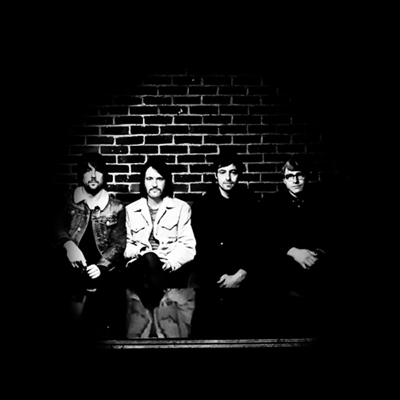
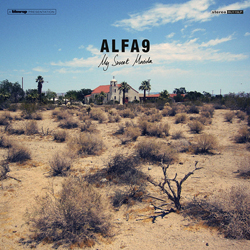
My Sweet Movida, the new album from Staffordshire four-piece Alfa 9, is one of my favourite records of the year so far – I love its retro rock, cosmic-psych-country road trips, Spaghetti Western soundtracks and ’60s-inspired jangle-pop.
Produced, written and arranged by the band, it was recorded at Tremolo Studios, in Newcastle-under-Lyme, and The Room, Stoke-on-Trent. I spoke to guitarist Leon Jones to find out why it’s taken five years to come out.
While we were chatting, the subjects of love, sex, betrayal, coincidence and chance also came up in conversation, which was nice…
Q & A
Alfa 9
Hi Leon. Alfa 9 have been on my interview hit list for a while and now we’ve finally found the time to sit down and have a chat… How do you feel about it?
Leon Jones: I feel that you’re a perceptive man, Sean, and one of more than good taste. I know you’re a Byrds, Bond and Morricone fan. Do we need to get deeper?
Ha! Let’s see how things go… Do you feel that Alfa 9 are part of a UK scene? There are quite a few current bands doing the rounds whose influences include The Beatles, The Byrds, Big Star, ’60s psych and soundtracks, aren’t there? I’m thinking of The Hanging Stars, Dreaming Spires, El Goodo, The Raving Beauties, Kontiki Suite, The Carousels... to name but a few.
LJ: It’s flattering to be talked about in the same circles as those bands. It’s got to be encouraging hearing others who are aiming at something similar and making it sound relevant. It does feel like there’s a momentum building. Our album’s out, The Hanging Stars and El Goodo have new records out… I really like The Carousels as well…We’re playing with The Hanging Stars in Leicester on June 30 [at The Firebug].
Your new album, My Sweet Movida, is one of my favourite records of the year so far. How does it feel to have it out there? Are you pleased with it?
LJ: It’s been a long process to write, record and do everything to release the album, but that’s kind of how we work…we like to let songs meld and develop, so it takes time. Maybe for our next record we’ll do the whole thing in one take…
It’s your third album – the follow-up to 2013’s Gone To Ground. Why has it taken five years to come out?
LJ: We were doing a lot of gigs following the release of Gone To Ground and then there were babies and cats and stuff like that happening…We’ve got 15 songs written already for the next album, so we’re aiming to be a bit quicker next time
How did you approach this album?
LJ: Well, I think we felt really comfortable with things – we’ve found a great mix in the band and really play off each other, plus we had moved on as songwriters, so it was exciting. After we got a couple of songs going, the album started to get a character of its own. We weren’t afraid of allowing our influences to come through, but we were also confident that it still sounds like us.
‘We’ve got 15 songs written already for the next album, so we’re aiming to be a bit quicker next time’
You wrote, produced and arranged the album yourselves. How was the experience of making this record? Was it an enjoyable one?
LJ: Yes – we love being in control of the process and we’ve always had our own recording set up, starting with a four-track Portastudio. Technology gives us a lot of flexibility that 20 years years ago would not have been possible.
We’re lucky that there’s a studio about a mile from my house with a great old 16-track tape machine. We’ve recorded there on and off for years, so it’s a very comfortable environment for us. We did the basic tracks there, then recorded guitars and other stuff at our place – The Room – then went back there and did vocals.
What can you tell me about the first single, Smile Dog? It’s very psychedelic…
LJ: That was kind of the start of the new album – a jam that took on a life of its own. Those kind of songs are the purest expressions of the band – they just happen.
What influences shaped the songwriting and the sound of the new album?
LJ: It’s pretty clear who we like – The Byrds, The Beatles, Rolling Stones, Paisley Underground, Neil Young, Ennio Morricone, Nuggets, Pink Floyd, Stone Roses, Creation Records – that hasn’t really changed since we’ve been together. That stuff’s the bedrock. I think with this album, we felt confident with the songs and getting them to sound how we wanted them to.
The second single, Movida, continues Alfa 9’s penchant for Ennio Morricone-esque soundtracks, doesn’t it? It has a Spaghetti Western feel…
LJ: Yes – definitely. We love Morricone and that kind of melancholy there is in a lot of his work. I’m fascinated by the Mojave desert in California and the Joshua Tree, particularly. For someone from the Midlands, it’s a very strange environment
The song Darkest Sea has a country feel. How did that track come about?
LJ: I wrote an opening theme for an imaginary western soundtrack-type thing that we wrote ages ago and then we eventually added words. We tried a few different arrangements. I think we were listening to a lot of the Handsome Family at the time we recorded it.
I love the song Different Corner – it’s gorgeous jangle-pop and very Byrdsy. What can you tell me about that song?
LJ: It’s about love, sex, betrayal, coincidence and chance…the dark end of the street.
‘I’m fascinated by the Mojave desert in California and the Joshua Tree. For someone from the Midlands, it’s a very strange environment’
Fly – the final track on the album – is an epic closer. Were you aiming for a ’70s Pink Floyd-style, psych anthem? It certainly sounds like it…
LJ: That was another song that wrote itself – we were aiming for nothing, but it just kind of appeared in the room. We’re massive Floyd fans, but I think there’s also a Crosby, Stills, Nash & Young thing happening on it as well.
You have a few gigs coming up this year. What can we expect?
LJ: It sounds like a cliché, because it is, but I think we sound better now than we ever have done. We’ve got a lot of songs worked up – we could do about four hours!
What’s on the Alfa 9 hi-fi at the moment? Any musical recommendations – new and old?
LJ: Michael Head and the Red Elastic Band, The Hanging Stars, Gene Clark, El Goodo, Cowboy, Rain Parade, The Gosdin Brothers, The Easybeats, Spindrift, New Riders of The Purple Sage…
Finally, will we have to wait another five years for your next album?
LJ: Nope – life’s starting to feel very short…
My Sweet Movida by Alpha 9 is out now on Blow Up. It’s available on heavyweight vinyl, CD and download.
The band play The Troubadour in London, 263-267 Old Brompton Road, SW5 9JA on April 7, supported by Usselman.
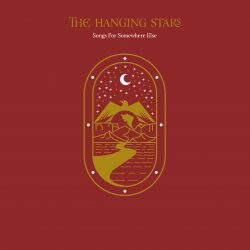
Songs For Somewhere Else, the new album by London cosmic-country-psych-folk five piece The Hanging Stars, is the follow-up to their brilliant 2016 debut, Over The Silvery Lake, which was Say It With Garage Flowers’ favourite record of that year.
The band’s latest release is even better than its predecessor and is a much more varied and adventurous collection of songs – there’s the beguiling and soporific Spiritualized-meets-Byrds groove of On A Sweet Summer’s Day, the heavenly, Big Star jangle-pop of Honeywater, menacing Spaghetti Western soundtrack Mean Old Man, the country-rock romp For You (My Blue Eyed Son) and the woozy and playful 1920s-style jazz-blues of Too Many Wired Hours.
I met singer-songwriter/ guitarist Richard Olson and bassist Sam Ferman in a basement bar in Soho to find out the stories behind these Songs ForSomewhere Else. Topics for discussion included the joy of listening to The Byrds, importing Ennio Morricone-style whistling from Portland, Oregon and funereal horns from Majorca, and why the flute is nothing to be scared of…
Q & A
How does it feel to have the new record done and dusted and out there?
Sam Ferman: It’s great – it’s funny, really because people who hear it will think that there’s been a two-year gap, but we started recording it before Over The Silvery Lake came out. It’s had a long gestation, but it’s the first one we’ve done with both Patrick [Ralla – guitar, keys and vocals] and Joe [Harvey-Whyte – pedal steel, dobro], who are now full-time members of the band. It’s a reflection of that set-up, whereas with the first one, there was a lot more toing and froing with members.
Richard Olson: Those days of saying ‘we’re going to make a record, write some songs over six months and record them in two weeks’ just don’t happen anymore. In some ways, maybe that would be nice, but it’s an ongoing, growing thing – it’s painstaking. Trying to get five people to do the same thing at the same time is hard enough – Sam and me have got bloody heads from banging them against the wall and trying to get things going and sew up this tapestry that we try and do. There are so many threads that need to be right. It’s almost surreal when you know the record is going to come out – sometimes you think that we’re going to make such fools of ourselves.
Why do you say that?
Sam: It’s self-doubt.
Richard: That’s the whole process – it’s painful as hell, but then a week later you think, ‘fucking hell – we’re very talented people!’
You are… and you’re very prolific…
Richard: We’re already halfway through the third record!
Sam: When Rich and me came to sequencing this album – which songs would go on it and in which order – that really put into perspective the arc of history over that two-year period. We listened back to stuff and realised how we’d changed in that time. It’s interesting how certain songs were recorded in a certain style.
For example, Pick Up The Pieces, which is on the album, was a song that we recorded for the first album, but, for a number of reasons, we felt that it didn’t work on that record.
Richard: It didn’t fit.
Sam: There was something missing at a certain point on the new album – it needed some energy – and putting Pick Up The Pieces on it gave it some more life.
This album was all recorded in Bark Studio, in Walthamstow, wasn’t it?
Sam: Apart from Pick Up The Pieces, which was done in L.A.
Richard: It feels like we’re getting a really nice reception for this album, which is amazing.
The new album is richer and more eclectic than the first one. Was it a conscious decision to include a variety of musical styles this time around?
Richard: I tell you what was a conscious decision – we really wanted more of a collaborative effort and that’s one of the reasons… On A Sweet Summer’s Day – which is the first song on the record – is, musically, all Sam, but I put lyrics to it. I was like, ‘this is stunning – let me have a go at it.’ We’d never really worked like that before. I was really pleased with it. I was like, ‘that worked’.
‘It feels like we’re getting a really nice reception for this album, which is amazing’
I have shedloads of songs lying around – playing with Joe and Patrick, who are both younger guys than me, has opened things up – it’s so much fun playing with those dudes and we all felt that we wanted to step up. They’ve made us up our game. For You (My Blue Eyed Son) is an old song of Patrick’s from a band he was in called the New County Flyers, and Honeywater was a collaboration between Patrick and me.
Sam: Doing the recording session for Honeywater really sticks out for me – we did everything in a day and then we mixed it a week later. It was really satisfying – we’d all been in the zone and put something down and there’s nothing I’d change about that song.
It’s beautiful.
Sam: Thank you.
Richard: The gods were with us in the studio that day.
Sam: It was a ‘hairs standing up on the back of your neck’ moment. We thought, ‘this one’s a real goer’.
Richard: It’s a cliché, but I felt like we’d won the Lottery, but trust me, we didn’t… It was like we’d been given a present – it was amazing.
Sam: One of the great things about this album is that you hear Patrick and Joe’s influence.
And it’s more of a representation of what you sound like live…
Sam: Exactly. They’re brilliant musicians and they’ve been involved in the writing process.
There are several other collaborations on the album – you’ve worked with guest musicians, including your US friends Collin Hegna (Federale, Brian Jonestown Massacre), Miranda Lee Richards – on the duet How I Got This Way – and Christof Certik (Brian Jonestown Massacre, Winter Flowers), as well as Alison Cotton on viola (Left Outsides, Eighteenth Day Of May), Luke Barlow (Nought) on flute and Thomas Wake on clarinet…
Richard: It’s so much fun – it’s lovely to play in a group and to play on bills with different people. One day, the Brian Jonestown dudes are in town and they’re staying at my house, or Miranda’s in town…. The fact that we can do that makes it great – it’s the sum of all the parts.
‘I love celebrating our own little scene. That’s what it’s all about. We embrace it’
You have the nucleus of the band, but it’s like an extended family – a collective…
Richard: Exactly – I love the idea of that and I’m proud of those people. I’ve known a lot of them for a long time. I love celebrating our own little scene. That’s what it’s all about. We embrace it.
Let’s talk about some of the songs. On A Sweet Summer’s Day has a hypnotic feel – it’s like early Spiritualized meets The Notorious Byrd Brothers…
Richard: Lazer Guided Melodies is one of my favourite records and there’s very much a Byrds thing going on, too.
Sam: When I first started playing with Rich, I was 24 – I’m 30 now – he said to me, ‘have you listened to The Notorious Byrd Brothers?’ I hadn’t – there were no famous hits on that record. I remember going out the next day and getting it on CD. It really made me think about how a lot of the music that I thought was quite left field was actually really middle of the road. It’s a really far-out record.
Richard: But it’s still so gentle on the ear – sonically and songwriting-wise, it’s so pleasing, When you discover it, it feels like one of those records that, wherever you are, whatever age you might be, it will make a mark on you – it’s like Love’s Forever Changes.
Moving on from The Byrds, what can you tell me about Mean Old Man, which is one of my favourite songs on the new album? It sounds like an Ennio Morricone Spaghetti Western soundtrack – it has cool whistling on it…
Richard: Collin, who plays bass in the Brian Jonestown Massacre, has his own band called Federale – they’re pure Spaghetti Western – and he’s a proper, shit-hot whistler. He’s on that track – he sent us his whistling from Portland.
The Good, the Bad and the Oregon?
Richard: Oh my lord – I can tell you’re a journalist…
Sam: It also has some Soviet rock oohs and aahs in the middle eight.
Too Many Wired Hours – the second track on the album – is a 1920s, jazzy, bluesy stomp. It has a clarinet on it and it reminds me of The Kinks and The Coral.
Richard: Yeah – I don’t mind that. The clarinet was Sam’s idea. In my mind, it sounds like David Lindley’s Kaleidoscope.
Sam: It totally does, but that’s a pretty niche reference.
Richard: I’m a big fan of Kaleidoscope.
The most country-sounding song on the album – and another of my favourites – is For You (My Blue Eyed Son). It’s like The Byrds, circa Sweetheart of the Rodeo, or The Flying Burrito Brothers…
Richard: It’s Patrick’s song, but I wrote quite a lot of the lyrics for it. It sits so comfortably on the album and with who we are – and it’s shitloads of fun to play!
Sam: It feels magical when we do it live.
Dig A Hole has a colliery brass band arrangement on it…
Richard: That was one of the songs that we worked the hardest on. It’s a story song… The brass was done by a friend of ours called Leon Beckenham, who was in the band Fanfarlo. He’s a fantastic horn player and he lives in Majorca – he did a great job.
So this album has whistling imported from Portland and horns from Majorca on it…
Richard: Yes!
Sam: I can remember Rich playing the song to me on acoustic guitar in the backroom of his old house in Tower Hamlets Road about three years ago. I thought it had such a beautiful transition from a very melancholic, plaintive, beautiful verse to a countrified chorus.
Richard: We call it shoegaze-country.
Sam: With the horns, it sounds like a cross between a Northern English brass band and a New Orleans funeral march. It’s one of my favourite songs on the album – I think it’s absolutely beautiful.
Richard: It’s a story about a failed relationship and trying to escape from it…
‘It sounds like a cross between a Northern English brass band and a New Orleans funeral march. It’s one of my favourite songs on the album’
A lot of the songs on the album have references to drinking in them…
Richard: There’s a lot of regret and excess on this record – and the day after the excess… I write most of the lyrics. I worked really hard at it and I’m pleased with a lot of them.
The final track on the album, Water Song, has a flute on it. It’s not the first time a flute has been heard on a Hanging Stars album, is it? You’re not afraid to use a flute, are you?
Richard: There’s no reason to be afraid of a flute.
Don’t fear the flute!
Sam: I get Love, or Nick Drake’s Bryter Layter vibes on that track.
Richard: I would say Genesis – Selling England by the Pound. I’m not afraid to say that. Water Song is a lullaby.
Was the flute played in Walthamstow?
Sam: It was.
So, there’s whistling from Portland, horns from Majorca and flute from Walthamstow…
Sam: This album was nearly half flute-based! There are five songs that didn’t make the record and they were all flute-based.
You could release a mini-album of flute songs…
Sam: The idea has been floated.
Or should that be fluted?
Richard: [laughs] Jesus Christ!
‘There’s no reason to be afraid of a flute’
Sam: In sequencing the album, we had 16 or 17 songs… some of which might make the next record. We can’t be sure at the moment. The great thing about being in this band is because we’re constantly working and recording, every time it comes round to doing an album, there are songs that didn’t make the previous one and there are songs on the next one that might not make it. We are building a body of work. It’s about having the albums speak to us rather than having to cram stuff in.
Richard: I like that! Let the album speak to you.
The album title, Songs For Somewhere Else, sounds like you’re saying that this record is a means to escape from the troubled world we’re living in…
Sam: That makes sense – it is about escaping. The world is horrible and it always has been. Why do humans engage with music, art and literature? To rationalise the horror, or to escape it entirely. This record treads a line between coping and escaping. All the music that I really love is sadness viewed through a prism of beauty. Some people will say it’s a coping mechanism to deal with the horrors of life, but I think it’s a way of seeing stuff that’s happened to you – or that you think about – in a new way.
‘This record treads a line between coping and escaping. All the music that I really love is sadness viewed through a prism of beauty’
Where would you suggest that this album is best listened to?
Richard: On headphones, in the comfort of your own home. With any album that I’m involved in, all I want is for it to take you somewhere. I discover music all the time – it’s all about goosebumps and getting a present that you want to go back to. You just want to listen to it again – whether you’re at work, or at home, or wherever you are. That’s the stunning beauty of music – it’s magical.
You’ve achieved that with this record.
Richard: Thank you so much.
After the interview, Richard pulls out his phone and a pair of headphones and lets me listen to a rough demo of a new track that could be destined for the third Hanging Stars album. It’s another gorgeous, country-tinged gem, but it’s not for now – it’s a song for somewhere else…
• Songs For Somewhere Elseby The Hanging Stars is released on February 16 on Crimson Crow.
The band play an album launch party in London, at The Victoria, Dalston, on February 22.


 The most country-sounding song on the album – and another of my favourites – is For You (My Blue Eyed Son). It’s like The Byrds, circa Sweetheart of the Rodeo, or The Flying Burrito Brothers…

 Say It With Garage Flowers