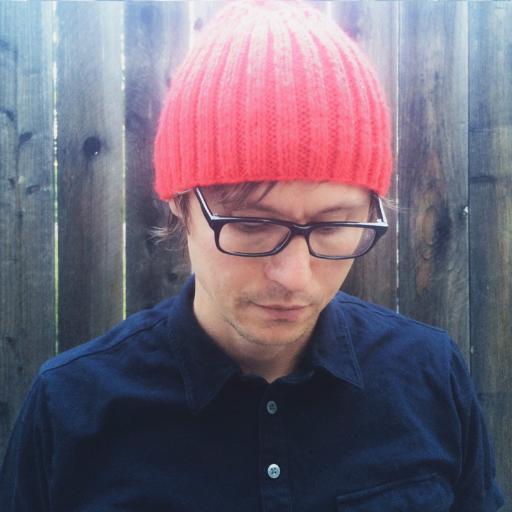
I first stumbled across US singer-songwriter Jacob Golden in 2007, when I reviewed his second album, Revenge Songs, for a London-based music magazine. I was impressed by the record, which, at times, reminded me of Simon & Garfunkel, Cat Stevens, Neil Young and Jeff Buckley.
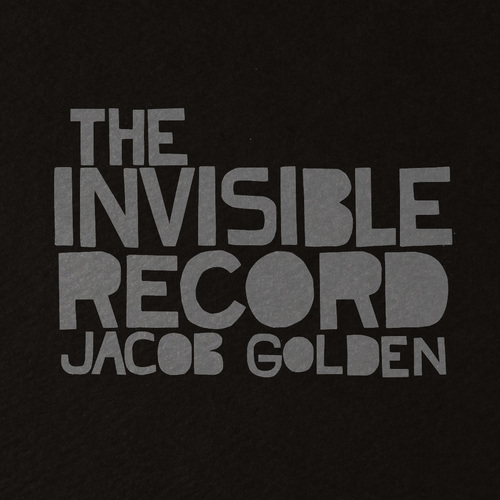
Tipped for big things – Mojo magazine called Revenge Songs, “the most gorgeous break-up record since Beck’s Sea Change”, and his song On A Saturday featured in US teen drama series The O.C. – Jacob was signed to UK indie label Rough Trade (The Smiths, The Fall, Antony and The Johnsons). However, things didn’t work out for him and he dropped off the radar. Until now, that is…. He’s back with a brilliant new album of “dark folk songs with psychedelic undertones”, The Invisible Record, which he has released on his own label, Zero Integrity Records.
Picking up where Revenge Songs left off, it’s a haunting record, which includes beautiful, fragile ballads (Wild Faye and Horse), perfect guitar pop (Tomorrow Never Knows On The 45), an unsettling torch song (All In A Day’s Work) and a starkly confessional, yet amusing, tale of his success and failure in the music industry, while battling his own personal demons (Bluebird).
Having read my 2007 review, Jacob, who is based in Sacramento, California and describes himself as “an indie singer-songwriter with an equal love for Nick Drake and The National”, dropped me a line to see if I’d like to chat to him about his latest album. How could I turn down this, ahem, Golden opportunity?
You released your last album, Revenge Songs, back in 2007 and then you disappeared – until last year. Where have you been?
Jacob Golden: I went through some low points. I did a lot of creative and professional soul-searching that, ultimately, brought me to a better place. I had to figure out how to – and even if I wanted to – keep pursuing a music career that, although it was exciting at times, could be really soul crushing.
I’m not saying I had it different than anybody else, but a lot of times I felt I was always climbing uphill and I got tied up in a very traditional model of failure and success. I shifted my focus away from my creative process and got more concerned about how other people perceived me, which never is a great place to make art from. I had to untangle that stuff in my head and hide out for a while, so I could find my creative true north again. Once I did, that’s when the new record started to come about.
When I reviewed Revenge Songs all those years ago, I said: ‘At times, Golden sounds like a stripped-down, darker take on Simon & Garfunkel (‘I’m Your Man’), a power-pop Cat Stevens (‘Church of New Song’), Harvest-era Neil Young (‘Shoulders) and Jeff Buckley (‘Love You’). Revenge never sounded so sweet…’
Was that a fair description?
JG: It was certainly a flattering one. I always aspire to the quality of songs of Simon & Garfunkel, as well as The Beach Boys. There is timeless, dark beauty in the sound and lyrics – Bookends [by Simon & Garfunkel] is one of my favourites. I think I absorbed a lot of that great music as a kid, via my mother and father’s record collection. It stuck with me, that sense of space and atmosphere, even as my influences expanded, I’ve always had that as my core. It’s the same with Neil Young and specifically After The Gold Rush, which is such a great vibe of a record.
Jeff Buckley was pretty huge for me when I was learning to sing, as was Thom Yorke. They showed me what was possible with just a voice and as I traced back their influences, I discovered the great Nina Simone, Tim Buckley, The Zombies and Scott Walker. But I can’t ignore Sparklehorse, PJ Harvey and The Flaming Lips, who all brought a great cinematic creativity, as well as intensity, to their records, which are still very influential on me.
One of my favourite tracks on your new album is Tomorrow Never Knows On The 45. It’s a killer pop tune that references The Beatles song from Revolver, which is one of my favourite albums of all time. How did that song come about? What inspired it? Is it about your teenage years?
JG: I do love a great, classic pop hook. I think Revolver may be my favourite Beatles record as well. I also remember discovering Big Star and feeling like I’d found this lost band when I was teenager, working in a record store. I never heard on them on the radio as I was growing up, but they had such great hooks and melodies.
In general, the song is about that feeling of discovering something new and how you get to revel in that feeling – just you and the music. When I was a kid, I collected 45 records and I loved going down to the shop each week and forking out a couple of bucks for the latest song. It was a visceral joy. I’d pore over every detail of each song. It taught me a lot about music. So the song is about that vibe, but, more specifically, it’s about going into a dark room with a nice set of headphones and getting completely lost – in a good way – either in making, or listening to, music.
Bluebird, from the new album, is an autobiographical song. It references your musical influences and talks about your ‘big break’, when you got discovered by Geoff Travis, who signed you to the record label Rough Trade. It documents your subsequent experiences and how things didn’t work out. How do you feel looking back on those days now? Do you wish you’d been more successful and had hit the big time? Do you have any regrets about that? Why didn’t it work out? Did you really “throw it all away?”, as it says in the song?
JG: I’ve got some conflicting thoughts on that time. I have a lot of great memories and to have been a part of that Rough Trade musical heritage, for at least a little while, was such an honour. Geoff was always super kind to me – we had lots of great talks about music and he gave me good advice.
It’s hard to say what went wrong exactly. I’ve never been the obvious cool guy at the party; I was pretty earnest, maybe too much so. My label mates at the time were The Strokes and The Libertines and I was like this weird American living in Soho, who was obsessed with Sparklehorse and Nina Simone. It was just a weird mix. I was socially awkward and pretty much a loner. It was probably more about fashion and timing than anything else.
I think I had some raw talent, but I hadn’t truly discovered my identity as a solo artist. I could sing my ass off – and still can – but the climate just wasn’t right for me at the time.

You’ve self-released the new album and you’re doing all your own PR and bookings. Is that difficult? How’s it working out for you?
JG: What’s that Bright Eyes lyric? “I’d rather make a pay check than win the lottery”.
I’ve had quite a few professional starts and stops over the last 15 years. I just wanted to get back to writing songs and sharing them, and winning fans as honestly as I can. I’m approaching my music more as an artisan small business now, which feels good.
When you hook up with a label – even an indie label – at least, in my experience, there’s always that idea that you could have a hit, and it takes the notions of success and failure to really perverted extremes. I would be signed on tour in some cool foreign country and yet I’d still get these stressed out emails that ‘things weren’t working out on the radio’ or ‘so and so isn’t feeling the record’… It really took me out of the creative process.
It’s hard to not get a lot of other people’s voices in your head too, which, for me, made it challenging to keep my motivations pure. I’ve had to work to get back to that again and again. I guess part of me wants to buy into that idea of success at least at some level. I mean, I look at bands like Spoon or Animal Collective and I think wow, that’s such a cool place and it probably is, but I bet they get a lot of those stressed out emails, too.
I’m just putting myself out there. Sharing my work, emailing people and trying not to be annoying. Self-promotion is probably the most difficult part for me. I’d really rather just play my songs, but, hey, there are worse problems to have.
How did you approach this album? How did you write and record it? What did you want to achieve with it?
JG: A lot of the songs were actually written quite fast. I have other songwriter friends and we would do these mad 12-hour writing sessions. It’s called the 20 song game. Everyone in the game starts writing songs at 7am in their respective studios. The goal is to write and demo 20 songs in 12 hours, which is no easy task. There’s no time to think, so you are forced to work on instinct, plus there is this friendly competitive part that pushes you on.
Of course, everyone writes some hilariously terrible songs during the day, but I ended up with Wild Faye and All In a Day’s Work, which is actually the recording you hear on the record. Everyone gets together at the end of the day and plays what they came up with and has a laugh.
As for the recording, a lot of the record started while I was living in Portland, Oregon. I had a little basement studio that I spent a lot of time in. A lot of the songs were born there – just me and an old four-track cassette recorder. It’s a homemade record. I made it with pretty modest tools – one decent microphone, my laptop, a four track, and a lot of old speakers and some guitar pedals and a lot of patience and experimenting. I didn’t really know what I was making, I was working on other projects in tandem, but I always ended up coming back it. I knew something was there. I didn’t have a grand vision for it, but each time I went back to it and pulled it up, I heard it differently and I eventually dug in and finished the bastard!
So, are you pleased with it?
JG: Yes, I feel like it’s me in the most definitive sense yet. My first record, Hallelujah World, had some good tunes, but it was sort of a mess, as I was coming out of being in a band. Revenge Songs had much more of my identity, and I feel a lot of those songs still really work. This one, though, feels like the balance between what I do – the songs, the voice and the atmosphere of the record are very definitive. I also feel like this album is a sort of ‘line in the sand’ that I want to build upon.
It’s a very stripped-down record in places. Why did you decide on that approach?
I mostly perform solo and I wanted the album to really represent that. There is still a fair degree of production and atmosphere going on, but I like to keep things understated. I wanted everything to ride on my voice and the songs and guitar. Everything sort of floats around those primary elements and if you took away the orchestration and just left the voice and guitar. the songs would still totally work. I’m not saying that’s how I always want to work, but, for this collection of songs, I feel like it’s the strongest way to present them.
What music are you currently into – new and old? Who have been your biggest musical influences and what influenced your new album?
JG: Nina Simone, Chet Baker and a lot of the torch singers. What I mostly listen to personally, though, is instrumental music – Nils Frahm, Explosions in the Sky, Four Tet and Clark. I listen to a lot of this music because the approach is very creative and there is space in the music for the words in my head to still flow.
Listening to music is part of my creative process, so I need to leave room to come up with my own narratives. I do love experimental indie rock – Panda Bear, The National, The Notwist, Tame Impala, Deer Hunter and Viet Cong. The band Money, who are from Manchester, are great.
So, how’s 2016 shaping up for you? Can we expect you to play some gigs in the UK? Have you played in the US recently?
JG: Yes – I’ll definitely be coming back to the UK. I still have a lot of love there and the feeling is mutual. I’m still working out my plans for a visit this summer. I’m hoping to get into a cool festival and I’ve been promising folks a bunch of house concerts, which I love to do. I always encourage folks who write to me about wanting to see me live to get some friends together and host a house show. It’s the best way of experiencing what I do.
Finally, what’s next for Jacob Golden?
JG: I’ve been sharing a lot of B-sides and outtakes on my Patreon. It’s one of the ways I really see moving forward. The idea is to basically write my next album ‘in public’, building a community and sharing the new songs as I write them.
It gives folks a peek into my creative process and helps me build a sustainable income by folks pledging a couple of bucks for each song I share. I think it’s a pretty cool way of putting music out and I’m excited to build it and share more there.
Jacob Golden’s new album, The Invisible Record, is out now on Zero Integrity Records.


 Say It With Garage Flowers