‘These stories needed to be told’

Picture of Robert Rotifer by Rosie Lovering

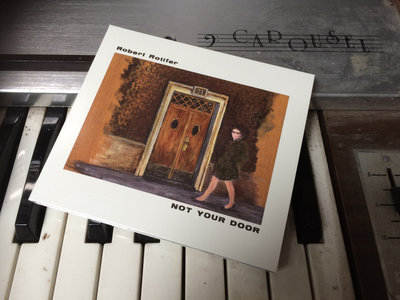
Austrian-born, Canterbury-based singer-songwriter Robert Rotifer’s new album, Not Your Door, is his most personal and autobiographical record yet, with songs about growing up in Vienna and the death of his grandmother, a Jewish communist and resistance fighter in the Second World War. I speak to him to find out why he felt the time was right to tell these stories and how they’re more relevant than ever in the current European political climate…

I’ve been listening to the new album a lot – it’s a great record…

Robert Rotifer: I’m glad and I’m grateful that you like it because I sometimes find it pretty hard going to listen to because it’s very intimate. People have been telling me they like it, but it was really hard for me to let go of some of the stuff. It’s quite intense and there are just ten songs – I felt that if I put 12 songs on it, it would’ve been too much. Also, these days, you want it to sound good on vinyl and the truth is, the less you put on there, the better it sounds.

I think it works really well on vinyl because, thematically, there are two distinct sides to the record. The first half of the album deals with contemporary subjects, including immigration and the smartphone generation, while the second half is a song cycle about you and your family’s experiences of growing up and living in Vienna. 

RR: The songs on the first side give you the background to where the second side comes from. Side one should open your mind – ‘what is this guy talking about?’ – and on side two, you can see where I’m coming from. It has a dramatic curve.

I like the details in the lyrics and the stories that you tell in the songs…

RR: They’re compelling. I couldn’t take into account what people might make of it and I felt there were things that I just needed to write about, which should always be the case. I couldn’t edit myself accordingly to what was going to work with an audience, which was a real self-indulgence, but I’m aware of that.

It’s arguably your most personal and autobiographical record and it’s a Robert Rotifer album, rather than one by your band, Rotifer. Although the guys from Rotifer play on the record, was it always going to be a solo album?

RR: It just happened that all sorts of things conspired – Mike Stone, who plays bass, was very busy and Ian Button (drummer) was busy with Papernut Cambridge. I just felt that I had this personal stuff to get rid of and it seemed right to do the record by myself. Mike and Ian were absolutely fine with it – there was no animosity.

Some of the songs – the title track and Irma la Douce – are about your grandmother, Irma Schwager, who died last year. She was a Jewish communist who fled Austria to escape the Nazis during the Second World War and joined the French resistance. The title track sees you standing outside her old flat in Vienna…

RR: My grandmother died when she was 95. She met my grandfather during immigration, while they were part of the underground Austrian resistance in France – they were both Jewish – not religiously so – but by birth. My mum was born in France when she was in hiding during the Second World War.

My grandparents came back to Vienna in 1945 and moved into a flat that was right next to the Danube Canal – it’s the bit of the Danube that goes right into the city of Vienna. That was one of the last strongholds where the Nazis had hidden.

When my grandparents moved in to the flat, part of the outside wall had collapsed because the Russians had lobbed grenades into the building. Until the very end, you could see bullet scars in the doors and there was a hole in the wood panelling where they’d looked for hidden weapons. After my grandmother died, my mum found pictures of German soldiers in uniform having a jolly in the flat. It had belonged to a Jewish family and was taken over by a Nazi general.

When my grandparents came back, they were offered the flat. For me, it’s a symbolic place and has more to say than just my personal history. With the way politics is going in Central Europe at the moment, I think these stories need to be told – it’s essential to explain to people was it was actually like.

On my grandmother’s 90th birthday, there was a big do, because she was a little bit of a celebrity in leftie circles. I was invited to sing and I sang a song called The Frankfurt Kitchen, which is about a kitchen design from 1928 that was the daddy of all the Ikea kitchens. It was designed by Margarete Schütte-Lihotzky, who was a friend of my grandmother’s.

I played it as a tribute to her friend, who had died, and as I was on stage and my grandmother was standing next to me, I said to her that I was glad that she came back to Vienna, otherwise I wouldn’t be here. I asked her why she’d come back and, like a shot, she said that it was because they’d won. I thought that was the best reason ever.

When she died, it became obvious to me that that idea of her coming back had gone – I can’t rely on other generations having fought for me. It was really emotional for me and I felt all these songs about Vienna coming out. While they might be about me, they also say something about where Europe – and the world – is at the moment, from Trump all the way to Nigel Farage and Norbert Hofer [the far-right Austrian presidential candidate who was narrowly defeated earlier this year].

I don’t want to get too political about it because it’s emotional for me, but it’s about feeling safe.

One of my favourite songs on the album is the opening track, If We Hadn’t Had You. It’s a very personal song that’s about your daughter and mentions an anti-war demo in Hyde Park that you took her to. Can you tell me about the background to the song?

RR: My daughter said I always writing depressing and sad stuff – she asked me to write something nice and I thought that if she’s said that, then the most obvious thing to do is to write a nice song about her. But I wanted to write a song that wasn’t mawkish.

I’ve tried to explain that parental happiness is also withdrawal from what happens around you – you’ve got the luxury of something which is so much more important… But I also wanted to make it clear that because you have kids you don’t have a higher calling. My daughter absolutely loves the song.

You’ve recorded two versions of If We Hadn’t Had You – the one on the album has a guitar solo by you, but the version you released on a EP earlier this year features a saxello solo by 80-year-old Canterbury jazz legend Tony Coe, who played on John Martyn’s classic album Solid Air. How did you get him involved?

RR: Living in Canterbury, I was aware of Tony Coe – I’d seen him play at jazz gigs. He was around in the Ronnie Scott’s scene in the ‘50s.

He says that Solid Air was just a session for him – that it wasn’t a very exciting afternoon, but, for the rest of us, it’s good enough!

I got him to play on another album that I was co-producing with Andy Lewis and at the end of the session we still had some time, so I asked him to listen to If We Hadn’t Had You, which I thought could do with some saxophone on it. He really liked the song and I loved what he did.

When I’d mixed my album I knew that, thematically, If We Hadn’t Had You had to be the first song on it, but with the sound [of the saxello], you would expect the rest of the record to have that aspect to it, but it doesn’t – it’s like opening a door to a room that you then don’t use anymore. After thinking long and hard about it, I tried a guitar solo on it and, all of a sudden, it got a different flavour that fitted the rest of the album. I decided to do an EP with the Tony Coe version on it to give credit to it and not lose it.

Picture by Stephan Brueckler


Let’s talk about the sound of the album. It’s pretty stripped-down in places – there’s plenty of room for the songs to breathe, with acoustic guitar, organ and horn, but then there’s also some freewheeling electric guitar, heavier sounds and some psych-pop and jazzy touches. It’s a hard record to describe and nail down – it’s almost as if the songs are led by the lyrics, rather than the music…

RR: Yes – completely.

What were you aiming for with this record?

RR: I’m a big fan of French records from the ‘60s and ‘70s – what I like about them is the way the vocals are mixed right upfront, so you can hear what Jacques Dutronc or Serge Gainsbourg is telling you. That’s the opposite of what’s happened in the mastering wars of the zero years. This was the first time I’d ever mixed a record myself and I recorded almost all of it myself.

Writing-wise what I was aiming for with this record was that I wanted to get away from that guitarist’s thing of ‘here’s four chords and let’s sing over the top’. I wanted to write it more like a piano player would. I wrote some of the songs on piano.

I’d like to ask you more about your musical influences. You moved to England from Vienna just over 19 years ago, in early 1997, but you first visited England in 1982, as a 12-year old. What music were you into when you were young?

RR: My parents sent me to Canvey Island in 1982, when I was 12. Before then, I had been terribly Anglophile. It was a formative experience – in 1982 in Essex you saw second-generation mods running around and the look was magical to me. I was such a Beatles fan as a kid and I’d got into The Kinks and The Who.

So when you were growing up in Austria, you didn’t listen to local music?

RR: There was local rock music…. The case for Austrian indigenous pop music, whatever that means, because it’s a multicultural society, is quite important for me. I’ve been the co-founder and curator of the Vienna Popfest, which is a huge thing – it’s an annual festival where tens of thousands of people turn up. It’s anything that you could possibly describe as ‘pop’, but one of the great things about Vienna is that people are very schooled in the avant-garde – they keep an ear open for music that is odd. So at the Popfest you can have people playing something that in no other place in the world would be considered pop.

I like Austrian pop music, but when I lived there, there was this thing called Austropop, which was complacent, stolid and boring pop music. There were people with horrible hairdos and DX7 keyboards… As a teenager, I tried to get away from it as much as possible.

Then there was the Austrian version of Neue Deutsche Welle – the German New Wave thing. It was a mixture of what the Germans did and Austropop, which was even more fake to me.

I sang in English and I always played in very Anglophile bands – there was a mod and ‘60s culture going on. I became a music journalist in ‘91/’92 – I was studying, but I was offered a job because I wrote an article about Billy Bragg that people liked. I then went freelance and got into radio, which I still do today.

I ended up being the Britpop correspondent – I went to festivals like Reading and Glastonbury and hung around the hospitality area. If you were accredited, you could stick a microphone in Jarvis Cocker’s direction and he would talk to you.
0007570611_36

Your new album is being released on Gare du Nord Records – a label that you’re heavily involved with.  Any other new records and projects in the pipeline?

RR: This is an exclusive. There’s a new Papernut Cambridge album already finished. One afternoon, we decided to try and organise something like The Rolling Stones’ Rock and Roll Circus – it’s called The Cambridge Circus! I’m really looking forward to that.


Robert Rotifer’s new album, Not Your Door, is released on July 1 on Gare du Nord Records – CD/LP and download.  For more information, go to http://www.robertrotifer.co.uk  & http://robertrotifer.bandcamp.com

The album launch party takes place on June 30 at Servant Jazz Quarters in London: tickets are available here.

Britta Pop

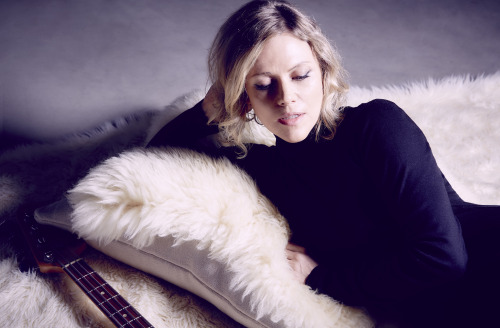
Britta
Picture of Britta by Luz Gallardo

Britta Phillips, who, with her husband Dean Wareham (Luna and Galaxie 500) makes up US duo Dean & Britta, has just released her first solo album – Luck or Magic – a great collection of curious cover versions and self-penned tracks, from haunting ‘60s pop to Euro synth sounds. I talk to her about Bond songs, making the new record, playing bass in Luna and which she prefers, luck or magic?

I am sitting with Britta Phillips in the Martini Bar of London’s Barbican and, rather fittingly, we are talking about James Bond songs.

Daydream, which is the opening track on her debut solo album, Luck or Magic, is dramatic, moody and cinematic and sounds like it was inspired by ‘60s spy film soundtracks.

“I wrote that song in 2000 – after I’d joined Luna. I was really into Dusty Springfield then – Dean had given me a mixtape with Dusty on it and I wanted to write a song where I could sing it a bit like her,” she says.

“The song sat there for a while – it didn’t make it on to the first Dean & Britta album – but I really liked it, so I re-recorded it and added a Bond feel to it. It sounds a little bit like Nancy Sinatra’s You Only Live Twice.”

I suggest to Britta that her and Dean would be ideal for writing a Bond song.

“I would love to – if they ever want a Bond song, Dean and I are available,” she says.

I tell her that I could imagine a Dean & Britta Bond song that was in the same vein as those wonderful, haunting, orchestral ‘60s Nancy Sinatra and Lee Hazlewood ballads Some Velvet Morning and Summer Wine.

Britta agrees, adding: “They’re pretty, but they’re dark…”

Pretty and dark would be a good description of Britta’s Luck or Magic album – a record that is half original songs and half cover versions.

There are gorgeous, haunting renditions of pop obscurities like Evie Sands’ One Fine Summer Morning from 1969 and Dennis Wilson’s 1970 b-side Fallin’ In Love, stripped-down, electronic takes on The Cars’ Drive and Fleetwood Mac’s Landslide, as well as her own compositions, including the cold, Krautrock synth groove of Million Dollar Doll and the Velvets-like closer Ingrid Superstar, with its psychedelic guitars…

So, how does it feel to have released your first solo album?

Britta Phillips: It’s very exciting. I’m very happy with it. I knew I would do one someday, but time flies… My friend Scott Hardkiss [San Francisco DJ and producer], who I met about 10 years ago, invited me to lunch in 2012 and said, ‘you should do a solo album and I’m gonna produce it’. And I said,’oh, alright’…

Sadly, Scott died in 2013…

BP: Yes – a year after we’d started working together. We didn’t get that much done, [in that first year] because we were both so busy….

You’ve been writing solo songs throughout your whole career, haven’t you?

BP: Yes – the oldest song on the album [Daydream] was written in 2000, about six months after I’d joined Luna. One of the other songs [Million Dollar Doll] has music that was written for the Frances Ha film soundtrack.  The music for Ingrid Superstar was written for 13 Most Beautiful[Songs for Andy Warhol’s Screen Test] but I wrote the lyrics later.

You’re known for being one half of Dean & Britta and also the bassist in Luna, but what’s it like stepping out on your own and being a solo artist?

BP: It’s mostly very exciting, but I feel a bit naked…I’ve always been in bands.

Why did you decide to make an album that’s half original songs and half cover versions?

BP: Dean & Britta always did a couple of covers and so did Luna. I always knew I was going to do a couple of covers, but it didn’t know it would be half… When I started to talk to Scott about the record, he had about 10 or 15 ideas for covers, but, as it was my first solo album, I wanted it to be at least half original songs.

There were five covers that I really liked and there were some original songs that I didn’t put on it. I just picked the ones that went best together and that I liked best. I did a Dylan cover – Don’t Think Twice It’s Alright – which I love, but I felt the flavour of it didn’t sit quite as well with the rest of the record. It pulled it more into a retro, ’60s thing – there were already a couple of things like that on the album.

I love your version of the Dylan song – it has a gorgeous country feel. In the end, you put it out on a limited double A-side vinyl EP with Dean’s version of the ’60s song Hey Paula, by Paul & Paula. I managed to buy a copy, but, if you don’t mind me saying so, the cover artwork is a bit rude…

BP: Dean picked that – I had nothing to do with it. He thought it was very funny. My mum pleaded with me to take the cover art off my Pledge campaign….

Are there any other songs you covered that didn’t end up on the album?

BP: I did Bang Bang [Nancy Sinatra], Daniel Johnston’s Honey I Sure Miss You and Led Zeppelin’s Babe I’m Gonna Leave You. I’ve also got some original songs that I want to finish.

You’ve covered a ‘60s song on your album – One Fine Summer Morning by Evie Sands, which comes from her 1969 debut album. I must admit, I don’t know much about Evie Sands…

BP: Oh – She’s amazing. I believe she was Dusty Springfield’s favourite singer. She lives in LA and I met her recently.

Has she heard your version of her song?

BP: I’ve Facebooked her about it, but I haven’t heard back. I don’t know if she got my message…

I’m sure she’ll like it…

BP: She’ll be happy… Her version is a little more country sounding.

You’ve also covered an obscure Dennis Wilson song –Fallin’ In Love – which was a b-side to his first solo single in 1970…

BP: I can imagine the Evie Sands and the Dennis Wilson songs being huge hits, but they never were. They’re amazing songs.

I really like the haunting strings and the twangy guitar on Fallin’ In Love…

BP: Thanks – Dean’s on guitar and the strings are just me noodling on the MIDI [synth]. My version is like a girl group doing it – it has bigger drums.

Let’s talk about your song Million Dollar Doll. To me, it sounds like it could’ve come from the soundtrack to the film Drive. It has an ’80s electronic Europop feel…

BP: I’m so glad you think so – I love that soundtrack. When I started making my record I was really into the Drive soundtrack and Chromatics and Glass Candy – anything Johnny Jewel produced – as well as LCD Soundsystem. I was yelling the lyrics like I thought he [James Murphy] might.

I like the trance-like, nighttime groove on Million Dollar Doll…

BP: It’s motorik…

Which leads us nicely on to the track Drive. This time, you’ve chosen to cover a song by The Cars…

BP: It was a huge song and not a cover I ever would’ve picked. It was Scott’s choice. He also chose Landslide and a bunch of other big covers for me to sing – I picked the obscure ones.

You’ve stripped it right back and made it more minimalist and electronic…

BP: Yeah – it’s the robotic ARP arpeggiator [synthesizer] – that’s what made it for me. I wasn’t sure about doing a big cover, but then I loved it…

And you’ve covered Fleetwood Mac’s Landslide – a well-known song – and made it your own, with some burbling synth sounds…

BP: It came out great – we stripped it down. You’ve got to do something different, or what’s the point? I’m not going to beat Stevie Nicks’ version – no way… I love Dean’s guitar solo on it.

Why did you choose to do a version of Wrap Your Arms Around Me – a 1983 solo song by former Abba member Agnetha Fältskog?

BP: It was obscure to me. I had never heard it, but I guess it was a hit somewhere. A friend, Chris Hollow from The Sand Pebbles, who are an Australian band, suggested it to me. He sent it and said, ‘Britta should cover this’.

I’m always fascinated when people really want to hear me sing a song. If somebody takes the time to tell me I should cover something, then I’ll try it.

Wrap Your Arms Around Me is a great Europop tune – it has a killer chorus…

BP: I cut out one line. Agnetha sings, ‘make love to me now like never before.’ It makes the song a little bit too silly or kitsch… Those words would not come out of my mouth.

Is the title track of your album, Luck or Magic, an old song of yours?

BP: No – it’s a new song. I was looking through my old diaries for inspiration. Back then, I was very emotionally distraught and I think that makes for better writing material.

So, lyrically, it harks back to the time when you first met Dean?

BP: Yes – we were having this torrid romance and I was feeling very vulnerable. The lyrics are trying to be tough about it – me saying, ‘I know it’s gonna last – I don’t give a shit – let’s go!’

The song has almost a funk groove…

BP: I never played anything funky on bass before this, but I was listening to slightly funkier and dancey things.

So, are you a secret funk bass player?

BP: Yeah (she laughs). Well, I love Sly Stone and Chic/Bernard Edwards and Tina Weymouth [Talking Heads]. I’ve been dabbling – getting my toes wet.

There’s also a funky feel to your song Do It Last. It sounds a bit like Daft Punk…

BP: That was the very last song I wrote. I had a piano sketch that was bouncy and very McCartney. I went through about eight different demos of that song and I just wanted to get away from that, so I rearranged it and I changed the chords.

I was listening to the Daft Punk song Something About Us and I thought I would try something like that, with the bass and the drums… It’s weird – I was hearing some kind of solo Lennon influence, but I don’t imagine anyone else hears it. It’s sort of ‘70s – a bit Hall & Oates and a little bit funky. It’s kind of light and sexy, but there’s a dark edge to it.

The closing track on the album is Ingrid Superstar – the title sounds like the best song Lou Reed never wrote… Musically, it has a very Velvet Underground sound to it and features Luna’s Sean Eden on ‘guitar swells’.

BP: It’s mostly me playing guitar, trying to play like Dean and Sean, who’s doing some trippy backwards bits on it. It’s a kind of T Rex groove.

Let’s talk about Luna – the band is coming to the UK in October and you’ll be playing the Penthouse album in full… On your gigs in the States, you’ve been opening for Luna, too. How is it being your own support act?

BP: It’s a little bit tiring, but Luna is my backing band, too, so it’s pretty good.

We’re going to play the whole of Penthouse and then do all the other songs that people usually want to hear.


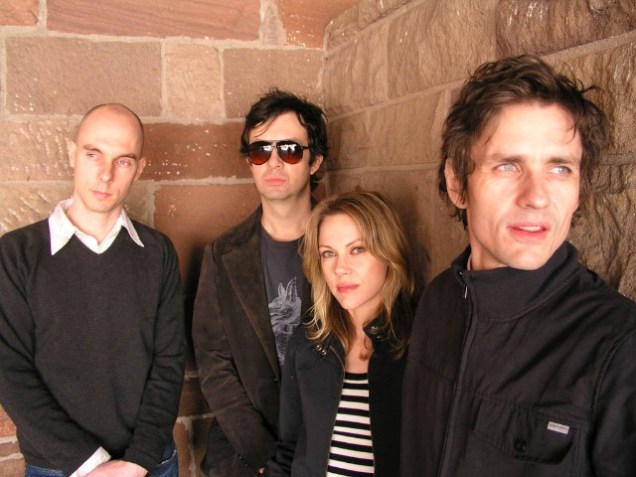
Luna-640x480
Luna

Are there any plans to make a new Luna record?

BP: We’re recording covers – we’ve been in the studio with Jason Quever. He produced Dean’s last solo record. We’ve recorded six covers and we’re probably going to record six more – I don’t know about originals at this point. It’s been a good way to ease us into the studio.

How is it being in Luna for the second time around – you split up in 2005, but reformed in 2015…

BP: We’re really enjoying it – there’s no pressure. We’re not trying to be the next new thing and get on the radio and sell a shitload of records. We’re just playing because it’s a great band and it’s fun to play with Luna and reconnect with the fans – Luna fans are amazing. There are some upsides to getting older – part of that is the history with the audience and a band. Rather than a band on stage performing and showing off, it’s much more of a communal thing, which sounds very hippie…

So, what about making another Britta solo album?

BP: I would like to do another one for sure, but I don’t know when. I haven’t thought about it. I feel like it will be a lot less confusing this time. It was so shocking when Scott passed away – I was slow to want to start on the record again.

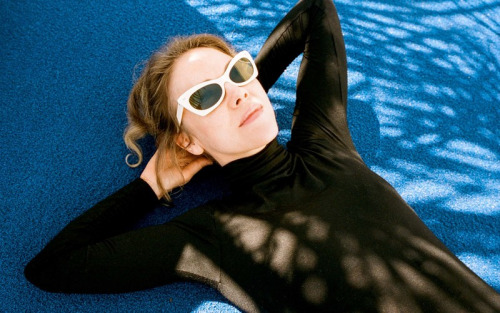
britta new
Pic of Britta by Shelby Duncan for The Standard Hotel


Did you feel like you owed it to Scott to get the record out there?

BP: I definitely did, but it was hard – I didn’t know when would be the right time to start working on it again. Then I heard from Scott’s widow, who sent me a mix of one of the songs that’s not on the album, and she really wanted me to finish it, so I thought, ok – it’s not too soon…

Who would be your dream musical collaborators?

BP: Oh, boy – there are so many… There are electronic and dance people like Johnny Jewel and also indie – the guy from Tame Impala [Kevin Parker] is great and I like Cate Le Bon, but I’d be afraid to work with her. I wouldn’t be able to speak to her because I have such respect and admiration for her. She’s one of my favourites.

What other music are you currently enjoying – old and new?

BP: I like Kamasi Washington, the jazz guy who plays with Kendrick Lamar. I’m always discovering old stuff. I’m enjoying James Last! Have you ever heard of him? He does great covers.

So, finally, if you had to choose, which would it be: ‘luck’ or ‘magic’?

BP: Magic. Growing up in the ‘70s and having really kooky parents, I did believe that magic was real for quite too long a time. My parents believed in UFOs, the Loch Ness Monster, Bigfoot and ESP – all that stuff. I had very magical thinking. Even though I don’t believe in it now, there’s a part of me that emotionally believes in it. To me, science is magic – you can explain it, but it’s still pretty magical…

Britta Phillips’ Luck or Magic is out now on Double Feature Records. Luna will play the O2 Academy in London on October 7.

http://brittaphillips.com/


britt cover