2024 was the toughest year for me as a freelance journalist since I started working for myself six years ago – difficult market conditions saw me lose a lot of regular business – but, on the upside, it meant I had more time to concentrate on my blog, which turned 15 this summer.
Next year, Say It With Garage Flowers can legally drink beer, wine or cider with a meal in a restaurant, providing it’s accompanied by an adult. Maybe I’ll take it out to celebrate…. Or I might just spend a night in a dark corner of a pub on my own, listening to music and supping a Guinness…
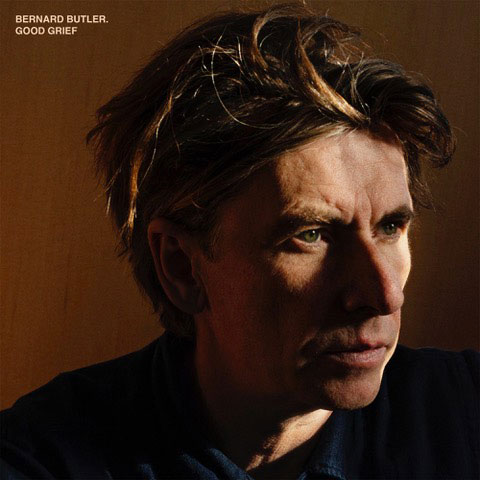 So, what were some of my sonic highlights of 2024? Well, my favourite album was Good Grief by singer-songwriter, guitarist and producer, Bernard Butler, who I had the pleasure of interviewing twice this year – once for the website Superdeluxeedition, and once for my blog.
His first solo album in 25 years, it was the record I kept going back to most this year – a very personal, intimate, honest and reflective collection of songs, which, lyrically, tackled subjects including his religious upbringing and Catholic guilt, his teenage years when he was dreaming of a life in music, anxiety, the companionship of solitude, and, how as a young man, he was often shamed for showing his emotions.
‘My favourite album of 2024 was Good Grief by singer-songwriter, guitarist and producer, Bernard Butler, who I had the pleasure of interviewing twice this year’
I’m surprised that Good Grief hasn’t featured in more end of year Best Of lists – I get the feeling that, sadly, it slipped under the radar.
I’ve been championing it since I first heard an advance review copy early this year, and I’m hoping it will be one of those word-of-mouth albums that people pick up on in 2025 and beyond. From talking to those who’ve heard it, I know they, like me, have fallen in love with it.
Look out for another Bernard Butler project in early 2025 – the debut album from Butler, Blake and Grant, a collaboration with Scottish singer-songwriters Norman Blake (Teenage Fanclub) and James Grant (Love and Money). I’ve heard the record and, rest assured, it will be on my Best of the Year list come the end of 2025…
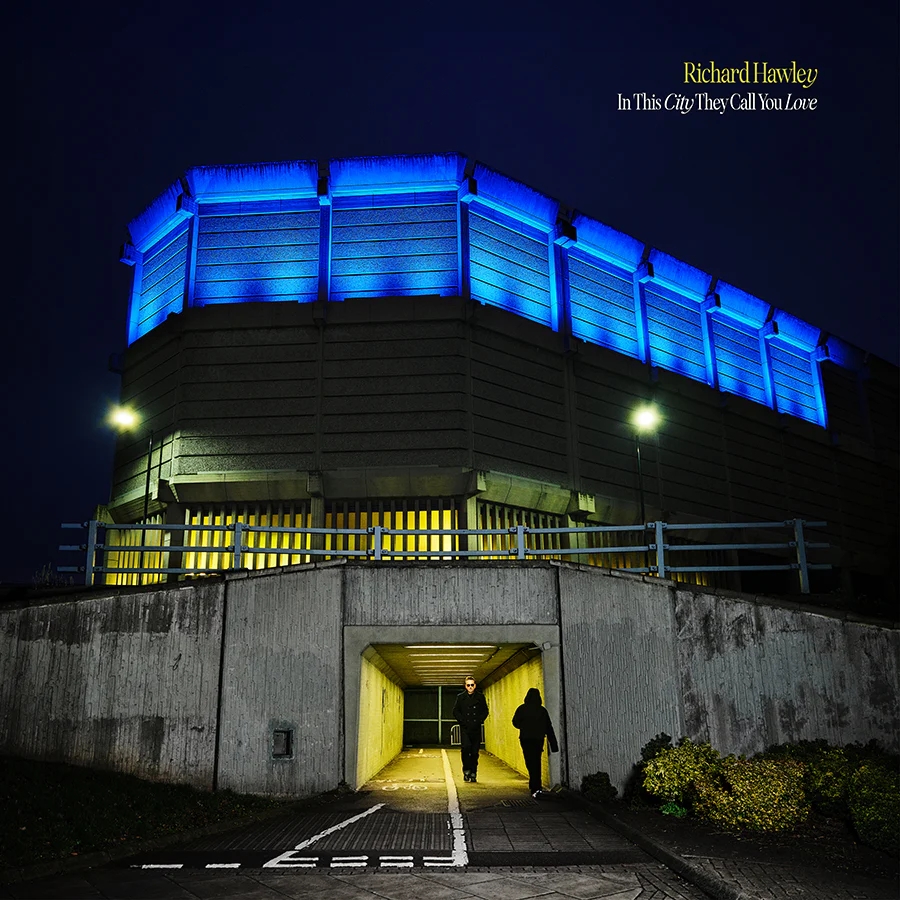 Another singer-songwriter, guitarist and producer who released a great album this year was Richard Hawley – In This City They Call You Love was one of the best records he’s made in a solo career that’s lasted nearly 25 years.
It was largely a return to the sound of vintage Hawley. Heavy Rain was a beautiful, late-night melancholy ballad with strings, and Prism In Jeans recalled early Elvis and pre-Beatles, British rock ‘n’ roll, but there were also a few surprises, including soulful, gospel-doo-wop (Deep Waters), and Easy Listening bossa nova (Do I Really Need To Know?).
The country song, Hear That Lonesome Whistle Blow, had echoes of Johnny Cash and Hank Williams, and Deep Space – the heaviest song on the record – was an upbeat, crunching rocker that tackled the need for some peace and quiet – time and space – but also reflected on eco and social issues.
‘In This City They Call You Love was one of the best records Richard Hawley’s made in a solo career that’s lasted nearly 25 years’
When I interviewed Hawley this year, he told me: “I’ve made three albums where I had the title before I’d even begun to record – where I had an agenda. One was Truelove’s Gutter. Another was Standing At The Sky’s Edge, when I wanted to turn everything up and make the music a lot more aggressive, and then this one.
“I wanted it to be multi-coloured in a way… focusing on the voice and what voices can do together… I deliberately only played a handful of guitar solos to keep it focused on voices, the song and space…”
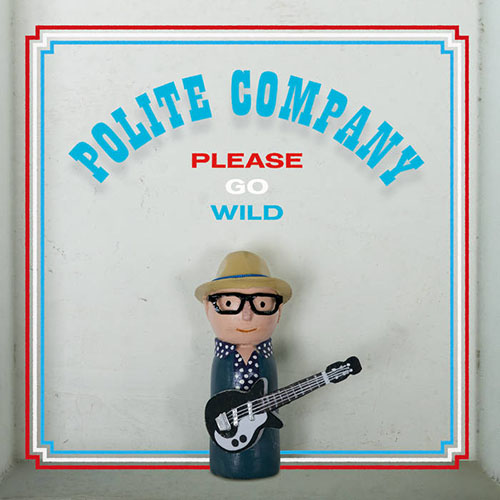
Lots of the albums I liked this year were by singer-songwriters – one of my favourites was Please Go Wild by Polite Company, the new project from London-based Alan Gregg (The Mutton Birds, Marshmallow).
It was a lovingly and brilliantly crafted record of melodic, wry and observational power-pop songs with a melancholy undercurrent.
Reminiscent of Fountains of Wayne and Squeeze at times, Gregg has a knack of composing a killer tune, as well as penning clever and amusing lyrical couplets.
Like Bernard Butler’s Good Grief, it’s another album that passed a lot of people by, but I feel like it will find a lot more fans in the not-too-distant future. Here’s hoping – I had it on repeat this year…
On the Americana front, I enjoyed Wayfarer Beware – the new album from Reichenbach Falls, which is essentially singer-songwriter, Abe Davies, who is of Canadian descent but was raised in England.
‘These cinematic, autobiographical and atmospheric songs recounted the breakup of a couple between upstate New York and rural Scotland over the course of a single autumn and winter’
On his third studio album, he was joined by Jonathan Anderson, a producer and multi-instrumentalist who’s based in the greater Vancouver area at his studio, Protection Island.
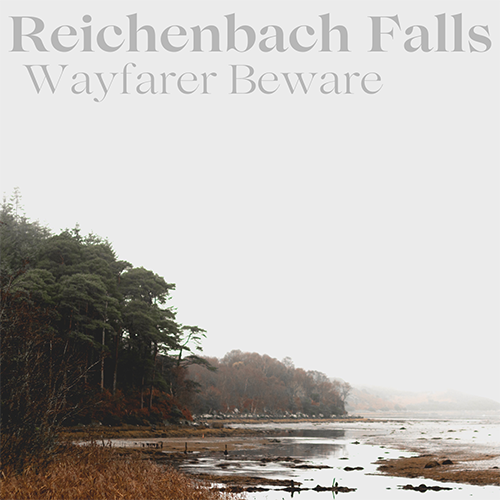 Davies, who has also been part of the Oxford music scene, lives in a remote area of Scotland, and has a small recording set-up at home, where he demoed the songs, which started out as just acoustic guitar and vocal tracks.
The tracks were then sent to Anderson, who worked his magic on them, creating inventive and inspired arrangements, adding instrumentation, including electric and acoustic guitar, piano, vintage synths, drums, pedal steel, organ and Mellotron.
These cinematic, autobiographical and atmospheric songs, which often feature references to snow, woods, rivers, trains and Christmas, recounted the breakup of a couple between upstate New York and rural Scotland over the course of a single autumn and winter.
Sticking with Americana, On A Golden Shore by London’s cosmic-country kings, The Hanging Stars, was another highlight of 2024.
Baggy, Balearic, pan pipes and a Renaissance instrument called the crumhorn could all be heard on the record.
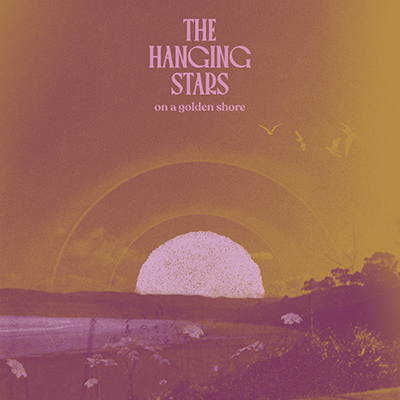 “We had to trust ourselves a little bit more and we threw the rulebook out the window – sonically, there’s all kinds of shit going on!” frontman and singer-songwriter, Richard Olson, told me when I spoke to him earlier this year.
Unlike its predecessor, Hollow Heart, which, because of the Covid lockdown, meant the band had more time to prep the songs before going into the studio, this time around saw The Hanging Stars develop the tracks during the recording sessions.
“This was much more of a studio album,” said Olson, adding: “We had to trust ourselves a little bit more – we had to trust in The Hanging Stars – and, for me, this record defines that.”
The shimmering, exotic and blissed-out Golden Shore had bongos, a funky bassline, synth, and pan pipes from Will Summers of the psychedelic folk/prog rock band Circulus, but with Sweet Light, we were in more familiar territory – infectious and jangly sunshine guitar pop with melancholy undertones and some Tom Petty-style country rock thrown in for good measure. It had that classic Hanging Stars sound.
Americana singer-songwriter, Peter Bruntnell, turned in one of his best albums this year – Houdini and the Sucker Punch.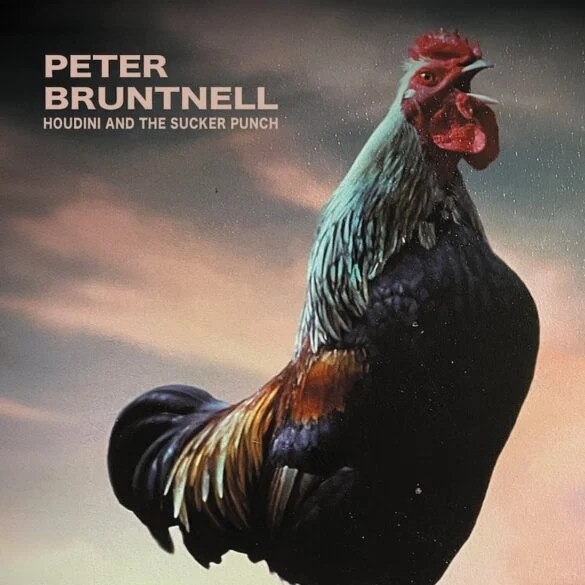
After 2021’s stripped-back, pandemic-era Journey To The Sun, which was surprisingly inspired by Eno and Bowie’s more electronic and experimental moments – it even had vintage synths on it – his new record was made with a full band, and it was a return to Bruntnell’s Americana roots, but with nods to classic British bands including The Smiths and The Beatles, as well as US acts like The Byrds and Pavement / Stephen Malkmus.
The superb title track, which opened the album, was classic Bruntnell – irresistible and melodic alt-country with a plaintive undercurrent, while the jangly The Flying Monk had guitars firmly on ‘Johnny Marr setting’, while Head-Smashed-In Buffalo Jump was soaked in Revolver-era psych, Mellotron and Fab Four vocal harmonies.
Guitar gunslinger, James Walbourne (The Pretenders, The Rails and His Lordship), fired off some ace twanging on the playful and galloping Wild West adventure that was Yellow Gold, while things were taken down a notch with the yearning ballad, Sharks, which had a lovely melancholy feel thanks to Laura Anstee’s mournful cello.
A lot of new soul music was on my turntable this year – UK singer-songwriter and guitarist, PM Warson, impressed with his latest effort, A Little More Time, which also turned to ‘60s pop sounds for its influences and inspirations. 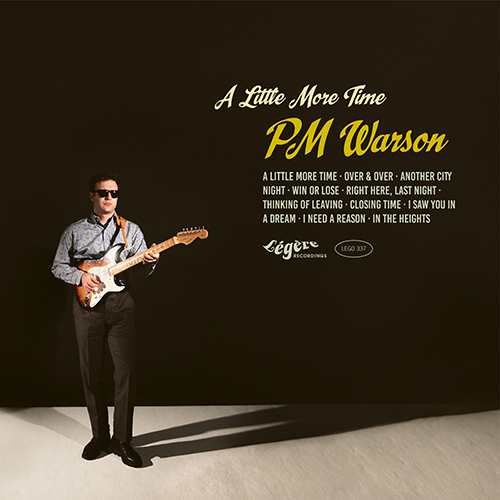
“That’s always been there, but on this record I let the wider influences just come in a little bit,” he said, talking to Say It With Garage Flowers.
There was still plenty of blues and R ‘n’B on the album, though, but, as he explained: “It’s a lot more straight up, with some really wild electric guitar playing – those tracks are a lot rawer, alongside some more polished, songwriting-led productions.”
San Francisco-based singer-songwriter, keyboard player, recording engineer and producer Kelly Finnigan’s latest solo album, A Lover Was Born, was another soul record that I enjoyed in 2024.
In the past few years he’s made two albums with his retro-soul band Monophonics, a mixtape, his 2019 debut solo long-player, The Tales People Tell, and a Christmas album, plus he’s found the time to produce other artists – The Ironsides, Alanna Royale and The Sextones.
A Lover Was Born was easily up there with his previous releases when it came to classy songwriting and rich, cinematic production, and it was inspired by the likes of Isaac Hayes and Curtis Mayfield, Chicago soul and Muscle Shoals, as well as Northern Soul and early hip-hop.
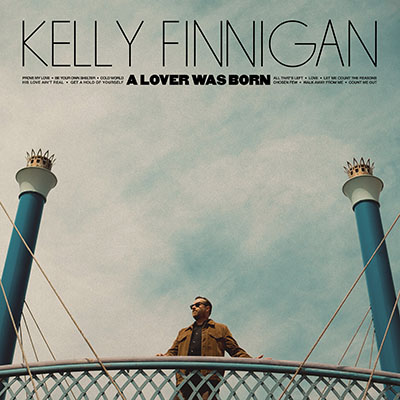
To make the new album, Finnigan assembled a crack team of musicians, including Max and Joe Ramey (The Ironsides), Jimmy James (Parlor Greens), Sergio Rios (Say She She / Orgone), Joey Crispiano (Dap Kings) and Jay Mumford (J-Zone).
“I wanted to make a record that felt like the next natural step after my first solo record in 2019,” he told me.
“A lot can happen in four or five years, and that was the case for me. I experienced some big valleys and peaks during the last few years, and I wanted to wear that on my sleeve.
‘A Lover Was Born was a very diverse record – musically and mood-wise: there were a lot of different vibes, from tender soul to funky and upbeat Northern Soul and some darker and moodier moments’
“The main goal of all my records is that they have a ‘vibe’ – they have character, and they feel engaging. That’s how I like my music, and I’m always pleasing my ears first and foremost. I want them to feel honest and relatable.”
A Lover Was Born was a very diverse record – musically and mood-wise: there were a lot of different vibes, from tender soul to funky and upbeat Northern Soul and some darker and moodier moments.
“At the heart of every good album are good songs,” said Finnigan. “I love these songs and the stories they tell. They really speak to who I am. All my records, including those with Monophonics, feel personal, and this one is no different. I wanted it to sound raw and emotive. Performance-driven is maybe the right way to describe it. It has a sense of freedom musically, all while still maintaining a lot of discipline and focus.”
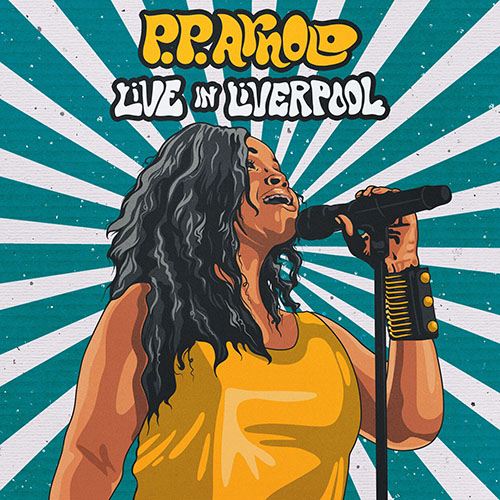 October this year saw the release of a great new live album by ’60s soul legend, P.P. Arnold, Live In Liverpool.
It was recorded in 2019 at Grand Central Hall, on the tour for her album The New Adventures of… P.P. Arnold, which she made with Steve Cradock (Paul Weller and Ocean Colour Scene guitarist) at the helm.
It featured versions of her hit singles, The First Cut Is The Deepest and Angel Of The Morning, as well as songs from 2017’s The Turning Tide and The New Adventures of… P.P. Arnold, which followed two years later.
Other tracks on Live In Liverpool included I Believe and Hold On To Your Dreams, which were both co-written with her son, musician Kojo Samuel, as well as Weller’s Shoot The Dove, covers of The Beatles’ Eleanor Rigby and The Beach Boys’ God Only Knows, and Magic Hour by Cradock.
‘Early next year, P.P. Arnold’s career will be celebrated with a new 57-track, 3-CD box set, Soul Survivor – A Life In Song, which will include rarities and unreleased material’
Arnold, who turned 78 this year, was born in L.A, and was one of Ike & Tina Turner’s singing and dancing troupe, The Ikettes, before she moved to Britain in 1966, where she launched a solo career that’s lasted almost 60 years.
She’s worked with acts including Mick Jagger, Rod Stewart, The Small Faces, Eric Clapton, Nick Drake, Barry Gibb, Peter Gabriel, Roger Waters, Primal Scream, Ocean Colour Scene and Paul Weller.
Early next year, her career will be celebrated with a new 57-track, 3-CD box set, Soul Survivor – A Life In Song, which will include rarities and unreleased material.
Speaking to me this year, she said: “I just want to do as much as I can while I can, and if it’s possible to move onwards and upwards, instead of going round in circles, that’s what I want to be doing. I want people to know that I’m still out here, fighting the good fight.”
That sounds like the perfect note to end on – a positive message with which to finish this year and see in 2025.
All the best for the new year and here are all my favourite albums of 2024, along with a Spotify playlist of one song from each record, availability permitting – at the time of writing, Ian Whitmore’s album, Among The Living, isn’t on Spotify.
Say It With Garage Flowers: Best Albums of 2024
- Bernard Butler – Good Grief
- Richard Hawley – In This City They Call You Love
- Peter Bruntnell – Houdini and the Sucker Punch
- Pet Shop Boys – Nonetheless
- Polite Company – Please Go Wild
- Paul Weller – 66
- The Hanging Stars – On A Golden Shore
- The Pernice Brothers – Who Will You Believe?
- Michael Head and the Red Elastic Band –Loophole
- The The – Ensoulment
- Camera Obscura – Look to the East, Look to the West
- Cinerama – Va Va Voom 25
- The Cure – Songs of a Lost World
- Reichenbach Falls – Wayfarer Beware
- Best Western – Youth
- PM Warson – A Little More Time
- Kelly Finnigan – A Lover Was Born
- Primal Scream – Come Ahead
- P.P. Arnold – Live In Liverpool
- Patrick Duff – Another Word For Rose
- Oisin Leech – Cold Sea
- Fontaines D.C. – Romance
- Philip Parfitt – Dark Light
- John Murry and Michael Timmins – A little bit of Grace and Decay
- John Bramwell – The Light Fantastic
- Ian Skelly – Lotus and the Butterfly
- Bill Ryder-Jones – Iechyd Da
- Beth Gibbons – Lives Outgrown
- Steve Drizos – i love you now leave me alone
- Nick Cave and the Bad Seeds – Wild God
- Gold Star – How To Shoot The Moon
- Nadine Shah – Filthy Underneath
- Ride – Interplay
- Fairground Attraction – Beautiful Happening
- Gruff Rhys – Sadness Sets Me Free
- Danny & The Champions of the World – You Are Not A Stranger Here
- His Lordship – His Lordship
- Cast – Love Is The Call
- Nick Piunti and the Complicated Men – Up and Out of It
- Nick Gamer – Oregoner
- Wesley Fuller – All Fuller, No Filler
- Kevin Robertson – The Call of the Sea
- MG Boulter – Days of Shaking
- My Glass World – Assorted Marvels
- The Jesus and Mary Chain – Glasgow Eyes
- Ultrasonic Grand Prix – Instafuzz
- Isobel Campbell – Bow to Love
- The Raveonettes – The Raveonettes Sing…
- The Psych Fi’s – Can Con
- Paul Molloy – The Madmen of Apocalypso
- M. Butterfly – The Lonesome Country Sounds of M.Butterfly, Vol. 1 & 2
- The Blow Monkeys – Together / Alone
- Liam Gallagher & John Squire – Liam Gallagher John Squire
- Kitty Liv – Easy Tiger
- Dee C Lee – Just Something
- Nick Power and Mark McKowski – Throat
- Humanist – On The Edge of a Lost and Lonely World
- Andrew Gabbard – Ramble and Rave On!
- The Junipers – Imaginary Friends
- Parlor Greens – In Green We Dream
- Galvezton – Some Kind of Love (A Tribute to the Velvet Underground)
- Ian Whitmore – Among The Living


 Say It With Garage Flowers