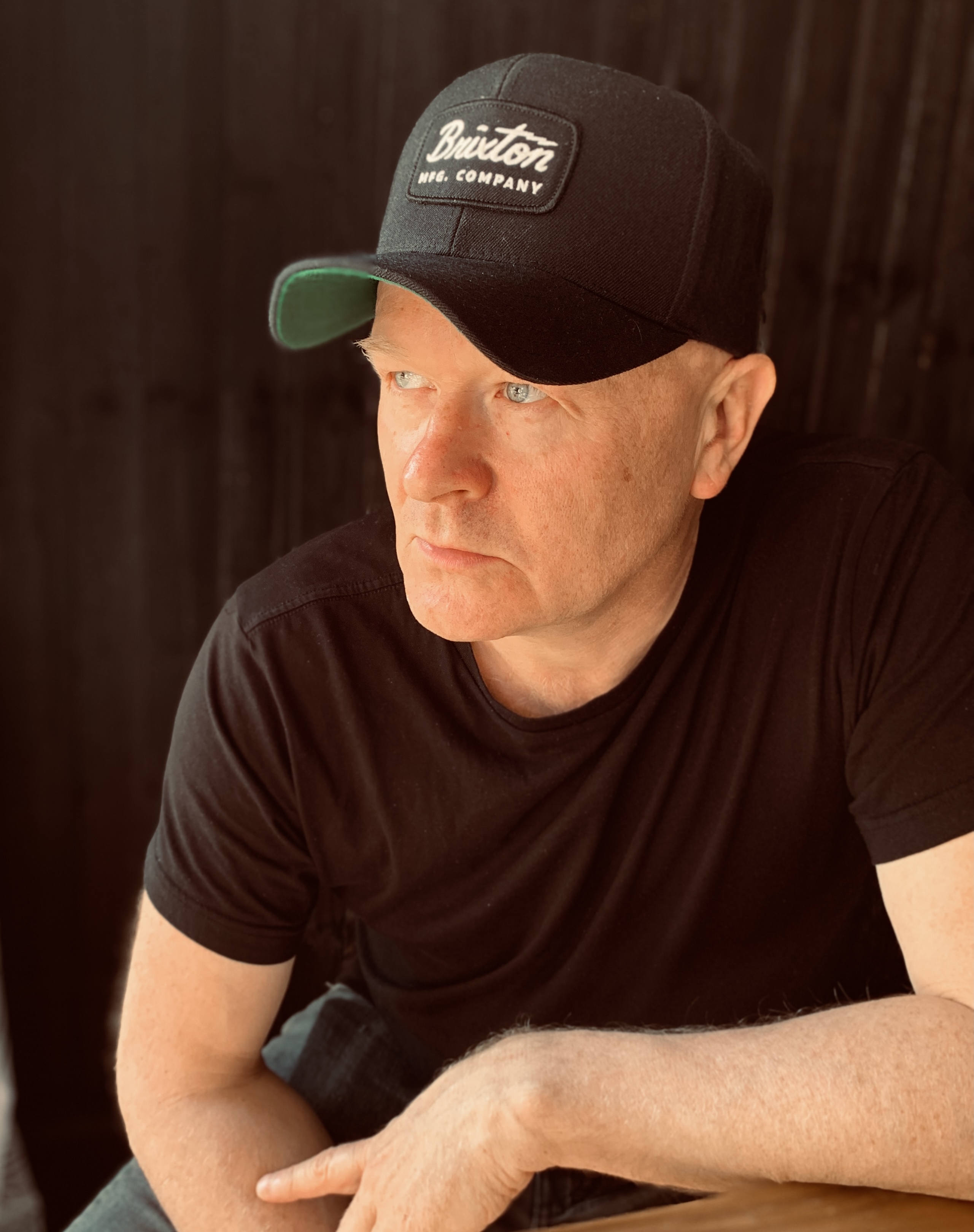
Singer-songwriter Matt James, who was formerly the drummer with ‘90s Brit indie-rockers Gene, is back with a brand-new single, The Reprieve, which sees him showcasing a much heavier sound.
Produced by Stephen Street (The Smiths, Morrissey, The Cranberries, Blur, The Rails) at his London studio, The Bunker, it’s a full-on, powerful, moody and rousing rock track, with some crunching, ‘foot on monitor’ electric guitar and Sympathy For The Devil-style ‘wooh-wooh’ backing vocals.
Quite frankly, James sounds like he’s taking no prisoners and that he’s going to come round your house and kick your front door in!
“On my first album [Breaking The Fall – 2022] I was experimenting with a lot of different sounds and now I’ve moved forward,” he tells Say It With Garage Flowers.
“I’ve done some quite plaintive songs – I had a very tough 2023 and 2024, after the death of my sister – so I wanted to do something that was a bit more hard-hitting. I was just desperate to rock out really!”
He adds: “For my live shows, I don’t have a band – I play with John Hornig [on pedal steel] – but, when it comes to the kind of records I want to put out, I dream of having a band one day. Going in the studio is my opportunity to rock out a bit.”
Gene
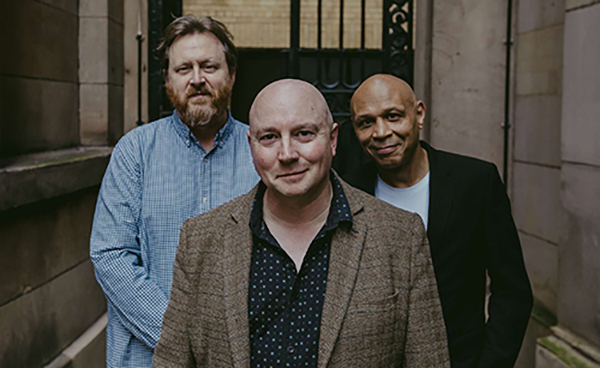
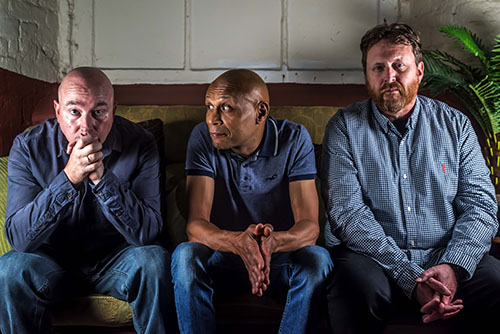
As well as featuring Hornig of Hastings-based Americana troupe, The Longshore Drifters, on pedal steel, The Reprieve also has two of James’s ex-Gene bandmates on it: Steve Mason (lead guitar) and Kev Miles (bass).
‘I wanted to do something that was a bit more hard-hitting. I was just desperate to rock out really!’
“It’s always really special to see them – they’ve been brilliant at supporting me,” says James. “I’ve got some plans to work with some other people as well. I’m hoping to work with Danny and Julian Wilson from Grand Drive – it’s been planned for a year, but hasn’t happened, although Julian has recorded some piano for a song.
“It’s in the pipeline and hopefully we’ll get it over the line this year. It’s one of many things I want to do. It’s good calling in musician friends – everyone has been very generous. Mick Talbot is on the next single, which is a right barnstormer! It has a Stonesy vibe, like Let’s Spend The Night Together. You can look forward to that one.”
Q&A
How did The Reprieve come about? Is it one of the newer songs you’ve written?
Matt James: It’s a newer song, but I had a version of it that sounded a bit like Ian Dury and the Blockheads – it was a funk-type thing. Just before I recorded it, I had a percussion loop, and I did an indie-blues-rock version of it. It’s somewhere in-between indie-rock and Americana, I suppose, which is a good place – I kind of like that. I probably won’t be accepted by either scene! (laughs).
I fell into Americana by accident – I was at an Alan Tyler gig in Hastings, and that’s where I met John Hornig. He told me that he was a pedal steel player, and he could play banjo – that’s his first instrument. I told him that I’d like to use pedal steel in a slightly different way, as textures and atmosphere, rather than traditional, [cowboy] hat-wearing country, and he loved the idea of that.
You’d explored country music when you were in Gene – a song like Why I Was Born has country influences…
Matt James: It does – that was Steve who came up with that. I loved R.E.M, and Steve and I used to love Big Star. There was also a lot of classic rock and bluesy influences in Gene, so I don’t think my influences have changed… The Clash were my favourite band at school – I was a bit of a punk snob, as you should be – but in my twenties I listened to everything.
What inspired the lyrics to The Reprieve?
Matt James: It’s about my own musical journey – doing it in my own time – and it’s slightly about knocking on doors… I knocked on a few that were shut! (laughs).
Everything I’ve done in my life seems to take far longer than anyone else – it takes me time to get good at something. I joined bands when I was 15, and I went to college in London when I was 18, for the sole reason of joining a band. I didn’t get anywhere until I was 26, and when I got my first proper job as a musician, I was 29. It took a hell of a long time from when I was a 15-year-old boy joining a band to telling my parents I was earning money for the first time.
Steve and Martin [Rossiter – Gene vocalist] were 21, but me and Kev were a bit older. It’s been the same with my solo stuff – I’m quite long in the tooth, but I’m determined to improve, and I think I’m doing that.
‘Musicians like myself have to have another job – you have to be selling out big venues to be doing it full-time. That’s just the way of the world’
There’s a whole culture of music journalists – not including yourself – who will delete without reading… That’s quite depressing, but the leveller for musicians like me is that you can use Spotify and reach a vast audience without having to use the industry at all – all the people that are charging for PR and radio… You can cut through that, and that was never possible before, but it’s depressing that you don’t get paid [from streaming]. Musicians like myself have to have another job – you have to be selling out big venues to be doing it full-time. That’s just the way of the world.
Any plans to make a second solo album?
Matt James: I’ve got four tracks recorded – it’s difficult for me to do it as much as I’d like to – and I have enough songs for an album. I’ve got to tick things off bit by bit – that’s the lot of the musician.
Did you have any songs left over from recording your debut record?
Matt James: I ended up with about five or six. A lot of those I’ve put into the mix and I’ve chopped and changed them… It’s good to have a lot of material to draw on – in any spare moment I’ve got, I’m down in my garden office/studio and playing the guitar, writing or demoing. I can’t spare whole days on it, but if I have a spare 10 minutes, I’ll pick up a guitar.
‘I need to do music. I’m depressed if I don’t’
I do music for two reasons – one is the pure freedom of expression, which sounds cheesy, but it’s not – I mean that wholeheartedly. I need to do it – I’m depressed if I don’t. Secondly, it’s because by using all the experience I’ve had, I hope that I might one day write a song that might completely change my world. That’s the goal – to write a song that could genuinely crossover and is seen as a bit of a classic. It’s not easy to do that, but, God, I’m going to give it a go.
The Reprieve is out now on streaming services. Matt James is playing The Jenny Lind in Hastings, East Sussex, on Friday January 31: doors 5pm. Details here.
You can listen to our Matt James playlist on Spotify below.
This year, The Boos (Sice Rowbottom – guitar and vocals, Tim Brown – bass, keys, and Rob Cieka, drums and percussion) are back, and hitting the road again, but this time it’s for the C’mon Up! tour, during which they’ll be performing a mash up of songs from their 1995 number one album, Wake Up! and the follow-up, 1996’s C’mon Kids, as well as a few surprises.
In an exclusive interview, Rowbottom tells us why the music industry needs to catch up when it comes to tackling mental health issues, looks ahead to this year’s tour and shares some thoughts and memories on writing and recording Wake Up! and the oft-misunderstood C’mon Kids.
It’s time to throw out your arms for a new sound…
Q&A
Hi Sice. How was 2024 for you?
Sice: It was very quiet I was mostly doing my day job. I had a busy 2023 – we had two albums out, one of which was a reissue, and I did my one-man show. I needed some reset time in 2024 and I did some planning for 2025, when we’re hoping to do quite a lot more.
How did the one-man shows go?
Sice: They were brilliant – I loved doing them, and the response was great, but the difficulty is marketing them: how do you tell people what it is? There’s psychology, a bit of singing, some comedy, talking…
Once the people were there, we had some great shows – we did a brilliant sold-out show in Liverpool, where I have a lot of contacts, but, in other places, it was more difficult. I took the show across the country to some great little venues, but I need something to hang it on – I need to write a book, if I get round to it – something that encapsulates all the elements of the shows. I’ll see…
Sice
In your one-man shows, you talk about mental health in the music industry, and we’ve discussed that topic in interviews before – particularly your work for the book, Touring and Mental Health: The Music Industry Manual.
Sadly, since we last spoke, we’ve had the high-profile case of Liam Payne, formerly of One Direction, who died in 2024.
It’s sad that it’s taken the death of a young man to put the issue of mental health in the music industry back in the spotlight.
Some of Liam’s fans have launched a petition asking for legislation that would “safeguard” artists’ mental health as they navigate the entertainment industry.
The Change.org petition proposes new legislation called “Liam’s Law” that would require artists to have access to mental health professionals, be given regular mental health checks and have adequate rest periods. Would you endorse that?
There’s lots to do in the music industry [around mental health] – there’s still a bit of a dinosaur attitude about it. A lot of people espouse that ‘if you can’t stand the heat, get out of the kitchen’ thing…
It’s not just in the music industry – there’s a lot of it in other industries too. It’s those type A personalities who work 15 hours a day and expect everyone else to do the same because that’s what they do – not everybody can do that and not everybody wants to do it because they realise it’s not good for you. Unfortunately, until we recognise that, I don’t think it’s going to change.
Things will happen gradually – every time a tragic case happens, there’s a shift and people start taking it a bit more seriously. It happened with Kurt Cobain…
‘There’s lots to do in the music industry [around mental health] – there’s still a bit of a dinosaur attitude about it’
The thing about Liam Payne is what do young people like him do after they’ve had a huge level of fame and they’re on the other side of it?
There’s a great book called Moondust, which is about what the people who landed on the Moon did with their lives after they’d done it – what do you do when the apex of your life has happened? For a lot of the people who were in boybands, what do they do afterwards and how do they find meaning and purpose in their life?
The last time I saw The Boo Radleys play live was at The Garage in London, during summer 2023, as part of the Giant Steps 30th anniversary tour. How was it playing that album again, and airing some songs that hadn’t been performed live before?
Sice: It was amazing, and playing the songs that we’d never played live was exciting – I was very surprised at how well they worked. I don’t know why that was… maybe it’s down to maturity or whether we’re better musicians or there’s better tech these days… A lot of those songs we probably would’ve tried to play back in the day but maybe they didn’t work… As a set, it worked well – a lot of people have a huge fondness for that album and that hasn’t faded.
Back in the day, we probably only played half a dozen songs from it, and a lot of people didn’t see us doing it.
So, this year The Boos are on tour again and you’re doing a mash up of the Wake Up! album from 1995, and the follow up – 1996’s C’monKids. You’re calling it the C’mon Up! tour. I see what you did there… Did you ever think about calling it Wake Up, Kids?
Sice: (laughs). Well, that was the other option… We’re going to do the whole of the Wake Up! album for the show at Rough Trade in Liverpool, but for the rest of the shows it will be a mash up of the two. Looking at the setlist that we’re going to do, mashing up the two makes a brilliant album – you can see the similarities between the songs because they were actually quite close in terms of their writing period.
How will it be singing a noisy song like C’mon Kids? Will it wreck your throat?
Sice: I’m worried about that – I don’t know how it’s going to be. I always used to wreck my throat doing it, so I don’t know what it will be like singing it as an older man…
You’re not the world’s biggest fan of the Wake Up! album, are you? You’ve told me before that you think it doesn’t work as a complete record…
Sice: Martin’s [Carr – Boo Radleys guitarist and songwriter, who isn’t in the reformed band] intention was to write a 12-song pop album, and I think it would’ve been brilliant if we’d done that, but I don’t think we did. Martin’s way of working was that whatever was produced was kind of it…
To be blunt about it, I think there’s a lot of filler on the album, which I don’t think there is on any of the other albums – but there are seven shit-hot songs and five that I’m not sure about…
Wilder is a brilliant song…
Sice: It’s great – really lovely.
With the piano, it’s like The Boos doing Elton John, and then there are those wonderful, Beach Boys-like backing vocals…
Sice: Totally. We always loved the harmonies. We’ll definitely do that song – back in the day, I don’t think we had a piano player who was good enough to do it live.
Have you got a favourite song off Wake Up!?
Sice: I love Twinside.
Find The Answer Within is a good tune too…
Sice: We’ve always done that… If we’d done a pop album, those would’ve been the songs that would’ve been good for it: Find The Answer Within,Twinside,It’s Lulu... If the rest of the album had followed suit, it would’ve been what we intended it to be.
Giant Steps is seen as The Boo Radleys’ masterpiece, but you prefer C’mon Kids, don’t you?
Sice: I do.
Is it your favourite Boos album?
Sice: I think it is – definitely. It sounds the most like us. We wanted to make it more like us, because Wake Up! had a lot of extra brass and other stuff. We wanted C’mon Kids to be just us in the studio. I like the eclecticism of it and that it’s slightly off the wall – it was a real shame that the album [wasn’t better received] … It was just timing… Had we released C’mon Kids straight after Giant Steps it would’ve been lauded.
It feels more like the natural successor to Giant Steps than Wake Up! was…
Sice: It does. Wake Up! was almost a reaction… because we’d done Giant Steps, which was sprawling and had everything and the kitchen sink, we didn’t want to do the same thing – we wanted to do a 12-song pop album… C’mon Kids was more naturally us, but the success of Wake Up Boo! kind of derailed us.
‘Had we released C’mon Kids straight after Giant Steps it would’ve been lauded’
At the time, a lot of critics thought that C’mon Kids was a deliberate attempt by you to sabotage your career, but it wasn’t, was it? You were just doing something different to Wake Up!…
Sice: It surprised me that people said that. Music journalists are pretty savvy people, and they know how it works… Did they really think that we had enough control to be able to decide that? Absolutely not. We saw it as an opportunity to give all those people who loved the band something brilliant to listen to. Had we released C’mon Kids after Giant Steps, I think we would’ve retained our indie cred, which we lost with Wake Up! We gained a lot of publicity and promotional ability, but we lost our indie cred.
C’mon Kids was a noisy album at times…
Sice: It’s very noisy – it was our most ‘rock’ album. What’s In The Box? was pure Who power.
The title track is a call to arms: ‘C’mon kids, don’t do yourself down, throw out your arms for a new sound…’
Sice: That was the bizarre thing about the idea that we were somehow trying to get rid of people with that album, because the first song says: ‘C’mon kids, throw out your arms for a new sound…’ We were saying, ‘Here you go – have some of this…’
That song feels like a mantra for the album and what you were doing. You also sing: ‘Work all day, it don’t mean a thing. With the sun always outside your window. Fuck the ones who tell you that life is merely a time before dying…’
It’s an anthem to getting out there, following your dreams and living in the moment…
Sice: Totally. It was a very energetic album. The weird thing is that because of Wake Up Boo! there’s this thing that Wake Up! is a big poppy album, but it’s actually really depressing. 4am Conversation and Reaching Out From Here are pretty miserable… Martin was at a time in his life when he was living in Preston and was quite miserable.
Wake Up Boo! has a melancholy undercurrent to it…
Sice: Yeah – absolutely. I think C’mon Kids is a really uplifting record – New Brighton Promenade is celebratory – and it’s a far more positive album.
It still has some melancholy too, though…
Sice: Yes, but that’s us…
Meltin’s Worm is bonkers. It’s the stuff of childhood nightmares – a song about a worm who eats a child and takes his place at school…
Sice: I love it! I can remember when Martin sent me the demo of it. It was one of the first songs for the album and I thought it was brilliant. No one else was writing songs like that, and it was very Beatlesesque – whimsical, weird and very English.
Both the Wake Up! and C’mon Kids albums were recorded at Rockfield. How was that?
Sice: The reason we went to Rockfield was because we were known as a party band. The problem was, if we were in London, people would’ve been dropping in all the time – it would’ve been a distraction. Everything prior to that had been made in London.
‘The weird thing is that because of Wake Up Boo! there’s this thing that Wake Up is a big poppy album, but it’s actually really depressing’
Rockfield was a solution to that, as it’s in the middle of nowhere, but I think we had too much time on our hands there. Our work rated slowed down and we got a bit bored and stir crazy. Everyone ended up disappearing at weekends, so, even though it’s a residential studio, our work rate wasn’t that great.
In London studios, you’d work for 12 hours solid and then clear off. At Rockfield, we nearly killed our engineer, Andy Wilkinson, because we’d all fall into different work patterns. Tim would want to get up in the morning and work, but Martin would practically want to be nocturnal and do something in the middle of the night. Poor old Andy had to be there the whole time… but it was a good thing to do.
You self-produced Wake Up! and C’mon Kids…
Sice: Yeah – and I wonder about the wisdom of that, but we didn’t like being hemmed in and being told we couldn’t do this or that. We enjoyed the process of experimenting and messing around, but it probably wouldn’t have done any harm to have an extra set of ears. If we’d got the right person, it might’ve been good.
So, finally, a question that’s in two parts… Firstly, what’s the first thing you do when you wake up?
Sice: I press the button on my one-cup water boiler because I’ve prepared my coffee the night before, so I can have it first thing in the morning.
And, secondly, have you ever played C’mon Kids to your kids, and, if so, what did they think of it?
Sice: It’s funny because they never used to be arsed at all, but when we went back out, they did the merch, and they suddenly realised how much we meant to people. They were like, ‘Oh my God…’
They didn’t think we were cool until they read about us and they realised we knew Oasis and Radiohead. My son said: ‘You have to understand, these people are like gods to us….’
I was like, ‘fair enough…’
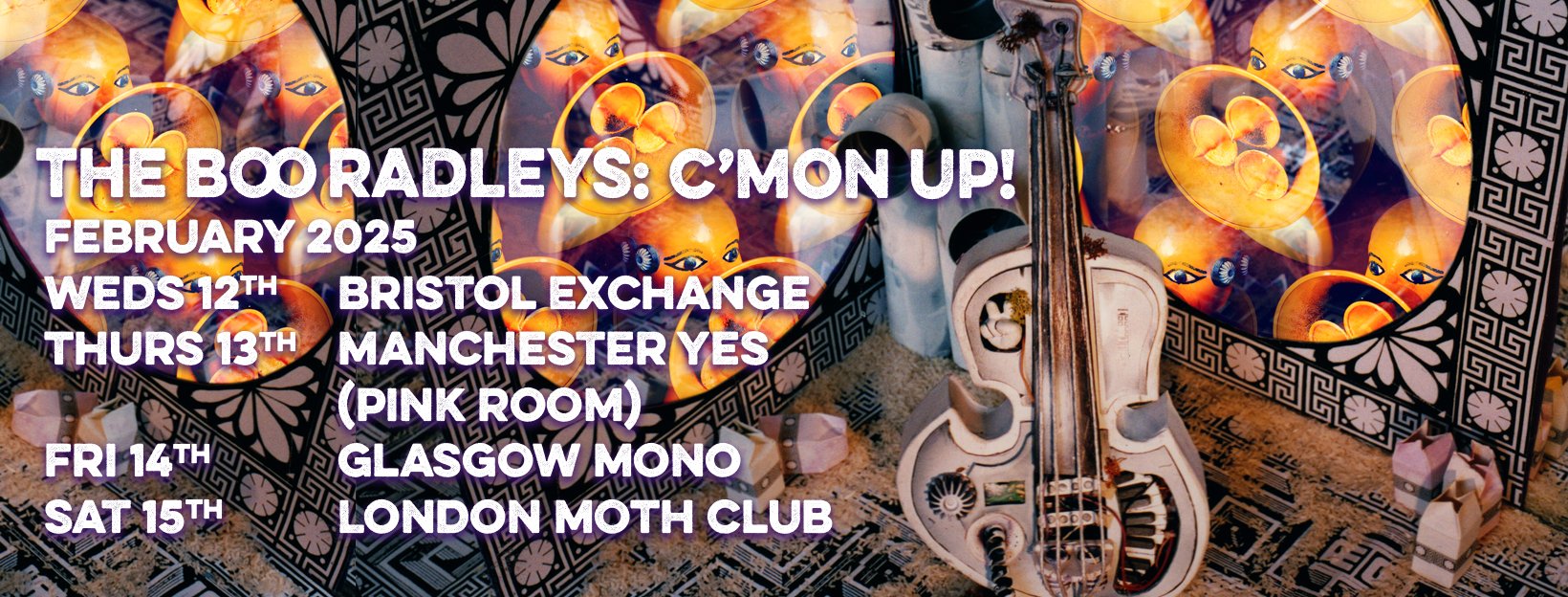
The Boo Radleys C’mon Up! tour is in February: more details here.
On March 30, there will be a special event at Rough Trade Liverpool, with the band playing the Wake Up! album in full.
The Boo Radleys will also be playing the 10th Anniversary Shiiine On Weekender festival, at Butlins, Skegness (Friday March 28 – Sunday 30).


 Say It With Garage Flowers