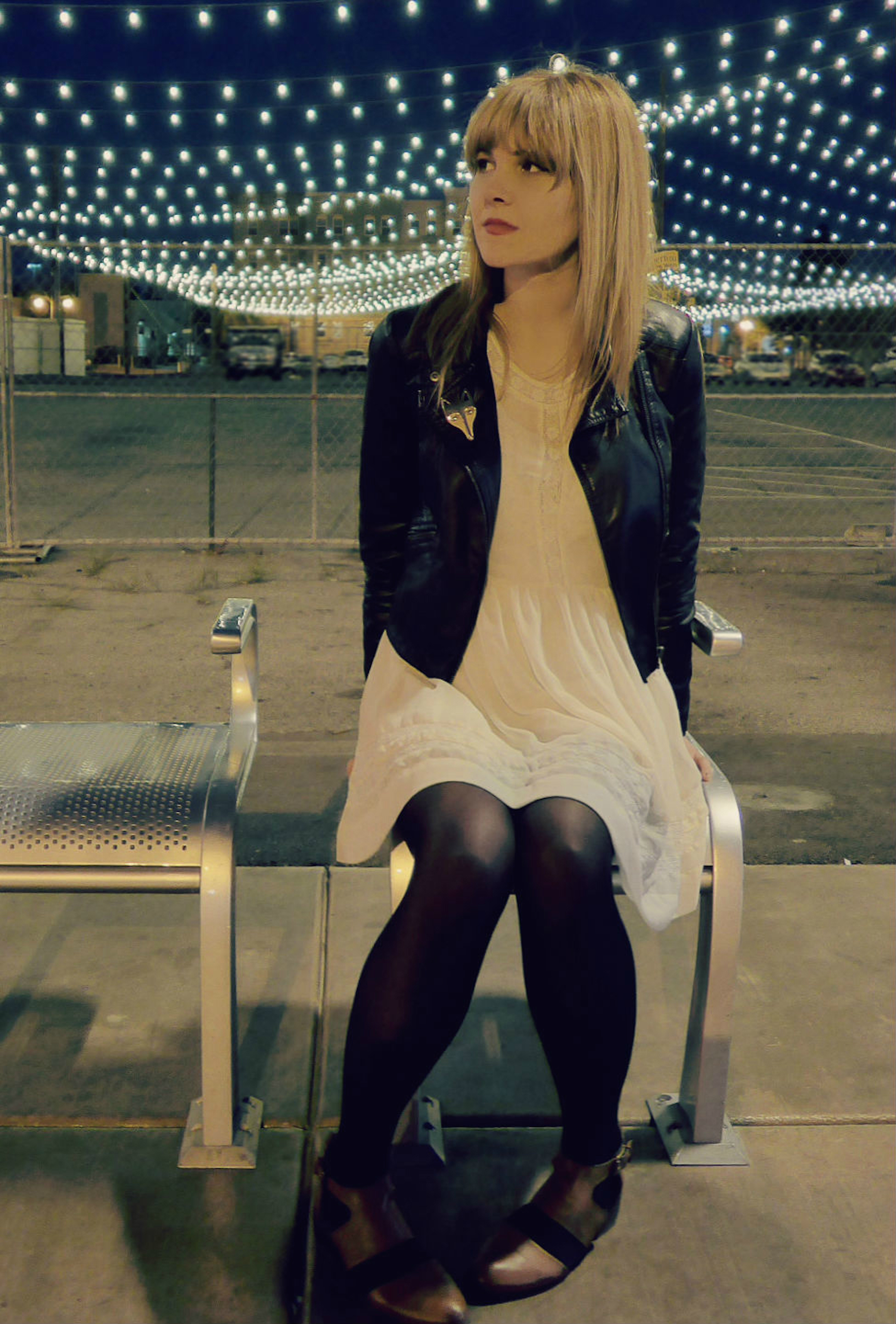
Charade – the debut album by LA singer-songwriter Meg Olsen – is a brilliant collection of cinematic, dark, melancholy, country-rock and pop songs. Its lyrical themes include ill-fated relationships, restlessness, the ‘masks’ people wear and wrestling with your inner demons. Laced with Hammond organ, pedal steel and twangy guitar, these are intimate songs for the wee small hours of the morning. I spoke to Meg to find out more about the record…
Congratulations on Charade – it’s a great album. How does it feel to have it out there?
Meg Olsen: Thank you so much. It feels so good. It was honestly such a whirlwind that it wasn’t until I was holding a physical copy of the album in my hands that it sank in that it was actually finished. I was in shock for the first few weeks and I am finally starting to be able to enjoy it. Now I’m ready to get out there and play the songs live…
You made the album with the help of crowdsourcing platform Kickstarter. How did that work out for you? Would you recommend it to other artists?
MO: Well, firstly, I am forever grateful to the people who backed my Kickstarter. They have been beyond wonderful – you included!
I could never have finished this record as quickly as I did if not for those funds. It would have taken at least another year – maybe longer.
In the end, the Kickstarter method was an enormous amount of work and I did spend more than I raised, so it wasn’t 100% crowdfunded, but I do think it was totally worth it. I would recommend it to other artists, so long as they are willing to do the research and to put all of their energy into it.
It really forces you to focus on being your own PR department, which, if I am honest, is not my favourite thing to do, but now I have an album… so, it’s a double-edged sword. I do think it is an invaluable tool for artists to have access to, if they are willing to put in the effort and, of course, see the project through, as promised.
The album has a late night, melancholy, country-pop sound and there’s a lot of twangy guitar on it….
MO: Well, I am a late night, melancholy kind of girl, so I’m glad that came across! I think I was really testing the waters with my first EP [Deal From The Bottom, which came out in 2013].
I knew how big of an undertaking a full album would be, but once the EP was out, I was really itching to expand upon that thread in an album form. I had most of the songs all ready to go, so it was just a question of working out the arrangements.
The overall themes are sort of dark and cinematic – ill-fated relationships, restlessness, the ‘masks’ people wear to please – or hide from – others and to hide from themselves, and wrestling with your demons. You know, all very upbeat subject matters! It’s a wonder I didn’t end up with a pop album, really… The twang is definitely present, maybe even more so than on the EP.
Going into it, I knew I wanted to keep a bit of that Americana element (pedal steel, banjo, etc), but when we got into the studio, it became clear that the record would have a decidedly twangy undercurrent.
I think the fact that my voice is clearly not a ‘country’ voice helps maintain a little of that indie-rock edge, though… or maybe it just confuses things, but I like blurring the genre lines a little. It keeps things interesting.
What was the recording process like?
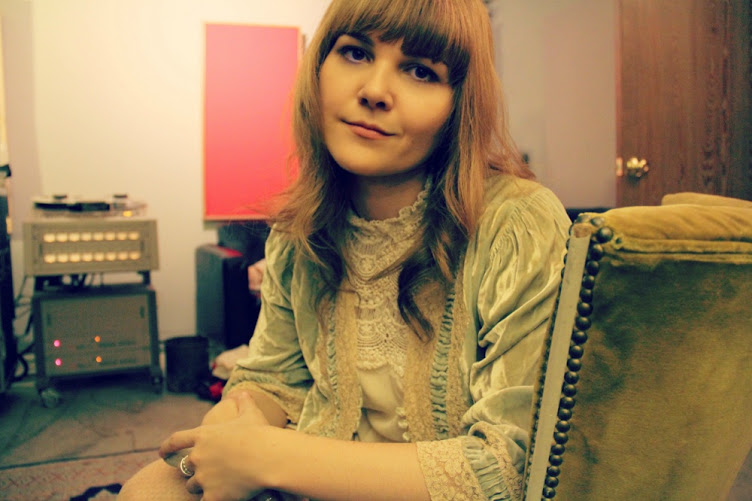
MO: I worked with Daniel Dempsey again – he produced the Deal From The Bottom EP and we recorded it mainly at Bad Transmission Studios in LA, apart from some of the vocals, which we actually tracked in my little house in Laurel Canyon.
Several of the musicians who were on the EP came back for Charade, including Ian Webber (from The Idyllists/ The Hopelessly Devoted) on acoustic guitar and electric and Sam Gallagher (Meg Myers / The Idyllists) on drums.
My producer introduced me to a super-talented guitarist named Aaron Andersen – Aaron end up playing all of the pedal steel, some lap steel and some of the electric guitar, too. His work really helped to build the overall feel of the record – he upped everyone’s game.
As for me, I played piano, Wurlitzer and Hammond organ, but we did bring in a more seasoned pianist to play on a few songs like Take Me Dancing and A Fine Way to Go. It was an awesome group of collaborators.
You covered Pale Blue Eyes by The Velvet Underground on the album and dedicated the track to the late, great Lou Reed…
MO: I’m a big fan of Lou Reed’s work – both with The Velvet Underground and solo. I knew I wanted a cover on Charade and I think it is interesting when people cover songs written by a member of the opposite sex. It can really shake up the story and make you see it in a different light, rather than trying to get one-up on the original, which is, obviously, never going to happen.
There was a short list of contenders, but Pale Blue Eyes seemed to cover themes akin to my own songs, so it made sense to record that track. We actually recorded it about month before Lou passed away. His passing made it all the more clear to me that I had made the right choice. It became a memorial tribute by chance, but it was originally intended as a kind of thank you to Lou for all of the wonderful songs.
What music are you listening to – and digging – at the moment?
MO: I’ve been listening to Nina Persson’s new solo record, Animal Heart, which is a fun, poppy record. I really love her voice and lyrics.
I just saw Neil Young play a show earlier this month, which was incredible. That set me on a complete Neil kick – mainly, Live at Massey Hall 1971 and Everybody Knows This Is Nowhere.
Also, I’ve been on a real vinyl buying binge lately – specifically 45s from the 1960s. I’ve been listening to people like Roy Orbison, The Byrds and girl groups like The Marvelettes.
You launched your album with a special show at Bar Lubitsch, in LA. How did that go?
MO: The show was really great – special and intimate. I love playing at Bar Lubitsch. It has a really cool vibe, as LA venues go. People came from far and wide. I had a full backing band, I wore a vintage dress with rhinestones and champagne was cracked open. It was very much a success in my book.
So, can we expect any more gigs and new material soon? Would you like to play in the UK?
MO: I will be touring in the US this summer and playing loads of local shows too. I would love to play a show in London – I lived there some years back and it’s still my favourite city. There’s nothing official yet, but there is a chance it could happen in the fall, so fingers crossed.
As for more recording, nothing is set in stone, but there are a few ideas brewing, so we shall see… We’re about to shoot a music video for Scissors + Fire, which I am very excited about. I can’t wait to get started on that.
I’m also working on a few other collaborations. One is with an art museum in The Netherlands, which should be a really fun project. Mostly, I’ll be focusing my energy on touring and getting my record out there…
Meg Olsen’s track by track guide to Charade
The Party
“This is the first song we recorded that wasn’t on the Deal From the Bottom EP. I wrote it several years ago now and I knew it would be on the album pretty early on. The protagonist in the song wants to get out of a situation with every fibre of their being, but the person they are with – whether it be a friend or lover – is being sucked into the glitz and glamour of the scene not realising that it’s an illusion and it’s empty. It’s like watching a train wreck in progress.”
Scissors + Fire
“This was one of the last songs we recorded and it was also the newest. Scissors + Fire is about a relationship that was really doomed from the beginning – my favourite subject! Ha! It’s two self-destructive people bouncing off each other, while inflicting real damage as it comes to a head.”
Follow You Blind
“This song is about the restlessness that I think all humans encounter from time to time – some more than others. In this case, it’s about feeling constricted by a relationship when you know you should be happy in the moment. I’ve known so many people who have been in that exact position.”
Reckless Heart
“This song was actually inspired, loosely, by a book I was reading at the time, Still Life with Woodpecker by Tom Robbins. It’s about the idea of waiting for someone to return (both physically or emotionally) to the life that you’ve built together. Being so blindly in love with someone that this person literally stays in one place for weeks, maybe years, to the extreme that the house and plants start to grow out of control and take over. Those things that hold you hostage while you wait for this person to come back. But what if they don’t? I think that’s another song…”
Pale Blue Eyes
“I talked about this earlier, but I knew I wanted to include a cover and this was on the list early on. It fits in with the themes of the other songs quite nicely. It’s a simple and beautifully bittersweet song.”
Charade
“This was another song that was kicking around for ages. It was originally going to be a stripped-down affair with just moody, reverb-drenched electric guitar and vocals. In fact, we had been playing it out that way, but when we got into the studio Sam (my drummer) started up with this almost bossa nova beat. We started jamming the song and we all loved it, so it stuck. One of the main themes that the album deals with is this idea of hiding ourselves behind masks – the lies we tell each other so we don’t create waves, or because we are afraid of being alone. Charade is about what happens when that blows up in your face. When the curtains fall and you’re exposed.”
Corners of Bars
“This was one of the songs on the EP and one of the first to be recorded. I wrote it on the piano quite a while back now and it’s still one of my favourites. It’s pretty straightforward and autobiographical as my songs go. I’ll leave it at that!”
A Fine Way To Go
“This song was a test of my self-editing skills because I had about six verses originally. I decided it really needed to be leaner. The song is about those times when you knowingly get yourself into a situation that is bad for you but it’s so much fun that you tell reason to take a hike. You’ll worry about the consequences later…”
Deal From The Bottom
“This was one of those rare cases where the words and the melody came all at once and it was more or less finished in an evening. I love the banjo part that Jonathan Clay (of Jamestown Revival) plays on this track. It’s about a guy who really loves this person but neither of them can seem to commit – they’re never in the same place – mentally and life-wise – at the same time. So he tries to numb himself and his “little black book” is his drug of choice.”
Take Me Dancing
“We recorded the vocals and piano live in the same room. I wrote this song several years ago. It’s about friendship and, again, the masks we hide behind. Not being able to see through that when someone may really need help.”
Waves
“This song started out as a chord progression and a melody that would eventually become the chorus. It stayed a half-idea for quite a while and then suddenly one day it all came together. Theme-wise, it’s clearly about betrayal, but also the dynamic between the sea and the weather was an influence. I’ve spent a bit of time in Cornwall and the sea and weather seem to really interact with each other there. You can’t help but thinking maybe they are engaged in a lovers’ row. California beaches aren’t quite the same.”


 Say It With Garage Flowers