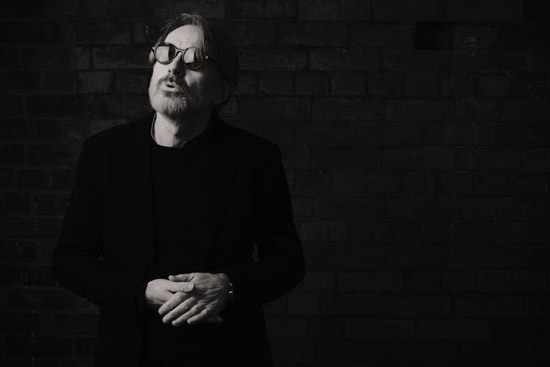
‘These are torrid times – this album is a reaction to that’

Vinny Peculiar is doing it while he still can… The West Midlands-based singer-songwriter’s new album – While You Still Can – is a socio-political record that takes a wry look at the current state of the UK, but also throws in some references to ’70s pop culture along the way.

We spoke to him about Brexit, the good and bad sides of social networking, heavy rock and channelling Gang of Four, Wishbone Ash and Pink Floyd…

Diane Abbott taking a selfie, broadcaster Richard Stilgoe, ’70s rock, class A drugs as a form of social control, Donny and Marie Osmond and a chain mail bikini… welcome to the weird world of Vinny Peculiar.

All of these subjects are mentioned on While You Still Can, the new album by the cult singer-songwriter, which is his thirteenth in a 20-year career.

The last time we spoke to Vinny, he’d just recorded Return of the Native, his brilliant 2018 album about moving from Manchester and returning to Worcestershire, where he grew up. This time around, he’s made a harder, darker and rockier record with a political edge and plenty of social commentary, but he hasn’t dispatched with the vintage pop culture references that we know – and love – him for.

Man Out Of Time is rollicking country-blues with a lyric about the ’70s glam rock years of his youth, while Culture Vulture’s Led Zep-inspired riffs are a nod to his Black Country rock roots. The synth-heavy Ministry Of Fate concerns itself with government media blackouts, Scarecrows is Bowie-esque, robotic funk meets plastic soul and the post-punk, heavy indie-rock of Pop Music For Ugly People tackles political opportunism and personal greed.

With atmospheric, ghostly piano and minimalist, spidery guitar, the opening song, Vote For Me, is a mysterious and sinister plea, and Question Time – our favourite track – is a Smiths-like, jangly pop song, but with a lyric about a missing female politician, told from the point of view of a suspect under interrogation.

With that in mind, we subjected Vinny to an interrogation to find out more about his new album and get his views on the state of the nation.

“I’m not used to making political-type proclamations – I just want to sell records!” he tells us. “How flippant am I?”

Q & A

I like the title of the new album. Where did it come from?

Vinny Peculiar: It came from something my dad often said to me: ‘Do something useful while you still can…’

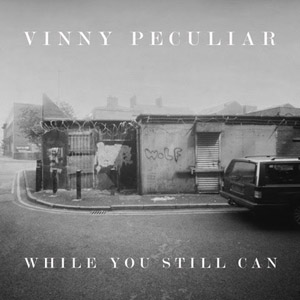
That was the original title, but I shortened it to While You Still Can, after a conversation with Paul Cliff, who designed the sleeve of the record. It seemed appropriate, given the volatile times we live in, politics fragmenting, constitutions crumbling, the climate changing, and the need to act while we still can…
On that note, the album is quite political at times – there are several social commentary songs on there: Vote For Me, Pop Music For Ugly People, Culture Vulture, Let Them Take Drugs, Ministry of Fate, Diane Abbott Takes A Selfie, Question Time, Art and Poverty…  Did you set out to make a political album, or did it happen by accident? 

VP: It’s impossible to avoid politics nowadays – things are so polarised, opinions so righteous, news feeds ever omnipresent… This album is a reaction, in parts, to all that and from speaking to people on the sharp end of this Government’s austerity programme – teachers, nurses and shop workers. These are torrid times.

The Tories have so much to answer for and, with the Brexit divide, everything is so aggressively polarised all the time, hence the socio-political side to this record. That said I don’t have all the answers, but listening a bit harder and shouting a little less would be a start. We need to be nicer to each other, and we need to get rid of the Tories, obviously…

Staying with politics, Question Time – my favourite song on the album – is classic Vinny Peculiar jangle-pop. The guitars are very Johnny Marr-esque, but, beneath the pop tune, there’s something more sinister going on…. a female MP is missing and her suspected abductor is being interrogated. We hear the song from his point of view…

VP: There’s an ambiguity in the song – it’s not clear exactly what’s happened to her. Perhaps she’s has been trolled and has gone underground, or perhaps something more sinister is going on… So many of my songs have a linear story, with a beginning, middle and an end, but Question Time asks more questions than it answers – a bit like the TV show…

‘I’d support bringing politics back to a more local, accessible, decision-making level, with less screaming, confrontational opinions on Twitter and more jovial meetings in the community centre’

With the current state of the UK, it must be a great time to be an observational singer-songwriter. Where do you start? Is it overwhelming?

VP: The songwriter’s radar does seem to be a little more vivid just now – yes. The sense of uncertainty, Trump – I mean, where do you start? We are living in a great big unknown and it feels like we’re being stitched up. It’s crazy, isn’t it? The Brexit thing, all the pseudo-nationalism, immigration scaremongering, families at war – these are divisive times.

We need a more empathic way of listening to each other. I’d support bringing politics back to a more local, accessible, decision-making level, with less screaming, confrontational opinions on Twitter and more jovial meetings in the community centre.

There’s a song on the new album called Diane Abbott Takes A Selfie. Are you a fan of social media? Is it a necessary evil?

VP: Like most musicians, I use social media to communicate new releases, point people in my direction, share interests and such – it can be a useful tool. On the other hand, it can be incredibly damaging, dangerous and destructive.

The hate speak, the trolls – just block ‘em – the rise in teenage suicides that’s being driven by cyber bullies and the dubious data targeting to fix elections… It’s addictive by design and I’m as guilty as the next person of spending way too long scrolling through my feed… There are digital-free communities emerging in Northern California, which is, er, interesting…

‘We need to be nicer to each other, and we need to get rid of the Tories, obviously…’

Your last record, Return of the Native, was a concept album about returning to live in Worcestershire, where you grew up. The new album has some Black Country rock on it – the West Midlands influence is still creeping through. Culture Vulture has a Led Zeppelin feel. Have you been getting in touch with your ’70s rock roots?

VP: I wanted this new record to be louder and prouder, with more of a band feel. The songs felt like band songs, even during the writing stage, and there are hardly any acoustic guitars on the record. It’s all rather riff-centric, with a few old school guitar solos – the kind of which I would have enjoyed as a teenager. They’re a bit flash – hah! One of the producers, Dave Draper, knows all about rock and the Midlands’ heavy metal legacy – his input was crucial in shaping the direction of the songs, as we turned up to 11.

Speaking of iconic Midlanders, I can recommend the Black Sabbath exhibition in Birmingham – it’s a beautifully put together show.

How were the recording sessions for the album? You worked with your ex-Parlour Flames rhythm section Che Beresford (drums) and Ollie Collins (bass) and two producers, Dave Draper and David Marsden, both whom you’ve worked with before. Was it an easy album to make?

VP: The Parlour Flames rhythm section reunion was fun. We rehearsed the songs as a three-piece band a couple of times and recorded bass and drums in Manchester – the rest of the album was recorded in my home studio. It was a relatively easy album to make, but they are never that easy – there is always something that doesn’t quite go to plan.

I’d hoped to have a more inclusive band involvement in the mixing/production, but it proved impossible with distance, time and work constraints. So, the bulk of the album was produced here in the Midlands by Dave Draper, who did Return of the Native, but three tracks were produced in Southport by David Marsden, who worked on my album Silver Meadows.

‘I wanted this new record to be louder and prouder – it’s all rather riff-centric, with a few old school guitar solos’

I should also add that the artwork for the album is by long-term Vinny Peculiar collaborator Paul Cliff. The images he used are pinhole photographs highlighting the former homes of World War 1 soldiers from Bury, Lancashire.

What were some of your other musical influences and starting points for the new record? As well as ‘70s rock, there’s synth pop (Ministry of Fate) and Bowie-esque funk / plastic soul (Scarecrows) in the mix, too. It’s an eclectic album…

VP: Gang of Four – I’m channelling my inner Andy Gill on a couple of the tracks – white noise and scratches – and my inner Andy Powell, from my teenage favourites Wishbone Ash – hard rock riffs and feedback. Oh and my inner Dave Gilmour on Let Them Take Drugs – he is such a feel-good player…

Man Out Of Time is a country-rock-blues song that is littered with ’70s references: Elvis, The Spiders From Mars, Queen, The Osmonds, Noggin The Nog, Richard Stilgoe… Do you feel like a man out of time?

VP: Hah! Yes – kind of. I think we all have our chosen musical era in pop music that’s defined by age. It was the excitement of the new music of my youth – glam rock, heartbreak, pop and TV culture – these are the inspirational forces at play here. The song is set in 1972 and is slightly at odds with the rest of the album. It ends in 1976, with the dawn of punk rock…
You’re very prolific. What are your plans for the rest of 2019 and 2020? Any new projects and albums in the pipeline?

VP: I’m hoping we can do a string of band gigs in March 2020, as well as continuing with the solo shows, and we have a band album launch gig at The Castle, in Manchester, on November 28.

I’m currently remixing some older tracks for a rarities album that I’ll put out some time next year, hopefully. I have an acoustic project I hope to finish, but, in truth, it’s only three songs in, so I have a way to go on that one. I’m especially looking forward to playing with the band again…

‘I’m channelling my inner Andy Gill from Gang of Four on a couple of the tracks – white noise and scratches’

The new record is coming out on vinyl. Is this your first vinyl release?

VP: Yes – this is the first Vinny Peculiar vinyl release. The label Cherry Red put out the Parlour Flames record on vinyl, but this is a first for my tiny little label and me. I’m hoping against hope I can shift a few of them – well, a lot of them actually, but we’ll have to see…

What was the last record that you bought?

VP: It was Kate Tempest – The Book of Traps and Lessons, and, before that, Be Bop Deluxe: The Very Best of The Rest of… both on vinyl.

Finally, what do you most enjoy doing while you still can?

VP: Playing football with my grandson, but, alas, my knees are giving way.

While You Still Can by Vinny Peculiar is released on October 28 (Shadrack & Duxbury Records). It’s available on CD digi pack and vinyl, or as a download.

More information at:

https://vinnypeculiar.com

https://vinnypeculiar.bandcamp.com/
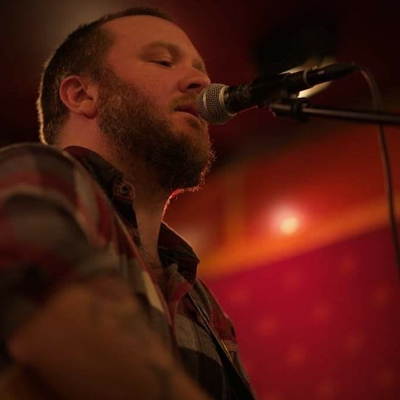


‘I want to make nine studio records, then do a ‘best of’ and call it a day…’

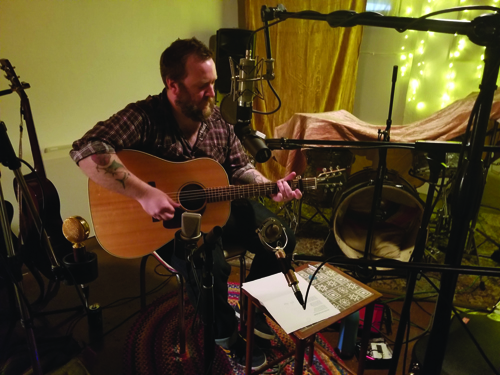
Picture of Luke in the studio by Scott Anthony

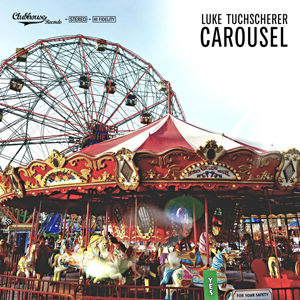
Carousel, the new album by UK singer-songwriter Luke Tuchscherer, is a stark, moody and intimate solo acoustic record – guitar, voice and harmonica – that was laid down in one day at a studio in New Jersey. It doesn’t shy away from addressing political and social issues and was inspired by Neil Young and Bob Dylan. We spoke to him about the making of the album, living in New York, Brexit and why the death of Tom Petty hit him hard…

When Say It With Garage Flowers last spoke to New York-based singer-songwriter Luke Tuchscherer, in late 2018, he outlined his plans to release a series of albums over the next few years – one of which, Carousel, a solo acoustic record influenced by Neil Young’s Hitchhiker and early Dylan, was pencilled in for 2023.

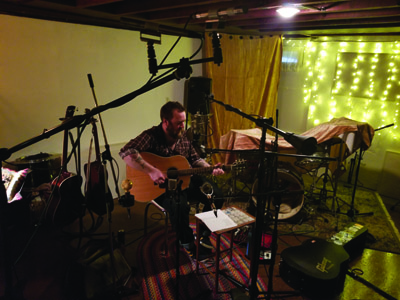
That plan has now drastically changed – Carousel is out in October this year. What hasn’t altered, though, is the sound – it’s a stripped-down, dark and sombre affair – just Luke and an acoustic guitar and a harmonica. Recorded live in one day at the Storybook Sound studio in New Jersey, it’s an intimate, and sometimes unsettling, listen.

Opener, My Darling England, deals with social issues, including class and national identity – the song was written 15 years ago, but, in these troubled times and with the spectre of Brexit looming over us,  it’s eerily prescient: ‘Now the streets are filled with shadows, every house has its own ghost. The people are growing restless – never getting what they want the most…’

Violets tackles domestic abuse, Potash was penned during the Iraq War and The Night Tom Petty Died  documents how one of Luke’s musical inspirations passed away just as he’d moved to New York from the UK: “Sitting at the bar in the Tribeca Tavern, on the jukebox was Learning To Fly – a beer cost more than I could spend. I wished that I was home…’

Luke cites Neil Young and Dylan, specifically The Freewheelin’ Bob Dylan album, as his reference points for the record, as well as Townes Van Zandt and Elliott Smith, but, at times, it also reminds us of Bruce Springsteen’s 1982 masterpiece Nebraska – our favourite album by The Boss…

“Well, I don’t know about the Nebraska comparison, as that was really just demos for what became Born in the USA – and it’s also very lo-fi and there are overdubs… Mood-wise, it might be similar – but it’s more akin to those early Dylan records, or Hitchhiker”, says Luke, talking to us from his home in New York. “Plus, Carousel is recorded really well. You do hear some coughs and grunts and breathing and stuff, but that’s just the nature of the beast.”

He adds: “I’d always wanted to have one solo acoustic record in my back catalogue. One of my best friends, Johnny, said he was a little disappointed that my first solo album wasn’t just the sound of me playing in his living room. Well, this album is that for sure – so here you go, Johnny! But it dates back to before that, since university, when I started doing open mic nights.”

So is the new album a reaction to his last one, Pieces, a full-on, electric band record that was influenced by Neil Young and Crazy Horse, Tom Petty and Pearl Jam?

“It’s not really a reaction to it – we’ve talked before about the records I have planned. That plan has become a little more refined now,” he says. “I want to make nine studio records, then make a ‘best of’ and call it a day. I’m not saying I won’t write and play music in the future, but that might be the end of my album career. It’s expensive to do and no one buys albums anymore. I guess we’ll cross that bridge when we come to it.

“The plan for the albums is three cycles of three: a quiet one, a middle one and a loud one – three times. This is the start of the second cycle…”

Q & A

You recorded Carousel in one day – how was that? Was it intense?

Luke Tuchscherer: It wasn’t too long – maybe four or five hours. I played the album in order, and I remember it took me a while to get past the first couple of verses in My Darling England. I think that was just a bit of red light fever. But once I got that out of the way, the rest was pretty smooth sailing.

I seem to recall a bit of trouble on Violets and Road to Damascus, but that was more a tuning concern — they’re in drop D and DADGAD, respectively, and the low string kept going out. We just had to stop for a bit and let the temperature in the room go down, despite it being recorded in February… I was pretty focused on the idea that it should largely be an album of first and second takes, and I think, other than the aforementioned songs, it was.

Most of the songs on the album are old – My Darling England, the opening track, was written when you were 21 – you’re 36 now. Ironically, in these times of Brexit turmoil, small-minded attitudes and a harsh economic climate, it’s more relevant now than ever…

LT: When I wrote the song, I was at university in Falmouth, Cornwall. When I was on breaks from there, I would do removal work to earn a bit of cash. Some of the removal guys would light-heartedly take the piss out of me for being a student — especially during the one summer I worked in the office. They were calling me a pencil pusher and all that. It was all in good spirits, it has to be noted, but that kind of reverse snobbery, even if it was in jest, probably inspired the beginning of it.

It’s a song about class in England, snobbery and reverse snobbery, socialism and meritocracy – all those big words I was learning at university. I did change the first two lines in the last verse before recording it, to make it even more relevant to today, but other than that, it’s basically the same. I’m 36 now and it’s weird to think that a song like that makes more sense now than when I wrote it. We did record a full band version for The Whybirds’ Cold Blue Sky album, but it didn’t really fit. It’s a good rendition, though.

‘I’d always wanted to have one solo acoustic record in my back catalogue. One of my best friends said he was disappointed that my first solo album wasn’t just the sound of me playing in his living room’

I’ve only written a couple of songs without a guitar — just the words and melody — and My Darling England was one of them. I wrote the whole tune one day during that summer I was working in the office. When I got home, I put the chords to it.  As a potentially interesting side note, the other two songs I wrote like that are Outside, Looking In, from Always Be True, and I Am The Child of An Immigrant, which will be on my Salvation Come album.

You now live in New York with your wife. Are you glad you got out of the UK? As an Englishman in New York – to quote Sting (!), how do you feel about the whole Brexit thing? Would you move back to the UK?

LT: Well, we’re not gonna be here forever. What will probably happen is that we’ll live in the US during Trump’s tenure, and then move back to a post-Brexit Britain. For fuck’s sake!

As anyone who’s friends with me on Facebook, or follows me on Twitter, will know, Brexit has been an obsession of mine since the referendum. It’s heartbreaking, needless and frustrating.

At the beginning, I was very much one of the shouty Remainers, who called all Brexiteers dumb and racist. But having seen The Great Hack and the Brexit film with Benedict Cumberbatch [Brexit: The Uncivil War] about Dominic Cummings, you realise how people were exploited. How they fell for this lie about the EU being the cause of all their problems, when it’s really not.

Most folks never had a problem with the EU, until a select group of millionaires — the ERG [European Research Group] and others – conspired to get us out in order to benefit financially. And look what they’ve done to the country. Even if we don’t leave – and I do still hold a small glimmer of hope that it won’t happen – the damage done to the collective psyche of the country is immeasurable and will take years to undo. And if it does happen, well, you can kiss Scotland goodbye – with good reason – and maybe you’ll be looking at a united Ireland, too.

‘Even if we don’t leave the EU, the damage done to the collective psyche of the country is immeasurable and will take years to undo’

There are plenty of Leavers who have seen the facts and have now changed their minds. That’s reason enough to call it off, or at the very least have another referendum. But the thing is, now it’s just become a tribal thing. The nuances have been completely lost. I’d rather just call it off and endure a couple of riots than have another referendum because I’m not sure I really believe in elections and referendums that much these days.

That’s not to say I don’t believe in democracy, but those processes are too open to populism, to trickery and to making it like a fucking game show. That’s when you get Brexit and Trump. We need something more akin to sortition. There’s a great book on that called Against Elections: The Case For Democracy.

I’m not an out-and-out angry Remainer now, as I have a bit more empathy with the folks who were duped. However, to those people who have seen all the new evidence but have just doubled down — out of greed or xenophobia or whatever — I would say to them that they’re either fucking dumb, or they’re a fucking c***! Or both!

Anyway – yeah, we’ll be moving back to the UK at some point. We just don’t know what state the place will be in when we do.

Do you like living in New York? Was it hard when you first moved there?

LT: We love it here. We miss our friends and family, and that’s why we’re not going to stay forever — not to mention the guns and shit healthcare — but it’s an amazing city.

My wife went vegan and I followed suit about a year later, and there are so many options here, but that’s barely scratching the surface. There’s an endless number of things to do and see, stuff that only happens in New York — like going to see Letterman or Fallon — not to mention it feels like you’re walking around on a movie set. In the summer you can go to the beach, in the winter you can huddle up in a cocktail bar… it’s awesome. Obviously, we’re working — we’re not going up the Statue of Liberty every day – and it’s not all partying all the time — but it’s cool as fuck.

Picture by Ben Oliver

One of my favourite songs on the album is The Night Tom Petty Died. How did his death affect you and why did he mean so much to you?

LT: Yeah, that song might make it sound like the opposite of what I just said about New York! But I’d just moved. My wife wasn’t due to move for two weeks. It was all feeling pretty scary and new, and there were a lot of unknowns. Where were we going to live? How was my wife going to get a job? How can we possibly afford all this? And the weekend I got to town there was the massacre in Las Vegas, then Tom Petty died.

A lot of people talked about 2016 — with Bowie and Prince and others, which were definitely tragic — but in 2017, we lost Chris Cornell and Tom Petty, which hit a bit closer to home for me.

Tom Petty’s not my favourite songwriter, in fact he’s probably only just in my top 10. There are too many filler tracks on later albums and, lyrically, he can be a bit clunky at times — look at Into The Great Wide Open: ‘A roadie named Bart’ and ‘chains that would jingle’ – oof! But he would often write an amazing lyric, and he knew his way around a chorus, that’s for sure.

One thing I like about Petty is how he can go from Honey Bee, which could basically be stoner rock, to Wildflowers, which is a really pretty, acoustic number, on the same album. Petty was just a very inspiring guy. Despite his success, there was still a punky, DIY quality to him.

Carousel is quite a political album at times –The Billions and Potash both reference war and suffering. What inspired those songs and when were they written?

LT: The Billions was written when I was single and feeling all ‘woe is me’ and writing loads of forlorn love songs. It’s a song about getting some fucking perspective and realising that my shit doesn’t even begin to compare to the suffering of billions of others around the world.

Potash is quite mental isn’t it? It’s a stream of consciousness. There are definite allusions to the second Gulf War in there, but that’s only a couple of lines. But it all creates a mood. The rest is up for debate.

What about Violets? You’ve said it was written in 2005, when you were working behind the counter of a petrol station, and it deals with domestic abuse…

LT: That’s right. I was on a post-grad course after my degree and worked in a petrol station while I studied. As I’m sure you can imagine, you’d see all sorts of characters come in. But occasionally you’d see something a little shadier. A few times I saw women come in with dark sunglasses, or black eyes, or the like. Could just be dark glasses, could just be an accident, but you always wondered…

‘The song Violets has got a kind of Elliott Smith vibe to the guitar, but, lyrically, it’s very direct’

Violets was inspired by a very specific incident when this girl – and she’d only have been a teenager, she was the little sister of a girl younger than me at school – came into the shop. Her boyfriend, who was a well-known local scumbag, was behind the wheel and he’d made her come in and pay. She had bruises all up and down her arms, which were plainly from being grabbed.

You want to say something, but you don’t know how. I guess the song is about that regret. It’s got a kind of Elliott Smith vibe to the guitar, but, lyrically, it’s very direct.

So, back to that plan you mentioned earlier… What’s on the horizon? When we spoke last year, you said you had plans for several albums, including Salvation Come, with acoustic guitar and violin, and Widows & Orphans – an acoustic album with guitarist Dave Banks. You also wanted to do another full band record – like Pieces – and a folky / bluegrass album, in the vein of Steve Earle. What’s the latest on that?

LT: That goes back to the three cycles of three I mentioned earlier. Quiet, middle, loud. You Get So Alone… [first solo album], Always Be True and Pieces were the first cycle. The next cycle starts with Carousel, then Salvation Come, then another rock album. Then it’ll be Widows & Orphans, then a folky/ bluegrass one, and then a final rock one.

Originally, Widows & Orphans was going to kick off the second cycle, as it’s basically ready to go. But My Darling England made me change my mind. I just felt that with Brexit, that song had to come out now, while it’s so relevant. Widows & Orphans will now start the third cycle.

As for Salvation Come, I’ve done my guitars, vocals and drums, the bass is nearly done, ditto the mandolin. Then it’ll be time to add the fiddle, steel and baritone guitars over here in the US. It’s sounding good already.

Picture of Luke in the studio by Scott Anthony

What music – new and old – are you enjoying? What have been your favourite albums of 2019?

LT: The best albums of 2019 have been David Banks’ Until The End and Pete Gow’s Here There’s No Sirens. Other than that, I’ve been listening to a lot of Wilco, as I read Jeff Tweedy’s book, and a lot of Supergrass, since they reformed. I also listen to a lot of ‘90s hip-hop and ‘80s rock at the gym.

Finally, when will you be back to play in the UK?

LT: I will be back with The Penny Dreadfuls in April. There will be a couple of normal shows and then a certain indoor roots festival that everyone should come to because it’s brilliant. I’ll keep everyone posted.

Carousel by Luke Tuchscherer is released on October 4 by Clubhouse Records. For more information, click here.