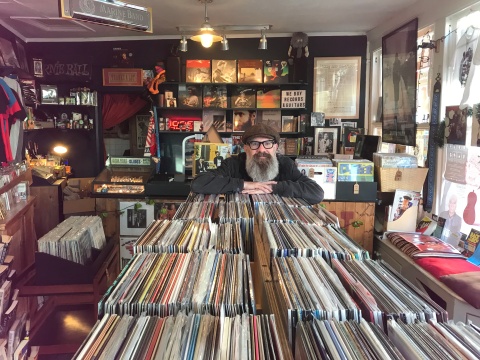
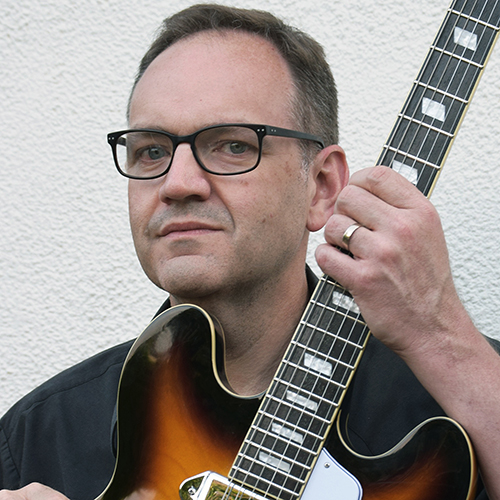
‘Humour is a huge part of country music, but, in the past 15 or 20 years, it’s gotten really stupid and crass’


Bob Collum
Bob Collum


Exclusive interview with Bob Collum and the video premiere of his new single, Parachute – out today (July 2 – Fretsore Records).

On his latest album, This Heart Will Self Destruct, Olkahoma-born, but Essex-based Americana singer-songwriter, Bob Collum, covers lyrical themes including anxiety, hope, fear, humour, uncertainty, love, disappointment, redemption and faith.

Judging by the subjects he’s chosen to tackle, you won’t be surprised to find that the record was mostly written during the first Covid-19 lockdown. Collum says the album “began life on the cusp, before the insanity of 2020”, adding: “I think it captures the last year quite well.”

Impressively, on the opening track, and brand new single, Parachute – the video is premiering on Say It With Garage Flowers today –  he manages to cover off hope, fear, humour, uncertainty, love and faith in the one song.

It’s a mid-paced, rootsy, country rock shuffle, with violin, on which Collum tells a potential partner: “It’s a leap of faith, you know that much is true, but I’ll share my one and only parachute with you.”

Parachute is me writing a more positive type of song, but with an escape clause,” he says, in an exclusive interview with Say It With Garage Flowers.

“I wish I could write a really upbeat love song, but they’re very difficult. This is as close to a feel-good song as I’ve written. It’s about the uncertainty of life. Sometimes it helps to have somebody there to face it with you. It’s an universal theme, but I liked the image of a parachute.”

Surely the classic country song take on it would be to have a parachute that doesn’t open?

“Absolutely. The answer song would be Who Packed the ‘Chute?” he says, laughing.

‘Parachute is me writing a more positive type of song, but with an escape clause. I wish I could write a really upbeat love song, but they’re very difficult’

Recorded with his band, the Welfare Mothers – “although only one is a mother, and none are on welfare at the moment, they remain the tightest band this side of the Thames Delta” – the album was produced by Pat Collier at his Perry Vale Studios in South East London.

Most of the recordings were done intermittently, with safety taking priority.  “At our age, most of the band were in the danger zone,” muses Collum.

The Welfare Mothers comprise Mags Layton (violin and vocals), Martin Cutmore (bass) and Paul Quarry (drums and percussion). Honorary member, guitarist Martin Belmont (Graham Parker and the Rumour, Nick Lowe, My Darling Clementine) plays the Fender Stratocaster and Fender VI bass on the album, adding a mean, Duane Eddy-style, twangy solo to the jaunty Shake It Loose.

Belmont’s ‘70s pub rock influence comes across on Giving Up, which is an infectious power-pop song – kind of New Wave meets country.

Elsewhere, there’s tongue-in-cheek country (the title track);  echoes of early R.E.M (Second Fiddle); a sad and reflective country ballad inspired by the likes of Johnny Cash (From Birmingham) and a raucous, fiddle-fuelled rockabilly cover of Saved, which is an R&B-flavoured song written by Leiber and Stoller and first recorded by Lavern Baker in the early ‘60s. Elvis Presley and Joe Cocker have released versions of it.

Collum also dips into blues (Tall Glass of Muddy Water) and soul territory (Spare Me). On the latter, he’s joined by Peter Holsapple (The dB’s and R.E.M.), who plays a mean Hammond B3 organ and also sings backing vocals. The song was an intercontinental collaboration between him and Collum.

Say It With Garage Flowers got to spend some quality time talking with Collum before his heart self-destructed…

Q&A

How was lockdown for you and how has Covid affected your plans as a musician?

Bob Collum: Lockdown provided a focus – the new record was pretty much written during the first lockdown.

It was like being stuck in a weird alternate reality, which stripped everything back to basics. I missed rehearsing and playing gigs – that’s part of music. We do it because we like that aspect – the commonality of sharing a love of music. Maybe now we’ll appreciate every single gig even more than we did before – the chance to play music live is going to be really special and nobody will take it for granted again.

I started thinking about life and what I enjoyed doing. I was able to sit down and be focused in a way in which I haven’t been for years. I did home demos and there was a lot more space to be creative.

That was really interesting. I’ve also managed to write another new record – I have more than enough songs for another one.

When we signed to Fretsore [record label] we going to put out an EP before we did an album. We recorded three or four songs in December and then we were going to go back into the studio in January, but we had to reschedule for late February and then Covid hit.

So we held off until things were safe, but then I picked up my guitar and started to write – the songs started happening, and the band liked them, so we thought ‘let’s do a full album’.

We did a session in late summer, when things opened up a bit, and it went really well, so we did the whole album and finished it up – then things went crazy again. It’s interesting how this record came to fruition – it was a happy accident, I guess.
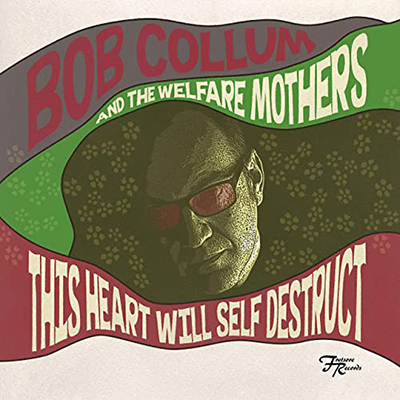
The album was produced and recorded by Pat Collier at his Perry Vale Studios in South East London…

BC: We’ve been working with Pat for years – he’s one of those classic producers. He did his apprenticeship in the late ‘60s/ early ‘70s at Decca – he was around when all the stuff that we love was being done, but he’s also fully up to date, with Pro Tools and everything. He’s not a slave to the old-fashioned way of doing it. His bag is that he wants to record a band playing together by using the technology that makes it easier to do so.

The record really captures the performances well – it almost feels like a live album… 

BC: I really appreciate that – when I started making records, back in the ‘80s, everything was done a track at a time… The performance is part of the recording. The most important part of the producer’s job is to make everyone feel comfortable and have fun – that’s what Pat’s really good at it.

To be a good producer and an engineer, you have to be good at psychology because, like any other conglomeration of human beings, in a band there are all sorts of things going on and you need to know how to keep things moving and how to appeal to the different egos. Pat manages to massage everyone into giving a great performance and he never gets flustered.

The title track is one of my favourite songs on the record…

BC: Thanks, man.

It’s a tongue-in-cheek country song, isn’t it?

BC: Yeah – I love the great soulful and emotional stuff, like George Jones, but he also wrote crazy, almost novelty, songs, like I’m A People, or Love Bug. Humour has always been a huge part of country music, but one of the problems is that in the past 15 or 20 years, the humour has gotten really stupid and crass. If you like all the great writers, like Shel Silverstein, their songs always have a wry side to them.

And they’re self-deprecating…

BC: Yeah – that’s the perfect word for them. If you have a sense of humour, you can get away with all sorts of stuff. Having that ability to wink at yourself is very important, because then, when you are being serious, people realise that you are serious.

I like the title, This Heart Will Self Destruct, which is a nod to Mission Impossible, isn’t it?

BC: My co-writer, Dave Bailey and I were sitting around and talking about the great country writers of the ‘50s, ‘60s and ‘70s – a lot of the time you could tell that they started with the title and worked backwards. It’s a great way of writing – it’s like starting a puzzle with the outside edges.

We were talking about phrases… I’m a big Mission Impossible fan – the TV show with Martin Landau. I’ve not seen any of the movies.

I was thinking about a guy who wanted to warn someone that things were going to end badly –  ‘I’ll end it first before you have a chance to hurt me’. That kind of thing. The phrase ‘This heart will self-destruct’ just popped into my head. We wrote the chorus, then filled in the blanks.

There are some blues and soul influences on the album, particularly on the songs  Tall Glass of Muddy Water and Spare Me... On the latter, you sing the great line: “I’ve got work to do like The Isley Brothers. What makes you think you stand in front of all of the others?” And Peter Holsapple plays organ on it… How did you get to work with him?

BC: I was a huge dB’s fan back in the day. I met him in the ’90s, at SXSW. We swapped numbers and our friendship developed over time. We did a gig together the year before last, which turned out be really fantastic, and, out of the blue one day, he said to me: ‘I’ve got this song –  do you want to help me finish it?’ And he sent it to me. We did it and then he asked if me and guys wanted to record it, so I said, ‘of course!’ I like the groove it has – it’s not what you’d you expect from us, but it still sounds like us.

Holsapple played with R.E.M, and I think your song, Second Fiddle, has the feel of early R.E.M…

BC: Yeah –  you can’t be alive at our age and not be influenced by them. They were a band in the ’80s that were a touchstone. Peter Buck plays guitar like you want a guy to play guitar. He’s an influence. When I play arpeggios on guitar, it comes directly from Buck and Roger McGuinn [The Byrds.]

The Byrds are an important band – probably the most important American group of the ’60s. They were fearless when it came to their influences. They had no problem crossing the line.

They were the American Beatles…

BC: Exactly. They did something nobody else were doing and they influenced The Beatles. You’d also be hard-pressed to find a group of guys who were as perfect as The Beach Boys.

What’s your approach to songwriting? 

BC: I try to avoid it! [laughs]. There’s no real way of doing it. I’m not like Paul Simon, doing it 9 to 5, with a yellow pad in front of you, or like Peter Case, who calls it ‘skywriting’ – waiting for the inspiration and song to come.

‘The Byrds are probably the most important American group of the ’60s.They were fearless when it came to their influences

The way I’ve been doing it lately is by coming up with a melody and some key words and phrases, putting it down on GarageBand, doing the lyrics off the top of my head, and then editing them as I’m doing it, and recording a demo. It’s a similar process to the way you’d write in the studio, but the studio is in my phone.

I don’t think there’s a set way of writing a song. There comes a time when you say, ‘how the hell did I write that?’ That’s life –  when you get older, you don’t do anything the way you did when you were 20, 21 or 22…

As writers it’s difficult to maintain the same style. People say there’s a formula –  yeah, there is, but sometimes you forget the recipe. Elvis Costello couldn’t make a record now like he did in 1978 if he tried, but he could make one that sounds fantastic, which is what he’s doing. It doesn’t sound like he’s aping his past.

Who are your songwriting heroes?

BC: Lennon and McCartney, Costello, Dylan… I always find it weird when people don’t like Dylan. It’s like a writer saying they don’t like Shakespeare.

What music –  new and old – have you been enjoying recently? Did you have a lockdown soundtrack?

BC: Dylan’s Rough and Rowdy Ways has been a hugely important record. I don’t think it could’ve been better timed – it did so much for so many people I know who listened to it. Dylan exists out of time and space – he just does what he wants to do.

You said earlier that you’d written another album. Are you hoping to record that this year?

BC: Yes, but realistically it will be autumn or winter, when things get back to normal.

What have you been writing about?

BC: Fewer love songs, but more ‘what the hell’s going on?’ songs. I should call the next record 12 Angry Songs. They’re not angry songs, but they’re more ‘what the heck?’ I’ve sent demos to everyone – Martin Belmont said it’s some of the most melodic stuff I’ve ever written, which is pretty cool.

Finally – this interview will self-destruct in 10 seconds. What’s the last thing you’re going to say to me?

BC: I just hope you like the record, man. During these crazy times, music has held me together more than I ever thought it would –  I think it’s done that for a lot of us. If just 10 people hear it, it’s important.

This Heart Will Self Destruct by Bob Collum and the Welfare Mothers is out now on Fretsore Records.

http://www.bobcollum.com

https://fretsorerecords.bandcamp.com/track/this-heart-will-self-destruct

Tour Dates – Bob Collum and the Welfare Mothers

June 19 – The Plough, Shepreth
July 6  – The Horns, Watford
August 1 – The Geese & Fountain, Croxton Kerrial (solo)
August 28 – Thornton Hough Village Club
September 5 – Southchurch Park Cafe, Southend
September 12 – The Flying Pig, Cambridge
September 18 – Queen St Brewhouse, Colchester
October 16 – The Grove Inn, Leeds
October 30 – The Smyth Arms, London
November 25 – The Betsey Trotwood, London

Follow Bob Collum and the Welfare Mothers:
FACEBOOK INSTAGRAM TWITTER


‘Sometimes, when we have opposing opinions, it can get too close for comfort, but we always work it out…’

Starlight Cleaning Co.

Here at Say It With Garage Flowers, we aren’t fans of the summer. In fact, when we first started publishing, in 2009, our tagline was, and still is, ‘musical musings from the dark corner of a pub’…

We love autumn / winter, and during the summer months you’re likely to find us sat indoors in a boozer, not the beer garden, discussing music, or hiding away indoors, listening to new and old albums. We’re staying in for the summer…

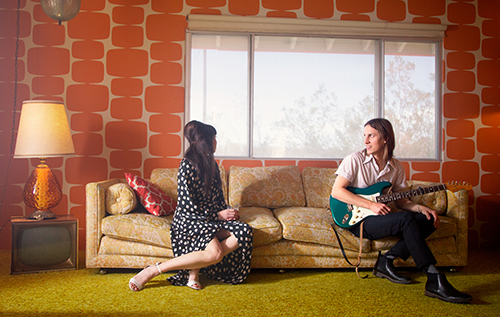
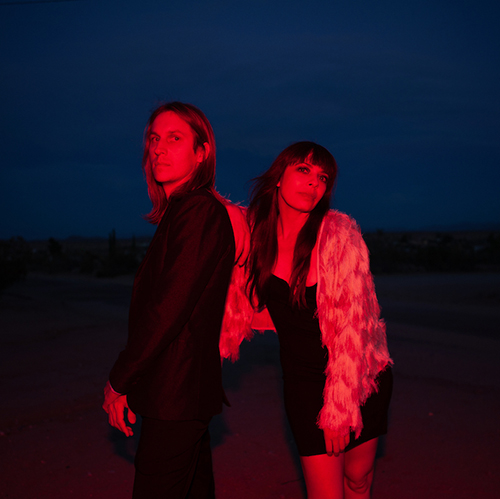
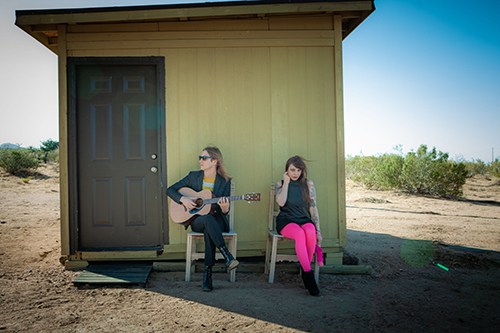
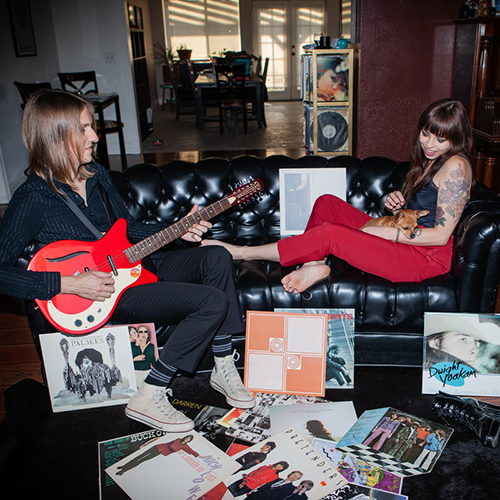
However, we do like our summer soundtracks, and this month we’ve been enjoying the new, self-titled album from Mojave Desert duo – and couple – Starlight Cleaning Co., who are Rachel Dean and Tim Paul Gray.

It’s a wonderfully melodic record that’s in love with ’70s/’80s New Wave guitar music, glossy L.A. pop, country rock, Americana and soft rock.

Opener, Don’t Take It Away, is jangle-pop perfection, with harmonies ringing out high over the desert landscape; the chugging, organ-fuelled and anthemic Train Wreck is like Tom Petty doing Springsteen’s Atlantic CityThe Race is melancholy and reflective dream-pop, with a superb haunting guitar solo by the late Neal Casal (Chris Robinson Brotherhood, Ryan Adams, Circles Around The Sun), and Joy Killer and The Current have the swagger and style of vintage Pretenders.

Dean fronted two bands prior to Starlight Cleaning Co – War Children and The Hot Fudge Sunday, while Gray was a member of Orange County-based groups The Delusions and Charles Mansion.

As a duo, Dean and Gray have toured with Tommy Stinson (The Replacements, Bash And Pop, Guns ‘n’ Roses) and on their own. Two years ago, they did something they had wanted to do for a while – they turned their solo act into a full band and recorded their debut album.

Dean has previously played under her own name, having released an album titled Indian Summer, produced by Rob Campanella (Brian Jonestown Massacre) and Casal, who plays guitar on two songs on the Starlight Cleaning Co. album. Sadly, he died last year.

“His death profoundly affected me,” Dean tells us, in an exclusive interview with the band. “It’s so hard to cope with the loss of a dear friend, especially when it’s sudden. That’s why it meant so much to us that he played on this record.”

Adds Gray: “Neal brought his unmistakable sound to a couple of the tracks. You know it’s him the second you hear it and I think that goes for everything he’s done. The fact that he left his stamp on it is something we are forever grateful for.”

‘Neal Casal’s death profoundly affected me personally. It’s so hard to cope with the loss of a dear friend, especially when it’s sudden. That’s why it meant so much to us that he played on this record’

Recorded at Dean and Gray’s home studio, Starlight Sound,  Starlight Cleaning Co. was produced by L.A./San Francisco blue-eyed-soul and soft rock troubadour, Bart Davenport, (The Bedazzled, The Loved Ones, The Kinetics) and engineered by L.A.’s “indie king” Joel Jerome (Dios, Cherry Glazerr, La Sera).

This record is a reflection of our life together as well as the individual paths that led us here: the struggles, uncertainty, the hopefulness and love,” says Dean.

“We hope that it resonates with others in their lives and brings us together as we all seem to deal with these common themes. We dedicate this album, in loving memory, to our dear friend Neal Casal.”


Q&A

How’s it going? Where are you and what’s it like?

Rachel: Hi there. We are currently at home in Yucca Valley, California – right next to Joshua Tree. It’s a beautiful day and we are sitting outside enjoying the weather.

Congratulations on your debut album –  it’s one of my favourite records of the year so far, and it’s my album of the summer. How do you feel about that?

Rachel: Thank you. That’s so nice to hear. We are excited you like it and hope that other people are connecting with it as well.

Tim: Very kind. Thank you.

How did you two first meet? You were both solo artists and this is your first full-band collaboration, as you were performing as a duo before, right?

Rachel: We first met when I booked Tim’s previous band at Ace Hotel in Palm Springs. I used to do all their music/cultural programming. We ended up talking more and he hopped on a show with me at Pappy and Harriet’s –  a now famous roadhouse out here – as well. The Pappy’s show happened first. I really loved his music and voice, and we started talking about playing music together. The following week, we were already on it… me joining Tim on a solo acoustic show.  The rest is history.

Tim: Even as a duo we knew that the kind of music we wanted to make would call for a full-band and the songs were written with that intention, so really the current situation is just an extension of those early duo days. We still enjoy a stripped-down show now and again.

What’s it like being in a band together, and also in a relationship with each other? What are the advantages and disadvantages?

Rachel: It’s honestly a lot of fun. It can be stressful at times, but overall it’s really something special. We are able to share all these amazing experiences together. Also we both take very different roles. I’m way more the business side of things and the front person when performing, while Tim is the primary writer and the true creative. Sometimes, when we have opposing opinions, it can get too close for comfort, but we can always work it out.

‘We both take very different roles. I’m way more the business side of things and the front person when performing, while Tim is the primary writer and the true creative’ 

Do you write collaboratively? What’s your songwriting process?

Tim: The closest we have come to collaborative writing is Don’t Take It Away, where we tossed around lyrical content, took inspiration from our dog and surroundings, and had a good time making a song of it, but the truth is, it is very difficult for us to do. We’ve found making small suggestions for each other’s work is what works best for us.

Rachel: Yes, Tim is definitely the writer in this band.  He writes everyday and it’s part of who he is.  I just write when I have something in my head that I can’t escape.

Starlight Cleaning Co.

You’ve said that the album is dedicated to the late Neal Casal, who plays guitar on it. How did you get to know and work with him, and how has his death affected you? Was it hard to put the record out after his passing, or did it feel like the right thing to do? Is it difficult to listen to?

Rachel: Neal was one of my dearest friends. We met in 2006, through mutual friends. We became close and he was a big part of my life. When it came to music, he really guided me. He produced my last record, Indian Summer, and he helped me so much with it. He played on it, sang, arranged all the songs and even took the photograph for the album artwork.

His death profoundly affected me. It’s so hard to cope with the loss of a dear friend, especially when it’s sudden. That’s why it meant so much to us that he played on this record. He actually took time out of his tour schedule and rented a studio to do some guitar parts. Putting the record out with his parts on there was celebratory. It was a way to celebrate Neal and thank him. I actually love listening to his parts. It’s something we’re proud of, and it always makes me smile.

‘Putting the record out with Neal Casal’s parts on there was celebratory. It’s something we’re proud of, and it always makes me smile’

Let’s talk about the recording of the album. How were the sessions? When did you make it?

Tim: We recorded this album pretty quickly in October of 2018. With a lot of unexpected events that year and the next, we were slow to wrap the mixing process, but once [producer] Bart Davenport suggested [engineer] Bill Faler, it took shape pretty quickly. The sessions took place at our home – Bart, [engineer] Joel, Dan [Sandvick –  bass]  and Sal [Salvatore Romano – drums] came out to stay at our house for five days and we just got it done. We cooked every night. Bart had a birthday. It was fun and low-key and an honest representation of our sound at the time.

You recorded it at your home studio, Starlight Sound. What’s your set-up like?

Tim: We were inspired after watching Thom Monahan and Vetiver do a record in our living room for the album Up On High in April of 2018. Like Thom, Joel brought all the gear and we just holed up and tracked it in our living room and the adjoining studio/office. I have a very basic set-up that I use for demos.

You worked with Bart Davenport and Joel Jerome on the album, as well as Neal Casal. What did they all bring to the process and the sound and feel of the record?

Tim: We thought of Bart for the role of producer, because we love his records. In particular, [his album] Physical World  gave us the impression that he would be an excellent fit both creatively and for sonic and aesthetic reasons. He used a lot of similar tones on that record and shares the 1980s quality we were after. He’s also a great person and a calming voice of reason.

Joel brought the entire studio out to the desert. He is incredibly talented and has an amazing pop sensibility that made his input invaluable. He was also comic relief when we needed it most and an excellent DJ. Neal brought his unmistakable sound to a couple of the tracks. You know it’s him the second you hear it and I think that goes for everything he’s done. The fact that he left his stamp on it is something we are forever grateful for.

The desert moves me: the people, the weather, the music that has been part of this place, is all inspiring’

The record has an ’80s soft-rock and New Wave feel, as well as jangle-pop and Americana. What influenced it, musically and lyrically? Do you think being in the Mojave Desert rubs off on you musically? 

Tim: We love so much music. A jangly guitar says something an aggressive guitar can’t and vice-versa. It’s a very sensitive-sounding album and the lyrics reflect that, so more often than not, the jangle won the battle with the lyrics coming from such inward places.

The ’80s thing is just part of what we love and who we are. We listen to a lot of that decade –  The Replacements, The Pretenders, Elvis Costello and ’80s hits. It’s just stuff we like. And there is a lot under the Americana umbrella we love too: Lucinda Williams, Townes Van Zandt… the list goes on.

Rachel: I moved to the desert back in 2007, after countless trips to Pappy and Harriet’s. I’ve been in love with Bakersfield country and California cosmic country like Buck Owens, The Byrds, and Linda Ronstadt, and have been inspired by those sounds almost as much as I am Chrissie Hynde or The Motels. So I guess the desert just moves me: the people, the weather, the music that has been part of this place, is all inspiring.

Although everyone seems to be catching on to it, back when I first moved here, this area felt very secret and special. Certain types of people were drawn to it. Weirdos, artists, and musicians mixed in with the sun-worn blue collar workers and it made for an interesting energy.

‘Don’t Take It Away is loosely based on our dog, Otis, who will lose his mind and get depressed if you take away his toys’

Can we talk about some of the songs on the record? What can you tell me about Don’t Take It Away? It’s one of my favourites –  I love the harmonies and the killer melody –  it’s perfect, jangly guitar pop. Where did that song come from?

Tim: Thank you. The uptempo songs always come about after too many cups of coffee early in the day. Just walking around the house, strumming the guitar. I like to imagine playing songs live and that sometimes helps them take shape.

Don’t Take It Away is loosely based on our dog, Otis, who will lose his mind and get depressed if you take away his toys. So that’s where the idea came from, and Rachel and I had a laugh making it.


What inspired The Race? It feels like it’s about your relationship… There’s a brilliant haunting guitar solo from Neal Casal on there too, isn’t there?

Rachel:  Yes. The Race is about our relationship and about the short time we spent in the south. Back in 2015, shortly after Tim and I started dating, my job moved us to New Orleans to open a new hotel and book the music venue on the property. It was a rough time. Although there is a sleepy, slow-paced feel to that place, there was a sort of ‘rat-race’ mentality in what I was dealing with there.

The song is about the hard time I was having fitting in, that both of us were having with each other, and still figuring out who we were together, and socially fitting in as well. It’s about struggle and overcoming it, when the going gets tough. We got through that life hurdle and it made us realise we were meant to be together and if we could get through that, we can probably get through anything. Once we started playing the song, we both agreed a Neal Casal guitar solo would be the icing on that cake.

I love the organ sound on Train Wreck – another of my favourite songs on the record. Ryan Adams would kill to have written it. I think it sounds like a classic Springsteen or Tom Petty tune…

Tim: That’s Bobby Furgo on organ. He played with Leonard Cohen throughout the ’90s and he’s an incredible musician living out here in the Joshua Tree area. He and Rachel both played together in the Pappy and Harriet’s Sunday band a while back.

Train Wreck definitely sounds like Atlantic City, but I realised that too late and there’s no going back now. Tom Petty’s writing style was more of an influence on that one than Springsteen though. There’s something really challenging and fun about trying to get something to resemble a ‘hit’. It’s like a different part of the brain and Tom Petty was a master at that.

I wrote the song in 2015. I had been living and travelling in an RV and broke down in Ozona, Texas. I was in a tow yard for three weeks and worrying and thinking a lot about the people in my life with substance abuse problems. Train Wreck came out of that experience.

I think Like A Shadow has the feel of The Smiths at times –  it’s the jangly, Johnny Marr-like guitars…

Tim: I am a fan of The Smiths Johnny Marr’s playing, in particular. That is probably Bart’s playing you’re hearing though, as I was strictly rhythm on that track. It is one of my personal favourites that I’ve written just due to its simplicity and how quickly it came to me. It was a little valentine for Rachel.

Sooner Than You Learn has an ’80s pop/ soft rock vibe –  a touch of Fleetwood Mac…

Tim: Fleetwood Mac definitely crossed my mind when writing that song. It was built around that opening guitar part and the realisation that not only myself, but so many others, are just kind of going too hard and drinking too much after the party’s over..

Joy Killer is one of the heavier songs on the record – it’s kind of ’80s indie-rock and it reminds me of The Pretenders. The Current feels like it’s coming from a similar place, too… 

Tim: Joy Killer was a song I had before I met Rachel that I never properly recorded. We just liked having a rocker in the set and so it became part of the album, although the lyrical content dwells on the relationship issues I was having before I met Ms Dean.

Rachel: The Current was another song from the past. I wrote it back in 2007 with my friend Rick Boston, who was sort of mentoring me at the time. It was one of the first real songs I ever wrote and it started out as a slow song.

Chrissie Hynde has always been a huge influence on me and I could always hear her in the song, so I guess it kind of shows up a bit.  It’s so funny to think that Tim and I were both writing these songs that would mesh so well together, years before we ever met.

What music – new and old – are you enjoying at the moment?

Rachel: Well, I’m a really nostalgic person, so I get lost in music memories from my past.  I’ve been listening to a lot of Burt Bacharach, Buck Owens, Dwight Yoakam, Divinyls, Richard Ashcroft, Travis, Jesse Ed Davis, Doug Sahm, and Marcos Valle for summer vibes.  And for newer stuff.. well I guess some of this isn’t exactly “new”, but I love so much of our friend’s music like Brian Whelan  he used to play with Dwight Yoakam, and he’s just an incredible songwriter and singer , Vetiver, The Tyde, Cass McCombs, Howlin’ Rain, Beachwood Sparks, as well as the Curation Records bands – GospelbeacH, Pacific Range, FD and the Wizards of the West, Trevor Beld Jimenez –  and so many others.

‘I’m a really nostalgic person, so I get lost in music memories from my past’

Tim: What she said… Also I’ve just recently doing a dive into Nick Lowe’s new(ish) stuff – Stoplight Roses from The Old Magic is an amazing song, as is pretty much anything he does.

The first record Rachel got me was his Labour of Lust, early in our relationship. A friend turned me on to Richard Hawley and I’ve been enjoying his music. I had a moment with Funkadelic,  Zappa and the like during the pandemic, which always lifted my spirits. I run the gamut with my musical taste. It’s all over the place. I love a lot of our friends’ records as well.

How has Covid affected your plans? Any live shows coming up? Will we get to see you play in the UK?

Rachel: Our plans for the rest of this year are to get out and play as much as possible. Out here on the West Coast, venues are opening slowly but surely and I hope that by the fall, we’ll be playing more regularly. As of right now, it’s a lot of unconventional outdoor shows, private parties and things like that. We’re really hoping to get to the UK next year, and we’ve actually been talking to a friend out there about setting up a tour, so fingers crossed. We really love the UK and can’t wait to get back.

The self-titled debut album by Starlight Cleaning Co. is out now on SofaBurn Records, on vinyl and digital.

http://www.starlightcleaningco.com

https://www.sofaburn.com