‘There’s a real sunshiny vibe to our album – hopefully things will feel a lot more positive by the time it’s released in the summer’


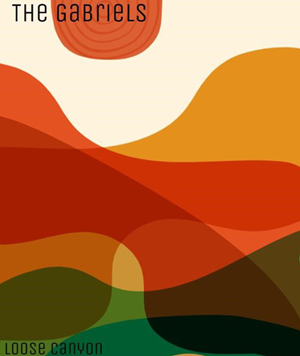
Loose Canyon, the debut single from Midlands-based band The Gabriels, is one of our favourite songs of the year so far.

A gorgeous, melodic and jangly guitar pop tune that celebrates the legendary Laurel Canyon music scene of ’60s L.A, it’s a far-out and groovy trip (man), that brings a much-needed hit of California sunshine to these dark days we’re living in. 

Loose Canyon was recorded in 2020 against the obvious background of Covid,” says vocalist Gudg, aka Kate Gudgin. “The song is about escapism. This year more than any we’ve all probably felt the need to escape. As a band we love the 1960s Laurel Canyon scene and would have loved to be have been part of it. It was a time where it felt like anything could happen both socially and musically and as a band it’s a big influence on us.”

‘Loose Canyon was recorded in 2020 against the background of Covid. The song is about escapism. This year more than any we’ve all probably felt the need to escape’

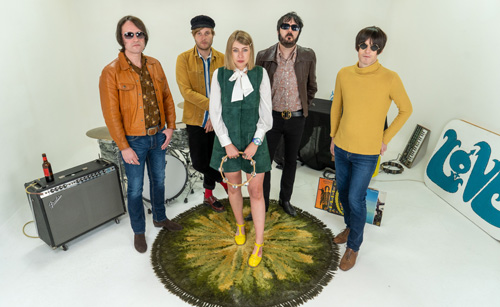
All of the full-time members (Gudg /Kate – vocals; Fran Feely – bass, Leon Jones – guitar and Stuart Gray – keys) have been in other acts prior to forming The Gabriels. Gudg previously sang with Pallenberg, Fran was in Elefant Records group, The Silver Factory,  Leon was in Blow Up Records’ cosmic country-rockers, Alfa 9, and Stuart played in Fence Collective band, Viva Stereo, and drone/psych act Children of Leir.

The Gabriels cite their influences as The Byrds, Buffalo Springfield, C86, The Stone Roses and Teenage Fanclub, and they have a shared love of ’60s culture and soundtracks.

In an exclusive interview, Say It With Garage Flowers spoke to Gudg (Kate), Fran and Leon about the new single, their penchant for all things ’60s and their plans for this year. Sadly, due to the current crisis, we couldn’t travel to Laurel Canyon for a chat, so we made do with email instead… 

 Q&A

How’s 2021 going for you so far?

Fran: Great. The debut single officially comes out on January 31, but it’s pretty much available now. The response has been amazing so far. It certainly helps dealing with the lockdown situation when there’s positivity elsewhere.

Let’s talk about your debut single. It has a great jangly guitar sound and it celebrates the ‘60s Laurel Canyon scene. Why does that era appeal to you so much?

Fran: It’s a real common love of all the members of the band, so it seemed an obvious subject matter to write about. We also got Robyn Gibson from The Junipers in to sing backing vocals, which has worked a treat, as he nailed it.

Kate: Personally I love music from all decades. Although the ‘60s music undoubtedly influences us, there’s tons of great music that’s been released since 1969 that you can’t ignore. That could be something that came later that’s indebted to the ‘60s like the Paisley Underground scene, 1980s jangle pop or even stuff like The Stone Roses, Teenage Fanclub or The Coral. Or something completely different… Fran and I are massive ABBA fans for example, so we hope some of that pop sensibility comes across in The Gabriels’ music.

Leon: That mid-late ‘60s West Coast sound is pretty much ingrained in my psyche. There were a lot of those records in my house when I was growing up – The Byrds, Crosby Stills & Nash, Joni Mitchell and Neil Young – so it’s always been there for me, but I’ve never excluded bands who weren’t part of that ‘60s scene.

We decided from the start that we wanted the band to be about great songs and to concentrate on writing songs and recording, as opposed to writing and rehearsing a set of songs and going out and playing a million gigs before thinking about recording anything. That has turned out be a very serendipitous decision, as we’d recorded the bare bones of an album’s worth of songs just as Covid hit. From that we’ve been able to build the songs up, with sessions scattered over 2020, albeit slower than we’d have liked.

‘That mid-late ‘60s West Coast sound is pretty much ingrained in my psyche. There were a lot of those records in my house when I was growing up – The Byrds, Crosby Stills & Nash, Joni Mitchell and Neil Young – so it’s always been there for me’

Tell us about how the band came together. You all knew each other socially, but what led to you forming The Gabriels, and where are you all based?  

Fran: Over the years we all knew each other from club nights and playing in bands. We were all good friends and Kate asked Leon if he would be interested in playing on some songs I had written. Stu came on at a later stage, as he liked the sound and wanted to join. Fran is originally from Leicester. Stu is Scottish but based in Leicester. Leon is from and based in Newcastle-under-Lyme and Kate is from where Noddy Holder is from.

Leon: We started discussing putting something together a couple of years ago, borne out of a mutual admiration of our other musical exploits and a lot of jangly guitars.

Where did the band name come from? 

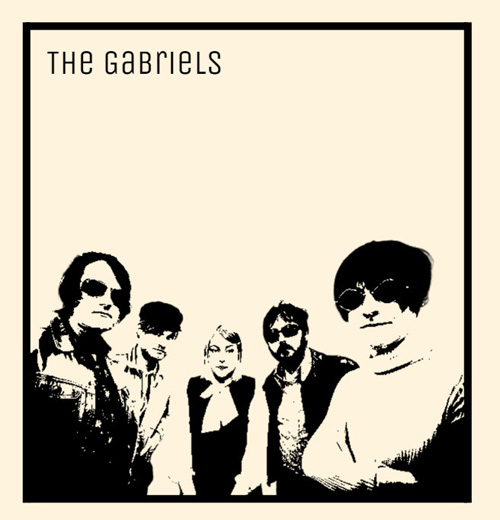
Gudg: Fran and myself are massive early Genesis fans – the Peter Gabriel period – so the name came from, well, Peter.
There’s an album planned. What can we expect? Is it done and dusted?

Fran: We went about things in a different way. We have written the album already and Leon has his own studio – he is in the process of mixing all the tracks. We feel that each song is strong enough to be a single. That is our goal – to have an album where there are no fillers on it.

Leon: Yep, as Fran says, we’ve approached the release in a different way, almost old-school indie – three great singles followed by an album. We’re just finishing up mixing as we speak and looking to release the album in the summer on the usual download/streaming services and, of course, on good old vinyl.

‘Each song on the album is strong enough to be a single. Our goal is to have an album where there are no fillers on it’

There’s a real sunshiny, positive vibe to the album – hopefully everything will feel a lot more positive by the time it’s released in the summer. We’re all chomping at the bit to get out and do some gigs, but that could be ages away, so we’re keeping an open mind. Again, we’ve been lucky in that we managed to film a few videos in 2020, so we’ve got plenty in the can to put out there over the next few months.

Are you worried about the current situation for live music? What are your hopes and fears for the future? As a new band, is it harder to get exposure at the moment?  

Fran: The world is definitely changing, so we will see what happens. To be honest, we are just happy making music and seeing what happens. We don’t expect anything in return, but hopefully folk enjoy the sounds. We’re pretty much making it up as we go along and just hoping people jump on board.

Leon: I think live music is something people have always enjoyed and always will, so no matter what, it will recover. However, the vast majority venues are in a desperate situation, which is heartbreaking. I just hope they can hang on in there. I’m not sure it’s any harder to get exposure at the moment – it’s always been hard! All you can do is write the best songs you can, present them in the best way you can and hope people enjoy it.
Can you tell us some of your favourite music and films from the Laurel Canyon / ‘60s counterculture scene? 

Fran: The Byrds, Buffalo Springfield and Love. Those bands have always been personal faves.

Leon: The Byrds’ first six albums have been a cornerstone of my music taste for as long as I’ve been a musician. I seem to have been on a personal Gene Clark crusade for ever, as he never gets the plaudits I think he deserves both as a member of The Byrds and as a solo artist.  I love the Flying Burrito Brothers’ self-titled album – the blue one – which is the first post-Gram Parsons album they did and is really underrated. I’m not the greatest film buff, but I love Beyond The Valley of The Dolls, which has a great soundtrack, and I still love Easy Rider, which I first saw in my early teens.

What music – new and old – have you been enjoying recently? 

Fran: I really like a new band called Fur. I think they are great. I really love early Genesis and Caravan are real faves of mine. I listen to lots of music, so it changes. We have a collaborative playlist on the The Gabriels’ Spotify page of stuff we all love.

‘I seem to have been on a personal Gene Clark crusade for ever, as he never gets the plaudits I think he deserves’

Kate: I’ve been really enjoying Swampmeat Family Band’s new album, which is called Muck! It’s such a great album – I saw them a few times in the mid-2000s.

I am also on a nostalgia trip to my youth at the moment, which includes songs that I remember vividly from childhood, such as those by The Everly Brothers and ABBA. I do keep my eye out for new music – there is some great music coming out at the moment by some really talented people.

Leon: I’m really enjoying a lot of the output from Brent Rademaker’s label Curation Records, especially the recent Beachwood Sparks reissue. I really enjoyed the last Whyte Horses album and I’m enjoying La Luz at the moment as well.  The latest El Goodo album is great, as you’d expect.

How have you been coping with lockdown?

Kate: I’m loving it! I’m on furlough, so every day is like Sunday for me! I read a lot. If you have a great book in hand, then you are sure to have a great adventure.

Leon: I feel really blessed that I’ve had The Gabriels to keep me occupied and that we managed to get enough material recorded in time to build on.

‘I’m on furlough, so every day is like Sunday! I read a lot. If you have a great book in hand, then you are sure to have a great adventure’

[To Leon]. Are Alfa 9 still going? Would you consider The Gabriels to be a side-project?

Leon: Alfa 9 are taking some time out. We’ve been together in one form or another for 20 years, so I think we’re due a break! We’re like family, so that will never go away. The Gabriels is definitely not a side-project and I’m really enjoying working as hard on it as I have for anything in the past. It’s really energising to work in a situation with different people, taking a new approach and with great songs.

Loose Canyon by The Gabriels is officially released on January 31. For more information, or to buy a digital version, visit: https://thegabriels.bandcamp.com.

The band have compiled a Spotify playlist of some of the music they love here.


‘I wear my songs on my sleeve, so anything that happens in my life will come out in them’

Ryan Martin

Wandercease, the title of the latest album from Hudson Valley, New York-based singer-songwriter Ryan Martin, is very appropriate for these days of lockdown, but funnily enough, the name wasn’t intended as a comment on the Covid-19 crisis. 

“I never made that connection!” he tells Say It With Garage Flowers. “The title comes from my great grandmother, who was a poet. When she found the home that she knew she would settle in and raise my grandfather in, she gave it the name ‘Wandercease’. It represents the dream that I’m always searching for.”

The record came out late last year and soon found its way on to our ‘Best Albums of 2020′ list, thanks to its stunning and infectious pop melodies, rich and layered symphonic sounds, loops and electronic touches, and occasional nods to Americana.

Epic opener, At Dusk, has a glorious ’70s AM radio/ soft rock and pop feel, I Just Wanna Die is a galloping country song, with twangy guitars, and the shuffling groove of Fathers To Daughters is fleshed-out with pedal steel, organ and horns.

The album is full of irresistible melodies, but there’s an underlying sadness to many of the songs, like the achingly beautiful chamber pop of the title track, on which Martin sings, “My love, here is the song I meant to give you long ago, but I just couldn’t find the words – a songwriter’s curse”, and the first single, Coma Kiss, which is a bouncy, soulful, retro pop tune, but was written about a failed relationship.

“I wear my songs on my sleeve, and so anything that happens in my life will come out in them,” says Martin.

Described as his ‘most musically adventurous and emotionally dynamic record to date,’ Wandercease took shape after his relocation to the Hudson Valley from New York City. It was produced by Kenny Siegal (Langhorne Slim, Joseph Arthur, Chuck Prophet) at Old Soul Studios in Catskill, NY and mixed by Paul Kolderie (Pixies, Radiohead, Dinosaur Jr.).

Siegal called on a whole host of local musicians to play on it —some of whom were fresh from working with artists such as David Byrne, Cibbo Matto, and Lana Del Rey. Guests include singer-songwriter and classically-trained harpist Mikaela Davis, who sings harmony vocals on Coma Kiss and also appears on several other songs.

“Kenny brought in Mikaela because they’re friends,” explains Martin. “Her voice blended with mine in a way I hadn’t heard before and it was exciting. She’s a massive talent and I’m grateful she was a part of this record.”

Q&A

How was 2020 for you and how has the Covid-19 crisis affected you?

Ryan Martin: Things are OK, more or less. I haven’t missed a meal. I get to see my family. I have good friends around me. The pandemic made it harder for the release of Wandercease, I think. I can’t tour, so that’s a bummer, but I’m happy it came out when it did. I just hope to continue writing songs and recording, and hopefully play some shows in 2021.

Are you worried about the future of live music? Will it ever get back to normal, or will it just have to adapt?

RM: I worry, yes. I think it may take some time to get back to the way it was. I hope there aren’t minds at work trying to establish live streaming as the standard in performing – it’s a poor substitute. I’m looking forward to doing my part and playing a lot when I can and when it’s safe.

Let’s talk about Wandercease. It’s your most musically adventurous record yet – it has a lovely, rich, lush and layered sound. How did you approach the record? Did you have a definite idea of what you wanted it to sound like? 

RM: Thanks. I kinda brought the songs and let the sounds come to the group and have everyone collaborate. I’ve kinda had the chance to make the records I wanted, and now I felt like opening the door to other ideas. A lot of the credit goes to Kenny Siegal and the musicians, but I think you’ll find my ideas there too, like the woodwind and strings.

‘I hope there aren’t minds at work trying to establish live streaming as the standard in performing – it’s a poor substitute’

On that note, there are some great arrangements on the album. What influenced and inspired the treatments of the songs? The record has a warm feel and is heavy on melodies. There are strings, horns, woodwind, synths, vibes, organ, pedal steel, loops, backing vocals…

RM: Yes I’m a melody guy I think, above all other things. I hear that first usually. And then you get to find other melodies within the songs, as you start to record and arrange. I think Jared Samuel [keys player ] is also great at that. He and I have a similar production sensibility – we both kept feeding each other’s enthusiasm for trying new ideas.

How were the sessions for the album? It was produced by Kenny Siegal at Old Soul Studios in Catskill, New York, and mixed by Paul Kolderie. What was Siegal like to work with? Did you enjoy making the record? Was it an easy record to make?

RM: It was a really great experience. Kenny has become a friend and I would work with him again any day. Old Soul is a special place. There’s so much there in terms of instruments and the rooms all bleed together, so it inspires musicians to play together and record live, which we did for a lot of the record. It was easy, but I also put a lot of pressure on myself to be on it and to rise to the level of talent I was surrounded by.

There are a lot of musicians on the album…

RM: Bringing everyone in for overdubs was great. Most of the musicians were Kenny’s friends and musicians from up in the Hudson Valley.

‘I like being out of the city and up in the woods to write and create – the Hudson Valley is so beautiful. I’ll sing for the foxes, the birds and the snow over the sounds of sirens and traffic and yelling any day’

You’ve relocated from New York City to the Hudson Valley. How’s that working out and did it have an influence on the new record, from a sonic point of view, or from the songwriting and the subject matter?

RM: Yeah – well the move was a part of a larger change, so I think it influenced the music and the songs. I wear my songs on my sleeve, and so anything that happens in my life will come out in them. I like being out of the city and up in the woods to write and create. It’s helpful and the Hudson Valley is so beautiful. I’ll sing for the foxes, the birds and the snow over the sounds of sirens and traffic and yelling any day.

What’s your approach to songwriting? What process works best for you?

RM: My approach is to try and keep the channel open and hope that something comes out that inspires me. Once it moves me I can keep it around and hopefully finish it sooner rather than later. Sometimes they come quick, but some I’ve been sitting on for months and years. It’s not something I can force. It loses its power to me if I try and finish lyrics for the sake of finishing a song. But at the same time there’s something to be said for completing it as an exercise, but I’m not that good at that. I usually have to care deeply to be motivated.

Let’s talk about some of the songs and get your thoughts on them. At Dusk is an epic way to start the album – it feels almost like a symphonic, ’70s pop/soft-rock song, but in a good way! What can you tell us about it? It’s a big-sounding song…

RM: I’ll take that! Thanks. I think this song was about embracing the pop elements – bringing attention to the hooks and the big moments. I’m happy with how the band came together on that one and how the vocals were arranged. Also Paul Kolderie did an outstanding job realising the true nature of the song in the mix.

Coma Kiss is a great, instant pop song. Where did it come from and what inspired it musically? It has a kind of breezy, retro, soulful feel…

RM: The core of the song came out quickly and flushing out what I wanted to say came further down the road, which is usually the process. I think Kenny was big on making it feel really good and danceable, which I was on board with.

I Just Wanna Die is one of my favourite songs on the record – it has more of a traditional Americana / country-rock feel than some of the other tracks…

RM: That came about quickly – it’s a fun song that has a heavy topic. That’s kinda been my calling card I guess – you can dance to it, but if you listen to the lyrics it’s anything but carefree and easy to swallow. We experimented with the arrangement of that song – there’s a great version where we slowed it down and wrote a bridge, but in the end I thought that the fast-paced, ‘train beat’, ‘take-no-prisoners’ approach was the way it should be and it was the way it was written.

Orphan Song is another Americana-type song. What inspired it? 

RM: That song was inspired by growing older and witnessing my friends stumble and fall, lose themselves and, at worst, die. Once you start entering your thirties, that’s when your behaviour and your mind really start taking a toll on you. I was in the group too, but somehow I got out.

Fathers To Daughters sticks out on the record, as it has loops and is more rhythmic than some of the other songs. Did becoming a dad for the first time inspire the lyric?

RM: Yeah – wandering around New York with my daughter, when she was two and three inspired it. Watching her experience all the joy and magic of the world, and the innocence she had. My role as her father hit me profoundly and still does. I’m gonna be a big part of this person’s life and I need to take responsibility for that. And also the overwhelming, overflowing love I have for her and creating that bond in her earliest years of life. Falling in love is the best thing in the world and it makes me wanna sing about it!

Orphan Song was inspired by growing older and witnessing my friends stumble and fall, lose themselves and, at worst, die. Once you start entering your thirties, that’s when your behaviour and your mind really start taking a toll on you. I was in the group too, but somehow I got out’

What music – new and old – have you been enjoying recently? Any recommendations?

RM: Yeah. I’ve listened to a lot of Mark Kozelek, Sun Kil Moon and Red House Painters, and also some instrumental music like Hammock, as well as Sigur Ros – heavy, melodic, beautiful music. Right now I’m listening to Mozart’s Piano Concerto No. 23 a lot.

What’s your preferred way of listening to music and why? 

RM: My preferred way would be to listen to vinyl records in the living room with no distractions, because it’s the best way to get absorbed by the music. A second way would be to listen to CDs in my car. I played a CD on my computer for the first time in over a year or two and after listening to MP3s for so long I was blown away by how good it sounded. I like to listen with intent and be captivated, as opposed to a passive kinda background thing. Though I do that too.

So what’s next for you in 2021?

RM: I’m gonna keep writing and finishing some songs and recording at home. Maybe I’ll tour in the fall and spend some time in Europe, when the pandemic calms down.

Wandercease by Ryan Martin is out now on High Moon Records.

https://ryanmartin.bandcamp.com/