‘Sometimes I just don’t like being around people – even the ones I love…’


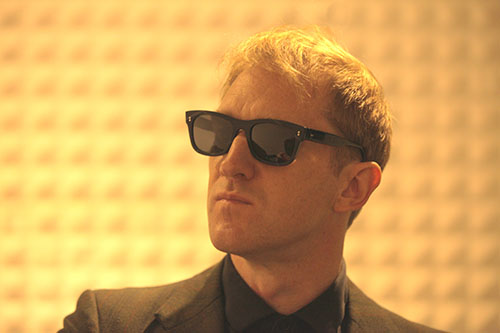
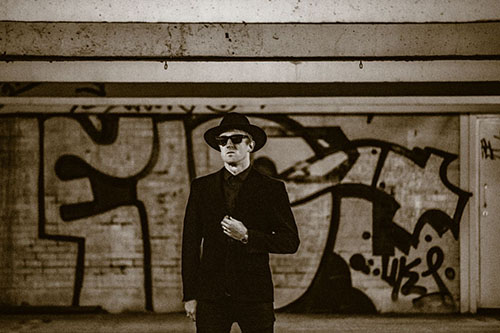
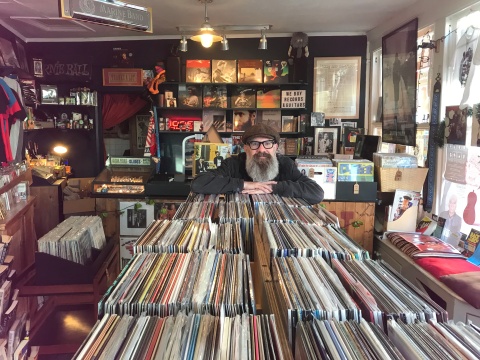
Steve Drizos in SE Portland, May 2023. Photo by Jason Quigley.


Steve Drizos’s new album, the amusingly-entitled i love you now leave me alone, sees the Portland singer-songwriter and producer expanding his sound with a full band, but, like its predecessor, 2021’s well-received and experimental Axiom, it’s still rooted in his love of ’90s alt-rock. 

“I like a record that takes me out of reality – I love folk music, but I want to be transported somewhere, so I love the energy of ‘90s rock,” he tells Say It With Garage Flowers

“I’m loving being a front person in this band – as much as it scares the shit out of me, it’s very gratifying.”

When we last spoke to Portland-based singer-songwriter, engineer and producer, Steve Drizos, it was for the release of his 2021 debut solo album, Axiom – a strong and diverse record that embraced ‘90s alt-rock and psych-folk, and also threw in a trance-like instrumental, female vocal samples, and even a proggy synth solo.

That album, which was written and recorded during the start of the pandemic, saw Drizos experimenting in his SE Portland studio, The Panther, and playing most of the instruments himself.

Now he’s back with the follow-up, i love you now leave me alone, which is even better than its predecessor and, as well as upping the ‘90s alt-rock sound – Radiohead’s The Bends was a key influence – saw Drizos working with a full band: Joe Mengis (Eels/Dancehall Days/Love Gigantic): drums; Tim Murphy (RoughCuts): bass, backing vocals; Todd Wright: electric guitars, backing vocals, and Jenny Conlee (The Decemberists), who just so happens to also be his wife. Drizos sang and played guitars, synths and percussion.

As well as Radiohead, influences this time around included The Afghan Whigs, early Foo Fighters and Mogwai, and Say It With Garage Flowers can also hear a touch of R.E.M, although Drizos assures us that wasn’t intentional.

There’s the crunching, Sugar-like, loud and anthemic power-rock of opener Boomerang; the jangly Americana of Troubled Heart and Katie,  the moody and atmospheric ballad Shadow Life; the summery strum of Brooklyn 97202, the widescreen, alt-rock epic Beautiful Nothing, and the naked and honest folk ballad, Inside Outside.

For his day job, Drizos is a producer and engineer – he’s worked with artists including Patterson Hood (Drive-By Truckers), Debbi Peterson (The Bangles), Spencer Tweedy (Tweedy), Chris Funk (The Decemberists), and Scott McCaughey (R.E.M., The Minus 5, The Young Fresh Fellows). He also plays drums for Jerry Joseph and The Jackmormons.

In an exclusive interview over Zoom from The Panther in SE Portland, he tells us why he took a different approach for album number two, how he’s grown in confidence as a singer-songwriter and a performer, and why he loves ‘90s rock…

Q&A

Hi Steve. I really like the title of the new album… 

Steve Drizos: I’m glad that you enjoy it…

Your first solo album, Axiom, was experimental, and you made it during Covid, largely on your own, but for this one you took a different approach, as it’s more of a full-band record. Why was that?

SD: That’s right. I was really motivated to have more collaborations on this project. I realised with the first record, if I had an idea of what a song or a particular chord change should sound like, it was only going to be as good as that.

When you start collaborating with someone else, that’s when things can start taking a different angle – doors open, and you can start to go in a direction you didn’t expect to. That’s the beauty of collaboration. As much as I loved being insular and the process of working by myself when I was making the first record, with this one there was that element of trading ideas with somebody else in the room.

And, also, with my experience of being a recording engineer, I really noticed the difference in the feel and the energy of making a record when a band is tracking live as opposed to when you’re piecing a record together. I missed that part of it, so that was the motivation.

‘Put a 12-string on anything and you can’t not be compared to R.E.M.’

Did any of the songs change dramatically from the demos to the finished versions?

SD: I don’t think any of the songs drastically changed – I had a strong idea and vision of what the album was going to sound like from the get-go. I wanted people who could play their instruments much better than I could, but I also wanted to add colours and parts to give it a bit more life – I have limited guitar experience and chord vocabulary.

It feels like more of a rock guitar / ‘pop’ album than your first one – there are no squiggly synth solos this time round…

SD: (Laughs) Right…

You’re into your ‘90s rock and that shows on this record. Some of it reminds me of R.E.M…

SD: A couple of people have mentioned that. That’s really interesting – I’m a huge R.E.M. fan but it certainly wasn’t an influence that I was drawing from on this record. Maybe it’s just ingrained in my DNA and it pops up when you don’t expect it…

Your wife’s band, The Decemberists, used to get a lot of R.E.M. comparisons…

SD: Yes, they did – and they continue to. Put a 12-string on anything and you can’t not be compared to R.E.M.

You told me in our last interview that making your first album saved your life – you’d been battling anxiety, depression and addiction. It was an introspective album and a difficult record to make, but it helped you.  Lyrically, this album seems to be less about you and more about other people – it deals with family and relationships…

SD: That’s absolutely true. I had the music for the majority of the record finished before I had any of the lyrics done.

I’m learning that it’s a difficult thing to work out what the thread is going to be – for a record to feel cohesive, there’s got to be a loose thread that runs through it. Once you have a ball park or a bullseye to aim for, everything falls into place.

As I was continuing my journey through sobriety and self-realisation, I realised that I am very much an introvert. Maybe I used to mistake that for social anxiety, but sometimes I just don’t like being around people – even the ones I love. I’m blessed to have amazing family and friends, but I get really recharged when I have my alone time – hence the album title.

‘As I was continuing my journey through sobriety, I realised that I am very much an introvert’

I thought it would be an interesting topic and view to investigate, so from there I started to look at my relationships with my friends and, like most people, I have a little bit of judgement when it comes to people around me. I wanted to lean into that and talk about marriage and relationships – and not always the good parts.

I just wanted to be as honest as I could, but, besides the songs about my wife, I didn’t direct a song at any particular person – it was just a composite of a bunch of people in my life.

Did you write Troubled Heart for your wife?

SD: Yes, I did – absolutely.

That’s one of my favourite songs on the record – it has a jangly Americana sound, and I love the twangy, melodic guitar solo…

SD: That’s fair enough – if there was an R.E.M-esque song on the record, that would be the one, for sure.

Boomerang is a big song to start the record with – it doesn’t mess around… It has a ‘90s alt-rock feel…

 SD: At the time, I was listening to a lot of early Foo Fighters stuff – especially their first two records. I just love the sound of them and the energy. So, I was aiming for a Foo Fighters-esque sound, and Taylor Hawkins had just died, so I was having a deep dive and revisiting their early back catalogue – even before he was in the band.  I wanted to make a real driving, guitar-heavy track to open the record with and get your attention right away.

The first single, Brooklyn 97202, was written about your neighbourhood in SE Portland, wasn’t it?

SD: That’s right.

It came out last summer and it has a summery sound…

SD: Absolutely – the refrain of that song has summer in it quite a bit: ‘The colour’s back and don’t it feel good – summer light in the neighbourhood.’

I don’t necessarily believe in seasonal songs too much, but that one felt like it needed to be cranked up in the summer time, and I wanted to introduce the newer sound of the band, so I was adamant about getting it out months before the record dropped.


Shadow Life stands out – it’s an atmospheric ballad with a touch of ‘90s rock…

SD: I can’t quite recall where that song came from – it has a big bridge with thick guitars, and a soaring outro that’s very derivative – it’s what I love about ‘90s anthemic music. It lives in The Afghan Whigs’ world of creating atmosphere and a vibe. A lot of the songs were written during the pandemic, but I was purposely trying really hard not to have a ‘pandemic’ song – the last thing the world needed was an ‘alone together’ song. There was plenty of those out there…

The idea behind Shadow Life is that it’s about people like me who have had a self-awakening: ‘maybe this way of living is not exactly how I want it to be and here’s an opportunity to change it.’

‘A lot of the songs were written during the pandemic, but I was purposely trying really hard not to have a ‘pandemic’ song – the last thing the world needed was an ‘alone together’ song’

Beautiful Nothing is another atmospheric track, starting slow and very low-key, then building into an epic…

SD: Yeah – the ending was definitely influenced by Mogwai – those records that are big, thick and grungy. It’s two chords over and over again – it feels like a mudslide comin’ atcha!

The album ends with Inside Outside, which is the most stripped-back song on the record – it’s almost folky, and I like the line: ‘Mountains don’t give a fuck if I die…’

SD: (Laughs) Thank you.

Without sounding too much like a hippy, is that song about getting back to nature? It also deals with anxiety and it’s very honest and naked…

SD: It is about getting out to nature when you’re feeling moments of anxiety, but it’s almost the opposite of the hippy idea – it’s not that the trees are resonating with me or know what I’m feeling… When I go out to nature, it’s a very humbling experience – my problems don’t matter, because everything was here long before me and will be here for a long time after… I liked the idea of this pretty, folky melody with lyrics that you wouldn’t expect – ‘the ocean doesn’t give a fuck about me…’

‘I’m loving being a front person in this band – as much as it scares the shit out of me, it’s very gratifying’

Are you pleased with the record? I really liked your debut album, but I think this one is stronger…

SD: I’m extremely proud of this record – more so than my first album because of the collaborations involved. A lot of the things I love about it aren’t my parts – I love the drum tracks and the bass performances. I think the songs are much stronger – the big difference with this record is that with Axiom, I had rough sketches and I built the songs as I was tracking them and recording them, but with this album I sat and wrote all the songs on an acoustic guitar. I made sure that the songs were solid and could stand on their own. I started writing the songs in mid to late 2021 and we started tracking them by fall 2022 – I wanted to get in and capture the moment as soon as possible. I’ve been sitting on the album for a while.

With Axiom, I never intended to go out and play the songs live, but with this album I started entertaining the idea and thinking about how these songs would translate in-front of an audience.

I have a band of amazing players. First and foremost, we’re all friends – we love each other’s company. We like to hang out and play music in the basement. Every single person in the band has said at one point, ‘This reminds me of high school and being in the garage with my first band’ – it has that kind of energy. It’s great. I’m loving being a front person in this band – as much as it scares the shit out of me, it’s very gratifying.

Do you feel you’ve now settled into your role as a singer-songwriter? When we last spoke, you said you were insecure and uncomfortable putting yourself out there. Do you still have imposter syndrome?

SD: I do a little bit, but I certainly feel much more comfortable… I think I was validated with Axiom – the reach of the record went beyond just friends and family.  That gave me the confidence to say, ‘OK – maybe I can do this.’ I’ve been writing songs ever since I was a teenager, but I never had the opportunity or the confidence to put them out in-front of people. I am settling into the role quite comfortably now – especially having a few shows under my belt and getting the butterflies out. I’m really leaning into being 50 years old and being a professional musician for 30 years, but doing something that really scares me and that I have to work at. I think it’s a gift and I’m doing the work that I have to do to get better at it.

Steve Drizos in his home studio, June 2020. Photo by Jason Quigley.

Am I right in thinking you had singing lessons for this album?

SD: It wasn’t so much singing lessons… I worked with a vocal producer called Rebecca Sanborn and she was fantastic – she pushed me out of my comfort zone and into a voice and a range that I didn’t really think that I had. I was comfortable enough with her to take a chance and not be afraid or embarrassed. It didn’t sound very beautiful coming out of the gates – I’m not so sure it still sounds beautiful – but there’s an energy to it. She encouraged me to go for it and I think it really makes a difference on this record. I feel like the energy of my vocal performance matches the energy of the band, which is all I could ask for.

What’s the appeal of ‘90s rock to you? You’re a similar age to me – I turn 50 in March this year. Is it a nostalgia thing for people our age?

SD: People have asked me that question, so I spent some time analysing it: ‘Why am I drawn to it? Is it just nostalgia for that time in my life?’

‘The Bends was a huge influence that I kept going back to – it’s the most perfect record you could ever ask for’

It’s partly that, but when you put on those records, it’s coming out of the ‘80s production style, when everything was larger than life. The ‘90s still had a bit of that – drums were big and a little bit unnatural sounding, and guitars were layered… I like a record that takes me out of reality – I love folk music, but I want to be transported somewhere, so I love the energy of ‘90s rock.

I enjoyed a lot of the grunge bands, but for this record, The Bends [Radiohead] was a huge influence that I kept going back to – from beginning to end, it’s the most perfect record you could ever ask for.

It’s my favourite Radiohead album…

SD: It’s my favourite too. Every single song is fantastic – it’s before things got a little weird… I love it. I also like some of the early Gomez records, like Bring It On and Liquid Skin – I love that production style. It brings in samples and those kinds of elements. I like the early Fatboy Slim records too – they’re pretty rock ‘n’ roll. Those drums are massive!

Would you like to play shows in the UK and Europe?

SD: I would absolutely consider it but the reality is that it’s extremely expensive. It’s even hard in the States – playing with Jerry Joseph, who’s been an established artist for 30 years… For the bands that are playing 500-seat venues or less, it’s getting really hard to go out and make money. The price of everything else is going up, but the guarantees aren’t… As much as I would love to go to Europe, financially, it’s extremely difficult.

Is the Portland music scene healthy?

SD: It seems like it is. Embarrassingly, I’m not super in-tune with some of the younger bands, but there’s a fairly new band called Glitterfox that are fantastic – they’re really taking off right now. People are going out and supporting local bands – it’s not quite what it used to be, but it’s getting pretty darn close. Portland is a really special place – it’s not just music fans, but also the music community that goes out to support each other, which is a pretty rare thing in bigger music markets.

‘People are going out and supporting local bands – it’s not quite what it used to be, but it’s pretty darn close’

So, it’s bounced back after the pandemic?

SD: Fortunately, we didn’t lose too many music venues – besides the big arenas, we don’t have any Live Nation venues… All the 200-500 [capacity] venues are independent, they fought really hard to get government funding,  and the community supported them through the pandemic. It was time for the people of Portland to say, ‘This is important’, and they showed up for it.

Thanks for talking to me – I think the new album has a wider appeal than the first one, and it will be a word-of-mouth record that people get into…

SD: That’s so wonderful to hear – it would be a dream come true. I’ve put it out there and after that, it’s out of my control.

i love you now leave me alone is out now on Cavity Search Records.

www.stevedrizos.com

‘I knew we had to make a record that was seminal…’

John Power

Cast’s new album, Love Is The Call, is the best record they’ve ever made. In an exclusive and very honest interview, frontman and songwriter, John Power, tells Say It With Garage Flowers why he feels liberated by it, gives us the lowdown on making the album in Spain with award-winning producer Youth, and reveals how he’s finally reconciled his Britpop past. “I genuinely had unfinished business – I needed to make this record. This was our final chance,” he says.

It’s been almost 30 years since Cast released their debut album, 1995’s All Change. Fronted by John Power, a former member of Liverpool indie-pop band The La’s, of There She Goes fame, Cast were formed in 1992 and they bothered the UK Top 40 with solid and anthemic Britrock songs including Alright, Walkaway and Sandstorm.

After splitting in 2001, following a poor reception and low sales for their fourth album, Beetroot, which saw them try to branch out musically, the band reformed in 2010.

Now Cast are back with a new album, Love Is The Call, touring the UK this month and, in the summer, they’re supporting Liam Gallagher for the 30th anniversary gigs celebrating Oasis’s Definitely Maybe.

Ahead of writing and recording the new album, which is Cast’s seventh and, coincidentally, their first in seven years, Power set himself a challenge – to create a body of work that possessed the zest and vibrancy of a brand-new band, but with the experience, perspective and tightly-honed musicianship that comes with years of being on the road.

He’s achieved it, too – Love Is The Call is a real return to form. In fact, it’s the best album the band have ever made. The record starts off in a low-key fashion, with the folky Bluebird, which is a short, sparse and haunting opener, just Power’s voice and an acoustic guitar.

‘Love Is The Call is a real return to form. In fact, it’s the best album Cast have ever made’

Things shift up a gear with the chugging and anthemic Forever And A Day, and Rain That Falls is trademark Cast – solid, melodic, and rousing harmony-laden Britrock-meets-Mersey-pop.

Far Away is uplifting and soaring guitar pop with a killer chorus, while Love You Like I Do is a psychedelic love song with Beatlesesque harmonies and Byrds-like guitars.

Love Is The Call isn’t short of big tunes and memorable hooks –  Starry Eyes is a great, rowdy glam rock stomp, the title track and first single is a life-affirming blast of psych-pop, I Have Been Waiting is almost punky, and the sprightly Look Around is yet more Mersey-pop but with an indie sheen.

There’s also a mystical and reflective ballad, Time Is Like a River“Time is like a river, it floats out to the sea, reaching on forever, endlessly” – which has a brilliant and totally unexpected Mariachi brass break, and the record ends with the melancholy, wistful and La’s-like epic, Tomorrow Calls My Name.

The songs were written by Power and the sound was then expanded and finely tuned by band members Liam ‘Skin’ Tyson (guitar) and Keith O’Neill (drums). Power also played bass – a nod to his time in The La’s.

Sessions for the album were overseen by Grammy Award-winning producer Youth (Killing Joke, The Verve, Embrace, James) at his Space Mountain studio in Granada, southern Spain – he’s a man known for his cosmic energy, and it sounds like some of that has rubbed off on Power.

“It’s a fantastic psychedelic pop record and I’m thrilled that people are going to hear it,” he tells us, speaking on Zoom from his home in London.

“It’s the record I wanted to make and it’s the record Cast needed to make but hadn’t, because I don’t think we were ready for it.”

Q&A

I think the new album is the best thing Cast have ever done…

John Power: I didn’t want to start repeating what everyone has been telling me, but the general consensus is what you’re saying… When we recorded it with Youth, who’s made a lot of records in his time, and Alan McGee, who has played a part in a lot of bands, they were both saying that it’s a career-defining record. As a writer and an artist, I’m like, ‘Wow’, y’know, I’ll let you say that…’

I definitely know it’s the best thing we’ve done in decades, and, as a complete record of where I am right now, in this moment, it’s been the most enjoyable record to have recorded and to have played on.

I think this record is something that I’m very… I don’t want to say proud, that would be silly, but I’m liberated…  It feels like it’s the best thing we’ve done in fucking ages – there’s no doubt about it.

You recorded it with Youth at his Space Mountain studio in Spain. How was that?

JP: It was fantastic. When we went there, a year ago, it was pissing down in Britain when we left – we were in the Andalusian mountains, not far from Granada. It was clear blue skies, but the wind was cold… He’s got this little kind of Moroccan courtyard that’s walled off, but it’s this amazing sun spot and it was a stunning place to record.

There was also the fact that I had a bunch of songs and demos, and I kind of knew deep down that something was going to happen there… I knew we had to make a record that was seminal…  we couldn’t just make a good record and have a bunch of good songs – that wouldn’t do it for Cast, not now. I’d been meeting with Youth and we’d found some common ground – I started to believe in what he could bring to the record.

‘We travelled light, like rock ‘n’ roll bandits,  knowing we were going to make something special’

Cast


The band were there and it was a feeling of excitement and expectation – the thing happened very quickly… We went over with a guitar each and some drumsticks – we didn’t take any kit, amps or gear. We travelled light, like rock ‘n’ roll bandits, knowing we were going to make something special. The whole routine of recording was invigorating and inspiring.

I would have a coffee with Youth in the morning, and we’d sit in the courtyard. The day would start with me panicking about getting the lyrics finished for the ideas I was going to play Youth. We’d sit there, go over a song and arrange it – he’d be like, ‘Is that right?’ Sometimes it was, but sometimes it needed big changes – I had to rewrite a chorus, write a middle eight, or whatever… It was a really creative feeling and environment. We’d go downstairs to the studio and Youth would tell the band what the arrangement was, and then we’d work for a good few hours getting that take right. It worked really fast after that – it was acoustic-style.

You played bass on the album, didn’t you?

JP: I played the bass – I had a run through and then we’d do a take, and that would be it. It was all happening. The reason I was playing bass is because I wanted Keith to play that jumpy rock ‘n’ roll – that punky, rockabilly beat. If I’m on the bass doing this… (he mimes playing bass and makes a bass sound) he’ll do that because it’s not really within his nature. Keith has done what I consider to be the best drumming on any Cast recording.

‘Nobody does a track a day – not unless you’re recording purely live. It just doesn’t happen. It normally takes two weeks to get the fucking drum sound!’

We were there for three weeks and we were going to do a track a day – that sounds as if that’s easily done, but, let me tell you, it wasn’t. Nobody does a track a day – not unless you’re recording purely live. It just doesn’t happen. It normally takes two weeks to get the fucking drum sound! That’s the most tedious part of being in a band – it’s just boring. We used everything that was set up there and by midnight we’d have most of a song finished, okay, it might’ve needed some shakers and some backing vocals, or an overdub on guitar, or I might redo something, but we had the idea nailed and that’s how we worked every single day. It was inspiring and uplifting, and it reaffirmed my love of the process of recording.

Youth is a dude – he’s a real character – he’s got a hell of creativity in him and he’s great at expressing it. We got him at the beginning of the year, and he was bang into our ideas – he worked brilliantly, and everyone got inspired.

I’ll give you an example… Far Away is a classic guitar pop song – do you know what I mean? On the demo, it was a pulsating, slow, acoustic track, like Across The Universe (he starts singing Far Away in a Lennon-like style), but Youth was adamant that it was wrong… So, we sped it up, and I had to write a new chorus – the middle eight was the chorus.

Anyway, what I’m trying to say is that it changed massively. I came home and played it to my wife, because she’d heard the demos when I was writing, and she was in shock because it was so different. I let Youth in with things like that and I can remember this little niggling feeling about to bite – I was about to slap his hand and say, ‘Don’t fucking touch that song!’ but, I went, ‘Now, John – don’t… Swallow that.’

‘Something changed with Youth. It was like drawing back the curtains and letting the daylight come flooding in’

So, I went with it – sometimes you feel things are happening and you’ve just got to be bold enough to go with it… and it was brilliant. I let him into my songwriting…

So, by handing over more creative control to Youth, it was a different process from working with some of your previous producers, like John Leckie or Gil Norton?

JP: Most definitely – Youth is a songwriter and he’s in a band, as well as being a multi-award-winning producer. There was just something different about it. My initial thing would’ve been to close the doors and barricade myself in, because that’s the way it’s always been in the past – ‘nobody knows my songs better than me’ and all that… but something changed with Youth. It was like drawing back the curtains and letting the daylight come flooding in.

It was the right thing to do, and it was a creative thing to do. It’s all about being there in the moment, and Youth was a massive part of this album – he got Skin and Keith to perform what they needed to perform…

There’s a lot of energy on the album…

JP:  Yeah – there is. It’s flying this record – it hits a certain point, after the fourth or fifth song, and it’s like a white-knuckle ride – you’d better buckle yourself in.

You’ve said that somewhere between the end of The La’s and the beginning of Cast there was a space you wanted to explore, and that’s what you’ve done with the new record…

JP: I had a conversation with Alan McGee – he told me to away and write a fucking great record. I kind of realised what he meant. I had to find somewhere that was going to evoke and inspire… so I was thinking about debut records: ‘Why are they so fucking good and why have they got this amazing energy?’ So, I started to think how would I write a debut album now, but with all the experience?

A record that has the energy and hunger of a debut…

JP: What’s so magic about a debut album? They’ve got nothing to lose and they’re in the moment – they’ve got it all to say and they’re not trying to be anything other than what they are.

The thing about the sweet spot between The La’s album and All Change is that there’s a place that I hadn’t explored. That’s why I’m playing bass on the record – I’m leaning into that time I had in The La’s that punk rock, that rock ‘n’ roll… The acoustics are jumping, the bass is pounding and Keith’s doing his thing. It’s not a parody of All Change or The La’s album – it’s me accepting who I am and not having two separate personalities.

‘Alan McGee told me to away and write a fucking great record’

I’m hoping that this record binds the two and makes me whole – it’s a beautiful space that is inspiring, but it’s very much a Cast record. It’s the record I wanted to make and it’s the record Cast needed to make but hadn’t, because I don’t think we were ready for it. Now it feels right, and I’m happy talking about the past, the present and the future. I think this record encapsulates the journey and the transition between those two moments in my life.

It’s the seventh Cast album, and, strangely, it’s seven years since your last one…

JP: It’s numerology…

It’s cosmic…

JP: Once I made this record and I heard it, it gave me a detachment and it liberated me from being needy – I just know that it’s the best record we could’ve made. If you don’t like it, then it’s not for you and I can’t help you…

‘I feel like this is the real thing again – it’s a fantastic psychedelic pop record and I’m thrilled that people are going to hear it’

JP: All that stuff about magic and the cosmos… the universe doesn’t do desperate… I stepped back and I had a word, as you do, and I said: ‘I’m ready and I’m in the right place to make this record.’ I feel like this is the real thing again – it’s a fantastic psychedelic pop record and I’m thrilled that people are going to hear it.

Not many bands are making some of their best work this far into their career…

JP: I agree, because I’ve been there – I’ve made records that are good, but there’s a difference…You know when you’ve made something seminal that’s everything you wanted – this feels like that. The last record was good – it’s got some really good songs on it – but this is a great record… I know that and I’m happy saying it.

Let’s talk about some of the songs on the album. Time Is Like A River is one of my favourites – it has a mystical feel and an unexpected Mariachi brass arrangement. It goes a bit Spaghetti Western…

JP: Yeah – that happened because we were in Granada – Youth knew a few shepherds he could call up… The noise at the end of it is from one of the shepherds’ phones – they were herders… That song has a change of time and tempo, from 4/4 to 3/4 in the break – it was one of the last songs that I wrote for the record. It was [originally] a bit different – it was faster.

I think it’s a beautiful song. We’d been working at some velocity – a lot of the songs are quite intense and they’ve got a lot of energy. All of a sudden, we pulled it back for one song on the album, apart from Bluebird – everything drops and it’s like a different colour or hue. It works amazingly because I think you need a breather. I don’t want to analyse it too much, but I’m glad that it’s one of your favourites. It’s a very rich song – the sentiments and the story should be able to be understood by most people. It’s about the meanderings in and out of life and where that takes us. We’re all just passing through, shifting space, shapes and movement, inhalations and time…  Y’know – it’s cosmic, that.

The album feels optimistic. The last song, Tomorrow Calls My Name, is pretty positive, as is the title track, and the record is also full of those classic Cast anthems…

JP: Tomorrow Calls My Name is the tear-jerker – it’s emotional. After the journey of the album, you get to that song… It’s quite intense but it’s beautiful – you get to the chorus [he sings it] and you think that’s it, but then it goes into the outro [he sings it] and it’s a big change: ‘You know it’s going to be alright…’

‘We’re gonna face some shit, brother, but it’s gonna be OK – we’re gonna make it to the end, where we’ve got to go’

There’s an emotional pull in that change and that dynamic – the band are playing, the words are pouring out, the caller is calling… It’s an epic track that finishes the album and leaves you hanging – it’s the journey of life and the things we’re going to have to face on the way. We’re gonna face some shit, brother, but it’s gonna be OK – we’re gonna make it to the end, where we’ve got to go. That’s the truth, whether we like it or not. It sums that all up – it’s a brilliant song to end on.

You’ve always had a ‘60s influence, especially The Who’s power rock, and there are a lot of Beatlesy harmonies on the album and some jangly, Byrdsy guitars…

JP: When I said it was going to be like a debut record, but with the wisdom and experience of a band that has been on the road for 30 years, I was setting myself up for a big fall, but I’d still want that record to sound somewhere between Revolver and Hunky Dory … that’s what I set out to do. Within the vocal lines and the shapes of the melodies, there are some Bowie-esque moves going on. I was hungry as a songwriter and the energy of the band has been so good live.

I Have Been Waiting almost has a punk feel… It’s full-on…

JP: Yeah – it’s breathless. I love it. It’s got a ‘yee-haw’, mountain roots thing – it’s like punky folk and it’s scorching. I love the energy – we were playing it in rehearsal and it’s a proper ‘wow’ moment. I love singing it.

Starry Eyes has a glam beat…

JP:  It’s like Stonesy glam. That could’ve been a single – and it has a rolling bassline. I love the chorus – I’m not going to sing it back to you, but I could do… It’s full of energy and it really lives. I gave Skin the opportunity to do some serious sonic needlework – on I Have Been Waiting and Starry Eyes, I gave him permission to let rip.

It’s primary colour guitar playing – while being authentic and original, it reminds you of all the things a guitar can do.


Bluebird is a low-key way to open the album – it’s a stripped-back and folky solo song, rather than kicking off the record with a big bang…

That was a song we recorded late in the session – it was originally a full-band song, but it wasn’t sounding right. Youth said to me, ‘Why don’t you go back on your own and play it as you’d play a little folk song?’ He said we’d go up to the chorus and then out…

It’s such a beautiful little song. I thought if we started the album with it, then you’re going to have to listen to the second song. It’s like turning a radio dial and you’ve captured it – a little song that’s been floating in space.

We were being bold, so we put it on first – it was heads or tails whether we were going to start with Love Is The Call, Starry Eyed, I Have Been Waiting or Look Around.

I think Bluebird is a lovely way to lead into the second track, First Smile Ever, which isn’t as threatening as some of the rest of the album, but has that Velvetsy sort of rhythm – it’s chugging away with this sort of urban outlook on life, from the inner cities that are shit. We’ve been let down, but the chorus is beautiful…

Next year, it will be 30 years since All Change came out. How does it feel looking back at that time now? Was it fun?

I think it was but what you’ve got to understand what your opinion of fun is – at the time, a lot of things we were getting up to were considered fun, but now I just think, ‘Oh my God – I don’t want to die…’

I don’t know if I’m being oversensitive, but not all my memories of that successful period in my life are fond. I don’t know whether it was me putting excess pressure on myself and dealing with the pressure of writing all the songs, singing every night and maybe being slightly unsure if my voice was going to go, and being overly tired and stressed…

There were a lot of good times and great shows – we were in the charts for God’s sake, we were on Top of the Pops, we were selling loads of records and having good times, but I was struggling a bit with my own identity. I sometimes find it difficult to go back to that period. Even when I see myself performing [from that time], I’m aware of what that person was really feeling – behind the bravado… I’m a different person now to what I was then – I’ve lived and learned a lot.

I think being a young kid from Liverpool… you’ve got certain ways of dealing with things, and I could’ve been a bit looser and more easy going – I could’ve enjoyed things a bit more. I could’ve taken my foot off the accelerator… It’s difficult growing up in-front of a camera. I’m being honest now –  I could easily say to you, ‘Hey, man – it was fucking great…’ I can’t remember most of it because I was off me head most of the time. It got a bit difficult… I’m ready now and I’m feeling good – I’ve written a great album. I’d rather be here than there, put it that way.

‘At the time, a lot of things we were getting up to were considered fun, but now I just think, ‘Oh my God – I don’t want to die…’

How does it feel to have made a new Cast record almost 30 years later…

JP: With me, time just seems to be one moment that stretches – it doesn’t feel like yesterday or tomorrow. When I’m singing the classic Cast tracks, they just like feel right now – there doesn’t feel like there was a time 30 years ago when I sang Sandstorm or Walkaway.

There was a time, after the band split up, when I didn’t sing them – I couldn’t bring myself to sing them… I didn’t have the energy and I didn’t want to sing them, but that’s all changed now. It took a long time for me to find my peace with them and to welcome them home again. I fell out of love with who I was and I fell out of love with that time of my life – I didn’t want to go there and I didn’t want to talk about it. I didn’t want to regret it, but it just wasn’t the ticket that everyone tells you it is. I had to deal with that.

What music have you been listening to recently – new or old?

JP: I go downstairs, and I put a record on. I’m not going to hit you with any modern stuff. It’s going to be old jazz, Howlin’ Wolf – I’ve got a lot of real old blues records that I don’t even know the titles of – Beefheart, Bob Dylan, early Marley, Peter Tosh, The Stones’ Beggars Banquet and Exile On Main St, Astral Weeks, Love’s Forever Changes, or maybe Blondie. I put records on and I sit down and think, ‘Fucking hell – what an amazing record!’

‘I fell out of love with who I was and I fell out of love with that time of my life – I didn’t want to go there and I didn’t want to talk about it’

There’s a lot of love for Love in Liverpool…

Forever Changes is like a rite of passage for Liverpool – it’s massive there and, you’re right, it’s kind of in the folklore and a big part of Liverpool’s musical identity – as is Captain Beefheart, weirdly. It’s like it’s written in the story of Liverpool. Forever Changes is one of my favourite records – my daughter is 12, and she loves it as well. That’s because she’s heard it since she was a young girl.

Talking of Liverpool folklore, any news on that second La’s album?

JP: I wouldn’t be surprised if Lee [Mavers] was on to the fourth La’s album… The last time I was playing with Lee, which was a long time ago, the second album was already written, and it was amazing. What I know of Lee, he would be always writing – I think he’s got his kids in the band now, and he’ll have schooled them. I guess it would be phenomenal – if Lee ever released some new music, you don’t need me to tell you how amazing it would be. I wish he would.

‘Lee Mavers was an inspirational character in my life and the best songwriter of his generation’

One day I’d like to think we could sit down and whatever… before we pass through. Even without it, I’m thankful for the journey – Lee was an inspirational character in my life and the best songwriter of his generation.

When you talk about time and songs from my past, it just doesn’t feel like time in a galactic way. I don’t even know if it even passes – whether it just always exists as one big, long happening. Lee – God bless him, he’s a phenomenal songwriter and anyone who writes songs like that has got to have a beautiful heart.

It’s 2024, but it feels like we’re in a ‘90s time warp – you guys are back with a new album, as are Shed Seven and Kula Shaker, Rialto have reformed, and Liam Gallagher has made an album with John Squire

JP: It’s weird – I wonder… It’s strange… The fad thing seems to have faded – now, all a sudden, you’ve got a younger generation that are looking back to that period of music in the way that I looked back to The Who and The Clash – that exotic and amazing decade or two of music. But when I was in The La’s, it was miles away from us.

‘If people come to a Cast show they want to hear Alright and Finetime, but that’s OK. If you go and see The Who, you want to hear My Generation’

I wonder whether are people are looking back at the ‘90s as this amazing period of British music? They’re feeling it and the people like yourself and me, who were there and witnessed it, are ready to champion it because maybe they’ve realised how good it was. It’s all about the music – there seems to be some sort of acceptance… I don’t think it’s about nostalgia, although we had classic, great tunes. If people come to a Cast show they want to hear Alright and Finetime, but that’s OK. If you go and see The Who, you want to hear My Generation. 

If you make something exciting or seminal, people want that – especially in a world that seems so ill at ease and at loggerheads with itself. What does rock ‘n’ roll stand for today, in the digital age? Is it that you get a corporate advert? I don’t even know what it is.


You’re supporting Liam Gallagher on his Definitely Maybe 30th anniversary tour this year. People who know Cast from back in the day will see you, but you’ll get new fans, too…

JP: It’s a massive thing for us – we can reconnect with people who loved the band but forget that they did, as well as new fans. It’s a big year and I do believe in time, things happening and the cosmic fucking clock – having such a good album is a blessing in itself, so to get on Liam’s tour, which, to be honest, nearly every band in the Northern hemisphere would’ve wanted to get on, is something aligning… That’s two very big things that are happening four us. They say things happen for a reason and I’ve always been a big believer in following my instincts. Things are feeling good for Cast.

‘I genuinely had unfinished business – I needed to make this record. This was our final chance’

We’re going to do what we do and give this record as much support as we can. I think people – music lovers – will pass it on through word of mouth. People who were into the band will love it, but if you’re into guitars and psychedelic punk rock ‘n’ roll, it could do something for you.

I genuinely had unfinished business – I needed to make this record. This was our final chance – I said to the band, ‘Treat it is as the last record we’re ever going to make.’ I’m happy to complete the circle – where it leads, I don’t know, but it is going to lead to a phenomenal year. The shows are going to be exciting – I know that because I’ve been in rehearsals. The band are playing the new songs great and couple that with all the classic tracks, and it’s gonna be great. I’m happy – I’m not happy content, but I feel good and I’ve made a good record. That’s a good feeling because it’s so fucking tough to write a great record, and it’s even fucking tougher to record it, and then get the whole vibe. I’ve got to detach myself and enjoy the moment.

The most important thing is that it’s being released and that it’s received well, and that I’m happy and the band is happy, and that people like yourself have been listening to it and saying, ‘This is interesting – I fucking like this.’ That to me is worth everything.

Love Is The Call is out now on Cast Recordings. Cast are on tour this month, and supporting Liam Gallagher on his Definitely Maybe 30th anniversary UK tour this summer. 

For more information, visit www.castband.co.uk.