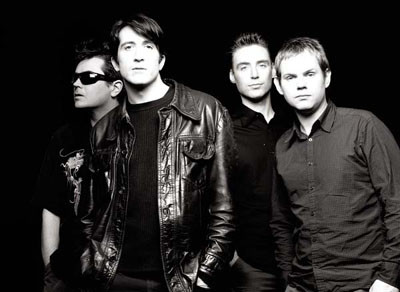
’90s cinematic guitar pop band Rialto are back after calling it a day more than 20 years ago.
The group, who emerged from the ashes of glam rockers, Kinky Machine, scored three Top 40 hits between 1997 and 1998 – the dramatic and paranoia-fuelled epic, Monday Morning 5.19, Untouchable and Dream Another Dream.
Late last year, Rialto, fronted by singer-songwriter, Louis Eliot, who has often been drawn to writing about the darker side of life and the seedy glamour of night-time London, played a comeback show at the Shiiine On Weekender indie festival in Minehead, and this month they’re appearing at The Lexington, London (January 26).
Say It With Garage Flowers met Eliot, who after Rialto split in 2002 went solo and then launched a Cornwall-based folk outfit called Louis Eliot & The Embers, in an East London pub – it was a Wednesday night 16:10 – to talk about the return of Rialto, the possibilities of a new album and vinyl reissues from the band, and why, after a health scare, he’s decided to swap rural life in Cornwall for a return to the UK’s capital city.
“I was chasing wildly after my youth, so I had a bit of a life change – I ended up living back in London,” he tells us. “It’s a cliché, but life isn’t a rehearsal – this is the moment and you’ve got to grab it.”
Q&A
So, how does it feel to be back in Rialto and playing again?
Louis Eliot: The response has been amazing.
How was the comeback show?
LE: It couldn’t have gone better – in rehearsals I felt we were good… I didn’t want to go up and do something shoddy – it felt really good and a lot of people were singing along. It was just as you’d hope it might be – it was good fun and the crowd were very friendly.
Maybe we should’ve done one warm-up gig, but just one warm-up gig isn’t going to make you sound like you’ve done 50 gigs… We rehearsed a healthy amount.
Did you enjoy playing the old songs again?
LE: I really did. It’s been nice playing them and thinking that they still stand up.
Did it bring back memories of having written some of them?
LE: I think it did… I can remember writing some of the songs, like Summer’s Over and London Crawling.
I wrote London Crawling when the record company got me a cottage in Wales – it was the only way I could focus on writing. This was pre-mobile – I’d have no telephone and just a pen and paper. In London, I’d have little ideas – I’d make notes and come up with titles.
Can you remember writing Monday Morning 5:19, which is, arguably, your most well-known song?
LE: Yeah – I was stuck for an idea for a song. My girlfriend at the time said: ‘Why don’t you write a song about an answering machine?’ It seems funny now, as they’re obsolete…
Was the songbased on real-life, or did you exaggerate the themes?
LE: A bit of both. A lot of the time with songs they’re based on some truths, but you’ve got to turn them into stories.
So, what prompted the reunion? Did you get a great offer from the organisers of the Shiiine On Weekender?
LE: It was an offer we couldn’t refuse, but we did refuse a few times… There have been one or two promoters who have been in touch over the past few years, asking if we’d be interested in doing it.
A lot of your ‘90s contemporaries had already reformed, including Sleeper and The Boo Radleys, but you resisted the urge to do it sooner?
LE: I think so – it’s taken a while to reassess what we did. You’ve got to feel like your heart’s in it.
So, why now?
LE: It just felt like it might be fun and there was interest, and then I started writing some songs as well.
You played two new songs at the comeback show – Put You On Hold and No One Leaves This Discotheque Alive. Did you purposely write some new songs for the reunion?
LE: No – I was just writing… I didn’t set out to write Rialto songs, but I thought the songs weren’t Louis Eliot & The Embers songs or a solo thing. I felt like I was picking up on themes I’d explored in Rialto and musically I was approaching things in the same way I had in Rialto.
That’s interesting. With your solo material and the songs you did with The Embers, you wrote a lot of folky, pastoral songs about country life – you were living in Cornwall at the time – and the subjects you covered in your music moved away from the themes of Rialto songs, like the seedy glamour of nocturnal London, drugs and stalkers… You’ve now moved back to London, so is that why your new music has changed and you’ve gone back to the themes and sounds you explored in Rialto?
LE: I think so – all that stuff I was doing in Cornwall was a reflection of the life I was living. I had kids and it was rural.
‘I got very ill – it was a close call. I was lying in a hospital in Spain and thinking ‘if I get through this’ – I wasn’t sure I was going to survive – ‘I’m going to have a different life’
When I was a kid, I liked the way The Clash used to mythologise their environment – I think I was doing that a little bit with The Embers. The physical space you’re in can be quite important to your songwriting.
I got very ill – it was a close call, but I’m fine now. I was lying in a hospital in Spain and thinking ‘if I get through this’ – I wasn’t sure I was going to survive – ‘I’m going to have a different life’. I was chasing wildly after my youth, so I had a bit of a life change – I ended up living back in London.
I think that perhaps the song title, No One Leaves This Discotheque Alive, sums up some of the things I was thinking. Part of it was that I wanted to be out there amongst it again, in the city.
‘I was chasing wildly after my youth, so I had a bit of a life change – I ended up living back in London’
It’s a cliché, but life isn’t a rehearsal – this is the moment and you’ve got to grab it. That song also reflects on going out at night and looking to be fulfilled in various ways – going home with somebody or getting high, or whatever it is.
So, you’ve written more new songs too…Would you like to make another Rialto album?
LE: I don’t see why not – the new songs went down really well at the show. They reflect on the night-time city stuff.
That’s what always attracted me to Rialto – the nocturnal imagery in your lyrics and the cinematic sound that was inspired by film composers like John Barry and Ennio Morricone. You wrote about the seedy underbelly of London and the darker side of life. Take When We’re Together, for example – not many people write songs about stalkers these days…
LE: (Laughs): No – and they certainly wouldn’t be putting themselves in the role of the stalker, like I did in that song.
You like to write about the darker side of life in the city…
LE: I’m drawn to it.
You’ve gone from the embers of the bonfire back to the sodium glow…
LE: Yeah – exactly. As I was writing the new songs and I thought ‘this is a Rialto record’, I started to do some recording, but I wasn’t working them up with a band – I was doing them at home with a tiny keyboard and a laptop, which had a parallel with the Rialto stuff.
Kinky Machine and The Embers, in their different ways, were both live bands – I’d write the songs, take them to the band and we’d arrange them, whereas Rialto and the new stuff was done in a studio way, but it was very simple.
Rialto
When we started Rialto, we were given a bit of recording equipment – it was basic by today’s standards… I think it was an 8-track and we had a little reel-to-reel in Jonny’s [Bull – guitarist] flat, a sampler, a bass and a guitar…
‘The new stuff doesn’t sound like Rialto-by-numbers, but it has elements that you’ll recognise, as well as some other influences that I didn’t tap into at the time, like disco’
In Kinky Machine, we felt we were shackled by a creative straitjacket, so, [with Rialto] we allowed ourselves to get a bit broader with the production and we could tap into those things you’ve mentioned, like Barry and Morricone.
The new stuff doesn’t sound like Rialto-by-numbers, but it has elements that you’ll recognise, as well as some other influences that I didn’t tap into at the time, like disco.
Rialto went more electronic and ’80s pop on the second album, Night On Earth…
LE: Yeah – that’s true.
‘We had a lot of luck and a bit of bad luck… Looking back at it, it’s like a comedy’
Didn’t you support Duran Duran?
LE: Yeah – we did a whole UK arena tour with them. We got to hang out with them a fair bit – it was funny. Simon Le Bon was really likeable – he was a loveable buffoon – and I liked his enthusiasm for what he was doing. He was loving his life.
Did they let you go on their yacht?
LE: They didn’t bring the yacht…
Rialto had a lot of record label troubles – you were dropped by East West before your debut album came out – which didn’t help your career. Would you have liked to have been more successful?
LE: Probably, but I didn’t dwell on it for too long. I wasn’t going to allow myself to get bitter about it. We had a lot of luck and a bit of bad luck… Looking back at it, it’s like a comedy.
Have you ever thought about writing a book?
LE: It’s been suggested a couple of times.
Why did Rialto split up?
LE: It petered out – I went to America and did some demos, and Jonny was doing something else…
The two Rialto albums – the self-titled debut and the follow-up, Night On Earth, haven’t been reissued. Wouldn’t it be nice to have them out on vinyl? Were they available on vinyl when they were released?
LE: There was a small vinyl run of the first album. I’d like to have them reissued on vinyl – I’ve had a couple of people approach me about that.
It’s great to have Rialto back and I’m looking forward to seeing you play live again. Is it OK to play a song about being a stalker in 2024?
LE: Let’s give it a go.
Rialto play The Lexington on January 26: the gig is sold out. You can join the ticket waiting list here.
It’s been five years since I became a freelance journalist and 2023 was my best year so far – thanks largely to me being asked to host a new podcast called Made By Music for British hi-fi brand Cambridge Audio.
The series, which is available exclusively on Spotify, sees me interviewing guests, including musicians, producers, actors / comedians and authors, about their life and career, and asking them to choose four ‘Music Moments’ – a song from their childhood, a track that’s influenced them, one of their own songs or one that’s connected to their career, and their ultimate track.
We play the songs and discuss why they’re important to my guests.
I’ve spoken to some fascinating, inspiring and entertaining people, including Boy George, Fatboy Slim, P.P. Arnold, Youth, Jazzie B, Andy Bell (Ride and Oasis), Miki Berenyi (Lush), Sice (The Boo Radleys), James Lavelle (UNKLE), Matt Berry, Stephen Street, Alexis Taylor (Hot Chip), Irvine Welsh, Mark Billingham, Billy Duffy (The Cult), Neil Barnes (Leftfield), James Skelly (The Coral), Paul Hartnoll (Orbital), Romesh Ranganathan and Chris Difford (Squeeze).
It’s been a lot of fun to do – I’d like to thank Cambridge Audio for asking me to get involved – and we’ve got more episodes planned for 2024.
As my freelance work has increased over the past 12 months, it’s meant that I’ve had to put my blog, Say It With Garage Flowers, which has been a labour of love for almost 15 years, on the backburner.
‘The Made By Music podcast has been a lot of fun to do – I’d like to thank Cambridge Audio for asking me to get involved – and we’ve got more episodes planned for 2024’
It will return in the new year – one of my resolutions for 2024 is to publish more articles on it – but, in the meantime, here’s a list of my favourite albums of this year and some thoughts on a few of them.
James Lavelle and Sean Hannam
If you’ve listened to the podcast this year, then thanks so much for your support – I’ve had lots of great feedback about the show and it’s been really well received in the audio and music industries.
It’s also been a brilliant opportunity for me to listen to a lot of great music – both new and old – and I hope you find plenty to investigate and enjoy while looking at my choices for the Best Albums of 2023 and listening to the accompanying Spotify playlist. Here’s to plenty more Music Moments in 2024.
Best Albums of 2023
Back in 2018, I chose UK Americana supergroup Bennett Wilson Poole’s self-titled debut album as my favourite record of that year.
Now, five years later, the long overdue follow-up, I Saw A Star Behind Your Eyes, Don’t Let It Die Away, has made it to the top of my list of the best albums of 2023 – I thought it was even better than its predecessor.
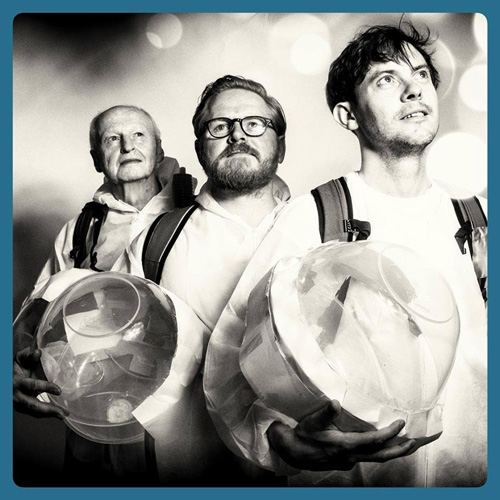
The first record by Bennett Wilson Poole – Robin Bennett (Goldrush, Dreaming Spires), Danny Wilson (Grand Drive, Danny and the Champions of the World), and Tony Poole (Starry Eyed and Laughing – ‘the English Byrds’) – was only ever intended to be a one-off collaborative project, but the group’s chief songwriters, Bennett and Wilson, soon found themselves working on new material and before they knew it, they had enough tunes for a follow-up record.
Sadly, due to Covid restrictions and also Poole suffering from health issues, album number two was delayed, but it finally came out in the spring of 2023.
Bennett Wilson Poole – photo by John Morgan
It didn’t mess around – opening song, I Saw Love was life-affirming and harmonic power pop, in the vein of The Byrds and The Beatles.
“I was going for an early Beatles sound,” says producer Poole. “I played everything on it. I remember Danny and Robin’s astonished faces when I played them the track which was created around their basic guide acoustic guitars and vocals.”
Poole, who as well as being a studio wizard – his inventive and playful production techniques transform Bennett and Wilson’s songs into gloriously rich pocket symphonies – is also king of the jangly, electric 12-string Rickenbacker guitar, which features prominently in the band’s sound, along with their superb vocal harmonies and arrangements.
The ending of I Saw Love features a sixth note harmony that recalls The Beatles’ She Loves You. It’s just one of many moments on the album that reference classic rock and pop songs – listeners will have fun trying to spot them all.
Tie-Dye T-Shirt has an intro that pays homage to The Who’s Won’t Get Fooled Again and features a vocal refrain of ‘open up your eyes,’ which echoes Everlasting Love by ‘60s British pop band Love Affair.
“When Danny and Robin first laid down the basic voice and acoustic guitar track, they’d envisaged it as a Gram Parsons-type country song – little did they know,” says Poole. “I’d already somehow been inspired to reference The Who, but I don’t know where that came from – no special pills were involved.”
Bennett Wilson Poole’s first album was in love with the vintage sounds of America’s West Coast, but this collection of songs owes more to British ‘60s psych-pop like The Beatles and The Zombies.
“This album is all the ‘Bs’ – The Byrds, Big Star, The Beatles and The Beach Boys. We’re massive fans of Odessey and Oracle by The Zombies, too. We were listening to stuff like that,” says Wilson.
I Wanna Love You (But I Can’t Right Now) is about having a love/hate relationship with the USA – how the country’s dark political situation over the past few years has overshadowed all the great culture and art it has produced throughout history.
“It’s a love song to America, but how everything that has gone on there has sullied it. The UK is hard to love sometimes too,” says Wilson.
Adds Bennett: “I really like that song. I can remember it started when we were driving back from a gig and Danny had an idea for the chorus, which was almost like a parody of The Backstreet Boys’ I Want It That Way but flipping it and making it about politics and culture.”
He adds: “There were quite a few references that didn’t make it into the song and there are a few that I don’t think people will ever find. There’s a bit of Walt Whitman and Allen Ginsberg.”
‘Bennett Wilson Poole’s first album was in love with the vintage sounds of America’s West Coast, but this collection of songs owes more to British ‘60s psych-pop like The Beatles and The Zombies’
It’s an irresistible and infectious song – the chorus is a killer – and one of the album’s few country rock moments.
The other is the gorgeous and nostalgic Cry At The Movies. Written about an old man who was born at the start of World War II and fell in love with the silver screen, it sounds like Neil Young teaming up with The Byrds circa Sweetheart of the Rodeo.
Album closer, the dream-like The Sea and The Shore, is a topical anti-hate song – a heartfelt and moving plea for unity, which started off as a home demo with Bennett at his piano.
“I played everything else on it,” explains Poole. “It was a bit like Jeff Lynne working on John Lennon’s home recordings to create Free As A Bird and Real Love. Danny put some harmonies on the verses too.”
He adds: “As a final reminder, I extended the last chord in the way that A Day In The Life does. It just seemed that the song’s sentiments should still be playing for ever, long after the record was over.”
Says Poole: “I think all the songs talk about that the love concept that Ringo always goes on about. We’re not The Beatles – we don’t have that reach – but we’re putting a little bit of something out into the world to counteract all that hate that is around at the moment. Love may not be all you need, but it’s absolutely the basis for everything.”
This is a fab album that it’s thrall to old-fashioned pop music, and classic rock ‘n’ roll. What’s not to love about that?
Quite a few of Say It With Garage Flowers’ favourite acts released new albums in 2023 and all of them were great.
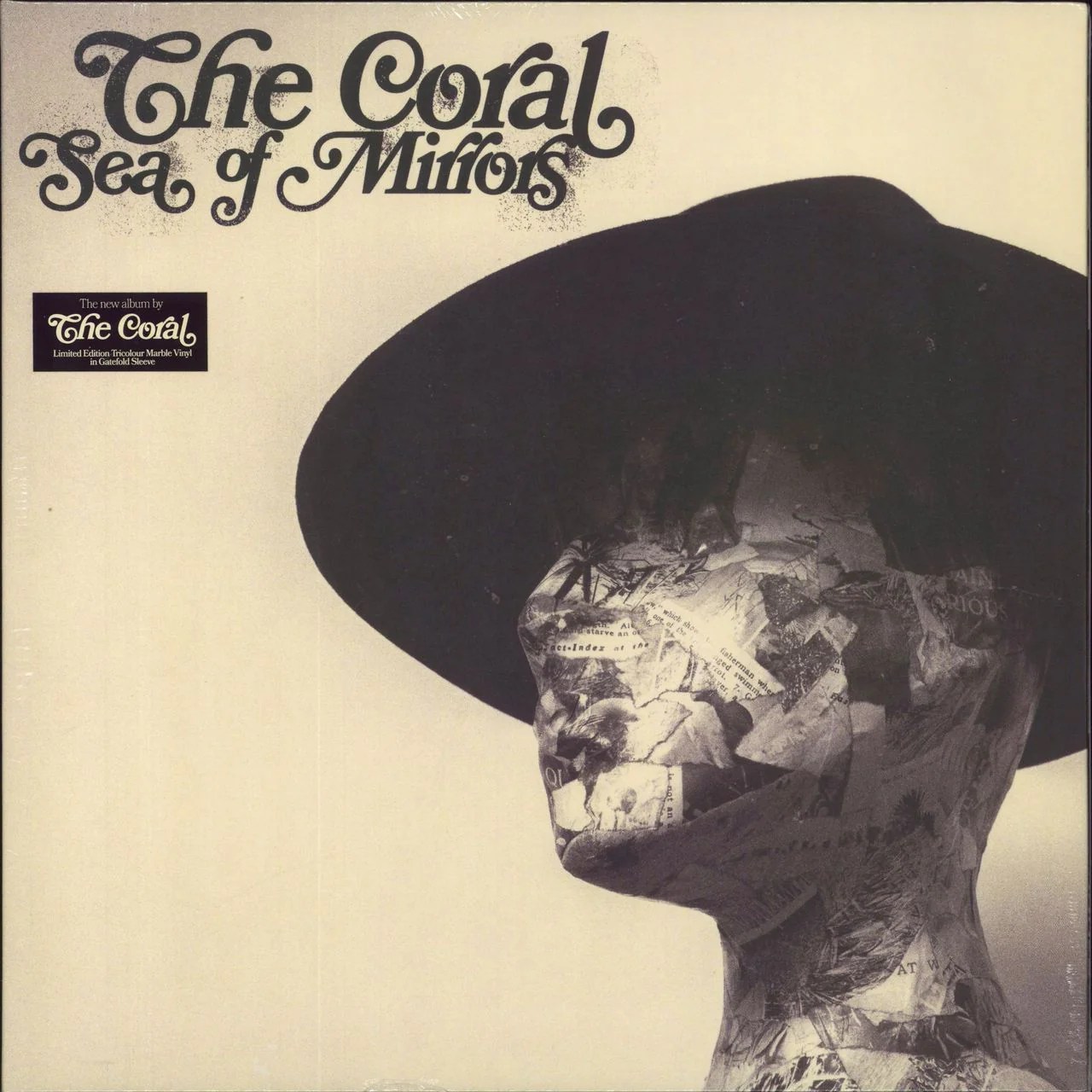
Liverpudlian psych-folk-pop band The Coral put out two brilliant records on the same day – their eleventh album proper, Sea of Mirrors, and a companion piece, the pirate radio-themed murder ballads and country-flavoured Holy Joe’s Coral Island Medicine Show, which was only available on physical formats.
Both albums were the last records to be made at Liverpool’s Parr Street Studios and followed on from 2021’s brilliant 24-track double concept album Coral Island, inspired by faded British seaside glamour, childhood holidays to North Wales, end-of-the pier amusements, pre-Beatles rock ‘n’ roll and jukebox pop.
Musically, Coral Island’s influences included Duane Eddy, Chuck Berry, Sun Records, Joe Meek, The Kinks, The Byrds and Crosby, Stills & Nash.
“After we’d put Coral Island to bed, our co-producer, Chris Taylor at Parr Street, asked us if we wanted to make the last album ever made at the studios,” says Coral frontman, James Skelly.
“We didn’t really have any new songs at that point, so I just sat down and wrote some.
“It got to point where we were going in and just writing things in there, on the day. It kind of felt like the walls were crumbling around us as we were in there recording every day.”
He adds: “I took what we’d done home and started to realise that we might have made two albums. There was one that had more of a story to it, sounding in a way like our version of country, the other a bit more stream of consciousness. At that point, it’s a case of wondering: well, what haven’t we done? Nobody’s ever given us a film soundtrack, so we decided to make a version of our own.”
‘After we’d put Coral Island to bed, our co-producer asked us if we wanted to make the last album ever made at the studios. We didn’t really have any new songs at that point, so I just sat down and wrote some’
So, Sea of Mirrors was The Coral’s take on a surreal, European Spaghetti Western soundtrack and was partly inspired by the Wim Wenders movie The State of Things, in which a film crew are trying to make a movie in Portugal in the 1950s and the story revolves around everything that happens on and around the set.
Another inspiration for the album was Lee Hazlewood’s A Cowboy In Sweden – a soundtrack to a 1970 TV special, which is very cinematic and psychedelic.
Says Skelly: “I was listening to A Cowboy in Sweden and thinking is there anything more ridiculous and Coral than a European Western?”
Sea of Mirrors opens with the atmospheric and folky scene-setting instrumental The Actor and The Cardboard Cowboy and then there are more folk influences at play on the haunting, autumnal and ‘60s sounding Cycles of The Seasons, which has a gorgeous, swooning string arrangement by Sean O’Hagan (The High Llamas and Stereolab), who previously worked with The Coral on 2010’s Butterfly House.
Similarly evocative is the beautifully dreamy Faraway Worlds, which has a Beach Boys-style vocal harmony interlude and could’ve come off Pet Sounds it’s that good.
First single, the upbeat Wild Bird, plunged us into familiar Coral territory, with its twangy guitar and infectious chorus. It’s a campfire cowboy song mixed with Northern folk sounds – Ennio Morricone meets Merseyside.
Twangy guitars ride again on the superb North Wind, which is haunted by the ghost of Joe Meek.
The title track is delicate and wistful psych-pop, while the ‘60s-influenced That’s Where She Belongs pulls out the twangy guitars yet again, and The Way You Are is a lovely, mesmerising ballad, with a great orchestral arrangement – fittingly, it sounds like the theme song to a long-lost ‘60s cult film.
And, on that note, this soundtrack to a movie that doesn’t exist ends with a fitting and dramatic finale – the string-laden Oceans Apart, which features narration by Oppenheimer and Peaky Blinders actor Cillian Murphy.
Brilliantly, the band described the track as ‘the Bohemian Rhapsody Queen would’ve written if, instead of touring the world, they stayed in watching cinecittà studios films and listening to Gene Clark.’
It was great to take another trip into the wonderfully weird world of The Coral. Who knows where they’ll go next.
You can listen to me interviewing James Skelly on the Made By Music podcast here:
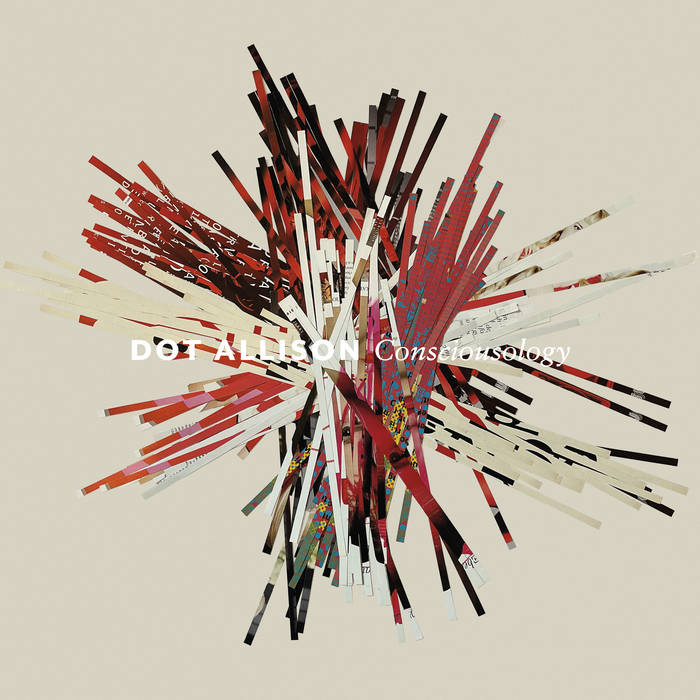
You wait ages for a Dot Allison album to come – 12 years in fact – and then two arrive in quick succession.
Hot on the heels of 2021’s superb Heart-Shaped Scarscame the equally impressive Consciousology, which felt very much like a companion piece to its predecessor, with similar lyrical themes and ideas, including science, nature and botany, as well as musical influences like folk singers Tim Hardin, Karen Dalton and Nick Drake, the mid-‘60s pop symphonies of the Beach Boys, electronica, avant-garde composers, cinematic string arrangements, pastoral atmospherics and psychedelic sounds.
Ride guitarist and sonic experimentalist, Andy Bell, guested on two tracks – the first single, a gorgeous, love song called Unchanged, and Double Rainbow, which featured the electrical activity of a plant translated into pitch variations. That’s something you don’t hear every day.
Recorded with the same team as Heart-Shaped Scars, namely co-producer Fiona Cruickshank and orchestral arranger, Hannah Peel, Consciousology was a stunning collection of immersive and often hauntingly beautiful songs, some of which featured the London Contemporary Orchestra.
Commenting on whether the record was a concept album, Allison said: “It’s me wanting to have an excuse to talk about things I feel passionate about and it informs the lyrics.
“It is a wee bit of a concept album in as much as the reason it’s called Consciousology is because I’m really interested in the study of consciousness – there’s quite a lot of evidence to suggest that consciousness extends beyond the brain and that it could be electromagnetic. I’m fascinated by it and I want to talk about it and put it out there – to be a wee droplet in an ocean of conversation. I’ll put the concept in there but not at the expense of the song – the song has to win…”
For his debut solo album, Richard Olson & The Familiars, the frontman of London’s cosmic country kings, The Hanging Stars, and former member of The See See and The Eighteenth Day of May, let his freak flag fly, with stunning results.
It was a wonderfully eclectic and inventive record, opening with the spacey, Primal Scream-style psychedelic dub of I Can’t Help Myself, before movin’ on up to the irresistible and breezy, orch-pop of Fall Into My Hands, taking a detour into the English countryside for the gorgeous ‘60s and ‘70s pastoral folk of Down Looking Up, heading to a Swedish forest for the Lee Hazlewood twilight croon of A Thousand Violins and then moving into krautrock territory for the hypnotic Little Heart.
Elsewhere there’s a Spacemen 3-inspired cover version of Air by Brit-folk-psych outfit The Incredible String Band, a homage to the garage-rock of early Brian Jonestown Massacre records (I’m A Butterfly), a Velvet Undergroundesque spoken word piece (Rain) and the haunting, psychedelic folk lullaby Inside Sunshine.
“I had a bunch of songs and I didn’t know what I wanted to do with them, so I was like it, ‘Fuck it – I’m just going to make a record!’ the Swedish-born singer-songwriter told Say It With Garage Flowers. “The rules were completely thrown out of the window – that was fun.”
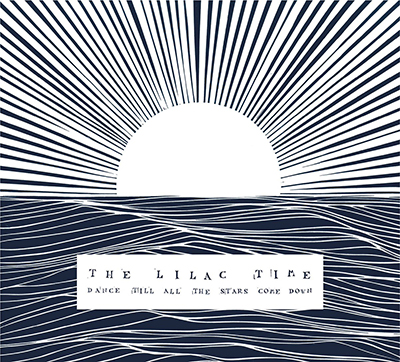
Big issues such as climate change and wildfires (Adiós And Goodnight), the plight of Syrian refugees, the rise of Trump, (A Makeshift Raft) and the cruelness of the Tory government (The Long Way) were all subjects that singer-songwriter Stephen Duffy explored on The Lilac Time’s latest album, Dance Till All The Stars Come Down.
Their first album since 2019’s Return To Us and the eleventh since they released their eponymous debut in 1987, it was a wonderful record. Acoustic, stripped-back, sparse and intimate – it doesn’t feature conventional drums or bass – it had a rustic country-folk feel. It was also very much a family affair – The Lilac Time comprises Duffy, his brother, Nick, and wife, Claire.
Stephen Duffy
‘Getting rid of the bass and drums and focusing on the guitar playing and the singing made it feel better for me – it forced me to concentrate more on the songs because there was nothing to hide behind’
Ben Peeler played pedal steel guitar and the songs were beautifully mixed and mastered by the Grammy-winning John Paterno, who has worked with The Lilac Time since 2015 – his other clients include Bonnie Raitt, Badly Drawn Boy and Robbie Williams – Duffy co-wrote songs with Williams in the early Noughties.
Talking to Say It With Garage Flowers, Duffy said he thought Dance Till All The Stars Come Down was his best record yet: “I suppose you always think that, and then years later, you think, ‘that was a load of old nonsense’. But, with this, getting rid of the bass and drums and focusing on the guitar playing and the singing has made it feel better for me – it forced me to concentrate more on the songs too, because there was nothing to hide behind. ”
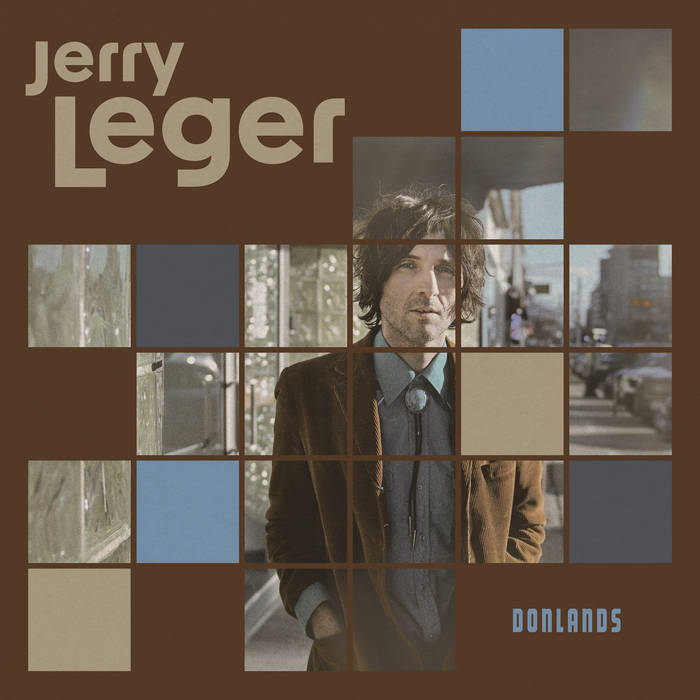
Toronto singer-songwriter, Jerry Leger, has enjoyed a long working relationship with fellow Canadian musician and producer, Michael Timmins (Cowboy Junkies), but for his 2023 album – Donlands, which was his fourteenth, he opted for someone else behind the controls – another Canadian music legend, producer / engineer, Mark Howard, who’s worked with Bob Dylan, Neil Young, Tom Waits and Lucinda Williams.
“Not a lot of people make records like Mark Howard anymore,” says Leger. “After I got to tell him how much Tom Waits’s Real Gone meant to me, I fell right into the experience.
‘Leger’s latest album was his most atmospheric, sonically interesting and striking yet – largely a departure from his folk, blues-rock and Americana roots for a spooky and intimate, cinematic soul sound’
“Like all my albums, we recorded Donlands mostly live in the studio with my band The Situation (Dan Mock, Kyle Sullivan and in a circle – no headphones, just listening and existing, breathing as a whole. To me, it’s a record that lives in its own world.”
Named after the street in Toronto’s east end, where it was recorded, in what once was the Donlands theatre, Leger’s latest album was his most atmospheric, sonically interesting and striking yet – largely a departure from his folk, blues-rock and Americana roots for a spooky and intimate, cinematic soul sound.
Low-key opener, Sort Me Out, its lyrics inspired by conversations Leger had with his therapist, was his take on an old-fashioned rhythm and blues/ soul ballad – Johnny Ace and Roy Orbison influenced the feel – with late-night electric piano and organ.
There was more organ on the moody and swampy I Was Right To Doubt Her – a haunting, Tom Waits-like song about addiction that sounded like it had emerged from the fog on the bayou. It also has a Dylan Time Out Of Mind vibe, which comes as no surprise – Howard was an engineer on that record and Leger is a huge fan of it.
Three Hours Ahead Of Midnight resembles a ‘60s country-soul standard – it could’ve been written by Dan Penn and Spooner Oldham, it’s that great.
You Carry Me is the record’s heaviest moment and its most upbeat. It has a funky, fuzzed-up, playful groove that recalled the Velvet Underground and Iggy Pop.
I Need Love is stunning – an aching and nakedly honest country ballad with pedal steel, while Out There Like The Rain cocoons the listener in what could be weird, warm electronica, which, with touches of pedal steel, creates a startling, sci-fi country soundtrack.
The closer, Slow Night In Nowhere Town, is another spellbinding country song – it’s easy to imagine it playing on a jukebox in a dark corner of a bar in a backwater town, with just the barkeeper and a couple of lonely regulars to keep it company.
“This song has a cinematic quality,” says Leger. “I see bright neon lights and no one around. It has a windshield wiper rhythm, which I think is perfect.”
Matt Deighton, the former frontman and guitarist of ‘90s English acid jazz outfit, Mother Earth, who has played and recorded with acts including Paul Weller, Dr Robert (The Blow Monkeys),Mick Talbot (The Style Council) and Squeeze’s Chris Difford, has made a string of brilliant soulful and rustic solo albums, steeped in folk-horror, mod-rock and pastoral beauty, but yet he remains one of Britain’s best kept secrets.
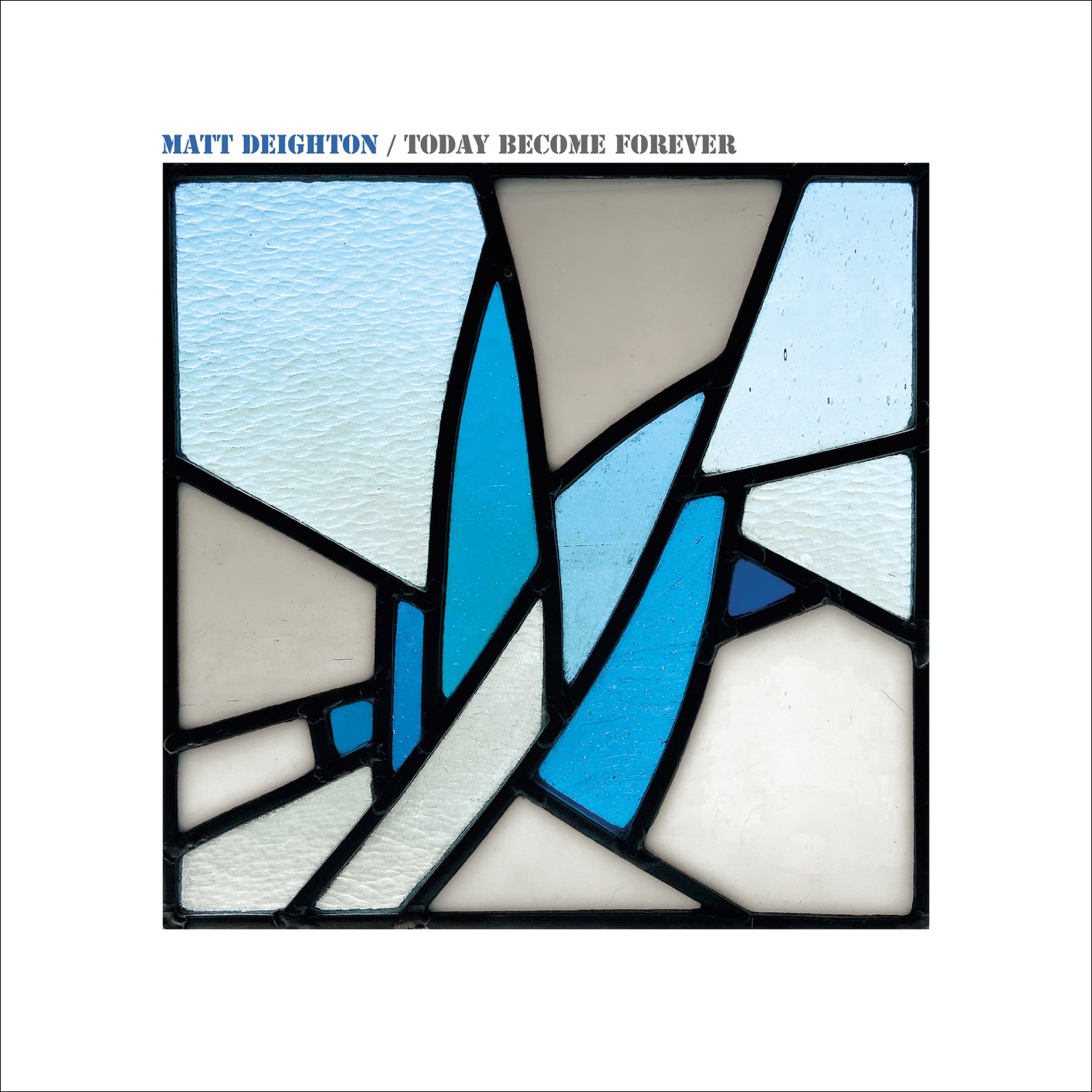
His latest album, Today Become Forever – his seventh and first since 2018 – is one of his best.
The record, which is the follow-up to 2018’s Doubtless Dauntless, was produced in part by Ken Scott (The Beatles, David Bowie, George Harrison) and Deighton himself.
Opening song and first single, A Song That’s On My Mind, is a sturdy and rousing, Weller-like mod-rock anthem, with a heavy soul feel thanks to a great brass arrangement by sax player and flautist, Jacko Peake, while things take a more laid-back turn on the gorgeous and folky ballad, High Time (Figured It Out), which has soaring strings and splashes of country piano.
The stripped-down Stringless Heart – acoustic guitar and strings – is a great showcase for Deighton’s playing and his aching vocals, as is the jazzy Letting Go, which has some lovely flute by Peake on it, giving it a Nick Drake circa Bryter Layter vibe.
The big brass sound is back on the upbeat Ruthless Grin – another slice of powerful mod-rock with a vocal part by Deighton’s wife, Clare.
Matt Deighton
Anhedonia – named after the inability to feel pleasure – is one of the album’s heavier moments, with a great, fuzzed-up guitar sound that’s reminiscent of Blur’s Graham Coxon, whereas Snow Lit Lovers is tender and cinematic – an atmospheric and intimate soundtrack for long winter nights.
Second single, When All Heaven Breaks Loose, is a moody and autumnal ballad that feels like it was written about Deighton’s well-documented battle with anxiety and depression, but amidst all the sadness, it has a yearning and hopeful quality: “When the winter’s over and the leaves turn green – when the rain stops pouring down… When your heart is open, but love doesn’t come, could you make it on your own? I need something to take me – I need something to break me out of this blue.”
If you need something to listen to as 2023 turns to 2024, here’s my list of the 60 best albums of the year, along with a Spotify playlist.
See you on the other side…
Say It With Garage Flowers: Best Albums of 2023
Bennett Wilson Poole – I Saw A Star Behind Your Eyes, Don’t Let It Die Away
The Coral – Sea of Mirrors
The Coral – Holy Joe’s Coral Island Medicine Show
The National – First Two Pages of Frankenstein
The National – Laugh Track
Matt Deighton – Today Become Forever
Dot Allison – Consciousology
Jerry Leger – Donlands
The Lilac Time – Dance Till All The Stars Come Down
Depeche Mode – Memento Mori
Richard Olson & The Familiars – Richard Olson & The Familiars
Andrew Gabbard – Cedar City Sweetheart
Cut Worms – Cut Worms
Pete Molinari – Wondrous Afternoon
Gaz Coombes – Turn The Car Around
Vinny Peculiar – How I Learned To Love The Freaks
Emma Anderson – Pearlies
Billy Valentine and the Universal Truth – Billy Valentine and the Universal Truth
Edgar Jones – Reflections Of A Soul Dimension
Nick Waterhouse – The Fooler
Blur – The Ballad of Darren
Noel Gallagher’s High Flying Birds – Council Skies
Iraina Mancini – Undo The Blue
The Ironsides – Changing Light
Whatitdo Archive Group – Palace of a Thousand Sounds
The Long Ryders – September November
The Mariners – Four Sides of the Circle
The Black Delta Movement – Recovery Effects
Rose City Band – Garden Party
Those Pretty Wrongs – Holiday Camp
Wilco – Cousin
Teenage Fanclub – Nothing Lasts Forever
Dropkick – The Wireless Revolution
Burning Ferns – World of the Wars
William Matheny – That Grand, Old Feeling
Cowboys In The Campfire – Wronger
Luke Tuchscherer – Widows & Orphans
Jenny Don’t and The Spurs – Fire On The Ridge
GA-20 – Live In Loveland
Jim Bob – Thanks For Reaching Out
Andrew Weiss and Friends – Beverly Hills, Thanksgiving Day









 Say It With Garage Flowers