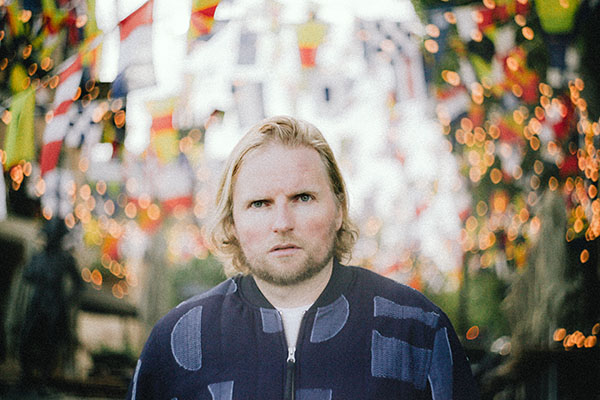
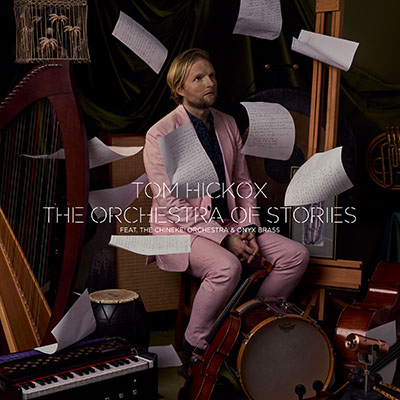
This month sees the release of The Orchestra of Stories, the long-awaited third album by baritone-voiced singer-songwriter and pianist, Tom Hickox.
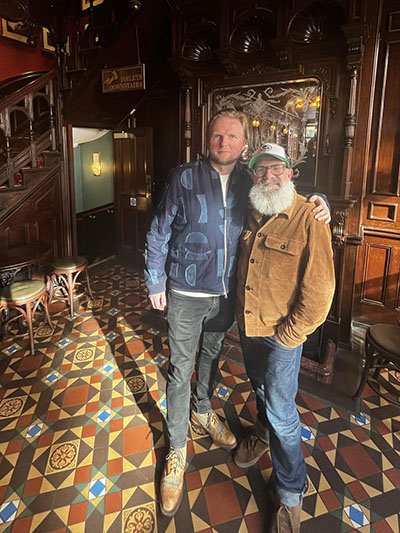
Most of the best stories are told in pubs, so, fittingly, to talk about his new record, which is a grandiose affair, inspired by the lush, dramatic and mysterious sound of Scott Walker’s seminal solo albums of the late ’60s, Say It With Garage Flowers invited Hickox to a Central London boozer on the last day of winter this year.
The Orchestra of Stories is a stunning piece of work – a set of largely story-based songs on which the London-based Hickox has collaborated with the Chineke! Orchestra – Europe’s first majority black and ethnically diverse orchestra – and the Onyx Brass ensemble, as well as guitarist, Shez Sheridan, from Richard Hawley’s band.
As if that wasn’t adventurous enough, Hickox produced the album himself, which was a first for him.
“It wasn’t initially my intention to produce it myself,” he says, sipping a pint of lager in a quiet corner of the pub, where the winter sun is streaming in through the window behind us.
“I co-produced my first one with Colin Elliot, who works with Richard Hawley, and I produced the last one with a bassist friend of mine called Chris Hill.
“I really enjoy collaborating, because, otherwise, it’s quite lonely, but I met up with a couple of people and talked to them about doing this record, but nothing clicked, so I just started getting on with it myself.”
He adds: “As I started getting into it, I realised quite soon it was my vision and that I had to do it because of the way it was forming. It’s a massive production and it took a long time to get together – it required lots of different studios, lots of musicians and lots of money!”
The orchestral arrangements were recorded in London’s AIR Studios, while other parts, including vocals, drums, bass, piano and guitar, were laid down in studios in North and South London and Sheffield.
The Orchestra of Stories is Hickox’s first album in eight years, since 2017’s Monsters in the Deep. “The new album took a long time to record, and that was elongated by Covid,” he says, adding that he also had to deal with some personal issues, which further delayed his plans for the record.
“It all happened about six months later than I would’ve wanted, and because it’s been so long, we’ve been kind of rebuilding from the ground up,” he says. “And so here we are, eight years later…”
Q&A
How does it feel coming back with a new record after eight years?
Tom Hickox: I’m incredibly proud of it and I’m excited to share it – I’ve been desperate to do it for a couple of years.
Is it the album you’ve always wanted to make?
Tom Hickox: Yes – it is, and it’s exactly the sound that I love. It’s the sort of record where people would say to me, ‘Oh, mate – we don’t need 17 string players on this – we’ll just get a quartet…’, but I was like, ‘woah, OK then, whatever….’
If you’re going to do it, do it properly, even if it means going down in flames… Don’t scrimp on the strings… I know you can use great orchestral samples these days, but it’s not the same, is it?
Tom Hickox: Yeah. I was very lucky to work with the best of the best in terms of players, but it’s also the imperfections of recording real people… That’s what makes it special. I’ve got an incredible library of samples at home, but they’re not real…
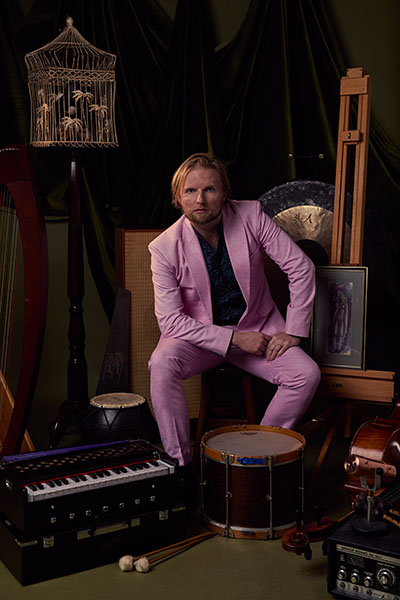 You worked with the Chineke! Orchestra – Europe’s first majority black and ethnically diverse orchestra…
Tom Hickox: That in itself is very unconventional – they contributed the string section to the album, which was a real honour for me. Their mission is to champion the cause of black and ethnically diverse composers, as well as the players themselves, but I’m not that, so I was bloody lucky. I also had a friend in Onyx Brass – I asked them to be a part of the record a very long time ago because I knew that I’d written some brutally difficult trumpet parts…
So, you wrote all the arrangements for the record?
Tom Hickox: Yes – everything.
Are you classically trained?
Tom Hickox: Not really.
Your dad was a conductor, wasn’t he?
Tom Hickox: Yes – I have it in my blood…
Do you write on piano?
Tom Hickox: Yes – everything starts there and then I take the arrangements onto a computer…
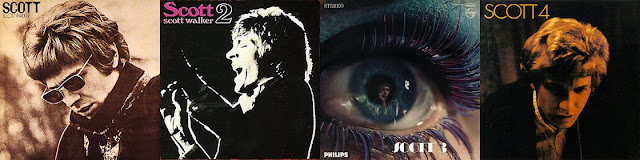
The album often reminds me of ‘60s Scott Walker – particularly his four solo albums: Scott, Scott 2, Scott 3 and Scott 4. Is he a big influence on you?
Tom Hickox: He is – that sequence of albums is the biggest influence on this record. I love him, his voice and his songwriting, and also his choice of covers, but it’s the creation of that sound world that resonated with me when I first heard it. Tons and tons of artists use strings and brass to add colour but often the choice of arrangement can be dull – it’s just padding out what’s already there… There are moments on those Scott Walker records where the choice of tone or articulation is so clever… I wanted to bring some of that [to my record] and make the orchestral palette fundamental to it.
‘I love Scott Walker – his voice and his songwriting, and his choice of covers, but it’s the creation of that sound world that resonated with me when I first heard it’
Your song Lament for the Lamentable Elected has a real Scott Walker feel, and on The Failed Assassination of Fidel Castro, you play the part of Marita Lorenz, who was tasked by the CIA to seduce the Cuban revolutionary and put poison in his moisturiser but ended up becoming his lover. That’s the sort of story I could imagine Scott Walker writing and singing about – on his 2006 album, The Drift, there’s a song called Clara, which he described as a “fascist love song,” and it references Benito Mussolini’s mistress, Claretta Petacci. That’s not too far away from the sort of subject matter you might explore…
Tom Hickox: For sure… I’d like to think so. I’m always looking for interesting angles on something you may know already, or a nugget of humanity that I can seize upon and have fun with.
Neil Hannon of the Divine Comedy is often compared to Scott Walker… I think your song, The Shoemaker, has an early Divine Comedy feel…
Tom Hickox: That’s a huge compliment – he’s a very clever and fantastic songwriter.
Shez Sheridan, who is Richard Hawley’s guitarist, plays on your new album…
Tom Hickox: He is on the whole record, and he’s the only musician who has featured on all my albums – he will be forever associated with Richard, and rightly so – that’s an amazing relationship – but he is very important to my sound as well, and I’ve learnt so much from him.
You write about characters and stories, but you put yourself into the songs too, like on Chalk Giants, which has a bucolic feel and is about travelling and trying to find a meaning to life…
Tom Hickox: A lot of my songs are about looking for a sense of belonging or home, in an abstract way – that place you feel comfortable and happy in. For most of us that’s a lifelong battle. I’ve always loved the romance of the great American road trip and with Chalk Giants I thought it would be interesting to write my very British version of that.
It’s like Route 66 but…
Tom Hickox: Via Lewes (laughs).
‘A lot of my songs are about looking for a sense of belonging or home, in an abstract way – that place you feel comfortable and happy in. For most of us that’s a lifelong battle’
Chalk Giants feels like more of a personal song than a character one…
Tom Hickox: Yes, but even when I am obviously inhabiting another character, and putting myself into them, that’s maybe when I’m most successful… I love the tension and the blurred line between the voice I’m inhabiting and my own inner voice that’s coming through. I always enjoy that in other artists and it interests me as a writer.
When it comes to performing live, part of my show that’s developed over the past 15 or 20 years is to tell a lot more of the stories and talk a lot more. You can give people a way in and make the whole experience richer. When I was very young, I was like, ‘oh, no – the songs must speak for themselves…’ but as the years have rolled by I’ve seen that it really helps people to get the most out of the songs… People say they like to hear the stories.
On that note, the first song on the album, The Clairvoyant, which is intriguing, dramatic and mysterious, was inspired by a story in the US, where a man was hustled out of his life savings by a fraudulent female psychic…
Tom Hickox: It’s really sad… There’s a whole notion that someone could be led that far down the line… It’s so tragic, and the way I decided to frame it… The first two words are ‘She said,’ and the rest of the song is the stuff she said to him to pull him in…
Despite the subject matter, the song has a romantic feel…
Tom Hickox: Yes – it’s a seduction of sorts, I suppose… Throughout the song there’s some distant guitar feedback underneath the beautiful violin line – it’s a kind of drone, and, at the end, you just hear a crackle of noise from an amp and then it flicks off. I had that in my mind – that it was the severance of the connection with a past life.
Game Show was the first song to be released from the album – it’s a dark and powerful piece of music, tackling politics and issues around privacy and security. It was inspired by Edward Snowden’s revelations, the Cambridge Analytica personal data scandal and the controversy surrounding Trump’s presidency…
Tom Hickox: It’s one of my favourite arrangements – the combination of the orchestra and the band. It’s a sort of John Barry thing, with baritone guitar…. that ’60s and ’70s thing. It slightly sits apart from the rest of the album thematically and it has some extra factors – imagined news footage and game show effects.
It has guest appearances by CNN’s Clarissa Ward, the BBC’s Nick Beake and the actor, Rory Kinnear…
Tom Hickox: That’s a good line-up… Originally, I was going to have samples [of news reports], but I was quoted a quarter of a million dollars to use them for only about 20 seconds… So, I had to think again. The song also looks at the connection between Elon Musk and Trump, and, if you want to widen the lens, it’s also about trillionaire oligarchs – people who have greater wealth than nation states… That’s quite something, and, when the song was released, in a tiny way we saw the sharp end of it because it was throttled enormously on social media.
The final song on the album, The Port Quin Fishing Disaster, was inspired by the legend of an abandoned Cornish fishing village, which is not a story I was familiar with…
Tom Hickox: That makes it interesting to me. I like to write about things that people don’t know about. Port Quin is a magical little place and I know it well – I like to walk there, but I didn’t know about the history of the village until relatively recently. I heard about it at a gig by the Cornish sea shanty band, Fisherman’s Friends.
My dad is buried in Cornwall and I got married there. Talking about looking for home, although I’m not Cornish and I’ve never lived in Cornwall, it’s probably where my heart is.
So, you’re launching the album in London with a show at Kings Place on May 9. Will that be with an orchestra?
Tom Hickox: It’s going to be as much as we can afford. There will be my full band, a string quartet, trumpet, trombone and French horn. It will be a nice mixture of the new album and some songs from the other records, with some chat in-between – it’s going to be a big show.
The Orchestra of Stories is released on April 25 (Family Tree Records).
For live dates, click here.


 Say It With Garage Flowers