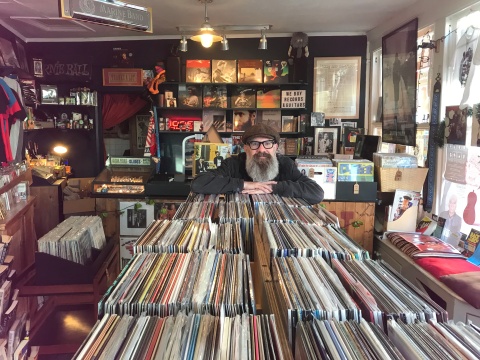
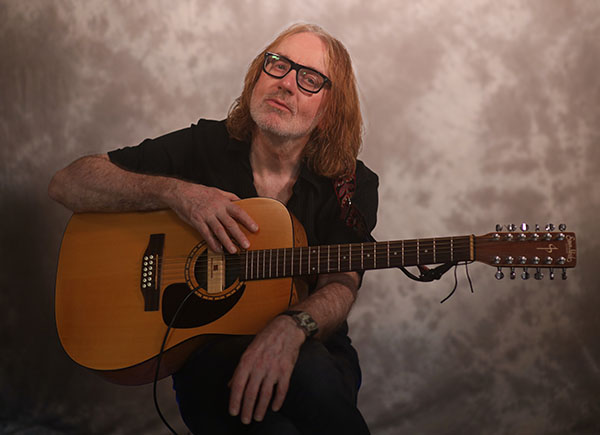
‘Silver Meadows is the most surprising record I’ve ever written’

Photo by Paul Tsanos

Vinny Peculiar is one of our favourite singer-songwriters here at Say It With Garage Flowers and we always love having a chat with him. It’s been a while since we caught up, so we thought we’d better rectify that situation…

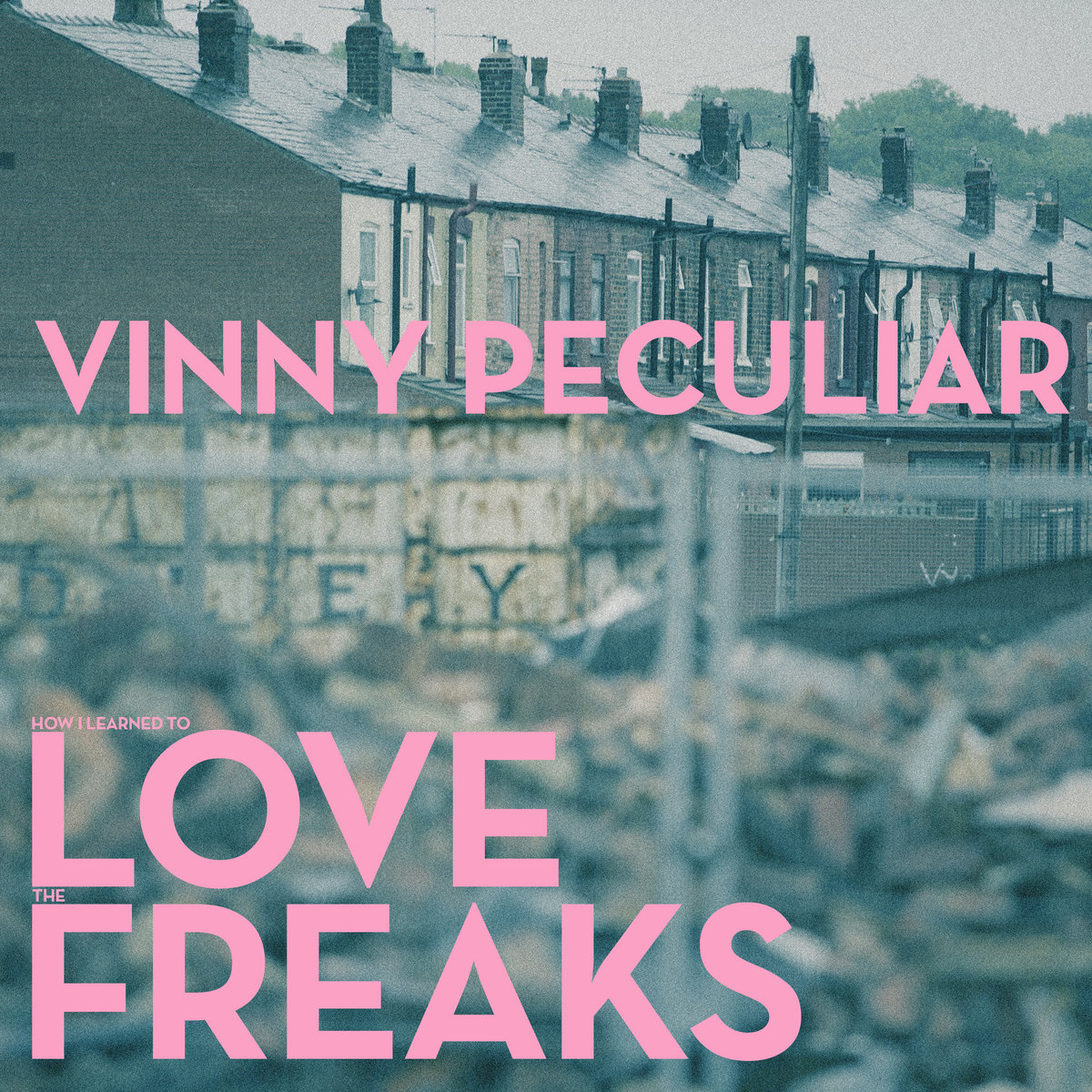
Last year, he released his thirteenth studio album, the well-received ‘hippy-rock’ record, How I Learned To Love The Freaks, which was inspired by the death of the counterculture in modern society, the peace and love era of the ’60s, and the sociopolitical awakenings that occurred in the latter part of that decade. 

This autumn, Peculiar, who grew up in Worcestershire, is playing a few shows in the UK, including a gig at Thornton Hough Village Club, in Birkenhead, where he’ll be revisiting songs from his 2016 album, Silver Meadows (Fables From The Institution) and playing the record in its entirety.
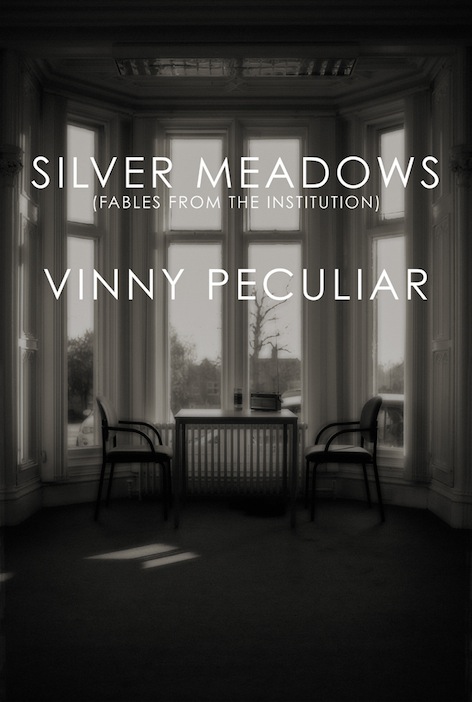
Writing about that record when it was released, Say It With Garage Flowers called it, ‘a tragi-comic masterpiece that tackles the issues of mental health and care in the community.’

Silver Meadows (Fables From The Institution) is a concept album that’s set in a fictitious long-stay institution and it was inspired by Peculiar working as a nurse and visiting his schizophrenic brother in hospitals during the ’80s and early ’90s.

We asked him why he’s chosen to revisit an album that came out eight years ago, discussed why mental health issues have become easier to talk about, got his views on the death of counterculture and how the music industry has changed, and found out what he’s got planned for his next record.

Q&A

So, on September 21, you’re appearing at the Thornton Hough Village Club, in Birkenhead, and for that show, you’ll be playing your 2016 album, Silver Meadows (Fables From The Institution) in its entirety. Can you tell me what prompted you to return to that record?

Vinny Peculiar: Yes. I’ve gone back to Silver Meadows… It’s probably the album I get the most communications about – I think that’s partly to do with some of the mental health themes that run through it. It was also the most surprising record I ever wrote, because it was the last thing I expected to do when I left the NHS – to dwell upon some of my experiences. But sometimes that defines you, so I ended up making that record…

When I talked to you about the album eight years ago, you told me that there was a two or three-week spell at the start of 2014 when you wrote 20 songs…

VP: Yeah – it was a very quick turnaround…

You’d touched on mental health issues in some of your older songs, like Big Grey Hospital, but Silver Meadows was a concept album about a long-stay mental facility…

VP: Yeah… and the people who work, live and play there… and, ultimately, the people who get away from there. In the ‘80s, the Community Care Act enabled authorities to plan for care outside of long-stay institutions, so a lot of them were closed down. That was a good thing, but the challenge was to meet the needs of people once they were out in the real world.

‘Silver Meadows is the album I get the most communications about – I think that’s partly to do with some of the mental health themes that run through it’

You mentioned that the themes of the album have resonated with people. Since you made Silver Meadows, mental health seems to be higher up the agenda – talking about it is less taboo than it was…

VP: Yeah – and I think that’s a good thing. People can share their worries and their stress, and talk more, without feeling too embarrassed about it. People do turn around and say, ‘I think I’m having a bad day, and this is what’s going on – can I talk to you about it?’ They are more likely to communicate.

I think a lot of that is down to Covid, which affected a lot of people mentally, as well as physically…

VP: Absolutely. With Silver Meadows, I’ve done a few guest spots at the National Psychiatrists’ Convention – they approached me. I played some songs and talked about my experiences working in the NHS a long time ago and the impact of change.

Half of the people in the place I was working didn’t want it closed down, but the other half did – it was about having a long-term vision for the people who’d been stuck in those places for a long time – often for no good reason. They were given labels they didn’t deserve. There were older women who were only there because they’d got pregnant as kids, which was bizarre – their reason for admission was social embarrassment.

I think Silver Meadows is one of your most eclectic albums – there’s a stripped-down piano song, New Wave, dark and psychedelic stuff, guitar pop, jangly country, folk…  I don’t mean this in bad taste, because of the subject matter, but it’s quite a schizophrenic record…

VP: I know what you’re saying – it’s all over the place… It’s basically a character-driven record – each of the tracks reflect certain characters at a certain time, like the person in Community Care who is about to be shown a new house in the community and is incredibly anxious.

That was a massive issue – all these patients had been at the facility for donkey’s years and all of a sudden someone is out in the real world – even though they’d been in a home, with some pretty awful stuff going on, people became used to it and they became institutionalised.

Community Care is about breaking that cycle of institutionalisation and enabling people to function in the real world – the impact that had. A lot of the people in those places had communication difficulties – they were incredibly with it but didn’t have a way of expressing it. They were non-verbal but you kind of knew what was going on.

There’s a song on the album called Waiting Games, which is about a lad who’s got locked-in syndrome. It’s not totally a true story, but it’s about him falling for a young psychologist who’s trying to help him, and is vaguely aware that there’s more to him than meets the eye. He falls in love with her, but he can never express it until he finds a way of communicating with her.

Mental health isn’t an easy subject to write about – you wouldn’t want to come across as patronising or distasteful – but you tackle it respectfully, and there’s humour on the record, as well as some serious songs and issues…

VP: Yeah. The drug dealer song [Gerald The Porter] is fun.

Wednesday Club is a humorous song too…

VP: It is, but the crazy thing about those places is that they did have a nightclub every Wednesday that started at six o’clock and lasted until half past eight, because that’s when the staff went home. Everything gets distorted in an institution – it’s all about the staff and not about the people who live there. Who’d want to go to a disco at six o’clock?

So, when you perform the album live this month, are you and your band going to play the songs from it chronologically?

VP: We are, and I’m going to narrate each of the songs in a more structured way, with some media as well.

Talking of gigs, I enjoyed your show at the Water Rats in London earlier this year, in support of your most recent album, How I Learned To Love The Freaks – it was great to hear some of those songs played live…

VP: I’ve had good feedback on that album – it’s funny, you put an album out, you get a surge of interest, you do your social media, and then you sell a few copies, and then it tails off, and then you think again… That’s my process – I’m not expecting it to go stratospheric, but the reaction was really good. I think it’s one of my better albums – the overall sound of it. I wanted it to be a proper hippy-rock record.

Where did the concept of making a counterculture album from?

VP: Counterculture is massive in all our lives – certainly my generation and yours. It’s an omnipresent force, and music was such a big part of it, particularly when we were young. I think a lot of the power in that cultural force has been dissipated and bought off by huge corporations.

If you look at Taylor Swift, that’s what people view music as now – she’s taking over the world. Music seems to have been taken over by corporations who will spend a billion pounds worldwide on advertising to get two billion back – they buy every streaming platform, radio station and advert.

Money, money, money will buy it, so people have it thrust upon them, and, before you know it, it just monopolises everybody’s lives. The idea of music being an alternative… you’ve got to look a lot harder to find alternatives to the mainstream now, because the mainstream is just so forceful.

The song Death of the Counterculture is about music as a cool force for good, and also as a voice of political reasoning and objectivity, and alternative political ideas – from green to typically left-wing. It just isn’t happening anymore – there’s no Red Wedge 24. Even politics has been bought off.

‘If you look at Taylor Swift, that’s what people view music as now – she’s taking over the world. Music seems to have been taken over by corporations who will spend a billion pounds worldwide on advertising to get two billion back’
A lot of artists who have a large platform to influence people shy away from talking about politics, as they’re afraid it will damage their career…

VP: Yeah. Everyone’s more sensitive and feels much more fragile about the dos and don’ts of their media profile, and there’s so much investment in that. You can buy a profile now.

So, what’s next? Are you working on a new album?

VP: I’ve been putting together a new album of tracks that didn’t quite make the old albums – it will probably come out next year. I’m trying to think of a new album, but I’ve got so many songs that didn’t get onto previous ones. I’m trying to work out which ones are any good (laughs).
Vinny Peculiar is playing live this autumn:

  • Sept 20: Tapestry Arts, Bradford,
  • Sept 21: Thornton Hough Village Club, Birkenhead
  • October 18: Davenham Theatre, Davenham
  • November 10: Kitchen Garden Cafe, Birmingham
  • There’s also a 2025 date planned at The Music Room, Liverpool, on May 31.

For more information and tickets, visit: https://vinnypeculiar.com.

‘If you can find a melancholy in a major key, that’s when you’re really winning’

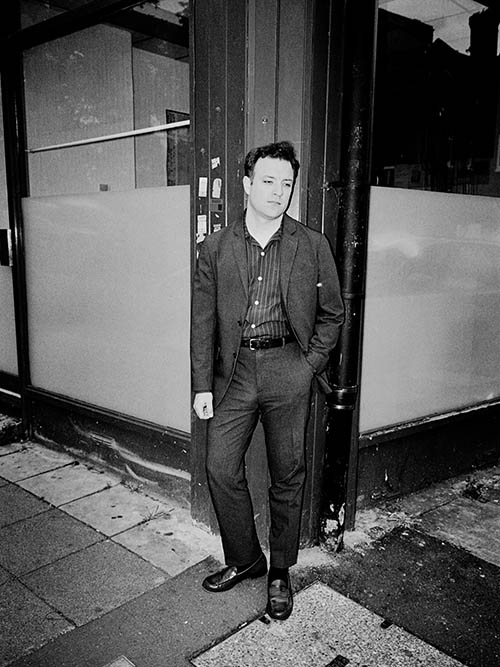
Photo by Chloe Ackers

The last time Say It With Garage Flowers spoke to UK soul, blues and R ‘n’ B singer-songwriter and guitarist, PM Warson, it was for the release of his second album – 2022’s Dig Deep Repeat, which he recorded in an industrial storage unit in Stoke Newington, north-east London, during the pandemic.

One of our favourite albums of that year, it was much harder and more raw than his debut, True Story, and was in thrall to the classic soul of Ray Charles and Booker T. & the M.G’s, but also paid homage to his love of ‘60s pop music and girl-group sounds, like Phil Spector, as well as vintage garage-rock and the surf instrumentals of Dick Dale, Link Wray and Duane Eddy.

For this year’s follow up, A Little More Time, Warson has explored those ‘60s pop inspirations, er, a little more…

“That’s always been there, but on this record I let the wider influences just come in a little bit,” he says, talking to Say It With Garage Flowers over a coffee in a café in the Marylebone area of London, one morning in mid-July this year.

There’s still plenty of blues and R ‘n’B on the album, though, but, as he explains: “It’s a lot more straight up, with some really wild electric guitar playing – those tracks are a lot rawer, alongside some more polished, songwriting-led productions.”

Warson chose to make the new record at Lightship 95, a floating analogue and digital studio moored on the Thames.

“The live room has a very distinctive sound and I think you can hear it at the heart of the recording – it’s quite a ‘roomy’ production,” he says. “It’s a great place to work – it’s like a mid-century spaceship.

“After doing the last album, I realised that I needed the room sound [in Lightship 95] for the stuff I was trying to do – I wouldn’t have got that in the other place. I was very specific with the engineer, Giles Barrett, that I worked with, about what I wanted and he really got it. I think you can hear that immediately on the opening track.

“We listened to a load of early ’60s pop records and Wish Someone Would Care by Irma Thomas, which was done at Capitol – it’s a big-room recording. It was a bit of that flavour… You’re not going to do it exactly like they did it, but part of this record was about letting go of the, ‘Well, in 1961, they would’ve done it like this…’

‘Part of this record was about letting go of the, ‘Well, in 1961, they would’ve done it like this…’ I just did it the way that worked for me now, but with some of that influence’

“I just did it the way that worked for me now, but with some of that influence on the process. I’ve always been someone who tries to let the process inform the sound, rather than the other way round, but sometimes it’s good to do it the other way round: ‘How are we going to get there? This is a good way of doing it.’ “

He adds: “The room in Lightship 95 isn’t massive, but it has got a high ceiling, and because it’s the hull of a ship, it has artificial walls. I wonder if that’s quite comparable to some of the buildings in the States that studios were housed in? It definitely has a similar resonance.”

To lay down the album, Warson was joined by his regular rhythm section, Billy Stookes (drums) and Pete Thomas (upright and electric bass), plus guests, including Stephen Large (organ and electric piano), Martin Kaye (piano), Jack McGaughey (organ), Ollie Seymour-Marsh (guitars) and Grant Olding (harmonica), as well as backing singers and a horn section. 

Q&A

Ahead of the album, you released a seven-inch single, Right Here, Last Night, which came out on FYND…

PM Warson: That’s my label. It was distributed by Acid Jazz and we had an arrangement with Légère Recordings, who are the rights holder and have done the album with me – they cleared the way for me to do the seven-inch. It was a reset for me, and that track was quite an interesting one to lead with because it’s not typical of the album – it’s more like some of my previous output. It’s late-night R ‘n’ B with a bit of a jazz sound.

I think it sounds quite Northern Soul, too…

PMW: Yeah.

And it has a moody edge…

PMW: Especially in the middle – it has a muted trumpet on it, which is very evocative. We did it on a whim – muted trumpet can be a bit naff, but we tried it out and it really worked.

The title track of the album, A Little More Time, is the opener, and it was released as a single digitally. It’s a dramatic, ‘60s-style, Phil Spectoresque pop song…

PMW: Definitely. It’s a sound I’ve had in my head for a very long time, and it was the first track we laid down in the first session, so it set the tone for the record. There’s acoustic guitar going all the way through it, and a nylon string guitar, and real, Al Kooper, mid-’60s Bob Dylan organ, which seemed to fit perfectly with the horns.

There were some tracks on the last album that had a Spector feel, like Game of Chance (By Another Name) and Out of Mind… 

PMW: They did, yes. but they were a bit darker. There are ten tracks on this album –  for the musicians out there, you’ll notice that nine of them are in major keys. That’s a big shift – the last album didn’t have a single track in a major key on it. The tracks were all quite dark and in minor keys.

‘There are ten tracks on this album –  for the musicians out there, you’ll notice that nine of them are in major keys. That’s a big shift’

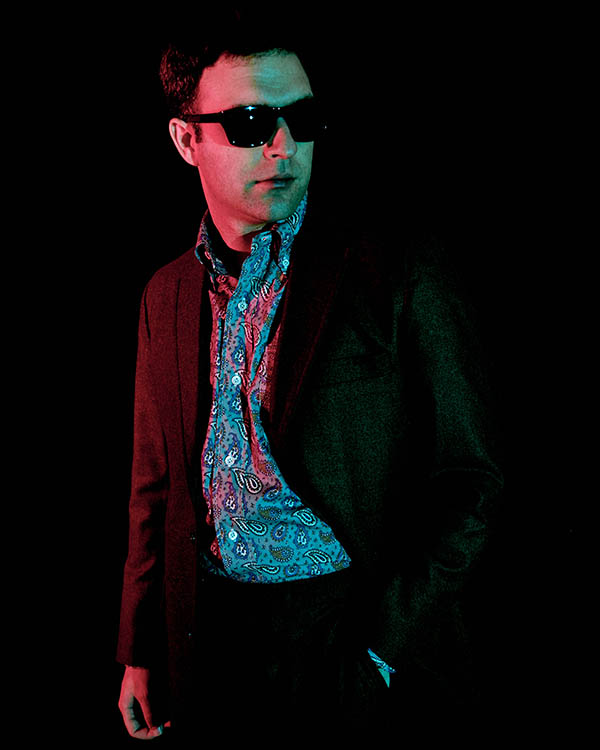
Photo by Chloe Ackers

So, does that mean you’ve cheered up for this record? 

PMW: Yeah, but if you can find a melancholy in a major key, that’s when you’re really winning, so that’s what I’ve been trying to find a little more.

Over & Over, which is the second track on the record, has a late-night, bluesy feel… 

PMW: It’s quite a bold move to have that second – it was influenced by the Paul Butterfield Blues Band and the ‘60s blues scene in West London, as well as southern soul and Irma Thomas. It has my mate, Ollie, playing some very aggressive lead guitar on it.

One of my favourite songs on the record is Another City Night, which is very atmospheric. It reminds me of Under The Boardwalk by The Drifters and Spanish Harlem by Ben E. King… 

PMW: Exactly – those New York records that the British acts were emulating. It’s also got pedal steel guitar on it by CJ Hillman – he’s incredible. We’d been meaning to do something together for ages… Pedal steel is such a distinctive sound and evocative, but it’s often just shoehorned in. A lot of people want to put pedal steel on something because it’s cool… That’s fine, but I wanted to wait for exactly the right thing and it felt right. I sent CJ a message saying, ‘Now’s the time’, and he was game – he was very generous with his time

‘I’m a really big Dylan fan but I’m quite careful with how I approach his influence’

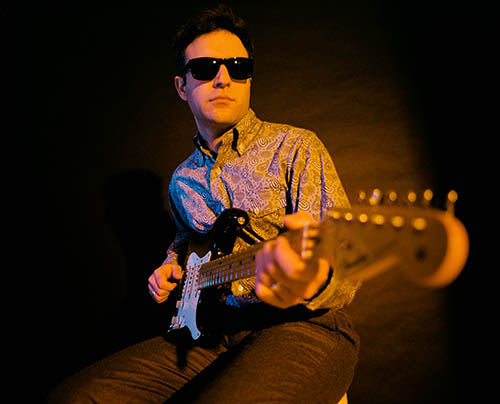
Photo by Chloe Ackers

There’s a great twangy guitar break on that song too…

PMW: That was me –  we overdubbed my Telecaster, which is my main guitar, because I was playing acoustic on that track. It was quite influenced by Little Barrie (Barrie Cadogan) – like a lot of guitarists, I’m really into him. He does those kind of bluesy but slightly cinematic things – they’re modal jazz and I’ve tried to tap into that in my own way, with a little bit of fuzz on the way in.

Closing Time really stands out on the album for me, because it has a West Coast, ’60s rock/pop feel – it’s slightly psychedelic… 

PMW: Definitely. I’m really into Buffalo Springfield, The Byrds, pre-the San Francisco hippy thing, and Dylan and The Velvet Underground. I’m a really big Dylan fan but I’m quite careful with how I approach his influence. I’d had the jangly riff for ages but it didn’t really fit in with what I was doing before, which was more jazz-soul-R ‘n’ B. Since it’s become more rock-pop-R ‘n’ B, it seemed to work, and I just reeled off a lyric which was just a load of nonsense really, depending on how you take it. I think that was the second track we put down.

I could imagine The Charlatans doing it… 

PMW: Yeah… I kind of let these things in… if I had something, I would throw it into the melting point. There was brief period with this album where I got a little bit lost because I had late-night R ‘n’ B, the slightly psychedelic thing, the ’60s pop, the country… It was starting to get a bit confused, but when I did the last session, which was Another City Night and  I Saw You In A Dream, it all made sense.

I Saw You In A Dream is my favourite song on the record – it’s a big, dramatic and cinematic ballad, with a ’50s, Roy Orbison-like feel… 

PMW: Yeah – I’ve been influenced by that stuff since I was a young teenager. It wouldn’t have gone on a previous record because it didn’t feel right.

There’s a twangy, melodic, Duane Eddy-style guitar solo on it… 

PMW: It sounds like it’s a baritone, but it’s in E on my Telecaster right at the bottom. The piano is also distinctive it’s a ’60s Wurlitzer, plodding along and doing almost a Beatles thing. It’s a bit unusual for me. We put a phase-shifter on the Wurlitzer, which gives it a throbbing quality.

The song, I Need A Reason, from the album, came out under another name, Every Day (Every Night), in 2022.  It’s like a bridge between the last album and this one…

PMW: Yeah – I changed the title. It’s basically a live cut not entirely, but fundamentally. We started doing the arrangement that’s on the album live.

The album finishes with In The Heights, which is one of the darker tracks, with a late-night / early-morning-in-the-city vibe…

PMW: Definitely – it’s more in keeping with some of my previous stuff, but it fitted well on this record. That track, Another City Night and I Saw You In A Dream tie-in with each other – they have a similar mood and imagery.

So, are you pleased with the album? 

PMW: I am. It feels like a massive step forward – both the production and the songwriting, as well as the playing and singing ensemble.

We do a lot of stuff from the last album live and I was very pleased with it, considering the circumstances in which it was made, but with this one I decided I wanted to do it properly and be less precious about other things. It’s the closest I’ve got to the vision for it. It’s not just emulating a sound – it’s a bit more infused with different things, and sonically it’s really close to the kind of stuff I like. I also like the package – the album cover.

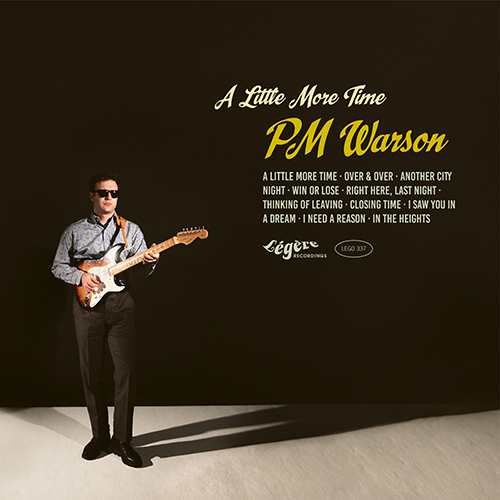
Was the artwork inspired by a Willie Nelson record?

PMW: Yeah – it was. Kerstin Holzwarth, who did the layout, has a knack of doing something that’s very classic, but doesn’t look like it’s sending something up. It’s always a risk, but she got it perfectly. It doesn’t look like the Willie Nelson record, but it feels like it has the same vocabulary. It’s important –  the combination of the songs, the sound and the package… I’m really careful about album covers – I’m fussy and I take a lot of time on it.

A little more time?

PMW: Exactly.

A Little More Time is released on September 6 (Légère Recordings) on vinyl and digital.

https://pmwarson.bandcamp.com/album/a-little-more-time