‘This album has traces of everything that I’ve always loved about music – I think it’s the perfect record to come out 20 years into my career’

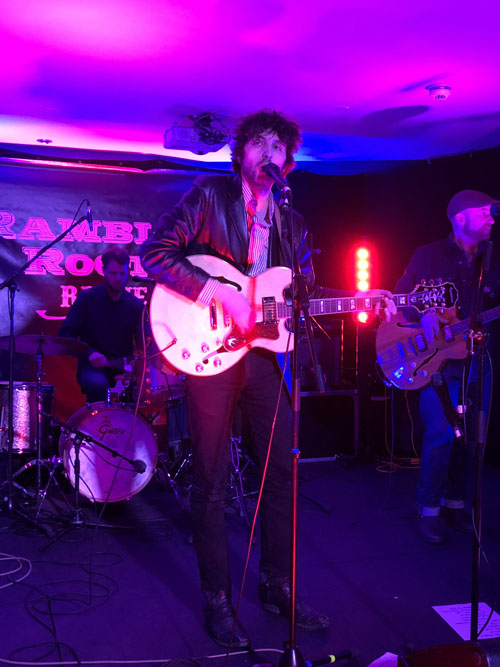
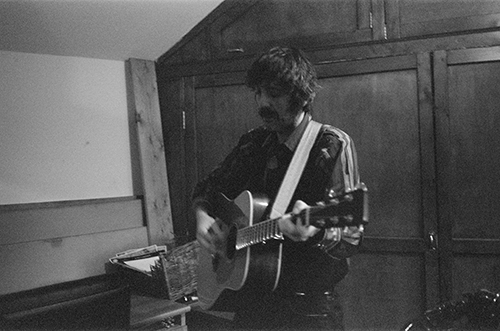
Picture of Jerry Leger by Katie Methot.

Canadian singer-songwriter Jerry Leger’s last studio album, Donlands  – his fourteenth –  was recorded in Toronto’s East End and produced by Mark Howard (Bob Dylan, Neil Young, Lucinda Williams).

It was one of Say It With Garage Flowers’ favourite albums of 2023 and we said it explored new territory with its ‘spooky and intimate, cinematic soul sound.’

The follow-up record, this year’s Waves Of Desire, sees Leger moving in a different direction yet again – it’s a warmer-sounding set of songs, and was influenced by acts including The Beatles, The Everly Brothers, Roy Orbison, and The Zombies, whose music first inspired Leger as a kid.

“I get a certain feeling from those songs and memories, and I wanted to try and get that same feeling with Waves Of Desire,” he says. “I’m not trying to copy or sound like those songs, but just getting close to the feeling they gave me.”
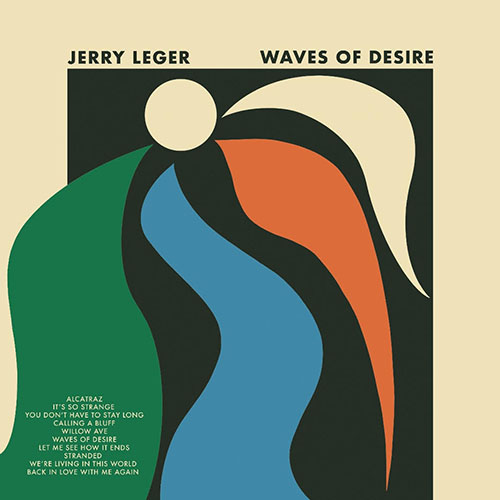
Made in Germany, during a short break from touring Europe, Waves Of Desire was recorded at Cologne’s historic Maarweg Studios, which began as an EMI studio in the 1950s and still has its main room virtually unchanged, with a mix of vintage and modern gear. Leger’s vocals were all recorded live with the band through an old German microphone.

Produced by Leger, the album features his longtime group, The Situation, (Dan Mock – bass/vocals), Kyle Sullivan – drums/vocals, and Alan Zemaitis (keys/vocals), as well as contributions from Suzan Köcher (harmony vocals) and Julian Müller (co-production / guitar).

It’s been 20 years since Leger’s first solo album – 2005’s Jerry Leger & the Situation. His latest, Waves Of Desire, sees the start of a new partnership with Hamburg-based label, DevilDuck Records, and next year he will be touring the UK to support the release.

In an exclusive interview, he tells us about the influences behind the new album and gives us an insight into the making of the record. Subjects covered include “pure pop”, vintage synth sounds and close harmonies. 

Q&A

Congratulations on Waves Of Desire – it’s a great record. It feels like a natural progression from Donlands, which was your most sonically adventurous record yet. Do you see it that way too?

Jerry Leger: I feel it’s a perfect follow up to Donlands. It kind of expands on what I learned from working with Mark Howard on the last album but adding more textures and pop sensibility.


The new album often feels lighter in tone than Donlands, which had a spooky and intimate, cinematic soul feel, and a darkness to it. Waves Of Desire is a warmer record, despite having some emotional and very personal songs on it…

Jerry Leger: I wanted this album to be more comforting and inviting. I can think of certain records that I’ll put on when I feel like I need a hug, and I wanted to make one like that.

You’ve referred to this record as your ‘Pure Pop for Jerry People’ album, which is a nod to Nick Lowe’s Pure Pop For Now People – the US title of his Jesus of Cool album…

Jerry Leger: It was either that or ‘Jerry Of Cool’. I’m sure it’s more of a joke on Nick’s part, but it makes it sound like he was carrying the torch for classic pop songwriting  from the Everlys and Buddy Holly, to the girl groups, Del Shannon, the British Invasion… I think Nick Lowe got even better with age, but I love his first couple of albums as well. They’re fun-sounding – there’s attention to detail while still sounding alive.

‘I wanted this album to be comforting and inviting. I can think of certain records that I’ll put on when I feel like I need a hug, and I wanted to make one like that’

Have you seen the Born Fighters Rockpile doc? It’s amazing stuff. I love him talking about double-tracking vocals on choruses. Bands like The Beatles would do that so it would cut through better on radio. Hey BBC, play Alcatraz, the opening track on Waves Of Desire, will ya?

You were born in 1985, but when you were growing up, ‘pure pop’ to you meant The Everly Brothers, The Drifters, Roy Orbison, The Zombies, and your first obsession – The Beatles. When you hear their music now are you immediately taken back to your childhood?

Jerry Leger: The Beatles have been there all my life. My parents are first-generation fans, but they felt just as much my band as theirs. Certain songs like Yes It Is and Every Little Thing take me back to being a little kid in the car with my family or hearing them at home, when my dad would fire up his 8-track player. I can still hear the beginning of A Day In The Life bleeding into Penny Lane from another channel on the 8-track tape – side note, there will be a very limited run of Waves Of Desire on 8-track!

I get a certain feeling from those songs and memories, and I wanted to try and get that same feeling with Waves Of Desire. I’m not trying to copy or sound like those songs, but just getting close to the feeling they gave me.

Pop music today is almost a dirty word, isn’t it? It feels like a lot of modern pop is cheap, disposable and forgettable. Or am I just getting too old for it?

Jerry Leger: I completely agree  that’s why I think I keep using the “pure pop for…” reference. I mean, “pop” stands for popular, but at one point the best music being made was also the most popular. It wanted to be heard by millions and the competition was high. Song craft was a huge deal. You couldn’t get the song out of the door if it wasn’t good enough. Whether it was The Beatles wanting to top their previous single, or Gerry Goffin/Carole King pitching to The Shirelles, the quality control was high.

‘These days, a song is background on a playlist, or it’s turned off if it doesn’t hit the listener in the first 30 seconds’

I mean Lennon/McCartney wanted to be Goffin/King or Leiber/Stoller. These days, it doesn’t feel like the actual song matters as much as how it looks on social media. It doesn’t feel like a lot of people listen to an album from start to finish anymore. These days, a song is background on a playlist, or it’s turned off if it doesn’t hit the listener in the first 30 seconds.

My buddy, Julian Müller, who plays guitar on the new record and co-produced it, kept calling Waves Of Desire an album of all hits. I would laugh it off, but I did want to make an album where you would not want to skip a single track and it would become someone’s go-to record.

I think of Ann Peebles album I Can’t Stand The Rain I absolutely adore that record from start to finish. It doesn’t overstay its welcome and I’m always excited for every song.

Picture of Jerry Leger and band by Amelie Förster.

So, what were your starting points for Waves Of Desire? How did you want it to sound?

Jerry Leger: I wanted to have a brighter sound with nice textures. Those older records didn’t have the technology to layer and layer stuff on the recordings and I’ve always tried to make records that way. I guess one album I kept referencing was A Date With The Everly Brothers. It’s got a sweet clear sound that has energy and feels great. Another one that I just love the arrangements and production is the first Dwight Twilley Band album, Sincerely.

Why did you choose Maarweg Studios in Cologne as the place to make the record?

Jerry Leger: Julian told me about it. It opened as an EMI studio back in the ’50s and the live room is pretty much the same. It has a nice mixture of old and new gear. My vocals were all recorded live with the band through a ’40s (I think) German microphone.

Thomas Haumann, who recorded and mixed Waves Of Desire, also plays drums in a psych-rock band, Blackberries, with Julian. So, there was that connection too. Thomas was amazing to work with and we had a lot of fun.  We recorded the whole album in three very long sessions – he was a real trooper.

‘It’s a modern-sounding album with a timeless aesthetic’

I wasn’t sure who was gonna mix the album, but Thomas had sent me a rough version of You Don’t Have To Stay Long, and I thought it just had a great, unique sound to it. I love it when an album’s overall sound really stands on its own. I think the combination of how he mixed the record and how I wanted it recorded was perfect. It’s a modern-sounding album with a timeless aesthetic.


You self-produced the album, with help from Julian Müller. How was that?

Jerry Leger: I knew how I wanted it to sound and I didn’t want to deal with any push back on my ideas or stray from where I wanted it to go. Julian was a great co-pilot and cheerleader, who also has a great classic pop sense.

He helped keep the sessions on track and organised too. I really enjoyed self-producing, ‘cos I had confidence in what I thought would work, or at least seeing if something worked for me. If it didn’t, then we’d try something else. It was just very easy and I think it came out great. I’m a big music nerd – I may not be very technical, but I think I know what sounds good, at least for my own music.

‘I knew how I wanted this record to sound and I didn’t want to deal with any push back on my ideas or stray from where I wanted it to go’
Picture of Jerry Leger by Katie Methot.

You’ve used some vintage keyboards on the album, including a Mellotron and a Moog, creating warm analogue sounds and textures. Tell me about that…

Jerry Leger: I love the texture of the string sound and the breathy flutes on a Mellotron. I had read about The Zombies using a Mellotron in place of a string section on Odessey and Oracle. For them, it was for budget reasons but for me, I just thought that was a great mindset. Not that I would have been able to afford a string section either!

For the Moog, I thought of it like a version of pedal steel with that dreamy/spacey sound. I think the synth additions add to Waves Of Desire being a natural follow-up to Donlands.

Alcatraz, which opens the album, is one of my favourite songs on the record. Despite its subject matter, which is about the end of a relationship, it’s an upbeat song musically, and it has a gorgeous, warm feel. I like how it opens with the Dylan-style organ and you sing about waking in the morning sun –  it creates a nice, warm mood… The lyrics and the music are juxtaposed – a heavy subject matter but with a breezy, pop-style backing…

Jerry Leger: I was thinking of something like The Shangri-Las…

You’ve said that Let Me See How It Ends, from the new album, is one of the best songs you’ve ever written. It sounds like a ’50s standard… There’s an Everly Brothers feel to it – it’s the close harmonies – but with added Mellotron… Where did that song come from?

Jerry Leger: I told Suzan Köcher I wanted close harmonies, à la the Everlys, on the whole record. Those are my favourite harmonies on the planet. She matched my voice and inflections so well – it was incredible.
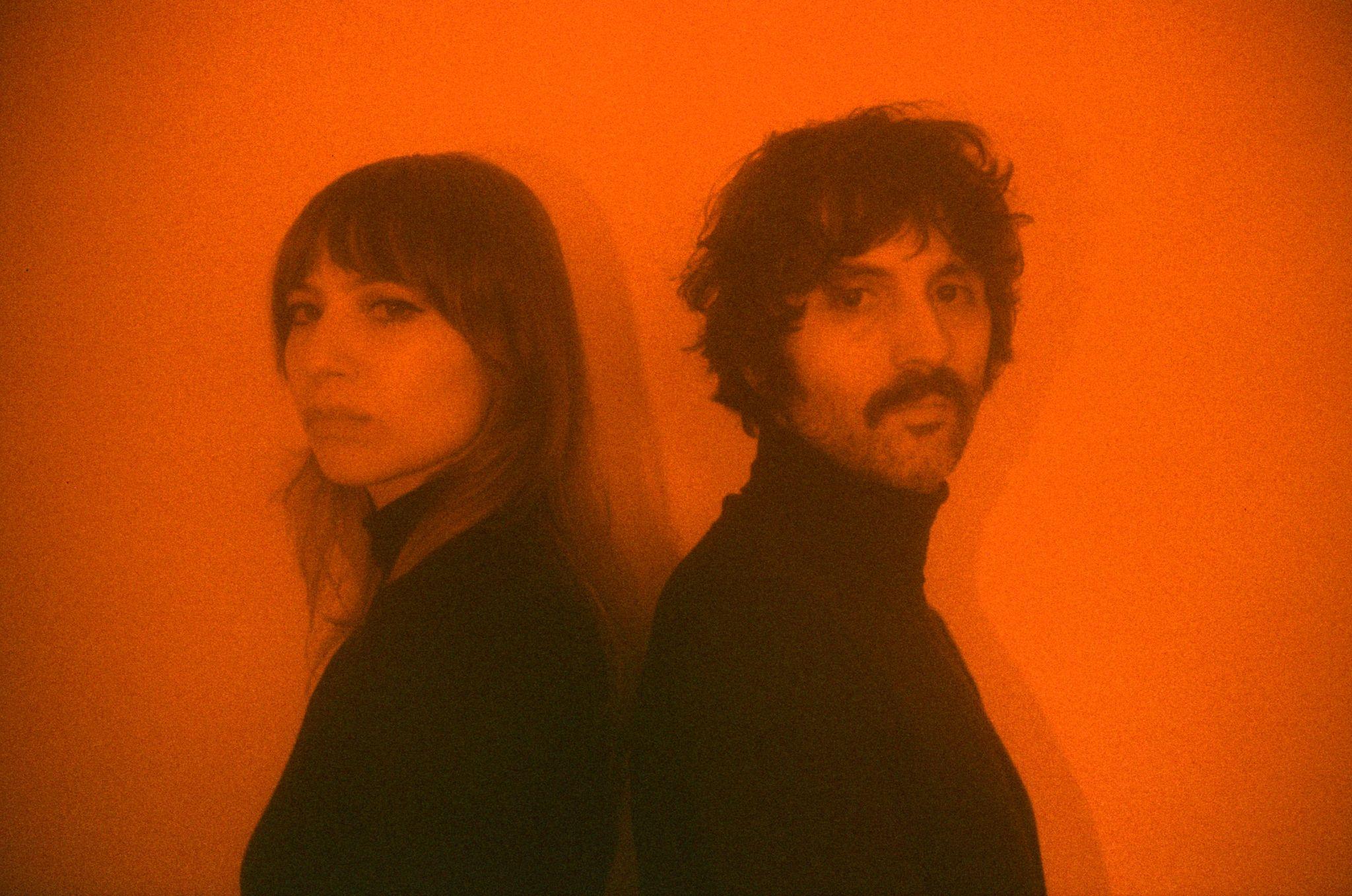
Suzan Köcher and Jerry Leger – picture by Katie Methot.

‘I wanted close harmonies, à la the Everlys,  on the whole record. Those are my favourite harmonies on the planet’

We also sang it live together on the track, which I just think is the best and most emotional way to do it. It’s one of my personal favourites and the bridge section I’m particularly proud of. It does sound like one of those songs that has always been there. Where did the song come from? I just love heartbreak songs – they’re my favourites.

There’s some nice synth on Stranded and We’re Living In This World too…

Jerry Leger: Yeah – played by Alan Zemaitis. He had the solo on Stranded worked out from a demo we made of the song back in Toronto.

For the part on We’re Living In This World, I wanted the Moog to have a breathing effect, and I’d pictured the main character in the song floating in space. That’s one of my favourite parts of the album.

Willow Ave is a slightly autobiographical and nostalgic piece, and in the second verse you reminisce about walks with your dad along the back roads in Toronto’s East End. What can you remember about those times?

Jerry Leger: I always looked forward to those after-dinner walks with my dad. I was pretty young – probably 5 or 6. There was a house in particular that was big and a bit menacing-looking. He would point to the top window and say stuff like there was a ghost or witch up there. I’d be so fascinated, trying to spot it. I’ve always loved the paranormal and the unexplained. I grew up watching old horror movies and shows like Unsolved Mysteries.

Are you pleased with the new album? It’s the record you’ve been longing to make, isn’t it?

Jerry Leger: I love it! It has traces of everything that I’ve always loved about music and what I’ve learned along the way. I think it’s the perfect album to come out 20 years into my career. The music I loved as a little kid is the music I still love – it’s in my DNA. I wanted to channel that because it’s part of me as an artist. I don’t think it should come as a surprise that there’s a thread throughout my discography, no matter what kind of record I’m making.

‘The music I loved as a little kid is the music I still love – it’s in my DNA’

So, what’s next? Do you think you’ve got a fully-electronic album in you, or maybe you could do a record that’s part Nick Lowe and part Low by Bowie: How Lowe / Low can you go?

Jerry Leger: I was obsessed with Low when I was about 13 or 14, and I made my own experimental album at home called Level. It’s terrible but maybe one day it’ll be my Carnival Of Light – that’s a reference for all those fellow Beatles fanatics.

How Lowe Can You Go? is a great title – pitch that to Nick! I do have a copy of Nick’s Bowi 45 somewhere… Actually, I think Low has some “pure pop” on Side One, though I guess Nick didn’t feel that way at the time… It was definitely on my mind during the recording of songs like We’re Living In This World.

‘I was obsessed with Low when I was about 13 or 14, and I made my own experimental album at home called Level. It’s terrible!’

Are you looking forward to playing the new songs live? What can we expect?

Jerry Leger: I’m excited to play Europe this year as a duo, with Kyle Sullivan on drums/vocals. We’ve been playing together since the beginning, so this will be a very fun tour for Waves Of Desire. It’s also kind of a 20th anniversary tour as well, with a big full-band Toronto show when we return.

I haven’t announced anything yet, but I will be coming back to the UK in spring 2026 and the shows will definitely be focused around Waves Of Desire.  I’m not sure what the setup will be – hopefully with a band or some configuration close to it, with those close harmonies…

Waves Of Desire is released on October 24 on DevilDuck Records. Please note – the vinyl version will be available in the UK from November 21. 

Listen to a Spotify playlist of songs that influenced Waves Of Desire, plus some of Jerry Leger’s childhood favourites:

JERRY LEGER – EUROPEAN TOUR DATES – Get Tickets HERE.

Thurs Oct 30 – 674FM, Cologne, Germany*^

Sat Nov 1 – Rinkerode, Germany*

Tues Nov 4 – Medley, Malmö, Sweden*

Weds Nov 5 – Kulturhuset, Halden, Norway*

Thurs Nov 6 – Goldie, Oslo, Norway*

Fri Nov 7 – Moskus, Trondheim, Norway*

Sun Nov 9 – Jazzköket, Östersund, Sweden*

Weds Nov 12 – House Concert, Stanghelle, Norway*

Thurs Nov 13 – Torbjørns Konserthall, Bergen, Norway*

Fri Nov 14 – Odda Blues Club, Odda, Norway*

Sat Nov 15 – House Concert, Karmøy, Norway*

Weds Nov 19 – Nochtwache, Hamburg, Germany*

Mon Nov 24 – Maschinenhaus, Berlin, Germany*

Wed Dec 3 – The Great Hall, Hometown release show and 20 Years of Jerry Leger & The Situation celebration, Toronto, ON, Canada #

+ solo

* with Kyle Sullivan on drums/percussion/vocals

^ with Suzan Köcher on vocals & Julian Müller on guitar/vocals

# full band

jerryleger.com 

https://jerryleger.bandcamp.com/merch
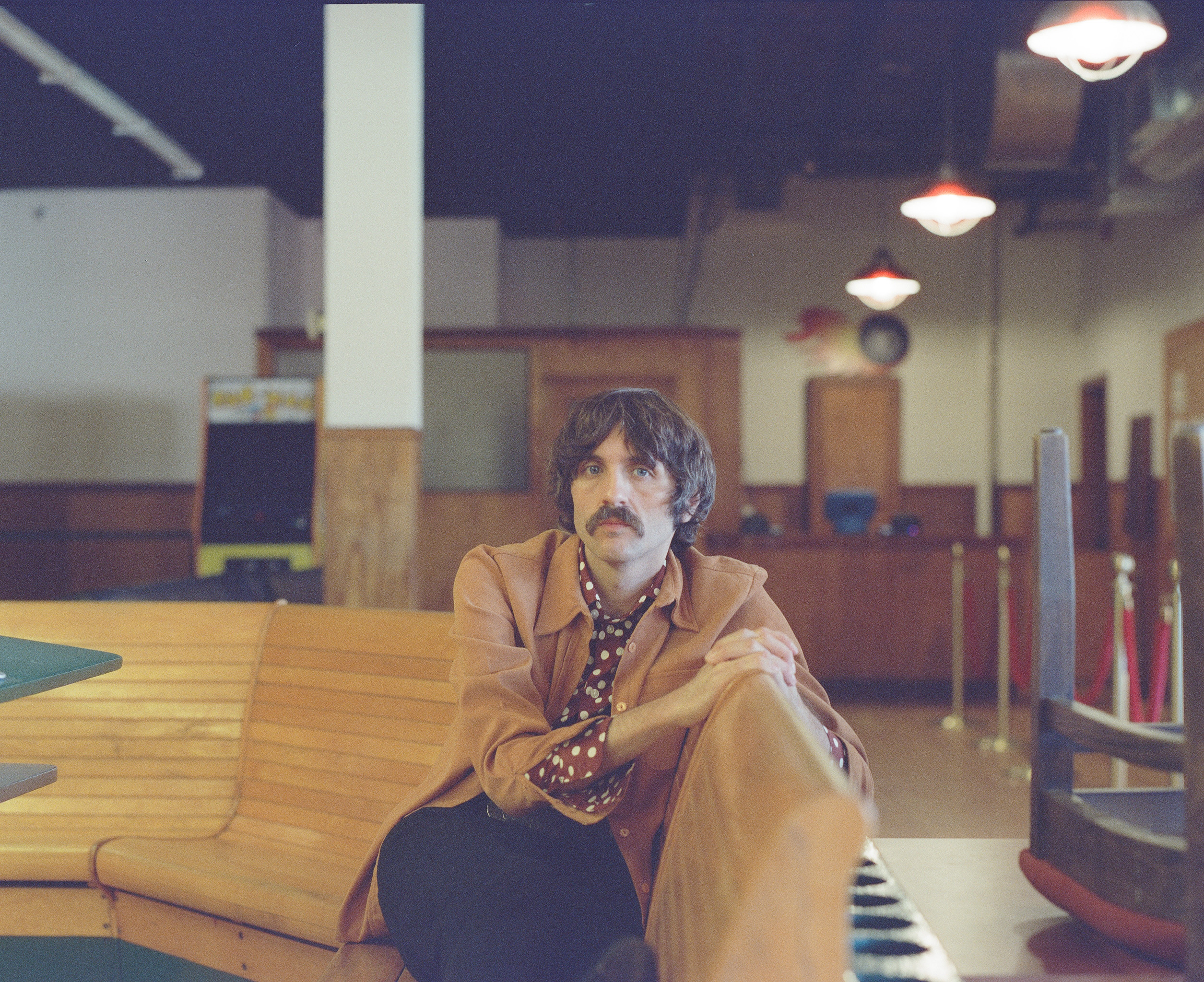
‘This record sounds like who I am, but it’s a little deeper than some of the others – it’s more vulnerable’

Jerry Leger, photographed at Shamrock Bowl in Toronto by Laura Proctor.

Canadian singer-songwriter, Jerry Leger, has described his latest album, Nothing Pressing, as his ‘deepest artistic statement yet’.

It’s also one of his strongest and darkest records. Largely written and recorded in the wake of a close friend’s death and with the shadow of Covid hanging over it, Leger says it’s an album about survival – mental, physical and artistic. 

Some of the songs, like the stark, stripped-down and folky Underground Blues and Sinking In, were recorded in his Toronto apartment, using two SM58 microphones fed into his vintage 1981 Tascam four-track tape recorder.

“I spent a lot of the lockdown writing and demoing using the four-track,” he says. “I wasn’t writing with the pandemic in mind – and some songs were written before it happened – but the album does have a feeling of isolation, reflection, longing and gratitude.”

He adds: “It was spring of last year that I unexpectedly lost one of my best friends. I think it’s unavoidable that things like that seep in. It’s a surreal feeling losing someone close. I wasn’t consciously writing with him in mind, but I can now hear traces of me dealing with it in a few of the songs.”

New single, the raw and punchy Kill It With Kindness, anthemic rocker Have You Ever Been Happy?, the Neil Young-like Recluse Revisions, the classic country-sounding A Page You’ve Turnedand the Beatlesy love song With Only You were laid down in the studio with his long-time producer, Michael Timmins (Cowboy Junkies), and Leger’s band, The Situation (Dan Mock (bass/vocals), Kyle Sullivan (drums/percussion). There are guest contributions on the album from Tim Bovaconti (pedal steel) and Angie Hilts (vocals).

“Other than my drummer and bassist/backing vocalist,  I sang and played almost everything,” says Leger. “This gave the sound a certain flavour and character that hasn’t quite been captured on previous studio albums. There is very little outside involvement, to avoid diluting the sound we were after, creating a more personal statement.”

“I wasn’t writing with the pandemic in mind  and some songs were written before it happened – but the album does have a feeling of isolation, reflection, longing and gratitude”

The song, Nothing Pressing, which opens the record, and the tracks Protector and Still Patience are solo acoustic, recorded live in the studio with few embellishments, save for Mock’s overdubbed harmony vocals and, on the title track, Timmins’ ukulele. 

The follow-up to his 2019 studio album, Time Out For Tomorrow, it’s a stunning collection of songs – and often painfully honest. On Still Patience, over a sparse backing of guitar and Wurlitzer, Leger sings: “I go drinking by myself, when I got nobody else, for misery is company.”

At times sad and reflective, it’s an album that doesn’t shy away from tackling personal issues, such as mental health, depression and seeking solace in alcohol, but it’s also a record that believes a problem shared is a problem halved.

“I really hope that this record is given the attention it needs. It’s not really an undertaking [to listen to], but it requires a little more work than Time Out For Tomorrow, which was very inviting,” says Leger, talking to Say It With Garage Flowers from his apartment, in an exclusive interview.

“It could be very helpful for a lot of people – it’s one of those records that I would go to for a different type of comfort.  I need to know that other people are going through all these crazy feelings too.”

Q&A

It’s good to chat again – it’s been a while. How are you doing?

Jerry Leger: I’m good. It’s been a busy year so far, what with getting the record together and the tour. It’s definitely been a bit stressful – putting a new studio album out in the current climate, where we’re still dealing with the pandemic and everything else.

And now there’s a war on…

JL: Yeah – it doesn’t seem to be getting that much better, but it’s exciting to have something new to focus on. Putting this record has been different.

The last time we spoke was in March 2020 – Covid had forced you to cancel your European and UK spring tour for your album, Time Out For Tomorrow, and you’d hastily put together a brand new, digital-only album, called Songs From The Apartment.

Available to buy from Bandcamp, it was made up of ‘lost’ songs from 2013- 2018 that you’d demoed and quickly forgotten about. Since then, it’s had a vinyl release.

You’ve also published a book of poetry, called Just The Night Birds, made a concert film, put out some non-album digital singles, and written and recorded the new record.  You’ve been busy…

JL: I know – I do like staying busy in general. I guess the healthy thing about all those projects I did was that I wasn’t putting pressure on myself to create anything or put them out – it was helpful me to do that.

To make this album, we were trying to get into the studio as soon as possible because we knew that when we resumed touring and going overseas we couldn’t really tour Time Out For Tomorrow. It was definitely a smart idea to make a new record, but we had to work out how we could get into the studio.

“It felt great making the record, but it was a strange feeling at first. That soon disappeared once we were rocking and rolling and getting into it”

The four of us – (Dan Mock (bass/vocals), Kyle Sullivan (drums/percussion) and Michael Timmins (producer) – wanted to make sure we were comfortable and safe.

I went to the studio in the summer (2021) and recorded some stark, acoustic numbers. Then, once we got the green light, we got the band in. It felt great making the record, but it was a strange feeling at first. That soon disappeared once we were rocking and rolling and getting into it.

Was it a quick album to record?

JL: It was a lot faster to make than I thought it would be. I did the songs Nothing Pressing, Still Patience and Protector in one session – just me and my guitar. I added some Wurlitzer to one of the tracks, and then when the band came in, we booked a week – a Monday to Friday – to record.

We were so determined to do a good job and not rush it, but that determination allowed us to do the songs in two / two-and-a-half days. There’s also five songs I recorded with the band that didn’t go on the album. I was starting to change the vibe of the record as we were into the sessions and I listened to the rough mixes. I thought it should be just a full-band album, but Mike brought me back to the original plan – he said that wasn’t the concept we should be going for. That was helpful – that’s why I still like working with a producer. He’s someone who can make sure I’m staying on-task.

Mike wanted some stark acoustic songs, a couple of tracks that were me at home, and then the band. There’s a story – the album is bookended by Nothing Pressing and Protector. Both those songs are saying certain things and in the middle you get everything else.

“I was starting to change the vibe of the record as we were into the sessions. I thought it should be just a full-band album”

I was having so much fun playing with the band and with what we were recording that it made me want to change what we were going for. Who knows if that would’ve been better or worse? It wouldn’t be worse – it would still be a great record…

Look at Dylan. When he started screwing with his records sometimes it went in a good way – like Blood On The Tracks, which he rethought and recorded, but other records, like Infidels, suffered. It could’ve been a certain record, but he had second thoughts.

You’re a prolific songwriter. Did you have all the tracks written before you went into the studio, and were any of the songs old ones you hadn’t put out before?

JL: They were all brand new, except for Wait A Little Longer, which I’d recorded with my side-project, The Del Fi’s – it came out on their second record, in 2018. You’ve got to dig for those albums – not a lot of people heard that song and I thought we could do a really good job on it and give it a different spirit and a wider audience.

It’s a song I love and the band also love it. I originally gave it to The Del Fi’s because when I played it live I never really got much of  a reaction to it. But after we played with The Del Fi’s, my band said: ‘Why did you give that song away?’ I thought I was the only one who liked it… There’s something jovial about it and I thought this album could benefit from it.

“I think this album has been the best way for me to cope with the loss of my buddy, Sean. I haven’t really dealt with it and the pandemic’s made it hard”

It’s a pretty dark record at times. Some of the songs are sad and deal with personal issues, like alcohol abuse, depression and wrestling with inner demons. You lost a good friend, called Sean, before you made the album, which influenced some of the songs and themes on it. You’ve described the record as your ‘deepest artistic statement yet’. There’s a shadow hanging over it, isn’t there?

JL: I think that’s a good description of it. There’s a shadow hanging over everything and I was trying to make an effort to not accept that or realise it. Everyone deals with it at various points – a resilience. What comes with that is trying to push certain thoughts away. I think this album has been the best way for me to cope with the loss of my buddy, Sean – I haven’t really dealt with it and the pandemic’s made it hard. I still haven’t seen a lot of my friends, or it’s been on a semi-regular basis. It’s a bit of a sad record – but it has moments that go off in other directions.

Did you have a feel for what this album should sound like? For Time Out For Tomorrow, you were influenced by Lou Reed’s Coney Island Baby

JL: I just wanted it to sound like me and us – for this one, I didn’t have a concept of how I wanted it to sound. I think that’s why some of the tracks vary from one another. I think the record sounds like who I am, but it’s a little deeper than some of the others. It’s more vulnerable in places. Still Patience is a song that I wasn’t sure I wanted to release.

That’s one of my favourite songs on the record…

JL: Oh, thanks. It’s a song that at the time I was writing it, I wasn’t exactly thinking about what I was writing about – it was quite emotional to record, as it was the first song I recorded being back in a studio, after so long wondering whether if I’d ever be doing it again.

A couple of the songs on the record are just you singing and playing into a four-track recorder…

JL: I particularly love the sound of the four-track, which I used to record Underground Blues and Sinking In. I love the sound of those machines. If we hadn’t made this studio album, I was going to put out an album of just songs recorded on the four-track, because I was really excited about the sounds I was getting out of it and the different arrangements I was coming up with. Mike liked that too – he was the one who mentioned I should include a couple of those recordings on the album.

“Underground Blues is just me at home on a Tascam four-track – Springsteen used the model before it to do Nebraska”

I’m not a great guitarist, but I played the electric guitar solo on Underground Blues – this was the first album where I played all the solos. Underground Blues is just me at home on a Tascam four-track – Springsteen used the model before it to do Nebraska. 

Underground Blues is folky and has a mid-’60s Dylan feel…

JL: One of my buddies is a big Dylan fan and he also loves Bert Jansch –  he thought it sounded like something he would do. That’s interesting because Bert Jansch is somebody I’ve listened to more and more over the years. I really dig him, but I could never play like that. There’s a certain feel in the acoustic playing that aligns itself to that kind of blues song that Bert would’ve played – there’s a bit of a folk element to it.

The album title, Nothing Pressing, is apt for a record that was written during lockdown…

JL: Yeah. Besides Wait A Little Longer, that was the only song that I wrote before 2020. It was written around the time of the release of Time Out For Tomorrow – in 2019. It’s just one of those songs that came to me – I was picturing somebody like John Prine or Butch Hancock.

I was going to call the album Recluse Revisions, but Nothing Pressing became the title track. Mike suggested Nothing Pressing because he felt it was a song that really set up the record well and that it was nice to start it off with an acoustic number and then, surprise, here’s the second song, Kill It With Kindness… It’s not the record you thought you were getting…

The phrase ‘Nothing Pressing’ could also be a comment on the current global vinyl shortage…

JL: That’s true – I actually received some surprising news that our vinyl has made it time for the album release date.

Well, Adele’s latest record is out now…

JL: Yeah – she gave us some room.

The first single you released from the album was Have You Ever Been Happy? I like the lyric ‘Something made me laugh, but the punchline was me…’

JL: [laughs].

That song has a great chorus and melody, and I love the backing vocals by Angie Hilts…

JL: She’s from Toronto – she also sings on Wait A Little Longer. She had sung on the original recording of that by The Del Fi’s. She came up with the vocal harmony. I worked with her before, on my Nonsense and Heartache album – she sang on The Big Smoke Blues, Pawn Shop Piano and Lucy and Little Billy The Kid. She’s a great singer and artist – she can go in different directions, above or below me, and it just blends.

Recluse Revisions – another favourite of mine – has some great pedal steel on it and the harmonica gives it a classic Neil Young feel…

JL: I hear that.

I like the line in the song about musicians playing ‘cowboy songs we know by heart’ on cheap guitars…

JL: I had that line leading up to the song – I liked the idea of musicians listening to it. It’s about when you have a cheap guitar and the action / the strings are really high up from the neck, but you can usually still play those cowboy song chords, like G and C and E.

I like that imagery – of being with a comrade, playing songs and it still being harmonious. There’s another line in it: ‘We’re young now that we’re old.’ That could be about losing time, but not… In some ways, it feels like we’ve lost the last two years, but in other ways, all this stuff has happened – you and I kept doing things. We all did. Recluse Revisions is about trying to figure out how we reemerge and join the rest of society again. How to socialise and how to be comfortable going out again.

“I’ve always been somebody that’s suffered from a bit of social anxiety, so I have to push myself even more now to get out”

Here in Toronto, certain mandates have started to be lifted and I know that in the UK that’s already happened. I’ve always been somebody that’s suffered from a bit of social anxiety to begin with, so I have to push myself even more now to get out. I want to get out, get on the road and play shows because that’s always felt like a different dimension or a different world. I can accept that.

“I’m a survivor – I’ve had to deal with a lot of shit through the years”

You were getting a bit of a following in the UK, after playing gigs here and some decent press. Are you worried that you’ve lost some momentum due to the pandemic? How do you feel about coming back to play here? You’ve now got three albums’ worth of new material to play…

JL:I’m just excited to get back doing it. I’m a survivor –  I’ve had to deal with a lot of shit through the years, with my career and things not working out how I thought they would. Spiritually, I’m unable to compromise. That’s made things a bit tougher for me, but it’s also made me tougher.

Time Out For Tomorrow had some good momentum and I was excited about touring it, but I couldn’t do anything about it. I just keep making albums and touring them, and, hopefully, people come out. We’ll be there and we hope that our audience feels comfortable about coming back out and supporting us.

Jerry Leger & The Situation at the 2019 Ramblin’ Roots Revue: picture by Sean Hannam


I also really hope that this record is given the attention it needs. It’s not really an undertaking [to listen to], but it requires a little more work than Time Out For Tomorrow, which was very inviting. I can’t keep on making the same record every time – I’m not even capable of doing that.

“Spiritually, I’m unable to compromise. That’s made things a bit tougher for me, but it’s also made me tougher”

This record just happens to be what it is, but, song-wise, I think it’s a much stronger record than the last few. It could be very helpful for a lot of people – it’s one of those records that I would go to for a different type of comfort. There are records that are very great-sounding and bright – if I want to be in a better mood, I throw a Beatles record on – but then there are records for when I need a different type of comfort, like Blood On The Tracks. I need to know that other people are going through all these crazy feelings too.

Kill It With Kindness is a big-sounding song, with some raw guitar. Like some of the other songs on the record, it tackles alcohol use and depression – keeping demons at bay…

JL: Yeah – that’s true. It starts off with the enemy being in your mind – it’s about how you choose to react to certain things. If there are people and things around you that are having a negative effect, you have a choice – you can decide how you want to tackle that.

I agree with you – I think the record is about tackling that and trying to fight some demons. With the pandemic and everything stopping, there was a lot more time to self-reflect and look in the mirror. Thinking about things and how you want to be perceived and how you want to be moving forward.

Sure there are some things that we use as a crutch. There are elements of that – using different things to help you cope and get by. Sometimes that can end up making things a bit more overwhelming. The record is a man with a worried mind – stress and anxiety – and it acknowledges that. I think the next record will be about tackling those things, but through meditation and stuff like that…

You’ve got the George Harrison moustache to do it…

JL: (laughs): Yeah – I have. Exactly. I’m gearing up for that. The next record will be about taking care of myself – I knew that I had to do that in order to keep going on. It will be about finding that help to help myself.

Your song With Only You from the latest album has a very Beatlesy feel…

JL: Yeah – I really dig that one. It’s a love song – a break point on the album – but there’s an element of sadness to it, because you’re relying on someone else to help you through. You can’t make it without them, because you need more strength than you can create yourself.  But there’s also a beauty to it.

That song is very much the Beatles influence that’s been there all my life. It shows on that song. I actually worked out and wrote the guitar solo for it – I normally just do it and feel it out. It sounds like a cross between George Harrison and Mick Jones from The Clash. Mick Jones didn’t always have finesse, but he had confidence. It’s nothing super-fancy – it’s light and it’s melodic. A little brother to George Harrison.

“The next record will be about taking care of myself –  I knew that I had to do that in order to keep going on”

Your first live show for the new album will be in Toronto, at the Paradise Theatre, on March 31, which is my birthday…

JL: Yeah – I got you tickets to fly over for it. I wish!

It’s your big comeback show…

JL: I’m going to wear all leather.

Nothing Pressing is out now (digital) via Latent Recordings/Warner Music Canada/Proper Music. The physical release (CD and vinyl) is out on March 18. 

https://ffm.to/jerrylegernp


Tour Dates
03-05 Birkenhead, England – Future Yard
04-05 Winchester, England – The Railway Inn
05-05 London, England – The Green Note
06-05 Nottingham, England – The Chapel, Angel Microbrewery
07-05 Glasgow, Scotland – Broadcast

Home