‘This was the hardest record I’ve ever made…’

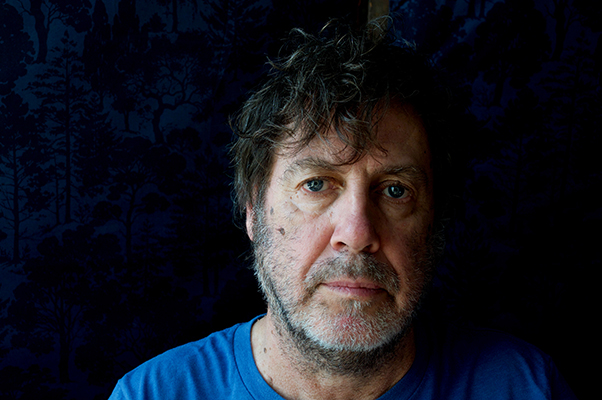
Peter Bruntnell

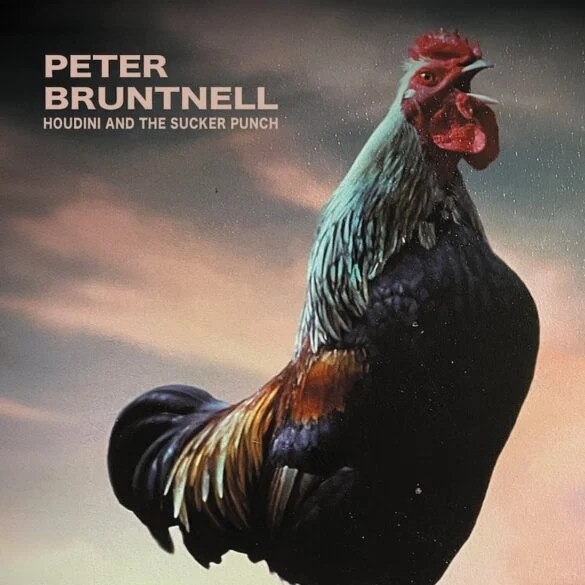
UK Americana singer-songwriter Peter Bruntnell’s latest album, Houdini and the Sucker Punch, is his twelfth – and it’s also one of his best. 

After 2021’s stripped-back, pandemic-era Journey To The Sun, which was surprisingly inspired by Eno and Bowie’s more electronic and experimental moments – it even had vintage synths on it – his new record was made with a full band, and it’s a return to Bruntnell’s Americana roots, but with nods to classic British bands including The Smiths and The Beatles, as well as US acts like The Byrds and Pavement / Stephen Malkmus.

The superb title track, which opens the album, is classic Bruntnell – irresistible and melodic alt-country with a plaintive undercurrent.

It’s followed by recent single, the sublime and jangly The Flying Monk, with guitars firmly on ‘Johnny Marr setting’, while Head-Smashed-In Buffalo Jump is soaked in Revolver-era psych, Mellotron and Fab Four vocal harmonies.
Let There Be A Scar adds a touch of Everly Brothers, but with Neil Young’s ‘90s grungy stadium rock, and even the pop sensibilities of Deacon Blue.

Guitar gunslinger, James Walbourne (The Pretenders, The Rails and His Lordship),  fires off some ace twanging on the playful and galloping Wild West adventure that is Yellow Gold – Bruntnell is on bouzouki duties – while things are taken down a notch with the yearning ballad, Sharks, which has a lovely melancholy feel thanks to Laura Anstee’s mournful cello.

No Place Like Home is upbeat and jangly Americana – the Byrdsy guitars ring out like The Bells of Rhymney – and the pedal steel-laced, moody and haunting R.E.M-esque ballad, Stamps of the World, evokes Country Feedback from Out of Time.

Say It With Garage Flowers spoke to Bruntnell over a couple of beers in a pub near London’s South Bank one evening in late summer to find out about the writing and recording of the new record.

“I didn’t think this album was Americana, but maybe it is,” he tells us, confusingly…

Q&A

When we last spoke, it was to promote your 2021 album, Journey To The Sun – a sparse, stripped-down solo record that was made during the time of the pandemic, when you’d bought a synth, a drum machine and a bouzouki. You told me you’d been listening to Another Green World by Brian Eno and Bowie’s Low, which influenced the sound of the record.

When I asked you what kind of album you might make after Journey To The Sun, you said it could be another ‘electro record’, but you haven’t done that – Houdini and the Sucker Punch is a full-band Americana album. You’ve gone back to your roots…

Peter Bruntnell: I didn’t think it was Americana, but maybe it is – one song is a rip-off of The Byrds!

That’s No Place Like Home, which has a jangly Americana feel…

Peter Bruntnell: Yeah.

You’ve got pedal steel on the album too, which gives it that Americana sound… Was this record a deliberate reaction to the last one, or was it more organic than that?

Peter Bruntnell: I didn’t really think about it – it was just how the songs came out. I don’t know whether it was a conscious decision to write songs that would translate better with a band or whether it was just how it came out. I’m not sure.

Do you write songs on acoustic or electric guitar?

Peter Bruntnell: I write on both.

Are you a prolific songwriter?

Peter Bruntnell: No, I’m not. I had about 13 songs [for this album] but three fell by the wayside and I ended up doing Stamps of the World because I liked the song, and it hadn’t been on an official release.

It was on Ringo Woz Ere, which isn’t see as one of your official albums…

Peter Bruntnell: I didn’t think it was a good enough album to call it an album… I didn’t think a record company would be interested in it.

Stamps of the World is a great song – it stands out on Houdini and the Sucker Punch because it’s the darkest and moodiest song on the record…

Peter Bruntnell: Yeah – I guess so…

It reminds me of Country Feedback by R.E.M…

Peter Bruntnell: I don’t know that one.

It’s from Out of Time and it’s my favourite R.E.M song…

Peter Bruntnell: Oh, really.
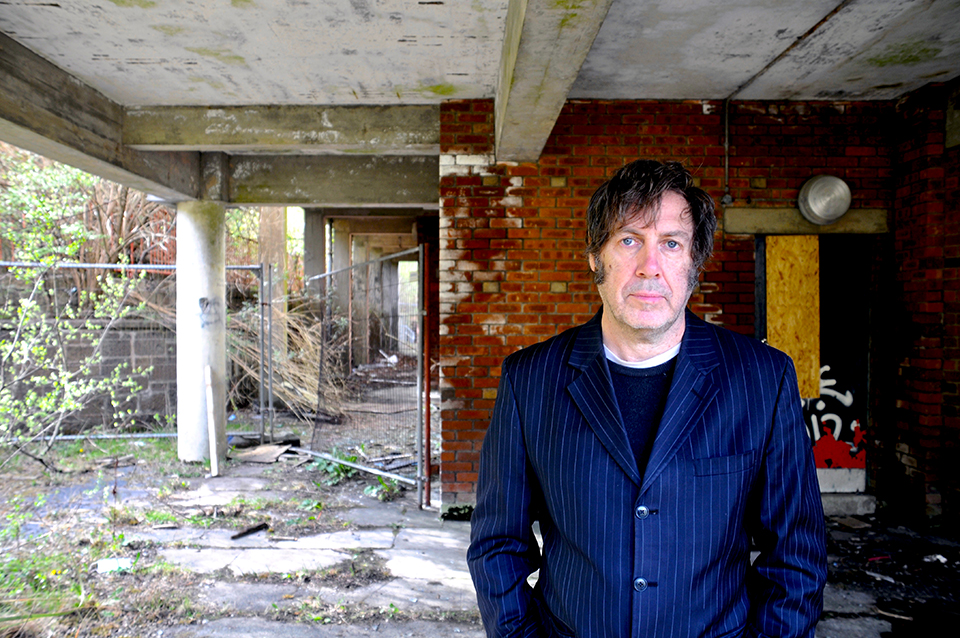
You’ve got some of your long-term collaborators on the album: Mick Clews (drums), Dave Little (electric guitar) and Peter Noone (bass), plus some special guests: pedal steel player, Eric Heywood; Son Volt/ Uncle Tupelo’s Jay Farrar on piano; cellist Laura Anstee, and Mark Spencer (Son Volt) on Hammond organ and piano. You toured with the States with Son Volt recently, didn’t you?

Peter Bruntnell: Last year. While I was out on tour with them, I was talking to Mark, and I asked him if he’d play on the new record. He was like, ‘Yeah – of course.’  So, then I thought, ‘Maybe I’ll ask Jay if he would play piano…’ He said, ‘Yeah –I ’ll give it a go…’ So, that was cool.

Son Volt have always been a big influence on you, haven’t they?

Peter Bruntnell: Yeah – very much.

‘I didn’t think this album was Americana, but maybe it is – one song is a rip-off of The Byrds!’

What about the other guests?

Peter Bruntnell: Eric Heywood is one of my favourite pedal steel players – I messaged him to see if he had a studio at home and he said he would love to do it and that he could do it at home. That was a game-changer – Eric’s great.

Peter Linnane also plays Hammond organ and synth on the record…

Peter Bruntnell: He’s the guy that masters my records. He’s in Massachusetts. With technology being what it is, you can get your favourite players on the album and you can stay at home.

We recorded the drums and the bass in Wargrave, Berkshire, with a mate of mine called Jim Lowe, who has engineered quite a few of my records – he works for the Stereophonics mostly and he has a studio in his garden. His wife is Laura [Anstee], who plays cello on the album.

The cello sounds great – very mournful and melancholy….

Peter Bruntnell: It’s amazing.

‘With technology being what it is, you can get your favourite players on the album and you can stay at home’

James Walbourne, who has played with Son Volt, and is in The Pretenders, His Lordship and The Rails, is also on the album – he plays guitar on Yellow Gold

Peter Bruntnell: Yeah – he did that at his place.

That song is a Wild West adventure, with twangy guitar…

Peter Bruntnell: It’s perfect for James. I wrote it on a bouzouki. After touring with Son Volt last year, me and my girlfriend drove from Colorado to Montana – we drove through Colorado and Wyoming, and, if you haven’t seen that part of America, it’s mind-blowing. There’s nothing – no settlements or farms – it’s mental. You can feel the buffalo and the Indians there. By the time we got to Montana, I was in a bookshop buying a book about trappers and the gold rush.

When I came back, I listened to a load of podcasts about it and one of them was about a guy who blows a hole in the side of a mountain – it falls on him and he’s trapped under the rocks. He smells some smoke coming from a campfire, so he starts shouting and a cowboy hears him and saves him, but by the time he gets him to the hospital, which is fucking a week’s ride away, he’s dead.

But, before he dies, he tells him there’s a load of gold in the hole, and the cowboy spends the rest of his life trying to find where he rescued the bloke, but he never finds it. It’s mental, but that’s not in the song… The song was inspired by the podcast, but I made the guy a Welsh bloke from the valleys, because I’m Welsh. I was born in New Zealand, but I’m Welsh.

Let’s talk about some of the other songs on the album. The title track opens the record and it has an Americana feel, with Hammond organ and pedal steel. One of the traits of your music is that you combine a great melody with a melancholy undercurrent…

Peter Bruntnell: Maybe.

You can write a great pop tune that has a sadness to it – that’s one of the reasons I like your music. What can you tell me about the title track, which has lyrics by your long-term songwriting partner, Bill Ritchie?

Peter Bruntnell: I thought of the title and then said to Bill: ‘We’ve got to write a song called Houdini and the Sucker Punch…’

It was a co-write lyrically, but when I wrote it, it had a different tune – it was around the time of King of Madrid [2019 album], but I didn’t like the tune enough. Then I found a tune that I’d recorded on my Dictaphone – I went through it looking for anything that might be useful or usable, and that melody was on there, so I adapted the lyrics.


The Flying Monk is my favourite song on the album – the guitars have the feel of The Smiths / Johnny Marr, and there’s a nod to Some Girls Are Bigger Than Others in the lyrics, when you sing: Saint Joseph told the rebel as he emptied a yard of ale…’

Peter Bruntnell: Yeah – of course. The Smiths are one of my favourite bands.

So, you deliberately wanted The Flying Monk to sound like them?

Peter Bruntnell: I was trying to make it sound like Superman by R.E.M, with those harmonies – so, it was a bit of that and a bit of The Smiths, but the riff is more Syd Barrett – the first two notes are like Lucifer Sam [Pink Floyd]. The riff came really late – we’d already recorded the rhythm tracks… I was in the studio, and I needed a riff.

Lyrically, the song was inspired by an 11th century Benedictine monk called Eilmer of Malmesbury, who tried to fly using wings… There’s also a brewery named The Flying Monk…

Peter Bruntnell: It’s a good little story – he broke both his arms and both his legs. I didn’t know the story until the Christmas before last… I was in Gloucestershire, and I wrote the song in-between Christmas and the New Year.

Sharks is another of my favourite songs on the album – it’s a love song, but, lyrically, when you mention surfing in it, as part of a metaphor, was that inspired by an experience with your first record company when you were in a band in the early days? 

Peter Bruntnell: Part of it was. The band was the Peter Bruntnell Combination – we had an album called Cannibal. My record company learnt that I was trying to surf, and they went, ‘Great – he’s a surfer, so let’s send him down to Cornwall.’

That was their angle – they paid for me and my band to go to Cornwall every weekend. I was an acoustic guitar player only at that time – I was slowly learning how to play electric… My guitar player,  who was in his wetsuit, said [puts on a camp, theatrical voice]: ‘This grey rubber suit is driving me mad…’

He actually said that to me, so, it’s always been in my head – it’s quite comical. Sharks is a kind of love song….

It’s a beautiful song…

Peter Bruntnell: Ahh – thanks, mate.

So, from surfing to dancing… Let’s talk about the video for the first single, Out of the Pines, which made me smile…

Peter Bruntnell: It’s pretty amateurish, but it’s sincere. We filmed it on the Isle of Bute – it’s very remote. I went there to go fishing and found a fallen-down chapel, so we filmed a video there – I knew I was going to be dancing, but I didn’t know it was going to be a one-take thing… It was mildly embarrassing, but I don’t care anymore…

I love the opening lines of that song: ‘I’ve never been much good at getting up in the morning – singing after dark has been my tomb…’

Peter Bruntnell: That’s autobiographical… I wanted to write a song that was a bit like Ron Sexsmith – it’s me trying to be him.

In the press material for the album, you describe Let There Be A Scar as having “a very vibey feel…” It has Everly Brothers-style harmonies and is a bit like Neil Young’s ‘90s grungy stadium rock…

Peter Bruntnell: It’s almost Nirvana for me, and the melody is almost Let It Be Me by the Everly Brothers. I also really love Acetone, so the quiet bits are very Acetone, guitar-wise.

Head-Smashed-In Buffalo Jump is very Revolver-era Beatles, with psychedelic backwards guitar…

Peter Bruntnell: That was the initial idea – I wanted to write a song like Rain. There’s a place in Canada called Head-Smashed-In Buffalo Jump – Bill [Ritchie] has always gone about it… When I was driving through Wyoming, with the Rocky Mountains on my left, as I was going north… That was another song that was inspired by the plains and Wyoming, but the idea is that there’s a bloke on the Tube feeling like he’s just jumped off the cliff at Buffalo and landed on his head. It’s also inspired by a story that’s in the podcast I mentioned earlier: Dr. History’s Tales of the Old West – there’s a story about an Indian kid who used to run buffalo off a cliff. The kid got a bit too keen and ended up at the bottom… I used it as a metaphor for someone going into London on the Tube…

You’ve certainly nailed that Revolver feel… Is that a Mellotron sound on it?

Peter Bruntnell: Yeah – that’s Pete Linnane. He sent me four of five keyboard parts to choose from.

Revolver is my favourite album of all time…

Peter Bruntnell: I like that one – I was listening to it yesterday, driving back from Devon. Taxman is insane…

‘I like the fact that this album is quite up and the songs are fast’

The last song on the new album is Jimmy Mac, which is one of the more subdued moments  – the cello gives it an autumnal feel, and the outro reminds me of Wichita Lineman

Peter Bruntnell: Yeah – we were going for that kind of thing. That was Dave [Little] – he only plays on two songs on the record, because he didn’t have a set-up at his place in Devon, and I made the record in London. So, it was geography… he was four hours away and I couldn’t send him stuff… I was trying to get it done and also do a full-time job…

So, how was it making this album?

Peter Bruntnell: It was the hardest record I’ve ever made – I was mixing it, doing overdubs, and going to fucking work, and I produced it…

Are you pleased with it?

Peter Bruntnell: I am.
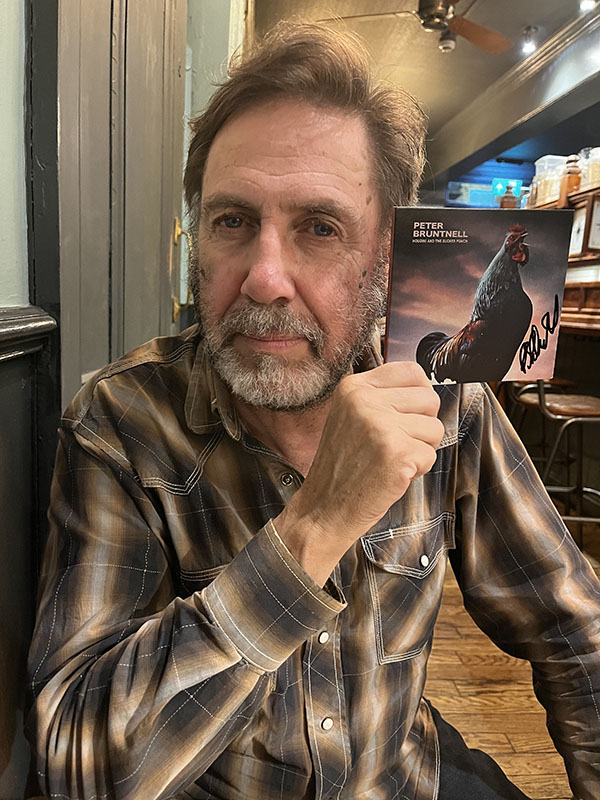
‘I was fed up with protesting. I wanted this album to be more pastoral and to try another angle’

I think it’s one of your best…

Peter Bruntnell: That’s cool. I like the fact that it’s quite up and the songs are fast.

It’s 10 tracks – five on each side on the vinyl. Bang! Too many albums are too long nowadays…

Peter Bruntnell: I agree.  

Some of your previous songs have dealt with political issues – Mr. Sunshine was about Trump. This time around, you haven’t tackled politics…

Peter Bruntnell: I was just fed up with protesting. I wanted this album to be more pastoral and to try another angle…

So, you wrote more story songs with characters in them?

Peter Bruntnell: Yeah – I’m not banging on about the Tories anymore… and now they’re out. anyway…

Houdini and the Sucker Punch is out now on Domestico Records.

For more info, visit: https://peterbruntnell.co.uk/


UK Tour Dates

2024

Oct 4:LIVERPOOL Outpost
Oct 5:ISLE OF BUTE Craigmore Bowling Club
Oct 6:GLASGOW The Glad Cafe
Oct 20:TWICKENHAM Eel Pie Records (in-store & signing)

Dec 5: LONDON The Green Note (duo show with Robbie McIntosh)
Dec 14: SUTTON The Sound Lounge
Dec  15: ST LEONARDS The Regency Rooms

2025

Mar 6: NOTTINGHAM Angel Microbrewery
Mar 7: PRESTON The New Continental
Mar 8: GATESHEAD The Central


‘I’m not a fan of very emotional singing. It’s more interesting to have a robot sing a heartfelt melody’

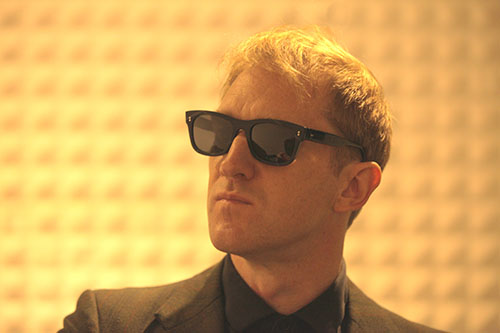
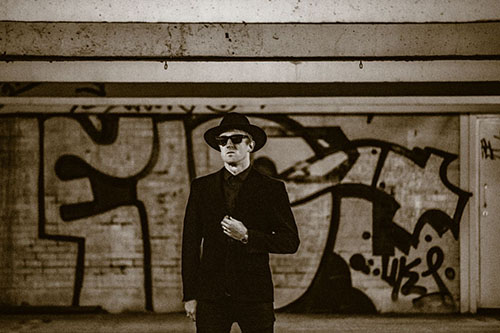
Usually found hiding behind a pair of dark glasses, Doviak is the mysterious and ice-cool multi-instrumentalist and producer who is best known for his work with Johnny Marr – he plays guitar and keys in Marr’s band and has co-produced the former Smiths guitarist’s four solo albums: The Messenger, Playland, Call The Comet and Fever Dream Pts 1-4.

In the past few years, Doviak, who is based in Manchester, has been releasing his atmospheric and often cinematic, electronic-heavy solo songs on digital platforms, as individual tracks or EPs. His music is inspired by ’80s synth-pop, electro, Cold War espionage – on his social media profile he calls himself cyberspace’s foremost purveyor of ‘Spywave’ – European travel, John Barry and gothic rock.

Say It With Garage Flowers had a clandestine meeting with him to discuss his solo work, his thoughts on new tech such as AI and immersive audio, working with Marr and why decentralised collaborations might be the way forward.

This interview will self-destruct in 10 seconds…

Q&A

Let’s talk about your most recent solo release –  The Vanguard EP.  It doesn’t sound as spywave as some of your previous material… 

Doviak: In my head it is, but in reality it’s not.

One of the tracks, Turn It Over, has a pulsing, ’80s electronic feel – it’s like Howard Jones… 

Doviak: Yeah – there’s all sorts of stuff referenced. Sometimes I’ll be playing around with a riff and it happens to be electronic and I’ll just go with that. I might try and make it something that you might even hear on the radio…

With a pop sensibility….

Doviak: That’s the idea. It’s fun doing all these mysterious tracks, but if nobody listens to them, it’s a bit demoralising. That’s not to say I’m doing things just to get radio play, because that doesn’t really work either. I like pop. To me, Turn It Over is trying to be an intellectual version of a really crass pop track. All of the lyrics in 90 percent of pop stuff are silly that’s what they’re meant to be and that’s why they sell, but if you like lyrics, they’re not very engaging. I like the idea of having that production but with something more quirky.

‘Turn It Over is trying to be an intellectual version of a really crass pop track. All of the lyrics in 90 percent of pop stuff are silly’


The Courtyard, which is on the EP, is darker and a much more cinematic track…

Doviak: It’s an electro-goth thing.

It reminds me of Depeche Mode…

Doviak: That comparison comes up a lot – people always say it. The funny thing about that is I never listen to Depeche Mode – I hardly know any of their stuff, but that’s what it’s supposed to be like – dark, low vocals, and moody with goth reverb.

There’s a song on the EP called Price of a Soul – I’m surprised Depeche Mode haven’t written a song called that…

Doviak: Yeah – trying to find any title that some fucker hasn’t used is almost impossible.

Wait For The World is an anthemic ballad – it has synths on it, but is more guitary and less electronic than some of your other songs…

Doviak: That’s right – the song dictated it. With some songs, there is a core tune – with melody, lyrics and chords – that you could play on an acoustic guitar, and it works in its own right, but with others, the production is so integral that it wouldn’t be much good on one. With Wait For The World I thought it was better to follow slightly more traditional instrumentation than a heavily electronic one – it just seemed to work better that way. It’s a really old song – about 10 years old. I just had to get it out eventually.

Would you say the EP is themed?

Doviak: Only because it’s electronic, but, also, because, in my head, the lyrics are about people’s relationship with the internet, social media and new tech. It’s this thing that’s been foisted upon us  – this revolution – and we’re learning how to navigate this world.

Are you a fan of AI in music?

Doviak: I’m not a fan of it but I recognise the fact that it’s not going to go away and its presence is only ever going to increase. It’s like better than the devil you know…

That’s a Kylie song…

Doviak: (laughs) Exactly – that’s a good reference… If AI is a tool that you can leverage to improve what you’re doing and make it more interesting then why not? I don’t think you should get rid of the human element, but some aspects of it will disappear. There will always be people who want that human element – I think that’s fundamentally why people like music. Anthropologists argue that singing is like bird song – it’s a way to show your sexual proclivity.

 ‘I’m not a fan of AI but I recognise the fact that it’s not going to go away and its presence is only ever going to increase’

Maybe singing evolved before language, but I’m not saying that’s the case… There’s an emotional element that connects with you for some reason – some people like certain genres – but some of it is more instinctive. That will always be there, but some people don’t really care about music – it’s just a thing in the background. They’re not going to care if it’s AI music playing in a coffee shop, but there are a hardcore group who will and they like real people… Some elements of pop aren’t just about the music you’re buying into the personality and the imagery as well…

I have no problem if you run an AI music program and you get an idea from it. If the whole thing sounds great and you want to put it out, whatever, but I think it will be a long time before that happens frequently.

What are your views on Dolby Atmos and immersive audio? Some producers see it as a gimmick – do the possibilities interest you?

Doviak: It is gimmicky but, again, it’s another thing that will be around… I don’t know if you know this, but Apple Music prioritise your stuff in their store if you have Dolby Atmos mixes…

Because they want to sell headphones…

Doviak: Yeah. It not’s a bad thing, but I don’t think it’s particularly necessary.  Look at how must people consume music – 70 percent of it is through a tiny, tinny speaker on their phone. Some people have amazing systems to sit and listen to, which is great, but that’s the minority…
I’m not against it, but it’s time, and how much time do you want to dedicate to learning how to mix in Atmos? If someone wants to mix it for me, great… I might look into it at some point, but it’s not a priority. I’m not against it.

You worked on a recent track called Ghost In The Room with a group called Moontalkers. How did that come about?

Doviak: It was straightforward – they just got in touch out of the blue and asked if I’d be interested. It seemed like fun and it was great to just do vocals on something rather than having to produce all the music too. Plus it’s interesting and fun to be working with younger musicians.

Your song Venus Eye Honeytrap was inspired by the story of Mata Hari, wasn’t it?

Doviak: Yes – that’s right, but the lyrics have their own subtext. I think she was accused of being a spy, but I don’t think she was probably. The song was actually more inspired by noodling around, but the overall aesthetic of it is just a distillation of the things I like – The Horrors and any slightly dark, gothic band, but I don’t like to stray into true gothic territory – it has more of a rock element.

It sounds like Gary Numan doing a theme song for a spy film…

Doviak: I think that’s a good description.

Your singing voice reminds me of Numan at times…

Doviak: On certain songs, it’s a deliberate choice to get more robotic than soulful. If I get the melody right and I have a very emotive piece of music with a tune that’s quite sweet, I want to upset that with something that’s a bit colder and dispassionate – to me it’s the right side of melodrama, because I’m not a big fan of very emotional and heartfelt singing generally. Sometimes it’s amazing, but it can get on your nerves a little bit… it just isn’t my thing. For me, it’s more interesting to have a robot sing a heartfelt melody.

Which is essentially what Kraftwerk did…

Doviak: Sure.

‘If I get the melody right and I have a very emotive piece of music with a tune that’s quite sweet, I want to upset that with something that’s a bit colder and dispassionate’

Alicia Vigil of L.A. rock band Vigil of War guests on Venus Eye Honeytrap. How did that come about?

Doviak: She’s a friend of a friend, who I worked with. I was in town, and we did some writing – we kicked around some ideas. Whether anything will see the light of day, I’ve no idea, but it was fun. I don’t do much writing [with other people] outside of my work with Johnny. I’ve done production and mixing, but not a great deal of writing.

Would you like to do more?

Doviak: Yes – that’s what I enjoy the most. The production and the writing are kind of tied together to some degree… I like it a lot more than mixing and engineering, which I don’t really enjoy. They all have positives and negatives, but the thing I really like is writing – it excites me the most by far.

There is an underlying Cold War theme to a lot of your solo music and it’s very cinematic. Have you written soundtracks? I know you’ve been involved with music for adverts…

Doviak:  Yeah – I have done, but not for a while. I’ve been too busy – there was a point where I was doing The Messenger album with Johnny and touring… We had a lot of production stuff to work out, because it was the first time we’d really gone out, and I was doing a lot of work for TV adverts. It started to take off, but I had to make a choice, so I did the live thing because it was more fun, and I got to see the world, play gigs and work with Johnny, which was great. I tried to do both for a little bit, but it wasn’t really happening – something was going to suffer…

Would you like to do film soundtracks? Some of the tracks you’ve done with Johnny, like Walk Into The Sea and Rubicon, are more like soundscapes than traditional rock or pop songs, aren’t they?

Doviak: Absolutely – that’s right. I like to have some sort of balance – if I was going to see a gig, what songs would I want it to contain? It’s nice to have a general thread of something running through it. Sometimes you want to hear a couple of up-tempo, catchy, straightforward songs with choruses, but then you might want a lull with some emotive stuff. Not everyone wants that – a lot of the audiences respond better to the up-tempo, catchy singles and they jump around and sing the lyrics – but I think they’re also impressed by the soundtracky stuff, and the people that like it really like it.

Where does your love of the Cold War come from?

Doviak: Probably from watching films. It’s not something I’ve always been into. I had a whole bunch of songs kicking around for many years, but with no real defining element to them, but at some point I thought it would be fun to do something John Barryesque – I’d liked Portishead and the idea of doing melodramatic orchestration. There are particular harmonies that are unique to that genre – there’s an element of melancholy. It’s not so much sadness, but more of a bleak melancholy…

Like Barry’s soundtrack to The Ipcress File

Doviak: Exactly.

Johnny and the band used to walk on stage to the theme from The Persuaders

Doviak: We did actually – that’s right. It’s a good piece of music.

Did you write your Enemy Numbers EP while you were travelling around Europe?

Doviak: Exactly – the impetus came from different places, and I liked the idea… If I’d had the budget, I could have done themed videos for the cities they were related to – Berlin, Paris, Hamburg, Prague… I had some brief ideas while I was on the road, but I didn’t have the time to expand on them until I got home. The emotion still remains – a set of chords and a simple melody, but that’s enough and it’s something to build on. If it’s the right thing, it sparks my imagination, and I can go back and build on it with that in mind. I’m lucky to be able to travel, and it’s a great way of doing it.

I see so many cities and I got to thinking what would it be like if you were a guy listening to a shortwave radio by yourself, in a room at night, with a different identity – it could be a strange, lonely experience. That’s why there’s a sadness to the music – slightly bleak and melancholy, but without being overly melodramatic.

Did you write Century in Montmartre, Paris?

Doviak: Yes – the chords and the basic tune. The idea is that there’s some guy in a room by himself, feeling melancholy and looking over the rooftops of Paris. It’s particularly scenic round there.

Do you have a home studio?

Doviak: Yes – it’s basic, but it’s enough for me to do what I need to do.

So, you record all your solo stuff there?

Doviak: Yeah, but Jack [Mitchell – Johnny Marr’s drummer] played on a couple of the early songs, Solid State Machines and Enemy Numbers, so we recorded his drums elsewhere. I’d do that again, but it hasn’t been convenient and for some of the recent songs it hasn’t really been necessary.

Do you have a big collection of vintage gear, like old synths?

Doviak: Not as big as I’d like – one of the reasons is because I have to travel so much and the other is because software is getting so good. Some of it sounds as good as the real thing – certainly by the time you’ve done various things to it production-wise and put it in the mix. We have a whole bunch of stuff in Johnny’s studio – a Juno, a Moog, a Yamaha SS30…

Johnny explored electronic music with Bernard Sumner in Electronic and then when he had his band The Healers he went back to more traditional rock, blues and psychedelic stuff. Do you think working with you on his solo records has made him experiment with more electronic sounds again?

Doviak: With the more electronic tracks like Spirit, Power and Soul, and Armatopia, that’s what he wanted to do – he already had those ideas. There may be one or two songs where I’ve said, ‘You could put a dirty Juno bass on there…’ or something. I can’t remember – he remembers that stuff brilliantly.

You’ve been putting out your solo songs and EPs digitally. Any plans to make an album one day?

Doviak: Yes – it’s a nice way of tying tracks together thematically and having them all released at the same time. From a more cynical point of view, it’s also better for marketing, or so I’m told – it’s easier to get more people on your side, like the press, if you’ve got a product out. I’d like to do it but my time’s limited…

Apart from during Covid, you’ve been so busy with Johnny’s albums and touring…

I know… and during Covid we were writing the last album, which has 16 tracks on it. We wrote about 20. In an ideal world, I’d have a situation where I could bang each of my tracks down in six months to a year and do an album. I think it’s more consistent that way.

What’s the process like when you and Johnny work on tracks together? Does he give you demos or do you both come up with ideas in the studio and layer stuff up?

Doviak: It’s kind of a mixture – we might have ideas for a song and once we start working on it, it can take twists and turns and end up nothing like the original – in my mind, the music is 75 percent Johnny, something like that… I tend to do more of the drums, the bass and keyboard stuff.

‘What if you were a guy listening to a shortwave radio by yourself, in a room at night, with a different identity – it could be a strange, lonely experience. That’s why there’s a sadness to the music’

Have you got a lot of unreleased solo stuff?

Doviak: Yes, I have. I’ve always written and recorded, and it’s 80 percent ready to go. That final 20 percent is a killer sometimes – you have to mix it and master it, and that takes a lot of time. It’s very beneficial to have another pair of ears on it. When you’re doing everything yourself, you’re very close to the song and you can’t see the wood for the trees. That’s where collaboration comes in handy. If you’re in a band, you kick ideas around in a rehearsal room… The one thing I don’t like about writing by myself is that it’s quite isolating and boring – I like being with other people, talking and having a laugh while I’m working.

I really like your song Don’t Follow – it has ‘80s synths on it and electronic drums. It reminds me of Duran Duran when they did The Chauffeur, as well as Howard Jones and Ryuichi Sakamoto…

Doviak: That one’s had a good response – mainly because I think it’s more of an identifiable genre.

It could’ve come off the soundtrack to Drive

Doviak: Exactly.

One of my favourite songs of yours is Russian Dolls – it’s very dramatic. Do you remember a ‘90s band called Rialto, who were influenced by John Barry and Ennio Morricone? It reminds me of them… 

Doviak: I remember the name…  I’d had the song knocking around for ages – the idea and a piano riff. It got tweaked over time – I struggled with the chorus – but it’s very John Barry / Ipcress File. It’s spywave, with almost Persuaders-like guitars.

Where did you grow up?

Doviak: In Cambridge.

There’s a spy connection there right away…

Doviak: Exactly.

Were you always in bands when you were young and how did you end up working with Johnny Marr?

Doviak: I was always in bands until I moved to Manchester, but I had a lot of friends in music, and I was involved with it. It’s a long story – I had a friend in a band in Manchester called Alpinestars, who said: ‘We’re going on tour – why don’t you come along just for a laugh?’ I worked as a guitar tech, which I’d never done. One of the guys in the band knew Johnny vaguely and we got in contact, met up and played some guitar – it went from there.

So, what are your plans for the rest of the year?

Doviak: I like the idea of working out a way of doing decentralised collaborations. I don’t even know what means yet, but it sounds good, and if you say the word ‘blockchain’ with it, people will probably think it’s interesting.  It’s if you have an idea and you put it out there online in some format – you could choose people to work with, or maybe anybody could do it and develop it in their own way.

And you’ll be doing another record with Johnny?

Doviak: Probably soon – he’s been crazy busy. It’s been nuts.

Follow Doviak on Instagram, X and YouTube.

For Johnny Marr tour dates and info, visit:  https://johnnymarr.com/