‘If you can find a melancholy in a major key, that’s when you’re really winning’

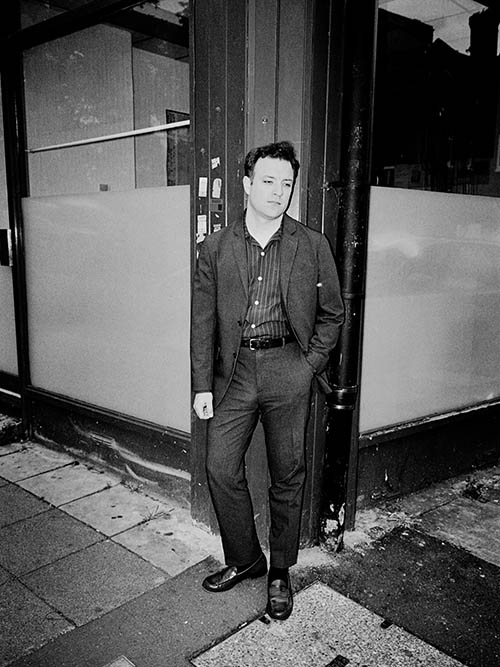
Photo by Chloe Ackers

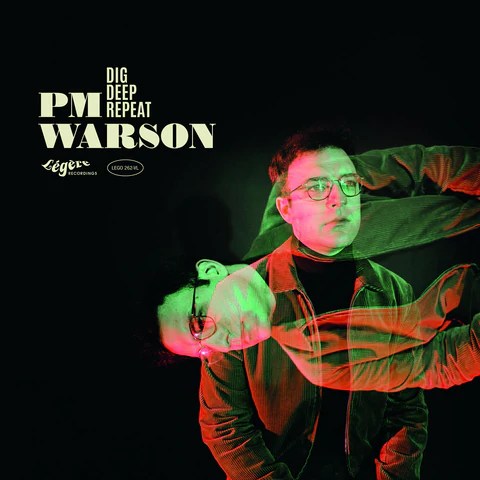
The last time Say It With Garage Flowers spoke to UK soul, blues and R ‘n’ B singer-songwriter and guitarist, PM Warson, it was for the release of his second album – 2022’s Dig Deep Repeat, which he recorded in an industrial storage unit in Stoke Newington, north-east London, during the pandemic.

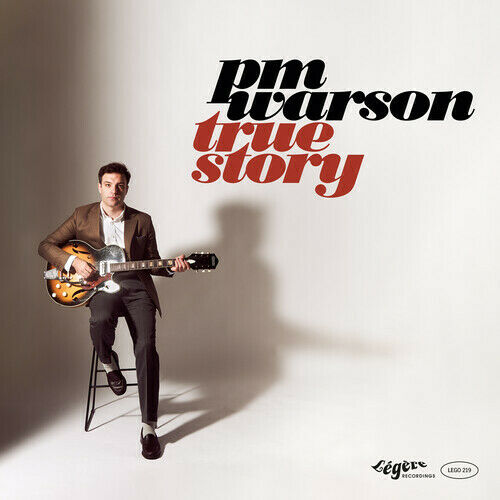
One of our favourite albums of that year, it was much harder and more raw than his debut, True Story, and was in thrall to the classic soul of Ray Charles and Booker T. & the M.G’s, but also paid homage to his love of ‘60s pop music and girl-group sounds, like Phil Spector, as well as vintage garage-rock and the surf instrumentals of Dick Dale, Link Wray and Duane Eddy.

For this year’s follow up, A Little More Time, Warson has explored those ‘60s pop inspirations, er, a little more…

“That’s always been there, but on this record I let the wider influences just come in a little bit,” he says, talking to Say It With Garage Flowers over a coffee in a café in the Marylebone area of London, one morning in mid-July this year.

There’s still plenty of blues and R ‘n’B on the album, though, but, as he explains: “It’s a lot more straight up, with some really wild electric guitar playing – those tracks are a lot rawer, alongside some more polished, songwriting-led productions.”

Warson chose to make the new record at Lightship 95, a floating analogue and digital studio moored on the Thames.

“The live room has a very distinctive sound and I think you can hear it at the heart of the recording – it’s quite a ‘roomy’ production,” he says. “It’s a great place to work – it’s like a mid-century spaceship.

“After doing the last album, I realised that I needed the room sound [in Lightship 95] for the stuff I was trying to do – I wouldn’t have got that in the other place. I was very specific with the engineer, Giles Barrett, that I worked with, about what I wanted and he really got it. I think you can hear that immediately on the opening track.

“We listened to a load of early ’60s pop records and Wish Someone Would Care by Irma Thomas, which was done at Capitol – it’s a big-room recording. It was a bit of that flavour… You’re not going to do it exactly like they did it, but part of this record was about letting go of the, ‘Well, in 1961, they would’ve done it like this…’

‘Part of this record was about letting go of the, ‘Well, in 1961, they would’ve done it like this…’ I just did it the way that worked for me now, but with some of that influence’

“I just did it the way that worked for me now, but with some of that influence on the process. I’ve always been someone who tries to let the process inform the sound, rather than the other way round, but sometimes it’s good to do it the other way round: ‘How are we going to get there? This is a good way of doing it.’ “

He adds: “The room in Lightship 95 isn’t massive, but it has got a high ceiling, and because it’s the hull of a ship, it has artificial walls. I wonder if that’s quite comparable to some of the buildings in the States that studios were housed in? It definitely has a similar resonance.”

To lay down the album, Warson was joined by his regular rhythm section, Billy Stookes (drums) and Pete Thomas (upright and electric bass), plus guests, including Stephen Large (organ and electric piano), Martin Kaye (piano), Jack McGaughey (organ), Ollie Seymour-Marsh (guitars) and Grant Olding (harmonica), as well as backing singers and a horn section. 

Q&A

Ahead of the album, you released a seven-inch single, Right Here, Last Night, which came out on FYND…

PM Warson: That’s my label. It was distributed by Acid Jazz and we had an arrangement with Légère Recordings, who are the rights holder and have done the album with me – they cleared the way for me to do the seven-inch. It was a reset for me, and that track was quite an interesting one to lead with because it’s not typical of the album – it’s more like some of my previous output. It’s late-night R ‘n’ B with a bit of a jazz sound.

I think it sounds quite Northern Soul, too…

PMW: Yeah.

And it has a moody edge…

PMW: Especially in the middle – it has a muted trumpet on it, which is very evocative. We did it on a whim – muted trumpet can be a bit naff, but we tried it out and it really worked.

The title track of the album, A Little More Time, is the opener, and it was released as a single digitally. It’s a dramatic, ‘60s-style, Phil Spectoresque pop song…

PMW: Definitely. It’s a sound I’ve had in my head for a very long time, and it was the first track we laid down in the first session, so it set the tone for the record. There’s acoustic guitar going all the way through it, and a nylon string guitar, and real, Al Kooper, mid-’60s Bob Dylan organ, which seemed to fit perfectly with the horns.

There were some tracks on the last album that had a Spector feel, like Game of Chance (By Another Name) and Out of Mind… 

PMW: They did, yes. but they were a bit darker. There are ten tracks on this album –  for the musicians out there, you’ll notice that nine of them are in major keys. That’s a big shift – the last album didn’t have a single track in a major key on it. The tracks were all quite dark and in minor keys.

‘There are ten tracks on this album –  for the musicians out there, you’ll notice that nine of them are in major keys. That’s a big shift’
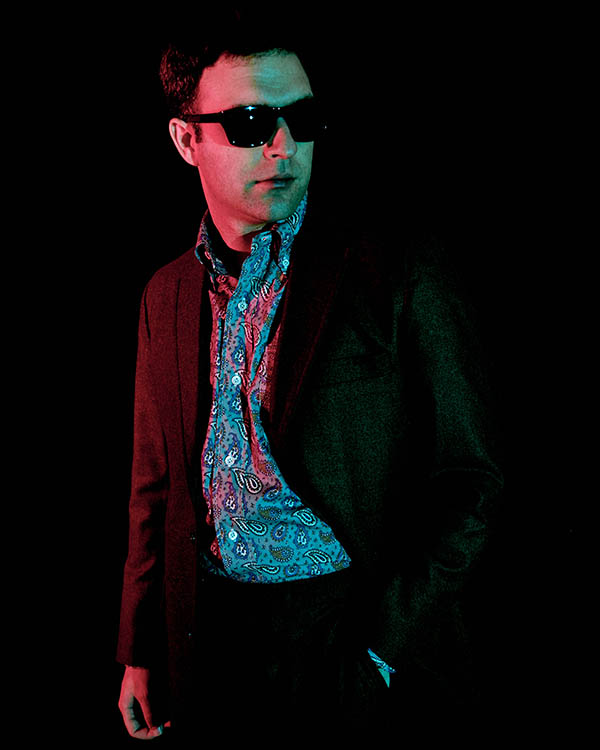
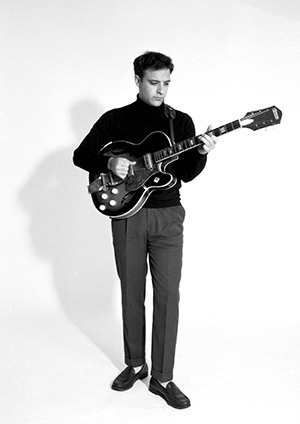
Photo by Chloe Ackers

So, does that mean you’ve cheered up for this record? 

PMW: Yeah, but if you can find a melancholy in a major key, that’s when you’re really winning, so that’s what I’ve been trying to find a little more.

Over & Over, which is the second track on the record, has a late-night, bluesy feel… 

PMW: It’s quite a bold move to have that second – it was influenced by the Paul Butterfield Blues Band and the ‘60s blues scene in West London, as well as southern soul and Irma Thomas. It has my mate, Ollie, playing some very aggressive lead guitar on it.

One of my favourite songs on the record is Another City Night, which is very atmospheric. It reminds me of Under The Boardwalk by The Drifters and Spanish Harlem by Ben E. King… 

PMW: Exactly – those New York records that the British acts were emulating. It’s also got pedal steel guitar on it by CJ Hillman – he’s incredible. We’d been meaning to do something together for ages… Pedal steel is such a distinctive sound and evocative, but it’s often just shoehorned in. A lot of people want to put pedal steel on something because it’s cool… That’s fine, but I wanted to wait for exactly the right thing and it felt right. I sent CJ a message saying, ‘Now’s the time’, and he was game – he was very generous with his time

‘I’m a really big Dylan fan but I’m quite careful with how I approach his influence’
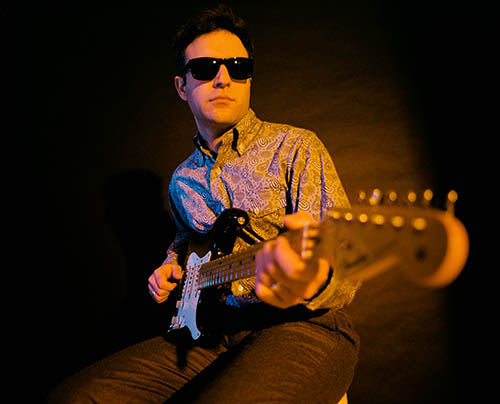
Photo by Chloe Ackers

There’s a great twangy guitar break on that song too…

PMW: That was me –  we overdubbed my Telecaster, which is my main guitar, because I was playing acoustic on that track. It was quite influenced by Little Barrie (Barrie Cadogan) – like a lot of guitarists, I’m really into him. He does those kind of bluesy but slightly cinematic things – they’re modal jazz and I’ve tried to tap into that in my own way, with a little bit of fuzz on the way in.

Closing Time really stands out on the album for me, because it has a West Coast, ’60s rock/pop feel – it’s slightly psychedelic… 

PMW: Definitely. I’m really into Buffalo Springfield, The Byrds, pre-the San Francisco hippy thing, and Dylan and The Velvet Underground. I’m a really big Dylan fan but I’m quite careful with how I approach his influence. I’d had the jangly riff for ages but it didn’t really fit in with what I was doing before, which was more jazz-soul-R ‘n’ B. Since it’s become more rock-pop-R ‘n’ B, it seemed to work, and I just reeled off a lyric which was just a load of nonsense really, depending on how you take it. I think that was the second track we put down.

I could imagine The Charlatans doing it… 

PMW: Yeah… I kind of let these things in… if I had something, I would throw it into the melting point. There was brief period with this album where I got a little bit lost because I had late-night R ‘n’ B, the slightly psychedelic thing, the ’60s pop, the country… It was starting to get a bit confused, but when I did the last session, which was Another City Night and  I Saw You In A Dream, it all made sense.

I Saw You In A Dream is my favourite song on the record – it’s a big, dramatic and cinematic ballad, with a ’50s, Roy Orbison-like feel… 

PMW: Yeah – I’ve been influenced by that stuff since I was a young teenager. It wouldn’t have gone on a previous record because it didn’t feel right.

There’s a twangy, melodic, Duane Eddy-style guitar solo on it… 

PMW: It sounds like it’s a baritone, but it’s in E on my Telecaster right at the bottom. The piano is also distinctive it’s a ’60s Wurlitzer, plodding along and doing almost a Beatles thing. It’s a bit unusual for me. We put a phase-shifter on the Wurlitzer, which gives it a throbbing quality.

The song, I Need A Reason, from the album, came out under another name, Every Day (Every Night), in 2022.  It’s like a bridge between the last album and this one…

PMW: Yeah – I changed the title. It’s basically a live cut not entirely, but fundamentally. We started doing the arrangement that’s on the album live.

The album finishes with In The Heights, which is one of the darker tracks, with a late-night / early-morning-in-the-city vibe…

PMW: Definitely – it’s more in keeping with some of my previous stuff, but it fitted well on this record. That track, Another City Night and I Saw You In A Dream tie-in with each other – they have a similar mood and imagery.

So, are you pleased with the album? 

PMW: I am. It feels like a massive step forward – both the production and the songwriting, as well as the playing and singing ensemble.

We do a lot of stuff from the last album live and I was very pleased with it, considering the circumstances in which it was made, but with this one I decided I wanted to do it properly and be less precious about other things. It’s the closest I’ve got to the vision for it. It’s not just emulating a sound – it’s a bit more infused with different things, and sonically it’s really close to the kind of stuff I like. I also like the package – the album cover.
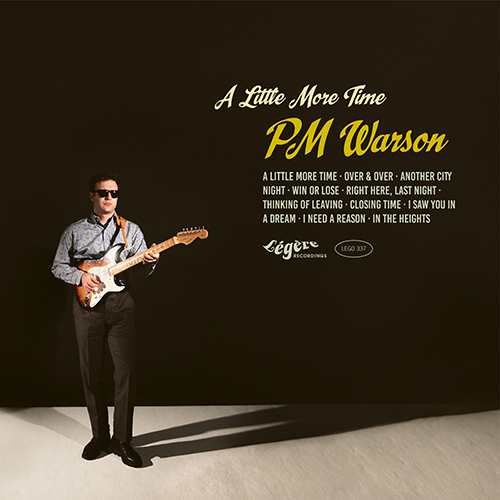
Was the artwork inspired by a Willie Nelson record?

PMW: Yeah – it was. Kerstin Holzwarth, who did the layout, has a knack of doing something that’s very classic, but doesn’t look like it’s sending something up. It’s always a risk, but she got it perfectly. It doesn’t look like the Willie Nelson record, but it feels like it has the same vocabulary. It’s important –  the combination of the songs, the sound and the package… I’m really careful about album covers – I’m fussy and I take a lot of time on it.

A little more time?

PMW: Exactly.

A Little More Time is released on September 6 (Légère Recordings) on vinyl and digital.

https://pmwarson.bandcamp.com/album/a-little-more-time

‘I’m pleased with this album – it’s true to my ideal of what I think records should sound like’

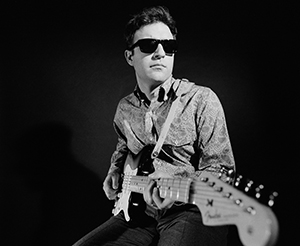
PM Warson – picture by Chloe Ackers.

When lockdown first kicked in, PM Warson, had only just finished recording his debut album, True Story.

Faced with no gigs to promote it, once restrictions allowed, the UK soul-R’n’B-garage rock singer-songwriter went straight back into the studio – a small room in an industrial storage unit, in Stoke Newington, North East London – to work on a new record. The result is his second album, Dig Deep Repeat, a brilliant collection of raw and soulful songs, albeit with a harder edge to them than those on his debut. 

Warson, who is 32, is in thrall to the classic sounds of Ray Charles and Booker T. and the M.G’s, but this time around he’s also paid homage to his love of ’60s pop music, like Phil Spector, as well as vintage garage-rock and the surf instrumentals of Dick Dale, Link Wray and Duane Eddy.

First single, the high-octane Leaving Here is a reworking of an early Holland-Dozier-Holland Motown song that’s been known on the R ‘n’ B scene for years, and covered by The Who, among others, but Warson takes it back to its soul roots while still keeping its garage-rock credentials intact.

Game of Chance and Out of Mind are dramatic and haunting ’60s-pop-inspired songs, the ferocious surf-styled instrumental Dig Deep could grace the soundtrack of a Tarantino movie, and the stunning, organ-drenched soul ballad, Matter of Time, is so authentic that it sounds like a standard. You can’t believe it’s not an obscure track that vinyl-loving Warson hasn’t dug up while crate digging and taught his band to play.

His new album has been on the Say It With Garage Flowers turntable for the past couple of weeks and we’re loath to take it off. We just want to, er, dig deep and repeat…

“The title came from a remark that I made when it got to the point when I didn’t know what I was going to do next,” Warson tells us, in an exclusive interview.

“‘I guess I’ll have to dig deep and make another record – dig deep repeat.’ It was a working title, but when it came to it, I thought, ‘That’s the one – I’ll just go with it…”

Q&A

Your first album, True Story, came out in 2021 – you finished it just before lockdown, didn’t you?

PM Warson: Yeah – the last session for the first album was almost the day before lockdown. I was really lucky, but it left me in a bit of a jam because it was recorded pretty old school, which is how I do my stuff… But I found a way to make it work and I managed to get the album out, which felt like a bit of an achievement to be honest.

You’d put out a few, self-financed 7in vinyl singles before then, hadn’t you?

PMW: Exactly – I did a run of singles and then Légère Recordings in Hamburg offered me the chance to work a full-length album, which I did just in the nick of time. I guess this one just follows on from that.

Did lockdown accelerate the process of making a second album? I guess if you hadn’t been locked down, you’d have been touring the first record, rather than making the follow-up…

PMW: Exactly. I lost a couple of great gigs – they disappeared – but then I pushed the first album through and that gave me a little bit more coverage than I was expecting for an unknown artist. I didn’t have any digital platform at all, apart from basic social media – I wasn’t on Spotify. I had an international following, but it was just guys who were into 45s.

The first album got quite a decent listenership – particularly in Europe – but I wasn’t able to capitalise on that. Things kept on getting cancelled, moved or not booked at all.

‘I didn’t have any digital platform at all, apart from basic social media – I wasn’t on Spotify. I had an international following, but it was just guys who were into 45s’

During that second lockdown, in January, when I could still go into the studio to work on stuff, I started playing around in a little room in Stoke Newington, which is where I had finished the first record. Initially, I didn’t have much of an idea of what to do, but when it became clear that I wasn’t able to tour, I was like, ‘I’m just going to make another record.’

I’m really pleased with the record, given the circumstances – it’s true to my ideal of what I think records should sound like, despite the fact it wasn’t an ideal time to try and do that kind of thing.

Did you have the songs for the second album already written?

PMW: This process was quite different. Before I put my first singles out, I was doing house band sets at Blues Kitchen and Old Street Records, playing for a couple of hours, doing R ‘n’ B covers with my band, and then I started slipping some of own tunes in – the songs developed and then I cut the 45s. They were written, performed and recorded.

This time, it was almost the other way round – the songs were developed in the studio. It was a completely different approach. There’s a lot of live recording on this album – guitar, bass and drums – but it built from there, rather than with more going on on the live track.

‘The first record had more of a late ‘50s approach, with more of the band in the room, but this one is more mid-‘60s, where you get the basic track down and add to it’

What’s your recording process like?

PMW: There are people who’ve made great records by layering things up, but that’s just not my thing… I’m a great believer in live tracking. I have a great rhythm section who’ve been with me since the beginning: Billy Stookes [drums] and Pete Thomas [bass]. Just the three of us recorded the basic tracks.

The first record had more of a late ‘50s approach, with more of the band in the room, but this one is more mid-‘60s, where you get the basic track down and add to it.

I think the new record sounds harder and edgier than the first one.Was that a conscious decision?

PMW: It kind of turned out like that, partly because of the situation – inevitably there was a bit of frustration. The other thing is that just the three of us were developing songs, so, just by the nature of it, is was a bit rockier. We were all in that small room in Stoke Newington, recording on an Atari 8-track, so it was a bit more guitar-driven.

Some of the songs, like the first single, Leaving Here, have a garage-rock feel whereas the first album is more soul, although, of course, this record is soulful too…

PMW: Yeah – the first record is more soul and swing, I guess. It’s a crossover between jazz and R ‘n’B. On this one, the jazz is still there, but it’s been slightly pushed out in favour of a more ‘60s rock kind of thing. That suited the material and we were jamming ideas – there’s a hint of jam band about it, but we’re not going in a My Morning Jacket direction. There are a few long outros, which is where we’re digging in on an idea.

What’s your fascination with ‘old school’ recording and using vintage gear?

PMW: I have that stuff, but I don’t know how to use it to its maximum potential. The main thing to take away from analogue equipment is that it gives you a certain sound, which some people argue could be emulated with software – maybe it can, maybe it can’t – but, the thing is, it just makes you play kind of differently. The directness of live tracking all together with no editing makes everyone a little bit more engaged. You’ve got to get it right and you don’t get precious – you’re serving the song and you’re not indulging. When you’re doing overdubs, you either play it and it’s right and you keep it, or you do it again.

Did you record the brass, backing vocals and keys in Stoke Newington, too?

PMW: Yes – it was all done in that room, apart from some of the Hammond organ, the Rhodes and the Wurlitzer, which were played by Stephen ‘Lord’ Large, who has an amazing collection of vintage gear, and a young American guy, called Jack McGaughey, who I picked up along the way. Once the tracks were down, and lockdown was lifted, everyone came in.

Let’s talk about some of the songs on the record. The opening track, Insider, starts off having a slightly sinister, menacing feel to it, with guitar and piano, but when the soulful girl group backing vocals come in, they lighten the mood…

PMW: Yeah – I think that was the first idea that we worked on in the room and I think I played a six-string Fender bass on it, working that riff with the drummer. It’s a play on the standard blues form – it has quite a dark atmosphere, but it opens up when we go to the major chord in the chorus.

Leaving Here, the first single, is a cover of an early Motown song written by Holland-Dozier-Holland song. I don’t know the original… 

PMW: Eddie Holland had a singing career before he started writing. The original song was a Motown release, but they hadn’t dialed in the Motown sound at that point – it’s quite a ropey recording. It’s got the vibe of a demo that’s been recorded for another artist to sing. The version that’s more well known is by The Who – that’s how I know it. The Birds – that Ronnie Wood was in –  also did it. It’s been in rock circles, but I wanted to take it back… I started playing the riff in the studio and embellished it in my own way.  

Game of Chance (By Another Name) and Out of Mind both have a dramatic ’60s pop feel…

PMW: Alongside the Ray Charles R ‘n’ B, which is the first world that I’m from, I also like ’60s pop records – there’s a bit of Phil Spector in there, but it’s still guitar-oriented because of the arrangements we were doing.

You didn’t use strings on the songs…

PMW: Exactly. What I like about this album is that there’s something authentic about only using what’s available to you – it encapsulates a certain era. It’s a nice ethos. Maybe I could’ve waited to do the record at a bigger studio, but I sometimes think pressing ahead is the way forward.

Never In Doubt has a late-night, bluesy feel…

PMW: That one’s been following me around for a while – it’s a variation on a classic blues thing and you can hear a bit of Green Onions or Johnny ‘Guitar’ Watson in it, but we slowed it down and made it a little bit more brooding.

I love the instrumental, Dig Deep, as I’m a massive fan of twangy guitar and surf sounds, like Link Wray, Dick Dale and Duane Eddy. That track breaks up the record halfway through….

PMW: I wrote that tune when I was a teenager – I’ve had it for a long time. On the first record there’s a song called You’ve Got To Tell Me – that and the title track, True Story, were written when I was at secondary school – I played in a garage-rock-indie band – and a few of the songs were around then, but I never really found a home for them. Dig Deep was a late insert – we needed a lift on the record and I remembered that I had a surf instrumental. I rejigged it – our drummer, Billy, is so good that we did the full Wipe Out on it.

One of my favourite songs on the album is Matter of Time – it’s a big soul ballad, with some great organ and piano…

PMW: Exactly  – it’s a real change of pace for me. I’m pleased with that one. I got really into a vocal group called The Sapphires. They had one song called Gotta Have Your Love that’s well known in Northern Soul circles, but they did some great, dreamy dark pop as well – a bit like The Shangri-Las but not as obvious. They influenced the chorus of Matter of Time.

I think Matter of Time sounds like a standard – a classic soul song that’s been around for years…

PMW: Oh, great – that’s very flattering. That’s the world I really love and the fact that I’ve managed to capture a little bit of that is what I’m aiming to do.

So, with two albums out since 2021, you don’t feel any pressure to do a third record yet, then…

PMW: I’m not sure – I’ve got a session coming up, so I’m already looking. I don’t know what’s coming up, but I love producing records like this – I’ll always be inclined to come up with something. Maybe I’ll do some 45s, or another LP. We’ll see.

How did you first get into ’50s and ’60s music?

PMW: Through my folks. They’re not quite of that age – they didn’t grow up with The Beatles and The Kinks and all that stuff, but I got fed that. I can remember us having a Sounds of the Sixties compilation – it had some real naff stuff on it, but it also had Working in the Coal Mine, Barefootin’ and You Really Got Me on it. They’re great tracks and they really stuck in my mind. I’m not a big Beatles worshipper these days – I went through a phase when I was at school – but, when I was a kid, we had all their films recorded off the telly.

‘I love linking records together, and seeing who produced what. I’ve always done that’

When I was older, I had a friend called Andy whose mum was really into ’60s soul – when she heard I was into it, she’d say, ‘Try this’. It was the CD era – things like The Best of Ray Charles, B.B. King, Muddy Waters or the Spencer Davis Group, so I got into that, and my dad was into New Wave, so I got into Elvis Costello and all that stuff.

My mind has always made connections between those records – I love linking records together, and seeing who produced what. I’ve always done that. If, when I was 16, someone said, ‘We’re really influenced by The Byrds,’ I would buy The Best of The Byrds.

Who are your musical heroes?

PMW: Ray Charles is a big one and Steve Cropper has always been up there for me.  I also love being absolutely floored by a track I’ve never heard before. You get that when you dig around – whether it’s records or just going by recommendations. I’ve found a tune by Jimmy “Preacher” Ellis called Since I Fell For You – it’s amazing.

Dig Deep Repeat is out now on Légère Recordings.

PM Warson is playing at The Night Owl, Finsbury Park, London on June 1 and The Red Rooster Festival, Thetford, on June 4.

https://pmwarson.bandcamp.com/album/dig-deep-repeat