‘We love records that sound like they’ve been made by a group of musicians in a room’

The Milk

We speak to cinematic soulsters The Milk about their superb and ambitious new album, Borderlands, which has been influenced by acts such as Brian Wilson, Paul McCartney, Miles Davis and Michael Kiwanuka.

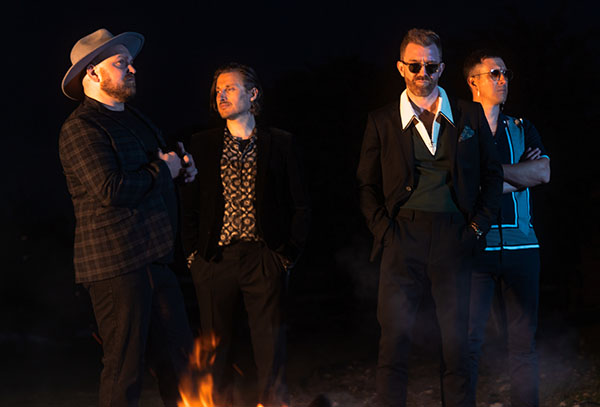
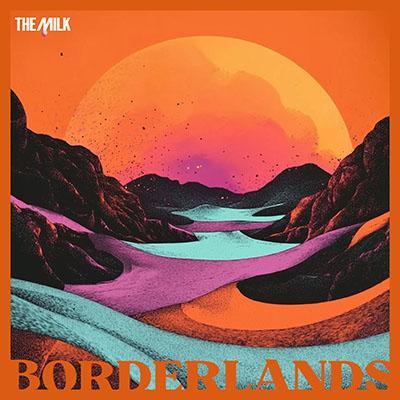
This month, Essex four-piece The Milk – Rick Nunn (vocals, keys), Mitch Ayling (drums), Luke Ayling (bass), and Dan Le Gresley (guitar) – release their fourth album, Borderlands. The band met at school and bonded over a shared love of music, particularly a fondness for soul.

Borderlands, which features the Soul Choir and other guest musicians on trumpet, saxophone, flute, violin and viola, is The Milk’s most ambitious and fully realised record yet – a stunning set of cinematic soul songs that draws on influences old and new, including Brian Wilson, Paul McCartney, Miles Davis, Marvin Gaye, Kamasi Washington, Michael Kiwanuka and Thundercat.

Reviewing the record for this month’s issue of consumer magazine Hi-Fi+, I called it, ‘a melting pot of ‘60s and ‘70s-style soul, modern funk and jazz, and vintage film soundtracks.’

I added: ‘Like all the best records, this album takes you on an emotional journey and is designed to be listened to in one sitting – it’s a coherent piece of work that starts with the striking and filmic I Need Your Love and closes with the epic love song, I Saved My Best For You, with its silver screen strings.’

To get the full story behind the making of Borderlands, Say It With Garage Flowers went for a couple of beers with Nunn in an East London pub on a warm July evening.

“We’re very much into making a body of songs that has a beginning, a middle and an end – that’s how I listen to music at home,” he says. “I like the commitment of putting a record on and then having 40 or 45 minutes when I don’t need to make another decision.”

So, we settled in and listened to what he had to say…
Q&A

Borderlands was recorded over the last 12 months or so at your drummer Mitch Ayling’s Woods Lodge Studio in the Essex countryside, with the band playing every track live in the room together…

Rick Nunn: That’s something that we’re very attached to – it’s a bit of a dying art form. We work well as a rhythm section, and we have to try and capitalise on that – we love records that sound like they’ve been made by a group of musicians in a room. We went for a big, ‘70s wall of sound-type production, but we still wanted it to be anchored around a four-man rhythm section – that was important for us.

Did you have a definite idea of the kind of album you wanted to make – it’s a big and ambitious-sounding record…

Rick Nunn: We spent about a year arguing about the references and batting ideas around, and eventually we all gave in and said, ‘Let’s make something huge.’

People who like soul music will hopefully like it, but we also just wanted to make something that was a talking point in itself – even if it’s not your thing, it’s a big-sounding record.

‘We went for a big, ‘70s wall of sound-type production, but we still wanted it to be anchored around a four-man rhythm section – that was important for us’

Our studio is a lovely retreat – we’re lucky to have it and it means we’ve got total control of the process. Yeah, we could’ve made a stripped-back record, but we’ve done that before. We’ve got a unique space where we’ve got the option to make a huge-sounding record – the kind of record that if you were playing on the clock, it would cost a fucking fortune. Very few bands have got the resources or the budget to do that – to make that kind of high-production, mid-‘70s soul record.

The album was mastered on vintage analogue equipment by Lewis Durham (Kitty, Daisy & Lewis) at Durham Sound Studios in Camden, North London. Are you into vintage gear?

Rick Nunn: I think it can sometimes be a distraction. The reason the Snakepit [Motown studio in Detroit] sounds like the Snakepit is because the Motown band sounds like the Motown band… You can buy all those microphones if you want, but it’s a very small part of the sound – you can’t just chuck a load of dusty mics at a band…

Let’s talk about some of the tracks on the album. I Need Your Love is a song in two halves – the first half was inspired by a 4/8 bar cyclical brass hook from a jazz standard played by a big band tribute to Buddy Rich at Ronnie Scott’s. There’s a nod to the vintage cinema Pearl & Dean theme, and also a section from an old soul ballad of yours that had never been released…

Rick Nunn: We love a gear shift in a track. We were playing around with it… I’m a massive jazz fan, but we didn’t want to just make a jazz track. I think there are people that do that better than we do it. We were struggling with the chorus, and I had this straight-up soul record that the boys liked, but, as a standalone track, it wasn’t getting on the record, and then we brought it in, and we were like, ‘ah,’ so that was an interesting gear shift… It’s a kind of Frankenstein track…

I like the nod to the Pearl & Dean theme on it… It’s a great way to open the record…

Rick Nunn: Yeah – it’s track one on an album that we’re saying is a cinematic soul record… The curtains open…

I love the horns and there’s a great electric guitar solo on it too…

Rick Nunn: Dan, our guitarist, is insane – I just love the way he plays. It’s a difficult thing doing soul lead guitar – soul solos are not that common, but I think he makes it relevant.

Pangs of Love was inspired harmonically by Brian Wilson and Paul McCartney, but it also has a great, ‘70s-style, fuzz guitar sound that reminds me of The Isley Brothers…

Rick Nunn: Yeah, and we also reference Michael Kiwanuka, who uses a good, similar fuzz sound. So, we would often use on all those references you’ve talked about, but the most recent one would have been him. He uses that fuzz, one-note stuff…

Pangs of Love reminds me of Doves too… They’ve always had a soul influence…

Rick Nunn – Yeah. They had an album with the word ‘soul’ in it – Lost Souls, which was their first album. When I was 11 or 12 and I’d just started going to gigs, Doves seemed to be on every bill. They’re excellent, and in an era where there wasn’t a lot of soul references, they were introducing kids to a lot of soul stuff. I even like the trippier Doves stuff, like The Cedar Room.

A Time To Let Go on your new album is a personal song inspired by the death of your father…

Rick Nunn: Yeah – it’s about my old man. The boys knew my dad from when they were little boys… We don’t have to tell each other what we’re writing about. I can walk in with a song like that, and everyone goes, ‘okay…’ Or if Mitch walks in with a song that’s about a breakup, I know what he’s singing about, you know… So, I walked in with that song…

‘It’s something that feels beyond transcendent. Brian Wilson was a fucking genius at that stuff, and so is Kamasi Washington’

You wrote it on piano…

Rick Nunn: Yeah – it was a confessional piano song…

And then, inspired by Brian Wilson, you threw the kitchen sink at it, with a heavenly choir, brass and a soaring string arrangement…

Rick Nunn: It’s something that feels beyond transcendent. Brian Wilson was a fucking genius at that stuff, and so is Kamasi Washington – that kind of transcendent soul choir.

Morning Light is more reminiscent of your previous album, Cages – it’s spacious and stripped-back…

Rick Nunn: Yeah – it’s a lot more like the album we made previously, when we were signed to Wah Wah 45s – a lovely, small North London soul/jazz label. We made a more stripped-back, modern soul record, which I love, and I think that track probably leans more towards those times. But we do a bit where it gets quite big towards the end, with the last section. You want a little bit of a gear shift, even with the pace of a 10-track album.

When you’re making an album, do you think of it in terms of being a vinyl LP?

Rick Nunn: We’re very much into making a body of songs that has a beginning, a middle and an end – that’s how I listen to music at home. I like the commitment of putting a record on and then having 40 or 45 minutes when I don’t need to make another decision.

I think streaming and downloading took that away to a certain extent, but then the vinyl revival has brought it back…  There are still some people who stream but don’t listen to an album from start to finish – they skip to different tracks…

Rick Nunn: The amount of people who love a song, but they don’t know who the fucking artist is because they’re just liking it and adding it to a playlist…

So, the middle track on Borderlands is called The Middle – I see what you did there – and it started off as an acoustic song that was demoed for your album Favourite Worry

Rick Nunn: Yeah – our demo bank is fucking huge. It’s a collective creative project and it’s more about what ideas are best rather than whose ideas are best. We’re like old pirates – everything gets chucked in the middle and everyone gets an equal cut – there are no egos.

The title track has a big, symphonic soul sound – it soars…

Rick Nunn: It’s a weird song – when you play it on piano, it has a rolling rhythm…

Lyrically, was it inspired by Brexit and the EU?

Rick Nunn: I think that’s something we’ve projected onto it after the event – I don’t think that’s what we were talking about… It’s more about that Bruce Springsteen thing that he’s always saying – packing a car, driving out of town and heading for the sunset – what’s over the next hill? The last people to get out of town…. I love it,  and I think it’s Mitch’s best achievement on the record in terms of the production and how it’s mixed – there’s an alarming number of musical elements going on in that track, but I can choose what I want to listen to on it. That’s testament to a well-mixed track.

Wanted Man is the jazziest track on the record – it was inspired by John Coltrane and Miles Davis…

Rick Nunn: Yeah – the boys let me get away with that one. There’s an early Miles Davis  [soundtrack] album, Ascenseur pour l’échafaud – Lift to the Scaffold – which was the first time that he went to Paris – he was relatively young and he was taken aback by the egalitarian nature of Parisian culture – he embraced the intelligentsia, and he fell in love with the fact that as a black man, he could go there and be held in such high regard in terms of high society –  and he was hanging out with some very cool academic people.

He fell in love with a Parisian woman, and then he was hanging out with a film director, and he was ask to improvise live to an Art Nouveau movie that was being shot at the time, and they gave him a Parisian rhythm section who he’d never met before.

I watched an interview with the drummer who said that Miles improvised live to the movie while it was being projected. I gave that direction to our trumpet player, Don, and said: ‘Can do you that?’ He said he knew it… Most of what you hear of Don is the first take, apart from a couple of little edits.

You’ve described the album as ‘cinematic soul’ – the final song, I Saved My Best For You, feels like a track that should be played over the end credits of a film. It starts with just a guitar and vocal, but then it shifts into something immense, with a big arrangement and an epic finale…

Rick Nunn: I’ve got a big, old school, semi-acoustic Gretsch – we did that live, as a single take, and then we recorded the whole back end as a separate thing. We’re massive fans of Vegas-era Elvis, and the band that was put together, so we were like, ‘let’s do that!’

We wanted to make it sound like fucking Casablanca! Unashamedly, we know what we’re doing, and we want people to know that – we’re not trying to pretend we’re not doing it…

It’s a love song too…

Rick Nunn: I only met my missus a few years ago, and it’s a message to her to say, ‘It’s been great, but I’ve saved the best stuff for you, and it’s gonna get even better because you’re here.’


Borderlands is released on September 19: vinyl, CD, digital download and streaming platforms: www.thisisthemilk.com.

September and October tour dates:

  • September 19:  229, London.
  • September 20:  Ropetackle Arts Centre, Shoreham-by-Sea.
  • September 26:  Band On The Wall, Manchester.
  • September  27:  Subscription Rooms, Stroud.
  • October 18:  The Old Town Hall, Hemel Hempstead. Acoustic show.

Traveller’s Tales


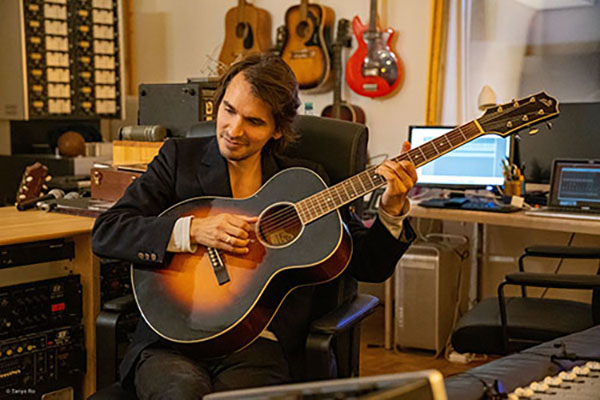
Photo of Dan Raza by Tanya Ro


Folk and Americana troubadour, Dan Raza, is back with his first album in eight years.

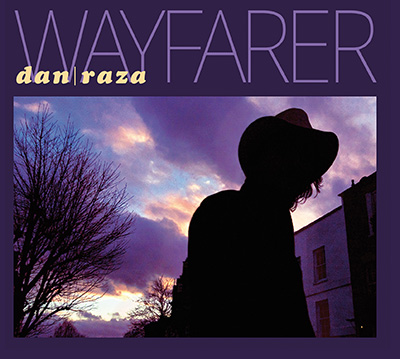
Wayfarer, his third record, was mostly written while travelling across the US, Mexico and mainland Europe.

“After my last album, Two, came out, in 2017, I found myself feeling burnt-out and in need of a change of environment. I’d just come out of a long-term relationship, Brexit had just happened, and things were starting to feel quite claustrophobic for me in the UK,” says the London-based singer-songwriter. 

“I just had a realisation that life is short, and I’d spent the best part of a decade-and-a-half doing the same things and had become a bit jaded.

“I wanted to go to new places, meet new people, and spend some time reflecting on where I was at the time and where I wanted to go next.”

Where he’s gone is to make his best album yet – Wayfarer is an ambitious, warm and soulful record that sees Raza taking his sound in new directions and exploring influences including Van Morrison, Rod Stewart, Ronnie Lane, Jackson Browne, Bobby Womack and The Staple Singers.

‘I found myself feeling burnt-out and in need of a change of environment. I’d just come out of a long-term relationship, Brexit had just happened, and things were starting to feel quite claustrophobic for me in the UK’

Tackling both personal and political themes, the songs embrace folk, country, blues and soul, and feature rich arrangements.

“On stage now for a while, it’s just been me and a guitar, but I knew some of these songs deserved fuller arrangements,” says Raza.

“Part of the fun for me in going into the studio is having other musicians add their own musical voices and seeing how the songs expand as a result.”

With that in mind, Wayfarer features an impressive list of guests, including Adam Phillips on guitar (Richard Ashcroft), Geraint Watkins on keys (Van Morrison) and Luke Bullen (KT Tunstall) on drums.

North Carolina multi-instrumentalist and Grammy-nominee, Josh Goforth, plays fiddle, mandolin and guitar, while the album also continues Raza’s long-term collaboration with members of Slim Chance, the band Ronnie Lane founded in the ‘70s after leaving The Faces.

Charlie Hart from the group produced Raza’s 2012 self-titled debut record, and Steve Simpson (mandolin) and Frank Mead (whistle and accordion) both appear on Wayfarer.

In an exclusive interview, Raza spoke to Say It With Garage Flowers about the inspirations and influences behind the new record – we managed to persuade this restless wayfarer to spend some time with us in a pub in Hackney a few weeks ahead of the album coming out.

“That warm sound is what I love. It’s soul music,” he tells us.


Q&A

Wayfarer is your first album in eight years – the last one, Two, came out in 2017. In the press background to the latest record, you say that in the last few years, you’d found yourself feeling burn-out and in need of a change of environment. You’d just come out a long-term relationship, Brexit had just happened, and things were starting to feel quite claustrophobic for you in the UK, so you went travelling. Is that why it’s taken you so long to make a new record?

Dan Raza: They were the reasons I left London after the last record – I was living in London until 2017, then I went walkabout… I left London shortly after the last album came out, which wasn’t the brightest idea, but I needed to get out, so I did… I came back in 2019.

Why did the record take so long? I started to write and gather the songs over two or three years while I was abroad, then I was ready to record, but the pandemic happened…

So, when you left London, you went to Tennessee…

Dan Raza: I had friends there and I’d never been before. It was so cool – I flew into Knoxville and spent time in Nashville and Johnson City.

How was Nashville for someone whose music has often been tagged as Americana? Did you see several sides to the city?

Dan Raza: It was the best – it’s amazing… There’s a lot of bad stuff there, but the good stuff is top level. It’s just so inspiring, getting to hear the best songwriters play in intimate venues, trading songs.

In the sleeve notes for the new album, you say that the record involved a journey all over the world – from the streets of Helsinki to the streets of North Carolina…

Dan Raza: That’s right… When we started recording the album, we had to do it remotely because of the pandemic. The rhythm section was in Helsinki – the engineer, who is a cool guy named Henri Vaxby, is Finnish, and he organised the rhythm section. I was playing in East London – we were wearing masks – and the drummer and the bass player were in Helsinki, playing to a click.

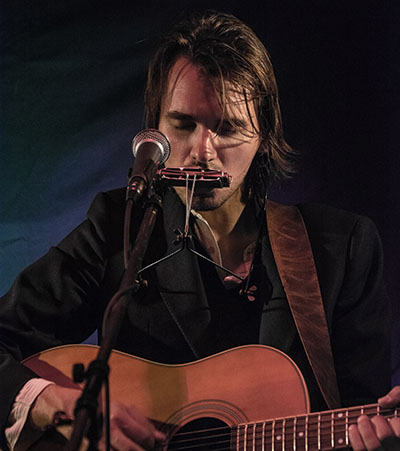
Photo by René Geilenkirchen

‘Nashville was just so inspiring, getting to hear the best songwriters play in intimate venues, trading songs’

You went to Mexico and mainland Europe on your travels too…

Dan Raza: Yeah – Italy and Germany, where I played gigs, and I went to Eastern Europe for a little bit.

It sounds quite romantic and Dylanesque – you were a wayfarer, a wandering minstrel – but what was it really like? Was it hard and quite hand-to-mouth?

Dan Raza: I was in my mid-to late thirties, so it wasn’t like being a young Dylan in his twenties… It was cool and I’d always wanted to live abroad, so when Brexit happened, I thought, ‘Oh, shit – they’re going to shut the door…’ I was like, ‘Hell, man – I want to get out, meet people and experience what it’s like to live abroad, only if it’s for months rather than years…’

I loved it, man – you read about the history, you’re standing on the streets, and you can’t help but suck it all in. It’s so inspiring – incredible history and rich, individual cultures.

I toured a lot in Germany, and in Italy I turned up at acoustic nights or songwriter nights – I would talk to the promoters and musicians afterwards and see if they could get me gigs.

So, were all the songs written while you were travelling?

Dan Raza: Pretty much, but there was a little break because of the pandemic and I wrote a couple of other songs, including Water Reflects (What It’s Shown). That was written during the nadir of the Boris Johnson time.

Was Covid a double-edged sword for you? It delayed the album, but it also gave you more time to write a few more songs for it…

Dan Raza: Definitely. I was one of the unfortunate musicians who didn’t get any government help, so I was working all the time – I was doing a delivery job… I didn’t have all the time to sit at home, writing songs, like some people did, but I got to reflect on the songs I’d written and where I thought the album was going to go – it was a good thing for me.

‘Water Reflects (What It’s Shown) was written during the nadir of the Boris Johnson time’

How do you write songs? On acoustic guitar?

Dan Raza: Yes, but I do a lot of work away from the guitar as well, in terms of thinking about the ideas.

Do you write the lyrics first and then the music, or is it the other way round?

Dan Raza: It’s evolved – it’s more lyric-based now, but before it was more music-based. Hopefully the lyrics are a little bit stronger on this album because of that.

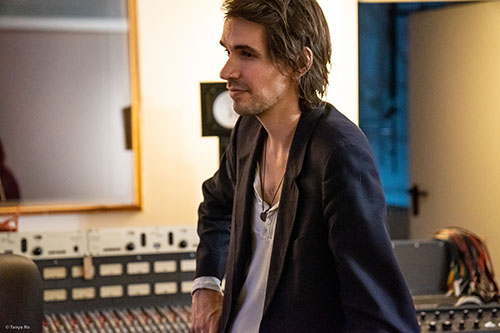
Photo by Tanya Ro

So, you recorded the album between 2021 and 2023…

Dan Raza: The bulk of it happened at the Rock of London Studios on Hackney Road and we did some overdubs in North Carolina – I have a great friend called Josh Goforth, who is based over there. He produced the sessions. I went up into the mountains – it’s Doc Watson territory…

But you produced the album…

Dan Raza: I did, but by default… I’m not a great producer, but I had a lot of help. It sounds alright.

It sounds great! It has some nice, full arrangements, and you’ve worked with some good musicians on it, including Adam Philips (guitar – Richard Ashcroft); Geraint Watkins (keys – Van Morrison) and Luke Bullen (drums – KT Tunstall), plus some members of Slim Chance: Steve Simpson and Frank Mead. Charlie Hart from Slim Chance produced your first album, in 2012…

Dan Raza: Charlie saw me when I was in my mid-twenties – he came down when I was playing at a songwriters’ night in Lewisham, as he lived nearby. He liked what I did, and he invited me to his studio – I played him some songs and he asked me whether I’d be interested in making an album. That’s how I made the connection with all those guys. The nice thing about the new album is that I feel like my extended musical family has grown.

The album has a lovely, warm sound…

Dan Raza: Thanks, man – I love that. It’s what I like in a lot of music, like Jackson Browne…

I’m thinking Van Morrison’s Tupelo Honey, too… There’s a Celtic soul thing going on…

Dan Raza: That’s a real sweet spot for me, and Ronnie Lane and early Rod Stewart. There are English, American and Anglo-Irish influences, and they meet in a unique place… The Waterboys are kind of similar… It’s a melting point – that warm sound is what I love. It’s soul music.

‘The nice thing about the new album is that I feel like my extended musical family has grown’

There’s organ, strings, pedal steel and fiddle on the record…

Dan Raza: That’s one of the problems when you’re producing – it’s so tempting to keep adding stuff… It was difficult to make it all sit right, but we got there. 

Let’s talk about some of the songs. There’s a mix of personal and political songs on the record. You wrote Only A Stone’s Throw Away while you were in Tijuana, Mexico, in winter 2018.  It’s about Central American migrants trying to cross to the US…

Dan Raza: That was a wild time… I don’t know how much of it was reported over here… the caravan of hundreds and thousands of people leaving Central America for the US… Climate change, war and whatever else causes displaced people to want to move – that situation is going to keep coming up. It was something I saw and I wrote the song that day.

Nothing Like A Woman is one of the lighter songs on the record. It’s romantic and is about the power of a relationship – how a woman can make you change your mind…

Dan Raza: That was me trying to do the whole Ronnie Lane and Rod Stewart thing, with a fiddle and a mandolin.

Like You Wear It Well?

Dan Raza: Exactly, man – that’s my template.

In My Own Time is a Dylanesque country-folk tune, and again, it’s a bit lighter than some of the other songs on the record, with violin and banjo…

Dan Raza: Yeah, man – I love the groove, with Luke Bullen on drums.

Water Reflects (What It’s Shown) has a moody, blues-soul feel, It’s a new direction for you. Musically, it was influenced by Bobby Womack and The Staple Singers, wasn’t it?

Dan Raza: Yes – very much. Thank you for picking up on that. It was exciting – as a musician, you listen to a lot of diverse stuff, but your sound can be a bit limited, do you know what I mean? So, it’s nice when you can touch on some of your other influences, and they find a way to come out.

I think this album will surprise people. It’s ambitious and it has a range to it.

Dan Raza: Good – thanks, man. I’m just lucky with the way it came out and with the musicians I worked with. Water Reflects (What It’s Shown) reflects some of my influences and some of the people I was working with – they pushed me in different directions. When I play the song live, it sounds different – it’s almost like a Bert Jansch drony blues thing, but when I did it with the keys player, who is a guy called Carl Hudson, and the drummer, Russ Parker, it just gave it a Pops Staples feel, and suddenly I was like, ‘This is awesome, man,’ and I came up with the chant bit in the middle, which I basically stole from Bobby Womack, and I was running…

That song was inspired by the political climate when Boris Johnson was prime minister and Brexit happened…

Dan Raza: Yeah – I was disgusted by it, as a lot of people were. It was the hubris of the time – Johnson, who was so arrogant… It was January 2020, and it came from my frustration and anger.

Behold The Night is a beautiful song to start the album with. It’s a ballad with strings that gradually builds. What can you tell me about that track? It lures listeners in, rather than starting with a bang…

Dan Raza: It’s always difficult, because most of my songs are slow... (laughs). If I put a fast song at the start, the rest of the album would be downhill! I like it – it just felt like a natural start, but I never wrote it to be an opener. It starts with my guitar and voice, which is a natural way to start a singer-songwriter album, and then the other instruments come in.

Wasn’t That Enough For Me, which was the first single, is a song about being on the road and hitting the highway…

Dan Raza: That’s a metaphor…

It’s also a relationship song…

Dan Raza: Exactly – it’s about not being able to settle down.

It fits with the title of the album too – a wayfarer, a restless person, moving around…

Dan Raza: Yeah. It has echoes of all those things – a restlessness and searching for something…

Are you feeling restless at the moment?

Dan Raza: Good question, man. No – I feel alright.

How is it being back in London?

Dan Raza: I’m not feeling restless yet. Let’s wait and see. I’ve got so many friends and connections here, so let’s make the most of it. I want to soak up what’s happening.

Wayfarer by Dan Raza is out now on Valve Records.

www.danraza.com