‘I wanted to make more of a solo record – it just happened to coincide with the pandemic’

Peter Bruntnell


When Say It With Garage Flowers last spoke to UK-based, Americana singer-songwriter, Peter Bruntnell, he’d just emerged from the basement studio in his Devon home, where he’d been making his 2016 album, Nos Da Comradewhich was one of our favourite records of that year.

Now, five years later, he’s been busy in his basement again, working on his latest album, Journey To The Sun, which is his twelfth, and the follow-up to last year’s sublime King Of Madrid. Written and recorded during lockdown, it’s a more sparse and stripped-down sounding set than his last few releases – gorgeous, haunting and folky, but with some vintage electronica sounds and even a couple of spacey sci-fi instrumentals. Yes  that’s right, Americana fans, don’t choke on your pale ale, but there’s a lot of synth on this record…

Opener, the stunning, Dandelion, is an atmospheric folk-horror song, like Matt Deighton, or Pink Moon-era Nick Drake being produced by Brian Eno; the lovely Lucifer Morning Star has warm, burbling synths and chiming 12-string guitar, while Heart of Straw is classic Bruntnell – an aching, acoustic, country-tinged ballad – and recent single, You’d Make A Great Widow, is laced with his trademark wry humour and melancholy, but wrapped up in one of the prettiest melodies you’re likely to hear all year.

Some of the songs were co-written with Bruntnell’s long-time collaborator, Bill Ritchie, while US musician and mastering engineer, Peter Linnane, lays down some Hammond and pump organ, concertina, Mellotron and piano, and Iain Sloan plays pedal steel guitar on the track Dharma Liar. 

‘Americana fans, don’t choke on your pale ale, but there’s a lot of synth on this record…’

“I felt like I wanted to make more of a solo record, which just so happened to coincide with the pandemic,” says Bruntnell. “That meant more acoustic guitar, and I bought a bouzouki in March last year, which really was a catalyst for quite a few songs being written in a very short timeframe. Oh, and I got a drum machine and a new synthesiser too.”

So is he going through an electro phase? We spoke to him to find out…

Q&A

How have you coped during the past year and a bit? Has it been tough making a living as a musician?

Peter Bruntnell: At first it was tough, but then I started doing a live stream every Thursday, which seemed to go quite well, so that was one gig to look forward to each week – once I got used to it. Oh, and then I started writing, and before I knew it, I’d written an album’s worth of stuff.

Did Covid affect your plans to make the new album?

PB: Well, it just meant that I had to record and produce it all myself, but that sort of suited the vibe of the songs.

Opener, the stunning, Dandelion, is an atmospheric folk-horror song, like Matt Deighton, or Pink Moon-era Nick Drake being produced by Brian Eno’

You recorded and self-produced the album at your home, in Devon, where you have a basement studio. Peter Linnane, who plays keyboards on the record, and is based in Boston, sent you his parts, didn’t he?

PB: Yeah – I sent the first song to Pete, to ask him if the light compression I had on the mix was okay for the mastering job. He came back to me saying it was fine, and he sent some pump organ and concertina parts, in case I might like to mix them in. I had a listen and liked all his parts, so I kept them, and that became the pattern for nearly every song thereafter.
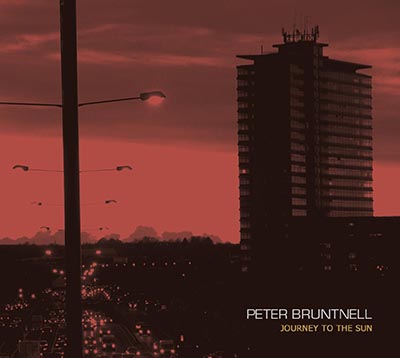
Peter Bruntnell - Journey To The Sun

Let’s talk about the sound of the record – it’s more stripped-down than some of your last few albums, with acoustic guitar, bouzouki, keys – organ, synth, Mellotron – and a drum machine. Did you set out to make a ‘back to basics’ album? Was it a reaction to your last couple, which have had more jangly, electric guitar and a fuller band sound?

PB: I did feel like I wanted to make more of a solo record, which just so happened to coincide with the pandemic. That meant more acoustic guitar, and I bought a bouzouki in March last year, which really was a catalyst for quite a few songs being written in a very short timeframe. Oh, and I had bought a drum machine and a new synthesiser too.

What inspired the album, musically?

PB: Apart from a bit of Brian Eno, I’m not sure what other influences directly inspired the songs. Maybe some Brian Wilson…

What about the synth? Are you going through a Kraftwerk, or Bowie Low phase, or doing a Neil Young Trans?

PB: Sort of. I’d been listening to Another Green World by Eno and had been thinking about doing some more ‘electro’-style stuff for a while now, so it all just fell into place. And Low has been one of my favourite records for years.

Tell me about the bouzouki? Is there a story behind it?

PB: I bought it hoping it would inspire some songwriting, which it did. Because I don’t know how to play one, it forced me to be more experimental than when I write on a guitar.
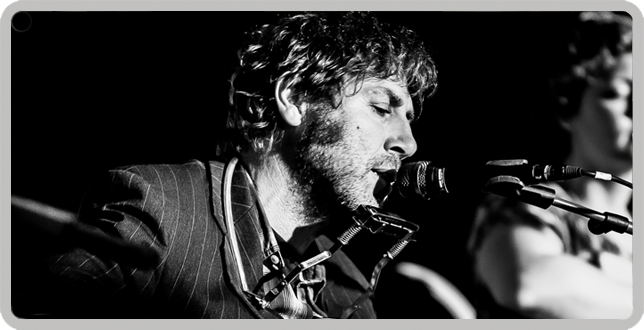
What can you tell me about the first song on the album, Dandelion, which is one of my favourites on the record? I love the arrangement – it has a haunting, folky feel, but with some lap steel on it, too. It’s a very striking and atmospheric song…

PB: It was written on the bouzouki and was maybe the first one. It has atmosphere, with just vocals and bouzouki, so I didn’t have to think too hard about its production. I have a piano in the hall which I can’t play that well, but for sparse two or three finger chords it sounds great.

Lucifer Morning Star is another one of my favourites on the album. What can you tell me about that song? It’s a lovely track… 

PB: Thanks. It’s one of my favourites for some reason too. Bill Ritchie came up with most of those lyrics. It was the last song written – maybe the feel of the record was already established, so I kept it similar when arranging the parts for it.

‘I’d been listening to Another Green World by Eno and thinking about doing some ‘electro’-style stuff for a while, so it all just fell into place’

You’ve done a great cover of the traditional folk song Wild Mountain Thyme on the record. What prompted that and why did you include it?

PB: I recorded it about five years ago, because I love the song and wanted to keep busy recording. It seemed to fit among these new songs, so it made the album.

Your last album, King of Madrid, had a song called Widows Walk on it and this record has You’d Make A Great Widow. Are you now intending to have one widow-themed track on each record?

PB: Hah! No – that’s just a coincidence. My wife was talking one day about what would happen if I died and jokingly said, “I’d make a great widow”. That’s where the idea came from.

There’s a great video for the song, in which you get to play a zombie. How did that come about?

PB: I thought it would be fun to get loads of ‘widows’ in it, so I wrote a post on Facebook to see if people would film themselves miming to one of my songs, and I got a great response. And then the ghost and zombie idea just came to me.

Heart of Straw is a gorgeous track. Where did that one come from, and why did you decide to use a line from it as the title of the album?

PB: It’s another anti-government song – yawn. I just stumbled around until I found the right words. It could easily be Etonian rather than Utopian, and ‘Head of Straw’ rather than ‘Heart’. I was just looking for an album title that I liked the sound of and ‘journey to the sun’ seemed like a good idea at the time.

‘Lockdown meant that I focused on writing more than normal, as there wasn’t much else to do’

The album feels melancholy and reflective, with themes of loss, longing, regret and death. Do you think the Covid crisis affected the songwriting lyrically and also the mood of the record?

PB: Maybe – it’s difficult to say. Lockdown meant that I did focus on writing more than normal, as there wasn’t much else to do. I wasn’t really expecting to have an album written and recorded by the end of the year.

You’ve recorded some instrumentals for the album – the spacey The Antwerp Effect and Moon Committee. I think they sound like incidental music from a ‘70s sci-fi TV show, or a film soundtrack. Would you ever consider making an instrumental record, or writing and recording a soundtrack?

PB: Yes – I’d like to do more. I might go more ‘electro’ for the next album. I really don’t know yet…

‘I wasn’t really expecting to have an album written and recorded by the end of the year’

What was your lockdown soundtrack and what music – new and old – are you currently enjoying?

PB: Over lockdown I watched more TV than listening to music – all the usual stuff, like Netflix, etc. I have an Alex Chilton live in Baton Rouge album in my car at the moment, along with Jordan the Comeback by Prefab Sprout.
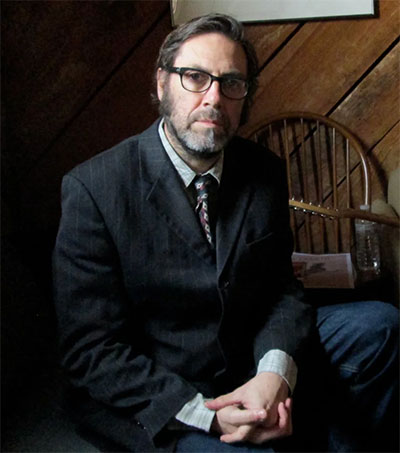
What are your plans for the rest of the year, now things are slowly returning to some kind of ‘normal?’

PB: To play live as much as I can and travel – even if it’s in the UK.

On that note, when all travel restrictions are lifted, and you’re allowed to take a ‘journey to the sun’, where would be your ideal destination – and why?

PB: Italy, Spain or France – anywhere in Europe would be great. I love Europe and hate Brexit!

Journey To The Sun is released on June 11 (Domestico Records). You can pre-order a signed copy here.

https://peterbruntnell.net


‘I am someone who has historically thrived in isolation’

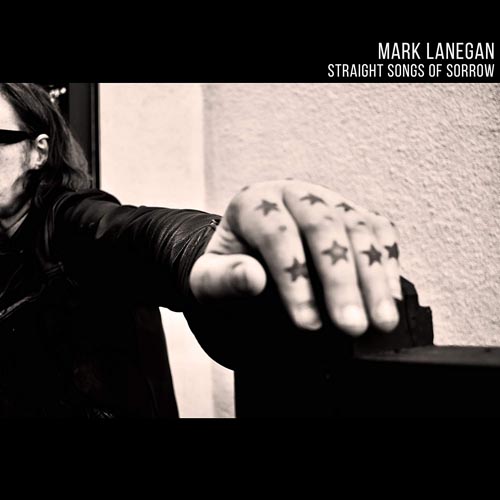
Straight Songs of Sorrow by US singer-songwriter Mark Lanegan (Screaming Trees, Queens of the Stone Age) was our favourite album of 2020.

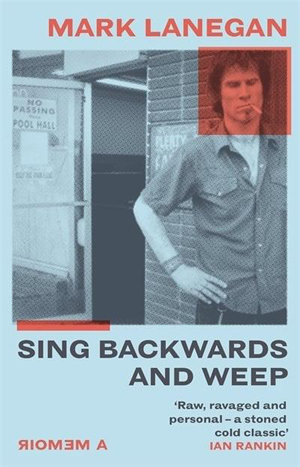
His twelfth solo record, it served as a companion piece to the gravel-voiced grunge survivor’s autobiography, Sing Backwards and Weep, which also came out last year.

The book, described as ‘a brutal, nerve-shredding read, recounting his journey from his troubled youth in eastern Washington, through his drug-stained existence amid the ’90s Seattle rock scene to an unlikely salvation at the dawn of the 21st century’ was brilliant – often harrowing and painfully honest, but shot through with black humour. 

Its accompanying soundtrack, Straight Songs of Sorrow, was one of the best – and darkest – records Lanegan’s ever made.

Reviewing it last year, we said: ‘It’s a sprawling, 15-track masterpiece that takes in the folk and blues sounds of his early solo recordings, as well as the electronic influences that have dominated his more recent releases. Like the book, the shadow of death hangs over these songs, and there’s plenty of drugs and [self] destruction thrown in for good measure too.’ 

Earlier this month, via social media, we contacted Lanegan, who’s recently relocated from his home in L.A. to live in Ireland, told him we’d chosen Straight Songs of Sorrow as our best album of last year, and asked if we could interview him. A day or so later, he dropped us a line and told us to send him some questions.

So here’s our exclusive chat – a no-holds-barred interview in which we cover a lot of ground, including his thoughts on the Covid-19 pandemic, lockdown, the future of live music, collaborating with other artists and his approach to songwriting. He also gave us an update on some of his future projects.

“I am most settled when I’m unsettled,” he tells us… so settle down and enjoy our one-on-one encounter with Dark Mark.

Q&A

How’s it going? How are you coping with the Covid crisis and lockdown? What kind of frame of mind are you in at the moment?

Mark Lanegan: I can’t complain. What can you do when shit is out of your control, except roll with the punches? My frame of mind is a surprisingly good one, given the global situation. I’m taking this time of enforced lockdown to get work done, which is what I enjoy most anyway. I am someone who has historically thrived in isolation.

As a professional musician, you’re used to being on the road a hell of a lot. What effect has Covid had on you? How was 2020? 

ML: 2020 was the slowest year in my adult life – by a thousand miles. That’s one of the very few reasons why I appreciated it. When you are my age, the years just fly by, and, for me, 2020 stopped time.

Are you worried about the future of live music? What needs to be done to address the situation? What are your hopes and fears for gigs and the year ahead?

ML: Well, it goes without saying that I would like to be on the road. That’s been the lifeblood of my existence for 30-plus years and I don’t want to stop moving now. Never mind the fact that nearly all of my meaningful income is from live shows. But honestly, if I’m concerned about anything, it’s how this thing is going to impact society as a whole. Might this possibly be that moment in history where a giant global crisis is the excuse for the powers that be to finally eradicate civil rights and personal freedoms? Governments love, and have been known to create, such opportunities. I think that’s what people should be keeping an eye on, not when they can get back to normal. Because let’s face it, things might likely never be ‘normal’ again.

‘Might this possibly be that moment in history where a giant global crisis is the excuse for the powers that be to finally eradicate civil rights and personal freedoms? Governments love, and have been known to create, such opportunities’

You recently relocated from L.A. to Ireland. What prompted the move and how are you settling in? What effect has it had on you?

ML: Well, I’ve been to Ireland many times and I’d thought about moving here for years, but some commitment or another always prevented it. When it became obvious that I would not be allowed to work as I am accustomed to for an indefinite period of time, it became the ideal window for other change as well.

Has moving to Ireland inspired you musically?

ML: I don’t really need inspiration to write music, or anything else really. It’s something I’m hardwired to do. Like breathing or fucking.

Whereabouts in Ireland are you living and what’s it like?

ML: I’m in County Kerry and it’s as physically stunning a place as I’ve ever been. More so probably, but it’s the people here who make it so great. They are the best.

‘I don’t really need inspiration to write music, or anything else really. It’s something I’m hardwired to do. Like breathing or fucking’

Have you moved all your possessions and your studio etc. to Ireland, or did you just up and leave?

ML: I came with the three 70 pound bags that my frequent flyer status on United allowed. I had one bag of clothes and two bags of recording equipment, small synths and drum machines. Everything else I left in storage in California. I’m renting at the moment, waiting to get into this house I’m trying for, and if that happens I suppose I’ll get my stuff shipped over in a container. But I’d just as soon start again anyway. You don’t own things – they own you.

You’re a very prolific songwriter and artist. In the past four years, you’ve released three studio albums, a Christmas album – half of which was new recordings – and a remix album, plus you’ve collaborated with Duke Garwood on the record With Animals, and you’ve worked with other artists, like Humanist, as well as touring the world. Are you a workaholic? Do you constantly write and think about your next musical projects? 

ML: I am most settled when I’m unsettled, so to speak, and there is something about being in a constant state of creation that keeps me engaged with life on a level that nothing else does, so I keep working. Most people never even get the opportunity to find out what it is they truly love. Most people are locked into a job they either hate, or simply tolerate, so they can keep eating and have a place to stay those few hours they’re not at the job.

I have been incredibly blessed to live the life I have and I feel like I would be pissing on that gift if I didn’t work everyday. And I only call it ‘work’ for the sake of answering this question. For me it’s something else altogether.


What’s your songwriting process like? How does stuff come to you? Which instruments do you write on and do you write music or lyrics first, or does it differ?

ML: I’ve only known two people whose music I love that take words written previously and then make them fit a piece of music. Simon Bonney, [Crime & the City Solution] who I consider to be one of the all-time greats as far as voice, phrasing, melody and lyrics, which in my opinion are the four keys to a great singer, and my 15-year- old nephew, David, who is advanced to a degree I never got until my forties. So I guess what I’m saying is, in my experience, it takes a genius, or someone who has developed in a different way than most guys I know, to write words first.

‘Most people never get the opportunity to find out what it is they truly love. I have been incredibly blessed to live the life I have and I feel like I would be pissing on that gift if I didn’t work everyday’

I make a melodic/rudimentary lyric map by instinct the first time I am hearing a piece of music I’m supposed to be writing, either for someone else or myself, and then I fill the words in later. It’s the music and the melody map, plus whatever words I might throw into that first round off the top of my head that indicate to me what the next words should be, and so on. My method is far from scientific – it’s more like building a fence.

Isobel Campbell and Mark Lanegan

You’ve collaborated with so many great artists. How do you choose who you work with and do you have any favourite collaborations? Which are you most proud of?

ML: I’m proud of every collaboration I’ve been a part of, because I have been blessed to have made music with so many artists whose work I admire, either for them, or myself.

For a guy like me who came into music by accident and who is still one of the least musically proficient musicians around, I have had incredible good luck. And my only criteria for doing something is: ‘can I get it done in the time frame required, is it something I can do to a degree of self-satisfaction and to the satisfaction of whoever it’s for, or is it outside my comfort zone and challenging?’

‘I often turn things down if what they want is a boring, rote performance. People who can’t see past the basement floor deserve to be enlightened. That low, low voice is old hat and so uninteresting. I can actually sing, if anyone wants to know’

I always say “yes” to things I initially perceive as outside my box because that is the shit I really get off on. I often turn things down if what they want is a boring, rote performance in what some people think of as my most compelling voice. But when I am asked to sing something in my lowest, low baritone I either turn it down, or do it how I think it should be done. I then give it back and come up with a reason why I can’t redo it. People who can’t see past the basement floor deserve to be enlightened. That low, low voice is old hat and so uninteresting. I can actually sing, if anyone wants to know.

Is there anyone you’d like to work with? Who would be your dream collaborator?

ML: Brian Eno. The same answer I always give to this question.

Straight Songs of Sorrow was my favourite album of last year. I gave it some very favourable reviews. I think it’s your masterpiece. How do you feel the record was received?

ML: I usually don’t pay too close attention to how a record is received because it’s really none of my business.

The only reason I really give a damn if anyone enjoys what I do is in how it impacts my ability to make another one.

What I’m saying is that because I am being given money to make these records and a large part of my personal income is a result of the music, it’s not a bad thing if a certain percentage of people who hear it connect to a degree where they are willing to put down cash to buy the next thing, or to come to a show, because that is what ultimately allows my continued existence as a pretend artist on this plane.

How did you approach Straight Songs of Sorrow? Did all the songs come quite naturally to you once you’d written your book? What was the writing and recording process like? 

ML: It was all done extremely fast because it didn’t even hit my radar until a month before my previous record was to be released, and I was booked on a three-month tour for that. Jeff Barrett, the boss at Heavenly, [record company] dreamed it up and once I had agreed, it had to be done before I left on that tour, if it was going to come out around the same time as the book it was meant to be a companion piece to. Luckily I had already been writing, playing and recording songs myself that were influenced by the sort of brutal experience of writing the book, so I had a lot of the bones of the album already recorded.

Which was more cathartic – making the album, or writing the book? 

ML: I don’t know if I’ve received catharsis from anything I’ve done. For me, more often the process of creating does the opposite – it brings shit out into the light I would rather not think about. But that’s the price you gotta pay I guess.

Some of the songs on your last album, and parts of your book, are very dark and harrowing. What was it like going back to those dark places?

ML: Not great, as you might imagine. As a rule I try to stay in the here and now, not looking back or future-tripping. I feel as though that’s been one of the keys to my survival.

By its nature that kind of book requires a shitload of backtracking and with it came a lot of grief, pain and self-reflection over things I had never thought about once they were done. I have pretty fierce powers of denial, but faced on a daily basis with things I had done, people I’d hurt, friends no longer here, youthful trauma, generational sickness, damage, all that, it almost buried me. I’m not gonna lie. I would never do it again.

‘I don’t know if I’ve received catharsis from anything I’ve done. For me, more often the process of creating does the opposite – it brings shit out into the light I would rather not think about. But that’s the price you gotta pay I guess’ 

Straight Songs of Sorrow is a very eclectic album – more so than your previous two records, Gargoyle and Somebody’s Knocking, which were mostly more electronic-based/ influenced. Was that intentional, or did it come about quite organically?

ML: I had started writing on an acoustic guitar for some of the songs, which was something I’d not done in quite a while. One of the things asked of me for this record was that I try to incorporate elements of my early Sub Pop records into it. So it ended up being sort of a combo of those old records and the records I make today. People are forever saying I should make acoustic records again and I find that to be a bit sad and short-sighted. Imagine how fucking boring your life would be if you only ever got to do the very first thing you ever did and never progressed beyond that? That would be like being Chubby Checker and only ever playing The Twist. Fuck that, thank you very much.

I really enjoyed your Black Phoebe 12in EP, which came out last year – it was a collaboration with your wife, Shelley Brien. Can we expect an album? What’s it sounding like and when will it come out?

ML: Yes and it should be out next year, sounding like more of the same. Before that, Ecstatic records boss Alessio Natalizia – Not Waving – is putting out another version of the EP, all of it remixed by him. It’s rad.

‘People are forever saying I should make acoustic records again I find that to be a bit sad and short-sighted. Imagine how fucking boring your life would be if you only ever got to do the very first thing you ever did and never progressed beyond that? That would be like being Chubby Checker and only ever playing The Twist. Fuck that’

What are your plans for 2021? Are you working on a new solo record? What’s inspiring you?

ML: My plans are to finish the novel I’m working on and finish a book of uncollected poetry, writings, drawings and ephemera that I’m currently doing, in addition to two other poetry books I’ve finished this month. One is out next month, the other later this year.

My friend Wesley Eisold, of Cold Cave and American Nightmare fame, is the guy who encouraged me to start writing poetry. His publishing house, Heartworm Press, is putting out my next two books of poetry, in addition to the split book we did together last year, Plague Poems. When he first read these two new books, he rightly pointed out that in a way these were part two to the memoir.

‘I hope to start my own record in the summertime. I can’t say how it’s going to turn out, but I know how I’d like it to be, and that’s as fucked up as possible’

Poetry can be just as revealing as bio stuff but way more beautiful and mysterious, which is the kind of thing I most like to read, listen to in music, and write and record myself when I am able to. I’m working on a couple of records right now, as well as Black Phoebe, and I hope to start my own record in the summertime. I can’t say how it’s going to turn out, but I know how I’d like it to be, and that’s as fucked up as possible.

Are there any more musical collaborations in the offing?

ML: Yes, I’m always doing stuff with and for other people – usually one or more tunes a week.

I really like the new single you’ve just made with Wax Tailor – aka French hip-hop producer Jean-Christophe Le Saoût – which is called Just A Candle. How did that collaboration come about and can you tell me something about the song?

ML: JC got hold of me via email and sent me an early version of the music. I sent him back something – I want to say that it was the same day. Then we met up when I was doing my last tour of France, hit it off and discussed the song, music and life in general.

Over the course of several months, maybe even a year, I continued to do different versions and try different things on the song. It might seem really straightforward when you hear it, but JC and I tried a truckload of different approaches and things to finally hit upon what you hear.

I really appreciate his artistry and attention to detail. It’s a pleasure to be involved in a process with someone who cares as much as I do about making music.

Thanks, Mark. Finally, what music – new and old – have you been enjoying recently? Any recommendations? What’s been your lockdown soundtrack?

ML: Today I was listening to John J Presley and Fields of The Nephilim. Yesterday it was Iggy, Jim Ghedi and the From Brussels With Love comp. It’s always something – new, old, whatever.

Mark Lanegan’s latest album, Straight Songs of Sorrow, is out now on Heavenly Recordings. His book, Sing Backwards and Weep, is published by White Rabbit.

To listen to a Mark Lanegan Spotify playlist, please click here.

https://www.marklanegan.com/