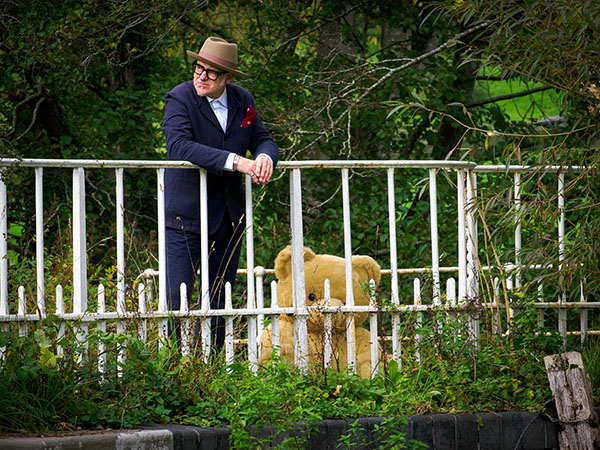
The title track of Michael Weston King’s new solo album, Nothing Can Hurt Me Anymore, is a dark, haunting and funereal, Southern Gothic-style ballad in the vein of Nick Cave, set in the countryside, with swaying pine trees and red kites circling in the sky.
In the atmospheric song, he sings: ‘In this house sleeps my wife and beside her sleeps my daughter. And the wind howls round the eaves, as I leave and close the door. And the willows that surround it are the weapons that protect us, because nothing can hurt me anymore.’
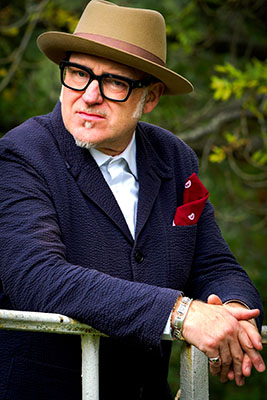
One morning in early March this year, Say It With Garage Flowers is sat with Weston King in the lounge of the house that’s mentioned in the song – his home, a farmyard cottage in rural mid-Wales – but there’s no wind howling outside, just bright blue sky and sunshine. The willows are around the door, though, and the red kites are wheeling overhead.
Eerily, a couple of hours later, when Weston King and filmmaker, John Humphreys, venture into the surrounding fields and countryside to make a video to accompany the song from which the album takes its name, the sky turns grey and foreboding, as if to complement the track’s unsettling atmosphere.
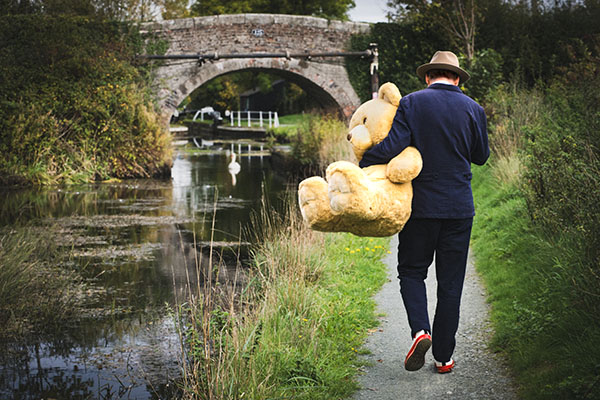
“There’s a short walk that I do quite often – along the canal, over the bridge, up to the hills and back – I pretty much wrote all of the song while I was doing that walk, just writing down everything I was looking at,” says Weston King. “It’s a kind of minor blues – it’s a bit like a Townes Van Zandt song.”
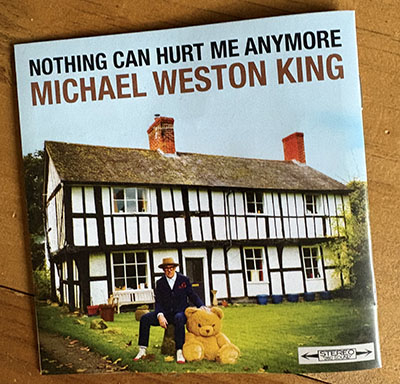
Like several songs on the album, ‘Nothing Can Hurt Me Anymore’ was informed by a family tragedy – in summer 2024, Weston King and his wife, Lou Dalgleish, who, together, make up the country-soul duo, My Darling Clementine, lost their six-year-old granddaughter, Bebe, in the Southport attacks, when 17-year-old Axel Rudakubana killed three young girls and attempted to kill ten others, including eight children, at a Taylor Swift-themed yoga and dance workshop.
Reflecting on the title track of the new album, Weston King says: “Lyrically, it’s a combination of moving to a new location and how it was slightly therapeutic for me after what happened to Bebe, so it’s partly a narrative description of the area and partly a reflection on losing her.”
The loss of Bebe derailed My Darling Clementine’s plans to record a new album – as much as they tried to carry on and make a record that was going to be about starting over and beginning a new life in the country – they moved to Wales from Manchester in 2023 – with the weight of so much sadness and grief bearing down on them, it just didn’t seem the right thing to do.
The tragic events of summer 2024 not only changed the music My Darling Clementine were making and the songs they were writing, it also altered their outlook on life.
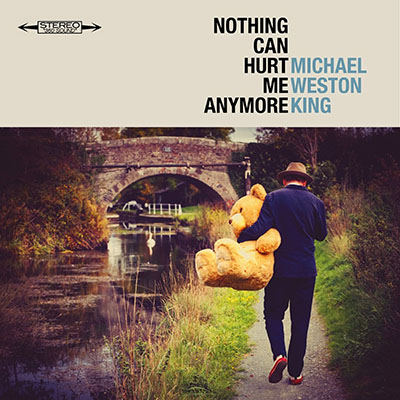
Recognising that everyone’s grief is individual – even that of a husband and wife – Weston King and Dalgleish needed to channel their suffering via their own individual creativity and in their own way, rather than in collaboration, so they worked on two solo albums.
Dalgleish’s record will be out later this year, while Weston King’s – Nothing Can Hurt Me Anymore – is released on April 4, which is Bebe’s birthday.
Opening song, ‘The Golden Hour’, is his take on the devastating events of summer 2024 and references how the murder of the three young girls in Southport and their families’ grief was hijacked and exploited by the far right: ‘We took our sorrow home – some took it to the street…’ It’s a defiant and rousing anthem – a widescreen epic, with strong echoes of early Springsteen.
‘La Bamba In The Rain’ – set in the English seaside town of Southport, where Weston King grew up – addresses the current trend of flag waving across the UK, and the call by those on the right for the ethnicity and immigration status of perpetrators of attacks to be made public: ‘When the Union Jack’s unfurled, and placed around the waist of every teenage boy and girl.’
‘Just A Girl In The Summertime’ – written about Bebe – is a lush, ‘60s-style pop song; the cinematic ‘Die of Shame’, with its spy film guitar licks and dramatic string arrangement, concerns itself with the media coverage of the Southport tragedy, and final song, the stripped-back, delicate, and lullaby-like ‘Sally Sparkles’, was inspired by the ‘stage name’ Bebe used when she performed on the swing in her back garden.
Nothing Can Hurt Me Anymore was partly recorded in rural mid-Wales – at the small Add a Band studios, where Michael had made his solo album, The Struggle, in 2022 – and partly in not-so-rural Sheffield, at Yellow Arch Studios.
‘ ‘La Bamba In The Rain’ – set in the English seaside town of Southport, where Weston King grew up – addresses the current trend of flag waving across the UK’
The album was produced by Weston King, along with Colin Elliot (Richard Hawley, Jarvis Cocker, Self Esteem), who also plays on it (bass, keys, cello, percussion, backing vocals, brass programming), and Clovis Phillips.
Musicians on the record include Phillips (Bill Callahan, Richard Thompson, Jeb Loy Nichols); Dean Beresford (Richard Hawley, Imelda May) on drums; Matt Holland (Van Morrison) on trumpet and flugelhorn; Shez Sheridan (Richard Hawley, Duane Eddy, Nancy Sinatra) on guitar; Clive Mellor (Liam Gallagher, Richard Hawley) on harmonica; Jeb Loy Nichols on backing vocals, and Erin Moran – AKA A Girl Called Eddy, duetting with Weston King on ‘Just A Girl In The Summertime.’
A large part of the album is influenced and affected by his unimaginable personal loss, but not every song on the record is about the tragedy. There are a few lighter moments too, like ‘A Field of Our Own’, a gorgeous, folk-tinged and slightly jazzy tale about relocating to the countryside and, quite literally, finding pastures new; ‘When I Grow Old’, which is a bittersweet reflection on ageing, and the unabashed and uplifting love song to his wife, ‘Grow Old With Me,’ with its soulful horn arrangement and honest lyric: ‘Yes, I love being here on my own… I still need to know you’re coming home.’
Speaking about the album, Weston King tells us: “I’m really pleased with it, and I’m pleased with how I’ve managed to exorcise and express something I never thought I would have to experience – consequently, it’s been a form of catharsis.”
Q&A
You weren’t planning to make a solo album, were you? The original idea was to record a new My Darling Clementine album, but the tragedy of losing Bebe altered your plans…
Michael Weston King: That’s right. We hadn’t made a new, original Clementine record for a while – the last one was an Elvis Costello covers album. To be honest, we made that partly because we had dried up a little bit with regards to writing – when you’re writing for two voices, it’s quite hard and a much more considered process – you can’t just let the muse take you. So, we did the Costello album – it was great fun to work with Steve Nieve on it – and, in 2023, it was time to make a new record, so I was writing songs for it and Lou was trying to get back into the groove of it.
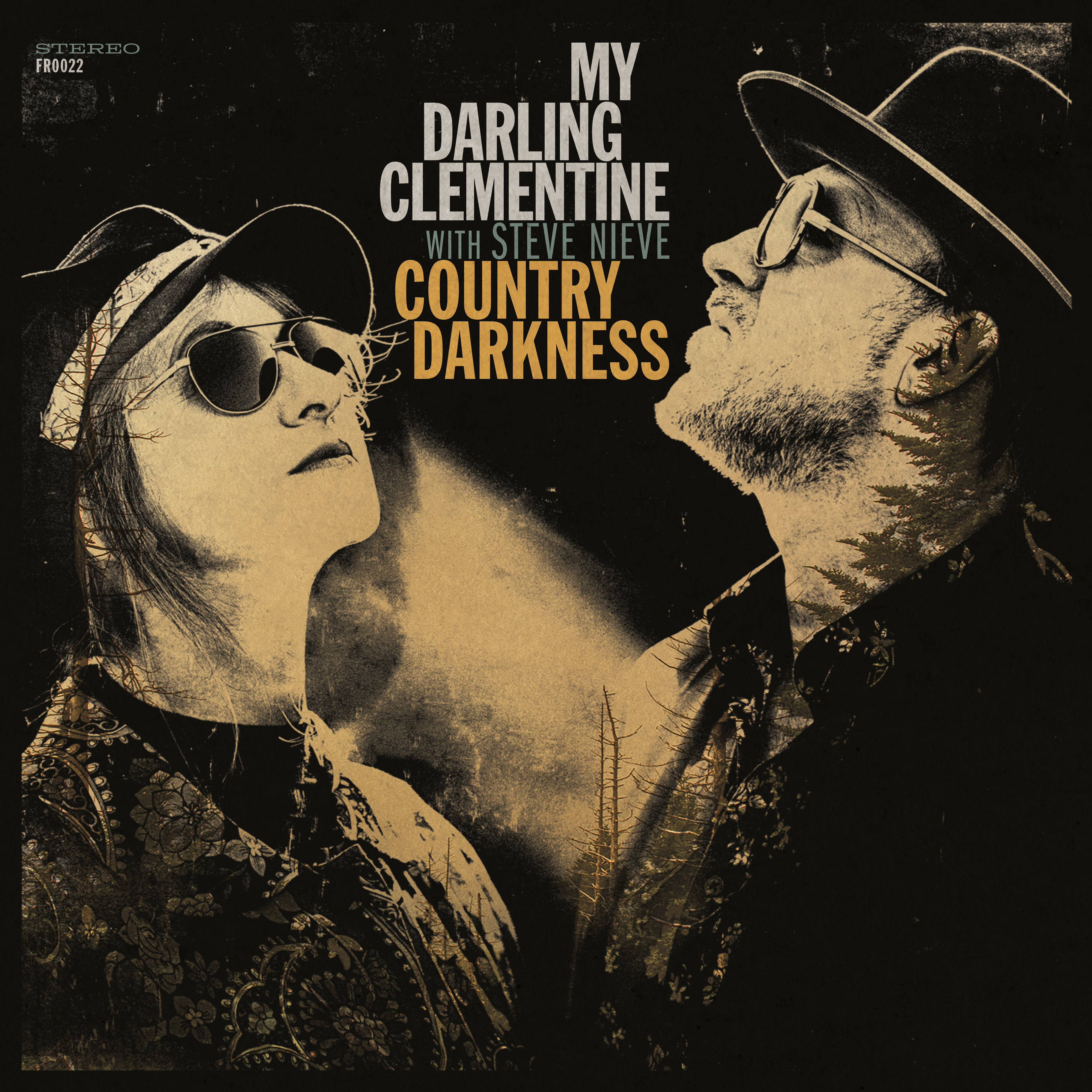 We’d partly recorded three or four songs at Add a Band studios, with Clovis Phillips, and then what happened, happened, and it just didn’t feel right to be making that kind of record. We couldn’t really write beyond the pain that we were in, and, when you’re writing as a duo, you kind of compromise, but Lou and I didn’t want to compromise in how we were going to deal with the grief process. So, we made a decision: ‘There’s no Clementine record – we’re both going to make solo records, and we’ll make them at our own pace and release them accordingly.’
Not all of my new record is about losing Bebe – that would be a bit too much of an ask for the listener. So, some of the album ended up being a mixture of songs reflecting on the tragedy from a personal point of view and the events that happened – the gutter press and the far right coming to Southport to trash the place off the back of immigration… all that shit.
The other songs are about moving away and starting a new life, which we have done here. We had a different outlook just moving here, but, after what happened, your outlook on life changes considerably, and I think that’s reflected in the record.
‘Not all of my new record is about losing Bebe – that would be a bit too much of an ask for the listener’
I don’t know how you would even begin to deal with such a tragic situation, but I know you channelled your emotions into the songs. How quickly after losing Bebe did you feel comfortable writing about what happened?
I wrote the last song on the album, ‘Sally Sparkles’, when we were staying at my dad’s house – we stayed in Southport for about eight weeks, to be with our family.
One morning, I just woke up and wrote the song in ten minutes – that was only a few weeks after we lost Bebe. It wasn’t like, ‘I’ve got to write about it…’ – it just came out. The other songs that deal with the loss happened six months afterwards, but, again, I didn’t sit down to write them. I just let it come and wrote down what I felt. ‘The Golden Hour’ is pretty much about the events and what happened to us.
That’s one of my favourite songs on the album – it’s defiant and anthemic, and it feels like you’re channelling early Springsteen…
It’s unashamedly Bruce-esque – ‘For You’, from his earliest album, is always a song that I’ve loved and, on and off, over the years, I’ve kind of wanted to rewrite it. In the end, I wrote something in that style, but all about what happened. It is quite a defiant song – the chorus is: ‘She’ll never be over; she’ll never be gone… ‘ It’s quite an uplifting song to sing, even if, lyrically, it’s about a very tragic event.
‘Die of Shame’, which deals with the media coverage of the tragedy, has some great ‘60s spy film guitar on it and some dark strings…
Colin Elliot arranged the strings, and the fantastic guitar is by Shez Sheridan. That song wasn’t written for this record – Mark Billingham [crime writer] had a book called Die of Shame, which was going to be made into a TV series, and I thought I would have a bash at writing the theme tune. But the title got changed to something else and I had this song… It wasn’t fully finished, but I loved the chord turnaround.
It wasn’t a My Darling Clementine song, so it just sat there for a while, and then when everything happened – especially the doorstepping by the paparazzi and the unbelievable depths that they sunk to – it seemed appropriate, as a lot of the lyrics were dark and based on murder, as Mark’s books normally are, so, with a few line changes, the song wasn’t based on the book, but on my experience of dealing with those scumbags.
So, I sang it as though I was one of the photographers – the ambulance chasers who took pictures of the awful situation to sell them to the papers. I’m singing angrily about them, but also from their perspective.
‘A Field Of Our Own’ is one of the lighter songs on the record, and it was originally destined for what would’ve been the new My Darling Clementine album. It’s about keeping it rural…
(Laughs). Yeah – it’s a ‘move to the country’ kind of song, and it’s the fourth track. After three songs that deal with the tragedy, I thought we needed to move away from that to something else. It’s unashamedly written in a Ron Sexsmith style. It’s a reflection on moving out of the city, as it will be good for us – as it’s turned out to be.
And it features sheep on it… Did you record them?
Yes – I did my John Lomax thing… They’re not our sheep, but they’re just behind the field out there [he points to outside the house.]
‘A Field Of Our Own is unashamedly written in a Ron Sexsmith style. It’s a reflection on moving out of the city’
Just A Girl In The Summertime has a lush, ‘60s pop feel…
That’s a strange song – I had a track with my vocal, an acoustic guitar and some synth strings. I was trying to write something like The Pale Fountains – kind of ‘60s Bacharach with a bit of Love thrown in. It had been lying around for ages – it was originally about a boy/girl relationship, so I tweaked it lyrically – now the girl in the song is Bebe, and the second verse is me talking about my son, so it’s now on a whole other level. It’s about a girl who’s lost to us and a father who has lost his daughter.
I took it to Clovis to start with – he put the drums on and built the track, but I wasn’t happy with the synth strings, so, with Colin, we added cello, violin and viola to it, to give it that more authentic string sound. I still wanted to do something else with it, so I got Erin from A Girl Called Eddie to sing on it. I sent it to her and she was totally up for doing it – she went into a studio in New York, put the vocal down and sent it back. It was great.
‘I was trying to write something like The Pale Fountains – kind of ‘60s Bacharach with a bit of Love thrown in’
I wasn’t sure about how me getting another girl in to duet with me would sit with the old ball and chain, but Lou was pretty cool with it – I was quite surprised! Erin’s voice is a counterpoint to mine and it adds an extra level of sadness to it that wouldn’t have been there if I’d sung the whole thing. I love the drumming that Clovis did on it, and the guitar is a bit Isley Brothers – I sent him ‘Summer Breeze’; that was the remit I gave him.
The first single from the album, ‘La Bamba In The Rain’, is set in Southport…
That’s where it ended up being set… I started writing it in Aldeburgh, in Suffolk. Lou and I were there for a few days – it was a dreary day, there was a band playing ‘La Bamba’ in the rain, and it was this classic, weary seaside town.
I kind of half wrote it, and I knew it wasn’t going to be a My Darling Clementine song, so I didn’t really aim to finish it. But then when we lost Bebe, my focus was very much on my hometown of Southport, as I was living there for a few weeks with my family. So, I transferred my writing on Albeburgh to Southport. The second verse is all about Southport, and there are lines about the mayor, who was making promises after the events happened. So, the song became a mishmash of faded seaside towns that have seen better days, as Southport certainly has.
Musically, I was trying to write a song like ‘Band On The Run’. The only reason I used the word ‘undertaker’ was because it features in ‘Band On The Run’ – ‘the undertaker drew a heavy sigh’ – and it flows nicely. It wasn’t anything to do with funerals.
It’s a bit of a surreal song – it’s not to be taken too literally. The last verse references the shipping forecast: ‘Trafalgar and Fitzroy.’
‘The song became a mishmash of faded seaside towns that have seen better days, as Southport certainly has’
I wrote the chorus about seeing Southport and many other towns decked out in Union Jacks, and the proliferation of the far right, and those kind of towns with disgruntled people. The towns may have seen better days, but they are affluent and full of retired people with money – immigration is not going to be affecting them, so it’s bollocks that they should be wanting to wave a flag and protest about it. You obviously see it in the working-class areas, where people feel aggrieved, but you shouldn’t see it in places like Southport and Albeburgh.
‘When I Grow Old’ is another lighter song…
It’s an older song, but it seemed to fit – there is a theme about ageing on the record and changing your life and outlook.
Musically, ‘When I Grow Old’ is one of those simple, Neil Young-type songs, and that’s what we tried to for in the arrangement, with the electric guitar quite loud, even though it’s a ballad.
The song is a flight of fancy: will I end up as a fat, old guy on a Greek island? Where will I end up? It’s a fanciful thing – it’s not real. I like the middle-eight section – I’ve had it for ages, and I always wanted to get it into a song. It’s about having a debauched week but going to church on a Sunday to clean up. I’m one of those people who grew up with a church background, and even though my faith doesn’t really exist very much these days – and it hasn’t for a long time – I’ve always fluctuated a bit between my church upbringing – as a believer – and then being a non-believer. That’s summed up in the middle eight of the song.
‘A Mother’s Pride’ is one of the oldest songs on the album…
I wrote it within a year of my mum dying, which was in 2006. It’s unashamedly a power pop/Squeeze kind of track. My mum was a Squeeze fan.
The guitar solo reminds me of Glen Tilbrook’s playing…
What Clovis played is fantastic. I was hoping to get John Perry from The Only Ones to play on it, but that never worked out. Clovis is such a brilliant guitar player, so I just said to him, solo-wise, ‘Pulling Mussels [from the Shell]’ – that’s what we’re going for here’ and he did it.
The song also mentions your dad, and what you thought would happen to him after the death of your mum…
Yes – it fits with the theme of grief and loss and people ageing – it’s all in that song. My dad lived for nearly 20 years on his own after my mum died. Even though the song was written not long after my mum died, I was foreseeing what would happen to my dad’s life.
‘Into The West’, is one of the darker moments on the album. Was that written for the My Darling Clementine album which didn’t happen?
We were going to try and have a go at it. I’ve always been a lover of R.S. Thomas – the Welsh poet and vicar. When we moved here, I went down a bit of an R.S. Thomas wormhole – five miles from here, there’s a village where he was the vicar. There was a book written about him called The Man Who Went Into The West – he ended up being the vicar of a church that overlooked Bardsey Island. You can’t get any further west. Me and my son, Oliver, who is a poet, went on an R.S. Thomas pilgrimage.
Oliver reads a poem on the track…
Yes, so that ties in. It’s a song about getting out of where we were [Manchester] because I hated it there, and I sing about Winter Hill, which is just outside Bolton and casts a shadow over the Northwest. It always rains there, and Winter Hill cast a shadow for me because when I was younger and living near there, it was an unhappy time. It’s a song about leaving your past behind and moving somewhere else. At the end of the song, Oliver reads an R.S. Thomas poem, but some of the lines are ones that he wrote that I felt were appropriate.
‘Winter Hill cast a shadow for me because when I was younger and living near there, it was an unhappy time’
It has some wailing harmonica by Clive Mellor and musically it reminds me of Ennio Morricone – it’s very haunting…
A lot of that is to do with Clovis’s electric guitar – that echoey Daniel Lanois reverb. Like ‘Nothing Can Hurt Me Anymore’, it’s quite cinematic.
Are you pleased with the album?
I am – I’m really pleased. When you’re making a record, you always have ups and downs: ‘Is it awful or is it great?’ But I’ve been doing it a long time now, so I know I can have those doubts, and you just ride them out.
I’m pleased with how I’ve managed to exorcise and express something I never thought I would have to experience, and, consequently, it’s been a form of catharsis. Writing it has helped me and I know it’s been the same with Lou, who has been writing her songs, but it doesn’t change anything.
Nothing Can Hurt Me Anymore is released on April 4 (Continental Song City).
www.mydarlingclementinemusic.co.uk
https://michaelwestonking.bandcamp.com/
https://continentalrecordservices.bandcamp.com






 Say It With Garage Flowers