‘This was the hardest record I’ve ever made…’

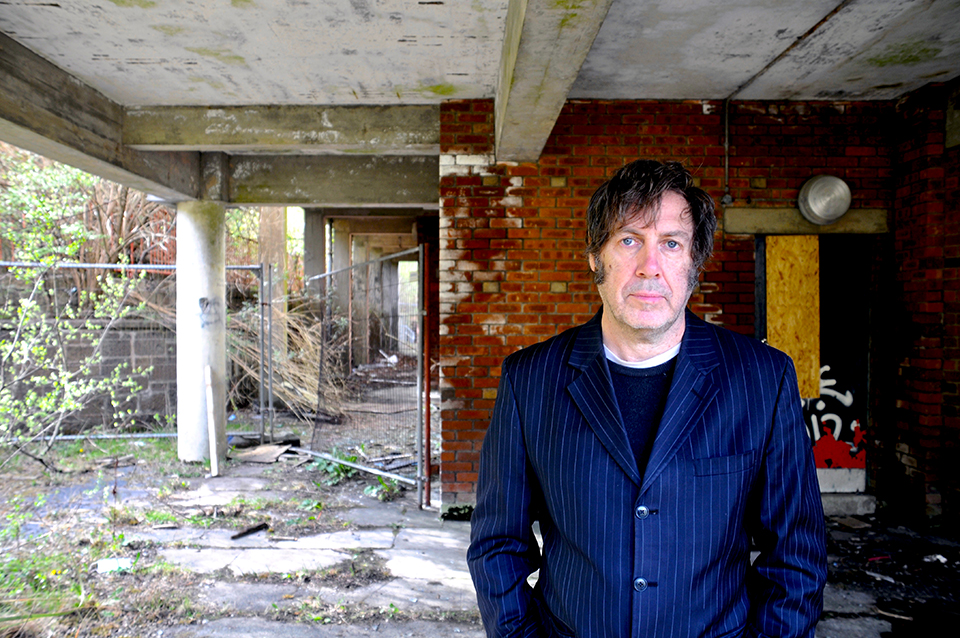
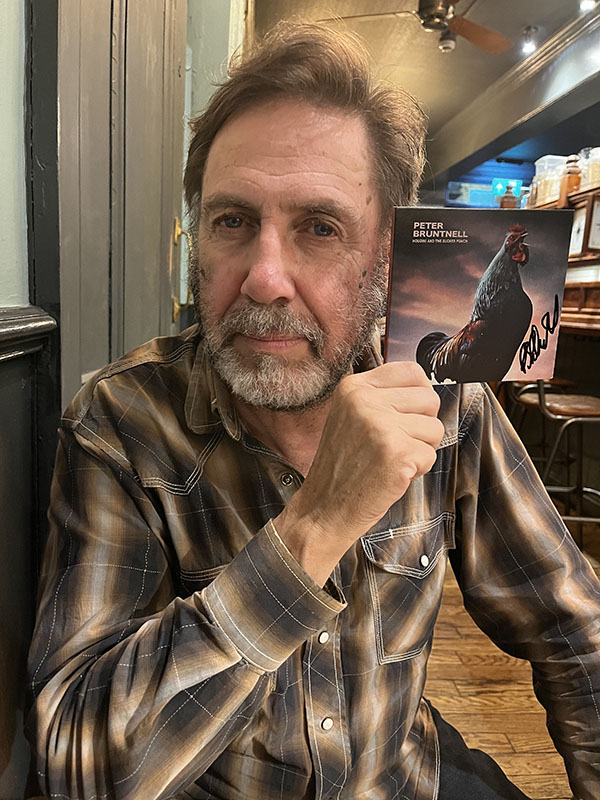
Peter Bruntnell

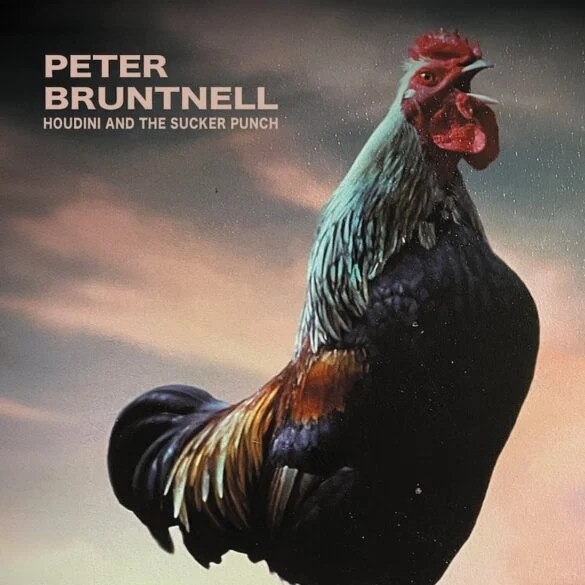
UK Americana singer-songwriter Peter Bruntnell’s latest album, Houdini and the Sucker Punch, is his twelfth – and it’s also one of his best. 

After 2021’s stripped-back, pandemic-era Journey To The Sun, which was surprisingly inspired by Eno and Bowie’s more electronic and experimental moments – it even had vintage synths on it – his new record was made with a full band, and it’s a return to Bruntnell’s Americana roots, but with nods to classic British bands including The Smiths and The Beatles, as well as US acts like The Byrds and Pavement / Stephen Malkmus.

The superb title track, which opens the album, is classic Bruntnell – irresistible and melodic alt-country with a plaintive undercurrent.

It’s followed by recent single, the sublime and jangly The Flying Monk, with guitars firmly on ‘Johnny Marr setting’, while Head-Smashed-In Buffalo Jump is soaked in Revolver-era psych, Mellotron and Fab Four vocal harmonies.

Let There Be A Scar adds a touch of Everly Brothers, but with Neil Young’s ‘90s grungy stadium rock, and even the pop sensibilities of Deacon Blue.

Guitar gunslinger, James Walbourne (The Pretenders, The Rails and His Lordship),  fires off some ace twanging on the playful and galloping Wild West adventure that is Yellow Gold – Bruntnell is on bouzouki duties – while things are taken down a notch with the yearning ballad, Sharks, which has a lovely melancholy feel thanks to Laura Anstee’s mournful cello.

No Place Like Home is upbeat and jangly Americana – the Byrdsy guitars ring out like The Bells of Rhymney – and the pedal steel-laced, moody and haunting R.E.M-esque ballad, Stamps of the World, evokes Country Feedback from Out of Time.

Say It With Garage Flowers spoke to Bruntnell over a couple of beers in a pub near London’s South Bank one evening in late summer to find out about the writing and recording of the new record.

“I didn’t think this album was Americana, but maybe it is,” he tells us, confusingly…

Q&A

When we last spoke, it was to promote your 2021 album, Journey To The Sun – a sparse, stripped-down solo record that was made during the time of the pandemic, when you’d bought a synth, a drum machine and a bouzouki. You told me you’d been listening to Another Green World by Brian Eno and Bowie’s Low, which influenced the sound of the record.

When I asked you what kind of album you might make after Journey To The Sun, you said it could be another ‘electro record’, but you haven’t done that – Houdini and the Sucker Punch is a full-band Americana album. You’ve gone back to your roots…

Peter Bruntnell: I didn’t think it was Americana, but maybe it is – one song is a rip-off of The Byrds!

That’s No Place Like Home, which has a jangly Americana feel…

Peter Bruntnell: Yeah.

You’ve got pedal steel on the album too, which gives it that Americana sound… Was this record a deliberate reaction to the last one, or was it more organic than that?

Peter Bruntnell: I didn’t really think about it – it was just how the songs came out. I don’t know whether it was a conscious decision to write songs that would translate better with a band or whether it was just how it came out. I’m not sure.

Do you write songs on acoustic or electric guitar?

Peter Bruntnell: I write on both.

Are you a prolific songwriter?

Peter Bruntnell: No, I’m not. I had about 13 songs [for this album] but three fell by the wayside and I ended up doing Stamps of the World because I liked the song, and it hadn’t been on an official release.

It was on Ringo Woz Ere, which isn’t see as one of your official albums…

Peter Bruntnell: I didn’t think it was a good enough album to call it an album… I didn’t think a record company would be interested in it.

Stamps of the World is a great song – it stands out on Houdini and the Sucker Punch because it’s the darkest and moodiest song on the record…

Peter Bruntnell: Yeah – I guess so…

It reminds me of Country Feedback by R.E.M…

Peter Bruntnell: I don’t know that one.

It’s from Out of Time and it’s my favourite R.E.M song…

Peter Bruntnell: Oh, really.

You’ve got some of your long-term collaborators on the album: Mick Clews (drums), Dave Little (electric guitar) and Peter Noone (bass), plus some special guests: pedal steel player, Eric Heywood; Son Volt/ Uncle Tupelo’s Jay Farrar on piano; cellist Laura Anstee, and Mark Spencer (Son Volt) on Hammond organ and piano. You toured with the States with Son Volt recently, didn’t you?

Peter Bruntnell: Last year. While I was out on tour with them, I was talking to Mark, and I asked him if he’d play on the new record. He was like, ‘Yeah – of course.’  So, then I thought, ‘Maybe I’ll ask Jay if he would play piano…’ He said, ‘Yeah –I ’ll give it a go…’ So, that was cool.

Son Volt have always been a big influence on you, haven’t they?

Peter Bruntnell: Yeah – very much.

‘I didn’t think this album was Americana, but maybe it is – one song is a rip-off of The Byrds!’

What about the other guests?

Peter Bruntnell: Eric Heywood is one of my favourite pedal steel players – I messaged him to see if he had a studio at home and he said he would love to do it and that he could do it at home. That was a game-changer – Eric’s great.

Peter Linnane also plays Hammond organ and synth on the record…

Peter Bruntnell: He’s the guy that masters my records. He’s in Massachusetts. With technology being what it is, you can get your favourite players on the album and you can stay at home.

We recorded the drums and the bass in Wargrave, Berkshire, with a mate of mine called Jim Lowe, who has engineered quite a few of my records – he works for the Stereophonics mostly and he has a studio in his garden. His wife is Laura [Anstee], who plays cello on the album.

The cello sounds great – very mournful and melancholy….

Peter Bruntnell: It’s amazing.

‘With technology being what it is, you can get your favourite players on the album and you can stay at home’

James Walbourne, who has played with Son Volt, and is in The Pretenders, His Lordship and The Rails, is also on the album – he plays guitar on Yellow Gold

Peter Bruntnell: Yeah – he did that at his place.

That song is a Wild West adventure, with twangy guitar…

Peter Bruntnell: It’s perfect for James. I wrote it on a bouzouki. After touring with Son Volt last year, me and my girlfriend drove from Colorado to Montana – we drove through Colorado and Wyoming, and, if you haven’t seen that part of America, it’s mind-blowing. There’s nothing – no settlements or farms – it’s mental. You can feel the buffalo and the Indians there. By the time we got to Montana, I was in a bookshop buying a book about trappers and the gold rush.

When I came back, I listened to a load of podcasts about it and one of them was about a guy who blows a hole in the side of a mountain – it falls on him and he’s trapped under the rocks. He smells some smoke coming from a campfire, so he starts shouting and a cowboy hears him and saves him, but by the time he gets him to the hospital, which is fucking a week’s ride away, he’s dead.

But, before he dies, he tells him there’s a load of gold in the hole, and the cowboy spends the rest of his life trying to find where he rescued the bloke, but he never finds it. It’s mental, but that’s not in the song… The song was inspired by the podcast, but I made the guy a Welsh bloke from the valleys, because I’m Welsh. I was born in New Zealand, but I’m Welsh.

Let’s talk about some of the other songs on the album. The title track opens the record and it has an Americana feel, with Hammond organ and pedal steel. One of the traits of your music is that you combine a great melody with a melancholy undercurrent…

Peter Bruntnell: Maybe.

You can write a great pop tune that has a sadness to it – that’s one of the reasons I like your music. What can you tell me about the title track, which has lyrics by your long-term songwriting partner, Bill Ritchie?

Peter Bruntnell: I thought of the title and then said to Bill: ‘We’ve got to write a song called Houdini and the Sucker Punch…’

It was a co-write lyrically, but when I wrote it, it had a different tune – it was around the time of King of Madrid [2019 album], but I didn’t like the tune enough. Then I found a tune that I’d recorded on my Dictaphone – I went through it looking for anything that might be useful or usable, and that melody was on there, so I adapted the lyrics.


The Flying Monk is my favourite song on the album – the guitars have the feel of The Smiths / Johnny Marr, and there’s a nod to Some Girls Are Bigger Than Others in the lyrics, when you sing: Saint Joseph told the rebel as he emptied a yard of ale…’

Peter Bruntnell: Yeah – of course. The Smiths are one of my favourite bands.

So, you deliberately wanted The Flying Monk to sound like them?

Peter Bruntnell: I was trying to make it sound like Superman by R.E.M, with those harmonies – so, it was a bit of that and a bit of The Smiths, but the riff is more Syd Barrett – the first two notes are like Lucifer Sam [Pink Floyd]. The riff came really late – we’d already recorded the rhythm tracks… I was in the studio, and I needed a riff.

Lyrically, the song was inspired by an 11th century Benedictine monk called Eilmer of Malmesbury, who tried to fly using wings… There’s also a brewery named The Flying Monk…

Peter Bruntnell: It’s a good little story – he broke both his arms and both his legs. I didn’t know the story until the Christmas before last… I was in Gloucestershire, and I wrote the song in-between Christmas and the New Year.

Sharks is another of my favourite songs on the album – it’s a love song, but, lyrically, when you mention surfing in it, as part of a metaphor, was that inspired by an experience with your first record company when you were in a band in the early days? 

Peter Bruntnell: Part of it was. The band was the Peter Bruntnell Combination – we had an album called Cannibal. My record company learnt that I was trying to surf, and they went, ‘Great – he’s a surfer, so let’s send him down to Cornwall.’

That was their angle – they paid for me and my band to go to Cornwall every weekend. I was an acoustic guitar player only at that time – I was slowly learning how to play electric… My guitar player,  who was in his wetsuit, said [puts on a camp, theatrical voice]: ‘This grey rubber suit is driving me mad…’

He actually said that to me, so, it’s always been in my head – it’s quite comical. Sharks is a kind of love song….

It’s a beautiful song…

Peter Bruntnell: Ahh – thanks, mate.

So, from surfing to dancing… Let’s talk about the video for the first single, Out of the Pines, which made me smile…

Peter Bruntnell: It’s pretty amateurish, but it’s sincere. We filmed it on the Isle of Bute – it’s very remote. I went there to go fishing and found a fallen-down chapel, so we filmed a video there – I knew I was going to be dancing, but I didn’t know it was going to be a one-take thing… It was mildly embarrassing, but I don’t care anymore…

I love the opening lines of that song: ‘I’ve never been much good at getting up in the morning – singing after dark has been my tomb…’

Peter Bruntnell: That’s autobiographical… I wanted to write a song that was a bit like Ron Sexsmith – it’s me trying to be him.

In the press material for the album, you describe Let There Be A Scar as having “a very vibey feel…” It has Everly Brothers-style harmonies and is a bit like Neil Young’s ‘90s grungy stadium rock…

Peter Bruntnell: It’s almost Nirvana for me, and the melody is almost Let It Be Me by the Everly Brothers. I also really love Acetone, so the quiet bits are very Acetone, guitar-wise.

Head-Smashed-In Buffalo Jump is very Revolver-era Beatles, with psychedelic backwards guitar…

Peter Bruntnell: That was the initial idea – I wanted to write a song like Rain. There’s a place in Canada called Head-Smashed-In Buffalo Jump – Bill [Ritchie] has always gone about it… When I was driving through Wyoming, with the Rocky Mountains on my left, as I was going north… That was another song that was inspired by the plains and Wyoming, but the idea is that there’s a bloke on the Tube feeling like he’s just jumped off the cliff at Buffalo and landed on his head. It’s also inspired by a story that’s in the podcast I mentioned earlier: Dr. History’s Tales of the Old West – there’s a story about an Indian kid who used to run buffalo off a cliff. The kid got a bit too keen and ended up at the bottom… I used it as a metaphor for someone going into London on the Tube…

You’ve certainly nailed that Revolver feel… Is that a Mellotron sound on it?

Peter Bruntnell: Yeah – that’s Pete Linnane. He sent me four of five keyboard parts to choose from.

Revolver is my favourite album of all time…

Peter Bruntnell: I like that one – I was listening to it yesterday, driving back from Devon. Taxman is insane…

‘I like the fact that this album is quite up and the songs are fast’

The last song on the new album is Jimmy Mac, which is one of the more subdued moments  – the cello gives it an autumnal feel, and the outro reminds me of Wichita Lineman

Peter Bruntnell: Yeah – we were going for that kind of thing. That was Dave [Little] – he only plays on two songs on the record, because he didn’t have a set-up at his place in Devon, and I made the record in London. So, it was geography… he was four hours away and I couldn’t send him stuff… I was trying to get it done and also do a full-time job…

So, how was it making this album?

Peter Bruntnell: It was the hardest record I’ve ever made – I was mixing it, doing overdubs, and going to fucking work, and I produced it…

Are you pleased with it?

Peter Bruntnell: I am.

‘I was fed up with protesting. I wanted this album to be more pastoral and to try another angle’

I think it’s one of your best…

Peter Bruntnell: That’s cool. I like the fact that it’s quite up and the songs are fast.

It’s 10 tracks – five on each side on the vinyl. Bang! Too many albums are too long nowadays…

Peter Bruntnell: I agree.  

Some of your previous songs have dealt with political issues – Mr. Sunshine was about Trump. This time around, you haven’t tackled politics…

Peter Bruntnell: I was just fed up with protesting. I wanted this album to be more pastoral and to try another angle…

So, you wrote more story songs with characters in them?

Peter Bruntnell: Yeah – I’m not banging on about the Tories anymore… and now they’re out. anyway…

Houdini and the Sucker Punch is out now on Domestico Records.

For more info, visit: https://peterbruntnell.co.uk/


UK Tour Dates

2024

Oct 4:LIVERPOOL Outpost
Oct 5:ISLE OF BUTE Craigmore Bowling Club
Oct 6:GLASGOW The Glad Cafe
Oct 20:TWICKENHAM Eel Pie Records (in-store & signing)

Dec 5: LONDON The Green Note (duo show with Robbie McIntosh)
Dec 14: SUTTON The Sound Lounge
Dec  15: ST LEONARDS The Regency Rooms

2025

Mar 6: NOTTINGHAM Angel Microbrewery
Mar 7: PRESTON The New Continental
Mar 8: GATESHEAD The Central

‘This record absolutely saved my life by giving me something to focus on’

Steve Drizos in his home studio, June 2020. Photo by Jason Quigley.

Axiom, by singer-songwriter, engineer and producer, Steve Drizos, who is based in Portland, Oregon, was one of the first new albums I listened to this year, when I was asked to review it for Americana UK.

Drizos is the drummer for Jerry Joseph and The Jackmormons and he has his own studio, The Panther. He’s worked with artists including Patterson Hood (Drive-By Truckers), Chris Funk (The Decemberists), and Scott McCaughey (R.E.M., Minus 5, The Young Fresh Fellows).

Released in late January, Axiom is his debut solo album and it really took me by surprise when I first heard it. Due to his CV, I guess I was expecting an alt-country record, but it’s nothing of the sort. 

The title track and album opener is a spacey and trance-like instrumental, with female vocal samples, electric piano and soaring strings, which builds to an epic climax, while Juggling Fire, which is the first song he wrote after quitting alcohol, is a shimmering, psych-folk ballad with a hint of blues. 

Writing for Americana UK, I said: “Drizos isn’t easy to pin down – You Don’t See That Now is a reflective, keyboard-driven ballad with strings, and Softer, Please brings to mind soulful grungers The Afghan Whigs.

“Similarly, the moody, ‘90s-style alt-rock of Static has crunching guitars, a driving bassline and some seriously powerful drumming, but throws in a proggy synth solo that sounds like it was found nestling under one of Rick Wakeman’s old capes.

“Drizos doesn’t shy away from tackling the issues he’s had to deal with though – on Juggling Fire he sings: “When you’re all alone, begging for night.”

I added: “Axiom is a diverting and often surprising listen – the sound of a man coming to terms with himself and capturing it in an honest and strong collection of songs.”

The album was written, recorded, produced and mixed by Drizos, at The Panther. He set out to play as many instruments as he could on the record, but ended up using some guest musicians, including his wife, Jenny Conlee-Drizos of The Decemberists, and local session player Kyleen King for string and vocal arrangements.


Drizos says that making the album took him out of his comfort zone – he’s suffered from depression and anxiety, and also fought a battle with booze and drug addiction, but he started working on the record once he’d got sober. Some of the songs had been kicking around for years, but his new-found sobriety gave him the motivation to finally record them.

Having achieved his biggest goal for the album – to finish it – he says his next ambition is to have people hear it and relate to it: “If someone can find something relatable in the lyrics, especially someone who might be struggling with some of the things I sing about on the record, and not feel so alone and isolated, that’s the biggest goal.”

In an exclusive, honest and very revealing interview, I speak to Drizos to find out how he overcame his personal demons to make his debut album, and also get his thoughts on what lies ahead for live music in a post-Covid world.

“Even as I’m answering these interview questions, there’s a big part of me thinking: “Don’t they know I’m not really a singer-songwriter?” Like I’m going to be found out. That’s my insecurities yelling at me,” he says.

Q&A

How’s your new year going so far?

Steve Drizos: How’s 2021 going? Well, it feels the same as 2020 so far, minus the daily spewing of our former “con-mander”-in-chief. And the constant, varying levels of anger, anxiety, and disbelief that went with it. So that’s a good start.

How has Covid affected you as a musician / producer? Has it messed-up any of your plans?

SD: It’s interesting that you worded the question that way. As a touring/gigging musician, it has obviously brought everything to a screeching halt, with little to no conversation about things moving again, at least in the States. I feel like in the beginning, everyone was trying to predict when things would open back up again and try to plan accordingly, only to be discouraged over and over again.

My bandmates and other colleagues have stopped trying to predict and just sit tight and wait. We were able to do a few live shows this summer when we could play outdoors, so that was a nice reprieve from missing the live show experience. However, I do hear a lot of my fellow musician and crew friends saying how amazing this year has been, not having to pack their suitcases and leave home on a regular basis, and being able to spend time with family and loved ones. Covid has certainly forced that hand.

As a producer/engineer, it has been very fortuitous. I finished a major remodel on my studio, The Panther, in December of 2019. I have been able to keep busy with remote recording and mixing projects, as well as safely running in-person sessions. People still have the need to create and now have the time to work up new material and are looking for a place to record them. So that business has been booming and is the thing I’m most excited and passionate about at this point in my career. So the pandemic has given me the time to really dive into it – time that I wouldn’t have had if I was still steadily on the road. I’m extremely lucky in that respect.

‘I hear a lot of my fellow musician and crew friends saying how amazing this year has been, not having to pack their suitcases and leave home on a regular basis, and being able to spend time with family and loved ones. Covid has certainly forced that hand’

What’s it been like for you in lockdown in Portland? How have you coped?

SD: Lockdown hasn’t been terribly brutal. I have an amazing wife that I love spending time with. As I mentioned, my studio has kept me busy, both with outside clients and working on my own music. And the band I’ve been with for 15-plus years – Jerry Joseph and The Jackmormons – has been doing weekly live stream shows, so I get to perform on a regular basis. We just hit week #44 I believe. It’s called Jerry Joseph’s Happy Book, every Thursday. In general, I don’t mind spending time alone. I’m a natural introvert. I definitely miss going to my favourite restaurants, seeing live shows, and hugging my family and friends. But, overall, it’s been okay.What are your main concerns for the future of live music in the wake of the pandemic?

SD: My biggest concern at this point in time is the survival of the venues themselves, especially the smaller independent rooms that I not only play in the most, but prefer to see shows at. Not just here in Portland but nationwide. And I guess worldwide for that matter.

That said, I’m actually amazed that more venues haven’t shuttered their doors at this stage of the game. Maybe things won’t be so dire as I originally thought. I also wonder how long it will take for audiences to feel comfortable gathering en masse again.

There’s a big psychological barrier that people will have to get past, vaccinated or not, to feel normal being on a sweaty dance floor with a few hundred strangers. Although I just read that an 80-person orgy got busted up outside of Paris, so maybe not everyone holds the same reservations. There’s your glimmer of hope.

‘I’m amazed that more venues haven’t shuttered their doors. I wonder how long it will take for audiences to feel comfortable gathering en masse again? There’s a big psychological barrier that people will have to get past’

Let’s talk about your debut solo album, Axiom. Why did the time feel right to put out a solo record? Some of the songs on the album have been kicking around for a while. How did you get everything together for the record? Did you have a big plan, or did it just kind of happen?

SD: The entire process of this record has been pretty organic. I have wanted to release a record of my own for some time, but I never seemed to be able to focus enough on the task at hand to reach the finish line. I have hard drives filled with half-finished ideas. Once I gained some clarity in my life, I was able to put the necessary attention and intent into getting something finished.

From the actual start to the finish of Axiom, it was about a four-year timeline. I certainly would not consider myself a prolific songwriter, and because I took on most of the performing, recording, and mixing roles, the whole thing took its own sweet time. I never felt rushed or pressured to put it out by a certain date.

Having a studio in your home presents a certain amount of obstacles when it comes to calling a song or a mix “finished.” Plus the record had stretches of being on the backburner, due to touring or other clients in the studio. The pandemic gave me the time to finally wrap things up and get it done.

Steve Drizos in his home studio, June 2020. Photo by Jason Quigley.

You’ve battled drug and alcohol addiction, and you’ve had to deal with anxiety and depression, but you’re on the road to recovery. You’ve got sober and focused. How did you do that? Was it a challenge? 

SD: That’s a big question. Let me see if I can sum it up in a relatively concise answer. To answer the how part, I reached out for help, finally, after years of knowing I had a problem.

In the music business, it’s very difficult to discern where the party stops and the problem begins. It’s an environment where drugs and alcohol are not just condoned, but encouraged. And most anything is easily available.

So after years of trying to change things on my own with no success, I finally reached out to a friend who I saw doing what I wanted to do, be sober and happy in the music industry. That started me on the long road to recovery that I continue to walk today.

My story and experience is certainly not unique, and there are plenty of resources out there to help you if you truly want it. Was it a challenge? Absolutely. It’s one of the most terrifying experiences I’ve been through, next to my wife’s cancer battle. It does get easier over time, but it’s something that I need to be aware of and work on everyday. The pay-off however is unexplainable.

In the music business, it’s very difficult to discern where the party stops and the problem begins. It’s an environment where drugs and alcohol are not just condoned, but encouraged. And most anything is easily available’

Has making a solo record helped you to focus on something? Would you say it has been cathartic? What were the good and bad parts of making the album? Was it a difficult experience?

SD: The record absolutely saved my life by giving me something to focus on, especially in the early days of my sobriety. It’s such a cliché to say music can save your life, but once again, there it was for me during one of the most challenging periods of my life.

It really is an amazing thing to have this constant force with me to help get me through. The hardest part of making the record was finding the balance between believing you are making something important and, at the same time, remembering it’s just another record in a long line of records, so just get on with it. The hours spent obsessing over a snare sound or a single lyrical line is crazy. At some point, all perspective is lost and it’s hard to take a step back and hear anything with objectivity.

The best part was the feeling of accomplishment getting the masters back, and listening to the entire record from beginning to end. I will never forget that evening in May, walking around my neighbourhood with headphones on. I certainly learned a lot from making Axiom and know what I need to do to make a, hopefully, better follow-up.

‘My entire life, for a certain period of time, was nothing but recovery and facing uncomfortable truths in myself – it was pretty all-encompassing’

Lyrically some of the songs deal with personal issues you’ve faced. Was it hard to revisit those experiences when you were writing the record? What effect did it have on you?

SD: Very early on in the making of the record, I made the decision to be really honest about what I was going through. I have always been a private person and so it was really stepping out of my comfort zone to let my guard down. On the other hand, my entire life, for a certain period of time, was nothing but recovery and facing uncomfortable truths in myself – it was pretty all-encompassing. So it wasn’t that difficult to tap into those raw emotions that were right there on the surface.

You’ve said that the album took you out of your comfort zone. Can you elaborate on that?

SD: Besides what I stated earlier, about being open and honest about a very personal topic and experience, the other thing that really pushed me into unfamiliar territory was having a body of work with my name front and centre. I’ve spent my entire musical career in a supporting role – and been very happy in that position. I’ve seen first-hand the kind of pressure and stress that comes with fronting a band and it never looked appealing to me.

Even once I realized that Axiom was becoming a reality and would get released, I never had the desire to put a band together to tour the record. I’m very uncomfortable in the spotlight. Even as I’m answering these interview questions, there’s a big part of me thinking: “Don’t they know I’m not really a singer-songwriter?” Like I’m going to be found out. That’s my insecurities yelling at me.

‘I’ve spent my entire musical career in a supporting role – and been very happy in that position. I’ve seen first-hand the kind of pressure and stress that comes with fronting a band and it never looked appealing to me’

What kind of record did you want to make and do you think you’ve achieved it?

SD: I think I am came pretty close to hitting the mark on making the record that I heard in my head. I unapologetically wanted to tap into my ‘90s influences.

I started touring extensively in 1995 and feel in some ways my musical tastes cryogenically froze at that time. With the introduction of music streaming services, I was able to go back and revisit all that music, and a bunch that I missed. And that was the jumping off point.

I’m also a huge fan of “produced” records, where the studio is used as an instrument to manipulate, distort, and stretch sounds. So the expanding of my studio coincided with the making of Axiom. There’s no way I could have afforded to make the record I wanted to make in a commercial studio, paying by the hour. So I built one that would fit my needs. I’m not so sure if it was any cheaper looking back, but I know it’s a fully functioning studio space that other people seem to enjoy working in.

‘Even as I’m answering these interview questions, there’s a big part of me thinking: “Don’t they know I’m not really a singer-songwriter?” Like I’m going to be found out. That’s my insecurities yelling at me’

What’s your studio, The Panther, and set-up like? What’s the vibe like there and what kind of gear do you use? And where did the name come from?

SD: The Panther is a tricked-out basement studio in the house my wife and I own. A friend recently said: “You don’t have a home studio, you have a studio in your home.”

It’s a hybrid set-up of analogue and digital gear. My wife and I have a decent collection of keyboards, drums, guitars, etc. to cover the needs of most clients. We have a grand piano in the living room and the entire house is wired up to plug in mics anywhere. The Panther certainly has its limitations, but most people seem to be pretty happy with the vibe and, most importantly, the final results.

The name came from a black velvet panther painting that lives in the control room. When I needed a name for album credits on one of the first projects I did there, The Panther was it.

Let’s talk about some of the songs on Axiom. What can you tell me about the title track? It has female vocal samples, electric piano and soaring strings, and it builds to an epic climax…

SD: That track started with the drumbeat. It was an interesting rhythm that I had just started tapping out on my lap one day, so I tracked it on the drums, looped it a few times, and started writing the music around it. It’s in an unconventional time signature and I was having a hard time finding a melody to go over the top of it.

I wanted to call the song Axiom because I thought it was a cool-sounding word and its definition embodied a lot of the concepts and challenges about truth that I was witnessing in the world and also realising in myself. So I did a little research and found a collection of poems written on the topic of truth by Samuel Johnson. So using the text-to-speech feature on my computer, I created the samples in lieu of a melody.

The second half of the song was a complete rip off the Mogwai record Young Team that I was listening to at the time.  It wasn’t until much later that I decided to call the record Axiom as well.

My favourite song on the album is Juggling Fire. What inspired it? It has a psych-folk feel…

SD: Thank you. Watching this one particular homeless woman, who was a regular in our neighbourhood for a little while, inspired the lyrics. I would watch her stroll through the streets and scavenge for the things she needed to survive.

The homeless situation is Portland is quite dire and this was not an uncommon occurrence to witness, but at that particular time I felt acutely aware of the fact that most of us are just a few circumstances away from being in that same position, especially when viewing it through the lens of addiction.

It was the first song I wrote after getting clean – it was more a test to see if I could be creative in my new skin. It came about fairly quickly. When it came time to mix it, I wanted to give it a real ethereal vibe. I’m glad that comes across.

Softer, Please reminds me of the Afghan Whigs and Static has a ’90s alt-rock thing going on….

SD: As I mentioned before, these songs are more than a nod to my rock past, but a full-on embodiment of the music I still want to hear.

With those two songs in particular I was aiming for more of a Gutter Twins-meets-The-Verve-meets-Pearl Jam kind of vibe. So the fact that you picked up on an Afghan Whigs feel is a huge compliment.

When you mentioned that in your Americana UK review, I was so stoked! With Static, I think I was trying to emulate some of the production ideas from Gomez records I love so much.

Softer, Please was just a straight up burner – Troy Stewart’s ripping guitar solo at the end just sent it over the top.

Talking of solos, there’s a great, unexpected synth solo on Static – it’s a bit prog rock. How did that happen?

SD: The synth solo was impeccably executed by Jenny [Drizos’s wife, Jenny Conlee-Drizos of The Decemberists]. I wanted a sound that was granular and well, static-y. And we both share a love for prog rock, so it was not a stretch for her at all to come up with exactly the right part for that solo. It never gets old for me hearing that section.

On the album, you set out to play as many instruments as you could, but ended up using some guest musicians, including your wife, Jenny, and local session player, Kyleen King, for string and vocal arrangements. Why did you decide you needed some help?

SD: Good question. At some point early on I realised I had to let go of my pipe dream of playing everything, and quite frankly my control issues, and bring in players much more qualified than I am on certain instruments.

Kyleen King and I had been working closely together on a few studio projects prior to the recording of Axiom, and so I knew she was going to be a perfect fit for the backing vocals and string ideas I had.

Plus we try to work in trade. I had recorded and mixed a few projects for her, under the name A Cat Named Grandpa, so I was cashing in my favour chips with her. She’s so amazing to work with and has developed quite the résumé over the last few years.

At some point early on I realised I had to let go of my pipe dream of playing everything, and quite frankly my control issues, and bring in players much more qualified than I am on certain instruments’

Adding Jenny to the mix was a no-brainer. Why hack through piano and keyboard parts when you have one of the best keyboard players in the world as your wife? I can’t even begin to get into the amount of support and patience she had through the making of the album. I’m also not a particularly strong bass player, so I brought in Nate Query (The Decemberists) and my long time tour mate, Steven James Wright (Jerry Joseph and The Jackmormons).  I filled in the rest of the sounds as I went along, with players from the rich soil of Portland talent.

What are your plans for the year ahead?

SD: In the immediate future, I have been busy rehearsing these songs with a small acoustic band to do a few live stream shows over the course of the next couple months.

After that, my plans for the year ahead are doing more of the same as I did in 2020. Try to keep The Panther as booked as possible, keep going with the weekly Jerry Joseph live streams, hopefully be able to play a few outdoor shows this summer, and patiently wait until things open up again and see what the landscape looks like as far as venues and touring. I’ve already started demoing out some new ideas for a follow-up to Axiom.

Any musical recommendations – old and new? What’s been your lockdown soundtrack? What are you currently enjoying listening to?

SD: My musical tastes have been all over the place during the pandemic. The one new to me artist I fell in love with is Samantha Crain from Oklahoma. Her record, A Small Death, just floored me.

I’ve been listening to The Glands from Athens, Georgia a lot lately. Quilt out of Boston is a regular listen of mine. I’m really digging Michael Kiwanuka’s Love & Hate.

I know people complain about the evils of music streaming services, and their arguments are valid, but I can’t imagine what life would be like without it. I can wake up every morning and pick my record for the day, and dive deep into catalogues of artists – both new or long-forgotten’

As far as older stuff, I’m enjoying some ‘90s music that I missed or wasn’t that into at the time. Superchunk for one. I’ve been blasting Hole’s Celebrity Skin as of late. It’s so good!

I know people complain about the evils of music streaming services, and their arguments are valid, but I can’t imagine what life would be like without it at this point. I can wake up every morning and pick my record for the day, and dive deep into catalogues of artists – either new or long forgotten about.

Abso-fucking-lutely directly support the artist when you can, especially the indie artists. Buy all the merch. But as a fan, it’s an amazing time to have access to all of it. And I’m a music fan above everything else.

Oh, I should also note that a close friend of mine here in Portland sent me a message the other day saying his brother’s band Star Collector was on the same Best of 2021 So Far Spotify playlist you put together that I was included on. How random and cool is that?

Axiom by Steve Drizos is out now on Cavity Search Records. You can buy it here.

www.stevedrizos.com