This is the first blog post I’ve written since September. For those of you who don’t know, my dad, show business journalist and broadcaster, John Hannam, died that month, following a short illness. He was 80.
Following his death, I decided to take a few months off, to deal with family matters and try to come to terms with his untimely passing. However, in true entertainment tradition, the show must go on, so today I’m updating Say It With Garage Flowers with some news that also acts as a tribute to my dad’s extraordinary career and his wonderful legacy.
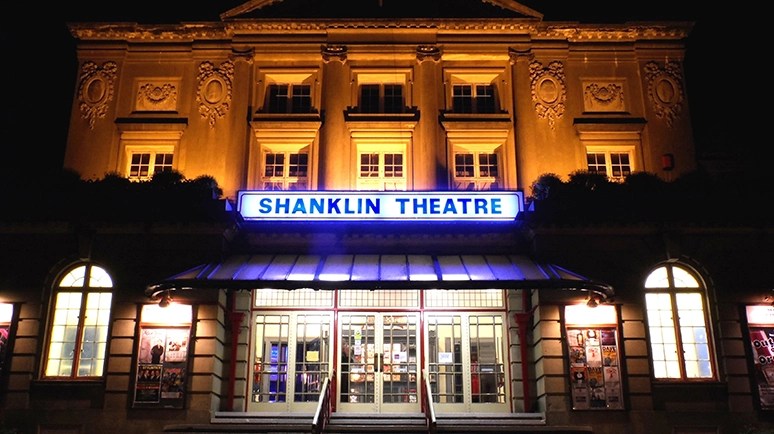
On Sunday February 6 2022, I am staging a charity concert in honour of my dad. It will take place at Shanklin Theatre, on the Isle of Wight, where my dad was born and bred and spent his life.
Dad loved the Island – he made a name for himself there and was never lured away by the bright lights of Fleet Street, or national radio, although his great reputation was known all over the UK and across the world.
During his amazing life – almost 50 years of it spent interviewing stars of stage and screen, as well as local people – he decided to stay on the Island, with his family and friends. Shanklin Theatre was a venue that my dad was very fond of – it’s where we held the wake for his funeral in November – so it’s very fitting that the tribute concert will take place there.
‘On Sunday February 6 2022, I am staging a charity concert in honour of my dad. It will take place at Shanklin Theatre, on the Isle of Wight, where my dad was born and bred and spent his life’
As a nod to the showbiz TV series, Sunday Night at the London Palladium, I’ve called the concert Sunday Night at Shanklin Theatre – A Tribute To John Hannam. The line-up of performers will include national and local musicians who dad liked, admired and supported – most of whom he interviewed at some stage during his career.
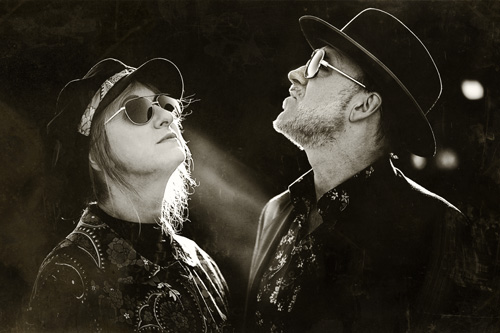
So, who’s on the bill? Headlining the night will be British husband-and-wife country duo, My Darling Clementine – Michael Weston King and Lou Dalgleish. Last year saw the release of their fourth album, Country Darkness – a project which saw them collaborating with Elvis Costello’s keyboardist and right-hand man Steve Nieve (The Imposters/ The Attractions) and reinterpreting some of Costello’s country and country-soul songs.
Also performing on the night will be singer-songwriter, Matt James – the former drummer of ’90s anthemic indie-rockers Gene.
Matt James
Earlier this year, Matt launched his solo career with his debut single, A Simple Message. The follow-up, Snowy Peaks, is released digitally on December 10, and there’s an album planned for next year.
Also on the bill will be another Matt – singer-songwriter, Matt Hill, a folk and Americana artist from the North of England, whose latest album, the politically-charged Greedy Magicians II – Return of the Idle Drones, came out earlier this year.
Matt Hill
The consumer magazine Hi-Fi+ called Matt, ‘A very gifted songwriter and a master of telling stories.’
Local Isle of Wight musicians, or those with a connection to the area, will also be performing on the night. There will be appearances from Andy Strickland (The Loft, The Caretaker Race and The Chesterfields); professional singer and actress Amy Bird; reformed ’80s band Bobby I Can Fly; Chris Clarke, who was the bassist in UK Americana act, Danny & The Champions Of The World and runs Reservoir Studios in North London; local guitar legend, Brian Sharpe (The Cherokees) and, finally, local duo Bob and Bertie Everson.
Tickets are available here and cost £10. Proceeds will go to the British Heart Foundation and the Wellow Ward, St Mary’s Hospital, Newport, Isle of Wight. Doors open at 7pm.
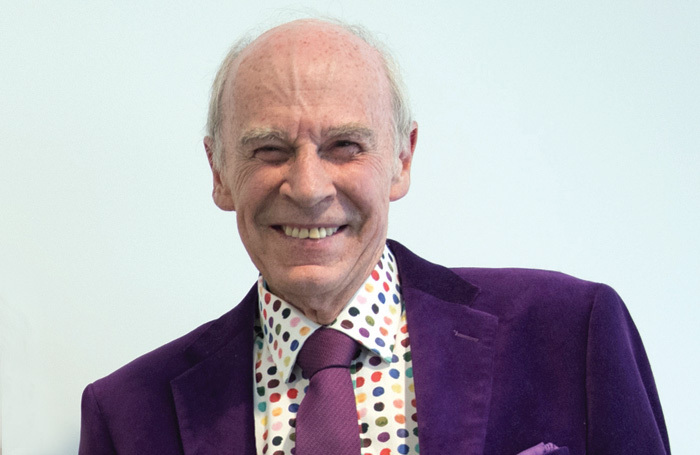
John Hannam
My dad loved music – of all different styles. Thanks to him, my sister Caroline and I are both big music lovers too. I have fond memories of him playing music in the house when we were growing up.
Through my dad, I got my passion for ‘60s music. For Christmas, birthdays and Father’s Day, I always used to buy him albums by current bands and artists that I thought he might like. Luckily, he always did – usually because they sounded like ‘60s acts he’d got me into in the first place…. I shall really miss our listening sessions and chats about music.
John Hannam meets Duane Eddy
Dad got me into legendary twangy guitarist Duane Eddy – one of dad’s musical heroes and also one of mine.
In 2018, Dad and I were lucky enough to be invited to see Duane play a gig at the London Palladium. We sat in on the sound check – it was basically our own private Duane Eddy gig – and then we watched the show and met Duane backstage.
It’s a night I’ll never forget, especially as when I shook Duane’s hand, he said to me: “This night is all about heroes.” I was with two of mine, and dad was with one of his. It was truly special.
Let’s make Sunday Night At Shanklin Theatre: A Tribute To John Hannam a night to remember too.
Please email me – hannamsean95@gmail.com – if you need any more information about the concert.
Sunday Night at Shanklin Theatre – a tribute to John Hannam: Sunday February 6 2022.
A night of live music in memory of legendary Isle of Wight journalist and broadcaster, John Hannam, who died in autumn 2021.
Featuring My Darling Clementine, Matt James (Gene), Andy Strickland (The Loft, The Caretaker Race, The Chesterfields), Matt Hill, Brian Sharpe, Bobby I Can Fly, Chris Clarke, Amy Bird, Bob and Bertie Everson.
Proceeds will go to the British Heart Foundation and the Wellow Ward, St Mary’s Hospital.
As 2020 draws to a close, here at Say It With Garage Flowers, we’re compiling our best albums of the year list. One of the late contenders is Black Angel Drifter, by Spain and London-based ‘urban country’ duo Morton Valence, who are songwriter, producer and multi-instrumentalist Robert ‘Hacker’ Jessett (ex-member of The Band of Holy Joy and Alabama 3) – and Anne Gilpin.
The record – their seventh – which came out in November, is a dark, disturbing and dissonant collection of songs, inspired by the haunting cowboy psychedelia of Nancy Sinatra and Lee Hazlewood, murder ballads, country, and the Spaghetti Western soundtracks of Ennio Morricone, as well as the strung-out, feedback-laced, narcotic blues of Spiritualized.
It also includes a stunning cover version of Bob Dylan’s dramatic The Man In The Long Black Coat, which is even more sinister than the original. In an exclusive interview, we spoke to Jessett about the band’s ‘gothic country’ sound, being outsiders and receiving death threats.
“I like writing stories, and I like songs with characters and narratives, but I’ve never murdered anyone and I’ve never been much of a junkie,” he tells us…
Q&A
How did Morton Valence come together?
Robert ‘Hacker’ Jessett: Blimey, how long have you got? OK, so Anne was a dancer in a quite well known contemporary dance company, where I was employed as a musician, after just having done a short stint playing with Alabama 3. We toured around all these small-town theatres, and up until this point I’d always thought that dancers were clean living – I was wrong. We developed this nightly ritual of boozy sing-alongs after the shows – Anne was clearly equally in her element singing as she was dancing.
We were both fans of what most people perceived as Okie country singers, like Iris Dement or George Jones, which was quite unusual at the time. Singing harmonies together seemed effortless. Our party piece was Iris Dement’s Our Town, and well, it kind of developed from there.
I think our first proper gig was at Come Down and Meet the Folks – [in London]. We collaborated with a guy called Chuck E Peru and before we knew it we’d morphed into a band. We played some interesting shows back then, touring in Germany with the late St. Thomas (Thomas Hansen), who had an influence on us. He was clearly a troubled soul, but there was honesty and beauty in his music that seemed unconcerned with reality, and he clearly wasn’t playing the game, like most people do when they start in the music biz.
Jeffery Lewis was another great songwriter we played with early on. Anyway, here we are seven albums later, with absolutely no plans for retirement, and hopefully album number eight coming in 2021.
You live in Spain and Anne is based in London. How does the band work? Does it make things difficult?
RJ: I moved to Madrid in 2018, after just having recorded our previous album Bob and Veronica’s Great Escape. I did so for a variety of reasons that I don’t have time to go into here.
I’m now lucky enough to live in the beautiful province of Granada. I think the last thing we did in the UK was to play some shows with The Long Ryders, back in 2019, which seems like a lifetime ago. As for the practicalities of Anne and me living in different countries, it just gives us a good excuse to travel, and actually, when we get together, it’s always really productive, as there’s a finite amount of time to get things done, which kind of focuses the mind.
How has Covid affected you as a band? Did it thwart any plans you had? How’s 2020 been for you?
RJ: The two adjectives I’d use to describe 2020 would be ‘productive’ and ‘boring’. I think boredom is a great creative motivator and gets a bad rap. So, the great vacuum that is 2020 gave us time to write a new album and make a film, so creatively, 2020’s been good.
Tell us about the film…
RJ: We describe it as an autobiographical, DIY ‘punkumentary’. It started about 10 years ago on a tour of Germany, when these two American filmmakers, both called Mike, tagged along with us with the idea of making a live performance DVD – remember them?
The tour was pretty chaotic, as they usually are, and when the Mikes got the footage back to America, they dismissed it as being unusable, due to the low-quality production values of the film stock. Eventually, we inherited the footage, and yes, it was most certainly rough and ready, but, rather than making us wince, it had the opposite effect. Paradoxically, its graininess, gritty sound and anachronistic video format seemed to essentially capture a spirit of rock ‘n’ roll that we like, so we patchworked a narrative around the footage, archives from our own film experiments and moments from some of our favourite B movies.
Even though Anne and I had absolutely no idea what we were doing, out of the chaos, somehow, we were finally looking at a cohesive piece of work that we called This Is A Film About A Band – literally no other name seemed to suffice. We didn’t want to make another rockumentary of talking heads and tour bus anecdotes and the like – in fact there’s virtually no dialogue at all, but instead it’s captioned, a bit like Top of the Pops 2.
Even though I would describe the film’s protagonist as the music, it does tell our story, and probably the story of lots of bands. Our original idea was to just stick it up on YouTube or Vimeo for our fans, but on the advice of a friend who works in the movie biz, we entered it into a few film festivals where it started to gather a bit of momentum.
We had it premiered at the Doc’N Roll film festival, which is probably the most prestigious film festival of its type in the UK, and we’ve been awarded other laurels. The feedback we’ve had has been incredible, and we’re really looking forward to seeing it on the big screen in 2021.
Let’s talk about your latest album, your seventh, Black Angel Drifter. It was actually recorded in 2016. Why has it been reissued this year and can you tell us about the vinyl version, which is due out soon?
RJ: For years we were uncompromisingly independent, and we actually passed on quite a few recording and management deals, which I guess was kind of stupid when I look back on it – this is all documented in our film by the way.
We’d had some bad experiences, but hey, who hasn’t in the music biz, right? We sincerely believed we could circumvent the middleman, which we did to a point with our own label Bastard Recordings, but there’s only so far you can go with that, and you end up spending more time looking at Excel spreadsheets than you do creating music.
‘For years we were uncompromisingly independent, and we actually passed on quite a few recording and management deals, which I guess was kind of stupid when I look back on it’
Finally, a label called Cow Pie, run by BJ Cole, Hank Wangford and Patrick Hart, came to our rescue. They completely get us – we’re not an easy fit that’s for sure. We’re kind of too country for the indie scene and too indie for country – we call it ‘urban country’, mainly because we want to have an answer when people ask ‘what kind of music do you make?’
Cow Pie are clearly kindred spirits when it comes to some of our slightly more leftfield ideas – they even put out a track of ours that’s half an hour of crickets chirping, although there is a hidden song in the middle of that one. But of course, their main thing is vinyl, which we’re dead excited about.
The new record originally started life as something by your experimental side-project. How did it end up being a Morton Valence album?
RJ: Back in 2016, we had two bands going in parallel – I guess we’re sadomasochistic… Black Angel Drifter was the name of our other band. We played one gig and recorded an album. Our plan was to make something that not only sounded auto-destructive, but actually was auto-destructive, hence the sole gig.
Songwriting-wise it’s probably the most collaborative effort we’ve put out – we’re really proud of the songs and feel they deserve more of an airing, hence the fact that we’ve taken off the mask and re-released them as Morton Valence. In 2016, Morton Valence were working on a multilingual covers album called Europa, which was a visceral response to Brexit. OK, retrospectively it was very naive – we were trying to avoid being overtly political and simply add something positive to what was an extremely toxic narrative. But we ended up getting trolled with the most sickening death threats – and worse – imaginable, which is what partly prompted me to leave the UK.
So, with everything that was going on in 2016, Black Angel Drifter was put on a hiatus. Fast forward four years, and everything that seemed so terrible in 2016 has been completely eclipsed by 2020, so it just seemed like a perfect time to resurrect Black Angel Drifter.
‘If you were to ask me what the greatest song ever written was, I would reply without any hesitation, Some Velvet Morning’
Let’s talk about the sound of the record. What were you aiming for and what were the sessions like? You produced it yourselves, didn’t you?
RJ: Much like our film, we didn’t really have a clue what we were doing, which maybe adds to its idiosyncratic nature. All our other albums have been with a producer of some description.
We recorded it partly down at [pedal steel guitarist] Alan Cook’s garage, my flat in south London and Bark Studio [in Walthamstow, London]. Our sole technical remit to ourselves was ‘does it sound shit? Or do we like it?’ If it was the latter, we just went with it. But if we were aiming for a specific feel, it would definitely be gothic country, whether or not we hit the target, I’ll let you be the judge of that.
Can we talk about a few of the songs? The opening track, Skylines Change/ Genders Blur, has a dark, menacing, twangy Morricone/Spaghetti Western-meets-country feel, but also reminds me of Nancy Sinatra and Lee Hazlewood, as well as The Jesus & Mary Chain…
RJ: It’s actually an old song that was co-written with Johny Brown of The Band of Holy Joy – a fantastic band that I was lucky enough to play with back in the day. Apart from me shamelessly lifting from Morricone, it definitely owes more than a passing debt of gratitude to Nancy and Lee.
‘If we were aiming for a specific feel, it would definitely be gothic country’
If you were to ask me what the greatest song ever written was, I would reply without any hesitation, Some Velvet Morning, so yes, you’re absolutely spot on about that. It being the opening gambit on the album, we wanted to go straight for the jugular – do something that would either make the listener baulk and go immediately for the eject button, or have the opposite effect. The logic being, if you live through this, you’ll make the whole album.
Black-Eyed Susanis a moody and sinister murder ballad. What inspired it? It’s a disturbing tale…
RJ: It’s another collaboration – this time with the Scottish poet David Cameron, someone who could not be more opposite than his unfortunate namesake. The plot comes from his novel The Ghost of Alice Fields, and he asked me to adapt his poem into a song. I’d never done anything like that before. I write 99 percent of our lyrics, so I guess technically that makes me a lyricist, but I certainly wouldn’t consider myself a poet. A storyteller, maybe?
I think only certain song lyrics can crossover as poetry, which to me is simply defined by whether something reads well without its given musical accompaniment. Anyway, I was really unsure at first, simply because most individuals have a particular timbre of their own.
I intonate words in a particular way that work their way around a melody, usually as I’m strumming a guitar, and it happens very naturally, so to try and shoehorn someone else’s words into that scenario felt a bit weird. But I was flattered to have been asked, so I gave it a go, and I guess my fears were unwarranted, as the resultant song works well in my humble opinion.
As far as its content goes, songs mean different things to different people. I’ve had people come up and say stuff like, ‘I love that song you wrote about such-and-such, we played it last week at me dad’s funeral’ or whatever, and I’m like, wow, I’m honoured. But I had no idea it was about such-and-such, but that’s the beauty of a song.
‘The Man In The Long Black Coat is a work of genius; it’s country gothic heaven and hell’
You’ve covered one of my favourite Bob Dylan songs, The Man In The Long Black Coat, and you’ve made it sound even more menacing than the original. Good work!
RJ: As you rightly point out, it’s a work of genius; it’s country gothic heaven and hell, and it kind of set a ridiculously high standard for what we were trying to do on this album. Taking on something of such magnitude is living dangerously, not least as Mark Lanegan does a killer version of it too.
I guess when you cover a song, you want to leave your own mark on it, and hopefully we at least achieved that – most likely much to the horror of some Dylan purists. Having a male/female vocal takes it somewhere different, plus I spent a long time getting the discordant guitars the way we wanted them to sound.
Playing in tune is a doddle, but to get the sound I was after, the guitars needed to be out of tune, but not just any old ‘out of tune’, it was actually something very precise.
I knew how I wanted the note to sound, but finding something that doesn’t actually exist in any tangible way can be problematic. I suppose I was looking for an optimised sort of disharmony that would really suit the song. You might think that sounds pretentious, but when you listen to the song, hopefully you’ll know what I mean. Anyway, we found the note we were looking for in the end, it was perfectly out of tune, and we’re very happy.
On If I Could Start Again, a man recounts his misspent life from a prison cell. It sounds like a classic, strung-out country ballad, but it also reminds me of Spiritualized at times. Where did that song come from?
RJ: Well, I’ve never murdered anyone, my dad wasn’t a butcher and I’ve never been much of a junkie. But when I look back, of course there are things I’d do differently, as would anyone, right? Of course, to look back in such a way is also an exercise in futility, which is a good place to start writing a song.
‘I’ve never murdered anyone, my dad wasn’t a butcher and I’ve never been much of a junkie’
I like writing stories, and I like songs with characters and narratives, and yes, it’s definitely got a dose of Spiritualized, and maybe a touch of Tom T Hall. I create a character, and see where that character goes. This guy is a nice middle-class kid who gets it all wrong. He could’ve been an IT consultant or an operations research analyst, but he assumes there’s more to life, he’s a romantic, and the rest is self-explanatory. There’s certainly nothing cryptic in this song, and in terms of my life in music, I’ve made every mistake there is, and if I could start again, I really wonder what I’d do, and as for real life, well I wouldn’t even know where to begin.
Sister Painis one of the bluesier songs on the album. Any thoughts on it?
RJ: It’s actually a slowed-down version of Otis Redding’s Hard to Handle, set to a sludgy spiritual blues chant, backed by an imaginary version of The Stooges as the house band, so it’s kind of like a revue show in a song.
The album features Alan Cook on pedal steel. He’s become a regular member of the band, hasn’t he? How did you get together and what’s it like to work with him? I know Alan from his work with Quiet Loner (Matt Hill) and UK country duo My Darling Clementine...
RJ: Alan provides the backbone of our sound, in particular on Black Angel Drifter, where he’s pretty much ubiquitous throughout. His sound was perfectly described in one review as something that ‘fills the void like a guilty conscience’, and without him the atmosphere would change completely. I’m not sure how we met to be honest, through mutual musician friends I suppose, but he’s been with us for quite a few years now, and he’s obviously extremely tolerant to put up with me.
‘Popularity is often synonymous with conformity and mediocrity, and in today’s world it seems to be applauded and rewarded more than ever’
Who or what are your main influences and inspirations?
RJ: Wow, that’s always a tough one. All sorts of people are inspiring to me, but very few of them are musicians or famous people. My sister and her colleagues for starters – she’s a nurse busting a gut at the NHS, which trumps everything in my opinion. And I suppose I’ve always admired people who don’t care about being popular or how others judge them.
Popularity is often synonymous with conformity and mediocrity, and in today’s world it seems to be applauded and rewarded more than ever – a world where you put one foot wrong, you’re an instant pariah. No one gets through life without someone cutting us some slack from time to time, right? Yet we’re so quick to judge and condemn others, and shout about it as loudly as possible, usually on social media.
So, I’m inspired by people who pronounce schedule with a ‘k’ and don’t give a shit, that kind of thing, and far as a main musical influence, that would be my mum for turning me on to The Beatles before I could even walk. Thanks, Mum.
You’re currently planning your eighth album, which is pretty much written and demoed. You plan to record it in London, with pedal steel guitarist BJ Cole producing. What can we expect? Any idea what it will sound like?
RJ: Well nothing’s signed and sealed yet, but the songs are pretty much there, and the provisional plan is to release it on Cow Pie, and yes, we’ve had discussions with BJ. He’s an artist we are huge fans of and who I briefly crossed paths with years ago, when I was knocking around with Alabama 3. But it’s a bit premature to talk about it at this stage to be honest.
Black Angel Drifter is a very produced album, in the sense that a lot of how it sounds was created in the studio. I’m certainly not saying that’s a bad thing, quite the opposite in fact, it’s what The Beatles used to do, but it’s just one way of doing things, and it allows you more space to experiment.
With each album we’ve always tried something different – that’s one bonus of being independent – and with the next one we plan to get the songs as tight as we can first, then go in and record them pretty much live. One of my favourite albums ever is The Trinity Sessions by Cowboy Junkies, which was of course recorded completely live. But it’s early days still, so let’s wait and see.
What are your plans for Christmas? Will it be a dark one, rather than a white one?
RJ: It will be a sunny one actually, because I’ll be in Andalucía.
Finally, what music – new and old – have you been enjoying recently?
RJ: My album of 2020 is definitely Distance is the Soul of Beauty by Michael J Sheehy – it really is an astounding piece of poetic beauty. Michael sent me a copy in the post when I was living in Madrid in the summer, and I haven’t stopped listening to it ever since. It’s one of those records where you feel like he’s having a conversation with you personally, rather than playing to an audience, which is a rare talent that very few singers are able to do.
I also love The Delines, and went to see them play just before the lockdown, Willy Vlautin is so talented, it’s ridiculous, and it was good to see Amy Boone in great form after that terrible accident. But my tastes are very catholic, I love the Fat White Family, maybe I’m biased because I’m from Brixton. They remind me a bit of The Country Teasers, who have a film on at Doc’N Roll that I can’t wait to see.
Anne and I have always been fans of John Prine, Tim Hardin and The Carpenters, as well as movie soundtrack composers like Roy Budd or Michel Legrand. These are just the first things that have popped into my head. On another day, it would be a completely different list.
Black Angel Drifter by Morton Valence is currently available to stream and download on digital platforms. A vinyl version will be released by Cow Pie in early 2021.




 Say It With Garage Flowers