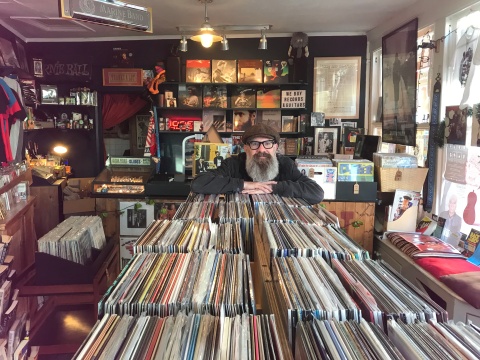
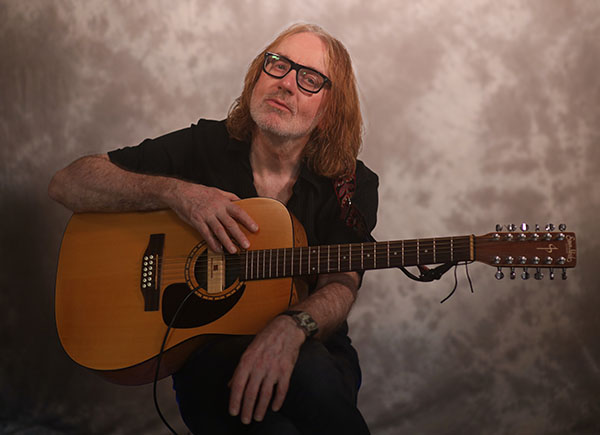
Vinny Peculiar is one of our favourite singer-songwriters here at Say It With Garage Flowers and we always love having a chat with him. It’s been a while since we caught up, so we thought we’d better rectify that situation…
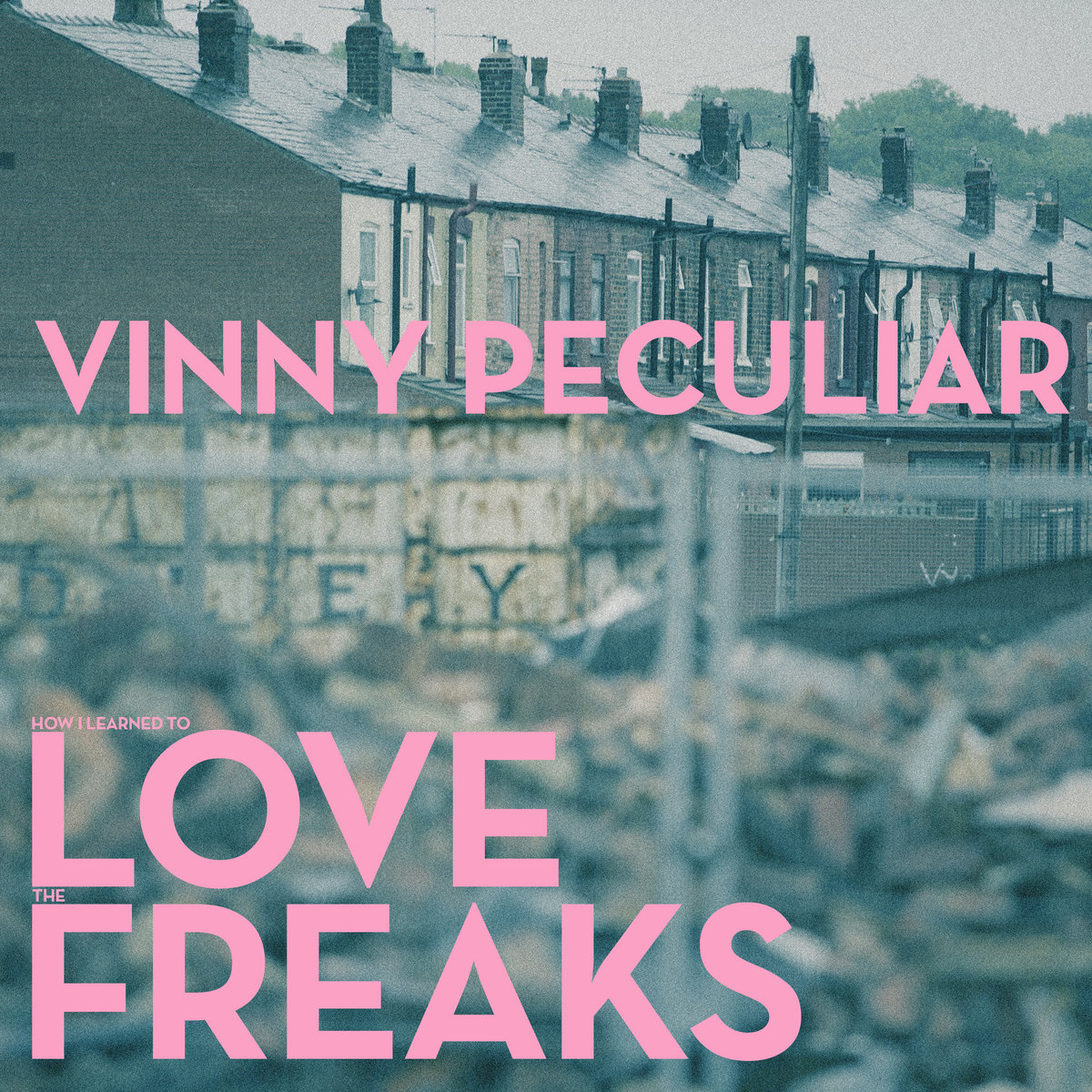
Last year, he released his thirteenth studio album, the well-received ‘hippy-rock’ record, How I Learned To Love The Freaks, which was inspired by the death of the counterculture in modern society, the peace and love era of the ’60s, and the sociopolitical awakenings that occurred in the latter part of that decade.
This autumn, Peculiar, who grew up in Worcestershire, is playing a few shows in the UK, including a gig at Thornton Hough Village Club, in Birkenhead, where he’ll be revisiting songs from his 2016 album, Silver Meadows (Fables From The Institution) and playing the record in its entirety.
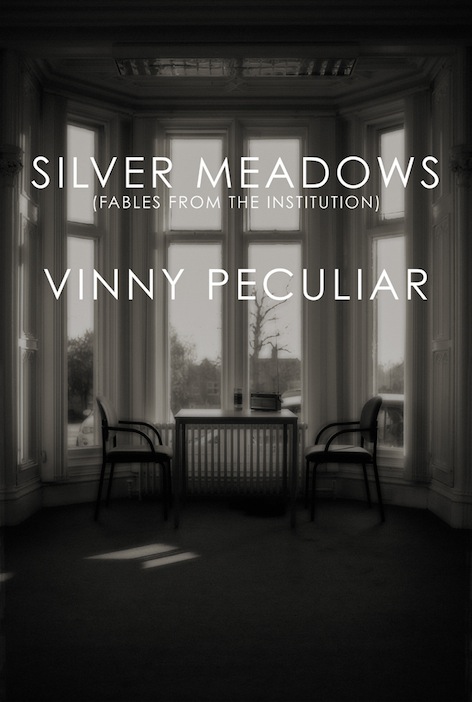 Writing about that record when it was released, Say It With Garage Flowers called it, ‘a tragi-comic masterpiece that tackles the issues of mental health and care in the community.’
Silver Meadows (Fables From The Institution) is a concept album that’s set in a fictitious long-stay institution and it was inspired by Peculiar working as a nurse and visiting his schizophrenic brother in hospitals during the ’80s and early ’90s.
We asked him why he’s chosen to revisit an album that came out eight years ago, discussed why mental health issues have become easier to talk about, got his views on the death of counterculture and how the music industry has changed, and found out what he’s got planned for his next record.
Q&A
So, on September 21, you’re appearing at the Thornton Hough Village Club, in Birkenhead, and for that show, you’ll be playing your 2016 album, Silver Meadows (Fables From The Institution) in its entirety. Can you tell me what prompted you to return to that record?
Vinny Peculiar: Yes. I’ve gone back to Silver Meadows… It’s probably the album I get the most communications about – I think that’s partly to do with some of the mental health themes that run through it. It was also the most surprising record I ever wrote, because it was the last thing I expected to do when I left the NHS – to dwell upon some of my experiences. But sometimes that defines you, so I ended up making that record…
When I talked to you about the album eight years ago, you told me that there was a two or three-week spell at the start of 2014 when you wrote 20 songs…
VP: Yeah – it was a very quick turnaround…
You’d touched on mental health issues in some of your older songs, like Big Grey Hospital, but Silver Meadows was a concept album about a long-stay mental facility…
VP: Yeah… and the people who work, live and play there… and, ultimately, the people who get away from there. In the ‘80s, the Community Care Act enabled authorities to plan for care outside of long-stay institutions, so a lot of them were closed down. That was a good thing, but the challenge was to meet the needs of people once they were out in the real world.
‘Silver Meadows is the album I get the most communications about – I think that’s partly to do with some of the mental health themes that run through it’
You mentioned that the themes of the album have resonated with people. Since you made Silver Meadows, mental health seems to be higher up the agenda – talking about it is less taboo than it was…
VP: Yeah – and I think that’s a good thing. People can share their worries and their stress, and talk more, without feeling too embarrassed about it. People do turn around and say, ‘I think I’m having a bad day, and this is what’s going on – can I talk to you about it?’ They are more likely to communicate.
I think a lot of that is down to Covid, which affected a lot of people mentally, as well as physically…
VP: Absolutely. With Silver Meadows, I’ve done a few guest spots at the National Psychiatrists’ Convention – they approached me. I played some songs and talked about my experiences working in the NHS a long time ago and the impact of change.
Half of the people in the place I was working didn’t want it closed down, but the other half did – it was about having a long-term vision for the people who’d been stuck in those places for a long time – often for no good reason. They were given labels they didn’t deserve. There were older women who were only there because they’d got pregnant as kids, which was bizarre – their reason for admission was social embarrassment.
I think Silver Meadows is one of your most eclectic albums – there’s a stripped-down piano song, New Wave, dark and psychedelic stuff, guitar pop, jangly country, folk… I don’t mean this in bad taste, because of the subject matter, but it’s quite a schizophrenic record…
VP: I know what you’re saying – it’s all over the place… It’s basically a character-driven record – each of the tracks reflect certain characters at a certain time, like the person in Community Care who is about to be shown a new house in the community and is incredibly anxious.
That was a massive issue – all these patients had been at the facility for donkey’s years and all of a sudden someone is out in the real world – even though they’d been in a home, with some pretty awful stuff going on, people became used to it and they became institutionalised.
Community Care is about breaking that cycle of institutionalisation and enabling people to function in the real world – the impact that had. A lot of the people in those places had communication difficulties – they were incredibly with it but didn’t have a way of expressing it. They were non-verbal but you kind of knew what was going on.
There’s a song on the album called Waiting Games, which is about a lad who’s got locked-in syndrome. It’s not totally a true story, but it’s about him falling for a young psychologist who’s trying to help him, and is vaguely aware that there’s more to him than meets the eye. He falls in love with her, but he can never express it until he finds a way of communicating with her.
Mental health isn’t an easy subject to write about – you wouldn’t want to come across as patronising or distasteful – but you tackle it respectfully, and there’s humour on the record, as well as some serious songs and issues…
VP: Yeah. The drug dealer song [Gerald The Porter] is fun.
Wednesday Club is a humorous song too…
VP: It is, but the crazy thing about those places is that they did have a nightclub every Wednesday that started at six o’clock and lasted until half past eight, because that’s when the staff went home. Everything gets distorted in an institution – it’s all about the staff and not about the people who live there. Who’d want to go to a disco at six o’clock?
So, when you perform the album live this month, are you and your band going to play the songs from it chronologically?
VP: We are, and I’m going to narrate each of the songs in a more structured way, with some media as well.
Talking of gigs, I enjoyed your show at the Water Rats in London earlier this year, in support of your most recent album, How I Learned To Love The Freaks – it was great to hear some of those songs played live…
VP: I’ve had good feedback on that album – it’s funny, you put an album out, you get a surge of interest, you do your social media, and then you sell a few copies, and then it tails off, and then you think again… That’s my process – I’m not expecting it to go stratospheric, but the reaction was really good. I think it’s one of my better albums – the overall sound of it. I wanted it to be a proper hippy-rock record.
Where did the concept of making a counterculture album from?
VP: Counterculture is massive in all our lives – certainly my generation and yours. It’s an omnipresent force, and music was such a big part of it, particularly when we were young. I think a lot of the power in that cultural force has been dissipated and bought off by huge corporations.
If you look at Taylor Swift, that’s what people view music as now – she’s taking over the world. Music seems to have been taken over by corporations who will spend a billion pounds worldwide on advertising to get two billion back – they buy every streaming platform, radio station and advert.
Money, money, money will buy it, so people have it thrust upon them, and, before you know it, it just monopolises everybody’s lives. The idea of music being an alternative… you’ve got to look a lot harder to find alternatives to the mainstream now, because the mainstream is just so forceful.
The song Death of the Counterculture is about music as a cool force for good, and also as a voice of political reasoning and objectivity, and alternative political ideas – from green to typically left-wing. It just isn’t happening anymore – there’s no Red Wedge 24. Even politics has been bought off.
‘If you look at Taylor Swift, that’s what people view music as now – she’s taking over the world. Music seems to have been taken over by corporations who will spend a billion pounds worldwide on advertising to get two billion back’
A lot of artists who have a large platform to influence people shy away from talking about politics, as they’re afraid it will damage their career…
VP: Yeah. Everyone’s more sensitive and feels much more fragile about the dos and don’ts of their media profile, and there’s so much investment in that. You can buy a profile now.
So, what’s next? Are you working on a new album?
VP: I’ve been putting together a new album of tracks that didn’t quite make the old albums – it will probably come out next year. I’m trying to think of a new album, but I’ve got so many songs that didn’t get onto previous ones. I’m trying to work out which ones are any good (laughs).
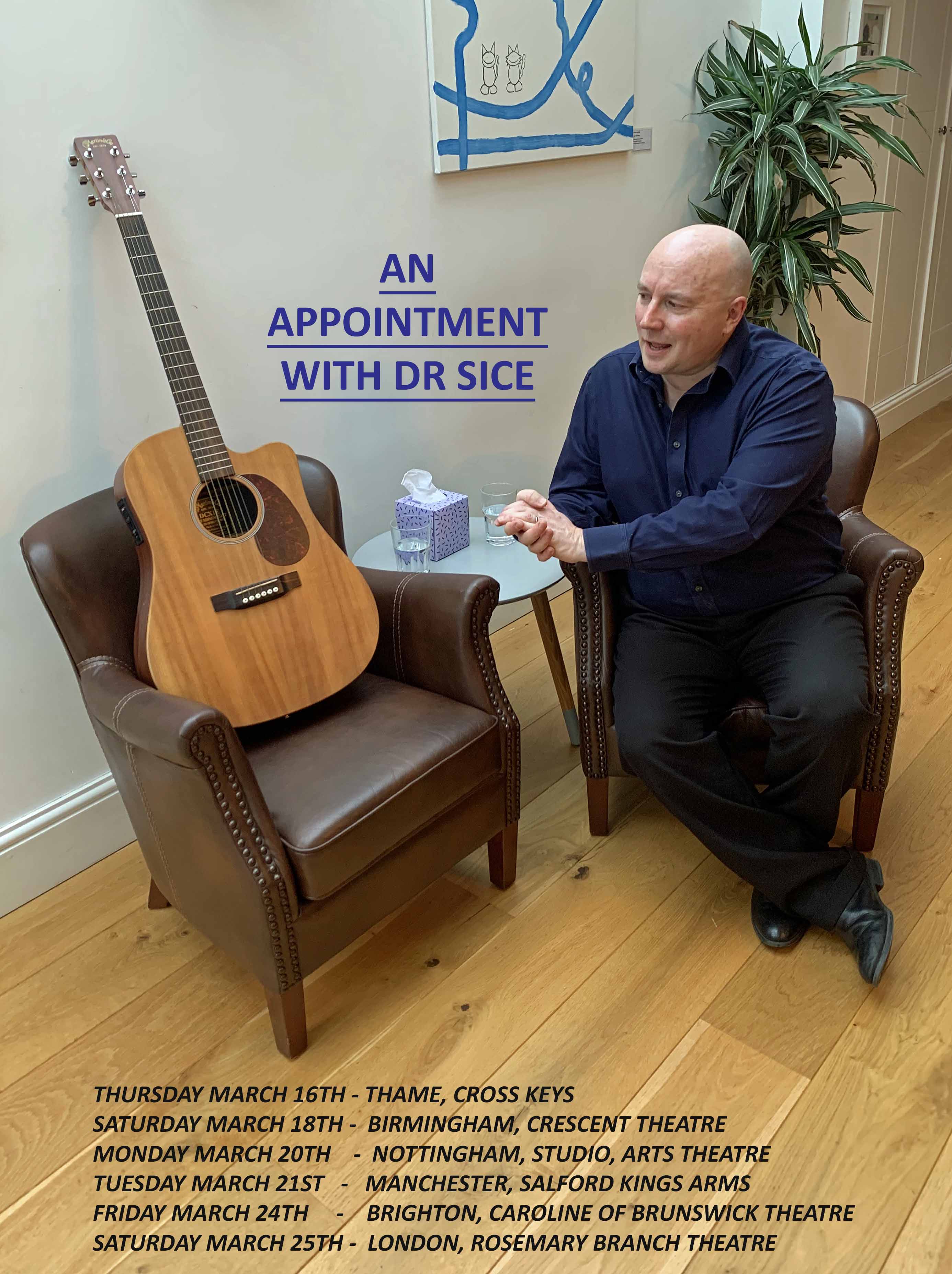
Vinny Peculiar is playing live this autumn:
- Sept 20: Tapestry Arts, Bradford,
- Sept 21: Thornton Hough Village Club, Birkenhead
- October 18: Davenham Theatre, Davenham
- November 10: Kitchen Garden Cafe, Birmingham
- There’s also a 2025 date planned at The Music Room, Liverpool, on May 31.
For more information and tickets, visit: https://vinnypeculiar.com.




 Say It With Garage Flowers