‘I wanted sad bastard songs sitting alongside frivolous rock ‘n’ roll’

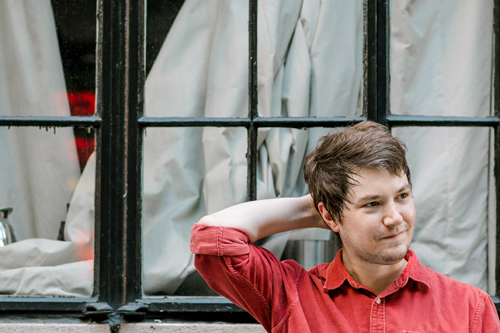
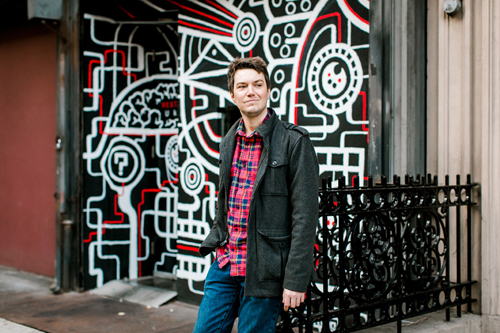
New York-based singer-songwriter Jake Winstrom’s second solo album, Circles, is one of our favourite records of the year. This time around, the former frontman of  Tennessee band Tenderhooks has cranked up the guitars and embraced his love of classic rock ‘n’ roll, power-pop and country rock. 

Speaking from his New York apartment, which he describes as “a shoebox”, he says: “I think my first solo record [Scared Away The Song] suffered a bit from the inclusion of maybe one too many “serious songwriter” type songs, without enough fun, uptempo, jangly rock ‘n’roll to serve as a counterbalance, so I wanted to make sure there was room for that on this record.”

He’s certainly achieved his goal – recent single, the brilliant What’s The Over/Under?, is an infectious power-pop song  – “I’ve never had too much of a handle on what I want until I fuck it up” – with jangly, 12-string Rickenbacker guitars and punchy, soulful horns, while on its predecessor, the chugging glam-rock-country-boogie of Come To Texas She Said, which was inspired by a long-distance infatuation that derailed before it could become something more, reedy-voiced Winstrom does his best Marc Bolan impression.

Circles is full of highly melodic, guitar-heavy tunes with a retro feel – Winstrom cites ’70s Neil Young and Crazy Horse as a major influence, which is obvious if you listen to the Zuma-style guitar solo on My Hiding Place, a song about addiction, and the brooding, epic album closer, Kilimanjaro.

Tom Petty and Bruce Springsteen are also artists that Winstrom admires – his song Washed My Face In A Truck Stop Mirror, a raucous blast of rock ‘n’ roll, has echoes of both of them – while Think Too Hard is reminiscent of The Beatles, circa Revolver, as well as Detroit power-pop songwriter – and Say It With Garage Flowers favourite – Nick Piunti.

Winstrom, who is 37, also looks to the ’90s and early Noughties for inspiration –  on the moving, cello-assisted ballad, I Walk In Circles, he channels Elliott Smith.

Two years in the making –  writing and recording –  Circles was produced by drummer Jeff Bills (The V-Roys and Steve Earle), who also worked on Winstrom’s debut album. The songs were committed to tape just before the coronavirus hit. 

‘The world needs another rock ‘n’ roll record like it needs a hole in its head right now, but I needed this one’

“We were lucky for sure – we were basically 99 percent done, so we were able to lean on some very talented friends with home studios to add the odd overdub here and there,” he says.  “And engineers John Harvey and Mary Podio were super-savvy to invent a new workflow that let us finish mixing remotely.”

He adds: “We were really fortunate. I mean, obviously, the world needs another rock ‘n’ roll record like it needs a hole in its head right now, but I needed this one.

“For my own sanity, I feel like I’ve been working up to this album my whole life. I’m 37 years old – it’s 37 minutes long. Coincidence? I think not. But I do feel like a good chunk of my lifetime is living in these songs. The highs, lows and in-betweens, to quote Townes Van Zandt. I hope folks dig it. I do.”

Q&A

How are you doing? Congratulations on Circles – it’s a great record.

Jake Winstrom: I’m good – just chugging along and trying to stay safe, like everybody. Thanks so much. I’m very happy to hear you dig the record.

You’ve said that your first solo album, Scared Away The Song, had too many “singer songwriter” type songs on it and not enough fun, uptempo, jangly rock and roll tunes. With Circles, that’s not something you can be accused of. How did you approach this album?

JW: I definitely wanted to broaden the musical spectrum on this album. The last one, maybe due to time and cost constraints, ended up veering a bit too much toward what folks call “Americana”, I guess – lots of acoustic guitar-based, rootsy-sounding songs and what have you.

I had several more rock songs written for that record, including What’s The Over/Under? but we ran out of time on the day we tracked with a full band. So with this one we moved full band, electric songs to the top of the pile. And I wanted more moments of fun and levity in the songwriting. I think I had Bruce Springsteen’s The River in mind. What’s the saying? Shoot for the stars but settle for the moon? Hah. I wanted sad bastard songs sitting alongside frivolous rock ‘n’ roll.
How were the recording sessions? You worked with drummer / producer Jeff Bills again on this album. What did he bring to the process? Why do you like collaborating with him?

JW: The recording sessions were so much fun. I love recording and Jeff is just fantastic. He brings so much to the process. He has a real ear for songwriting and arranging.

I’d send him my four-track demos as soon as they were done and then we’d start ping-ponging arrangement ideas. And his production process is all about the song. He’s not afraid to get into the weeds on minute lyric edits and things like that. He really hammered this record into existence. He also has a great talent and Zen-like patience for mixing. Which I do not. Hah! So it’s a good musical marriage.

You have a great band on the album. How did you choose the musicians that you wanted to work with?

JW: We did have a truly great band for these sessions. Putting it together was easy – I just rang up my friends and they very graciously all said yes. On the last record, Jeff and I had kind of a rotating cast of musicians from song to song, depending on the sound we were going for. On this one I wanted more cohesion, but we didn’t have time to rehearse.

I knew we’d need a versatile group that could hammer out arrangements on the fly. We ended up with a veritable wrecking crew: Jeff on drums, Peggy Hambright on keys, Dave Nichols on bass, Greg Horne and George Middlebrooks on guitar, and Jeff Caudil on backing vocals. That’s some serious muscle.

Some of the takes are live, aren’t they? Do you normally record that way? My Hiding Place was done in one take, wasn’t it? 

JW: Everything started with us playing a song three or four times to get a good live take. My Hiding Place was one where it all just kinda fell into place in the room – even the vocal. I think it must’ve been the mood lighting in Scott Minor’s studio. Hah.

‘The studio where we recorded half a dozen songs is sadly no longer with us, but it was a great room. It definitely had some spooky magic’

Where did you make the album?

JW: We did it in Knoxville [Tennessee], with the exception of some vocals recorded in Brooklyn. We started at Scott Minor’s Wild Chorus studio, early last year. We recorded half a dozen songs there. The studio is sadly no longer with us, but it was a great room. It definitely had some spooky magic. I wanted to record there because one of my favourite bands, Count This Penny, did their absolutely gorgeous album A Losing Match there.

It had a live room with no dividers between the guitar amps and drums, which made Jeff a little nervous, but I loved it. To quote the Rolling Stones – let it bleed! A little Telecaster in the cymbal track never hurt anyone. And that’s where My Hiding Place was recorded. It definitely has that room’s stamp on it.

We recorded the second batch of songs at Top Hat Recording [in Knoxville] last fall. The engineers are a super-sweet married couple – John Harvey and Mary Podio – who built a house with their dream studio inside. It’s a fabulous, comfy place to hunker down and make a racket. We mixed the entire thing there too. We still had six songs to mix when lockdown hit, but John and Mary were very savvy and invented a new workflow that allowed us to finish things up. They’re really smart, great people.
Luckily, you pretty much finished the album prior to the Covid-19 lockdown. How was isolation for you? Did you write any new songs during lockdown? Did it inspire you?

JW: It’s been fine for me. I’m thankful to still be gainfully employed. I guess I’ve mostly been entertaining myself by getting this record finished and out into the world. So after September 25 [album release date] it’s time to find a new hobby!

I’ve written a little bit. Unfortunately I can’t say I’ve found it to be a particularly inspiring time. I miss hearing snippets of subway conversations and weird one-sided cell phone arguments while walking down the sidewalk.

You’ve relocated from Knoxville, Tennessee to New York? How’s that? Do you like living in New York? How has it influenced your writing and music?

JW: I love New York! I’ve been here for eight years now, I think. I reckon once I hit the decade mark I’ll be ‘official’. Hah. I like to think about songs while I’m walking, so New York is perfect for that. You can get into kind of an unconscious rhythm zigzagging through neighbourhoods while turning things over in your mind. I remember coming up with What’s The Over/Under? and My Hiding Place while making my way through the East Village.

What’s The Over / Under? is one of my favourite songs on the record. What can you tell me about the track? It’s a great power-pop song, with a killer chorus, Rickenbackers and horns. 

JW: I think I was in a hardcore Buddy Holly phase when I wrote that. I wanted to write lots of strummy, propulsive, open chord songs without too many minor chords. It’s easy to disappear down the minor chord rabbit hole sometimes. I remember coming up with the chorus, then having to Google what “over/under” actually meant. I don’t do sports betting or anything. It’s funny the things that tumble out of your subconscious mind sometimes…


The first single, Come To Texas She Said, reminds me of T-Rex – it’s a glam-rock-country-boogie!

JW: Hah – that’s awesome! “Glam-rock-country-boogie” sounds like my ideal genre. I was ruminating on the title Come To Texas She Said for a while. And once I kinda broke the verse melody everything else fell into place. It’s a song that’s gotten a big reaction live since I started playing it a year or so ago.

Jeff and I had many conversations about the arrangement. He actually went rogue – as he is wont to do – and initially produced a whole different version from his home studio, overdubbed on top of my four-track demo. It was actually really cool. The track included a mini V-Roys reunion, with Paxton Sellers laying down a groovy walking bass part. It had horns too. But ultimately we felt it was too Americana-y. Too much like the last record. I wanted to let it rip.

We recorded what became the album version during the Top Hat sessions. Dave Nichols’s elastic bass line really makes it for me. And Peggy Hambright’s call-and-response electric piano is so great – it reminds me a little bit of Harry Nilsson’s records.

‘I always bring up Neil Young and Crazy Horse in the studio. I love the rawness of those mid-’70s albums, like On The Beach and Zuma’

There are several classic rock ‘n’ roll influences on the album. Think Too Hard reminds me of The Beatles, Revolver-era, Washed My Face In A Truck Stop Mirror has a Tom Petty / Springsteen feel, and My Hiding Place and Kilimanjaro have a Neil Young and Crazy Horse vibe. Are those artists all big influences on you? What were your musical reference points for this record? 

JW: Wow, thank you – that’s extremely high praise. Yes – I love everyone you just mentioned. I always bring up Neil Young and Crazy Horse in the studio. I love the rawness of those mid-‘70s albums, like On The Beach and Zuma. And I think Peggy channelled a little E Street magic with her organ part on Loose Change, so those were all reference points I had in mind.

It’s funny, though – Jeff absolutely hates it when I say something like “hey, why don’t we try playing this song like Tom Petty, or The Bangles, or Syd Straw?” He’ll really flip his shit! He thinks bringing up musical reference points cheapens the creative process or something. He’s a purist I guess – hah. So I have to go and whisper those ideas to the rest of the band when he’s not paying attention…

I Walk In Circles has an Elliott Smith feel, doesn’t it? Are you a big fan?

JW: It does. I was trying to emulate his kind of hushed, double-tracked vocals. His records are so beautifully crafted. I actually came to his music late. I saw one of my favourite artists, Marika Hackman, cover his song Between The Bars when her tour came through Brooklyn last year, and that kind of set me off on an Elliott Smith tangent.

Some of your songs have a country influence. Did you grow up with country music in Tennessee? What were your influences when you were younger?

JW: Going to college in Knoxville really opened my ears to country music. Before that I was pretty much solely focused on the British invasion and classic rock ‘n’ roll, with a smattering of post-punk bands, like R.E.M.

I think during my sophomore year I picked up Lucinda Williams’s Car Wheels On A Gravel Road at the Disc Exchange and fell in love with everything about it – the songs and the sound, which actually has some Beatles-y touches, thanks to the Twangtrust production. That led me to Lucinda co-conspirator and Knoxville poet laureate R.B. Morris, as well as The V-Roys.

Then it was down the yellow brick road to Gram Parsons, Emmylou Harris, Uncle Tupelo, Steve Earle, Waylon Jennings, Roger Miller, Dolly Parton, Kris Kristofferson, Hank Williams, Bill Monroe and on and on and on.

‘Going to college in Knoxville really opened my ears to country music. Before that I was pretty much solely focused on the British invasion and classic rock ‘n’ roll, with a smattering of post-punk bands, like R.E.M.’

What’s your songwriting process?

JW: Songwriting for me almost always begins with improvising – picking up a guitar and strumming/singing while I walk around the apartment. Maybe getting the gears moving by playing someone else’s songs and then seeing if I can hit on a melody or chord change that peaks my interest.

Those ideas will usually live in my iPhone audio notes for a while, waiting for words to flesh them out. That’s when I find it helps to walk around the block and get a change of scenery. Anything to trick myself into not thinking! Staring at a blank page isn’t the way to do it – at least not for me.
Are you hoping to play live when things get back to normal?

JW: I hope so. I’ve had offers to do outside things during the pandemic, but it’s just so dicey, safety-wise. Plus a lot of sweat and spit flies off me while I play, so I’m basically a public safety risk! We’ll definitely do something once life gets back to normal. It would be fun to play the record in sequence. Of course, by the time it’s safe to do that, I’m sure I’ll be on to the next album.

‘A lot of sweat and spit flies off me while I play live, so I’m basically a public safety risk!’

How hard has it been as a musician being unable to play gigs to promote your new record? Are you worried about the future of the live music scene?

JW: I’m lucky in that I have a day job. I’m gutted for my friends that make their living playing music. It’s a really brave, hard life. And then to have the rug yanked out from under you by this…

Yeah – I’m really worried for the small venues. The sweaty little clubs that are so important for artists honing their craft. I’m terrified that by 2022 all the ones here in New York are going to be replaced by Chase Banks and Chipotles. And watching concerts on Zoom and Instagram Live ain’t gonna cut it. The pandemic has proven that much.

What are your plans for the rest of the year? 

JW: Stay vertical! I hope to venture down to Tennessee to spend Christmas with my family. We’ll see what the state of the world is by then. Fingers crossed.

Can you recommend some music – new and old? What are you into at the moment?

JW: Ooooh – let’s see. X’s new album Alphabetland is frenetic and fabulous. Girl Friday, this L.A. band I saw last year and fell in love with, just put out their first LP, Androgynous Mary. It’s a total blast. Great harmony singing and fiery guitar playing with stellar songwriting and arrangements that twist and turn. I’ve also had the new Haim record on repeat since it came out this summer.

As far as oldies, Fire On The Bayou by The Meters has found its way back to my turntable many times this summer. I’ve also been digging into Linda Ronstadt’s Mad Love album, which includes several Elvis Costello covers.

Finally, have you heard Nick Piunti, who’s a power-pop singer-songwriter from Detroit? Your music often reminds me of his – I think you’d like him. I’m going to recommend that he checks you out. Have a listen to this:

JW: I haven’t. Thanks for the recommendation. I really dig this song! It reminds me a bit of Cheap Trick, in the best way. Total melodic confidence and barnstorming guitars.

Circles by Jake Winstrom is released on September 25 – it’s available on streaming and download services, as well as vinyl.

For more information, visit: https://jakewinstrom.bandcamp.com/


‘I have always wanted my music to be authentic and true to my own experiences’

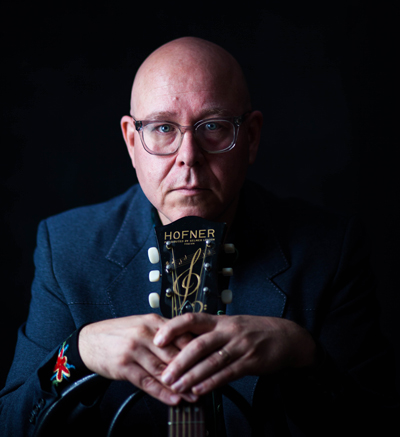
Picture by Nicola Davison-Reed


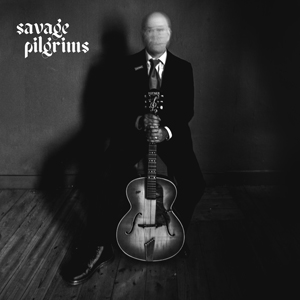
Matt Hill is the artist formerly known as Quiet Loner. For his new album, Savage Pilgrims – a collection of story / character songs told by different narrators – he’s decided to put it out under his own name, rather than the moniker which his previous four records have been credited to.

“In 2020 I turned 50 – it seemed the right time to ditch the Quiet Loner name and to release this album under my own name. Finally, I’m Matt Hill again,” he says.

Fittingly, it’s an album that sees him returning to his roots – some of the songs, like the folky Bendigo, which is the tale of a celebrated prizefighter, and the country-blues of Four Corners, are set in Nottinghamshire, which is where he grew up. Hill was born and raised in the mining town of Eastwood – the hometown of DH Lawrence. The novelist and poet actually features in one of the songs on the album, the haunting and moody, Spaghetti Western-flavoured The Exile of DH Lawrence, although it concerns itself with the last few years of the protagonist’s life, spent wandering the deserts of New Mexico, stricken with TB. The album’s title, Savage Pilgrims, comes from a phrase Lawrence used to describe his time in voluntary exile – he called it his “savage pilgrimage.”

Hill describes the album as “Americana rooted in British history and his own upbringing in a working class culture obsessed with America.” Savage Pilgrims is also a rootsy album musically – it’s influenced by country/Americana, folk, blues, spirituals and gospel.

It was recorded with producer/collaborator Sam Lench in an attic studio above a 19th century pub in Northern England, where George Orwell used to drink – The King’s Arm, in Salford. Hill and Lench wanted the listener to feel like they were in the room, sat next to the storyteller, with people playing instruments all around them, so the performances were recorded live to analogue tape, using vintage microphones and with minimal overdubs.

This makes for a great and interesting sounding record – intimate and immersive, but rhythmic, raw and rough around the edges. Hill’s vocals take centrestage – it’s like he’s singing in your ear  – accompanied by traditional folk or Americana instruments, including acoustic and electric guitars, (James Youngjohns and Lench), double bass, banjo, mandolin and percussion.

Lench plays cello on Billy’s Prayer, which was written about a fairground boxer  – Billy Marchant – who turned professional and became a sensation in America, while singer-songwriter Kirsty McGee provides backing vocals on several songs. For the bluesy and upbeat opener, Stone & Bone, in which the undead rise from their graves in an ancient cemetery to terrorise the Stock Exchange in the City of London, she plays a musical saw in a stairwell, which creates an eerie and ghostly effect. She also adds flute to the gorgeous, pastoral, folk ballad, If Love Should Rise, which was inspired by the stunning landscapes of the Peak District, which is where Hill now lives.

Diehard Quiet Loner fans will be glad to know that Hill has resurrected one of his old songs, Get Me Johnny Cash On The Phone, for the new record, although it’s now called Gary Gilmore’s Last Request – a country song about a convicted murderer on death row getting a phone call from his hero, the Man In Black.

Here at Say It With Garage Flowers, sadly, we couldn’t get Johnny Cash on the phone, but we did manage to have a chat with Hill about his new album, which we think is his best yet, his musical influences, his love of Elvis Presley, his upbringing and, er, his appearances on daytime TV…

Q&A

You have described Savage Pilgrims as “Americana rooted in British history, based on your own upbringing in a working class culture obsessed with America.” Why do you think US culture played such an important role in your younger years and in the lives of some of the people in the area where you grew up?

Matt Hill: It’s undoubtedly true that American culture dominated working class culture – it still does, except now it’s hip-hop and gaming. Growing up in the ‘70s and ‘80s, country music was still a strong influence. I think Western movies played a big part in that too. It wasn’t unusual to see blokes dressed up as cowboys. I don’t think it was just in the coal mining areas – it was right across the UK. But it seemed particularly strong in Nottinghamshire – we even had nodding donkeys, like on Dallas. People probably don’t know, but Nottinghamshire actually had its own oilfield. We had a long-running Americana festival in Newark and there was even a theme park just up the road from me, called the American Adventure. Notts is the Texas of the UK.


While we’re on the subject of classic US culture, you’re an Elvis fanatic, aren’t you? How and why did your obsession with the King come about?

MH: I became obsessed with him when I was about eight years old. It was just after he died and his films were on TV a lot. All I wanted to do was listen to him and read about him. It sounds crazy, but there was actually an Elvis shop about three miles from my house. It turned out it was the only one in the UK and it was in a Derbyshire mining town! The guy who set it up ran the British Elvis fan club too and had a direct line to Elvis and The Colonel [Tom Parker – Elvis’s manager] from his Derbyshire home!

At the very end of your song Gary Gilmore’s Last Request, it sounds like you’re doing a slight Elvis croon. Was that intentional?

MH: As for the Elvis inflection in my voice, people usually spot Costello, but, yeah, Presley is in there too.

Gary Gilmore’s Last Request is one of the more Americana / country tracks on the new record. It’s a very old song – it used to be called Get Me Johnny Cash On The Phone –  and is a Quiet Loner cult classic and live favourite. Why did you resurrect it for the new album?

MH: I wrote that song in the late ‘90s, after reading Norman Mailer’s book The Executioner’s Song. Here was a guy on death row and the one thing he asked for was to speak to Johnny Cash. That one detail blew me away. I did record it around 2001 – for one of those very early Matt Hill EPs. I recorded it again for my aborted second album in 2004, and it was on the shortlist for my Spectrology album in 2010, but it just never seemed to fit on anything. Once the songs for this new record started to come together, as being more narrative and story-based, then it was really clear that Gary Gilmore belonged on this record.

If you were on death row, what would be your last request?

MH: A phone call from Johnny Cash would be right up there on my list too. But he’s not with us, so I’d probably ask for a phone call from Kris Kristofferson or Willie Nelson. They’re probably the closest we’ve got to Johnny.

‘The songs that most appealed to me as a kid were all about middle-aged people getting divorced. I was clearly a strange child’

Did you get into country music and then Americana from Elvis? Was it a natural step?

MH: Elvis is such a good person to listen to for a musician because he has so many different elements in his music. You will find country, bluegrass, blues, gospel, folk and soul. He really did create a kind of “cosmic American music” of his own in the late ’60s and early ‘70s. I think country music came to me around the same time I start listening to Elvis.

Once I knew about Sun Records, that introduced me to Johnny Cash. I also watched The Dukes of Hazzard and loved the theme song. And then Dr. Hook and Don Williams were two formative influences because that’s what my dad was listening to. I loved the stories in the songs – I hear things very visually, so those songs painted pictures in my head. It’s fascinating to me how the songs that most appealed to me as a 10 or 11 year-old-kid were all about middle-aged people getting divorced. I was clearly a strange child.

You’ve published a zine to accompany the launch of your new album. In one of the articles in it, you say that an English folk singer once said he couldn’t understand why you sang in an American accent and played country. Ironically, you were being authentic to your English roots by playing music that’s come from the US the stuff you grew up with.

You also say that English folk music wasn’t on your radar until you were in your 20s. Over the past few years, you’ve embraced more folk music though, haven’t you? Songs like If Love Should Rise, Bendigo and Billy’s Prayer feel like they come more from the English folk tradition than US roots music…

MH: I feel like I’ve embraced a lot of different influences on this album and, yes, some of it is more rooted in English folk, but very loosely, because I don’t have much grounding in it. Other than Nick Drake I’ve not listened to a lot. In the early ‘90s I was briefly in a band called Seven Little Sisters that did a lot of Irish folk, as well as bluegrass, so I learned a lot from that.

‘American culture is authentic to where I’m from. No one sang traditional English folk songs in my upbringing’

You mentioned that folk person who said I wasn’t being authentic. That really troubled me for a long time, because it’s true that I don’t sing in a Nottingham accent. In fact I’ve moved around so much in my life I don’t even speak with a Nottingham accent anymore. But I have always wanted my music to be authentic and true to my own experiences, so that comment really did bother me at first. But that person was wrong – American culture is authentic to where I’m from. No one sang traditional English folk songs in my upbringing.

I’ve worked in prisons – all the lads there rap in American accents but it’s real to their lives. They can identify with the whole ‘gangsta’ thing because it’s about crime, money, family and tough working class upbringings. Just like country music was for a previous generation. To me, authenticity comes from the purity of your intention. The sound of a voice, like the sound of a guitar, or the way you rap, are all just stylistic. The substance of music comes from purity of intention and opening up a channel to the heart.

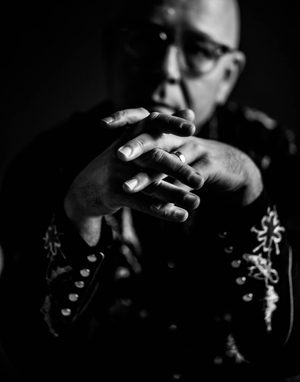
Picture by Nicola Davison-Reed

There are two songs about boxers /fighters on the new album: Bendigo and Billy’s Prayer. Are you trying to tell us something? Morrissey went through a phase where he was obsessed with boxers. Is it a melancholy, Northern singer-songwriter thing? Are you handy in the ring?

MH: To be honest, I’m not a fan of boxing. I find it brutal and I see a class aspect to it that I really don’t like. It’s controlled by very rich people, paying ridiculous amounts of money to watch working class men and women beat each other up. But, on the other hand, boxing gyms play an important role in working class communities. A gym can give kids hope and discipline and self-belief in environments where that stuff is in short supply. So I have mixed feelings about it. But I’m always in search of a good story and Bendigo is a great story and connects to my family and roots. The story of Billy Marchant is fascinating, so I had to put that song on the album too.

Did you have a long list of songs for the new album?

MH: I started with about 25 songs. I worked with Kirsty McGee on the pre-production. She has such a good grasp of songwriting and I really value her opinion. We’d also done a fair bit of touring together, I’d been to Holland and Germany with her and so she knew my live set pretty well, so she helped me whittle down 25 songs into an album. For me, when I’m making an album I always have so many songs – it’s not a case of picking the best 11, but of finding the songs that belong together. I’m passionate about albums for that reason and I get sad that technology formats are rendering them obsolete.

Savage Pilgrims is a musically diverse record: folk, blues, country/ Americana, gospel and spirituals. What kind of inspirations and influences were you drawing on?

MH: This comes back to what I was saying about Elvis – all those American music forms you mention. I’ve spent my life listening to those, so they come out in the way I perform. Some of that comes from the choices we made when recording too. Sam Lench is really knowledgeable about folk music, so when he added a guitar part on If Love Should Rise he chose a weird guitar tuning, so it sounds proper folky. Four Corners is about a crossroads, so I wrote blues influences into that from the very start. Those sort of musical choices really colour the music.

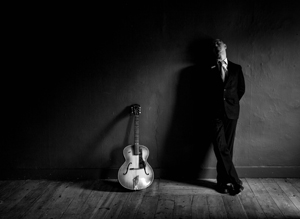
Picture by Nicola Davison-Reed

What inspired the striking album art? I really like the moody, black and white look you’ve gone for – the photos of you are great…

MH: I put out four albums as Quiet Loner and nowhere on any of those albums will you find a photograph of me – not even on the inside. That was a choice. So because this was a fresh start, I decided I would go in the opposite direction and stick a photo of myself on the cover. So then I had to find the right person to work with. I was really drawn to working with Nicola Davison-Reed, after seeing her portrait work online. I talked to her about the sound of the record and the vintage sounds we used – she did the rest. She’s an incredible artist and I’m delighted with the results that she got.

As well as Savage Pilgrims, you’ve also put out a ‘Greatest Hits’ collection. It’s called Twenty/Twenty – An Introduction To Matt Hill and is available as a free 20-track download from your website. How was it going through your back catalogue to put that together?

MH: Prior to lockdown I’d been rehearsing regularly with James Youngjohns, who I’ve been making music with for 20 odd years. James encouraged me to delve into the back catalogue and we were playing songs from that first album. So when it came to putting 20 tracks together, I’d already been looking back and deciding what I liked and what I didn’t.

There are some rarities on it, like She Means Everything, which is Matt Hill does pop-soul! Do you have a lot of unreleased stuff in the vaults? Isn’t there a ‘lost’ album? Will it ever see the light of day?

MH: There is indeed a lost album and that song, She Means Everything, is from it. I recorded it in 2004 – the year Secret Ruler of the World [debut album] came out.  I wasn’t a happy person at the time and my anxieties and insecurities got the better of me and I ended up shelving it. It’s something I now regret. That album means a lot to me because it features my friend Chris Evans. He and Mike Harries put a tremendous amount of work into that album and it would be nice to get it released at some point. Chris took his own life in 2013. A few days before he died we had met up and were reminiscing about that lost album and making plans to work together on a new one. It was not to be.

Have you written any new songs recently? Has lockdown inspired you?

MH: I have written some new songs but I’m definitely not getting any inspiration from lockdown. I’ve got a few political songs and there are a couple that I think are decent – one about a soldier coming back from World War II and another about living with chronic illness. I probably only release about a third of all the songs I write.

‘I can’t see music venues reopening until next year. I’m trying to adapt and stay positive, but there is a very real chance I may not be able to make a living’

What are your plans for the rest of 2020?

MH: I’m hopefully releasing a new album with a band project called The Low Drift, but, aside from, that I really don’t know. So much of how I make my living is tied up in delivering songwriting workshops. These are usually delivered in community settings, like at a homeless centre, in a prison, or at a dementia care home. None of those sessions have been able to continue, but I’m hoping to begin work on a songwriting project that’s being done over the phone.

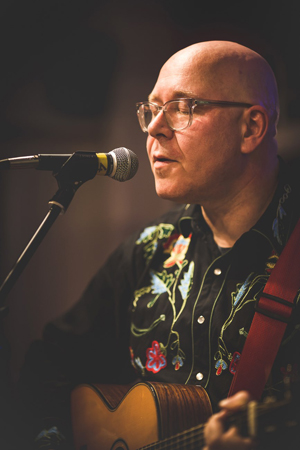
Picture by DMC Photographic

Longer term, I think we will see a massive crash in the economy and that always hurts funding for the arts and charities. I can’t see music venues reopening until next year. I’m trying to adapt and stay positive, but there is a very real chance I may not be able to make a living this time next year. Sadly there will be many people in that position – not just musicians and artists.

Finally, you’ve had several brushes with fame – and infamy. You’ve appeared on daytime TV – Flog It! and The Jeremy Kyle Show – played at Glastonbury, thanks to Billy Bragg; you once had to shake Jacob Rees-Mogg’s hand, and you spoke with Jimmy Savile about Elvis! How would you like to be remembered?

MH: Thanks for reminding me of some of my darkest days! Yes, it’s true – I have met more than my fair share of villains! For many years I had to go to all the Party Conferences for my job, so I have met so many politicians and journalists, but I certainly wouldn’t want to be remembered for meeting Jeremy Kyle, Jacob Rees-Mogg or Jimmy Savile! I would be happy to settle for simply being remembered fondly by my surviving friends and family.

Savage Pilgrims by Matt Hill is released on July 6 (Quiet Loner Records).

There will be an online album launch event on Sunday June 28, at 8pm: details on Matt Hill’s Facebook page: https://m.facebook.com/matthillsongwriter/

https://matthillsongwriter.com/

https://quietloner.bandcamp.com/