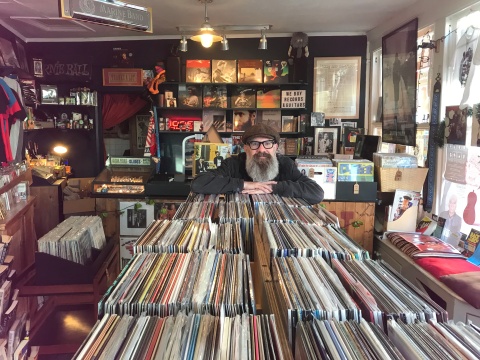

It’s almost 20 years since Mark Billingham’s debut novel, Sleepyhead, was published – a highly original and riveting crime thriller that first introduced us to the character of Detective Inspector Tom Thorne, who is based in North London, loves country music, enjoys a beer and is passionate about Tottenham Hotspur. In case you were wondering, Mark shares two of those interests with his creation – he supports Wolverhampton Wanderers.
When Sleepyhead came out, in August 2001, it entered the Sunday Times Top Ten Bestseller list and ended up being the biggest selling debut novel of that summer. Since then, Mark has become one of the UK’s most successful crime writers.
This month sees the publication of his latest novel, Cry Baby – the seventeenth entry in the Thorne series and his twentieth book, if you include his three stand-alone thrillers: In the Dark, Rush of Blood and Die of Shame.
Cry Baby is a Thorne origins novel – a prequel to Sleepyhead, it’s set in 1996. In an exclusive interview, Mark talks to Say It With Garage Flowers about life during the Covid-19 lockdown, looks back at how his career in crime writing started, reflects on the enduring appeal of Thorne, gives us a sneak preview of the new book and tells us what he was getting up to in 1996.
Q&A
How did you cope with lockdown? As a writer, aren’t you used to lengthy periods of being at home on your own, shut off from the outside world?
Mark Billingham: On a day-to-basis, it’s not actually been very different – like a lot of writers, I’m looking for any old excuse to spend the day in my pyjamas.
I’ve been writing a lot. I know that a lot of people have found it very difficult to write – some have found it very difficult to read, for God’s sake – but I actually wrote the best part of my next novel in lockdown. I know plenty of people who have been very productive, but I completely understand why some people haven’t.
I wrote this next book very quickly, but sometimes, at the end of the day, I’d look at what I’d written and I’d think ‘what’s the point? It’s just a bloody crime novel. What does it matter in the scheme of things?’ Especially if the news that day was really bad. People are dying and the country’s going to shit! You just have to keep trying to lift yourself to get it done.
What has been different is that I haven’t been able to go out to promote my new book and do festivals and events – everything is now online. That’s what I’ve found the hardest part because I love doing all that stuff, but, again, in the scheme of things, it’s a very minor niggle.
‘I’m not convinced that people will want to read about the pandemic – when we return to some form of normality, they will want something that’s more escapist or cosier’
Has anything from the Covid-19 crisis filtered through into the book you’ve just finished writing?
MB: We’ve all got to make a decision, which I suspect is too early to make – how do you reflect lockdown and the pandemic in works that are yet to come out? I certainly reference it in the next book, but I’m hoping that by the time the book comes out, the virus won’t still be on everybody’s minds 24 hours a day.
I’m also not convinced that people will want to read about the pandemic – when we return to some form of normality, whatever that means, people might well want something that’s more escapist or a little cosier. Having lived through the pandemic, will people want to read fiction about it? We’ll have to see. It’s no coincidence that the golden age of so-called ‘cosy crime fiction’ was between the wars. After the horror of the First World War, people wanted something that was more…healing.
So you’ve spent lockdown writing, but did you have much time to do any reading?
MB: Yes – I’ve been reading tons. I’ve read an awful lot of new novels that have been sent to me, as well as some old favourites and bits of non-fiction. The last novel I read was Michael Connelly’s new book [Fair Warning], which is absolutely fantastic.
I loved Craig Brown’s book about The Beatles [One Two Three Four: The Beatles in Time] – I’ll read pretty much any book about The Beatles.
What was your lockdown soundtrack? What new or old music have you been listening to?
MB: I’ve been listening to old music – I’m such an old fart. I just tend to walk into the kitchen and go: ‘Alexa, play Elvis Costello’, or ‘Alexa, play Graham Parker’. But just to evidence the fact that my finger is still on the pulse, I’ve been listening a lot to the new Bob Dylan album [Rough and Rowdy Ways], which just gets better each time I hear it.
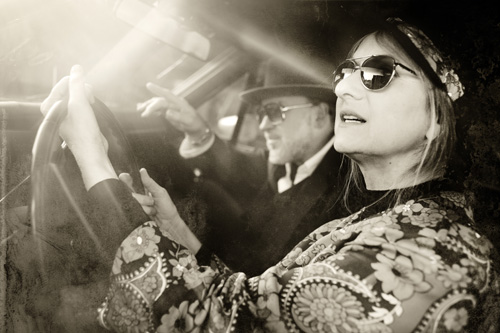
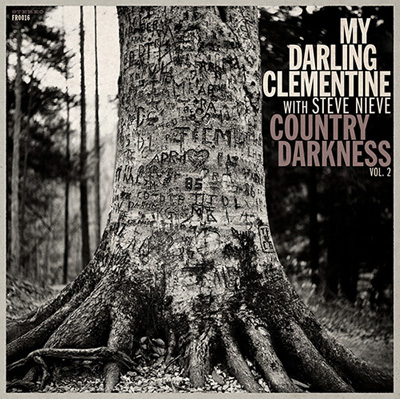
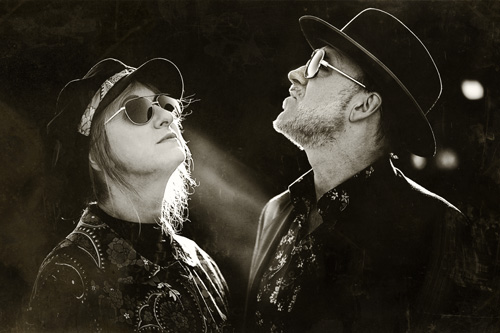
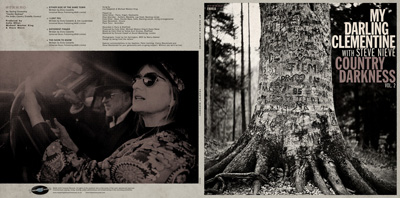
A few years ago, you collaborated with country duo My Darling Clementine for the music and spoken word album The Other Half. Have you listened to their recent Country Darkness EPs, which are cover versions of Costello’s country and country-soul songs, recorded with Steve Nieve?
MB: Yes I have and they’re great – fantastic stuff. I’ve also been following the stuff that Steve’s been doing online with Costello.
You’re a huge Costello fan. Have you heard the recent singles he’s put out: No Flag and Hetty O’Hara Confidential?
MB: Yes – I really like them. I love No Flag because he sounds properly angry again – he’s back to full strength and on fire. I wonder if the new one [Hetty O’Hara Confidential] is from one of the musicals he’s been writing? I don’t know. I know he’s written one with Burt Bacharach, A Face In The Crowd, and has been playing a few songs from it in his live shows for a couple of years.
Let’s go back to your writing. It’s almost 20 years since your first novel, Sleepyhead, was published, back in 2001. How does it feel looking back at that time now?
MB: I can remember exactly what I was doing and where I was. I was on holiday with my wife and kids in Corfu. My kids were very young and every night after we’d put them to bed, my wife and I would sit outside this villa we’d rented – she’d have a glass of wine and I’ve have a bottle of beer – and I’d start scribbling ideas in a notebook.
At the end of the fortnight’s holiday, I did a word count and realised I’d written about 30,000 words. I knew that would be about one third of a novel, so I started to think that maybe this novel-writing lark wasn’t as daunting as I thought it would be.
When I got home, I tarted up the 30,000 words and I sent them to an agent – they sent them to a bunch of publishers who wanted it, there was an auction and I was off! I still hadn’t finished the book when I got my deal. I can remember being in Brent Cross shopping centre when my agent called and said that a publisher had made an offer – that’s the moment you always remember. I didn’t really know what I was doing – that was when the hard work started!

What drew you to the crime fiction genre?
MB: I think it was when I read Sherlock Holmes at a very young age, but the more important moment was my first exposure to ‘popular’ crime fiction. When I started buying books for myself they were all blockbusters like Jaws and The Godfather.
When I became a student, I discovered Dashiell Hammett and Raymond Chandler. I got all those big Picador editions – and bloody loved them. I started with noir and hard-boiled American fiction and then discovered the likes of John Harvey and Ian Rankin. I devoured everything I could get. I started hanging about on the fringes of the crime fiction community – I would go to festivals and I started reviewing books so I could get them for nothing. The missing piece of the jigsaw was to try and write one.
When you created Thorne, did you ever envisage that he would endure for so long?
MB: No – when I wrote the first book, I never imagined that it would be the start of a series. I needed a copper because there had been a crime committed. In my head, Thorne wasn’t even the main character. I wanted the book to be about the victim – a woman called Alison Willetts, who’s in a coma for the whole of the novel. I was in a very fortunate position, in that a number of publishers wanted the book, so I had to go and meet them all. The first question they all asked was: ‘is this the start of a series?’ I thought, ‘well – it better had be then!’ So I wrote another Thorne novel, little knowing that I’d still be writing about him nearly 20 years later.
How have you – and Thorne – stayed the course for almost 20 years?
MB: I’ve not constantly written about him – I’ve taken breaks to write stand-alone books and to collaborate with people on other projects whenever I’ve felt the need to. Why have readers stuck with Thorne? I don’t know, but, God, I’m very grateful for it! One of the things that has stood him in good stead I think is that I’ve never had a plan for him, or a dossier on him – the reader knows as much about him, book on book, as I do. They put flesh on the character’s bones.
I’ve never described him, so the readers have their own idea of what he looks like. Hopefully, he stays unpredictable and interesting, because I genuinely have no bloody idea about what he’s going to do next! I think that’s one of the reasons why he’s managed to stick around for the best part of two decades.

To tie in with the twentieth anniversary, a few months ago Sleepyhead was reissued as a special, limited edition hardback, with a foreword by Lee Child…
MB: It was hugely generous of Lee to write that. I’d gone back to Sleepyhead reasonably recently anyway, because I was doing the unabridged audio versions of all my early books. I’d read it again – it’s quite a sobering experience going back and reading something you’ve written 20 years ago.
How was it?
MB: There were certainly things I’d do very differently now, but you live with it – you learn as you go. Hopefully you make your mistakes early on – well, you never really stop making mistakes – but, hopefully, you get better as you go on. I did change one or two tiny things for the special edition, but I don’t think people will notice them. There are things I could’ve changed that I didn’t – like the weird thing I did with Thorne’s music taste.
You mean the bit where he’s listening to trip-hop and speed garage, as well as his beloved country music?
MB: Yeah – I thought, ‘shall I take that out?’ But I then said, ‘ do you know what? I did it – leave it in.’ I quickly dropped it after the first book…
I did take out the tiny bit of Thorne’s physical description – I’ve never done it since and I wish I’d never done it then. So, it’s gone. If it’s a character that readers are going to read about for 20 years, I’d rather they painted the pictures.
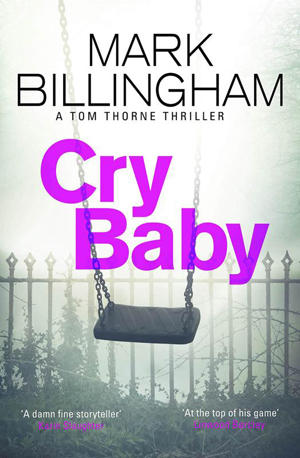
Let’s talk about your latest book, Cry Baby – the seventeenth Thorne novel and your twentieth book. It’s a prequel to Sleepyhead and it’s a Thorne origins novel, set in 1996…
MB: Yes – that’s exactly what it is. Because it was the twentieth book, I’d been thinking about it for a while and I wanted to do something a bit different and special. The more I thought about it, the more I thought ‘what a great idea – I wish I’d done this before’.
If I have one slight regret about Thorne it’s that I perhaps made him too old to begin with – he started off aged about 40, which was around the same age I was when I wrote the first book. I haven’t aged him in real-time, so he hasn’t aged as quickly as I have. With Cry Baby, I had the chance to take him back to when he was a younger man – he’s less cynical and less scarred and he’s still married – just about – and both his parents are still alive. He’s a very different person, so that was exciting to write about – how did he become the character that then appears in Sleepyhead?
I could also go back to a time that I remember really well, but which also feels like ancient history now – if you wanted to get pictures developed, you went to a chemist, and if you wanted to get somewhere, you wandered around with an A-Z in your hand.
Crucially, in terms of technology, it’s pre-internet, pre-mobile phones and pre-CCTV – all the stuff that makes the life of a contemporary crime writer very hard, because you’ve got to deal with all that stuff.
‘I had the chance to take Thorne back to when he was a younger man – he’s less cynical and less scarred and he’s still married – just about. He’s a very different person, so that was exciting to write about’
Was it a fun book to write, or was it challenging?
MB: Oh, it was a lot of fun. There was enjoyable research, like finding out what was on the telly and the radio back then – all that popular culture stuff, which is never a chore to do.
I also had to find out how police procedure was back in those days – I worked with an ex-Detective Superintendent, a guy called Graham Bartlett, who works with a lot of crime writers, including Peter James. He was really helpful, because he was serving back then, so he could tell me exactly what things were like. He could tell me how many women were on a team of detectives back then, or how many black and Asian officers there were – it was a lot fewer than there are now, that’s for sure.
He could also tell me how things worked in terms of technology. The most technologically advanced bit of kit that Thorne has is a pager, but not even one with text on it. It just beeps and he has to go to a phone box to ring police control. You can have a lot of fun with that stuff – ‘these stupid mobile phones are never going to catch on…’
Thorne and his soon-to-be ex-wife are selling their house and he is gobsmacked that they can get £150,000 for a three-bedroom house in North London! It’s ridiculous – there will be hollow laughter from people now that can’t buy a one-bedroom flat for that.
How easy was it to go back and create Thorne’s origins?
MB: I had the tent pegs for it – knowing who somebody becomes gives you a few decent clues as to who they were. It’s not like he’s a radically different character, but there were crucial domestic things that were fun to write, like scenes with his parents, or his wife, who by the time of Sleepyhead he’s divorced from. During Cry Baby, they’re going through the hell of all that. I didn’t have to reinvent him – I just had to imagine what he might have been like in his thirties, as opposed to his forties.
What music is Thorne listening to in Cry Baby?
MB: Oh, he’s still listening to George Jones and Hank Williams, but the piece of music he hears most during the book is Three Lions, because it’s all set during Euro 96. That’s the first thing he hears when the turns the radio on, although at one point George Michael’s Fastlove comes on. He’s not listening to too much Britpop – it’s all Frank Skinner and David Baddiel, which pisses him off, because one of them’s a Chelsea fan.
What were you doing in 1996?
MB: I was still doing stand-up, but I was a few years away from thinking about writing that first book. I hadn’t gone through my brush with violent crime (In 1997, Mark became a crime victim, when he and his writing partner Peter Cocks were held hostage and robbed in a Manchester hotel room). I was enjoying Euro ‘96 – I was there at Wembley the night England stuffed Holland 4-1. It was a lovely, footloose summer – I was 35.
How were your team, Wolves, doing then?
MB: Oh, they were doing terribly – they were not the team they are now, or in the ‘70s. They were in the doldrums.
Without giving away any spoilers, can you tell us a bit about the plot of Cry Baby?
MB: Even though it’s been a number of years, Thorne is still reeling from a case – the Frank Calvert case – that is also referenced in Sleepyhead. A piece of misjudgement on Thorne’s part, or a lack of confidence, that tragically resulted in the death of three little girls and their mum. That still disturbs him and some of the other cops that he works with remind him about it and wind him up about it.
‘There are a few little reverse Easter eggs in Cry Baby that readers of the series will recognise – characters who appear further down the line’
Thorne then has a new case come along – a young boy goes missing and then various people start to die. He knows that they must be connected to the missing boy – there are a couple of murders and he knows that solving them is going to be the way to find the boy, whether he’s alive or dead. He’s not going to fuck this one up!
He teams up with a young pathologist for the first time – who [regular] readers will know ends up becoming his closest friend [Phil Hendricks]. It’s the first time they meet and I had a lot of fun with that. I’d already decided that they weren’t going to get on. When they first meet, they have a big row and they fall out.
There are a few little reverse Easter eggs that readers of the series will recognise – characters who appear further down the line. At the very, very end of the book, we catch up with where Thorne is now – I tee him up for the next book, which won’t be out until the year after next, because the one before that is a stand-alone novel.

There’s an audio book of Cry Baby coming out too, which features David Morrissey as Thorne – a role he previously played in the Sky One TV series Thorne, which was based on adaptations of your novels Sleepyhead and Scaredycat…
MB: We’ve recorded it – it was a lot of fun. I played the part of Hendricks.
Are there any plans for more of your books to be turned into TV dramas?
MB: There are adaptations in the pipeline, but it’s always so hard to talk about these things. Hopefully, there’s going to be an American adaptation of one of the stand-alones, but I can’t say too much about it and it’s all on hold because of Covid-19. Just before lockdown, because of Cry Baby, there was a suggestion of a reboot of Thorne, but, again, it’s all gone very quiet.
Finally, I have a quandary. I have all your books on a shelf at home and they’re in order of publication, but, as Cry Baby is a prequel, should I put it before Sleepyhead, or, as it’s brand new, should it go after your last novel, Their Little Secret? This has been keeping me awake at night…
MB: [laughs]: I think you’ve got to stick with the order of publication – you’ve got to put it after Their Little Secret. One of the questions people are asking me is if they haven’t ready any of my books, is Cry Baby a good entry point? Of course it is, as, in theory, it’s the first case, but if you’ve read all the Thorne books you’ll hopefully get as much fun from it as if it was the first one you’d picked up.
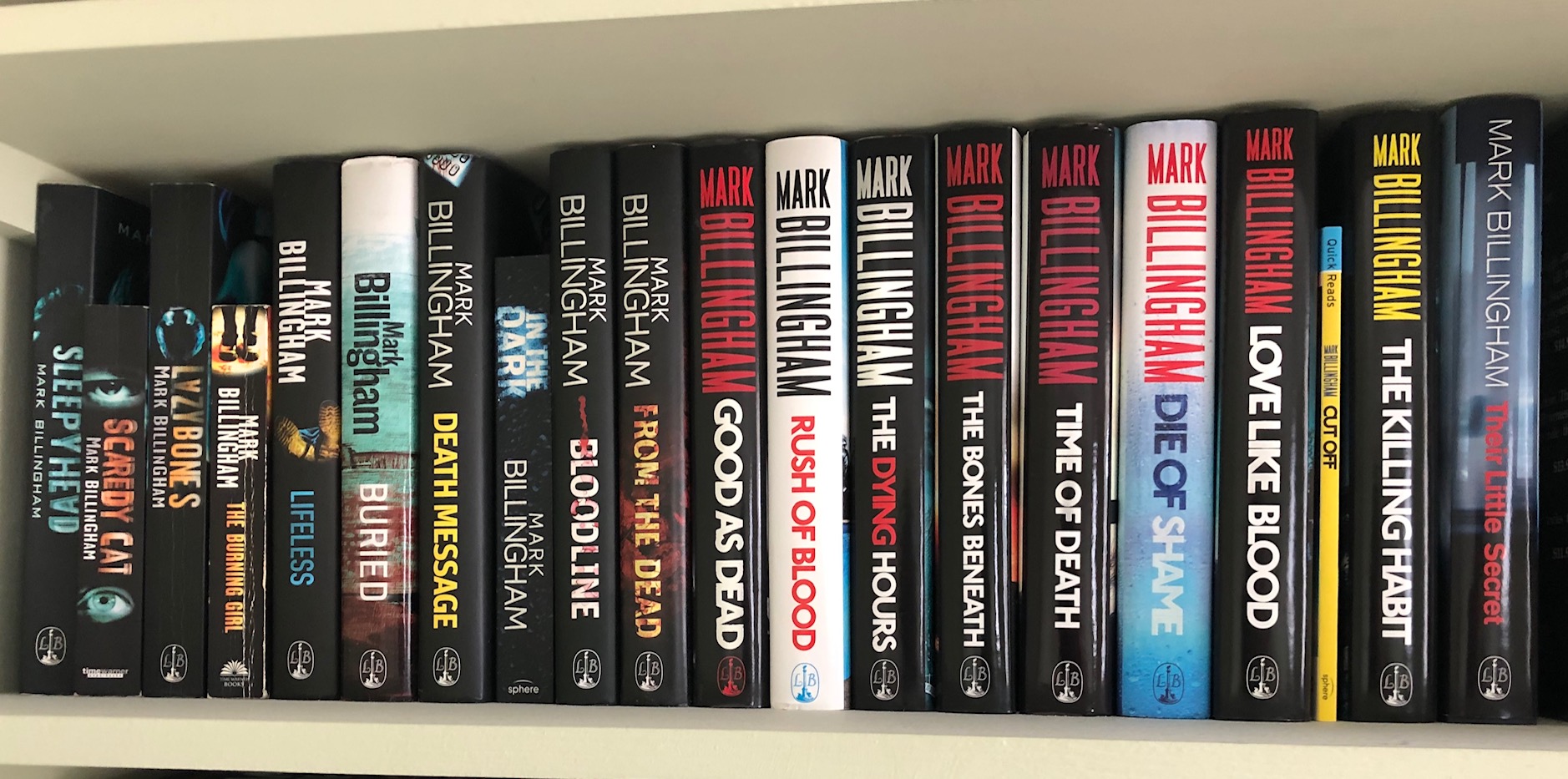
Cry Baby by Mark Billingham is published by Little, Brown on July 23: https://markbillingham.com/


 Say It With Garage Flowers