‘We love records that sound like they’ve been made by a group of musicians in a room’

The Milk

We speak to cinematic soulsters The Milk about their superb and ambitious new album, Borderlands, which has been influenced by acts such as Brian Wilson, Paul McCartney, Miles Davis and Michael Kiwanuka.

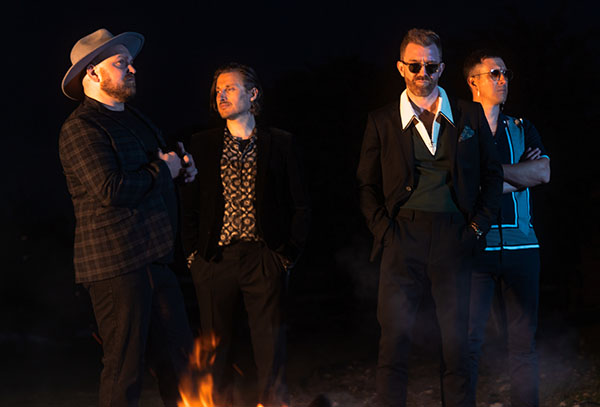
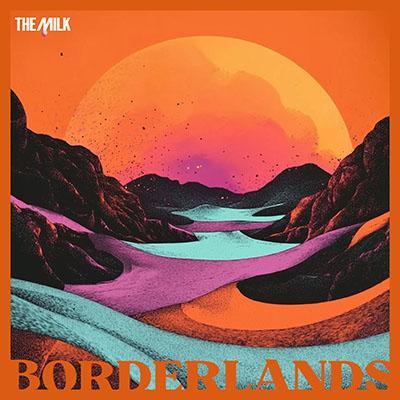
This month, Essex four-piece The Milk – Rick Nunn (vocals, keys), Mitch Ayling (drums), Luke Ayling (bass), and Dan Le Gresley (guitar) – release their fourth album, Borderlands. The band met at school and bonded over a shared love of music, particularly a fondness for soul.

Borderlands, which features the Soul Choir and other guest musicians on trumpet, saxophone, flute, violin and viola, is The Milk’s most ambitious and fully realised record yet – a stunning set of cinematic soul songs that draws on influences old and new, including Brian Wilson, Paul McCartney, Miles Davis, Marvin Gaye, Kamasi Washington, Michael Kiwanuka and Thundercat.

Reviewing the record for this month’s issue of consumer magazine Hi-Fi+, I called it, ‘a melting pot of ‘60s and ‘70s-style soul, modern funk and jazz, and vintage film soundtracks.’

I added: ‘Like all the best records, this album takes you on an emotional journey and is designed to be listened to in one sitting – it’s a coherent piece of work that starts with the striking and filmic I Need Your Love and closes with the epic love song, I Saved My Best For You, with its silver screen strings.’

To get the full story behind the making of Borderlands, Say It With Garage Flowers went for a couple of beers with Nunn in an East London pub on a warm July evening.

“We’re very much into making a body of songs that has a beginning, a middle and an end – that’s how I listen to music at home,” he says. “I like the commitment of putting a record on and then having 40 or 45 minutes when I don’t need to make another decision.”

So, we settled in and listened to what he had to say…
Q&A

Borderlands was recorded over the last 12 months or so at your drummer Mitch Ayling’s Woods Lodge Studio in the Essex countryside, with the band playing every track live in the room together…

Rick Nunn: That’s something that we’re very attached to – it’s a bit of a dying art form. We work well as a rhythm section, and we have to try and capitalise on that – we love records that sound like they’ve been made by a group of musicians in a room. We went for a big, ‘70s wall of sound-type production, but we still wanted it to be anchored around a four-man rhythm section – that was important for us.

Did you have a definite idea of the kind of album you wanted to make – it’s a big and ambitious-sounding record…

Rick Nunn: We spent about a year arguing about the references and batting ideas around, and eventually we all gave in and said, ‘Let’s make something huge.’

People who like soul music will hopefully like it, but we also just wanted to make something that was a talking point in itself – even if it’s not your thing, it’s a big-sounding record.

‘We went for a big, ‘70s wall of sound-type production, but we still wanted it to be anchored around a four-man rhythm section – that was important for us’

Our studio is a lovely retreat – we’re lucky to have it and it means we’ve got total control of the process. Yeah, we could’ve made a stripped-back record, but we’ve done that before. We’ve got a unique space where we’ve got the option to make a huge-sounding record – the kind of record that if you were playing on the clock, it would cost a fucking fortune. Very few bands have got the resources or the budget to do that – to make that kind of high-production, mid-‘70s soul record.

The album was mastered on vintage analogue equipment by Lewis Durham (Kitty, Daisy & Lewis) at Durham Sound Studios in Camden, North London. Are you into vintage gear?

Rick Nunn: I think it can sometimes be a distraction. The reason the Snakepit [Motown studio in Detroit] sounds like the Snakepit is because the Motown band sounds like the Motown band… You can buy all those microphones if you want, but it’s a very small part of the sound – you can’t just chuck a load of dusty mics at a band…

Let’s talk about some of the tracks on the album. I Need Your Love is a song in two halves – the first half was inspired by a 4/8 bar cyclical brass hook from a jazz standard played by a big band tribute to Buddy Rich at Ronnie Scott’s. There’s a nod to the vintage cinema Pearl & Dean theme, and also a section from an old soul ballad of yours that had never been released…

Rick Nunn: We love a gear shift in a track. We were playing around with it… I’m a massive jazz fan, but we didn’t want to just make a jazz track. I think there are people that do that better than we do it. We were struggling with the chorus, and I had this straight-up soul record that the boys liked, but, as a standalone track, it wasn’t getting on the record, and then we brought it in, and we were like, ‘ah,’ so that was an interesting gear shift… It’s a kind of Frankenstein track…

I like the nod to the Pearl & Dean theme on it… It’s a great way to open the record…

Rick Nunn: Yeah – it’s track one on an album that we’re saying is a cinematic soul record… The curtains open…

I love the horns and there’s a great electric guitar solo on it too…

Rick Nunn: Dan, our guitarist, is insane – I just love the way he plays. It’s a difficult thing doing soul lead guitar – soul solos are not that common, but I think he makes it relevant.

Pangs of Love was inspired harmonically by Brian Wilson and Paul McCartney, but it also has a great, ‘70s-style, fuzz guitar sound that reminds me of The Isley Brothers…

Rick Nunn: Yeah, and we also reference Michael Kiwanuka, who uses a good, similar fuzz sound. So, we would often use on all those references you’ve talked about, but the most recent one would have been him. He uses that fuzz, one-note stuff…

Pangs of Love reminds me of Doves too… They’ve always had a soul influence…

Rick Nunn – Yeah. They had an album with the word ‘soul’ in it – Lost Souls, which was their first album. When I was 11 or 12 and I’d just started going to gigs, Doves seemed to be on every bill. They’re excellent, and in an era where there wasn’t a lot of soul references, they were introducing kids to a lot of soul stuff. I even like the trippier Doves stuff, like The Cedar Room.

A Time To Let Go on your new album is a personal song inspired by the death of your father…

Rick Nunn: Yeah – it’s about my old man. The boys knew my dad from when they were little boys… We don’t have to tell each other what we’re writing about. I can walk in with a song like that, and everyone goes, ‘okay…’ Or if Mitch walks in with a song that’s about a breakup, I know what he’s singing about, you know… So, I walked in with that song…

‘It’s something that feels beyond transcendent. Brian Wilson was a fucking genius at that stuff, and so is Kamasi Washington’

You wrote it on piano…

Rick Nunn: Yeah – it was a confessional piano song…

And then, inspired by Brian Wilson, you threw the kitchen sink at it, with a heavenly choir, brass and a soaring string arrangement…

Rick Nunn: It’s something that feels beyond transcendent. Brian Wilson was a fucking genius at that stuff, and so is Kamasi Washington – that kind of transcendent soul choir.

Morning Light is more reminiscent of your previous album, Cages – it’s spacious and stripped-back…

Rick Nunn: Yeah – it’s a lot more like the album we made previously, when we were signed to Wah Wah 45s – a lovely, small North London soul/jazz label. We made a more stripped-back, modern soul record, which I love, and I think that track probably leans more towards those times. But we do a bit where it gets quite big towards the end, with the last section. You want a little bit of a gear shift, even with the pace of a 10-track album.

When you’re making an album, do you think of it in terms of being a vinyl LP?

Rick Nunn: We’re very much into making a body of songs that has a beginning, a middle and an end – that’s how I listen to music at home. I like the commitment of putting a record on and then having 40 or 45 minutes when I don’t need to make another decision.

I think streaming and downloading took that away to a certain extent, but then the vinyl revival has brought it back…  There are still some people who stream but don’t listen to an album from start to finish – they skip to different tracks…

Rick Nunn: The amount of people who love a song, but they don’t know who the fucking artist is because they’re just liking it and adding it to a playlist…

So, the middle track on Borderlands is called The Middle – I see what you did there – and it started off as an acoustic song that was demoed for your album Favourite Worry

Rick Nunn: Yeah – our demo bank is fucking huge. It’s a collective creative project and it’s more about what ideas are best rather than whose ideas are best. We’re like old pirates – everything gets chucked in the middle and everyone gets an equal cut – there are no egos.

The title track has a big, symphonic soul sound – it soars…

Rick Nunn: It’s a weird song – when you play it on piano, it has a rolling rhythm…

Lyrically, was it inspired by Brexit and the EU?

Rick Nunn: I think that’s something we’ve projected onto it after the event – I don’t think that’s what we were talking about… It’s more about that Bruce Springsteen thing that he’s always saying – packing a car, driving out of town and heading for the sunset – what’s over the next hill? The last people to get out of town…. I love it,  and I think it’s Mitch’s best achievement on the record in terms of the production and how it’s mixed – there’s an alarming number of musical elements going on in that track, but I can choose what I want to listen to on it. That’s testament to a well-mixed track.

Wanted Man is the jazziest track on the record – it was inspired by John Coltrane and Miles Davis…

Rick Nunn: Yeah – the boys let me get away with that one. There’s an early Miles Davis  [soundtrack] album, Ascenseur pour l’échafaud – Lift to the Scaffold – which was the first time that he went to Paris – he was relatively young and he was taken aback by the egalitarian nature of Parisian culture – he embraced the intelligentsia, and he fell in love with the fact that as a black man, he could go there and be held in such high regard in terms of high society –  and he was hanging out with some very cool academic people.

He fell in love with a Parisian woman, and then he was hanging out with a film director, and he was ask to improvise live to an Art Nouveau movie that was being shot at the time, and they gave him a Parisian rhythm section who he’d never met before.

I watched an interview with the drummer who said that Miles improvised live to the movie while it was being projected. I gave that direction to our trumpet player, Don, and said: ‘Can do you that?’ He said he knew it… Most of what you hear of Don is the first take, apart from a couple of little edits.

You’ve described the album as ‘cinematic soul’ – the final song, I Saved My Best For You, feels like a track that should be played over the end credits of a film. It starts with just a guitar and vocal, but then it shifts into something immense, with a big arrangement and an epic finale…

Rick Nunn: I’ve got a big, old school, semi-acoustic Gretsch – we did that live, as a single take, and then we recorded the whole back end as a separate thing. We’re massive fans of Vegas-era Elvis, and the band that was put together, so we were like, ‘let’s do that!’

We wanted to make it sound like fucking Casablanca! Unashamedly, we know what we’re doing, and we want people to know that – we’re not trying to pretend we’re not doing it…

It’s a love song too…

Rick Nunn: I only met my missus a few years ago, and it’s a message to her to say, ‘It’s been great, but I’ve saved the best stuff for you, and it’s gonna get even better because you’re here.’


Borderlands is released on September 19: vinyl, CD, digital download and streaming platforms: www.thisisthemilk.com.

September and October tour dates:

  • September 19:  229, London.
  • September 20:  Ropetackle Arts Centre, Shoreham-by-Sea.
  • September 26:  Band On The Wall, Manchester.
  • September  27:  Subscription Rooms, Stroud.
  • October 18:  The Old Town Hall, Hemel Hempstead. Acoustic show.

‘Making a record really does feel like emptying a part of your soul…’

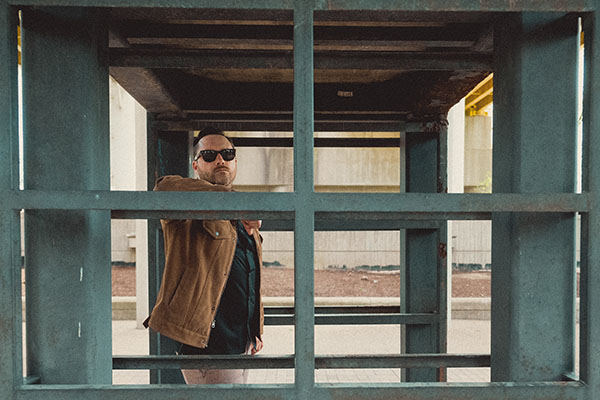
Kelly Finnigan – photo by Mitch LaGrow

“There’s nothing like making records,” says San Francisco-based singer-songwriter, keyboard player, recording engineer and producer, Kelly Finnigan. “I feel like that’s my purpose – the reason I was put on this Earth.”

Well, he’s certainly making the most of his time here – in the past few years he’s made two albums with his retro-soul band Monophonics, a mixtape, his 2019 debut solo long-player, The Tales People Tell, and a Christmas album, plus he’s found the time to produce other artists – The Ironsides, Alanna Royale and The Sextones.

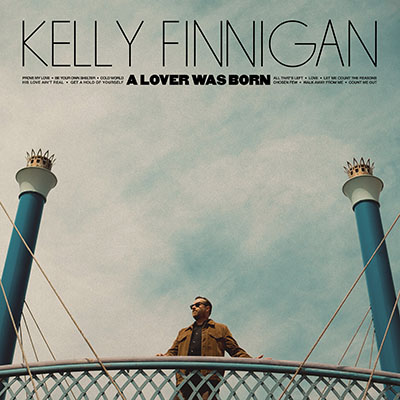
Not only that, but this month sees the release of his sophomore solo album, A Lover Was Born, which is easily up there with his previous releases when it comes to classy songwriting and rich, cinematic production, and it’s inspired by the likes of Isaac Hayes and Curtis Mayfield, Chicago soul and Muscle Shoals, as well as Northern Soul and early hip-hop.

To make this album, Finnigan assembled a crack team of musicians, including Max and Joe Ramey (The Ironsides), Jimmy James (Parlor Greens), Sergio Rios (Say She She / Orgone), Joey Crispiano (Dap Kings) and Jay Mumford (J-Zone).

Say It With Garage Flowers spoke to him about the writing and recording of the new album, his love of hip-hop and passion for collecting vinyl, and the darker side of modern American society that he tackles in some of his music. 

Q&A

Congratulations on the new album –  it’s brilliant. How did you approach this one? Did you have a definite idea of what you wanted it to sound like? 

Kelly Finnigan: Thank you very much. It feels great to share it with the world. I approached it with an attitude of patience, first and foremost. I wanted to feel fully focused and not have too busy of a schedule around the process of the recording sessions.

I spent a few days hanging out and writing music with my friend Joe Crispiano (The Dap Kings, Lee Fields) in New York, at his place in Staten Island. We developed ideas and chord structures and arranged parts. I did the same back home in the Bay Area, with my friends The Ramey brothers, from The Ironsides. That covers most of the songs, besides a few that I wrote alone in California and Ohio.

I wanted to make a record that felt like the next natural step after my first solo record in 2019. A lot can happen in four or five years, and that was the case for me. I experienced some big valleys and peaks during the last few years, and I wanted to wear that on my sleeve.

The main goal of all my records is that they have a ‘vibe’ – they have character, and they feel engaging. That’s how I like my music, and I’m always pleasing my ears first and foremost. I want them to feel honest and relatable.

‘All my records, including those with Monophonics, feel personal, and this one is no different. I wanted it to sound raw and emotive’

At the heart of every good album are good songs. I love these songs and the stories they tell. They really speak to who I am. All my records, including those with Monophonics, feel personal, and this one is no different. I wanted it to sound raw and emotive. Performance-driven is maybe the right way to describe it. It has a sense of freedom musically, all while still maintaining a lot of discipline and focus.

Can you tell me about the recording and production?

Kelly Finnigan: Well, once I got to the 10 or 11 song mark, I started to cut some demos of the songs on piano with a scratch vocal. This was beneficial to have on hand to show the musicians who were on the recording session: drums, bass, guitars and keys.

Once all those parts were recorded, I put down the ‘sweeteners’, which are lead and background vocals, as well as horns and strings. I’ve been doing it this way for a long time and it allows me to put all the pieces together in a way that is beneficial to my sound.

Most of the musicians on the album are people I’ve recorded with for years, musicians I have toured with, or people whose sound I admire. This list includes The Ramey Brothers, Austin Bohlman, Sergio Rios, Joe Crispiano, Jimmy James, Jay Mumford, Joey Quinones, Bryan Ponce, Alex Baky, Jason Cressey, Paul Chandler, Eric Johnson and on and on… I’m lucky to have a circle of incredible people who understand what I’m trying to achieve with these recordings.

The album is heavy musically, with a lot thoughtful parts from the musicians, great arrangements and performances from all involved. I wanted it to feel and sound inspired.

Leaning into the sonic aspect of the album, it is really a healthy balance of dirt and character, but in that charming way where it feels like the end of the ’60s before the ’70s hit and the fidelity on recordings changed.

‘I love a burning record that you can throw on, knowing it’s gonna hit everyone in the room hard, while I also love a good, slow sad song that hits you in a different way’

Photo by Brittany Powers


Trusting your gut and ears are important as well, if you want to get good at the art of making records. Relying on over-miking instruments for safety reasons, fixing mistakes in the box later and not allowing happy accidents or magic to happen because everything is preciously pre-planned in a way that doesn’t feel collaborative, is just not attractive to me as a creative.

It’s a very diverse record – musically and mood-wise: there are a lot of different vibes, from tender soul to funky and upbeat Northern Soul and some darker and moodier moments. Was it important for you to make a record that had a lot of different moods on it?

Kelly Finnigan: Yeah, as an artist and as a music listener.  I’m very much influenced by so much different music – old and new. I have an eclectic taste. I try and allow some of that into the music without clouding the vision or statement I’m making.

I was doing a lot of record shopping, particularly 45s, during the making of the album, which was putting a lot of different music and moods in my ears. It is important that I let the music reflect how I’m feeling and what I want to create mood-wise.

I love a burning record that you can throw on, knowing it’s gonna hit everyone in the room hard, while I also love a good, slow sad song that hits you in a different way.

His Love Ain’t Real is one of my favourite songs on the record – it has this big, dramatic, lushly-orchestrated sound. What can you tell me about that track? It’s one of the darker moments…

Kelly Finnigan: That is one of the ones I wrote on my own and is very much right in my wheelhouse. I love tough, dramatic and hard-hitting soul music, so I had a great time putting that one together. It’s very much inspired by the productions by Jerry Ragovoy and Thom Bell. Vocally, I was inspired by Syl Johnson, Carl Hall and Lee Moses on that song. It’s a track full of emotion, so I really tried to bring all the soul, fire and brimstone to the performance.

Cold World is another moody moment on the record – and it’s the most political song: it’s a social commentary. What inspired that track? It has echoes of Curtis Mayfield and Marvin Gaye circa What’s Going On for me… 

Kelly Finnigan: It’s definitely a social commentary and a sentiment a lot of folks will feel connected to. The main inspiration behind the song is this ever-evolving way of life in the 21st century that has become all too common. Greed and power is at an all-time high.

For most of us here in America, when you turn on the news or read what’s going on here and abroad, it’s hard to not feel affected mentally and emotionally. There is a lot of negativity being propped up and given a platform.

‘The main inspiration behind the song is this ever-evolving way of life in the 21st century that has become all too common. Greed and power is at an all-time high’

I think as a country, and as a society, we’re really struggling, with our character, our morals, our values and our willingness to accept others’ differences. We have all become very callous and cold towards each other, and I think unfortunately decency is lost on a lot of people.

Most of that song was written in Long Island with Joe, but I finished the chorus and put it together in California. I remember that this one came together pretty fast and it was an early take at the session. I got a beautiful string and horn arrangement from J.B. Flatt, who I have worked with before. I really dig the mood on this one.

Was Isaac Hayes an influence on lush and cinematic tracks like (Love) Your Pain Goes Deep and Be Your Own Shelter? 

Kelly Finnigan: I love that you took that away from those tracks. Isaac Hayes is most likely who I’m influenced by the most. It’s always hard to say, ‘cos there are a few people out there that I get so much inspiration from, but Isaac was truly one of a kind.

As a musician, songwriter, arranger, band leader, producer and visionary, he is one of the greatest ever. I don’t think people truly understand his contribution. While his records were grandiose and cinematic, I think at the core of that is this really soulful musician.

Me being such a huge fan of hip-hop music and discovering so much about the culture and genre, Isaac Hayes is a major part of the foundation to so many of the greatest samples of all time. I always say Isaac Hayes was hip-hop just like James Brown, Bob James, and Kool & The Gang.

Chosen Few has almost a hip-hop feel when it comes to the beats, the bass and the horns. Has the splicing and sampling culture of hip-hop always been an influence on you?

Kelly Finnigan: Yes, I always loved hip-hop as a kid, but really fell in love with it when I was around 12 or 13 years old. I was obsessed. I started DJing around that time and spent all my money and time on it. DJ culture, beat-making and crate digging was my passion.

My love for hip-hop carved the path for who I am today, and is a major part of my fabric as a producer and audio engineer. You can hear it in my records and it’s ingrained in my sound. The early sounds of hip-hop were mainly breakbeats or breakdowns of certain sections in soul and funk songs, so it only makes sense that they feel so connected.

You’re a crate-digger, aren’t you? Bought anything good recently? What are some of your favourite record shops?

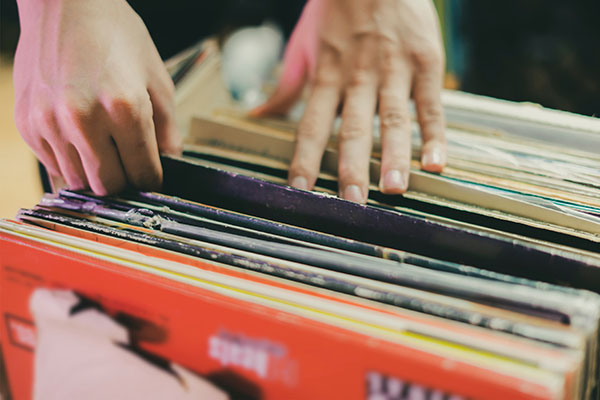
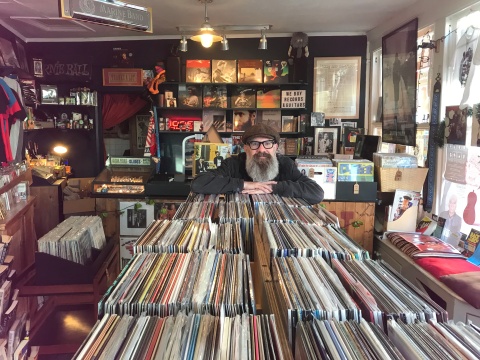
Kelly Finnigan: Yes, I am. Vinyl is so important to me and has been since I was a kid. I definitely loved tapes and CDs growing up, but I always kept buying vinyl. I’ve been collecting a long time. I sold off a lot to buy recording gear at one point, but I have been back at it hard the past few years.

‘My love for hip-hop carved the path for who I am today, and is a major part of my fabric as a producer and audio engineer’

The last great record I found in the wild was an original pressing of Chicago Blues by Johnny Young & Big Walter on Arhoolie Records. It is an incredible blues album from the late ’60s.

I’d say some of my top shops are Shangri-La in Memphis, Rooky Ricardo’s Records in San Francisco, Plaid Room Records in Cincinnati, Fingerprints Music in Long Beach, Dusty Groove in Chicago and Amoeba in L.A.

Photo by Shutterstock: Mike_shots

All That’s Left is one of the album’s slower and more reflective moments – it’s sad and emotional: it sounds like a classic soul ballad. Where did that song come from? It has a wonderful string arrangement…

Kelly Finnigan: That song was written by myself and the Ramey Brothers, and it’s absolutely the most personal record I’ve made to date. I lost my father in 2021 and dealing with the loss of such a big figure in my life has been difficult.

My father was and will always be my biggest inspiration and hero. Some people don’t know, but he was a fantastic musician and singer who worked in the music business for over 50 years. He recorded and toured with an A-list of who’s who in the business and was universally respected my his peers.

I learned immensely from him and it only makes sense that there is a piece of him on this record. While the pain of losing him has been tough, I know it’s really been really hard on my mom.

‘My father was and will always be my biggest inspiration and hero. I learned immensely from him and it only makes sense that there is a piece of him on this record’

My parents were married for over 50 years and knew each other for almost 60 years. I could only imagine the pain she was dealing with and still deals with today. I wanted to write something from her perspective – to give her a voice. I wanted to honour my parents’ love and talk about what it was like for her to lose my father, who is so deeply ingrained in her heart and mind.

Vibe-wise, I wanted to keep it open and stripped-down to not hide behind a big production. My friend, Louis King, who has worked on a lot of my music, wrote a beautiful string arrangement that really lends itself to the mood and emotion in the song. I’m really proud of that one on the album it means a lot to me. 

You’ve been so busy over the past few years: three solo albums, including a Christmas one, a mixtape, and two Monophonics albums, as well as production duties for other people. Where do you get all your energy and creativity from? What keeps you going?

Kelly Finnigan: I know it sounds a cliché, but it’s as simple as I really love what I do and I feel extremely lucky to be in a position where I get to wake up every day and create music that brings people joy.

Since I was a teenager, I have wanted to make records and make music, so the fact that I’m able to live that dream and make a living doing it is such a privilege. No matter how far I’ve come or how far I go, I will never take that for granted. The music gives me the energy, the collaborations and the potential for something to be bigger and greater.

I’m always listening to music and that really does fuel a lot, plus I try and make sure there’s balance, and I’m finding inspiration in other areas of life.

Making a record really does feel like emptying a part of your soul that has been filling up since the last time you emptied it. Now, I have obviously emptied my soul a lot in the past five years, but, luckily, I’ve got a big tank and it continues to be filled with ideas, inspiration, life lessons and a true passion for music.

So, what’s next? Any more projects in the pipeline?

Kelly Finnigan: Well, besides promoting my current album, I have a record that I worked on for soul singer Mike James Kirkland. That should probably come out sometime next year and I’m gonna get going on a new Monophonics record very soon. There are some other artists and bands that I’m talking with in terms of collaborations and a couple of other side-projects, but it’s a little early to start naming names.

A Lover Was Born is released on October 18 (Colemine Records). Click here for Kelly Finnigan’s tour dates. 

https://www.kellyfinniganmusic.com/

https://www.coleminerecords.com/