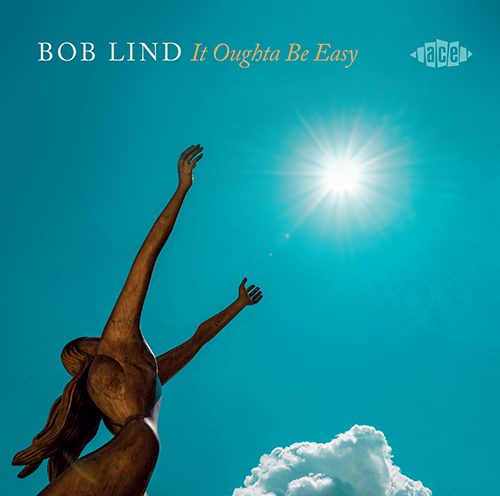
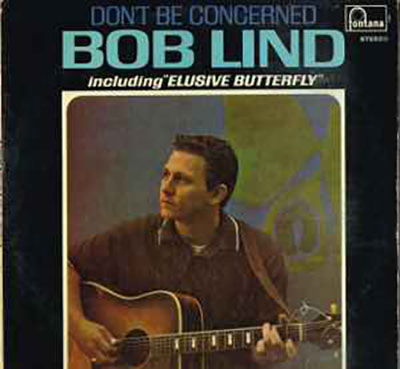
Almost 60 years since the release of his debut album, Don’t Be Concerned, US singer-songwriter, Bob Lind, is back with a brand-new record called It Oughta Be Easy – the follow up to 2022’s Something Worse Than Loneliness.
His fourth collaboration with producer, guitarist and multi-instrumentalist, Jamie Hoover, Lind’s latest album is a strong set of songs – personal, reflective, honest and at times amusing.
There are ruminations on love, life and happiness – Feel My Heart (That Other World) and Sophia’s Lullaby are hopeful songs about how love can overcome the darkness in the world – while When Love Is New is a humorous ode to young lust.
Musically, there are lush and cinematic arrangements, and a touch of Easy Listening, as well as jazz, big band, rock and roll, folk and pop.
In an exclusive interview, 83-year-old Lind, who had a Pulp song, Bob Lind (The Only Way Is Down), named after him – Jarvis Cocker and Richard Hawley are big fans – and has had his songs covered by more than 200 artists, including Glen Campbell, Aretha Franklin, Dolly Parton, Eric Clapton, Nancy Sinatra and The Four Tops, tells Say It With Garage Flowers about writing and recording the new album.
He also reflects on his career, which was kick-started by his 1966 US and UK hit, Elusive Butterfly.
“Sure I made a shitload of mistakes that I deeply regret, but I never regret giving my life to writing and singing,” he tells us.
Q&A
How was 2025 for you and how do you feel as we’re starting 2026?
Bob Lind: My year was great, especially when I consider that so many people are struggling in these dangerous, uncertain times. I’m with a fantastic woman, my health is chipper, and I have a much-appreciated, wacky gang of loving friends. A good chunk of the year was spent working on the album, which was a joy for me.
It’s been almost 60 years since the release of your debut album, Don’t Be Concerned, and you’re just about to release your new record. Does it feel like 60 years?
Sometimes.
Your new album is called It Oughta Be Easy – how easy was it to make and can you tell us about putting it together? It’s your fourth collaboration with producer, guitarist and multi-instrumentalist, Jamie Hoover…
The album was made entirely by four people: producer Jamie; keyboard man George Wurzbach; overdub engineer Brad Gagné at Sentient Sound Studio in North Miami; and me.
 Elena Rogers – a talented singer/songwriter in her own right – was gracious enough to contribute back-up vocals on a few of the songs, but, basically, the entire album is the work of the four of us. Enough good cannot be said about all these brilliant people.
I would record my demos at Sentient and send them to Jamie. I’d explain to him the kind of feel I wanted in the production and Jamie would use my input to create new tracks and send them back to me.
‘Jamie [Hoover] has an uncanny feel for my music and knows how to bring it to life’
I would listen and if there were problems, I would give him my notes and he would change whatever wasn’t working for me – that rarely happened, by the way. Jamie has an uncanny feel for my music and knows how to bring it to life.
George would record his piano parts. Then Jamie would send the tracks back to Brad at Sentient. I would go in and overdub my guitar, harmonica and vocal parts. Brad would send mixes back to Jamie and Jamie would mix them. If all this sounds complicated to you, you’re right. It was. But, ultimately, I’m happy with the results.
Are you a prolific songwriter? Do songs come easily to you?
Not as easily as they used to. My songs used to be finished within hours of when I started them. The ideas came effortlessly and I had the stamina to knock them out quickly.
The newer songs (by that I mean the ones written in the 2000s) take me longer. But here’s the trade-off: I believe I’m writing better now.
I’m patient enough to wait for the just-right line, rather than settling for a line that will work okay. I know my early stuff has paid better, but that’s not so important to me. It probably should be but it’s not.
What matters now is writing songs that resonate with – and touch the hearts of – a few discerning souls. But I would rather touch a few sensitive people wholly and deeply than interest a huge mass of people mildly
‘I believe I’m writing better now. I know my early stuff has paid better, but that’s not so important to me’
All this probably sounds precious and nobler-than-thou. But there’s nothing noble about me. I would probably sell-out in an instant if I knew how to do it. I just don’t know how to sit down and consciously write a “hit.”
The new album opens with Wearing You – an atmospheric, personal, sensual, and quite intense song. It’s a striking way to start the record. Can you tell us something about that song? It has a cinematic arrangement, and a driving rhythm. It’s a powerful track…
People always want to know who this or that song is about. For the most part, I don’t work that way. At my age, I have zillions of deep emotional joys and scars, accumulated over a lifetime. So, a tune like The Reptile, is not about any one person or situation.
That combination of guilt and obsession comes from a lot of past relationships and sheer fact-based imagination. I’m able to fabricate fictionalised scenarios from the whole cloth of memory.
Sophia’s Lullaby lightens the mood – it has a lush, Easy Listening-like arrangement, and it feels like a song of hope in a dark and dangerous world…
This is one that does come directly from a specific incident. Some years ago, a friend of mine and his wife went over to China and adopted a little baby girl. At that time, there were laws in China forbidding couples to have more than one child.
Human ego being what it is, many men wanted boys so their family name could be passed down. As a result, baby girls were often abandoned and left to die, or shunted off into overcrowded orphanages with unspeakably inhumane living conditions. So, my friends basically saved a life. That selfless action touched me to my core. It still does. That song is a lullaby to that baby girl.
When Love Is New is a fun song – an ode to young lust. What can you tell us about it? It’s one of the album’s lighter moments and has some laugh-out-loud moments…
It’s the oldest song on the album. It dates from the early ‘80s. At that time I was writing lyrics for a lot of composers. One of them, Neil Norman, gave me a cassette tape of a melody that caught my fancy. Just a simple 12-bar blues with a rock and roll hook and a peppy track. It sounded like fun to me. So, I wrote those words.
Feel My Heart (That Other World) is one of the highlights on the new record – again, it’s a song about how love can overcome the darkness in a mad and cruel world…
You nailed it with your nutshell synopsis – thanks for the kind words. There’s not much I can add to your observation. These are ugly, angry times and we should all know what’s going on. But I don’t think anyone can be happy with his or her attention constantly surrendered to the TV news.
‘These are ugly, angry times and we should all know what’s going on’
I know people who wake up in the morning and watch the news all day. By evening they’re hopelessly depressed. I’m not advocating head-in-the-sand denial. I just believe that if you have someone to love, it’s a good idea to treasure that and let that light illuminate your life.
You’ve seen a lot of changes in the world – does this feel like one of the worst times you’ve seen politically and socially?
In a word, yes. Historically, there have been equally horrific periods: The Holocaust, the Civil War, the nightmare in Salem… But in my lifetime, as a conscious adult, no, I don’t believe I’ve seen the world in worse peril.
A couple of the songs on the new record address happiness – Easy To Be Happy and Happy (Mantra). You’ve had a colourful and interesting life – is it easy to be happy at 83, or have you given up worrying about it? There’s a lot of humour in your songs, and recurring themes like lust, discontent and trying to find happiness…
Easy To Be Happy and Happy (Mantra) are two of several thematically linked songs on the album – Valentine and Nature’s Sweetest Lie comprise another matching set.
As many of my fans know, I was an alcoholic/addict, but I’ve been clean and sober 48 years. But sobriety hasn’t completely obliterated my childish demand for a perfect life.
There’s still an immature, grandiose child in me who thinks he has the right to a constant state of full-out happiness all the time – that my life should be one long 24-hour orgasm!
I may never get that spoiled kid to shut up. But I have to constantly remind him his unreasonable mindset is not the truth. I do have a good life. And will never have a perfect one.
Someone, I think it was Damon Runyon, wrote: “There’s no such thing as happiness. You’ll have to be happy without it.”
Nature’s Sweetest Lie has a great, jazzy, big-band arrangement: what can you tell us about that song? It feels like a warning to people who are caught up in the throes of a new relationship – it could almost be a companion song to When Love Is New. They both deal with the burning passion that’s present in the early stages of love…
Another good observation. I would match it up with Valentine. Women often accuse new men in their lives of not being able to commit. I say divorce courts are full of couples who committed too soon. My unsolicited advice is wait until the heat has died down a little before taking that BIG step.
‘There’s still an immature, grandiose child in me who thinks he has the right to a constant state of full-out happiness all the time – that my life should be one long 24-hour orgasm!’
Jackson, Mississippi, is known for its laws that allow for quick no-fault divorces. Billy Edd Wheeler summed it up in his song Jackson: “We got married in a fever / hotter than a pepper sprout / We’ve been talking about Jackson / ever since the fire went out.”
Old Pictures is a nostalgic and reflective song – it’s about having so much hope and so many dreams when you’re young, but how age can dim those ambitions. Are you someone who looks back, or do you live in the present?
Old Pictures is the newest song on the album. I finished it just days before the session and I had never played it for anyone before recording it – the take you hear is the first time I played it for any ears besides my own.
‘I am mostly at ease with my life, but that doesn’t mean I don’t suffer from apprehension about the future’
There were some friends in the studio and when I’d finished putting it down, there was this deep silence in the small studio. I think they were surprised to hear me give voice to that pessimism, but I don’t hide my feelings in my music. Yes, there are other ways to feel and yes, this is not the only way to look at the world.
I am mostly at ease with my life, but that doesn’t mean I don’t suffer from apprehension about the future. Brad sent the guitar and vocal to Jamie and he sweetened it with those strings and that ‘Duane Eddy’ guitar. But you’re hearing it exactly as it was sung for the first time ever.
 Looking back, how do you feel about your career? Do you wish you’d been more of a household name, or are you happy being a cult artist? You left the music business for a number of years to concentrate on writing – what prompted that and why did you return to music in the early Noughties?
Sometimes, people who want to insult me call me a “one-hit wonder.” Almost always this comes from people who have had no success themselves. They mean it to be derogatory. But to me the “wonder” is not that I only had one hit. The wonder is that I had any hits at all.
I wasn’t looking for that kind of career. At that time, there were artists like Judy Collins, Joan Baez, Tom Paxton, Josh White and even pre-electric Dylan who never had hit records at that point. But their body of work allowed them to tour, filling 700-to-900-seat auditoriums all over America. That’s the kind of career I was looking for early on.
I got out of the business because I was disgusted with the “suits” who kept interfering with what I was trying to do.
I stayed gone for a long, long time. It wasn’t until I got a website and heard from people all over the world who missed me and my work, that I decided to stick my toe back in.
Do you have any regrets?
Sure I made a shitload of mistakes that I deeply regret. A 23-year-old kid fucked-up on pills and booze is going to make stupid career judgements. I regret those idiotic choices. But I never regret giving my life to writing and singing.
‘I got out of the business because I was disgusted with the “suits” who kept interfering with what I was trying to do’
You’re best known for your 1966 US and UK hit, Elusive Butterfly. Where did that song come from? Can you tell us a bit about writing and recording it?
If you don’t mind, I’m sick of talking about that subject. The information is all over the internet in zillions of interviews. Here’s the capsule: I wrote it stoned on uppers and weed after being up all night. I was in that zone between sleep and wakefulness. No one expected it to be a hit – not even my record company, who released it as the B side of Cheryl’s Goin’ Home. My focus is on what I’m doing now.
Your songs have been recorded by so many great artists, including Cher, Glen Campbell, Aretha Franklin, Dolly Parton, Eric Clapton, Nancy Sinatra and The Four Tops, among others… Do you have any favourite versions of your songs by other people?
Five come to mind:
- Richie Havens: How The Nights Can Fly.
- Nancy Sinatra: Longtime Woman.
- Jay and the Americans: Truly Julie’s Blues.
- The Turtles: Down in Suburbia.
- Cher: Come To Your Window.
The last two – 4 and 5 – are strictly sentimental favourites. Both of them were recorded before anyone knew who I was, before Elusive Butterfly, before I’d had any success in the industry. I remain grateful to Cher and The Turtles to this day.
Who are some of your favourite songwriters and why?
Danny O’Keefe, James Taylor, Joni Mitchell, Michael McDonald, Donald Fagen and Walter Becker. The first three for their precise use of words, the care they take in telling the truth and avoiding cliché. McDonald for his gift for melodic “playfulness” – the way he will work two melodies in sync with each other, one to be sung, the other for the instruments. The Steely Dan guys for … well I don’t know where to start. They excel at everything.
Were you flattered when Pulp named a song after you? How was it being championed by Jarvis Cocker and Richard Hawley and do you speak to them at all?
As a matter of fact, I spoke with Richard just last night. And of course I was – and am – not only flattered but honoured that those two superstars have kept my name alive in England. Both of them are open-hearted, generous guys whose talent is off the charts.
Bob Lind’s It Oughta Be Easy is released on January 30 via Ace Records.
You can preorder it here.

 Say It With Garage Flowers