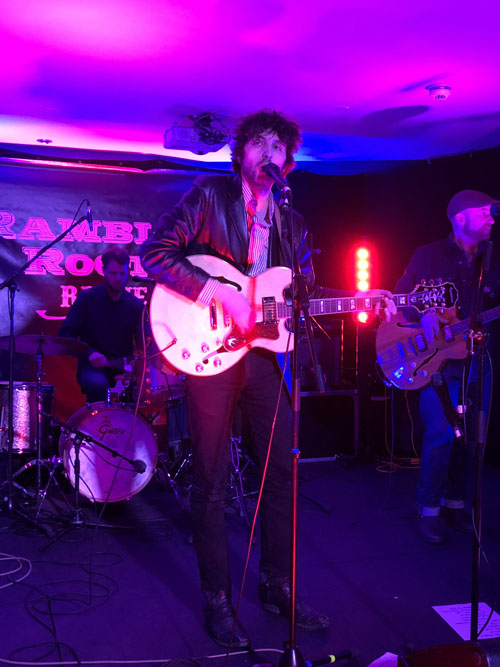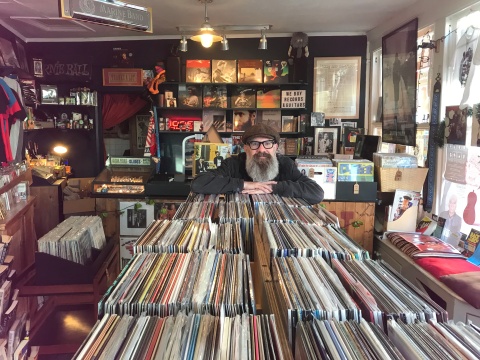
‘My favourite Dylan album will always be Highway 61 Revisited. It’s got everything…’


The recent Bob Dylan biopic, A Complete Unknown, has thrust the legendary singer-songwriter’s classic ’60s period back into the spotlight. Now a new book by UK author and journalist, Sean Egan, examines how and why during that decade, Dylan made some of the greatest and most influential recordings of all time.

Drawing on exclusive interviews with people who worked with Dylan in the ’60s, including musician Al Kooper and photographer, Daniel Kramer, Decade Of Dissent: How 1960s Bob Dylan Changed The World is a fascinating, accessible, and well-written book, offering some fresh insights into arguably the most important and revolutionary period in pop/rock music.

Egan isn’t afraid to speak his mind, either — he can be scathing about certain Dylan songs or albums, but backs up his opinions with solid arguments. He’s got a lotta nerve…

In an exclusive interview, Egan speaks to Say It With Garage Flowers about why and how he wrote the book. He also shares some of his favourite Dylan songs and explains why Highway 61 Revisited is the album that’s singularly most responsible for transforming popular music into what we know it as today.

“Highway 61 Revisited changed the rules for everything,” he tells us.

Q&A

After The Beatles, Dylan is arguably the most written about rock musician. Why did you decide to write another book on him — you’ve already done The Mammoth Book of Bob Dylan —and what did you set out to achieve with Decade of Dissent? What did you feel you could say that was new?

Sean Egan: I’m not sure there’s ever anything completely new to say about such a well-trodden subject — it’s the way that you say it.

What is new, though, is plenty of never previously published quotes and anecdotes from musicians who worked with Dylan in the ’60s, who I interviewed a few years back for a magazine article on Highway 61 Revisited. I was left, as per usual, with a lot of material that didn’t make it into the feature because of lack of space.
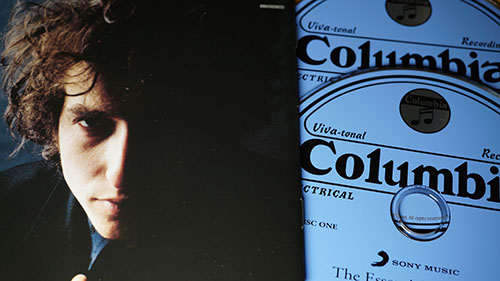
Photo credit: Stefano Chiacchiarini ’74 – Shutterstock

Why did you decide to concentrate on Dylan’s ’60s period? Did you ever consider a book on just his ’70s or ’80s work, or the religious years, or his latter records? Why not write about a period that hasn’t been so well documented?

Sean Egan: I decided to focus on the ’60s because although Dylan has made great albums since then, that was the calendar decade in which he was most influential and in which he was at the peak of his artistic powers.

In the ‘60s, he never stopped moving forward, going from protest with his second and third albums to more generalised beatnik poetry on his fourth album, and going electric in 1965 with all the magnificent results we hear on Bringing It All Back Home, Highway 61 Revisited and Blonde On Blonde.

Then we have those weird albums, The Basement Tapes (if we can call that an album – I deal with the demo tapes in circulation at the time in the book) and John Wesley Harding. In those songs he seemed to totally disavow his hipster aura for something that was penitent and quasi-religious and did so to the accompaniment of very rootsy, bare music. Even Nashville Skyline is interesting in a sense because it sees him embracing corny country clichés, which nobody saw coming.
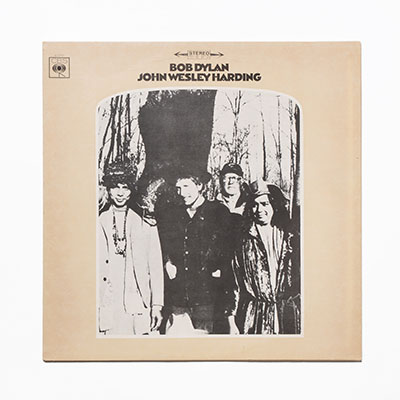
Photo credit: PHLD Luca – Shutterstock

The reason his ’60s material has been so well documented is simply because that is the best and the most influential material. There’s also the prosaic fact that I didn’t actually have much already existing interview material on the latter years.

How long did it take to research and write the book and how much of it relied on first-hand interviews undertaken by you? 

Sean Egan: You could say that it took me 15 years altogether because that was how long ago the interviews were conducted for the Highway 61 Revisited feature.

‘The reason Dylan’s ’60s material has been so well documented is simply because that is the best and the most influential’

In terms of physical writing, it didn’t take me that long, perhaps six months, and then the process of reading and rereading — even after it being submitted to the publisher — because endless honing is the way that I work.

Did you learn anything new or surprising?

Sean Egan: What is always surprising is the way that people’s memories differ. So, for example, Al Kooper swears that he gatecrashed the Like a Rolling Stone session — it’s quite a famous anecdote — whereas Al Gorgoni says that he invited him to the session after meeting him by chance on the street outside the studio.

Also, Daniel Kramer, the photographer, remembers Dylan giving musicians a lot of advice, but the musicians were always complaining to me that Dylan gave them no guidance whatsoever and they were essentially dancing in the dark.
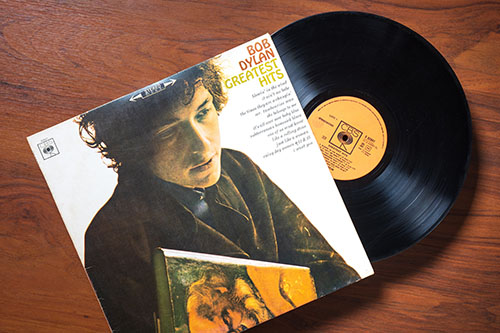
Photo credit: PHLD Luca – Shutterstock

Who were your favourite people to interview and why?

Sean Egan: I think Kramer was probably my favourite, simply because he hadn’t been spoken to as much as the musicians and he had a lot of interesting recollections about Dylan’s attitude about being photographed and about creating a public profile of himself. Dylan has always been interested in image and has never been the purist totally into the music that his songs might suggest.

‘The musicians were always complaining to me that Dylan gave them no guidance whatsoever and they were essentially dancing in the dark’

What’s your favourite Dylan song and album?

Sean Egan: My favourite Dylan album will always be Highway 61 Revisited. It’s got everything. It starts with Like a Rolling Stone and ends with Desolation Row, and those two songs alone are enough to make anybody’s reputation, but there’s lots of fantastic stuff sandwiched in between. Including surprisingly, It Takes a Lot to Laugh, It Takes a Train to Cry, which is not only a beautiful ballad, but it’s also an impressionistic song and we don’t really expect impressionistic songs — by which I mean sound paintings —  in Dylan’s canon because we associate him with sparkling words, with music as a secondary factor.
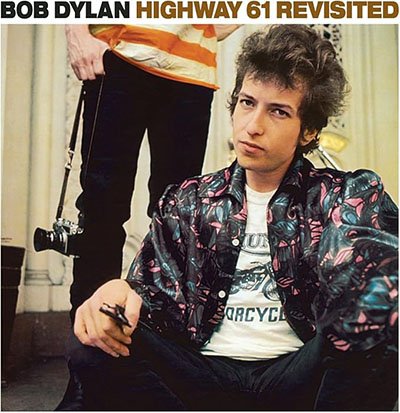
In terms of songs, It Takes a Lot to Laugh, It Takes a Train to Cry is up there, as is Like a Rolling Stone, as are so many other things, but I have to nominate a bit of an obscurity: Up to Me. It was an outtake from Blood on the Tracks first released many years later on Biograph.


I enjoy your writing style and some of your observations, but I don’t always agree with your views. For example, in the book, you are quite dismissive of Positively 4th Street, which is one of my favourite Dylan songs… You think it’s too reminiscent of Like a Rolling Stone… Can we at least agree that ‘You got a lot of nerve to say you are my friend… ‘ is one of the greatest opening lines in a song ever?

Sean Egan: It definitely is one of the greatest opening lines, but it takes more than that to make a great song or a great recording. Al Kooper played on both of those songs and he himself said to me that Positively 4th Street just seemed like part two of Like a Rolling Stone. It’s people’s different opinions that makes life interesting.
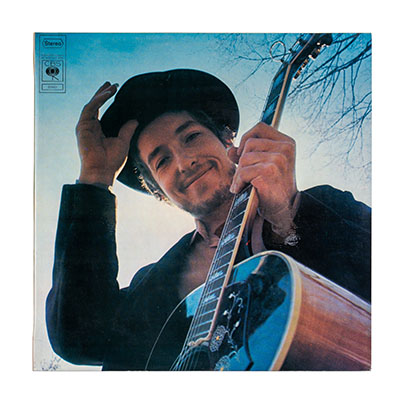
Photo credit: PHLD Luca – Shutterstock

Nashville Skyline is my favourite ‘Sunday morning album,’ but you’re not a big fan, are you? In the book, you call it: ‘half engaged and lazy…’ 

What’s your main beef with it? Admittedly, it’s not up there with his mid-’60s run of great albums, but it’s a nice album with some good moments, like, I Threw It All Away, which I think is one of Dylan’s best songs… Do you really think it’s such a bad album?

Sean Egan: It’s very slick and professional and it’s got a couple of classic songs in the shape of Lay Lady Lay and Tonight I’ll Be Staying Here With You, and if anybody else had made it, it would probably seem a much better album.

The trouble is that we associate Dylan with something more elevated. In fact, he is the very person who made songs and albums like that seem inadequate because he was the first person to prove that you could do so much more with popular music than just load it with clichés and romantic convention.

In the book, you say that Highway 61 Revisited is the album that is singularly most responsible for transforming popular music into what we know it as today. Can you elaborate on that?

‘Highway 61 Revisited changed the rules for everything. It proved that you could have a hit single with a six-minute scathing put down like Like a Rolling Stone, and that you could come up with a magnificent, poetic opus like Desolation Row, which spans 12 minutes’

Why do you think it’s that important? Some people might make the case for The Beatles’ Rubber Soul or Revolver being more influential —  I think the latter is the greatest album of all time —  but I guess as Dylan influenced the mid-’60s Beatles so much, as you explore in the book, you would argue that Highway 61 Revisited is a more important record?

Sean Egan: Both of the two albums you mentioned came after Highway 61 Revisited and were influenced by them, so while it’s up for debate which of the three albums is the better one, it’s not up for debate as to which one is the more influential.
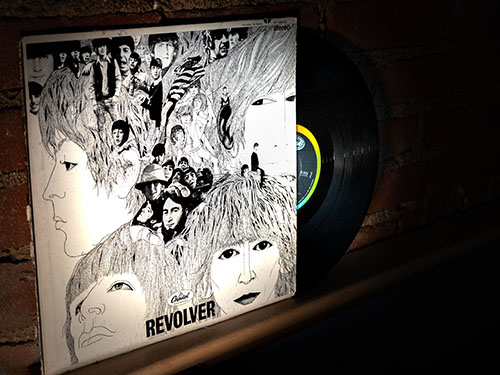
Photo credit: David Arsham – Shutterstock

Highway 61 Revisited changed the rules for everything. It proved that you could have a hit single with a six-minute scathing put down like Like a Rolling Stone, and that you could come up with a magnificent, poetic opus like Desolation Row, which spans 12 minutes and which seems to take in just about every injustice and iniquity and hypocrisy on the face of the planet.

Just imagine being a Beatles or Stones or Dave Clark Five fan being exposed to material like that and the kind of effect it has on your mind. Then imagine that multiplied millions of times over and you can begin to get a grasp of just how revolutionary Dylan and his art were. Teenyboppers were being exposed to ideas that had never crossed their minds before.

I would argue that ’66, with Pet Sounds, Revolver and Blonde On Blonde, is a better and more groundbreaking year for rock / pop music than ’65, but would you make a case for ’65 being more important?

Sean Egan: Sixty five and ’66 are probably equally important but I think it’s an illusion that ’66 was aesthetically an improvement. I like Rubber Soul better as an album than Revolver, and Highway 61 Revisited better than Blonde On Blonde, and the two Beach Boys albums from ‘65 more than Pet Sounds. All of those ‘66 albums were very, very slick and sophisticated-sounding but they to me don’t quite have the soul or the range of the ‘65 records. For me, the two greatest years for popular music are 1965 and 1979.

Have you seen A Complete Unknown and, if so, what did you think of it?

Sean Egan: Everybody’s asking me that at the moment, for obvious reasons, and the answer to the question is ‘no I haven’t.’ This is a deliberate thing, as it irritates me the kind of liberties with the facts projects like that take, by necessity, admittedly. Life doesn’t lend itself to the kind of tidy narrative and poetic juxtapositions that filmmaking demands.

I will watch it out of curiosity when it ends up on television and I’m pleased that it’s out there because it keeps Dylan’s name alive to new generations of people, but nobody should go to a film like that expecting it to be the exact truth.

‘I don’t know whether a new album’s coming soon and maybe Dylan doesn’t even know, but he might get up one morning and decide he’s got the itch to record or write again’

Have you met Dylan? If so, what was he like? And, if you haven’t, would you like to meet him, and what would you say to him / ask him?

Sean Egan: I’ve never met him. He’s one of the few heroes on my wish list I haven’t interviewed. Naturally, I’ve got some questions in the back of my mind that I’d ask him were I ever lucky enough to encounter him, but I’ll keep those to myself just in case that lucky day comes.
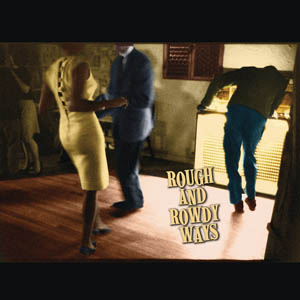
Do you think we’ll get a new Dylan studio album anytime soon?

Sean Egan: He’s at that stage of his life where he can record when he wants to and where his whims are the whims of a man who doesn’t have anything to prove anymore. I don’t know whether a new album’s coming soon and maybe Dylan doesn’t even know, but he might get up one morning and decide he’s got the itch to record or write again. He’s given us enough in his life in any case that we can all be satisfied and grateful for the pleasure he’s already given us.
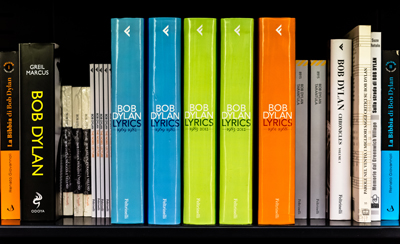
Dylan books
Photo credit: Apostolis Giontzis / Shutterstock

Can you recommend any good Dylan books to read other than your own?

Sean Egan: Elijah Wald’s Dylan Goes Electric, which A Complete Unknown is partly based on, is a good summary of why Dylan going electric was so seismic in both music and culture, and he knows a lot more about folk history than I ever will.

Clinton Heylin is the man when it comes to covering the entirety of Dylan’s career, even if he does tend to be a bit snippy about other writers. I’ve lost count of how many books he’s done. His depth of knowledge is incredible.

Decade Of Dissent: How 1960s Bob Dylan Changed The World by Sean Egan is published on May 20 (Jawbone Press).

www.jawbonepress.com


‘This record sounds like who I am, but it’s a little deeper than some of the others – it’s more vulnerable’

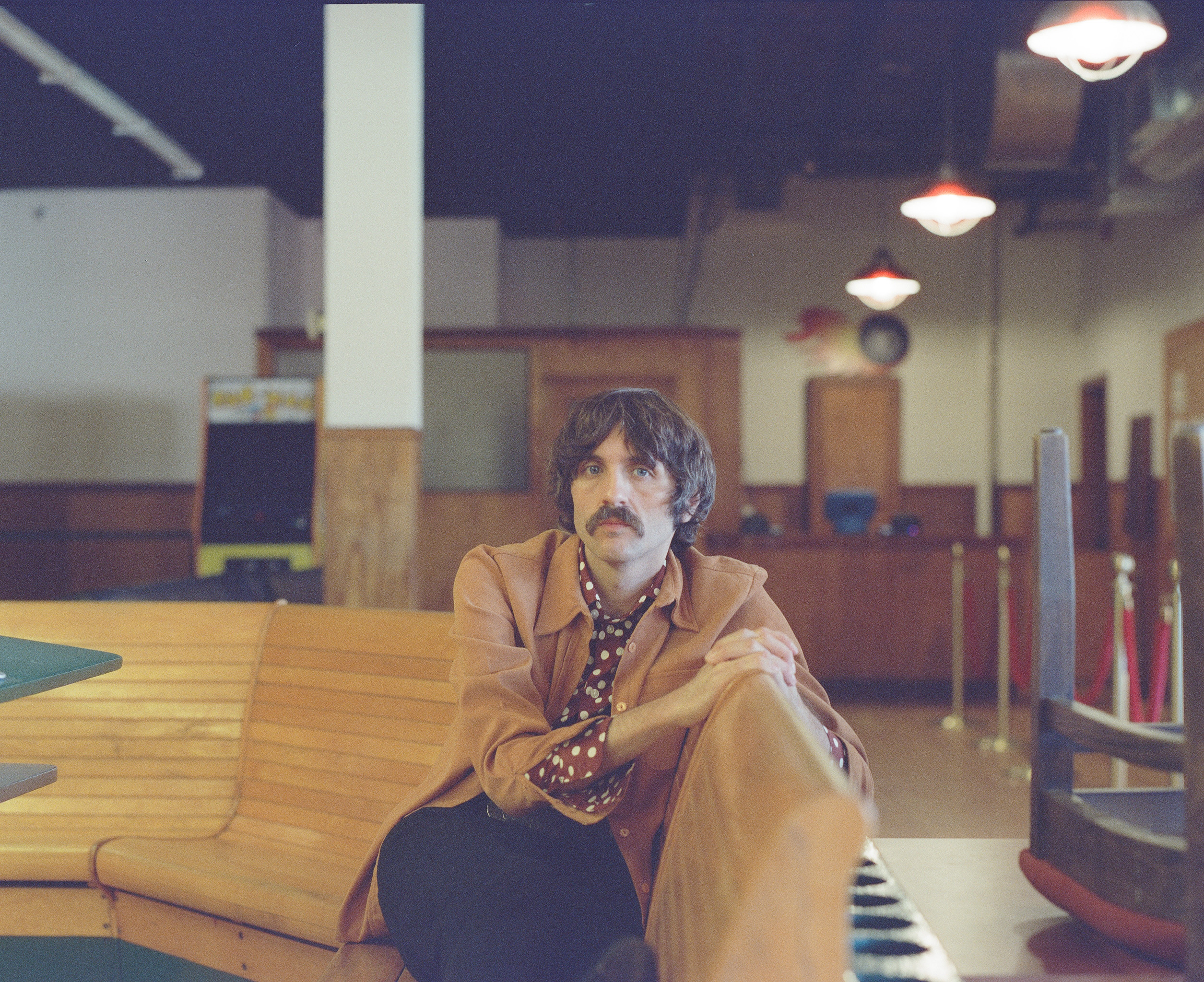
Jerry Leger, photographed at Shamrock Bowl in Toronto by Laura Proctor.

Canadian singer-songwriter, Jerry Leger, has described his latest album, Nothing Pressing, as his ‘deepest artistic statement yet’.

It’s also one of his strongest and darkest records. Largely written and recorded in the wake of a close friend’s death and with the shadow of Covid hanging over it, Leger says it’s an album about survival – mental, physical and artistic. 

Some of the songs, like the stark, stripped-down and folky Underground Blues and Sinking In, were recorded in his Toronto apartment, using two SM58 microphones fed into his vintage 1981 Tascam four-track tape recorder.

“I spent a lot of the lockdown writing and demoing using the four-track,” he says. “I wasn’t writing with the pandemic in mind – and some songs were written before it happened – but the album does have a feeling of isolation, reflection, longing and gratitude.”

He adds: “It was spring of last year that I unexpectedly lost one of my best friends. I think it’s unavoidable that things like that seep in. It’s a surreal feeling losing someone close. I wasn’t consciously writing with him in mind, but I can now hear traces of me dealing with it in a few of the songs.”

New single, the raw and punchy Kill It With Kindness, anthemic rocker Have You Ever Been Happy?, the Neil Young-like Recluse Revisions, the classic country-sounding A Page You’ve Turnedand the Beatlesy love song With Only You were laid down in the studio with his long-time producer, Michael Timmins (Cowboy Junkies), and Leger’s band, The Situation (Dan Mock (bass/vocals), Kyle Sullivan (drums/percussion). There are guest contributions on the album from Tim Bovaconti (pedal steel) and Angie Hilts (vocals).

“Other than my drummer and bassist/backing vocalist,  I sang and played almost everything,” says Leger. “This gave the sound a certain flavour and character that hasn’t quite been captured on previous studio albums. There is very little outside involvement, to avoid diluting the sound we were after, creating a more personal statement.”

“I wasn’t writing with the pandemic in mind  and some songs were written before it happened – but the album does have a feeling of isolation, reflection, longing and gratitude”

The song, Nothing Pressing, which opens the record, and the tracks Protector and Still Patience are solo acoustic, recorded live in the studio with few embellishments, save for Mock’s overdubbed harmony vocals and, on the title track, Timmins’ ukulele. 

The follow-up to his 2019 studio album, Time Out For Tomorrow, it’s a stunning collection of songs – and often painfully honest. On Still Patience, over a sparse backing of guitar and Wurlitzer, Leger sings: “I go drinking by myself, when I got nobody else, for misery is company.”

At times sad and reflective, it’s an album that doesn’t shy away from tackling personal issues, such as mental health, depression and seeking solace in alcohol, but it’s also a record that believes a problem shared is a problem halved.

“I really hope that this record is given the attention it needs. It’s not really an undertaking [to listen to], but it requires a little more work than Time Out For Tomorrow, which was very inviting,” says Leger, talking to Say It With Garage Flowers from his apartment, in an exclusive interview.

“It could be very helpful for a lot of people – it’s one of those records that I would go to for a different type of comfort.  I need to know that other people are going through all these crazy feelings too.”

Q&A

It’s good to chat again – it’s been a while. How are you doing?

Jerry Leger: I’m good. It’s been a busy year so far, what with getting the record together and the tour. It’s definitely been a bit stressful – putting a new studio album out in the current climate, where we’re still dealing with the pandemic and everything else.

And now there’s a war on…

JL: Yeah – it doesn’t seem to be getting that much better, but it’s exciting to have something new to focus on. Putting this record has been different.

The last time we spoke was in March 2020 – Covid had forced you to cancel your European and UK spring tour for your album, Time Out For Tomorrow, and you’d hastily put together a brand new, digital-only album, called Songs From The Apartment.

Available to buy from Bandcamp, it was made up of ‘lost’ songs from 2013- 2018 that you’d demoed and quickly forgotten about. Since then, it’s had a vinyl release.

You’ve also published a book of poetry, called Just The Night Birds, made a concert film, put out some non-album digital singles, and written and recorded the new record.  You’ve been busy…

JL: I know – I do like staying busy in general. I guess the healthy thing about all those projects I did was that I wasn’t putting pressure on myself to create anything or put them out – it was helpful me to do that.

To make this album, we were trying to get into the studio as soon as possible because we knew that when we resumed touring and going overseas we couldn’t really tour Time Out For Tomorrow. It was definitely a smart idea to make a new record, but we had to work out how we could get into the studio.

“It felt great making the record, but it was a strange feeling at first. That soon disappeared once we were rocking and rolling and getting into it”

The four of us – (Dan Mock (bass/vocals), Kyle Sullivan (drums/percussion) and Michael Timmins (producer) – wanted to make sure we were comfortable and safe.

I went to the studio in the summer (2021) and recorded some stark, acoustic numbers. Then, once we got the green light, we got the band in. It felt great making the record, but it was a strange feeling at first. That soon disappeared once we were rocking and rolling and getting into it.

Was it a quick album to record?

JL: It was a lot faster to make than I thought it would be. I did the songs Nothing Pressing, Still Patience and Protector in one session – just me and my guitar. I added some Wurlitzer to one of the tracks, and then when the band came in, we booked a week – a Monday to Friday – to record.

We were so determined to do a good job and not rush it, but that determination allowed us to do the songs in two / two-and-a-half days. There’s also five songs I recorded with the band that didn’t go on the album. I was starting to change the vibe of the record as we were into the sessions and I listened to the rough mixes. I thought it should be just a full-band album, but Mike brought me back to the original plan – he said that wasn’t the concept we should be going for. That was helpful – that’s why I still like working with a producer. He’s someone who can make sure I’m staying on-task.

Mike wanted some stark acoustic songs, a couple of tracks that were me at home, and then the band. There’s a story – the album is bookended by Nothing Pressing and Protector. Both those songs are saying certain things and in the middle you get everything else.

“I was starting to change the vibe of the record as we were into the sessions. I thought it should be just a full-band album”

I was having so much fun playing with the band and with what we were recording that it made me want to change what we were going for. Who knows if that would’ve been better or worse? It wouldn’t be worse – it would still be a great record…

Look at Dylan. When he started screwing with his records sometimes it went in a good way – like Blood On The Tracks, which he rethought and recorded, but other records, like Infidels, suffered. It could’ve been a certain record, but he had second thoughts.

You’re a prolific songwriter. Did you have all the tracks written before you went into the studio, and were any of the songs old ones you hadn’t put out before?

JL: They were all brand new, except for Wait A Little Longer, which I’d recorded with my side-project, The Del Fi’s – it came out on their second record, in 2018. You’ve got to dig for those albums – not a lot of people heard that song and I thought we could do a really good job on it and give it a different spirit and a wider audience.

It’s a song I love and the band also love it. I originally gave it to The Del Fi’s because when I played it live I never really got much of  a reaction to it. But after we played with The Del Fi’s, my band said: ‘Why did you give that song away?’ I thought I was the only one who liked it… There’s something jovial about it and I thought this album could benefit from it.

“I think this album has been the best way for me to cope with the loss of my buddy, Sean. I haven’t really dealt with it and the pandemic’s made it hard”

It’s a pretty dark record at times. Some of the songs are sad and deal with personal issues, like alcohol abuse, depression and wrestling with inner demons. You lost a good friend, called Sean, before you made the album, which influenced some of the songs and themes on it. You’ve described the record as your ‘deepest artistic statement yet’. There’s a shadow hanging over it, isn’t there?

JL: I think that’s a good description of it. There’s a shadow hanging over everything and I was trying to make an effort to not accept that or realise it. Everyone deals with it at various points – a resilience. What comes with that is trying to push certain thoughts away. I think this album has been the best way for me to cope with the loss of my buddy, Sean – I haven’t really dealt with it and the pandemic’s made it hard. I still haven’t seen a lot of my friends, or it’s been on a semi-regular basis. It’s a bit of a sad record – but it has moments that go off in other directions.

Did you have a feel for what this album should sound like? For Time Out For Tomorrow, you were influenced by Lou Reed’s Coney Island Baby

JL: I just wanted it to sound like me and us – for this one, I didn’t have a concept of how I wanted it to sound. I think that’s why some of the tracks vary from one another. I think the record sounds like who I am, but it’s a little deeper than some of the others. It’s more vulnerable in places. Still Patience is a song that I wasn’t sure I wanted to release.

That’s one of my favourite songs on the record…

JL: Oh, thanks. It’s a song that at the time I was writing it, I wasn’t exactly thinking about what I was writing about – it was quite emotional to record, as it was the first song I recorded being back in a studio, after so long wondering whether if I’d ever be doing it again.

A couple of the songs on the record are just you singing and playing into a four-track recorder…

JL: I particularly love the sound of the four-track, which I used to record Underground Blues and Sinking In. I love the sound of those machines. If we hadn’t made this studio album, I was going to put out an album of just songs recorded on the four-track, because I was really excited about the sounds I was getting out of it and the different arrangements I was coming up with. Mike liked that too – he was the one who mentioned I should include a couple of those recordings on the album.

“Underground Blues is just me at home on a Tascam four-track – Springsteen used the model before it to do Nebraska”

I’m not a great guitarist, but I played the electric guitar solo on Underground Blues – this was the first album where I played all the solos. Underground Blues is just me at home on a Tascam four-track – Springsteen used the model before it to do Nebraska. 

Underground Blues is folky and has a mid-’60s Dylan feel…

JL: One of my buddies is a big Dylan fan and he also loves Bert Jansch –  he thought it sounded like something he would do. That’s interesting because Bert Jansch is somebody I’ve listened to more and more over the years. I really dig him, but I could never play like that. There’s a certain feel in the acoustic playing that aligns itself to that kind of blues song that Bert would’ve played – there’s a bit of a folk element to it.

The album title, Nothing Pressing, is apt for a record that was written during lockdown…

JL: Yeah. Besides Wait A Little Longer, that was the only song that I wrote before 2020. It was written around the time of the release of Time Out For Tomorrow – in 2019. It’s just one of those songs that came to me – I was picturing somebody like John Prine or Butch Hancock.

I was going to call the album Recluse Revisions, but Nothing Pressing became the title track. Mike suggested Nothing Pressing because he felt it was a song that really set up the record well and that it was nice to start it off with an acoustic number and then, surprise, here’s the second song, Kill It With Kindness… It’s not the record you thought you were getting…

The phrase ‘Nothing Pressing’ could also be a comment on the current global vinyl shortage…

JL: That’s true – I actually received some surprising news that our vinyl has made it time for the album release date.

Well, Adele’s latest record is out now…

JL: Yeah – she gave us some room.

The first single you released from the album was Have You Ever Been Happy? I like the lyric ‘Something made me laugh, but the punchline was me…’

JL: [laughs].

That song has a great chorus and melody, and I love the backing vocals by Angie Hilts…

JL: She’s from Toronto – she also sings on Wait A Little Longer. She had sung on the original recording of that by The Del Fi’s. She came up with the vocal harmony. I worked with her before, on my Nonsense and Heartache album – she sang on The Big Smoke Blues, Pawn Shop Piano and Lucy and Little Billy The Kid. She’s a great singer and artist – she can go in different directions, above or below me, and it just blends.

Recluse Revisions – another favourite of mine – has some great pedal steel on it and the harmonica gives it a classic Neil Young feel…

JL: I hear that.

I like the line in the song about musicians playing ‘cowboy songs we know by heart’ on cheap guitars…

JL: I had that line leading up to the song – I liked the idea of musicians listening to it. It’s about when you have a cheap guitar and the action / the strings are really high up from the neck, but you can usually still play those cowboy song chords, like G and C and E.

I like that imagery – of being with a comrade, playing songs and it still being harmonious. There’s another line in it: ‘We’re young now that we’re old.’ That could be about losing time, but not… In some ways, it feels like we’ve lost the last two years, but in other ways, all this stuff has happened – you and I kept doing things. We all did. Recluse Revisions is about trying to figure out how we reemerge and join the rest of society again. How to socialise and how to be comfortable going out again.

“I’ve always been somebody that’s suffered from a bit of social anxiety, so I have to push myself even more now to get out”

Here in Toronto, certain mandates have started to be lifted and I know that in the UK that’s already happened. I’ve always been somebody that’s suffered from a bit of social anxiety to begin with, so I have to push myself even more now to get out. I want to get out, get on the road and play shows because that’s always felt like a different dimension or a different world. I can accept that.

“I’m a survivor – I’ve had to deal with a lot of shit through the years”

You were getting a bit of a following in the UK, after playing gigs here and some decent press. Are you worried that you’ve lost some momentum due to the pandemic? How do you feel about coming back to play here? You’ve now got three albums’ worth of new material to play…

JL:I’m just excited to get back doing it. I’m a survivor –  I’ve had to deal with a lot of shit through the years, with my career and things not working out how I thought they would. Spiritually, I’m unable to compromise. That’s made things a bit tougher for me, but it’s also made me tougher.

Time Out For Tomorrow had some good momentum and I was excited about touring it, but I couldn’t do anything about it. I just keep making albums and touring them, and, hopefully, people come out. We’ll be there and we hope that our audience feels comfortable about coming back out and supporting us.

Jerry Leger & The Situation at the 2019 Ramblin’ Roots Revue: picture by Sean Hannam


I also really hope that this record is given the attention it needs. It’s not really an undertaking [to listen to], but it requires a little more work than Time Out For Tomorrow, which was very inviting. I can’t keep on making the same record every time – I’m not even capable of doing that.

“Spiritually, I’m unable to compromise. That’s made things a bit tougher for me, but it’s also made me tougher”

This record just happens to be what it is, but, song-wise, I think it’s a much stronger record than the last few. It could be very helpful for a lot of people – it’s one of those records that I would go to for a different type of comfort. There are records that are very great-sounding and bright – if I want to be in a better mood, I throw a Beatles record on – but then there are records for when I need a different type of comfort, like Blood On The Tracks. I need to know that other people are going through all these crazy feelings too.

Kill It With Kindness is a big-sounding song, with some raw guitar. Like some of the other songs on the record, it tackles alcohol use and depression – keeping demons at bay…

JL: Yeah – that’s true. It starts off with the enemy being in your mind – it’s about how you choose to react to certain things. If there are people and things around you that are having a negative effect, you have a choice – you can decide how you want to tackle that.

I agree with you – I think the record is about tackling that and trying to fight some demons. With the pandemic and everything stopping, there was a lot more time to self-reflect and look in the mirror. Thinking about things and how you want to be perceived and how you want to be moving forward.

Sure there are some things that we use as a crutch. There are elements of that – using different things to help you cope and get by. Sometimes that can end up making things a bit more overwhelming. The record is a man with a worried mind – stress and anxiety – and it acknowledges that. I think the next record will be about tackling those things, but through meditation and stuff like that…

You’ve got the George Harrison moustache to do it…

JL: (laughs): Yeah – I have. Exactly. I’m gearing up for that. The next record will be about taking care of myself – I knew that I had to do that in order to keep going on. It will be about finding that help to help myself.

Your song With Only You from the latest album has a very Beatlesy feel…

JL: Yeah – I really dig that one. It’s a love song – a break point on the album – but there’s an element of sadness to it, because you’re relying on someone else to help you through. You can’t make it without them, because you need more strength than you can create yourself.  But there’s also a beauty to it.

That song is very much the Beatles influence that’s been there all my life. It shows on that song. I actually worked out and wrote the guitar solo for it – I normally just do it and feel it out. It sounds like a cross between George Harrison and Mick Jones from The Clash. Mick Jones didn’t always have finesse, but he had confidence. It’s nothing super-fancy – it’s light and it’s melodic. A little brother to George Harrison.

“The next record will be about taking care of myself –  I knew that I had to do that in order to keep going on”

Your first live show for the new album will be in Toronto, at the Paradise Theatre, on March 31, which is my birthday…

JL: Yeah – I got you tickets to fly over for it. I wish!

It’s your big comeback show…

JL: I’m going to wear all leather.

Nothing Pressing is out now (digital) via Latent Recordings/Warner Music Canada/Proper Music. The physical release (CD and vinyl) is out on March 18. 

https://ffm.to/jerrylegernp


Tour Dates
03-05 Birkenhead, England – Future Yard
04-05 Winchester, England – The Railway Inn
05-05 London, England – The Green Note
06-05 Nottingham, England – The Chapel, Angel Microbrewery
07-05 Glasgow, Scotland – Broadcast

Home