‘Any singer-songwriter who says they’re not influenced by Bob Dylan is lying through their teeth’

Alex Lipinski

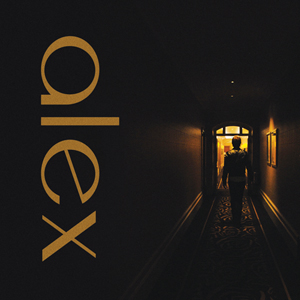
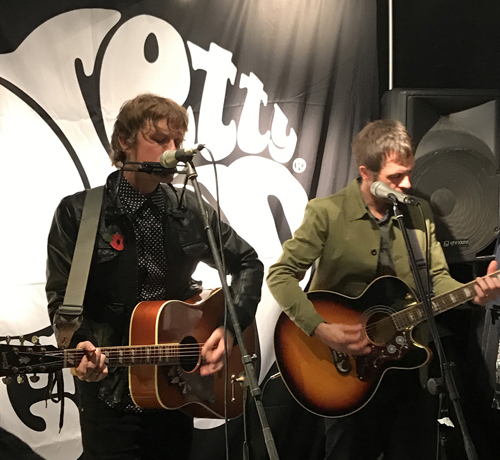
I first heard West Country singer-songwriter Alex Lipinski in November this year – he kindly invited me to the launch of his new album, Alex, at the Pretty Green clothes store in London’s Carnaby Street.

With his brother Adam on guitar, he played acoustic versions of several tracks from the record and I was really impressed – so much so that I bought a copy of the album on vinyl. Since then, it’s been on heavy rotation on my turntable and is one of my favourite albums of 2017.

Recorded and produced by Anton Newcombe of the Brian Jonestown Massacre at his studio in Berlin, it’s a raw and bluesy album and it sounds like Bob Dylan meets The La’s.

Dealing with the darker side of life, the songs are stripped-down and lived-in – the moody Dandylion Blues has a cool organ and electric guitar groove over which Alex warns of ‘dark skies on the rise’ and tells us that he’s ‘got to keep on keeping on’.

The folky strumming of Carolyn lightens the mood, but those dark skies soon return with Hurricane – one of my favourite songs on the album. Recalling Heartbreaker-era Ryan Adams and Dylan circa Blood On The Tracks, it’s a stunning country ballad (acoustic guitar and harmonica) that’s a vicious put-down of an ex-lover: “You had it all worked out. All you do now is scream and shout, spilling worthless words from your mouth.”

I spoke to Alex to find out how the album came together, what it was like working with Anton Newcombe, and to see what his plans are for 2018…

Q & A

Hi Alex. It was great to meet you a few weeks ago, when I saw you play at Pretty Green, in Carnaby Street. Thanks for inviting me. I really enjoyed the gig.

Alex Lipinski: It was good to meet you, Sean – we had a really cool night at Pretty Green. It was a nice, intimate space to showcase the new songs and the guys there looked after us.

How does it feel to have the new album out there? It’s your second album – your debut, Lonesome Train, came out seven years ago. Why the big gap between albums?

AL: It’s a good feeling to finally have this album out. After Lonesome Train was released, I was working on the follow-up album, then I started a project with Bonehead [Oasis] called Phoneys & The Freaks, so that kind of took over for a year or so, then by the time I was ready to start the second album, I was working on a new bunch of songs that I felt were stronger. That was when Anton Newcombe contacted me…
Adobe Photoshop PDF

How did you come to work with Anton?

AL: He saw a live video of one of my songs and contacted me saying he wanted to produce me and put my next record out.

We met a couple of times after Brian Jonestown Massacre gigs and discussed the direction. He had in mind these old ‘60s folk recordings, in essence, capturing the songs as stripped-back as possible – the bare bones – letting the voice, the songs and the performance come through.

We recorded the album in about eight hours in Anton’s studio in Berlin. My brother Adam [guitarist] joined me in Berlin and we set-up in Anton’s studio one night, sitting facing each other, with a giant RCA mic in the middle – the same one they used on the old Frank Sinatra recordings.

“We set-up in Anton Newcombe’s studio in Berlin one night, sitting facing each other, with a giant RCA mic in the middle – the same one they used on the old Frank Sinatra recordings”

We bought some beers from the local shop, went back to the studio and recorded a couple of takes of each song, all live with no click track. We added some minimal overdubs later, but the nucleus of the record stemmed from that one night in Berlin.

Anton’s a pleasure to work with. He would give us enough space to let us do our thing, but he’d also suggest things that I would never have thought of, and taught me how to accept perfect mistakes. He’s also arguably the funniest person I’ve ever met.

Are you pleased with the new record?

AL: Yeah – I’m really pleased with it. Going into the recordings, this was the kind of album we wanted to make – the collection of songs work well together.

Some of the songs had been hanging around for a while, whereas a few others were a lot more recent. I think Carolyn may be the oldest song on the album. The lyrics on some of the older songs evolved over time to the point when we recorded them.

When I first heard the album, I described it as ‘Bob Dylan meets The La’s’. How do you feel about that description?

AL: It’s funny you say that because quite a lot of people have come up to me and said a similar thing. I guess it’s the kind of juxtaposition of both British and American influences you can hear in the songs.

Let’s talk about some of the songs on your album. Hurricane is a highlight and it’s one of the darker songs on the record. What can you tell me about it? It’s a heartbreaker and it doesn’t pull any punches… 

AL: From what I remember, Hurricane was written very quickly. It’s one of those songs where you pick up a guitar and everything – the lyrics, melody and chords – all seamlessly fall together in about 30 minutes. It is really lucky when that happens. I guess you can say it’s pretty autobiographical. Everything I felt I needed to say about that particular situation is in the song.

Dandylion Blues is one of my favourite songs on the album. What’s the story behind it? It’s another dark song, isn’t it? I like all the depressing songs on the album. I’m not sure what that says about me…

AL: Dandylion Blues stemmed from the groove and the lyrics followed to suit the moodiness of the track. Again it deals with the darker side of things. The lyrics in the verse especially are quite seductive and almost manipulative. It could be interpreted as two people having a conversation, or it could be seen as the voices within someone’s head.

The album is quite a dark record and it’s raw and bluesy – a lot of the songs deal with the darker side of relationships and life, don’t they?

AL: Throughout the album, I think there’s an underlying theme of exploring the darker side of relationships and life in general, which completely works with the nature of these recordings. Capturing these songs in their rawest form gives them a greater power because the song and the performance are laid bare.

Like me, you’re a huge Dylan fan, aren’t you? He’s a huge influence on you, isn’t he? What do you like about him? Do you have a favourite Dylan album – and why?

AL: I think any singer-songwriter out there who says they’re not influenced by Bob Dylan in some way is lying through their teeth. His work is embedded in popular music in so many ways it’s difficult not to be influenced by him in some shape or form.

My brother gave me copies of Blonde On Blonde and Blood On The Tracks when I was 14 and it sparked a fuse and changed the way I listened to music – it opened my mind to a mystical world. I couldn’t pick a favourite record; it changes on a daily basis. The trio of Bringing It All Back HomeHighway 61 Revisited and Blonde On Blonde are pretty hard to beat. The lyrical content on Freewheelin’Another Side of Bob Dylan and The Times They Are A-Changin’ is untouchable.

“Throughout the album, I think there’s an underlying theme of exploring the darker side of relationships and life in general”

Can you tell me some of your other musical influences?

AL: I’m the youngest of four and I grew up in a house where music always seemed to be playing. My parents grew up in the ‘50s and ‘60s, so it was generally always rock ‘n’ roll – mainly The Beatles and Elvis Presley. Those early rock ‘n’ and roll records and ‘60s British bands had a huge influence on me from the start.

This developed into singer-songwriters, as I grew up and started taking songwriting and lyrics more seriously – specifically people such as Springsteen, Neil Young, Dylan and Ryan Adams. Wilco are one of my favourite bands over recent times. The musicianship in that band is incredible. Richard Hawley is another of my favourites.

You grew up in Weston-super-Mare, in Somerset. How was that? You then moved to London… That must’ve been a big change for you – all that musical heritage to explore…

AL: I had a great time growing up in Weston. It’s a small seaside town and as a kid I enjoyed living by the sea. I was a bit of a daydreamer – I had these great visions and big ideas of getting out and making a footprint in the world.

Growing up, my life was completely absorbed by music, and the music I listened to would take me to a different world and spark my imagination. I think growing up in a small town can give you that hunger and desire for something greater, which is a good thing.

I lived in London for five years, which was great. I knew had to get out and start playing. The 12 Bar Club on Denmark Street was my first point of call and I used to regularly play there. It’s a tragedy that venue no longer exists. And, of course, all the rich history that London had was amazing to an impressionable 19-year-old.

Where are you based now?

AL: I turned 30 last month and I’m currently living back in the West Country. The last year I lived in London I was pretty much out all the time, having too much fun, and I wasn’t as productive as I wanted to be. I moved back to Weston, where there’s not a great deal happening, and I’ve been far more productive. It’s a strange mind-set but it works creatively.
IMG_1821 (1)
Alex Lipinksi and his brother, Adam, at Pretty Green in London

It’s almost the end of 2017. How’s the year been for you? What are your plans for 2018? Can we expect another album and, if so, what’s it going to sound like?

AL: 2017 has been a productive year and I’m glad this album has seen the light of day. We’re in the process of booking dates for next year and the plan is to be on the road for most of it. I’m currently working on demos for the next record, which I’ll be recording with my full band.

Finally, what music – new and old – have you enjoyed this year?

AL: I tend to go back when searching for new music – there’s so much to discover. There’s a great Dion album produced by Phil Spector – Born To Be With You – that I heard recently and it’s amazing. Scott Walker’s Scott 3 and Scott 4 are both late discoveriesI was also late to the Big Star party, but what a band.

To be honest there hasn’t been a great deal this year that’s really excited me. I thought The Shins album was really good and the new War On Drugs record is phenomenal.

Alex by Alex Lipinski is out now on A Recordings.

http://alexlipinski.co.uk/


‘We didn’t want any fiddles or sailors on this album’

JF1_4934b (1)

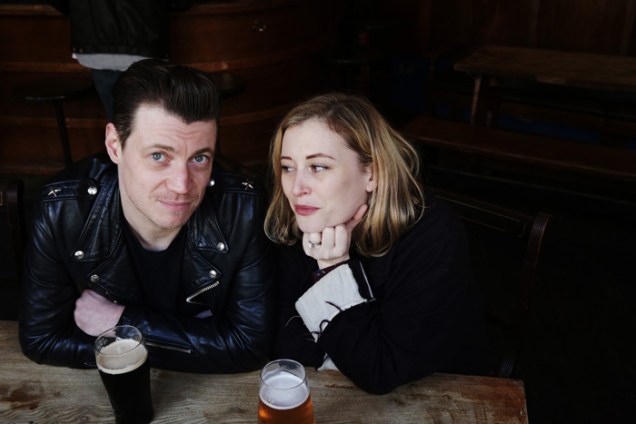
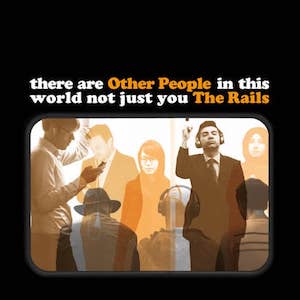
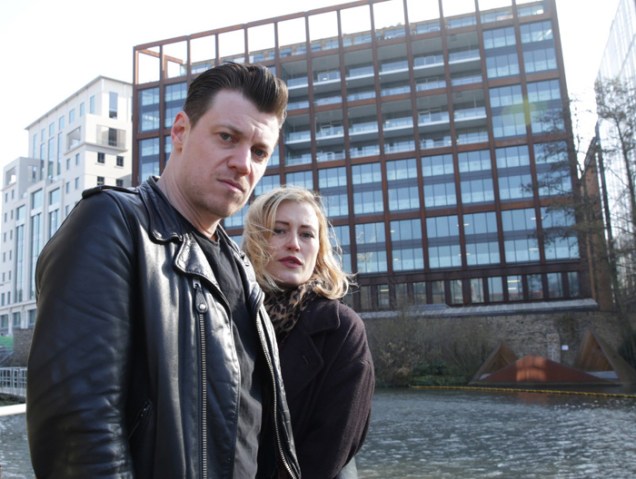
Husband and wife folk-rock duo The Rails – James Walbourne and Kami Thompson – are back. Their much-anticipated second album, Other People, is out on September 1.

Recorded in Nashville and produced by Ray Kennedy [Steve Earle and Lucinda Williams], it’s a darker, heavier and more electric record than their critically acclaimed 2014 debut Fair Warning. 

Moving away from the band’s traditional folk roots – it has ‘psychedelic’ tinges and groovy ’60s organ – it’s an album of 10 self-penned songs and isn’t afraid to speak its mind and deal with modern social issues.

The title track is a rallying call against those who are out for themselves, while Brick and Mortar is an angry protest song that laments the death of London – it’s part funeral march, part Kinks. 

The album feels like a record that’s about people who aren’t at ease with the world in which they live…

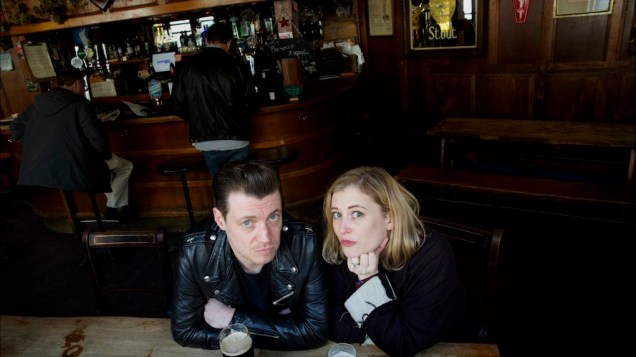
I took James [guitars, vocals, keyboards] and Kami [vocals and guitar] down the pub to find out more…

Rails-Packshot

Q & A

You recorded the new album in Nashville, at Room & Board Studio, with producer Ray Kennedy, who’s worked with acts including Steve Earle and Lucinda Williams. Why did you decide to make the new album in Nashville?

James: It was because Ray was there – I just wanted to work with Ray. Nashville had no bearing or influence on the record in any way.

You haven’t made a ‘Nashville country album,’ have you?

James: It honestly had nothing to do with country – it was cheaper to make the record with Ray in Nashville than to fly him over to the UK. We didn’t see any of Nashville. We got there, we drove to a house where we were staying and then to the studio – and that’s what we did for about a week. It was bloody hard work.

Kami: It was quite stressful – we had a small budget and very little time.

Why did you want to work with Ray Kennedy?

James: We were struggling with whom we were going to get to produce it, as we wanted to do something different, and then he came to mind. One morning, I thought, ‘It would be great if Ray could do it’…

Ray had worked on a 1998 album called Domestic Blues by my friend Bap Kennedy – I spoke to Bap about him – and then Ray Davies also said that I should work with Ray. It all came together. Ray Kennedy is a genius…

And so is Ray Davies…

James: He is! Ray Kennedy had also worked on some of my favourite records, like Steve Earle’s Transcendental Blues, which sounds heavy. We wanted to do a heavier record that was less folky. We wanted this album to be more of a rock band approach – more of a psychedelic thing. Maybe ‘psychedelic’ is too much… we wanted a whittled-down approach, with two electric guitars, bass and keyboards. We didn’t want any fiddles on it…

Kami: Or sailors.

James: If you’re in Nashville, you’ve got to watch the fiddle because it then becomes a country fiddle…

There is a pedal steel guitar on the album…

James: Yes – Eric Heyward played on one track.

‘We wanted to do a heavier record that was less folky – more of a rock band approach’

Can you tell me about the musicians you worked with on the new album? They weren’t Nashville guys, were they?

James: It’s funny – I knew we were going to get asked about the Nashville thing, but everyone that was involved – apart from Ray – wasn’t from Nashville. Cody Dickinson was on our first record – he’s the drummer in the North Mississippi Allstars and he lives in Memphis – he’s an old friend, so it was a no-brainer.

Jim Boquist [on bass] is another old friend of mine and he was in the first incarnation of Son Volt – he’s from Minneapolis. He has a punk-rock edge, ‘cos he used to hang out with The Replacements – he’s a good friend of Paul Westerberg’s. We had a different mix of people – from Memphis to Minneapolis is a huge world away and then there was us with the English folk thing…. we wanted to see what it would sound like.

Your first album was recorded in London with Edwyn Collins as producer. How was it working with Ray on this album? How did it compare?

James: It was as bonkers – they’re both as bonkers as each other.

Kami: It was a whole different substrata of bonkers…

James: They’re both in analogue mode – everything’s old and analogue…. This time [in Nashville], there were compressors that were used at MGM for Hank Williams and there were thousands of guitars – it was amazing.

Kami: You couldn’t let your gaze rest on anything for too long, because Ray would say, ‘Are you looking at that compressor? That’s the compressor that The Beatles used…’

Let’s talk about some of the songs on the new album.

You’ve said that this record is a move away from the more traditional folk sound of your debut, but there’s still a folk feel to some of the tracks, particularly the opening song The Cally and the title track and first single, Other People…

JamesYes – that’s true.

Other People has a pretty, folk-pop melody, but, lyrically it’s quite an angry song, isn’t it?

James: (laughing) I keep hearing that from people – I didn’t mean it to be that angry!

The opening line is, ‘crazy people, money-grabbers, old religions and new regimes, back-stabbers, heart-breakers, psychopaths with evil schemes….’

It sounds to me like a comment on the state of the world – a rallying call against selfish people and those who are just using others to further their own means…

James: It started with me being pissed off about people who should get off their high horse. It’s when you walk down the street…

Kami: It’s that huge lack of social manners.

James: It seems to be everywhere now. It’s about the internet and all the other stuff – it’s this (he points to his mobile phone) all the time…

But the song feels like it’s about bigger issues…

James: It grew into that – it got angrier and angrier as we were writing it. It’s a selfish world… I get the feeling that everyone’s out for themselves – they should care about their fellow man a little more.

Kami: It’s a theme on which you can easily zoom in and out.

It’s got a gorgeous tune, though…

James: You’ve got to be able to whistle it – you can’t give it all away.

‘There’s more of ourselves in this album… It definitely feels darker, but it wasn’t intentional’

It’s lighter than some of the other songs on the album, which I think is a very dark record, lyrically…

James: I guess it is.

It’s darker than the first album…

James: There’s more of ourselves in this album… It definitely feels darker, but it wasn’t intentional.

Kami: I can’t remember the last time either of us wrote a particularly cheerful song.

JF1_4757 crop

I think there are recurring themes on the record – the title track, Late Surrender, Leaving The Land and Brick and Mortar all seem to be songs about people who aren’t at ease with the world in which they live…

Kami: That’s a good way of summing it up.

There’s a line in the song Other People that seems to sum up the whole record for me – ‘we’re all strangers in our own time.’ Have the songs been shaped by current political and social issues?

Kami: Yes – absolutely. A lot of the album was written at a time when we were going to have to move out of London because we couldn’t afford to buy somewhere to live, so that was playing on our minds. And also maybe it’s the age we are – I think that plays a part. The song Leaving The Land was written about thinking we would have to leave London.

The album’s opening song, The Cally, is one of the more folky songs on the record. It’s about the characters who lived and worked on Caledonian Road in North London and it also mentions Pentonville Prison.

You like a prison song, don’t you? You had two on your first album – Send Her To Holloway and Borstal…

James: We love a prison song!

What was the inspiration for The Cally?

James: It was all down to my granddad, whose flat we’re now living in. He died a couple of years ago – he was 92. One day, we were in the kitchen and he was talking to me about when he lived and grew up around ‘The Cally’ and Almeida Street in Islington.

He liked to talk about the old days – he was telling me about a woman called ‘Woodbine Nellie’ who used to ‘work’ on the street. She was a lady of the night and I thought, ‘that’s a good name’.

I was walking down Caledonian Road one day and I started humming a song and I wrote it when I got home – I did it really quickly.

After The Cally, the next song on the record is Late Surrender. James – musically, it reminds me of some of the tracks you’ve played on with Pete Bruntnell…  [James has been a guitarist for several acts, including UK singer-songwriter Pete Bruntnell, Ray Davies, Son Volt, The Pernice Brothers, The Pogues and The Pretenders – he’s in the current Pretenders line-up]

It has a kind of Americana feel and jangly guitars…

James: Yes – it’s more rock. I can’t stand the term ‘Americana’ – I’ve never liked it.

Kami: I’m fairly allergic to the term ‘Americana’. It’s just English people playing American music – and, most of the time, quite badly.

Drowned In Blue and Hanging On are both melancholy songs – the former has a country feel to it, which is down to the pedal steel guitar.Was that a little bit of Nashville rubbing off on you?

James: It was – we thought we’d better give it a nod and Eric [Heyward] was in town. He’d been up all night, drinking moonshine with Tony Joe White’s drummer and they both rolled in… but he played amazing. He’s one of the best – a pedal steel stylist. No one else sounds like that guy.

Drowned In Blue has some psychedelic moments on it, too…

James: Exactly. We wanted to do what Ray Kennedy had done on those Steve Earle records – suddenly go from country to a Beatles thing. It’s like ‘what the fuck?’ It’s different from the folk thing. I wanted him to do his thing and put his stamp on it.

Kami: With our first album, we set out to make a folk-rock record with a ‘70s vibe, but an updated version of it. The first record was more of a concept – we had an idea and we worked towards making that happen. We wrote a few songs for it that were in that vein and we arranged some traditional songs in that style. With the new album, we wanted to make a heavier record – it felt more natural to us and it’s more of a reflection of the things that we like to listen to. We don’t listen to any folk music.

‘I’m fairly allergic to the term ‘Americana’. It’s just English people playing American music – and, most of the time, quite badly’

So do you feel like you’ve been tarred with the folk brush?

James: Not now, because we’ve got the new album…

Is folk a dirty word?

Kami: Not at all… I just hate anything that hasn’t got balls – I like things to have a bit of grit.

James: That’s what it’s about. It doesn’t matter whether it’s folk, or rock… we just wanted to make some great songs that had some grit. We wanted to sound heavier and for it to be electrified.

Drowned In Blue and Hanging On both seem to share a common theme – they’re songs about people who are at the end of their tether… maybe even suicidal…

Kami: James is regularly at the end of his tether!

James: That’s how I feel constantly! It’s funny talking about the themes of the songs because I hadn’t given it that much thought – I didn’t think about how dark it was. You’re right.

Kami: James is more the homicidal side of our marriage – I’m more suicidal! We should get some-T shirts made…

rails pub new

We’re talking about how dark the album is – there’s actually a song on it called Dark Times. It’s about an abusive relationship…

James: Yes – it’s another abusive relationship song. It’s meant to be like one of those old ‘60s songs – a Dan Penn-type song. It’s Dann Penn-lite.

And it ends with some groovy ‘60s organ….

James: Organs are hip! It was meant to be like Cream doing a folk song.

Brick and Mortar is my favourite song on the album.

Kami: Mine, too.

It deals with how old London is being torn down by greedy property developers and it laments what’s happened to some of the old pubs, areas like Soho and famous places like Denmark Street – Tin Pan Alley…

Kami: It’s the rich taking over the world…

It’s a song about the death of London and, appropriately, it’s a kind of funeral march…

James: It really is – a very fast one.

And it reminds me of The Kinks….

James: It is a bit Kinks-y, but it started out as slow and acoustic – like something from Oliver.

Brick and Mortar is a protest song – in fact several of the songs on the album could be seen as ‘protest songs’, couldn’t they?

Kami: I think the whole album is a rant!

James: It does feel like more of a rant…

Let’s talk about your songwriting process? Do you write together or separately?

Kami: For the most part, we write separately, but James will finish a middle eight or a chorus for me and I’ll write some lyrics for him – or vice versa. We tend to each have written most of the song before the other person gets involved.

James: The songs are mostly written – it’s just tweaking.

Kami: There’s only one of my songs on the new album – Leaving The Land. James had written loads and by the time I went to put my songs into the ring, they weren’t really in the same vein.

James: I wrote furiously for a long time…

‘I think the whole album is a rant!’

What music are you listening to at the moment?

James: I like the new albums by Jason Isbell and Randy Newman. The Randy Newman album is called Dark Matter and it’s bonkers – I listened to it in the bath last night. It’s pushing the boundaries – it’s mental. I’ve been listening to the Elvis album A Boy From Tupelo – it’s his early recordings re-mastered.

Kami: I’m having a funny couple of weeks. Do you ever get those weeks when you’re allergic to music? Nothing’s right.

The other day I went through every record that I thought I might want to listen to and I ended up listening to Radio 4. Maybe it’s because we’re gearing up to tour and I’m learning songs. I think my brain’s full.

Is there anyone you’d like to collaborate with?

James: That’s an interesting question. A lot of them are dead!

Kami: A palate cleanser for myself would be a non-collaboration – just to quietly do my own thing.

James: I think that’s true for both of us – I think I’m going to do it as well.

What are the pros and cons of being a married couple in a band? Is it hard?

James: Yes – you never want to do any work!

Kami: It’s very difficult to carve out time to work.

James: We have real arguments about it– we’ve got very different views on music and everything….

Kami: Music is all James does, but I go into a non-music mode between records – I sometimes have to switch that mode back on.

James: This year I haven’t stopped working – we’ve done the album, the rest of the year is solid and we’ve got stuff lined up for next year – we’re doing another Rails tour and there’s Pretenders stuff on the go. I’ve written a few songs with Chrissie Hynde and there’s a Pretenders live album coming out in a couple of months.

You’re heading out on a nine-day UK tour in September and then you’re supporting The Pretenders after that. What can we expect?

Kami: It’s stripped down – a four-piece band.

James: It’s two electric guitars, bass and drums.

James – you’ll be playing guitar in The Pretenders, too. How do you feel about supporting yourself on tour?

James: It’s not ideal… It will be a long time, but we needed to do it. Chrissie Hynde loves us – thank God – and she’s very vocal about us.

Kami: It will be like when A Mighty Wind opened up for Spinal Tap!

James: I might have a costume change…

So what’s a typical Rails tour like? Is it rock and roll?

James: Rock and roll? There aren’t many tours that are rock and roll anymore…

The-Rails back

Other People – the new album by The Rails – is released on September 1 on Sony / Red Essential.

The Rails are touring the UK in September:

September 11 – Glasgow, King Tuts Wah Wah Hut

Tues 12  – Leicester, The Musician
Tue 13 – Hull, The Adelphi
Thurs 14 – Hedben Bridge, The Trades Club
Fri 15 – Manchester, The Deaf Institute
Mon 18 – Cambridge, Junction 2
Tues 19 – Norwich, Arts Centre
Wed 20 – London,  The Borderline
Thurs 21 – Newbury, Arlington Arts Centre

http://www.therailsofficial.com/