One of Say It With Garage Flowers’ favourite albums of 2022 is Leo – the third solo record by former Case Hardin frontman, Pete Gow.
The trademark orchestral sound he debuted on 2019’s Here There’s No Sirens and its follow-up, The Fragile Line – from 2020 – was bolstered by some impressive, rich and soulful horn arrangements courtesy of his producer, multi-instrumentalist, Joe Bennett (The Dreaming Spires, Bennett Wilson Poole, Co-Pilgrim, Saint Etienne).
Leo feels like the natural successor to Gow’s previous two solo records, which were also created with Bennett (bass, piano, organ, vocals, strings, horns) and drummer, Fin Kenny, who, like Gow, are both workhorses of the UK Americana scene.
Reviewing the album for Americana UK earlier this year – I gave it 9/10 – I said: ‘Leo is Gow’s most accomplished and ambitious album yet, with Bennett taking his collaborator’s wry story songs about barrooms, booze, rock ‘n’roll and record collections and turning them into widescreen epics – the orchestral and brass arrangements perfectly complement these lyrically deft tales and the lives of the characters that inhabit them.’
In an exclusive interview, I spoke to Pete to get the full story about the writing and recording of the album and, to tie-in with a lyric from Leo’s opening song, Where Else Would We Be Going, I asked him to choose some of his favourite albums from the year that he was born.
Q&A
 You recorded the basics of the album in February 2020, just ahead of lockdown didn’t you?
Pete Gow: It was quite literally days before everything locked down. In the studio, Joe had these white sheets of paper up on the wall, that you write on with a Sharpie – song titles, album titles… Then he marks up what needs doing – backing vocals… then ticks them off.
When I went back and started doing other work on the album, we realised just how close to lockdown it was. In two days, myself, Fin and Joe worked through the songs – all the drums, the scratch guide vocals and guitar.
We had all sorts of plans for this record. We even talked about bringing in electric guitar – something that was different from the Here There’s No Sirens record – but then what happened happened… But it actually worked out in our favour, from the perspective that Joe’s studio is just down the road from his house, so he was able to work through lockdown and build the album up with nothing but the limits of his imagination.
You can hear that on songs like The City Is A Symphony – he went Brian Wilson nuts! I’m sure he was in a sandpit with a fireman’s helmet on when he did it.
It’s interesting that you said you had plans to do different stuff musically on this album, because the horns are more prominent this time around on some of the tracks, but there are still big string arrangements like on your first two solo albums. You’ve expanded the sound, but, apart from the guitar and drums, it’s Joe playing everything, isn’t it?
PG: Yes – everything.
It’s an even bigger sound on this album…
PG: Yes it is and that was a considered choice. We didn’t sit down before the album was recorded and say, ‘Let’s make this a horns record’, but we both knew we needed to do something different sonically.
The Fragile Line was a legitimate album, but it was never really intended as one, so, in my own mind, I don’t really count it as a proper record. It’s got a cover on it and a reworking of one of my own songs on it, so it’s kind of a companion piece to Here There’s No Sirens.
‘On The City Is A Symphony, Joe went Brian Wilson nuts! I’m sure he was in a sandpit with a fireman’s helmet on when he did it’
Horns were always part of the discussion – the tracks that I’d been writing just felt that they lent themselves to it.
Let’s Make War A Little Longer, off The Fragile Line, had some horns on it – Joe and I were thinking we could’ve really just done that as a horns track. Horns were definitely because of the necessity and there being no else to work on this record, so that took Joe down that road more firmly than we’ve previously discussed.
It’s a great sound, but I’ll avoid any ‘Pete Gow gets horny’ headlines…
PG: They’ve all been thrown around on various WhatsApp chats.
You’re a prolific songwriter, but were all the tracks on the record written for it, or do some date back from before your previous albums?
PG: It’s a mix.
‘I wrote Say It With Flowers specifically so I could get an interview with you’
There were a few songs written in the lead-up to making the album, but also included in that pile were Cheap and Shapeless Dress and Happy Hour At The Lobby Bar, which we decided to pluck from the pile and put out as a single during lockdown. That meant there were more songs needed writing, so the last two written for the project were the first two on the album, largely by coincidence – Where Else Would We Be Going and Say It With Flowers, which I wrote specifically so I could get an interview with you.
Thanks for that. Let’s talk about Where Else Would We Be Going, which was the first single from the album. It’s representative of the record – it’s a big song, with brass, strings and organ. It was a bold comeback statement…
PG: I know exactly what you mean. It was the last song written for the record and very quickly we knew it was the first song that we wanted everybody to hear, even before we’d finished putting it together.
‘Where Else Would We Be Going is reasonably joyous. It’s not often there’s that level of positivity in a Pete Gow lyric’
We’ve all gone through a lot of changes – there have been some fairly significant changes to my life, in what could be deemed as happening late in life, as I’m in my 50s now. Some of the song is about taking on those changes despite age, I guess – it’s a little Post-It Note of encouragement to my partner, and a note to self. It’s all of those things but I think it’s reasonably joyous. Where else would be going? What else have we got to do? We may as well do this. It’s not often there’s that level of positivity in a Pete Gow lyric.
That song is reprised at the end of the record, in a more sombre format, which is kind of the way it was written, then, before I got into the studio, it morphed into another version. We couldn’t decide between the two, but we’ve never bookended an album, so we thought we’d do that.
This record isn’t a concept album, but some of the songs share common themes, don’t they? You first solo album was very honest and personal, but this one has more character songs on it – albeit with your own personal touch. Leonard’s Bar, which is the centrepiece of the album and where the record takes its title from, reminds me of one of those Springsteen story songs, written about people and their small town lives, but with a hint of Nick Cave about it, too.
It’s about a former criminal who’s fallen on hard times and finds himself caught up in a difficult situation – one last job – thanks to his brother-in-law, Leo.
PG: That song was written about my first trip to the States with my partner and my first trip back to her hometown, which is Baltimore, or thereabouts. I had a notebook with me the whole time and I was jotting stuff down. At the time, her brother was going through a divorce and living at his mum’s – that’s where I met him.
The barman in the song with ‘This’ and ‘That’ tattooed on his knuckles was just a guy that served me, my partner and her cousin drinks one afternoon in a Baltimore bar. I saw it and wrote it down.
‘I can’t have too much positivity on my records – I need to bring it back down and appeal to base, with traumatised hitmen’
The narrative, the guy in the bar… it came together very organically and I just knew that it was going to be a reasonably big song. It took me a few weeks to pull it together – it’s quite long, but I think I edited it down. If I go through my notebook I’ll find verses that never quite made it – I wanted it to be expansive and to make a statement like Poets Corner, from previous albums, does. It has kind of movements to it – this one is telling a story, whereas Poets Corner doesn’t have a narrative. Leonard’s Bar has a beginning, a middle and an end.
Independent of each other, Joe and I realised it was a pivotal track. It’s the beginning of side two on the vinyl album, which is prime real estate for such a track.
There’s some great imagery in the song. I like the line: ‘I can still hear the screams and the smell of their fear, the piss in their pants and their hopeless tears.’ It has a dark twist, doesn’t it?
PG: Well, I can’t have too much positivity on my records – I need to bring it back down and appeal to base, with traumatised hitmen.
Know your audience…
PG: [laughs]
There are a lot of references to alcohol and music on the album. Say It With Flowers mentions getting drunk and playing the Derek and the Dominos song, Bell Bottom Blues, one of the tracks is called Side III of London Calling, and Where Else Would We Be Going references drinking while listening to your favourite albums that came out the year you were born. Was that a conscious thing?
PG: It wasn’t. It comes about because drinking and listening to music is fairly consistent throughout a lot of my work. These songs cover quite a long period of time, so without going in, editing and rewriting stuff, which I’m not really a huge fan of, that’s the consequence of that.
The second verse of Say It With Flowers is based on when Jim Maving and I got together to do some writing and, as what normally happens, we ended up drinking and pissing around on guitars. I sent my partner away for the weekend because I told her I needed some time with Jim to do some writing and then the two of just got drunk and ended up messing around with Clapton’s Bell Bottom Blues. It’s a true story.
And Side III of London Calling – where did that song come from? I need to refamiliarise myself with that album, as I can’t remember what’s on Side III…
PG: Death or Glory, Koka Kola… When I was a teenager and I bought that album a couple of years after it came out, they were the songs. I can’t remember where that line came from – I’d probably put the album on for the first time in 10 years and thought, ‘That’s a fucking great side of music’ – and it is. There are four songs that haven’t really been bettered with regards to a side of vinyl. So, I related that to finding the perfect woman – my partner. It probably happened after a load of gin one night. See, drinking and music…
Casino is one of my favourite songs on the record – it sounds like a classic Pete Gow, late-night ballad. The organ gives it a soul feel…
PG: It’s a good song to talk about because it’s definitely a transitional one between Here There’s No Sirens, The Fragile Line and the new album. It still has the strings on it and it could’ve easily fitted on either of those first two records. It dates back to the Case Hardin days, but it had a slightly more country feel then. When I realised that I wanted to use it for this project, I went back to it but it didn’t feel big enough.
Since I’ve been working with Joe, I write with him in mind. It needed a section where it could suck the air out of your chest. The middle bit used to be a verse, so I looked at how I could make it something that Joe could work with. I rewrote it specifically for the recording. Jim Maving came up with the riff.
As you said earlier, on The City Is A Symphony, Joe embraces his inner Brian Wilson. There’s a surprising Beach Boys-style mid-section. I guess Joe took that song in a completely different direction to what you would’ve done with it…
PG: Very much so. I found the original demo of it the other day. Every time I hear The City Is A Symphony, I’m surprised at what he did with it, but that was renewed when I heard what I had originally given him.
If you go back to the raw product, the thought that he saw potential in it and took it there was quite staggering, but that’s what he does.
In Case Hardin I was pretty controlling – band leader and producer of records. I knew what I wanted. I would listen to other people, but I kind of got things the way I wanted them. I knew that by going with Joe, I was going to have to surrender some of that control – and that’s what I wanted.
‘In Case Hardin I was pretty controlling – band leader and producer. I knew that by going with Joe, I was going to have to surrender some of that control’
I wanted someone else’s input. Over the course of the three records we’ve done together, there’s stuff where I thought, ‘Oh – I wouldn’t have done it like that,’ but, most of the time I’m blown away by what Joe brings to the project. That’s why you’ll always see his name, ‘Produced by Joe Bennett’ prominently on my records. He really does have as much input to the material and the albums as mine – his contribution is just as important. I always refer to them as ‘our albums,’ even though it’s my name above the door.

And Fin Kenny played drums on the record, and Tony Poole (Starry Eyed and Laughing and Bennett, Wilson, Poole) mastered it…
PG: Yeah – Fin is the only other musician on it. The first voice anyone hears on the record is Fin’s – at the start of Where Else Would We Be Going. The amount of time in any one eight-hour period or in a rehearsal room where he goes ‘OK?’ – to hear it every time you put that record on was essential to us. We’re glad that everything fell together and it worked out nicely that we could have it to be the first thing on the album.
Tony Poole masters most of Joe’s productions – those two are very much in tune with each other. Mastering is a dark art and I wouldn’t profess to understanding it or knowing the science of it, but you can just hear when something has been mastered well. Tony takes care and works his way through the tracks. He works in passages and frequencies – he’s a master of that.
In Where Else Would We Be Going, you mention albums from the year you were born. You were born in 1970 – do you have some favourite records from that year?
PG: I’m obsessed with anything that was released that year. There are some fairly obvious ones – Bridge Over Troubled Water, Déjà Vu, Loaded – there are some huge records from 1970. Bitches Brew by Miles Davis came out that year – there’s a great double album of his sets from Fillmore West, when he was opening for The Band. It’s just called Miles Davis at Fillmore – I picked that up. I bought it just because it came out in 1970. I spent a few weeks with that – it’s the peak of his avant-garde, with that John McLaughlin guitar sound.
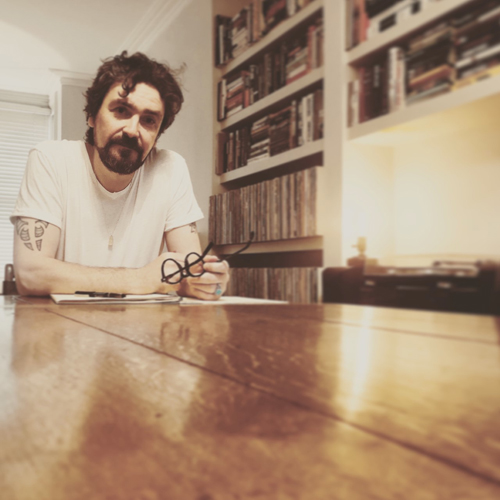
‘I’m obsessed with anything that was released in 1970’
I know Eric Clapton has almost talked himself into being cancelled, but Layla and Assorted Other Love Songs by Derek and the Dominos is a fantastic record. If you can make a record like that, with alcohol and drug abuse… It’s less cool than it’s made out to be, but sometimes it just comes together and works.
From beginning to end, it’s a terrific record – and I reference Bell Bottom Blues in Casino because, despite everything Clapton’s done to completely damage and destroy his reputation, I can’t get away from the fact that it’s one of my favourite songs ever.
Leo by Pete Gow is out now on Clubhouse Records – vinyl, CD and digital.
http://www.clubhouserecords.co.uk/


 Say It With Garage Flowers