“I feel like we’ve been through some dark times and 2015 is going to be a big year”

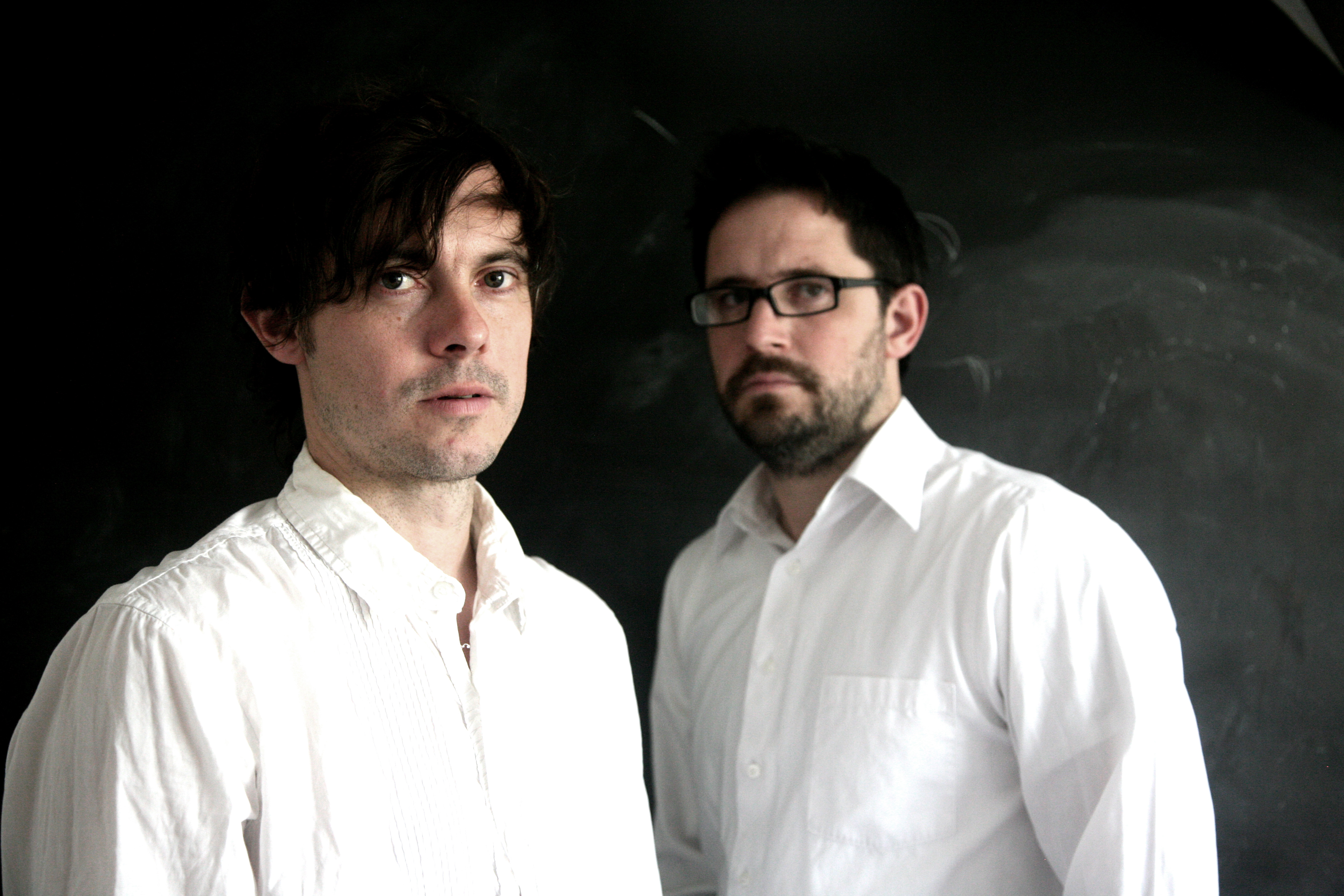
Darkest Before Dawn EP - The Dreaming Spires - Robin & Joe Portrait-1

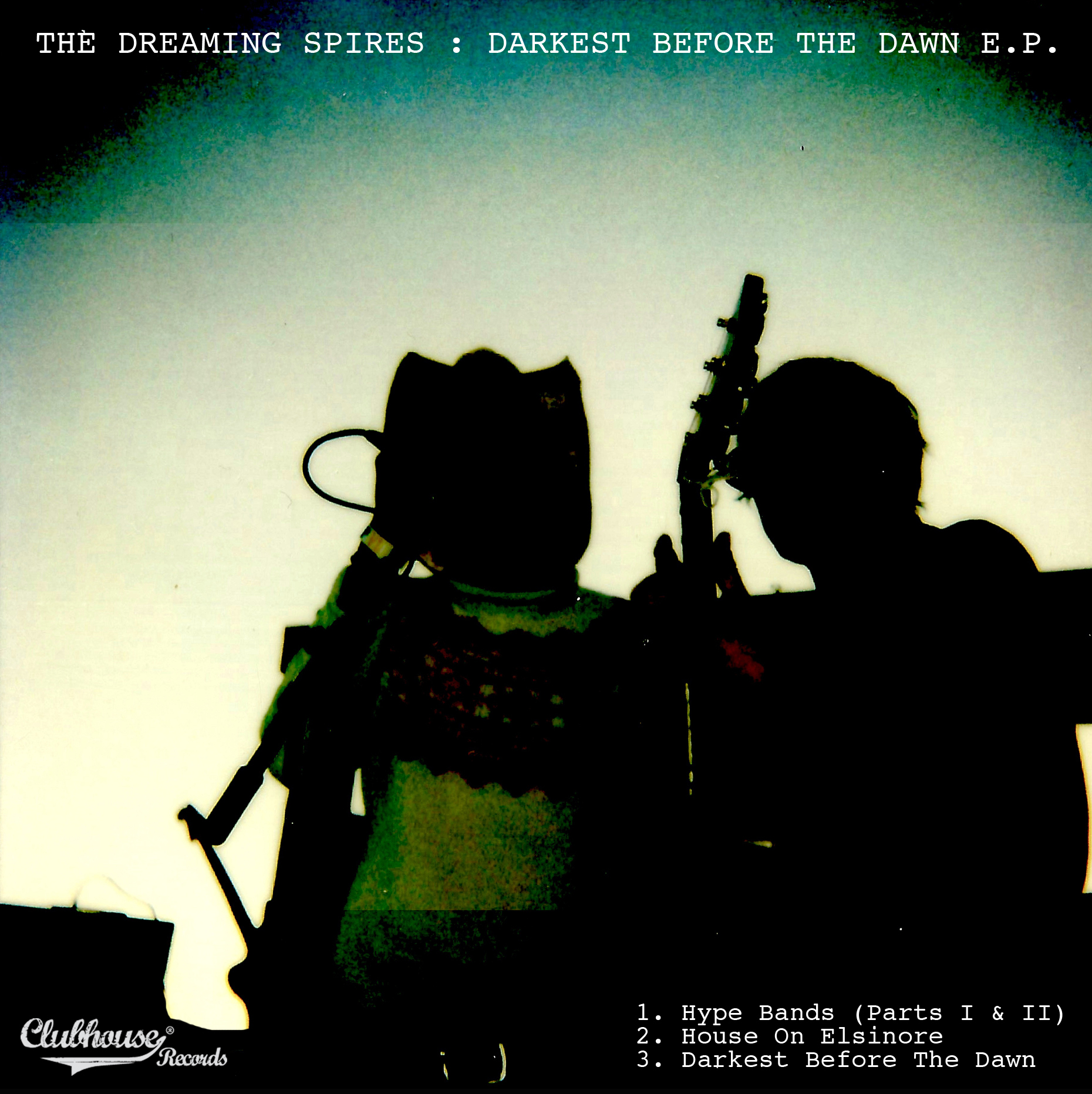
Fans of classic, jangly, guitar pop rejoice – Oxford band The Dreaming Spires are back with a gorgeous, brand new three-track EP, Darkest Before The Dawn, which is a taster for their second album, Searching For The Supertruth, due out next year.

Opening song  Hype Bands Parts I & II is a seven minute tour-de-force – a big blast of country-soul with horns, chugging rock & roll guitars and an irresistible, sunshine melody. Its wry, amusing lyric is about on-the-road antics in the USA and pokes fun at hipster indie bands who are more concerned about wearing the right clothes than writing great songs…

Second tune, House On Elsinore, is luscious. A hypnotic, hazy heat wave of a song, it’s set in LA’s dark underbelly and is soundtracked by chiming, psychedelic, Byrds-like guitars, while the title track is a positive, spiritual hymn that was written as a message of hope to a friend of the band, Danny, who went through some tough times, but, thankfully, came out the other side. It’s moving and very uplifting.

I spoke to Robin Bennett – who, with his brother Joe – forms the nucleus of  The Dreaming Spires, about Americana, hanging out in LA and how their new album has been influenced by shoegazing…

Let’s talk about your brand new EP, Darkest Before The Dawn, which is a great record. Musically, it feels like a step on from your debut album Brothers in Brooklyn. It has a richer, more expansive, widescreen sound. Musically, you’ve taken the jangle-pop feel of  The Byrds, Big Star and Teenage Fanclub, but also thrown in some Americana influences and themes…

Robin Bennett: Thanks. I’m excited to get some new material out after what feels like an age. We’ve always felt part of that lineage of bands, not so much by intention, but in how things seem to end up sounding.

I often think we’ve gone on a radical departure, only to be told it still sounds like The Byrds. Maybe a different Byrds album… We’ve always been bracketed in with Americana acts in England too, which has never made much sense to me, unless you’re going to include The Kinks and The Beatles, etc. I read Ray Davies’ book Americana this year, which helped put it all in perspective for me.

I definitely share those ‘60s bands’ excitement at the exotic nature of many aspects of American culture, which is shaped by Beat books, cowboy films, rock & roll music, neon signage, cup holders, and all the other ephemera. Bands from The Byrds to Tom Petty to Big Star refracted the British beat music back again – so I see it as back and forth across the Atlantic. It’s tough on us British acts playing in that style, because it’s assumed we are trying to be American. To be British, you have to sound like Duran Duran, it seems. As a child of the ‘80s mostly, I never heard any music I liked until I discovered ‘50s rock & roll and soul via The Beatles. These songs [on our new EP] are mostly triggered by events that happened during visits to the US. In this case, mostly California – between 2003-2008.

The Dreaming Spires - Darkest Before Dawn EP Cover

So, what was the starting point for the new EP – musically and thematically? 

RB: The song Darkest Before The Dawn was written by me and a friend, Cat Martino, in Brooklyn. We were trying to write a letter to our friend Danny in the form of a song. I’d had the tune and the chorus line for a while, since our first ever band practice before the first album, but when it was expressed as a direct message it seemed to come together. We wanted it to have a positive message while acknowledging how bad things had got. Although we were talking to Danny about his life, the theme of darkness and redemption feels applicable to all of us. We worked hard to create the contrast between light and shade in the title song, while House on Elsinore has a paranoid air from the many drones and so on…

The songs are on the new EP are all thematically linked – based on real life experiences you had with your friend Danny. He sounds like quite a character! You’ve certainly got some good tales from your antics with him – he has been referenced in several of your songs.

RB: Danny certainly is a character. In fact, it’s him I’m talking about in Singing Sin City from our first album, “smoking cigarettes like a cowboy movie character”. On our first visit to the West Coast with [previous band] Goldrush and Mark Gardener [ex-Ride], he was officially our tour manager and collected us from LAX airport. The whole experience made a big impression on me and we formed a close friendship. At the time he had his own band, The And/Ors, and was working as a screen printer for the artist Shepard Fairey. You could say the music we were listening to on cassettes in his tour van – mostly Teenage Fanclub and The Byrds – set me off on the direction that ended up with The Dreaming Spires. Given that he also introduced me to Big Star and reintroduced me to Tom Petty, you could credit Danny with our whole sound.

Aside from the bands and tours, we unexpectedly struck up a songwriting partnership. In only a few sessions in LA and also on his visits to Oxford, we contrived to write over 50 songs together at a rate of two or three a day. Until then I’d been writing mostly alone and struggling with it. He taught me how to put method in the madness and to create almost on demand, which was an amazing change for me.

We wrote songs for Goldrush for the album The Heart is the Place, and a kind of solo album called Dusty Sound System, which was written in a week and recorded in a day, as well as numerous unreleased songs. Strength of Strings and Just Can’t Keep This Feeling In eventually made it onto the Brothers in Brooklyn LP [The Dreaming Spires’ first album].

How does Danny feel about having songs written about him? He sounds like he went through a bad patch, but, thankfully, is now in a much happier place…

RB: He did indeed hit a bad patch and it was no longer possible for us to write together. It was also a turbulent and busy time in my own life, so I wasn’t sure if I’d be able to write again on my own – and for a year or so, there wasn’t much coming out. It was seeing him at such a low point, when we visited California for a friend’s wedding, that got me writing again – with him as the subject, instead of the writing partner. I don’t know why, but the ideas just kept coming, spilling out into numerous lyrics that I wrote at great speed. Some were finished in time for the first LP, some took longer and some form part of this new EP and the new album. I kept thinking, ‘now I should write about something else’, but I kept having more ideas from the same topic and often the lyrics would go off on tangents from a similar starting point.

I read something by Jay-Z, talking about writing lyrics by going back to the same point in your past for inspiration, so perhaps that’s what was happening. We spent a year recording these new songs, but I knew if Danny wasn’t happy with them, then I wouldn’t be able to release them, so I sent them to him before anyone else. His reaction was what I hoped it would be – he understood the intention of the songs, of course. I also didn’t feel right putting these songs out until I knew he was in good shape again, which he very much is now.

I like the wry, witty lyrics on your song Hype Bands Parts I & II. Are the words aimed at any bands in particular? I also like the rocky guitar sound on the track and the big brass arrangement. It has a soulful feel…

RB: I think we’ve ended up with a contrast between the brittle sound of the intro, which is a warm parody of any number of ‘hype bands’, and the looser feel of the second half, where music helps you to let go – which is what ‘soul’ music usually does. Because we’ve been playing in bands since the late ‘90s, we’ve come across many bands that have shot to fame before disappearing, but, in a way, it’s more of a comment on how the music industry has treated bands in the last 15 years. There’s a wave of hype to get them going, before a rapid tail-off into obscurity. Of course, if you’re a writer or an artist, this bears no relation to your development. The attributes to being a good ‘hype band’ are different to being a good writer, as your window of opportunity is so short. You have to chime with the trend of the moment.

When we did have a major label push for our old band, Goldrush, we coincided with the appearance of The Strokes, who must be the ultimate hype band. We didn’t stand a chance! Shortly afterwards we left Virgin Records, who replaced us with The Thrills – who, I should add, were a good band with some excellent songs. They did a similar thing, but in a much more presentable way. We crossed paths with them a few times during our LA visits, including an incident where we found out that a friend of Danny’s was acting as their stylist. When he asked Conor, the singer, about it, he denied everything. We really did play them at pool, too. We won!

Will any of the songs from the new EP end up on your next album – Searching For The Supertruth – which is out next year?

RB: We recorded 13 tracks in all – three of which form this EP and the other 10 make up the album. We tried to make it work as a double album, but, ultimately, it worked better separating these three songs as an EP – it’s too much to process at once. All 13 tracks will be on the vinyl release across two discs.

Is the EP representative of the new album? 

RB: I think the EP is a good pointer towards the album. We’ve finished the album. It’s been mastered by Tony Poole, a great musician and producer who played in the cult ‘70s band Starry Eyed & Laughing. We worked with our long time associate Rowland Prytherch to create as much detail in the sound as we can, so that further listening is rewarded. Something we’ve picked up more on since the first LP is trying to create an atmospheric undercurrent to the tracks, often using lap steel washes and string pads through numerous FX pedals. You could call it our shoegaze influence. I think it sounds positive and transcendent, overall.

So, what we can expect from the new album. Can you give us a few teasers? 

RB: We’ve been playing some songs live already. The autobiographical song Dusty in Memphis is already a crowd favourite, complete with a sing-along. We’ve also played the title song, with a backwards guitar part by Tony Poole, and the ballad We Used to Have Parties, which has a backing vocal from Sarah Cracknell of Saint Etienne.

Is it a concept album and  part of a trilogy? Where did the title  –  Searching For The Supertruth – come from?

RB: It definitely feels like a concept album, without being overbearing. It is the final part of the trilogy, where the narrative resolves, at least for now. The title came from a scientist friend called Rich Blundell. It’s to do with cosmic evolution and the universe becoming conscious of itself.

What music are you currently into and what are your favourite new albums of 2014? 

RB: This year I have enjoyed new stuff from The War on Drugs, Sturgill Simpson, and Arcade Fire, as well some great music by friends including Common Prayer, Sugar Magnolia and Paul McClure. I’m enjoying The Flaming Lips and friends’ take on Sgt Pepper more than I expected too! I’ve also been listening to lots of soul compilations, dreaming of being in Booker T & The MG’s, plenty of Jackson Browne and new and old Tom Petty albums. Getting a car with a tape-only stereo has meant I’ve listened to cassette versions of Tunnel of Love [Bruce Springsteen] and Emmylou Harris’ Luxury Liner more times than I care to mention.

So, how you do feel as we head into 2015?

RB: I feel like we’ve been through some dark times and 2015 is going to be a big year

Darkest Before The Dawn – the new EP from The Dreaming Spires – is released on November 24. It’s on ClubHouse Records.

http://www.thedreamingspires.co.uk

http://www.clubhouserecords.co.uk

http://www.clubhouserecords.co.uk/artists/the-dreaming-spires


In the dead of winter

Dead Flowers 6 - Hi Res

London-based alt.country band Dead Flowers have made one of the best albums of 2013. Recorded late at night, in wintry conditions, Midnight At The Wheel Club is a collection of dark, intimate, haunting and confessional songs, inspired by gravel-voiced singer/songwriter Ian Williams’ travels through New York and Montreal. I spoke to Ian to find out more about the record, which he describes as ‘like a morbid, little dinner party – if you mess with the seating plan, it will all fall apart’.

Congratulations on Midnight At The Wheel Club. As I understand, it began to take shape in 2011, when you were travelling in America, during the winter. Can you tell me more about your travels and how your experiences inspired your songwriting?

Ian Williams: There were a few trips that have all blurred into one for me, but, to cut a long story short, the travels included time in Austin – for the SXSW festival, a few days in New York and lots of time spent in Montreal. In New York and Montreal, I was lucky to be able to stay in people’s apartments, rather than hotels, which really helped in terms of getting into a groove and feeling like you are living somewhere, rather than just passing through. Songs crept up in the most unexpected places, on the beach (Coney Island), in a Laundromat (Montreal) and on various rooftops. We visited Coney Island in early spring, so all the rides were shut down and it was pretty much deserted. There was a spooky, jarring beauty about seeing a funfair and the rickety old Wonder Wheel at that time of the year – it was a bit like a tree with no leaves. I started writing the song Wonderwheel right there on the beach and the name crept in. I guess I just liked the way it sounded.

What about The Wheel Club that the album takes its title from? Where is it? Are you obsessed by wheels?

IW: There’s no use in denying it. I am a wheel obsessive. The Wheel Club is an old time country club / working men’s club on the outskirts of Montreal. On a Monday night they have a hillbilly night, which has been running since 1966. It’s sort of an open mic arrangement, but with a house band and some pretty hardcore rules – you can only play songs written before 1966 and there are no drums and no electric instruments allowed. It’s a wild night, with lots of line dancing, big pitchers of beer and an amazing selection of snacks. On my second visit, I plucked up the courage to get up and sing a Hank Williams song with my good pal Ragged Dick . We were kind of lousy, but the old folks were very kind to us. If I could only recommend one place to visit in Montreal, The Wheel Club on a Monday night would win hands down.

So, is the new record a concept album?  If so, how would you describe it?

IW: Most of the songs were born out of travelling, but it’s possible a couple of them came out of some dark corner back on dry land, too. I wouldn’t say it’s a concept album, but I definitely think the songs belong together. It’s like a morbid, little dinner party – if you mess with the seating plan, it will all fall apart. Actually we had to throw a few of them out fairly early on, as they just weren’t getting on.

There’s a dark beauty to the record. It’s very intimate and atmospheric. What were your intentions when you set out to make it?

IW: A lot of the records I admire have an  immersive quality and I think a lot of that is down to the way they are sequenced and how things open up and ‘pay off’ as you travel through them. We aimed to make an album which flows naturally and will keep someone’s attention and maybe let them lose themselves a little for half an hour.

Although the album is largely melancholy in tone, a song like Fences is hopeful. I’m thinking of the line, ‘the songs that I write give me a chance to survive.’  Do you see music as your saviour?

IW: Your question made me think of the Wilco song Sunken Treasure:  “Music is my saviour, I was maimed by rock and roll. I was maimed by rock and roll. I was tamed by rock and roll. I got my name from rock and roll.”  I don’t think I can put it better than that, so I’m not going to try.

Supernova is one of the most moving and saddest songs I’ve heard all year. How did it come into being?

IW:  If you watch a lot of Carl Sagan’s Cosmos while going through a breakup, then these things can happen. It’s a pretty grandiose statement, so I have no choice but to stand by it completely.

Your song The Beach is like an Irish, funereal sea shanty. Although it deals with death, it has a spiritual, uplifting feel…

IW: It’s another song that was conceived on Coney Island. It found its way back to the UK, had a rest and then flew out to Montreal, where our friend Christopher Fox played the pump organ parts and then went on to mix the song. He brought it to life so much that we knew he was the man to help us finish this album. The string arrangement from Emily McGregor lifts it out of the doldrums and gives it a gleam of hope.

So, did you form Dead Flowers after your travels? How long have you been writing songs and were you in any bands before this one?

IW: Well this is my second ‘proper record’ – the first was an EP called Bible Black Heart, which I released under the name Ian Williams. It came out in 2009 and you can hear it here.

For a while after that, we played shows as Ian Williams and The Dead Flowers, but when it came to making this record, I wanted to steer things away from the whole singer/songwriter thing. There has been an ever-changing and revolving cast of players involved in the music over the years, all of whom I am massively indebted to. I think we are finally finding some stability though and the challenge of representing the album live is a rewarding experience.

What was the process of recording the new album like? How did you capture that late night, wintry sound? It’s the perfect record for this time of year…

IW: Well, we recorded an awful lot of the album late at night, often in pretty wintry conditions. Scott Fitzgerald, who played keys and bass on most of the record, and who was also involved in the engineering and production, is something of a night owl. The sessions in his studio in Bath often wouldn’t start until early evening and we would record through until the early hours. Pretty much all the vocal takes were done very late at night and the version of Pan which ended up on the album was recorded between about 3am and 6am.

We tracked the drums at a studio called The Pool, in South London. All the drum recordings were done in one day, which was a big challenge, but the sound engineer, Ben Thackeray, did an amazing job and our drummer Richie Harwood is a very patient man. All the strings, a lot of electric guitar and some of the vocals were recorded in my home studio in London. Fortunately, we have pretty deaf neighbours, so I think they were quite oblivious. Finally, we spent some time at Christopher Fox’s studio in Montreal, where we tracked vocals and did the pump organ and the mixing. We actually worked remotely with Christopher on the final mixes, sending files over to him via an FTP and then sending back notes and tweaks for his mixes. Given the number of different locations, engineers and players involved, Christopher did an amazing job in mixing it into such a fully-formed, complete sounding album.

Midnight At The Wheel Club - Cover

Musically you’ve been compared to artists such as Mark Lanegan, Lee Hazlewood, Lambchop and Leonard Cohen. Are they all influences on you? Who are your musical heroes and influences?

IW: Let me get this out of the way first – I don’t really care for Lee Hazlewood. I just can’t quite get into him. Maybe one day I will realise how wrong I was. Lambchop are a huge influence – we got to open for them in Leeds earlier this year and it was one of the most magical nights of my life. Kurt Wagner [from Lambchop] sat and watched the whole of our set, which has encouraged me more than I can say. Scott and I are both big admirers of Leonard Cohen and especially like his later recordings. I think the Ten New Songs album he put out, which is almost entirely MIDI in terms of instrumentation, is a work of genius. Ethan Johns and Ryan Adams working together has resulted in a collection of albums I have found to be massively influential. I go back to albums by Sharon Van Etten, Justin Townes Earle, Devon Sproule and Yo La Tengo a lot at the moment. They’re all very different in terms of their sound, but they all make immersive, interesting albums.

By pure coincidence, Dead Flowers is the title of my favourite Rolling Stones song. Did that tune inspire your band name?

IW: Not in a massively conscious way, but we certainly wouldn’t be called Dead Flowers if the song didn’t exist, so I guess I’ll have to say yes.

What are your plans for Christmas? Are you a fan of the festive season?

IW: I’m looking forward to a trip back to Wales, to see my family, eat a lot of meat and have some epic nap time. I can’t wait.

So, how do you see 2014 shaping up for Dead Flowers?

IW: Hopefully some big, established band will dig our fresh new sound and take us out on a world tour. We will aim to get into a studio early in the New Year and knock out the next album pretty quickly. The last one took a year to make, so I am hoping we can speed things up a little this time around.

What are your ambitions for Dead Flowers?

IW: If I keep practising guitar at my current rate – around one hour a week – then I should be ready to play my first guitar solo in Dead Flowers in about five years’ time…

http://wearedeadflowers.bandcamp.com