In the dead of winter

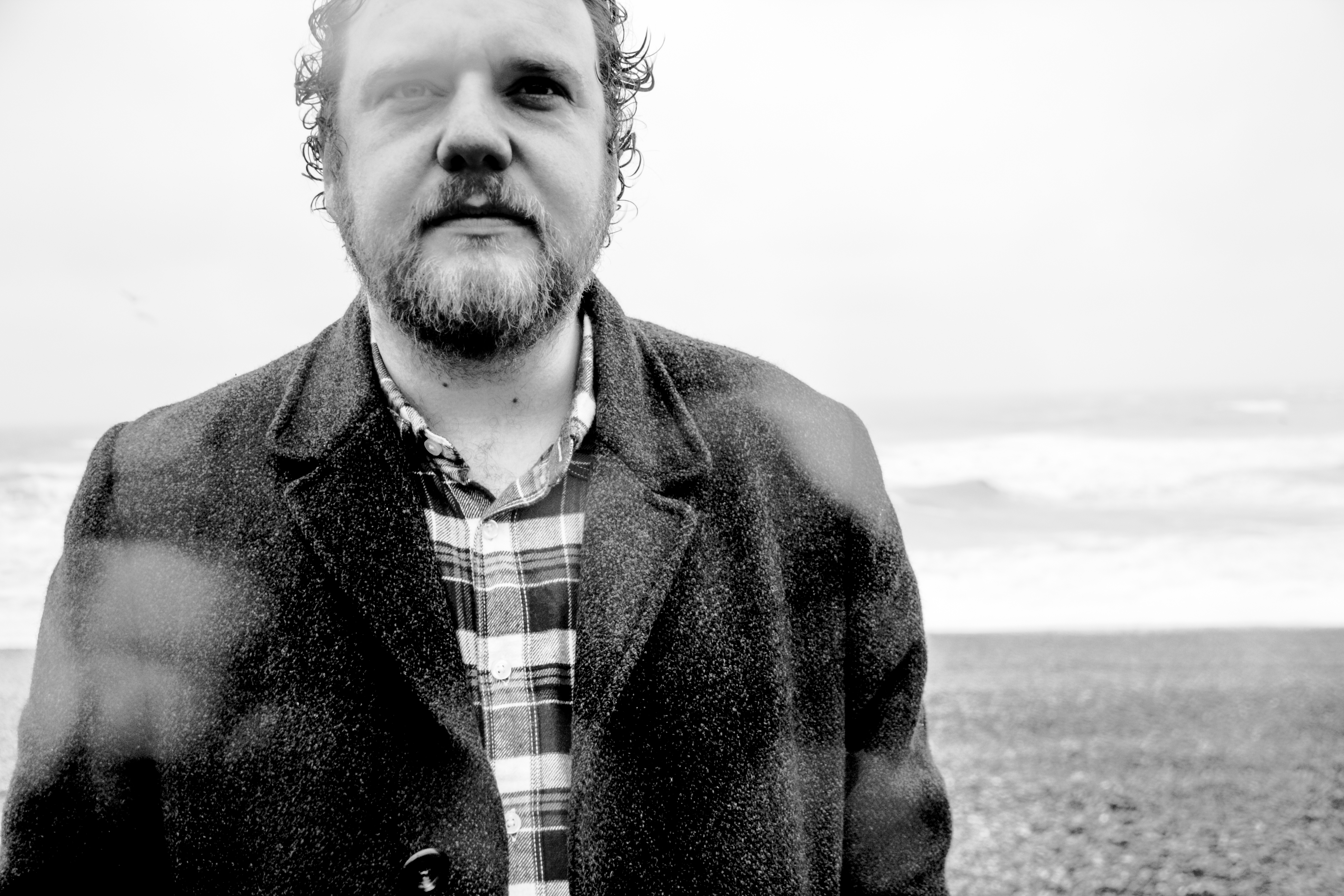
Dead Flowers 6 - Hi Res

London-based alt.country band Dead Flowers have made one of the best albums of 2013. Recorded late at night, in wintry conditions, Midnight At The Wheel Club is a collection of dark, intimate, haunting and confessional songs, inspired by gravel-voiced singer/songwriter Ian Williams’ travels through New York and Montreal. I spoke to Ian to find out more about the record, which he describes as ‘like a morbid, little dinner party – if you mess with the seating plan, it will all fall apart’.

Congratulations on Midnight At The Wheel Club. As I understand, it began to take shape in 2011, when you were travelling in America, during the winter. Can you tell me more about your travels and how your experiences inspired your songwriting?

Ian Williams: There were a few trips that have all blurred into one for me, but, to cut a long story short, the travels included time in Austin – for the SXSW festival, a few days in New York and lots of time spent in Montreal. In New York and Montreal, I was lucky to be able to stay in people’s apartments, rather than hotels, which really helped in terms of getting into a groove and feeling like you are living somewhere, rather than just passing through. Songs crept up in the most unexpected places, on the beach (Coney Island), in a Laundromat (Montreal) and on various rooftops. We visited Coney Island in early spring, so all the rides were shut down and it was pretty much deserted. There was a spooky, jarring beauty about seeing a funfair and the rickety old Wonder Wheel at that time of the year – it was a bit like a tree with no leaves. I started writing the song Wonderwheel right there on the beach and the name crept in. I guess I just liked the way it sounded.

What about The Wheel Club that the album takes its title from? Where is it? Are you obsessed by wheels?

IW: There’s no use in denying it. I am a wheel obsessive. The Wheel Club is an old time country club / working men’s club on the outskirts of Montreal. On a Monday night they have a hillbilly night, which has been running since 1966. It’s sort of an open mic arrangement, but with a house band and some pretty hardcore rules – you can only play songs written before 1966 and there are no drums and no electric instruments allowed. It’s a wild night, with lots of line dancing, big pitchers of beer and an amazing selection of snacks. On my second visit, I plucked up the courage to get up and sing a Hank Williams song with my good pal Ragged Dick . We were kind of lousy, but the old folks were very kind to us. If I could only recommend one place to visit in Montreal, The Wheel Club on a Monday night would win hands down.

So, is the new record a concept album?  If so, how would you describe it?

IW: Most of the songs were born out of travelling, but it’s possible a couple of them came out of some dark corner back on dry land, too. I wouldn’t say it’s a concept album, but I definitely think the songs belong together. It’s like a morbid, little dinner party – if you mess with the seating plan, it will all fall apart. Actually we had to throw a few of them out fairly early on, as they just weren’t getting on.

There’s a dark beauty to the record. It’s very intimate and atmospheric. What were your intentions when you set out to make it?

IW: A lot of the records I admire have an  immersive quality and I think a lot of that is down to the way they are sequenced and how things open up and ‘pay off’ as you travel through them. We aimed to make an album which flows naturally and will keep someone’s attention and maybe let them lose themselves a little for half an hour.

Although the album is largely melancholy in tone, a song like Fences is hopeful. I’m thinking of the line, ‘the songs that I write give me a chance to survive.’  Do you see music as your saviour?

IW: Your question made me think of the Wilco song Sunken Treasure:  “Music is my saviour, I was maimed by rock and roll. I was maimed by rock and roll. I was tamed by rock and roll. I got my name from rock and roll.”  I don’t think I can put it better than that, so I’m not going to try.

Supernova is one of the most moving and saddest songs I’ve heard all year. How did it come into being?

IW:  If you watch a lot of Carl Sagan’s Cosmos while going through a breakup, then these things can happen. It’s a pretty grandiose statement, so I have no choice but to stand by it completely.

Your song The Beach is like an Irish, funereal sea shanty. Although it deals with death, it has a spiritual, uplifting feel…

IW: It’s another song that was conceived on Coney Island. It found its way back to the UK, had a rest and then flew out to Montreal, where our friend Christopher Fox played the pump organ parts and then went on to mix the song. He brought it to life so much that we knew he was the man to help us finish this album. The string arrangement from Emily McGregor lifts it out of the doldrums and gives it a gleam of hope.

So, did you form Dead Flowers after your travels? How long have you been writing songs and were you in any bands before this one?

IW: Well this is my second ‘proper record’ – the first was an EP called Bible Black Heart, which I released under the name Ian Williams. It came out in 2009 and you can hear it here.

For a while after that, we played shows as Ian Williams and The Dead Flowers, but when it came to making this record, I wanted to steer things away from the whole singer/songwriter thing. There has been an ever-changing and revolving cast of players involved in the music over the years, all of whom I am massively indebted to. I think we are finally finding some stability though and the challenge of representing the album live is a rewarding experience.

What was the process of recording the new album like? How did you capture that late night, wintry sound? It’s the perfect record for this time of year…

IW: Well, we recorded an awful lot of the album late at night, often in pretty wintry conditions. Scott Fitzgerald, who played keys and bass on most of the record, and who was also involved in the engineering and production, is something of a night owl. The sessions in his studio in Bath often wouldn’t start until early evening and we would record through until the early hours. Pretty much all the vocal takes were done very late at night and the version of Pan which ended up on the album was recorded between about 3am and 6am.

We tracked the drums at a studio called The Pool, in South London. All the drum recordings were done in one day, which was a big challenge, but the sound engineer, Ben Thackeray, did an amazing job and our drummer Richie Harwood is a very patient man. All the strings, a lot of electric guitar and some of the vocals were recorded in my home studio in London. Fortunately, we have pretty deaf neighbours, so I think they were quite oblivious. Finally, we spent some time at Christopher Fox’s studio in Montreal, where we tracked vocals and did the pump organ and the mixing. We actually worked remotely with Christopher on the final mixes, sending files over to him via an FTP and then sending back notes and tweaks for his mixes. Given the number of different locations, engineers and players involved, Christopher did an amazing job in mixing it into such a fully-formed, complete sounding album.
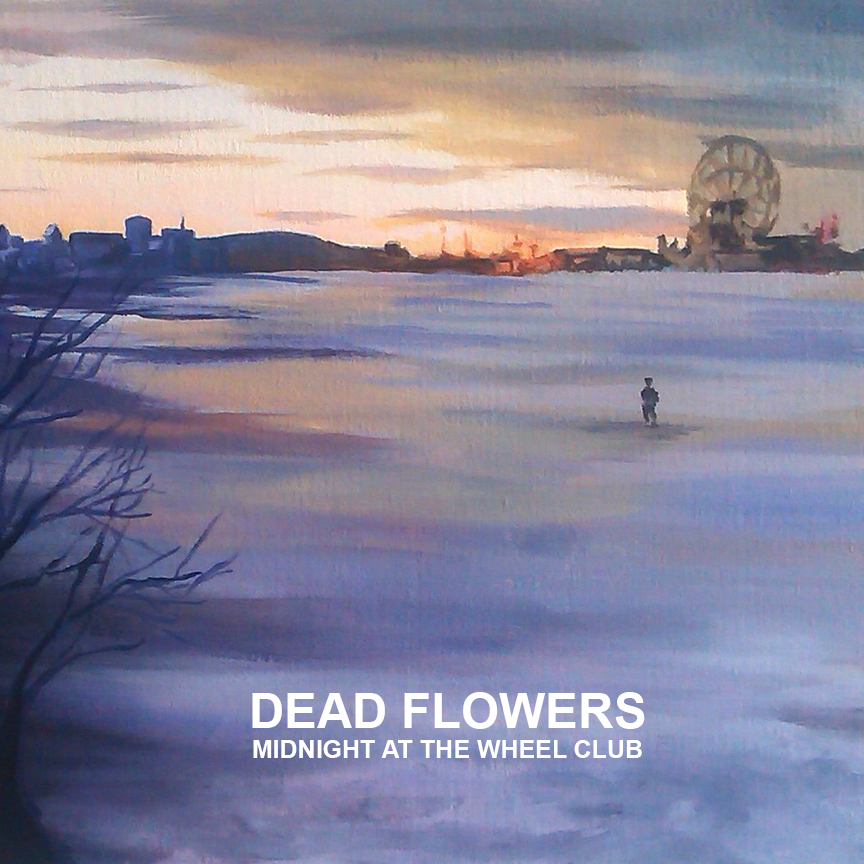
Midnight At The Wheel Club - Cover

Musically you’ve been compared to artists such as Mark Lanegan, Lee Hazlewood, Lambchop and Leonard Cohen. Are they all influences on you? Who are your musical heroes and influences?

IW: Let me get this out of the way first – I don’t really care for Lee Hazlewood. I just can’t quite get into him. Maybe one day I will realise how wrong I was. Lambchop are a huge influence – we got to open for them in Leeds earlier this year and it was one of the most magical nights of my life. Kurt Wagner [from Lambchop] sat and watched the whole of our set, which has encouraged me more than I can say. Scott and I are both big admirers of Leonard Cohen and especially like his later recordings. I think the Ten New Songs album he put out, which is almost entirely MIDI in terms of instrumentation, is a work of genius. Ethan Johns and Ryan Adams working together has resulted in a collection of albums I have found to be massively influential. I go back to albums by Sharon Van Etten, Justin Townes Earle, Devon Sproule and Yo La Tengo a lot at the moment. They’re all very different in terms of their sound, but they all make immersive, interesting albums.

By pure coincidence, Dead Flowers is the title of my favourite Rolling Stones song. Did that tune inspire your band name?

IW: Not in a massively conscious way, but we certainly wouldn’t be called Dead Flowers if the song didn’t exist, so I guess I’ll have to say yes.

What are your plans for Christmas? Are you a fan of the festive season?

IW: I’m looking forward to a trip back to Wales, to see my family, eat a lot of meat and have some epic nap time. I can’t wait.

So, how do you see 2014 shaping up for Dead Flowers?

IW: Hopefully some big, established band will dig our fresh new sound and take us out on a world tour. We will aim to get into a studio early in the New Year and knock out the next album pretty quickly. The last one took a year to make, so I am hoping we can speed things up a little this time around.

What are your ambitions for Dead Flowers?

IW: If I keep practising guitar at my current rate – around one hour a week – then I should be ready to play my first guitar solo in Dead Flowers in about five years’ time…

http://wearedeadflowers.bandcamp.com

INTERVIEW: “I felt that Gene Clark has been dealt a bad hand by history – that’s always struck me as being a grave injustice”

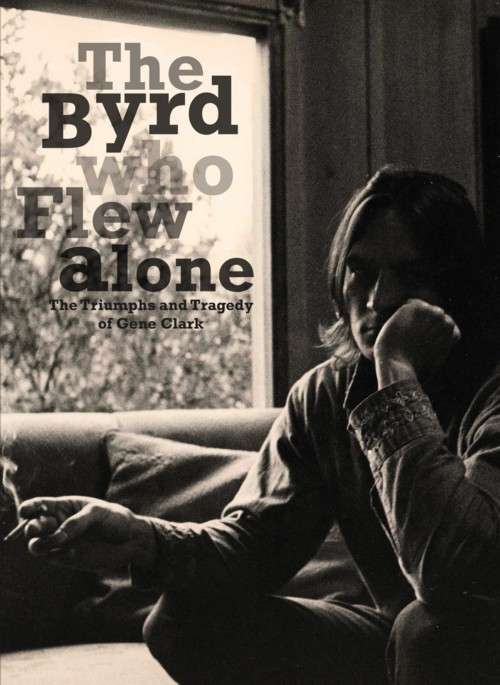
New documentary, The Byrd Who Flew Alone: The Triumphs and Tragedy of Gene Clark, tells the fascinating story of one of the founding members of The Byrds. One part hell raiser, one part mystical poet, Gene Clark died in 1991, aged 46, his latter years blighted by illness and drink and drug abuse.  He left The Byrds in 1966, unable to cope with the pressures of fame, and embarked on a solo career. A fear of flying also had a large part to play in his decision to quit the band.

From Beatles-inspired pop, to country rock, folk ballads and experimental, symphonic rock, Clark was a songwriting genius. His solo albums, White Light and No Other, are cult classics, but he’s never had the true recognition he deserves. Could this documentary, which is based on new interviews with Clark’s friends and family and contemporaries, including the surviving original members of The Byrds, David Crosby, Roger McGuinn and Chris Hillman, change all that? I spoke to father and son Paul and Jack Kendall, from Four Suns Productions, to find out how and why they made the film.

byrd_who_flew_alone_triumphs_tragedy_of_gene_clark


Congratulations on the film. It’s a great achievement. Why did you decide to make a documentary on the life of Gene Clark?  

Paul Kendall: I met up with a couple of guys called Mike Kerry and Chris Hall, who have a company called Start Productions. They’d made a fantastic film about Arthur Lee from Love, which is called Love Story. I thought it would be fantastic to do something like that – to go back to my roots and my love of music and combine that with what I knew about filmmaking, along with my sons Jack and Dan [who are filmmakers]. I thought if I could find the right project, then it would be great to try and get something off the ground.

Have you always been a fan of Gene Clark? Is he one of your musical heroes?

PK: Absolutely. I’m slightly too young to have caught The Byrds in their first flush, when he was still with the band, but I picked up on Dillard & Clark very early on and fell in love with their first album. I then followed his solo career. For the last 10 years of his life, to a large extent, he went off the radar, but he was still writing and recording songs, even though he didn’t have an outlet for them. Apparently there’s a whole wealth of unreleased and unheard material.

What’s your favourite Gene Clark song or album?

PK: The album I’ve listened to most regularly over the years is White Light – I love that one, particularly the song Spanish Guitar. Bob Dylan said it was a song he’d have been proud to have written. No Other is a unique, extraordinary piece of work. Even now, nearly 40 years after it was made, I can’t think of anything else that’s quite like it. The first Dillard & Clark album is a lovely record and arguably one of the first steps into country rock.

_MG_3485

(Left to right: Leland Sklar, bassist on Gene Clark’s No Other, with filmmaker Paul Kendall)

Has Gene Clark been overshadowed by Gram Parsons?

PK: Yes – that was one of my main motivations for making the film. I felt that Gene Clark has been dealt a bad hand by history. I love Gram Parsons as well and he should be remembered and acknowledged, but he’s way up there and Gene Clark is lurking in the shadows somewhere. That’s always struck me as being a grave injustice. Hopefully this film will do something to redress that.

Jack Kendall: I think Gene Clark is someone whom a lot of people like, but no one’s had a chance to hear his story. There hasn’t been a big outlet for him. He hasn’t had any of his songs sung on The X Factor, or used on adverts… He’s got a secret following, which we can tap into.

PK: Next year will be the 70th anniversary of Gene’s birth and the year after, it will be the 50th anniversary of The Byrds coming to prominence. There’s a sense that after years of Gene languishing in obscurity since he died, the stars are starting to align.

He’d have liked that… You actually met Gene Clark in the ‘70s, didn’t you?

PK: Yes. I spent a couple of years as a music journalist in the ‘70s, mainly working for Zig Zig magazine.  I met Gene when he was touring the UK with Roger McGuinn and Chris Hillman [from The Byrds] in 1977. I spent a very pleasant afternoon with him – the gig got cancelled and our one hour interview turned into a five hour tête-à-tête over a few beers. I feel like I have a personal connection with him, beyond the music.

TS2

(Left to right: Tom Slocum – Gene Clark collaborator – Jack, Dan and Paul Kendall)

Was Gene Clark your first choice as a subject to make a film about?

PK: In 2010, I got given John Einarson’s biography on Gene Clark [Mr Tambourine Man: The Life and Legacy of The Byrds’ Gene Clark] as a Christmas present, which filled in a lot of the gaps in my knowledge of Gene’s life and it took me back to his records – I re-played them while I was reading the book. I thought that it would be fantastic to make a film about Gene – if nobody had done it already. I did a bit of digging and found out that nobody had.  We had a big stroke of luck early on – I met up with the guys from Start Productions to get some advice and it turned out that they had thought about making a film about Gene as the follow up to Love Story, but in the end they did one about Mott The Hoople instead. They’d got as far as making contact with Gene’s estate, so they gave us the details – we knew we’d need to get the estate on board, right from the start. I had a series of exchanges with the lawyer who runs the estate and also Kai, Gene’s younger son, who is involved in looking after his father’s legacy.

The family were very sceptical at first – they’d had a number of approaches from filmmakers over the years, including some famous ones, but nothing had ever come about. They asked us to prove that we could do something, so we did some interviews with Barry McGuire, who was in The New Christy Minstrels with Gene, and John York [ex-Byrd who played with Gene’s band in the ‘80s]. Barry McGuire is a force of nature – he’s in his eighties and he still goes around the world doing shows – he was one of the prime movers and shakers in the LA ‘60s scene. We met up with Barry and John, who were playing in Frankfurt, shot some interviews and edited in some archive footage. We then sent that to Gene’s family and the lawyer, so they could see that we were serious about it and that knew what we were doing. Thankfully, they really liked it and they gave us their blessing and said we could approach other interviewees. That was in May 2011. From there, it just accelerated. In September of that year, we flew out to LA and spent almost a month running around California and Missouri filming interviews and location footage.

The whole project took two and a half years to complete. Was it easy tracking all the interviewees down? Are a lot of them still hanging out in LA?

PK: No. I thought they would be, but they’d fled LA and headed to the coast and the hills. We had to travel the length and breadth of California to get all the people we wanted and then we went to Missouri, where Gene hailed from, to meet up with his family and an old friend of his. We also interviewed Taj Mahal in Missouri – he was playing a gig there. We had one opportunity to speak to him.

1055450

How easy was it getting The Byrds – Roger McGuinn, David Crosby and Chris Hillman – to get involved and to talk about Gene?

PK: Once we’d got one – Chris Hillman – to come on board, I knew we’d get the others. They wouldn’t want to have been left out and have the others talking about them. They were very happy. Hillman, in particular, gave us a very good interview. I’d heard, through the grapevine, that he can be a bit prickly if you get him on the wrong day, but he was very gracious and was very open and insightful. McGuinn was slightly more guarded. There have been all sorts of talk over the years about relationships in the band – not just with Gene, but with all of them. There’s been various fallings out and issues. I think McGuinn is conscious that he’s taken some flack about the way in which Gene was treated by the other members of the band – particularly him and Crosby. Both McGuinn and Crosby were very happy talking about The Byrds and how the band started and their rise to fame, but trying to talk to them about things after that became a little bit more difficult.

For me, Crosby is one of the highlights of the film. I love his recollections and his delivery – he’s like a wise old man.

JKThere were so many great Crosby moments. While we were editing, we thought he was slowing the pace down, but we loved it…

PK: We interviewed Crosby in Bristol, while he was in the UK, playing with Graham Nash. We made it by the skin of our teeth – the interview was scheduled for the day after we got back from America. The whole US shooting schedule was finely tuned – if anything had gone wrong, we’d have had a problem – but it all went very smoothly. However, we came within seconds of missing our flight back to the UK, as Jack had lost his passport. But we found it – with seconds to spare.

Was there anyone that you wanted to interview for the film, but couldn’t get hold of?

PK: We had Bob Dylan on our wish list, but I got as far as talking to his manager…. I also wanted Tom Petty, but he decided he wasn’t available. I spoke to Doug Dillard [Dillard & Clark] and Bernie Leadon [Dillard & Clark, The Flying Burrito Brothers and The Eagles], on the phone,  but Doug was too ill – he died seven or eight months after we went to the States to do the shoot – and Bernie was reluctant to do it, as he’d done a similar thing for a Gram Parsons documentary and he didn’t like dredging up the past. He said that he didn’t want to do it.

Gene_Clark_03

Any good anecdotes from your filming trip to the States?

PK: There was a really spooky moment while we were shooting in Kansas City, in Bonner Springs, at the house Gene lived in when he was in his teens. We were filming wind chimes that were hanging from the porch and a hummingbird flew into shot and hovered, looking down the camera. Someone told me that hummingbirds are –  if you believe in that kind of thing – the souls of people who’ve passed away. So that was probably Gene coming to keep an eye on us.

If it had been a silver raven [the title of a Gene Clark song], that would’ve been even stranger…

PK: Well, a while later, I was sitting in the back garden, having a beer at the end of a busy day and a black raven flew past, perched on a branch and eyeballed me…

After Gene died in 1991, there was lot of bitterness and wrangling between his friends, girlfriend and family, wasn’t there? It ended up being quite a nasty situation, didn’t it?

PK: Yes and it dragged on for ages. We decided that we weren’t interested in that. Our story was going to be about Gene Clark’s life and his music and a celebration of it. There is a story to be told about what happened after he died, but it would be difficult to get to the bottom of it.

I must admit that I cried at the end of the film, when there’s amateur video footage of Gene playing I Shall Be Released…

PK: As soon as we found that, we knew we had to use it at the end. It’s a lovely version of the song – especially the harmonies. There’s real feeling to it. I like the fact that Gene’s presence throughout the film – in the footage and archive audio – is almost spectral. There’s something ethereal about it, which works. Between him leaving The Byrds in early ’66 and doing McGuinn, Clark and Hillman in ’79, there is literally no footage.

From making the film, what have you learned about Gene Clark?

PK: He was clearly a man with at least two sides to his story – there was Gene, the shy, retiring mystical poet guy and then there was the Gene Clark who could be an out of control nightmare. He was a very complex man and if you’d put him in front of a psychoanalyst, they’d have had a field day. Great artists invariably are very complex people.

What’s the reaction to the film been like?

JK: Everyone seems to love it.

PK: The reaction has been overwhelmingly positive. I’ve had people in their twenties and thirties who’ve heard of The Byrds, but know nothing about Gene Clark, coming up to me and saying they’re going to find out more about his music. The whole motivation for the film wasn’t to preach to the converted – it was to try and spread the word and get Gene more of the recognition he deserves.

The Byrd Who Flew Alone: The Triumphs and Tragedy of Gene Clark will be available on DVD in November.

To order a copy and for more information on the film, please visit:  http://foursunsproductions.com/