‘The first thing I do when I wake up is put a record on – I don’t love silence…’

Jerry-Leger-360x360

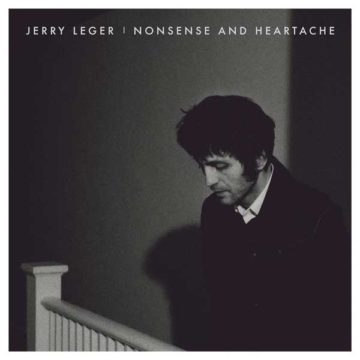
Canadian singer-songwriter Jerry Leger’s brilliant Nonsense and Heartache – out now on Latent Recordings and produced by Michael Timmins of Cowboy Junkies – is a double album, but, essentially it’s two distinct collections of songs.  

The first half  – Nonsense – is a raw, primal, bluesy, electric rock ‘n’ roll record, while the second instalment – Heartache – is a stripped-down, alt-country affair, with intimate ballads, lap steel, piano and fiddle.

Put them together and you have an album that reminds me of those classic early Ryan Adams long-players Heartbreaker and Gold – yep, it’s that good. 

I spoke to Jerry, who with his band, The Situation, is on a tour of Europe and the UK, to find out why he decided to release a double album and to gauge if his current mood is nonsense, or heartache…
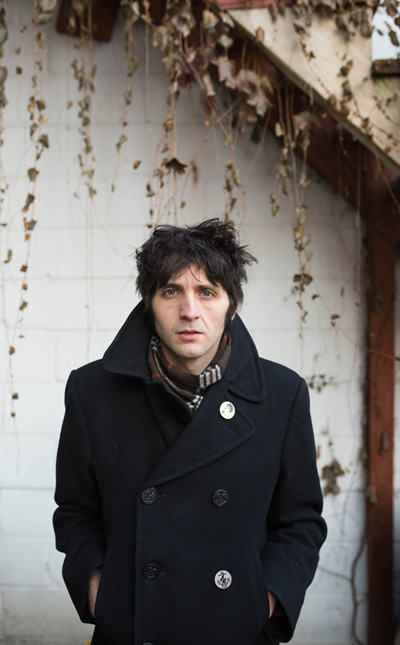
 

DSC_9558-2
Jerry Leger: photo credit – LPPhotographs

Q &A

Nonsense and Heartache is a double album of 18 tracks, which is quite a brave move, isn’t it? You don’t hear of many double albums being released these days…

Jerry Leger: Yeah, it’s usually the artist who fights for a double LP, not the label, but, in this case, it was Mike Timmins and Latent who suggested it.

I dug that and I had more than enough songs and we had a bit of a concept behind it. I think it was a cool move, I mean why not? It seems these days a lot of people are gonna listen to it, or they’re not, whether there’s two or 200 songs. A lot gets lost – I just wanna make albums I like while I’m here.

How were the recording sessions for the album? Was it an easy or a difficult album to make? Did you have a lot of songs written before you went into the studio?

JL: They were easy – we all knew what we were there to do. Heartache was recorded first – that took about four or five days. Nonsense was recorded four or five months later – I think that took two days. I can’t quite remember how many songs I had lying around, but we recorded about 29 and chose 18.

‘I just wanna make albums I like while I’m here’

The album has a raw, live sound – Michael Timmins , who produced, recorded and mixed it, also worked on my favourite album of last year John Murry’s A Short History of Decay, which is another raw, live-sounding record. How do Michael and you and your band manage to get that feel and sound in the studio? What’s your working relationship with Michael like?

JL: We just play live together in the studio. I also try to keep all the live vocals, but sometimes it’s not possible. There may be technical issues, or, if the band were cookin’ and I flubbed something that I really wanted to fix instead of leave in. Sometimes we just leave it in, though. Mike and I have a great working relationship – we like making the same kind of albums and we also like a lot of the same albums. He doesn’t get in my way creatively and when he makes a suggestion in the studio, it’s usually the right one. I respect what he does and what he has to say

One of my favourite songs on the Nonsense side of the album is Baby’s Got A Rare Gun – I think it channels ’65/’66 Dylan. Do you agree? It’s heavy, electric blues. What can you tell me about that track?

JL: Well, I love Chess Records – stuff like Muddy Waters, Little Walter and Howlin’ Wolf. I think it came from that sort of place, but, of course, I love Dylan, too, and that period is ingrained. When we recorded it, I wanted to get that over-driven vocal and band sound that’s on those records and early Bobby Bland.

The Big Smoke Blues – another of my favourite tracks on Nonsense – has a bit of a New Wave feel to it. It reminds me of Ryan Adams fronting The Strokes. Is that a fair comment?

JL: That’s fair, but I’d say it’s more Lou Reed and The Velvets rock ‘n’ roll, just ‘cos I listen to and love those records. I did really like the first Strokes album when it came out. I was 14 or 15 and thought they were here to save the day! I never really followed their career after, though. The Big Smoke Blues is a reference to Toronto, but it could be a lot of different places for the listener.  It’s a tune for outsiders.

‘I really liked the first Strokes album when it came out. I was 14 or 15 and thought they were here to save the day!’

Let’s flip the record over and talk about the Heartache side. It kicks off with the first single, Things Are Changing Round Here, which sounds like a classic country-rock song. What inspired that track?

JL: The East End of Toronto, where I grew up, was the initial inspiration. I’m only 32 and the area I grew up in is a strange land to me now. A lot of the personality is being sucked out of it – they’re knocking down blocks of old homes to build up to the sky. The unique shops and bars that can’t make the inflated rent are being replaced by boring chains.

Another Dead Radio Star – I love that title – is one of my favourite songs on the album. What’s the story behind it? I’ve heard that it was inspired by the 1930s radio show The Shadow, which was voiced by Orson Welles…

JL: I was listening to a compilation of radio stars from the ‘30s. The song I’d Give A Million Tomorrows (For Just One Yesterday) was playing and it sparked the idea – it’s referenced in the song. I also had another record of old radio shows by The Coon-Sanders Nighthawks of Kansas City, so they got a plug.

Things come and go, but their shadows remain in one way or another, and I’m the kind of person that looks for them. My dad used to listen to The Shadow, The Creaking Door and others as a boy and that has always stayed with him. It’s theatre of the mind.

The last song on the album, Pawn Shop Piano, is a great way to close the record – a gorgeous piano ballad. Was it written and played on a pawn shop piano?

JL: Some of the lines and ideas I’d written down before, or had floating in my head just waiting to be used. The first time we toured in the States we stayed at a dingy motel called the Travel Lite Inn, or something like that… I just liked the way it sounded and we survived.

We played Johnson City in Tennessee a couple of times and I remember this pawn shop called Diamonds and Guns and it had this great hand-painted sign, too. I jotted that title down in a notebook and figured I’d use it for something some day. It’s one of my favourites on the record and it just has a lot of truth in it for me.

Who are your main musical influences?

JL: There’s a lot, but Hank Williams I’ve heard for as long as I can remember and I just don’t think it gets better than that. Bob Dylan changed the way I wanted to write, Lennon and The Beatles made me wanna start playing, and Lightnin’ Hopkins was the coolest. When I was 13, my grandparents’ neighbour was giving away blues records. I just thought Lightnin’ looked cool – I hadn’t heard of him. When I listened to it, it was just wild – so natural, no bullshit. Leonard Cohen was also an early influence – my dad came home one day and gave me the first Cohen album and a book of poetry called Death of a Ladies’ Man.

‘My dad came home one day and gave me the first Leonard Cohen album and a book of poetry called Death of a Ladies’ Man’
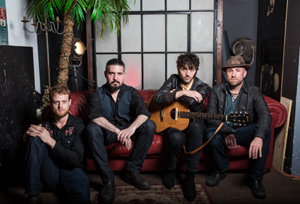
jls 2017 colour (3)
Jerry Leger & The Situation: photo credit – LPPhotographs

You’re heading out on a European and UK tour. What can we expect?

JL: I’m really looking forward to it – it’ll be my first time overseas in general. They’re all full-band shows and this line-up has been together for over 11 years, so it’s nice to do this together for the first time. What can you expect? I don’t know – I’ll just be singing my songs. I’m not ready to do anything flashy yet.

What music – new and old – are you currently digging?

JL: Lucinda Williams – Down Where The Spirit Meets The Bone; Ronnie Lane – See Me; Graham Nicholas – Dial Tones And Pretty Notes, and Ann Peebles – I Can’t Stand The Rain.

If I’m home I listen to a lot of music – the first thing I do when I wake up is put a record on. I don’t love silence.

So, what next? Can we expect a triple album?

JL: Why stop there?

Finally, what kind of mood are you currently in: Nonsense or Heartache?

JL: I’m in a Nonsense and Heartache selling mood.

Nonsense and Heartache by Jerry Leger is out now on Latent Recordings. For a full list of European and UK tour dates, go to https://jerryleger.com/


‘I’ve got the next four albums planned – track listings and all…’


DlLe4Uvw

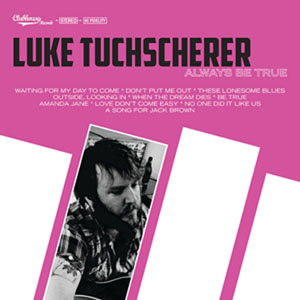
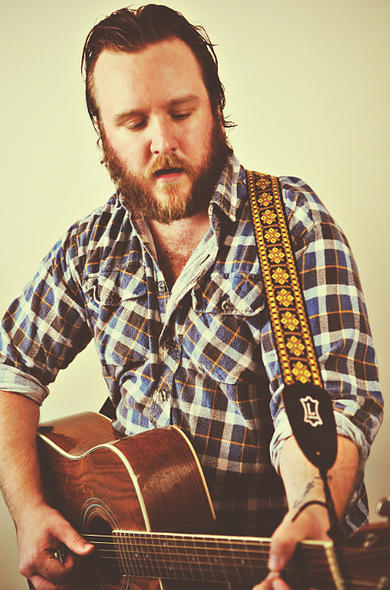
Whybirds drummer Luke Tuchscherer’s brilliant new solo album, Always Be True, is full of rough-hewn alt.country songs and anthems for the downtrodden, and its influences include Steve Earle, Bruce Springsteen, Tom Petty and Uncle Tupelo. 

Among the highlights are the rousing opening track, Waiting For My Day To Come,  the epic, tear-strewn ballad When The Dream Dies and These Lonesome Blues – a instant country classic that deals with death, drinking, cigarettes and the devil. ‘I really wanted to make a ’70s rock album, like Darkness on the Edge of Town or Damn The Torpedoes’, he tells me…

Q & A

Let’s talk about your new album – Always Be True. The title seems particularly relevant in these troubled times, where fake news is high on the agenda, wouldn’t you agree?

Luke Tuchscherer: I would certainly agree. Though, to be honest, we started recording it in late 2014 and I’ve had the title in mind since then, so I wouldn’t say that Trump and co had a direct influence on it, or the Brexit battle bus lies or any of that.

The title comes from the song Be True, which is a declaration of fidelity to my then girlfriend, now wife. But in a wider sense, it’s about being true to yourself, to your dreams and beliefs, as well as simply doing your best to be honest in day-to-day life.

It’s your second solo album. How does it feel to have it out there? 

LT: It’s a relief. It’s like an albatross has been lifted from me. I’m really thankful that it’s finally out and really happy that people like it.


LT album

How long were you working on it?

LT: As I mentioned, we started in late 2014. It was due out in summer 2016. For various reasons – some good, like Tom (Peters, producer) getting married and some awful, like band members losing loved ones – it took longer than planned. But that’s not the story of the album, that’s simply what delayed it. And when those big life events happen, well, as much as I like music, I’m afraid they take precedent and the music takes a back seat. However – much like the first album actually – even though it took a couple of years to complete, in terms of actual recording, it was only a few days.

How do you feel this record differs from your debut? You’ve said it’s a collection of songs that you want to play live, whereas with the first album, that wasn’t the case. Can you elaborate on that?

LT: With the last album, you had to be careful which songs to play in which venues. Unless it was a “sit down and shut up,” type place, then you couldn’t play half the songs off it.

Trying to play Hold On or I Don’t Need You To Tell Me to a festival crowd wasn’t even worth attempting.

This time most of the tracks – though admittedly not all – can be played solo, or with the band, to pretty much any audience. Obviously I’m not gonna pluck out A Song For Jack Brown in a noisy venue, but for the most part, they work.

The new album has a much bigger, more full-on sound that its predecessor – 2014’s You Get So Alone At Times That It Just Makes Sense – doesn’t it?  What did you want this album to sound like? How did you approach the songwriting and the recording?

LT: It certainly has more electric guitar! But if anyone followed what was happening in The Whybirds, they’d know that a large part of what I do is that rockier alt.country sound. I didn’t want to be pigeonholed as an acoustic artist just because of the first album, as that would be a great example of me not being true to myself… There’s that album title again!

‘I know what I’m doing for the next few records. There won’t be such a gap between albums – for the next couple at least’

Regarding the songwriting, I’ve got such a big backlog of songs that it’s very easy for me to pick the 10 that best fit the theme. No bullshit, I’ve got the next four albums planned, track listings and all. Now, obviously they’re subject to change, should I write something new that fits in, but for the most part I know what I’m doing for the next few records. There won’t be such a gap between albums – for the next couple at least.

You made the record with Tom Peters at The Den, in Bury St Edmunds. How was that? What was the recording process like? Was it a quick album to make? 

LT: Other than the delays mentioned, the sessions went really well. Very smoothly. Tom’s brilliant. He’s a great friend of mine and an awesome producer. I can’t recommend him highly enough.

Did you have all the songs written before you went in to record the album? What were your musical  and lyrical  influences for this record?

‘I really wanted to make a ’70s rock album with this one. Something like Darkness on the Edge of Town or Damn The Torpedoes’

LT: Without being too anachronistic, or overly reverent of the past, I really wanted to make a ’70s rock album with this one. Something like Darkness on the Edge of Town or Damn The Torpedoes or something, If Ryan Adams’ Heartbreaker was the template last time, I think those albums informed this one.

The opening track, Waiting For My Day To Come, is a bit of an anthem, isn’t it? It’s a big tune. What can you tell me about that song? Are you still waiting for your day to come? Could this album change all that?

LT: I wanted to write a song like Lodi by Creedence Clearwater Revival, where I could sing it at every shit gig I ever played, and now I open most shows with it. I dunno if that’s some sort of Freudian slip! I guess I am still waiting, and the song seems to suggest I always will be – ha ha! But really, that song was just what I was feeling in that moment, same as Outside, Looking In. It doesn’t mean I always feel that way about music. I don’t see Waiting… as a positive song whatsoever, but a lot of people find it optimistic, so good for them.

The legendary pedal steel guitarist BJ Cole played on your new album. How was he to work with?

LT: He was great. We sent him the songs, sent him some money and he sent back his tracks. Easy-peasy! One nice thing about having him playing on it though is that my wife and I had Tiny Dancer [by Elton John] as our first dance and BJ plays on that. It was very cool that he ended up playing steel on three songs about my wife.

e380d4_5b26ffaf94f344259837eb831f59299b.jpg_srb_p_600_590_75_22_0.50_1.20_0.00_jpg_srb.jpeg

You were the drummer in The Whybirds. How does it feel looking back on those days now? Why did you make the break and go solo?

LT: If it were up to me, The Whybirds would still be going all guns blazing with all four original members, and I’m pretty sure the other members know I feel that way. But it’s not up to me. The decision wasn’t mine. It was just a matter of life getting in the way. All of a sudden, my solo side-project became my main thing.


The Whybirds reunited for two tracks on your new album – Don’t Put Me Out and These Lonesome Blues. How was it being back in the studio with the band again? 

LT: It was great. We played those tracks back in the day but never got to record them, so I wanted everyone to play on them. Taff did his bass parts and backing vocals from Canada, where he lives now. We have our final gigs – for now – this summer. Everyone should come along!

These Lonesome Blues is a classic country-rock song, isn’t it? Depression, booze, cigarettes, women, death, the devil…. It’s got it all! What can you tell me about that track?

LT: I wrote that in 2006/2007, when I was a lonely, boozing, smoking, depressed young man. Hearing it now it sometimes seems like a pastiche, but I really felt all that at the time. If you look at the lyrics, without that barroom country backing, they’re actually pretty fucking bleak. But, I don’t feel that way anymore, so all’s well that ends well…

‘I wrote These Lonesome Blues when I was a lonely, boozing, smoking, depressed young man’

A Song For Jack Brown deals with the suicide of a young man. Why were you inspired you to write a song about Jack? Was it a difficult song to write? How have his friends and family reacted to the song?

LT: I was trawling through Facebook one night when I saw that a promoter The Whybirds used to work with had posted in a group called For Those Who Knew and Will Miss Jack Brown.

Seeing that group and reading those messages really got to me. Jack was a 21-year-old based in Leighton Buzzard. He was a super-talented rugby player, by all accounts the life and soul of the party, and it just seemed so tragic that he’d take his own life. The people left behind were devastated.

Anyway, I got choked up reading the messages and went away and wrote the song. I demoed it and sent it to the promoter saying that I wasn’t sure if it was appropriate or not, but that I’d written this song and thought I’d send it on. He liked it and asked if he could pass it on to Jack’s friends and family, and I said yes.

I started getting messages from people, including Jack’s mum, thanking me for the song. The next time we played in Leighton Buzzard, Jack’s dad came along to buy me a beer and say thanks. Now, as you can imagine, that’s quite a strange and humbling experience. Even though this was back in 2009, I thought I’d include the tribute on this record.

How’s the summer shaping up for you? What are your plans for the rest of 2017, music-wise?

LT: A few festivals, we’ve got some Whybirds ‘final shows’, and then the rest is a closely guarded secret – for the time being…

Finally, what music – new and old – are you currently digging? 

LT: I try, wherever possible, to listen to things that aren’t necessarily close to what I do, otherwise I’d just write songs like Waiting For My Day To Come all the time… But jazz, grunge, rock, pop, blues… I listen to all kinds of music. I’ve been really digging into Paul Westerberg’s back catalogue at the moment. I’ve always liked his stuff from the Singles soundtrack and The Replacements of course, but I’ve been delving in a bit more. For obvious reasons, I’ve been listening to a lot of Soundgarden lately.

Always Be True by Luke Tuchscherer is out now on Clubhouse Records.  For more information, please visit http://www.luketuchscherer.co.uk/ .

The Whybirds will be playing three farewell shows:

June 30 –  Esquires, Bedford
July 7 – Portland Arms, Cambridge
August 11 – The Lexington, London

http://www.thewhybirds.com/