‘If you can find a melancholy in a major key, that’s when you’re really winning’

Photo by Chloe Ackers

The last time Say It With Garage Flowers spoke to UK soul, blues and R ‘n’ B singer-songwriter and guitarist, PM Warson, it was for the release of his second album – 2022’s Dig Deep Repeat, which he recorded in an industrial storage unit in Stoke Newington, north-east London, during the pandemic.

One of our favourite albums of that year, it was much harder and more raw than his debut, True Story, and was in thrall to the classic soul of Ray Charles and Booker T. & the M.G’s, but also paid homage to his love of ‘60s pop music and girl-group sounds, like Phil Spector, as well as vintage garage-rock and the surf instrumentals of Dick Dale, Link Wray and Duane Eddy.

For this year’s follow up, A Little More Time, Warson has explored those ‘60s pop inspirations, er, a little more…

“That’s always been there, but on this record I let the wider influences just come in a little bit,” he says, talking to Say It With Garage Flowers over a coffee in a café in the Marylebone area of London, one morning in mid-July this year.

There’s still plenty of blues and R ‘n’B on the album, though, but, as he explains: “It’s a lot more straight up, with some really wild electric guitar playing – those tracks are a lot rawer, alongside some more polished, songwriting-led productions.”

Warson chose to make the new record at Lightship 95, a floating analogue and digital studio moored on the Thames.

“The live room has a very distinctive sound and I think you can hear it at the heart of the recording – it’s quite a ‘roomy’ production,” he says. “It’s a great place to work – it’s like a mid-century spaceship.

“After doing the last album, I realised that I needed the room sound [in Lightship 95] for the stuff I was trying to do – I wouldn’t have got that in the other place. I was very specific with the engineer, Giles Barrett, that I worked with, about what I wanted and he really got it. I think you can hear that immediately on the opening track.

“We listened to a load of early ’60s pop records and Wish Someone Would Care by Irma Thomas, which was done at Capitol – it’s a big-room recording. It was a bit of that flavour… You’re not going to do it exactly like they did it, but part of this record was about letting go of the, ‘Well, in 1961, they would’ve done it like this…’

‘Part of this record was about letting go of the, ‘Well, in 1961, they would’ve done it like this…’ I just did it the way that worked for me now, but with some of that influence’

“I just did it the way that worked for me now, but with some of that influence on the process. I’ve always been someone who tries to let the process inform the sound, rather than the other way round, but sometimes it’s good to do it the other way round: ‘How are we going to get there? This is a good way of doing it.’ “

He adds: “The room in Lightship 95 isn’t massive, but it has got a high ceiling, and because it’s the hull of a ship, it has artificial walls. I wonder if that’s quite comparable to some of the buildings in the States that studios were housed in? It definitely has a similar resonance.”

To lay down the album, Warson was joined by his regular rhythm section, Billy Stookes (drums) and Pete Thomas (upright and electric bass), plus guests, including Stephen Large (organ and electric piano), Martin Kaye (piano), Jack McGaughey (organ), Ollie Seymour-Marsh (guitars) and Grant Olding (harmonica), as well as backing singers and a horn section. 

Q&A

Ahead of the album, you released a seven-inch single, Right Here, Last Night, which came out on FYND…

PM Warson: That’s my label. It was distributed by Acid Jazz and we had an arrangement with Légère Recordings, who are the rights holder and have done the album with me – they cleared the way for me to do the seven-inch. It was a reset for me, and that track was quite an interesting one to lead with because it’s not typical of the album – it’s more like some of my previous output. It’s late-night R ‘n’ B with a bit of a jazz sound.

I think it sounds quite Northern Soul, too…

PMW: Yeah.

And it has a moody edge…

PMW: Especially in the middle – it has a muted trumpet on it, which is very evocative. We did it on a whim – muted trumpet can be a bit naff, but we tried it out and it really worked.

The title track of the album, A Little More Time, is the opener, and it was released as a single digitally. It’s a dramatic, ‘60s-style, Phil Spectoresque pop song…

PMW: Definitely. It’s a sound I’ve had in my head for a very long time, and it was the first track we laid down in the first session, so it set the tone for the record. There’s acoustic guitar going all the way through it, and a nylon string guitar, and real, Al Kooper, mid-’60s Bob Dylan organ, which seemed to fit perfectly with the horns.

There were some tracks on the last album that had a Spector feel, like Game of Chance (By Another Name) and Out of Mind… 

PMW: They did, yes. but they were a bit darker. There are ten tracks on this album –  for the musicians out there, you’ll notice that nine of them are in major keys. That’s a big shift – the last album didn’t have a single track in a major key on it. The tracks were all quite dark and in minor keys.

‘There are ten tracks on this album –  for the musicians out there, you’ll notice that nine of them are in major keys. That’s a big shift’
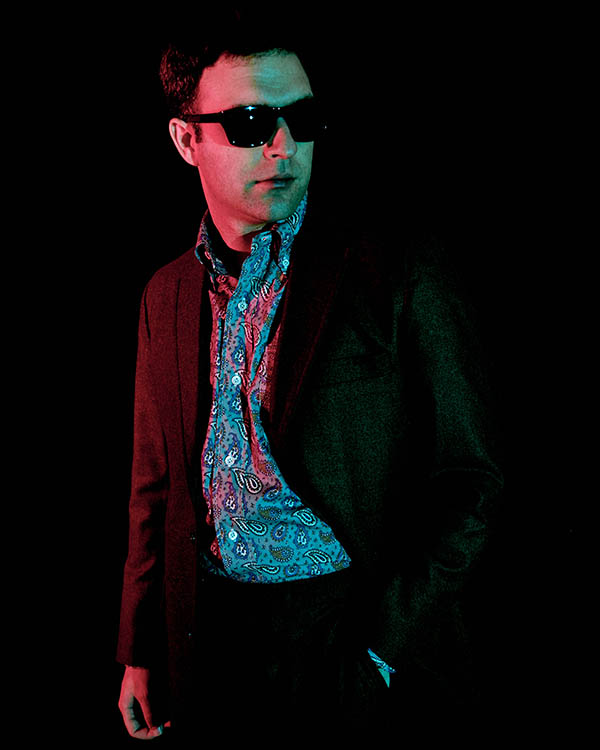
Photo by Chloe Ackers

So, does that mean you’ve cheered up for this record? 

PMW: Yeah, but if you can find a melancholy in a major key, that’s when you’re really winning, so that’s what I’ve been trying to find a little more.

Over & Over, which is the second track on the record, has a late-night, bluesy feel… 

PMW: It’s quite a bold move to have that second – it was influenced by the Paul Butterfield Blues Band and the ‘60s blues scene in West London, as well as southern soul and Irma Thomas. It has my mate, Ollie, playing some very aggressive lead guitar on it.

One of my favourite songs on the record is Another City Night, which is very atmospheric. It reminds me of Under The Boardwalk by The Drifters and Spanish Harlem by Ben E. King… 

PMW: Exactly – those New York records that the British acts were emulating. It’s also got pedal steel guitar on it by CJ Hillman – he’s incredible. We’d been meaning to do something together for ages… Pedal steel is such a distinctive sound and evocative, but it’s often just shoehorned in. A lot of people want to put pedal steel on something because it’s cool… That’s fine, but I wanted to wait for exactly the right thing and it felt right. I sent CJ a message saying, ‘Now’s the time’, and he was game – he was very generous with his time

‘I’m a really big Dylan fan but I’m quite careful with how I approach his influence’
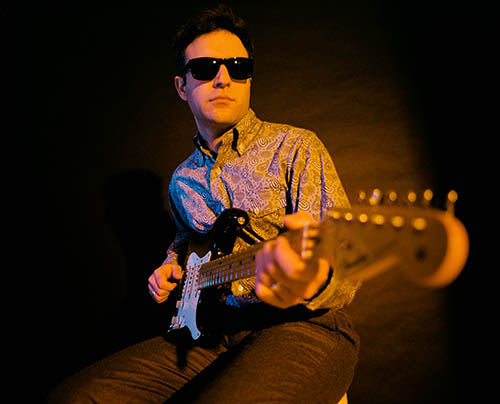
Photo by Chloe Ackers

There’s a great twangy guitar break on that song too…

PMW: That was me –  we overdubbed my Telecaster, which is my main guitar, because I was playing acoustic on that track. It was quite influenced by Little Barrie (Barrie Cadogan) – like a lot of guitarists, I’m really into him. He does those kind of bluesy but slightly cinematic things – they’re modal jazz and I’ve tried to tap into that in my own way, with a little bit of fuzz on the way in.

Closing Time really stands out on the album for me, because it has a West Coast, ’60s rock/pop feel – it’s slightly psychedelic… 

PMW: Definitely. I’m really into Buffalo Springfield, The Byrds, pre-the San Francisco hippy thing, and Dylan and The Velvet Underground. I’m a really big Dylan fan but I’m quite careful with how I approach his influence. I’d had the jangly riff for ages but it didn’t really fit in with what I was doing before, which was more jazz-soul-R ‘n’ B. Since it’s become more rock-pop-R ‘n’ B, it seemed to work, and I just reeled off a lyric which was just a load of nonsense really, depending on how you take it. I think that was the second track we put down.

I could imagine The Charlatans doing it… 

PMW: Yeah… I kind of let these things in… if I had something, I would throw it into the melting point. There was brief period with this album where I got a little bit lost because I had late-night R ‘n’ B, the slightly psychedelic thing, the ’60s pop, the country… It was starting to get a bit confused, but when I did the last session, which was Another City Night and  I Saw You In A Dream, it all made sense.

I Saw You In A Dream is my favourite song on the record – it’s a big, dramatic and cinematic ballad, with a ’50s, Roy Orbison-like feel… 

PMW: Yeah – I’ve been influenced by that stuff since I was a young teenager. It wouldn’t have gone on a previous record because it didn’t feel right.

There’s a twangy, melodic, Duane Eddy-style guitar solo on it… 

PMW: It sounds like it’s a baritone, but it’s in E on my Telecaster right at the bottom. The piano is also distinctive it’s a ’60s Wurlitzer, plodding along and doing almost a Beatles thing. It’s a bit unusual for me. We put a phase-shifter on the Wurlitzer, which gives it a throbbing quality.

The song, I Need A Reason, from the album, came out under another name, Every Day (Every Night), in 2022.  It’s like a bridge between the last album and this one…

PMW: Yeah – I changed the title. It’s basically a live cut not entirely, but fundamentally. We started doing the arrangement that’s on the album live.

The album finishes with In The Heights, which is one of the darker tracks, with a late-night / early-morning-in-the-city vibe…

PMW: Definitely – it’s more in keeping with some of my previous stuff, but it fitted well on this record. That track, Another City Night and I Saw You In A Dream tie-in with each other – they have a similar mood and imagery.

So, are you pleased with the album? 

PMW: I am. It feels like a massive step forward – both the production and the songwriting, as well as the playing and singing ensemble.

We do a lot of stuff from the last album live and I was very pleased with it, considering the circumstances in which it was made, but with this one I decided I wanted to do it properly and be less precious about other things. It’s the closest I’ve got to the vision for it. It’s not just emulating a sound – it’s a bit more infused with different things, and sonically it’s really close to the kind of stuff I like. I also like the package – the album cover.
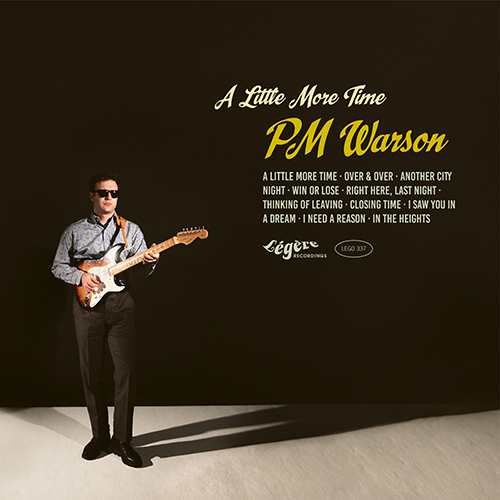
Was the artwork inspired by a Willie Nelson record?

PMW: Yeah – it was. Kerstin Holzwarth, who did the layout, has a knack of doing something that’s very classic, but doesn’t look like it’s sending something up. It’s always a risk, but she got it perfectly. It doesn’t look like the Willie Nelson record, but it feels like it has the same vocabulary. It’s important –  the combination of the songs, the sound and the package… I’m really careful about album covers – I’m fussy and I take a lot of time on it.

A little more time?

PMW: Exactly.

A Little More Time is released on September 6 (Légère Recordings) on vinyl and digital.

https://pmwarson.bandcamp.com/album/a-little-more-time

‘We wanted to get back to some ‘60s stuff – good, danceable grooves’

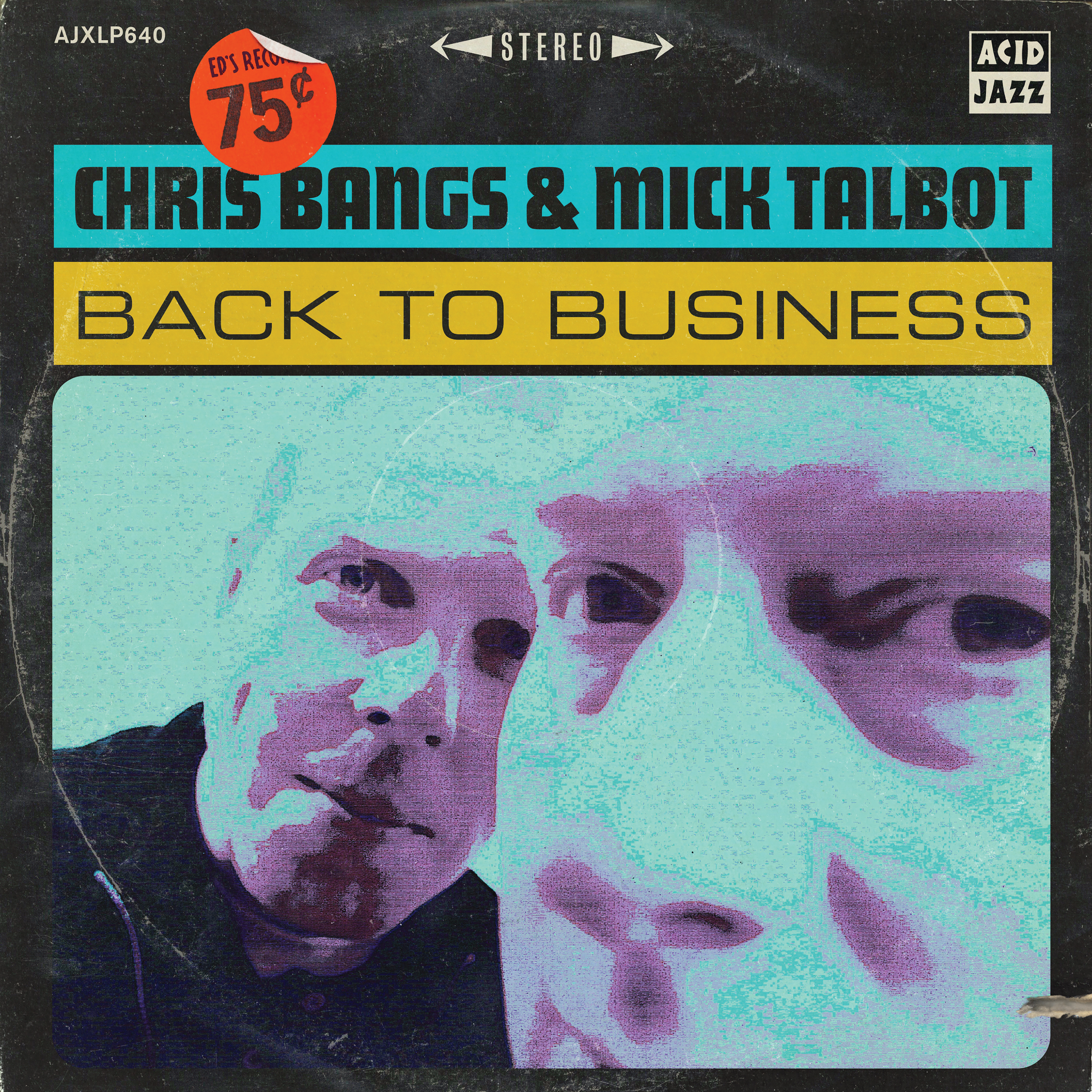
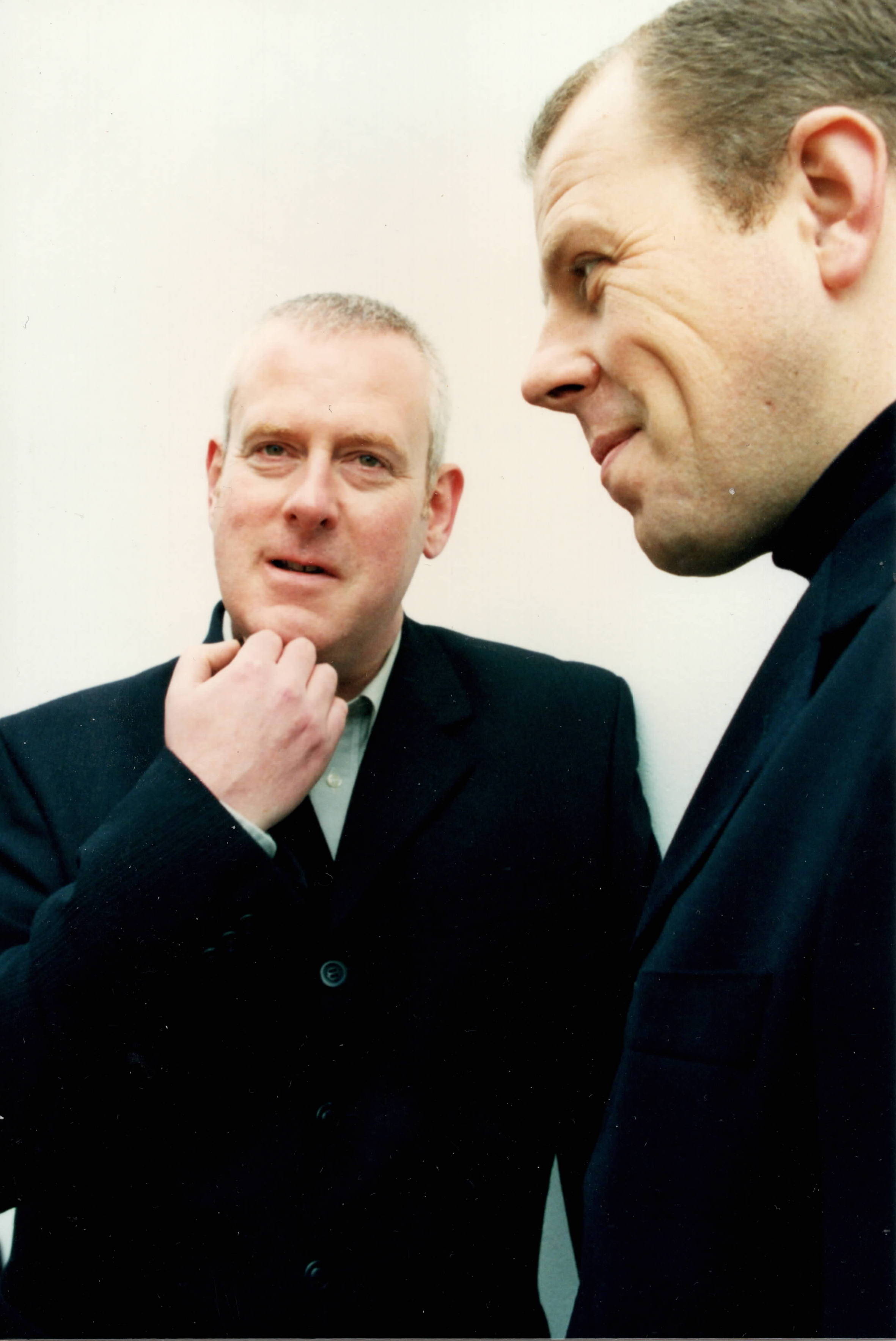
Back To Business is a new collection of groovy, hipshakin’, organ-heavy instrumentals by duo Bangs & Talbot – pioneering acid jazz DJ, musician and producer, Chris Bangs, and mod keyboard wizard and founding member of The Style Council, Mick Talbot.

The two of them have made their first album together in 20 years and it’s a scorcher – just the kind of soundtrack for a long, hot summer.

Talbot lays down some great Hammond, Wurlitzer and Rhodes piano, while bassist and drummer Bangs ensures the tracks always have a great groove – from the jazz club vibe of Sumthin’ Else to the Latino-soul-meets-West-Coast-Beach-Beat-sound of Surf ‘n’ Turf, and the explosive Kookie T, which, with its blaring brass and high-octane Hammond, sounds like the theme to a car chase scene from a Swinging Sixties action-thriller.

Marvin Gaye’s soul classic, How Sweet It Is, has been reinvented as a cool shuffle – Brand New Heavies’ guitarist Simon Bartholomew provides some tasty licks –  while Stingray pays its respects to gospel and evokes the atmosphere of legendary California club P.J’s. 

It’s Alright takes a trip to Detroit, with fuzz guitars, and the jazzy Leela’s Dance has more than a touch of Dave Brubeck’s Take Five about it.

“A lot of our past stuff was influenced by the ‘70s, but Chris wanted to get back to some ‘60s stuff – good grooves that were danceable,” explains Talbot, speaking to Say It With Garage Flowers.

“That’s the great thing about a lot of this album – it’s either head-nodding or dancey. It’s got a lot of different grooves, but most of them are quite immediate.”

He adds: “I’m not always sure what all the influences are because on a lot of the tracks Chris puts an infectious rhythm together – he likes playing bass and he also plays drums, guitar and keyboards. 

“Sometimes he suggests stuff and asks me to adapt it – I’m not precious. He might do a slide on a keyboard on one of his demos,  I’ll get the gist of what he wants me to do and redo it all, and then he’ll say, ‘I really miss my slide!’ So, I say, ‘Put it back then!’ [laughs]

Bangs & Talbot

‘Chris tries to paint a picture with sound – each track is a vignette of a movie’

“Chris does a lot of different things – he’ll give an arrangement to the horn players of him singing what he thinks they should play, so you get a funny demo with him singing, thinking he’s a saxophone.

“He tries to paint a picture with sound – each track is a vignette of a movie. It creates an atmosphere and conjures up an image, but, Chris is so poetic he wants to tell you what that image is.”

Q&A

Did you make the record during lockdown?

Mick Talbot: Yeah – but there were various times when there was a little bit more freedom. We wanted to try and capture the atmosphere of half a dozen people playing in a room, but that wasn’t possible at the time. Chris and I were only in the same room on two occasions – the rest of it was all done [remotely] with musicians we know.

While we were locked down, I did a few remote sessions, but I always go to my friend Ernie McKone’s studio, in Muswell Hill, where a lot of my vintage gear is, like my old Hammond, Wurlitzer, Clavinet and Rhodes –  he maintains them for me.

All those ancient things need care and attention – they get a bit sick if you take them on the road without souping them up – and he’s got the space for them. The colours on my palette are all there – the five or five principal sounds that I gravitate towards.

Mick Talbot

‘All my ancient gear needs care and attention – it gets a bit sick if you take it on the road without souping it up’

I did a remote session for a fella in New York – having been around for quite a while, it’s amazing to me to think I’ve just done something that’s on an album in New York and I didn’t have to go there…

The shenanigans people used to go through when they were doing an international project in the old days – they were scared of putting analogue tape through X-ray machines because you could wipe it quite easily. You couldn’t leave it in your hand luggage. Now I just do a session and, with a little ‘ping’, it’s gone thousands of miles and it’s on someone’s track.

How did you first get into playing keys? Are you self-taught?

MT: I’m a mixture of things. My nan was a piano player and she played by ear. I was quite enchanted by that and I asked her to try and show me some things, and she did, but she couldn’t really show me much because it was hard for her to explain the instinct – she just did it. It felt a bit mystical to me.

She told me there was a lady round the corner who taught piano, but I had the horrors about that because I wanted it to be like how my nan did it – like magic. She said, ‘If you’re keen, you don’t need to stick at it,’ but I did it for three years and it benefited me more than I thought.

Once I’d got the rudiments, and I got more of a personal taste for music, the fact that my teacher was principally a classical one, I wanted to try and apply that to the playing that was on the records I liked to buy. By the time I was about 12, I started trying to form school bands, so I stopped going to piano lessons and tried to develop what I’d learnt.

When you were growing up, were you listening to soul, jazz and funk? Have you always been into that?

MT: I liked all the English ’60s bands as well, but I guess they were R’n’B or soul-influenced. My mum was quite a fan of Motown, so, when I was really small, that was playing a lot.

My dad was more of a modern jazz fan, which I got to understand more as I grew older. He was good at sussing out records that would bring us together – he got me a Sly & The Family Stone album and said, ‘Some people think this bloke is jazz, some think he’s rock and some think he’s soul – they’re having trouble defining him, but I think he’s good and I think you might like him, but I don’t like all your music…’ We bonded over that.

When you and Paul Weller formed The Style Council, people had trouble labelling you too, didn’t they? You embraced so many influences: soul, pop, funk, rap, jazz, house music, European café culture, classical…

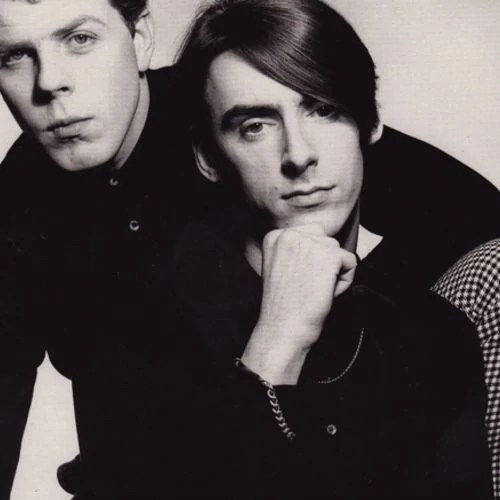
The Style Council


MT: We were only drawn to things that we actually liked – it wasn’t a calculated thing. We didn’t come into the studio one day and go, ‘We haven’t done anything that sounds like Kraftwerk yet.’

To me, it all seemed to make sense  – the more you look into music and go a bit deeper… The European influences, for instance – elements of Debussy, Ravel or the Romantic Classicists –  a lot of that music, in turn, influenced people like Duke Ellington, Burt Bacharach and Thom Bell of the Philadelphia sound.

‘The Style Council were only drawn to things that we actually liked – it wasn’t calculated. We didn’t come into the studio one day and go, ‘We haven’t done anything that sounds like Kraftwerk yet’.

Prior to forming The Style Council, you were in mod revival band, The Merton Parkas. When you were growing up and listening to soul, was it then a natural step to becoming a mod? What attracted you to that scene?

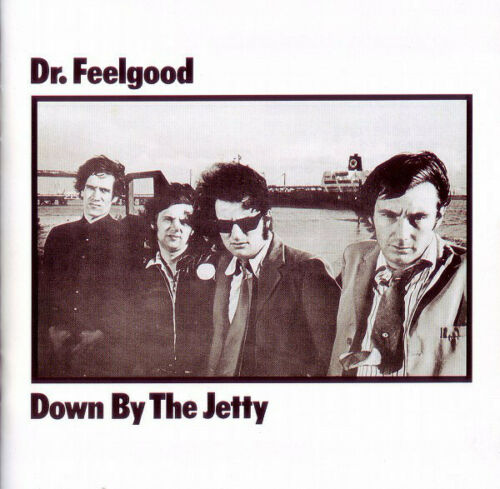
MT: When I was really little, I can remember that I liked that look, and then, in London, in the mid-’70s, just prior to the punk thing, there was a real explosion of energy with Dr. Feelgood –  they influenced a lot of the punk bands with their attitude and their look. I liked that on the sleeve of their first album [Down By The Jetty], it almost looked like they were from another time, like the mid-’60s.

Fast forward a couple of years and I saw The Jam just before they got signed to Polydor. I thought, ‘Hold on, this is a band for my generation’ – no pun intended – who were more of my age than Dr. Feelgood and they had some affinity with that ’60s mod thing and they were playing a few soul covers in their set.

I did see a lot of the early punk bands, but I thought their image was artificial on some levels – I knew a lot of weekend punks who dyed their hair green with food colouring and washed it out before they went to their respectable job. I thought it would be nice to be someone you could be all the time, and there’s no doubting that there’s a generation of bands who were so influenced by The Jam.

‘I saw The Jam just before they got signed to Polydor. I thought, ‘Hold on, this is a band for my generation’ – no pun intended’

Of the first five bands that surfaced with New Wave or punk, I felt The Jam were the most honest. A lot of them were trying to say it was Year Zero and that they weren’t influenced by anything, whereas The Jam weren’t shy about saying they were influenced by The Kinks, The Beatles or Wilson Pickett. It wasn’t like they’d just been dropped there by a spaceship in 1976.

‘I knew a lot of weekend punks who dyed their hair green with food colouring and washed it out before they went to their respectable job’

And I guessed you carried that approach through to The Style Council, as on the front cover of your second album, Our Favourite Shop, you had a store featuring memorabilia, books and records from some of your favourite writers and musical artists. You were literally wearing your influences on your sleeve…

MT: The visuals on that record had far-reaching consequences – people were trying to find copies of books that were out of print… I’ve met people who’ve said, ‘I think I’ve got three-quarters of what’s in that shop!’

The nice thing about that sleeve is that 90 percent of what was on it was mine and Paul’s and the rest of it was stuff that we wanted that we got our designer, Simon Halfon, to source. It wasn’t put together by a stylist – it came off our bookshelves or out of our lofts. It felt part of our makeup.

I always love reading about who or what influences the musical artists I’m into – it often sets me off listening to them and discovering new stuff…

MT: It’s the same with me. As a kid, I’d read about The Beatles and thought that maybe I should check out The Everly Brothers or Little Richard – whatever they were talking about. I liked The Rolling Stones as well and they helped me to find out about Howlin’ Wolf and Solomon Burke. It’s a nice process – I guess some bands are more open about that sort of thing.

Are you a record collector? How do you listen to music?

MT: I listen to it on any format because the moment you rely on streaming –  I don’t want to get into the politics of that, but they don’t bloody pay you enough – there’s sometimes a grey area. Things are missing, like you particularly like a B-side of a 7in single, but it’s not on Spotify. Why haven’t they got the one I’m searching for? It’s an anomaly.

‘I’m not a music format snob, but I appreciate there’s something about magnetic, analogue tape and vinyl that is just warm and nice’

https://open.spotify.com/track/5zY9QQzsUBKBNP98u4Dmbu?si=2f908c060b5d4408

Wiggle Wiggle, the B-side of the Bangs & Talbot vinyl single, Sumthin’ Else, is on Spotify… What’s your hi-fi setup at home like? Is it a big system?

MT: No – just normal speakers. My brother-in-law found me an old Dansette – sometimes I like to stack up some singles on that. I don’t do it all the time, but it might be influenced by something, like finding a rare record in a little junk shop, and I think ‘I’ll definitely have to get that red plastic thing out again…’

I’m not a format snob, but I appreciate there’s something about magnetic, analogue tape and vinyl that is just warm and nice.

Mick Talbot in the studio for Monks Road Social

You’ve played with so many acts, including Dexys Midnight Runners, Galliano, Gene, Candi Staton, The Blow Monkeys, The Young Disciples, Monks Road Social, Wilko Johnson, Roger Daltrey, Pete Townshend… Any collaborations that stand out?

MT: It’s really hard to pick out one. It’s whatever I’m currently working on.

Different things have enchanted me for different reasons – there are people I’ve not recorded with, but I’ve worked with… I did Jools Holland’s Big Band for a while, when his brother, Chris, who plays Hammond, took a couple of years out. That gave me the opportunity to play with Ronnie Wood, Dr. John, Edwyn Starr – all sorts of people. When you’re working with Jools, you’re never quite sure who you’re going to get. It’s quite spine-tingling when you’re playing with a legend.

It was a real thrill for me to work with Wilko Johnson – it was really mad, because I used to see him at Hammersmith Palais in 1976, and then I ended up working with him. He’s so influential.

Through working with him, I got to work with Roger Daltrey, and out of that I got to play with The Who very briefly. I filled in for a charity event – we did a medley. It was thrilling to be sat behind Pete Townshend while he was swinging around – that was a buzz.

‘I did Jools Holland’s Big Band for a while. That gave me the opportunity to play with Ronnie Wood, Dr. John, Edwyn Starr – all sorts of people’

There was one week in 2018 when the second Wilko Johnson album I’d played on came out, as well albums by Roger Daltrey and Ray Davies that I was on. They were all recorded at different times, but it was like three buses turning up at once.

People say to me, ‘What are you up to? Are you still in the music game?’ ‘Well, this week, I’m up to quite a lot, but next week it will look like nothing’s happening…’

Mick Talbot and Matt Deighton (Monks Road Social)


I’m really looking forward to the next Monks Road thing coming out, as it’s been put on hold for a while. We did the third album [Humanism] in Spain, but we ended up doing the new one in London, at RAK Studios, in one week. I love that studio – I’ve been fortunate enough to have been there a few times in the past couple of years and, for me, it’s second only to Abbey Road in terms of an old-school studio that still has every option available.

‘It was a real thrill for me to work with Wilko Johnson – it was mad, because I used to see him at Hammersmith Palais in 1976’

We have a mutual friend, Matt James, who was the drummer in Gene. You’ve played on his debut solo album, Breaking The Fall, which is released next month, haven’t you?

MT: Yeah – that was really nice. He had a few of the old Gene boys [Steve Mason – guitar, Kev Miles – bass) involved. It was great to catch up and play on it.

Matt always had that vocal thing going on – I can remember when I was playing live with Gene, they’d sometimes get Dodgy’s drummer [Mathew Priest] in, so Matt was featured more as a vocalist and a guitarist.

It’s great that it’s always been in him and that he’s got round to doing his own album. There’s one song that’s quite Northern Soul on it and a nice one where I played an accordion sound, with a rural or Cajun influence, or a bit like Ronnie Lane.

So, what’s next for you?

MT: I’m halfway through working on an album with an act called BirdSMITH – they used to be called First Congress. They’re the vehicle for a songwriter called Tom Van Can – he used to be a director of independent films. I first met him about 12 years ago, when I did some stuff for a soundtrack. He’s focused on music now. They had a single out called Kiss It Better – it got played on Radio 2 a bit.

I’ve not seen Candi Staton for a while – she’s coming over for a handful of festivals, so I’m going to play with her – and the next Monks Road Social album should be looming soon.

I’m also working on a second album for what I hope is an ongoing project with Chris Bangs, and there’s a Jam and Style Council exhibition on in Brighton [This Is The Modern World]. They’re showing the Style Council documentary [Long Hot Summers: The Story Of The Style Council] and I’ll be there for a couple of days, doing a Q and A.

Nicky Weller [Paul’s sister] is curating it and she tracked down one of our early video directors who had lots of outtakes – there’s all sorts of things. Her partner, Russell, has been editing stuff – he sent me a film of me playing with The Jam at The Rainbow, in 1979. I had no idea anyone was filming it.

https://www.youtube.com/watch?v=sL24XmTg-r0

Were you pleased with the documentary? I watched it earlier this year, on Sky Arts, and I thought it was brilliant. 

MT: It was good – it was very hard to try and shove everything into one film, but they did a good job. It really reflected the personalities of a lot of people well.

Paul and I did a combined interview – the people who put the film together were hoping there might be a commercial DVD release, because they said they’re sitting on about half an hour of stuff from us that they couldn’t get in that’s really funny. It shone a light on some things, but it didn’t work in the film. I guess it’s all owned by Sky… it’s not my shout.

How was it talking about that time again? The film was pretty candid…

MT: Having to film it over a couple of days and dredge up seven years of your life was kind of exhausting… it was a bit of a blur.

A lot of it was shot at Paul’s studio – while I was down there, I played on three tracks for his album, On Sunset, which he was just finishing. I thought I played on two, but it turns out I’m on three. There was so much going on.

The Style Council got back together to play one song at the end of the film, It’s A Very Deep Sea. How was that? It’s a lovely performance…,

MT: I was really pleased it came together. I saw Paul play in London a few weeks ago and it’s in his set now – I don’t think he’s played it live for a very long time and it’s nice that’s put a new focus on it.

I had concerns about whether or not we should work up three or four songs, in case it didn’t click, as it had been so long, but Paul went, ‘No – just that one.’ He was very definite about it and he said, ‘If it works – it’s great, and, if it doesn’t, we don’t have to use it.’

I was really hoping it would work, but if hadn’t, it wouldn’t have been the end of the world, as nobody knew about it but us.

People might think we sweated over it for a long time – I listened to the song a lot at home – but, when we did it, we started playing it, Paul thought it was really good, his instinct kicked in, and he said, ‘Let’s take it now.’ We only played it through all the way once. It felt good – a real pure performance.

‘Having to film the Style Council documentary over a couple of days and dredge up seven years of your life was kind of exhausting… it was a bit of a blur’

Do you think the film has opened up the Style Council to a new audience? You were so ahead of your time and more groundbreaking than you’ve been given credit for…

MT: It can’t do any harm. I was at a family party the other Saturday and I was quite surprised at some of my wife’s younger cousins who were aware of us. I think a lot of that is down to the documentary.

Some of the political issues you were writing about back in the day are still relevant now, aren’t they? 

MT: Some of Paul’s more pointed lyrics seem like they were written about today, but they’re from 35 years ago. It’s astonishing how little things change.


Back To Business by Bangs & Talbot is released on June 17 on Acid Jazz. It’s available on vinyl, CD, digital download and streaming platforms.  

www.acidjazz.co.uk/

For more information on The Jam and Style Council exhibition, This Is The Modern World, click here.