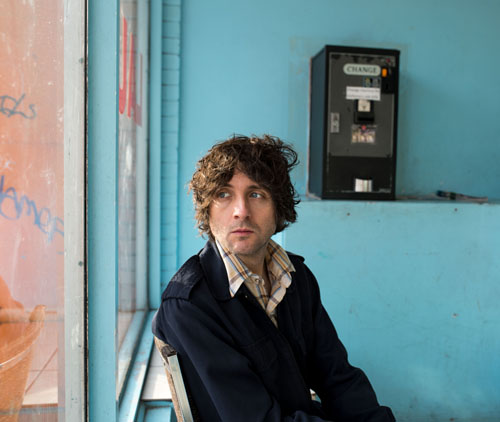
It’s been a year since Canadian singer-songwriter Jerry Leger first came to the UK and Europe to promote his brilliant double album Nonsense and Heartache – a mix of raw, primal, bluesy rock ‘n’ roll and stripped-down, alt-country ballads.
Now he’s back on tour, has released a new retrospective compilation album called Too Broke To Die, and is gearing up for the release of his next studio album,Time Out For Tomorrow, later this year.
In an exclusive interview he gave Say It With Garage Flowers while he was on the road, he tells us about revisiting his back catalogue, the challenges he faces as a Canadian artist, why he loves coming to the UK and Europe, and how the sound of his forthcoming album was inspired by Nick Lowe and Lou Reed…
Things are changing round here. That’s the title of a song on Jerry Leger’s 2018 album Nonsense and Heartache – one of Say It With Garage Flowers’ favourite records of last year – but it could also apply to the Canadian singer-songwriter’s profile in the UK and Europe.
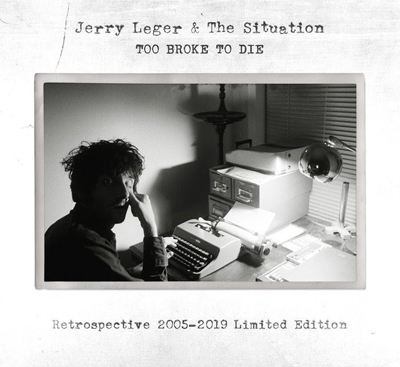
It’s been over 12 months since Toronto-based Jerry and his band, The Situation, who’ve been together for 12 years, first came to these shores, and now they’re back, to promote a new, limited edition, retrospective compilation album, called Too Broke To Die, which has been put together especially for the European market and is available to buy from his merch stall on tour.
It brings together 21 songs from the nine albums he’s made from 2005-2019 (eight studio albums and a live record), including some previously unreleased outtakes.
Highlights include the Dylan-esque rarity Beating The Storm; the gorgeous country shuffle of Wrong Kind of Girl; the moody and edgy Factory Made, which is an attack on the fake aspects of the music industry; the sad, reflective Nobody’s Angel; the cool, garage-rock strut of The Big Smoke Blues and the alt-country of Another Dead Radio Star, which was inspired by the 1930s radio show The Shadow, which was voiced by Orson Welles.
Off the back of last year’s successful tour, which introduced Jerry to a new audience outside of his native Canada, this return visit, coupled with Too Broke To Die, which serves as a handy introduction to his career, means 2019 could be the year that he breaks through in the UK and Europe.
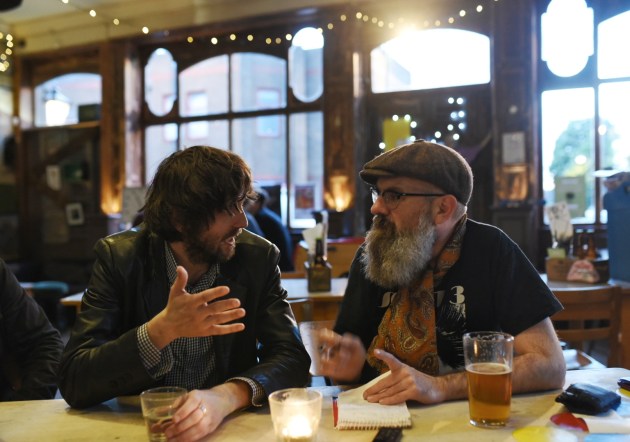
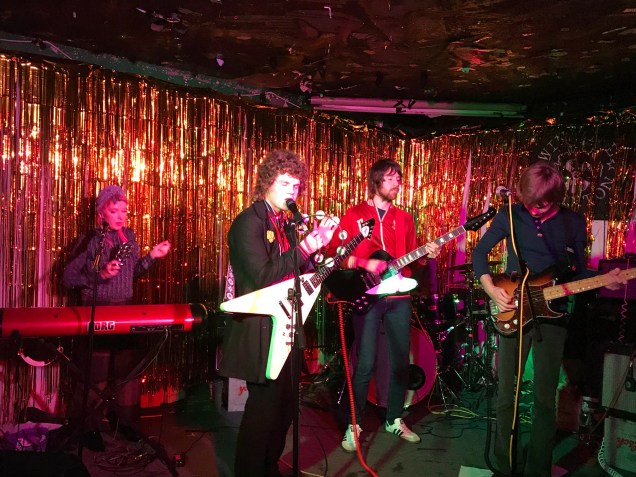
One thing’s for sure – it’s certainly not for want of trying…. When Say It With Garage Flowers catches up with Jerry over a pint in a East London pub, in Leytonstone, ahead of a headline show at What’s Cookin’, it’s the fifth night of a gruelling, seven-week tour of almost 30 dates, including stints in Germany, the Netherlands, Switzerland, Luxembourg, Norway and Sweden.
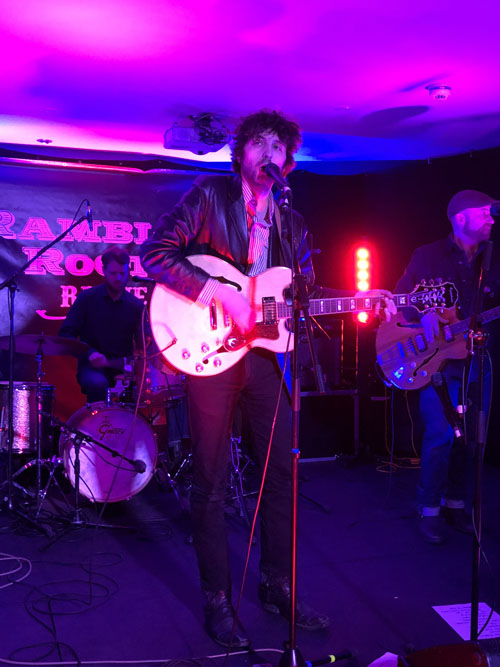
The tour kicked off with a storming UK festival slot at the Ramblin’ Roots Revue in High Wycombe and two appearances on Record Store Day, at Music’s Not Dead in Bexhill-on-Sea and Union Music Store in Lewes. I ask Jerry if he thinks his profile over here is getting bigger.
“I’m glad I did Ramblin’ Roots – it was great to see a whole bunch of people, some of whom I hadn’t met before. I hope my profile is building – it’s what I want, but it’s hard for me to gauge because some things happen very quickly and other things happen very slowly – every day is the same for me, so I’m not very aware of how everything is going,” he says, sipping his beer.
I want to reassure him that things are changing round here… With a brand new studio album on the way later this year and hopefully more UK dates planned in the autumn/winter, by the end of 2019, you’ll definitely be hearing a lot more of Jerry Leger…
 Q & A
Q & A
Your new album, Too Broke To Die, is a retrospective compilation album of songs from 2005-2019. How did it come about and how did you choose which songs made the cut?
Jerry Leger: There are a lot of albums I’ve made that people are unaware of, so I put together a compilation with a few songs from each album and a couple of previously unreleased songs.
Initially, I thought about having some covers on it. We recorded a bunch of covers with Michael Timmins [producer – Cowboy Junkies] for a project that never came to fruition. We did Time by Tom Waits, Like A Hurricane by Neil Young and a medley of John Lennon songs – Well Well Well and his version of (Well) Baby Please Don’t Go from Some Time In New York City. It was a wide range of covers, but then I decided I didn’t want to have to deal with all the licensing issues – I had eight of my albums to dig from and a lot of outtakes, so there was already enough there… Each album had about five or six songs that didn’t make it onto the record.
You’re like Prince…
JL: [laughs]: Without the money and some other stuff that we won’t go into – and I’m still here…
Too Broke To Die is essentially a ‘Greatest Hits’ set but without any hits on it…
JL: Greatest Miss Hits!
Was it hard to choose which songs ended up on Too Broke To Die? How was it going through your back catalogue?
JL: It was a bit tricky and very strange – a lot of the albums I hadn’t heard for a long time, apart from revisiting them so I could bring some of the songs back into my live set and refresh my memory. Some of the songs I recorded when I was 20 or 21 – I’ve just turned 34. I remember being there and making the albums, but it’s strange…
The record takes the listener on a journey – from some of your earlier raw and folky stuff to more soulful sounds, and bluesy country and Americana from your last record, Nonsense and Heartache…
JL: It’s always however I was feeling at the time – and whatever record I wanted to make. I’m still like that.
Let’s talk about some of the songs on the record. One of my favourites is Beating The Storm, which has a Dylan feel…
JL: Yeah – definitely.
Can you remember writing that song? What was the inspiration?
JL: I don’t remember the inspiration – I can remember writing it. I was living in a basement apartment and I wrote a few songs there, like Round Walls, for the album You, Me & The Horse. I’ve always loved Beating The Storm – I tried doing it for that album, but, for whatever reason, it didn’t make it. We tried it a few years later, for the album Some Folks Know, but it still didn’t make it. It stuck in my mind. When I was putting the new record together, it seemed like an obvious choice. It had never found a home…
What can you remember about Wrong Kind of Girl?
JL: That falls into that category of those songs that are a bit like magic – I don’t know where it came from or how it came here, but I happened to write it and I’m glad that I did, because I really like that song.
Is He Treating You Good? is a great song – it’s about a relationship gone wrong and it reminds me of something Elvis Costello could’ve written…
JL: I’m glad that you said that because I’m a big fan and he’s a big influence on me, but I never get that comparison. It’s one of my favourite songs I’ve written – it’s up there. It’s in my top three. The song speaks for itself.
Factory Made, from your album Early Riser, is one of my favourite songs on Too Broke To Die…
JL: I can remember writing that one. When Michael Timmins mixed it, it sounded like it came from a different world. We recorded it live and then he mixed it – his choices of which instruments came it and out, and his reverb and echo ideas… I wrote that song at home at 3 in the morning. I was really drunk and I was frustrated with everything – with how the music industry had gone and with some of the people around me who were full of shit. It was an attack on the real trend for making you think that things are legitimate when they’re not – I was frustrated by people getting sucked in by that. It’s a song about being a frustrated artist, but also a frustrated listener. Fortunately – and unfortunately – I think that song will be relevant for years to come.
‘Over a beer, I can talk all night about music I love. I can talk about Blood On The Tracks if you want me to…’
Nobody’s Angel feels like it’s one of your anthems…
JL: That was written when I’d started working in a hardware store in Toronto that my brother managed – I was a teenager in high school and I worked there for many years. You don’t want me to fix anything…
It was in an area where there were a lot of people who were suffering from different forms of abuse. I would see men and women – young people who’d had the life sucked out of them within a few years.
There was a coffee shop on the corner where there were drug dealers and pimps who were there all night… There wasn’t a lot of understanding – people’s lives got screwed up very easily for a variety of reasons, but they shouldn’t be looked down upon. The neighbourhood has now been gentrified – at the time, there was a lot of crack cocaine there.
Toronto features in quite a few of your songs, like Things Are Changing Round Here and The Big Smoke Blues – both of which are from Nonsense and Heartache and are also on the new compilation album…
JL: Yeah – I write about what’s around me. Obviously parts of me are in the songs, but there are also little conversations… Songs just come from anywhere – I don’t have a filter. Whatever I retain, I think could be a song…
Let’s talk about your next studio album, which is coming out later this year. What’s inspired some of your new songs?
JL: One song was written about a ghost town in Northern Ontario and the opening song is called Canvas of Gold – the first verse is: ‘Everything was almost decided when we were young. You stay poor like your family before and I’ll keep on hustling…’ I think I’ve become more aware recently of what a crazy life I’m living – it’s hard to survive as an artist in a big city, but it’s what I signed up for – it’s a hustle.
Is it hard trying to make it in the UK and Europe, outside of Canada?
JL: Hustling outside of Canada is more rewarding – Canada takes its own artists for granted – it’s always been that way. I want to keep working, so I have to build a profile here [in the UK and Europe]. I just want to keep reaching more people and I want to keep coming back here. We’ve had some of the most enthusiastic appreciation here – there’s more people here who are deeper music lovers than in North America. It’s been easier to get music listeners here. It became tiring in Canada – doing the same routes and travelling across the country. It didn’t feel like people were getting into it.
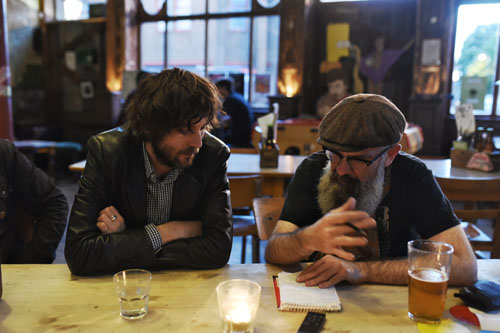
Canada’s really big and there’s not a huge population, so unless you’re playing the game according to somebody else, it’s very difficult to get anywhere. There’s a whole other world out there. I have my fans and supporters back home, but it’s really nice to be in a new market and have people dig what I’m doing. It’s a different appreciation – I’ve met way more people on the tours in the UK and Europe that listen to music in the way that I listen to it. When I get into a record, I dissect it – I listen very closely to it and it means something to me. Over a beer, I can talk all night about music I love. I can talk about Blood On The Tracks all night if you want me to…
‘It’s hard to survive as an artist in a big city, but it’s what I signed up for – it’s a hustle’
Earlier today, you told me that Canadian radio thought that your last album was too gritty…
JL: I thought that was great – it’s the best compliment they’ve ever given me.
Let’s talk more about your new studio album, which is out later this year. Like your two previous albums, you worked with producer Michael Timmins (Cowboy Junkies) on it…
JL: What was different this time around was that we rehearsed a lot before going into the studio, trying out different arrangements, but there’s still spontaneity on this record… A lot of it was played live in the studio, but I had more of a clear idea about how it was going to be executed. I already had in my mind what the arrangements were going to be. It took about a week to make.
What does it sound like?
JL: It’s a nice, short and sweet, lean and mean record. Two records I really dug the sound of that I wanted to capture on this record were Nick Lowe’s The Impossible Bird and one of my favourite Lou Reed albums, Coney Island Baby – I love that dry drum sound and the real directness of it. Some of the songs just coast along. I also like a lot of Nick Lowe’s older records with Rockpile, where he doubled the electric guitar solos. I doubled my vocals on some songs.
‘My next album is a nice, short and sweet, lean and mean record. I wanted to capture the sound of Nick Lowe’s The Impossible Bird and Lou Reed’s Coney Island Baby’
Do you have a title for the new album?
JL: Time Out For Tomorrow, which I think really captures the whole album – I don’t know why, but the title feels right. I’m really excited about the new record – I’m very proud of it. I really think it’s the best record I’ve made so far. It’s a cross between Early Riser and Nonsense and Heartache sound-wise and it’s very concise – songwriting-wise, performance-wise, arrangement-wise and sequence-wise. We went in with 18 songs, focused on about 15, then cut it down to 12 and 10 made it. Some of the songs that didn’t make it are some of the best, but they didn’t fit. It was like putting together a puzzle. I like records that are rough around the edges, but with this one I took a little more care putting those puzzle pieces together.
I can’t wait to hear the new album and I’m looking forward to you coming back to the UK.
JL: I’ve got to keep coming here and that’s what I plan to do. I’m sure we’ll be back before the end of the year.
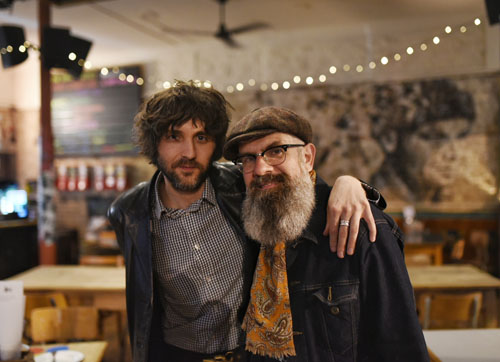
Jerry Leger & The Situation are currently touring Europe. For more information, please visit https://jerryleger.com/ .
The compilation album Too Broke To Die – a limited edition retrospective (2005-2019) is available to purchase at the gigs. It’s on Golden Rocket Records.
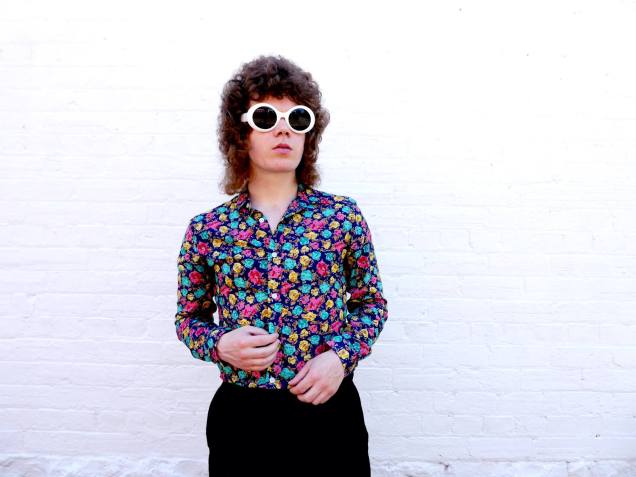
Thanks to Laura Proctor at https://www.lpphotographs.ca/ for the photography. You can follow her on Instagram here.



 Say It With Garage Flowers