
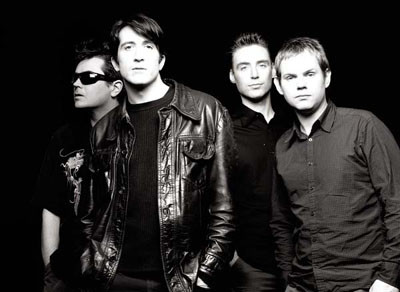
Baggy, Balearic country, pan pipes and a Renaissance instrument called the crumhorn can all be heard on the glorious new album by The Hanging Stars – On A Golden Shore. “We had to trust ourselves a little bit more and we threw the rulebook out the window – sonically, there’s all kinds of shit going on!” frontman and singer-songwriter, Richard Olson, tells Say It With Garage Flowers.
The Hanging Stars’ last album, 2022’s Hollow Heart, was our favourite record of that year – London’s kings of cosmic country created a rich and immersive collection of songs that were musically uplifting, but, lyrically, often tinged with sadness.
Hollow Heart also wasn’t afraid to comment on the state of the UK – the ‘60s-garage-rock-meets-The-Byrds of I Don’t Want To Feel So Bad Anymore was written about being completely helpless at the hands of the Tory government, while the West Coast psych-pop of You’re So Free concerned itself with anti-vaxxers and how Brexit and Trump’s presidency created social divide.
To make the album, the band and producer/musician, Sean Read (Soulsavers, Dexys) decamped to Edwyn Collins’ Clashnarrow Studios in Helmsdale, in The Highlands of Scotland, which overlooks the North Sea.
Speaking to us just before the release of the record, frontman, Richard Olson, said: “Edwyn offered us the use of his studio – it felt like being anointed – and Sean is one of the two engineers who he lets work there – the stars aligned.
“That happened during the pandemic, so we had to find a window when we were allowed to do it. It was quite a project, transporting six people to Helmsdale, with a bunch of instruments.”
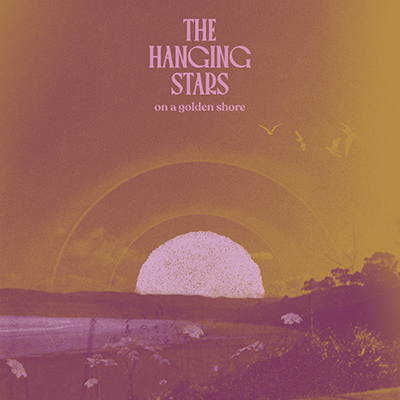
This time around, for their latest album, On A Golden Shore – their fifth, but their second for indie label, Loose Music – Olson and the band returned to Clashnarrow, albeit with new bass player, Paul Milne, who replaced original member, Sam Ferman, and, once again, Read was sat in the producer’s chair.
“It was a bit of a no-brainer, but it was still quite a venture to make it happen,” says Olson, talking to us in early 2024, over an early evening pint in a pub in Leytonstone, East London, shortly before a solo gig supporting Canadian folk singer, Bonnie Dobson, with whom he and his band are making a new record.
“Four of us went up, but Joe [Harvey-Whyte – pedal steel] stayed back and did his parts in London. Paul had to leave after three days, so we had to get the drums and bass down in that time, and then we did what overdubbing we could,” he explains.
Overdubbing and mixing were carried out at Read’s Famous Times studio in East London.
“Edwyn has got an amazing set-up – not everything works – but we wanted to use anything we possibly could,” says Olson. “That was a theme while we were there – what gadgets, synths, boxes and microphones could we find?
“When we were first introduced to Edwyn’s studio, it was quite daunting, but Hollow Heart is an incredible record – I was so pleased with it. This time, it was nice to go there and to feel that we owned what we were doing – that brought us freedom and confidence. I can see that people might feel that this record isn’t as immediate, however, it’s a genuinely confident one and it’s got a lot of facets to it.”
‘We had to trust ourselves a little bit more and we threw the rulebook out the window – sonically, there’s all kinds of shit going on!’
Like its predecessor, On A Golden Shore is another terrific record, although, as Olson says, perhaps not as immediate, but with some new influences at the fore. Anyone for some baggy, Balearic country, pan pipes or crumhorn? More on that in a moment…
Unlike Hollow Heart, which, because of lockdown, meant the band had more time to prep the songs before going into the studio, this time around saw The Hanging Stars develop the tracks during the recording sessions.
“This was much more of a studio album,” says Olson, adding: “We had to trust ourselves a little bit more – we had to trust in The Hanging Stars – and, for me, this record defines that. We threw the rulebook out the window – sonically, there’s all kinds of shit going on!”
There certainly is. First single, the sunny and optimistic, Happiness Is A Bird, is a case in point, with its breezy, Balearic vibe and delicious, Grateful Dead-like guitar solo.
“There was a bit of a joke,” says Olson. “When Tom [Bridgewater] from Loose asked us what the next album would be like, I said it was going to be a baggy, Balearic country record. He laughed and said: “Go on, do that, then’. “And, to a certain extent, it is – some songs, like Happiness Is A Bird, Golden Shore and Sweet Light vaguely have that vibe.”
He’s not wrong – the shimmering, exotic and blissed-out Golden Shore has bongos, a funky bassline, synth, and pan pipes from Will Summers of the psychedelic folk/prog rock band Circulus.
“I said, ‘This album needs pan pipes or I’m not doing it!” says Olson. “Will showed up with a suitcase of flutes, and, because of the Balearic baggy idea, I felt like we needed pan pipes – they’ve got a bad rep, but we’re not necessarily here to reclaim it.
“I’ve been listening to a lot of what I refer to as ‘spa-core’, or New Age might be another word for it – you have to sift quite harshly through that jungle, but when you get there, it’s pretty neat, man. Pan pipes sound fucking amazing and no one expects us to have them.”
Summers also features on the song Raindrop In A Hurricane, although playing something other than pan pipes: “As he’s an expert crumhorn player – it’s a Renaissance and Baroque instrument and it’s quite amazing – we thought, ‘Why not?” says Olson.
Lyrically, that song has a recurring Hanging Stars theme – escapism: getting away from everything… “That’s what we are – The Hanging Stars is an escapism and I’ll wear that badge. We’re wistful – we wish for something beyond and different, and I’m very proud of that,” says Olson.
He adds: “There are songs on this album that I’m very pleased with and that have been hanging around for a long time – something like Golden Shore has been kicking around for ages, but we had no idea it was going to turn into what it did. Happiness Is A Bird is one of those songs that turned out exactly how I had in mind – I’m very fond of it.”
‘I’ve been listening to a lot of what I refer to as ‘spa-core’, or New Age might be another word for it – you have to sift quite harshly through that jungle, but when you get there, it’s pretty neat, man’
With Sweet Light, we’re in more familiar territory – infectious and jangly sunshine guitar pop with melancholy undertones and some Tom Petty-style country rock thrown in for good measure. It has that classic Hanging Stars sound…
“We don’t want to get away from that – it’s who we are. It’s Patrick’s song, but I wrote the lyrics – I filled in the gaps for him. Patrick is an incredible songwriter – I’m sure he’s got ten billion different albums in him,” says Olson.
Wasn’t Sweet Light written just before you made the album? “That’s Patrick – he just pulled it out of his pocket. We were like, ‘It’s so bloody good, we’re going to have to do it now,” he says.
Opening song, the arresting Let Me Dream of You also does that neat trick of mixing some ‘70s country-rock swagger – think The Stones circa Exile On Main St. – with a whole heap of sadness: “It sets the tone of the record quite well in terms of heartbreaky bravado,” says Olson.
“I said, ‘This album needs pan pipes or I’m not doing it!’ They’ve got a bad rep, but we’re not necessarily here to reclaim it’
It has a loose groove, a ragged charm, some great ‘ooh-la-la’ harmony backing vocals and a mighty guitar solo from Patrick Ralla.
So, does Olson think it has a Stonesy feel? “I guess so – we did go for a bit of the Exile On Main St., Beggars Banquet and Let It Bleed vibe: it was just a fun song to do.
“With the lyrics, I had some good lines and it was the first song I’ve ever written where I had the melody in my head before. It just came to me, and I was like ‘fucking hell!’ So, I recorded it and thought, ‘This has got legs…'”
The country lament, Disbelieving – one of the best songs on the record – is so gorgeous you could imagine Gram Parsons singing it, and it’s followed by a companion piece called Washing Line, which is another sad ballad with pedal steel: “Hang me out to dry on your washing line.”
And while we’re on the subject of hanging, Olson says: “Disbelieving has been hanging around for quite a while… I constantly have songs on the go and it’s lifeblood for me – if I don’t have that, I don’t feel very fulfilled.”
Lyrically, there’s still a sadness to many of the songs on the new album, but it doesn’t feel as dark a record as Hollow Heart. Olson agrees, saying: “I think it’s more hopeful – there’s Happiness Is A Bird…. The sadness that runs through the record is to do with age. The older you get, the more tragedies you see. That’s just how the wheel turns…
“I’ve also been encouraged by people who I trust in my life to try and come up with more stories and write from a third person perspective. When I write lyrics, there also needs to be a sense of humour in everything – not ha-ha-ha, but something I can have fun with.”
Silver Rings has a touch of ‘70s funk in its piano intro, Raindrop In A Hurricane tips its corduroy cap to ‘60s folk like Bert Jansch and was also inspired by singer-songwriter, Bill Ryder-Jones, I Need A Good Day owes a large debt to vintage Teenage Fanclub, and the jaunty No Way Spell brings out the banjo.
“I Need A Good Day is very Scottish – let’s be honest, we’ve kind of ripped off Teenage Fanclub, but, I will say, it was completely unknowingly and innocently, until the song was done. But, yes, in retrospect, sorry Gerry Love and Norman Blake, it sounds just like your band,” says Olson.
‘I constantly have songs on the go and it’s lifeblood for me – if I don’t have that, I don’t feel very fulfilled’
Final song, Heart In A Box, which mentions the Sistine Chapel dome in its lyrics, is the perfect way to end the album, starting slow and sparse, with mournful brass, and then building up to a big, cosmic crescendo with horns, angelic harmonies and groovy bass.
“It’s a London song,” says Olson. “I wasn’t sure about that line with the Sistine dome,” he adds. The horn arrangements are by Sean Read: “That’s when the song really came together. It wasn’t going to be the last song on the record, but it was Joe who said, ‘That is an ender.’ And I was like, ‘Really? I feel like it’s number seven.”
It’s a great way to finish the record… “Thank you – I really appreciate that.”

Q&A
On A Golden Shore is The Hanging Stars’ fifth album in eight years…
Richard Olson: I know – I can’t believe it.
How does that feel?
RO: It’s always such a quest for the new, so it’s very hard to look back, but, saying that, I’m really pleased and proud that we’ve got such a big back catalogue.
Some bands don’t manage five albums in their whole career… You’re prolific…
RO: Thank you. I’ve been lucky enough to have been surrounded by such a bunch of incredible people and musicians during the lifetime of this band.
I don’t think the music community in London has ever been so strong. People always complain about it, but I’ll celebrate it – the amount of people who put stuff on, perform or pay to go to shows. People truly look after each other – the grass roots are stronger than ever.
I can’t stress enough how much of a band effort this record is – Paulie [Cobra – drummer] has had a huge input on this record. He’s always been a great harmony singer and arranger, but he’s really come out of his shell with this one – he’s been phenomenal. And Patrick and Sean, of course – it’s a team effort, man. Working with Sean is like working with family – he’s so close to us, he’s like a sixth member.
‘The sadness that runs through the record is to do with age. The older you get, the more tragedies you see. That’s just how the wheel turns…’
The new record is your first with a new line-up – Paul Milne has joined on bass, taking over from Sam Ferman…
RO: Having Sam leave was hard – he was such a part of the unit that me, Paulie and him had when we went to Los Angeles and did Over The Silvery Lake. It was tough, but I knew it was on the cards and the thing about this band is that the friendship part of it is huge – Sam is our friend and we want our friend to be happy. As far as I’m concerned, he’s still part of The Hanging Stars, and we’re lucky to have people like Paul Milne – we met him through the scene and he’d filled in a few times before when we did a tour with Wolf People a long time ago. He’s an incredible player, he’s very knowledgeable and he knows his shit – he’s just an utter joy to have around and, it’s the old cliché, but he has given us a little bit of a kick up the arse to iron out the finer creases.
So, how was it making the record?
RO: It was great – we found a window where we go up to Helmsdale again, with Sean Read at the helm…
That collaboration worked so well last time, so it was an easy decision to make?
RO: With Edywn and Grace [Maxwell – Collins’ wife and manager] holding their hands over us, we were like, ‘how can we not? It was so focused because we only had x amount of time – I think we were there for a week. Whereas last time, we went up a mountain and did mushrooms, this time around there wasn’t any kind of those shenanigans – we didn’t have time. I feel like this record is a part of what’s to come – it’s just the first disc of a double album that should’ve been…
So, you’ve got a lot more new songs written?
RO: Yeah – I’ve got pretty much the basis for a new album. I’ve been trying to define this record for myself – I’ve made a record, but I have to let it go and say it’s done. If I listen to it, I could go mad with the shit I want to change, but what am I going to do? It’s one of the hardest things and I think there are a lot of masterpieces lying out there on shelves because people can’t say, ‘This is done’.
Do you listen to your records after you’ve made them?
RO: Very rarely, but it happens from time to time – you also have to listen to them to remember stuff… I’ve got like 60 songs I need to remember.
Just before you went to make the new record, you won the Bob Harris Emerging Artist Award at the 2023 Americana Music Association UK Awards. How was that?
RO: It was great – I didn’t really know what to expect. I’m still kind of new to the whole scene, but it was a huge honour for us, as we’re talking about a guy [Bob Harris], who happily sat there and whispered in the ears of Tom Petty, John Lennon and Keith Richards – that’s pretty high praise, if you ask me. It was great to be on top of the world for two minutes, then you get on the bike again, but it was encouraging.
‘Last time, we went up a mountain and did mushrooms, but this time around there wasn’t any kind of those shenanigans’
Robert Plant and Mike Scott (The Waterboys) were both at the awards ceremony. Did you get to meet them?
RO: We’ve heard it through the grapevine that Robert Plant enjoyed us very much, but we didn’t meet him. I saw Mike Scott backstage with his daughter – he looked a lot more like Keith Richards than I remembered.
On A Golden Shore is released on March 8 (Loose Music).
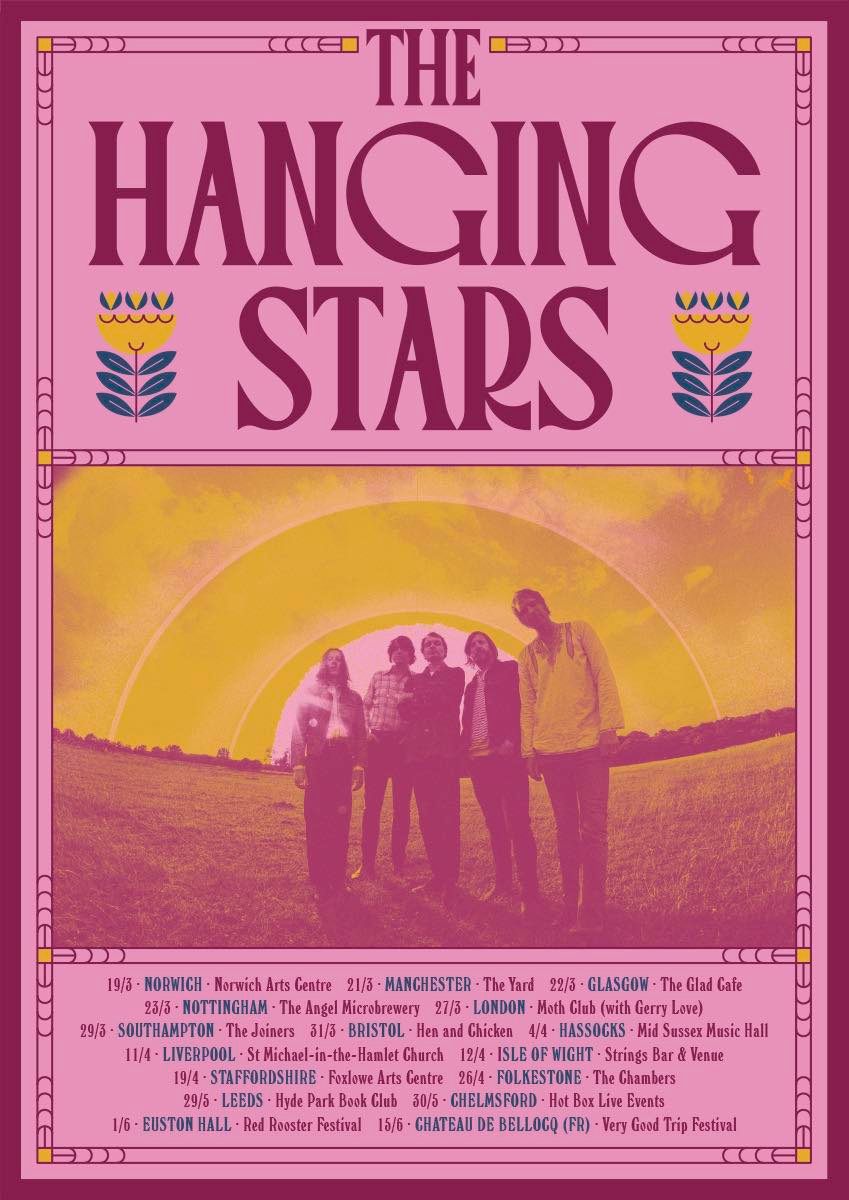
The Hanging Stars are on tour from March 19 – dates are here:




 Say It With Garage Flowers