Jangle all the way


Picture of The Lost Doves by John Middleham

Here at Say It With Garage Flowers, one of the recent albums that has helped us to stay positive during these tough times – and has been a shining light in the darkness – is the aptly-entitled Set Your Sights Towards The Sun, the debut record by UK duo The Lost Doves, who are North West-based singer-songwriters Ian Bailey and Charlotte Newman. 

It’s a superb collection of songs that’s in thrall to classic ’60s jangly and harmonic guitar pop, like The Byrds and The Beatles, as well as vintage psychedelic sounds. On the optimistic and anthemic title track, Bailey’s 12-string Rickenbacker rings out like bells (of Rhymney), and it also adds a gorgeous shimmer to the melancholy She’s Waking Up To Close Her Eyes.

There’s a country tinge to the beautiful, acoustic ballad You Stop Me From Falling,  a Lennon feel to the haunting Sally Weather, a hint of Eastern mysticism on More Than I and some seriously heavy psych on the dark, trippy instrumental, The Clowns Are Coming To Town

I wanted the album to feel like a record you’ve had in your collection for years – warm, inviting and in the vein of the classic West Coast sound of the ‘60s,” Bailey tells us, in an exclusive interview. He’s certainly achieved his goal…

Q&A

Hi Ian. How’s it going?

Ian Bailey: Well, things could be better gig-wise, as you can imagine, but being able to work and record from home has been a lifeline for me.

I’m based in Leyland, near Preston. Pre-Covid, Preston’s music scene was bustling and bright. The city played host to several fantastic local acts and artists – many of whom I’ve been lifelong friends with – as well as touring bands. All play and perform regularly at great venues, like The Ferret and The Continental.

Have you heard of Preston-based Americana band West on Colfax, who released a great debut album, Barfly Flew By, earlier this year?

IB: Scott [Carey – bass] from West on Colfax was in touch recently, after seeing one of my videos on the Americana UK website. He has invited me to play at their Americana night at The Continental, so I’m looking forward to that once venues can open again.

How has the Covid-19 crisis affected you, and what are your hopes and fears for the future of live music?

IB: I’ve been a self-employed musician for many years. At the onset of the first lockdown, back in March, I was really worried for the careers of fellow musicians, venues and everyone else working within the arts sector – the sound engineers, stage crew, lighting techs, the list goes on… Sadly, it appears to be an industry that was first to shut and looking like the last to open. Encouraging audiences to be confident to attend gigs again is another story…

‘Nobody should be excluded or made to retrain – that’s just the highest insult you can give any creative person. It’s a tough time, but I believe music, arts and culture builds bridges and has the power to heal’

It’s also concerning to see so many people in the arts slipping through the net and not being eligible for financial support, like the Self-Employment Income Support Scheme (SEISS). I know the Musicians’ Union and other organisations are lobbying for it and I really hope something can be done for everyone in the arts world. Nobody should be excluded or made to retrain – that’s just the highest insult you can give any creative person. It’s a tough time, but I believe music, arts and culture builds bridges and has the power to heal. I truly hope the live scene will return bigger than ever.
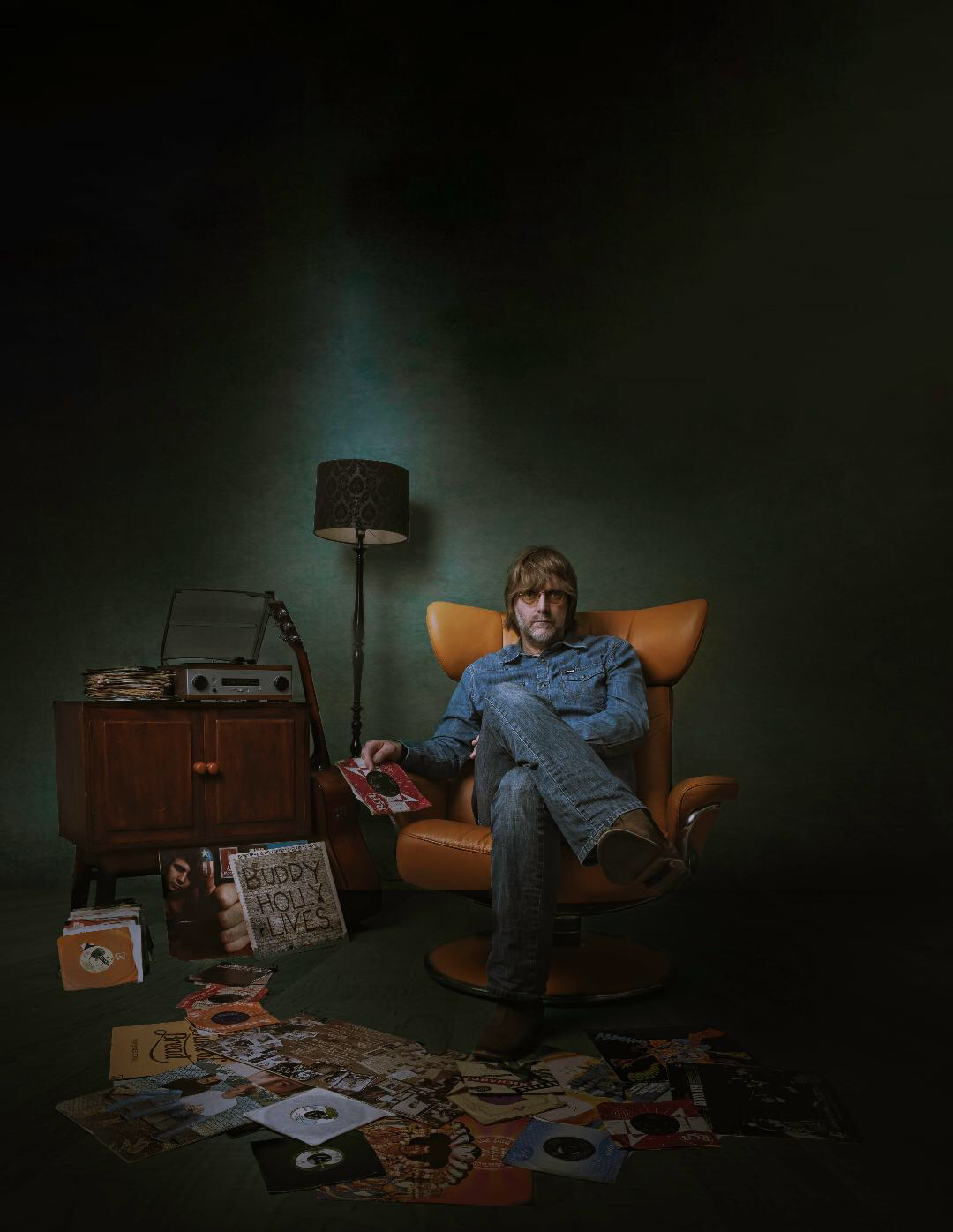
Picture of Ian Bailey by John Middleham

Let’s talk about your latest project – The Lost Doves. How did you end up working with Charlotte Newman? You both complement each other well – your voices sound great together…

IB: Thank you. I really enjoy working with Charlotte she’s a real natural talent. We met at a gig on the back of a lorry (laughs) a few years ago, and, a couple of years later, we decided to do something together. We started rehearsing various songs – covers and originals – and subsequently called the rehearsals ‘The Green Tea Sessions’, due to the copious amount we consumed. From thereon, we started recording a few tracks and that’s what spurred us on to create the album together.

You recorded it at your home studio, between late 2019 and pre-lockdown this year. How were the sessions and what’s your set-up like at home?

IB: They were all great sessions – quick and productive. Most of what you hear on the album were first takes. My studio, Small Space Studios, is in fact my daughter Sacha’s old box bedroom – it’s very small. I inherited the valuable space when she moved to Liverpool to start university.

A couple of years ago, I bought a 360 12-string Mapleglo Rickenbacker, which is the guitar you hear on the album. I use a jangle box with the Ricky, which is basically a compression pedal. It gives the guitar sustain and ‘that’ sound, and I just go straight into the desk with it. I bought some half decent mics, an £80 keyboard, an old Boss BR900CD [portable multi-track recorder] complete with flash cards, a drum machine, an old amp and monitors. That’s it really.

You co-produced the record with Charlotte and you both played all the instruments, apart from the drums, which were by ‘local legend’ Little Bobby Rockin’ Box. Tell us about Bobby…

IB:Well, Bobby is the pseudonym for my wonderful old Alesis drum machine that I bid for and won on eBay. We used Bobby’s talents throughout the album, before adding tambourine and shakers to complement his impeccable timing. We thought that by giving him credit and accolade as a local legend he’d be up for doing another album!

‘I wanted the album to feel like a record  you’ve had in your collection for years – warm, inviting and in the vein of the classic West Coast sound of the ‘60s’

How did you approach the album? What kind of sound and feel were you going for?

IB: That’s a really good question. When we embarked on the project, I was going to keep everything stripped-back and understated, but it soon became apparent that it would be a big mistake to leave out things like Charlotte’s wonderful lead guitar playing, our built-up harmonies and the way we blended the instruments, so I started to look at the majority of the album being full ‘band’ tracks, but with the occasional stripped-back song in there to give some balance.

With regards to the sound, I wanted the album to feel like an album you’ve had in your collection for years – warm and inviting. I guess I was always trying to create an album that was in the vein of the classic West Coast sound of the ‘60s.

Were all the songs written especially for The Lost Doves project, or did you already have some of them?

IB: Not all the songs were written specifically for the album. You Stop Me From Falling is one I wrote several years ago, but after performing the song in rehearsal acoustically with Charlotte, it felt natural to include it on the album.

See Saw and She’s Waking Up To Close Her Eyes were originally written for my stripped-back, acoustic album Empty Fields, but I really wanted to give them a bigger sound and production, so it felt right to include them on the album too.
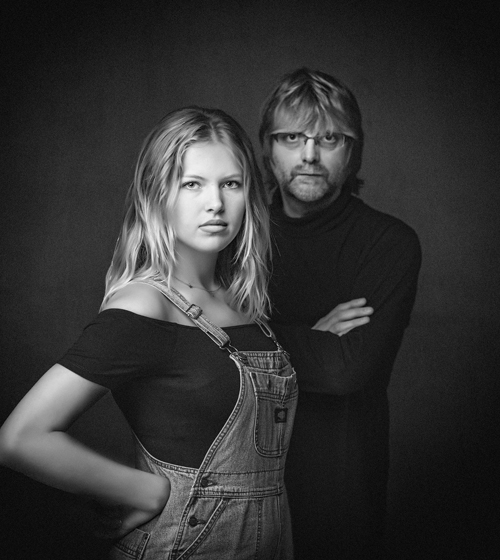
The Lost Doves: Charlotte Newman and Ian Bailey – picture by John Middleham

Where did the name The Lost Doves come from?

IB: I was originally working on a psychedelic ‘60s-style name, you know like Jack & Jill’s Incredible Grooving Satanic Barber Shop Bungee Jumping Santa Machine, but I was having no such luck coming up with something that had any relevance.

So I basically went back to the drawing board and hit upon the idea of two white doves escaping from a magician’s cage and flying for days, possibly weeks, over the sand and sea, to find a new home in the sun, away from the conjuror’s clutches, but, unfortunately, getting lost and losing their bearings somewhere along the way. I liked the way it also worked with The Byrds theme.

On that note, the jangly title track, which is one of my favourite songs on the album, has a definite Byrds feel, with 12-string Rickenbacker, harmonies and a great poppy melody…

IB: It feels very relevant for the hard times we’re living in. It’s a hopeful song about bringing some light into the darkness. It’s one of our favourites too.

What inspired it? Was it written in response to the Covid crisis?

IB: It was written pre-Covid and lockdown – in fact it was the first track we finished for the album. I wanted to write a song that delivered a positive message on life. It’s about helping each other, not looking back, and finding that even the smallest chink of light in the darkest room can bring hope – the bad days will pass. Its sentiment means more now than ever. I like the way the album hangs off the back of it too.

Several of the songs deal with hope and looking towards a better, brighter time. Was that intentional? They feel like they have a common theme…

IB: I guess it wasn’t intentional, but it seemed to flow that way. I’ve found that listening to certain music, using certain instruments and working with certain musicians brings out different sides to my songwriting and it’s confirmed to me that it’s good to be around positive folk.

‘I wanted the guitars to sound like Crosby and McGuinn in the left and right speakers, and the harmonies to sound like Crosby, Stills & Nash’

She’s Waking Up To Close Her Eyes is also very Byrds-like…

IB: Yes indeed, I wanted it to sound like The Byrds had just got back together. Musically I think it has a Chimes of Freedom feel. I like the words – they’re pretty melancholy really. It’s about a couple going their separate ways, but he wants her to stay and pleads with her, but how can he possibly change her mind? Will she believe him that it will all be different, when all she’s felt is loneliness and neglect day-after-day? I wanted the guitars to sound like Crosby and McGuinn in the left and right speakers, and the harmonies to sound like Crosby, Stills & Nash.

Why do you like the Rickenbacker sound so much? Are you a Byrds and Beatles fanatic? Who are your main influences?

IB: I’ve loved The Beatles and The Byrds since I was at school. I got my first Rickenbacker 12-string when I was 18, from Hobbs Music in Lancaster, after falling in love with the look and that unmistakable jangly sound. My dad was kind enough to sign the never-never form and I paid him back £10 a week. I still have the guitar to this day. I have a few different guitars, but the Rickenbacker always comes out of the case first.

My friends and I formed our first band together while we were at school and eventually turned ourselves into a great mod band, playing the scooter rallies in and around Lancashire. Bands like The Jam, The Who, The Small Faces and The Kinks all featured heavily in those days.

As the years went by, I was listening to artists like The Moody Blues, Simon & Garfunkel – in fact most of the stuff from my dad’s record collection. Little Richard, John Denver, Cat Stevens, Don McLean, Bread, Procol Harum, Traffic – those kind of artists. Later I was introduced to the such greats as Townes Van Zandt, Mickey Newbury, David Olney, Emmylou Harris….the list goes on.

Your song Sally Weather has a Lennon/ Beatles feel…

IB: It was based on a riff and an idea I’d had for around 20 years. The lyrics are based on a person I knew who had fallen into an abusive relationship. I’m glad to say she is now happy and loving her life again.

I always think it sounds like a cross between Girl and something else I can never quite put my finger on, but I guess something from the Revolver-era. The keyboard solo was inspired by House Of The Rising Sun by The Animals. I like the lines “insanity’s a point of view, so close your eyes you’ll miss the truth.”

You Stop Me From Falling is more stripped-down. It’s a gorgeous acoustic ballad. Where did that song come from?

IB: It was written and dedicated to a dear friend who helped me through some rough times. It was my way of giving them something back.

It’s been through a few different guises, but, primarily, when I was writing it, I had in my head the scene from The Shining, where all the ‘ghosts’ are in the big concert room in their 1920s regalia and the band are playing. It’s slightly odd I know, but you can never tell what will inspire a song sometimes.

The Clowns Are Coming To Town is a heavy, psychedelic instrumental. I really like it, but it feels a bit out of place on the album. Is it your Revolution 9 moment?

IB: I wanted a track that would crash down and create some waves. I love the whole psychedelia scene from the late ‘60s onwards – it had a big effect on me. I remember hearing White Rabbit [by Jefferson Airplane] for the first time and immediately heading into town, straight to Action Records [in Preston] and buying it.

‘I wanted a track that would crash down and create some waves. I love the whole psychedelia scene from the late ‘60s onwards – it had a big effect on me’

Watching the Monterey Pop Festival and seeing Hendrix setting his guitar on fire, and hearing Tomorrow Never Knows, Eight Miles High, Soft Machine, Piper at The Gates of Dawn and Alan’s Psychedelic Breakfast all had a big influence on me.

We had a lot of fun recording The Clowns Are Coming To Town – we were bouncing guitars along tables, pinging rulers, reversing organs, radios and guitars, backwards pianos, distorted bass, sending political leaders’ speeches backwards… that sort of thing. It started its days by being loosely based around The Byrds’ Stranger In A Strange Land, but it quickly turned into Revolution 9 part two.

More Than I also has a Beatles feel, as well as some slight Eastern vibes, as does the final track, which is a short, backwards, psychedelic instrumental, entitled Isolation. Is that you embracing your inner George Harrison?

IB: More Than I was written for my daughter while we were on holiday in Cornwall. We had gone down to the beach – the weather was beautiful, the sun was high, the sky was blue and I just had the line “Like a child on the sand who doesn’t feel the land as its fear” running through my head. I love Charlotte’s harmonies on that song.

Musically it’s inspired by Harry Nilsson’s Everybody’s Talkin’, The Beatles’ Across The Universe and George Harrison’s Here Comes The Moon. I use an electric sitar on it, just tickling through in the mix. I’m greatly inspired and influenced by George Harrison’s music and his spiritual values. He was a great man.

There are two cover versions on the album – and they’re both songs I love, the standard, Autumn Leaves, and Scott Walker’s Duchess. Why did you choose them?

IB: When Charlotte and I started rehearsing, we had one of those ‘OK, what songs have you got?’ moments. She played me Autumn Leaves and I was astounded. It was beautiful. I knew then it just had to go on any future album we made. I like to call it the ‘candlelit room with a glass of wine, next to a crackling California fire and looking out onto the setting sun’ moment on the album.

Scott Walker’s Duchess was played to me around 20 years ago after a long studio session. I’d never heard anything quite so enchanting, beautiful and dark. I would play it on repeat for months after and still do. It felt like the perfect choice to honour and celebrate this wonderful song and the great Scott Walker. 

Waves, which is the only song written by Charlotte on the album, has the sound of the sea from Barbados on it. Were you tempted to put any sound effects from Lancashire on the album? What would you have chosen?

IB: Charlotte loves travelling and she has a real sense of wanderlust. While she was away playing the cruise ships around the Caribbean, we stayed in touch and one cold, frosty morning she sent me a video recording of the Barbados sea lapping against the sun-drenched sandy shore. When she returned, we recorded Waves and I secretly added the waves to the final mix. She was delighted. Charlotte plays the beautiful lead guitar throughout that song – it reminds me of Lindsey Buckingham’s playing. What North Western sound effect would I have chosen? Probably the wind and the rain.

Can you tell us about your musical background? You’ve had four solo albums out since the ’90s…

IB: I was born in Blackpool in 1969 and spent my formative years living in various parts of The Fylde before moving to Preston in 1980. I started playing in bands when I was at secondary school, although I had a Bontempi guitar as a five-year-old and dug Blockbuster by The Sweet. When I left school, I got my first job as an apprentice at Fylde Guitars in Kirkham. During that time, I formed a mod band called Class A. It was taken from a Marlboro packet I seem to remember.

We went through various guises, but as the mod flame dimmed to a flicker, we attempted to resurrect ourselves. Sometimes we were psychedelic and sometimes gothic, but never with direction. We stuck together right through the early ‘90s until around ‘96/’97.

During that time, I met and married my soulmate Rachel and we had two wonderful daughters, Jose and Sacha. Rachel and the girls keep me on track through thick and thin. In 1998, I met Gary Hall through a mutual friend, Lee, who I was playing with in our band MellowDrive. We recorded our debut album and everything else after with Gary, in ’98, and he soon became a friend, producer and mentor.

He introduced me to great music I’d never heard before and songwriters whose lyrics cut deep. I recorded four solo albums with Gary and we both produced other artists over a 11-year or so period at his Voodoo Rooms Studio. That was a valuable experience for me and gave me the knowledge and tools to pave the way for me to start recording and producing from my own homegrown studio.

As well as Charlotte, you’re also working with singer-songwriter, Daniel Wylie, the former frontman of Cosmic Rough Riders. You’re releasing an EP of co-written songs, aren’t you? I’ve had a sneak preview of two tracks, Take It Or Leave It, which has a ’60s, jangly pop feel, with keys and brass, and Slow Down River – another summery, Byrdsy song about the sun. What’s the plan for the EP?

IB: I’m loving working with Daniel. We’ve been Facebook friends for several years. His songs, music and stories, and his ability to pull brilliant melodies out of the air are inspiring.

During lockdown, I began recording some new solo songs – Dangerous Clowns and TV Land. My daughter, Sacha, acted as video producer for my lockdown sessions. I sent Daniel the videos and he loved them. We got chatting about music we both enjoyed and I suggested we should do a co-write at some point. He was really into the idea and he sent over four song ideas.

The first track we finished was What’s Happening Now?, followed by Take It Or Leave It, and then Slow Down River. We are both really pleased with how they are all sounding. We plan to do more co-writes after this EP.

I’m producing and performing the songs in my home studio and I’m finding it to be such a great way to work. Daniel and I really are both enjoying the whole process. It’s also bringing out a different side to me as a songwriter and producer, which I’m loving. Daniel has been playing a couple of the tracks to a few record company friends and getting some great feedback. Nothing is finalised yet regarding the release, but we’re excited about it.

As you mentioned, you’ve been putting out some solo songs on YouTube. Any plans for another solo album? If so, when will it come out and what can we expect?

IB: Yes – so far I’ve recorded two tracks which will be on my new solo album. I have a bunch of songs ready to go and record. You can expect more jangle from the Rickenbacker, and a possible duet or two. There’s no release date as yet, but hopefully it will be towards next summer.

What music – new and old – have you been enjoying recently? What have been your favourite albums of 2020?

IB: That’s a great question. Well, recently I’ve been tuning in to a great American radio station called Radio Free Phoenix, which plays some fantastic music.

On my recent playlists there’s been The Byrds, Crosby Stills & Nash, The Doors, Townes Van Zandt, The Cure, Ravi Shankar, Buddy Holly, Dylan, Lennon, R.E.M, The Beatles, Led Zeppelin, Daniel Wylie, Roger McGuinn, Gene Clark, Syd Barrett, Black Sabbath, Soundgarden, Janis Joplin, The Mamas and the Papas, Creedence, George Harrison, Steve Hillage, Bob Marley, Little Richard, Mickey Newbury, The Who, Van Morrison, Richard Thompson, Bert Jansch, Elvis Costello, Joni Mitchell, The Moody Blues, Vaughan Williams, Tom Baxter, Jefferson Airplane, Jethro Tull, Crowded House, Miles Davis, Vivaldi, Steve Marriott, Martin Simpson, and, worth mentioning again, The Byrds!

I enjoyed the coverage on the radio for John Lennon’s 80th birthday too and I’ve had Ray LaMontagne’s Monovision on repeat. There’s some real gems on that album. My daughter Sacha introduced me to a band called Flyte – I love the harmonies and they are great musicians. I’ve been enjoying Homegrown by Neil Young. I also listened to the new Paul Weller album [On Sunset] the other evening. I really like the album before it, True Meanings, too.

Finally, what are your plans for Christmas? Will your 12-string Rickenbacker be ringing out?

IB: Well, I would usually be busy gigging in December, but I think this year it will be nights by the fire, finishing songs, spending time with my family and recording the new album. I’m sure the Ricky will be making an appearance. I might even record a jangly Christmas carol for you.

Set Your Sights Towards The Sun by The Lost Doves is out now on Green Tea Productions.

For more information, visit: https://www.facebook.com/Ianbaileymusicandinfo/

‘Fame would have been fun, but would I still be around to tell the tale? I’m not sure…’

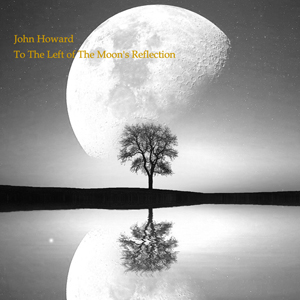
It’s been a busy year for English singer-songwriter and pianist, John Howard. He’s published the second instalment of his autobiography, Illusions of Happiness, and released his latest album, the brilliant To The Left of The Moon’s Reflection.

The new record – his seventeenth – is a collection of wistful, reflective and pastoral, piano-led ballads, chamber pop and folk songs, with sparse percussion and layered, atmospheric arrangements and harmonies. Howard sings lead and backing vocals and plays all the instruments.

To The Left of The Moon’s Reflection was written and recorded in his home studio –  he lives in a 100-year old cottage in the Murcia region of southern Spain –  during the winter of 2019 and spring 2020.

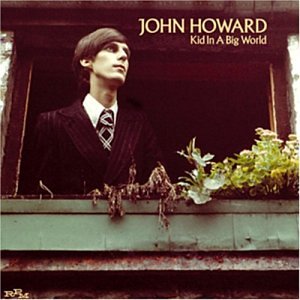
Howard, who is 67, grew up in Lancashire and trained as a classical pianist from the age of seven – he started playing when he was four. His debut album, Kid In A Big World, featuring the single Goodbye Suzie, was recorded at Abbey Road and Apple studios in 1974 and came out the following year.

“The only thing I envisaged in my twenties was becoming a gigantic star! It was what drove me from my first gigs when I was 17. I was very ambitious,” he tells Say It With Garage Flowers

“I thought I’d be selling millions of albums and doing concerts at The Carnegie Hall, playing at huge stadia around the world, packed with thousands of fans and headlining at massive festivals. So the fact that I’m still recording without all those ‘trappings of success’ is a very nice surprise.”

Q&A

During the summer, you published the second volume of your autobiography, lllusions of Happiness, which goes up to 1986. There’s a third and final instalment planned in the not-too-distant future. How have you found writing the books? Has it been cathartic? What have you learnt from the process?

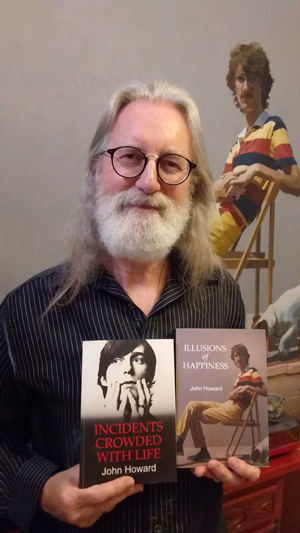
John Howard: To be honest, I didn’t know there’d be a second volume when I wrote the first one, Incidents Crowded With Life. It was intended as an online chapter-by-chapter series of events in my life up to my accident, when I broke my back, in 1976. I was astonished when Fisher King told me they wanted to publish it. But reviews were excellent and Fisher King asked me to write a second instalment.

Originally, it was going to go from 1976 to 2000, covering my recovery from the accident through to returning to recording with Trevor Horn and Steve Levine and my move into working in the music business in A & R and Licensing through the ‘80s and ‘90s; meeting my husband Neil, leaving London for Oxfordshire, and finally in 2000 for Pembrokeshire. But Fisher King suggested I split it into two books. So I decided to end Illusions of Happiness in 1986, just before I met Neil, having split from my then partner of eight years, changed jobs and moved into my own apartment. It seemed a good narrative point to finish the book.

‘I love writing, words come fairly easily to me – lines of songs arrive in my head while I’m ‘busy doing other things’, as Lennon once sang’

I love writing, words come fairly easily to me – lines of songs arrive in my head while I’m ‘busy doing other things’, as Lennon once sang. So writing the book felt very natural, and yes, a little cathartic. It sounds silly in a way, but quite a few members of my family have suffered from Alzheimer’s, so being practical, I wanted to get as much of my life down in writing now just in case there comes a time when “I can’t even remember my name”, as a line in the song Injuries Sustained In Surviving [from the new album] goes.

I didn’t really learn anything from writing the book, as I knew it all already! But it did help put some things into a clearer view in my mind. What I never did, in either book, was comment or judge, I just told what happened – as I saw it – and let the reader decide on who was right or wrong, on whether I, and other people in my life at the time, made the right decisions. What was, was. What happened, happened. There’s no changing that. I just wanted to put it down on paper.

Hopefully, the third book will be published sometime in 2022 – there were two years between books one and two being published, so I’m guessing there’ll be a similar gap before the third is out there. It’s more or less written – there’s just some tweaking and editing to do over the next weeks and months.

The new album is very reflective, nostalgic and melancholy at times. What kind of headspace were you in when you wrote the songs? It has a lot of reminiscences on it… Do you think writing your autobiographies made you write more songs about your past?

JH: I think writing the two autobiographies – so far – certainly put a lot of things in perspective. I have an excellent memory but actually writing stuff down that happened 40, 50-plus years ago captured those memories for good and finally gave them placement and sense.

As I say, I’m not one to look back most of the time, but being ‘forced to’ when you’re writing your life story – or a bit of it – did remind me of people, events, experiences, and that would automatically seep into my songwriting. The two processes sit side by side.

Getting older too, of course, one remembers and reflects, rather than anticipating a whole lot more! It is a strange feeling knowing I have probably – if I’m lucky and healthy – another 20, or 25, years left, whereas in my twenties that was indeed a lifetime, with 60 years ahead to look forward to and plan for. It isn’t being maudlin or morose admitting that – it’s a fact.

The album has a pastoral theme – there are a lot of references to nature in the lyrics and also the title…

JH: Yes – the album does have a pastoral theme, definitely. My surroundings and the simple, rural way of life here are certainly reflected in a lot of the songs. My city days are over.

The album title is taken from a line in the song Water, which is the closing track on the record and features the sound of crickets on it. Why did you choose it for the name of the album?

JH: Water is based on a dream I had, floating above a lake like a watching spirit. I wrote the lyric as an observer of a scene in which he/she is gradually drawn in until they’re completely part of it. I wanted the track to have an atmosphere of stillness, of silently watching something develop before your eyes – something you don’t understand at first.

Our skies here are very dark at night, so there is always a sense of connection to ‘the beyond’, being able to see the universe above us, watching the shooting stars, listening to the crickets all round us every night, and feeling a kind of wonder about it all. As a songwriter that must affect me.

Once I’d finished the album and needed a title, the line in Water’s lyric, “What’s that beam of light on the lake, to the left of the moon’s reflection?” described for me the vibe of the album –  the second part of the line especially. It also lent itself to a sleeve design very well too.

The song My Patient Heart is about living in Pembrokeshire, Wales, where you and your husband, Neil, used to be based, and also references Murcia, in Spain, where you live now. Can you tell me more about your inspiration for it?

JH: It’s one of my scene-setting songs, describing life here in the village, which is still very rural, families working in the olive and almond groves, the local church ringing its bells every day on the hour – usually about ten minutes slow!

Our neighbour gives us bottles of his homemade olive oil, others bring us home-grown spinach and various vegetables, and a chap in his nineties gives us jars of his home-made honey. When we had hens we gave people eggs and every summer families from the village come and collect fruit from our Chinese Meddler tree. They seem very pleased to have us as part of the village, which is heart-warming.

But the song also looks to Wales and our life there, which was also very rural. Though no one worked in the fields any longer in Pembrokeshire, everyone had an orchard, cherry trees, gooseberry bushes, wild berries growing in hedgerows. And seasons!

That’s what I miss the most – the seasons. They were definite, expected and regular as clockwork. It’s November here and in the mid-twenties. Sounds great, I’m sure, but my Northern English psyche still expects it to be minus two! I’m not sure I will ever lose that natural expectation. Neil and I do intend to return to Wales, someday, hence My Patient Heart. Everything is about timing, when it’s right. We’re very lucky to be in a position where we can decide when that is.

Let’s talk about Injuries Sustained In Surviving. It’s a great song – quite folky – and I love the title…

JH: Thanks. It was the first song I wrote and recorded for the album. I had Marrakesh Express in my mind when I wrote it, and carried that through to the vocals, where there are no ‘backing vocals’ per se, more three-and-four-layered harmony lead vocals. I became Crosby, Stills & Nash for a day!

The narrative covers childhood, youth and ageing all in one. I have memories of the railway lines behind my parents’ house in Heywood in the ‘50s and going out on day trips as a family in an old Austin jalopy. We went all over the place in that old car until finally one of its wheels fell off and dad abandoned it in a garage, getting ten quid for the scrap value!

The song develops through to more recent thoughts, “Yes, kid, I remember the fire burning, I recall every song I was singing” – I’m talking to myself really.

There’s a bit which is a reflection on my dad’s recent Alzheimer’s, “Don’t wait until your body is a shell of a stranger locked inside a lonely cell, with a thousand silent tales he’ll never tell.” But it ends on a higher note, “Sometimes good things come along you’d never planned, somebody might just sprinkle stardust in your hand.” There’s always a chance.

I think Echoes of Pauline sounds like a standard, or maybe something from a stage musical. What inspired it? Who is Pauline?

JH: Pauline is a real person. I was at school with her in the ‘60s in Lancashire and we were very close, like brother and sister in many ways. She introduced me to artists like Joni Mitchell, Dylan and Simon & Garfunkel.

I’ve written about her before, in The Flame on Kid In A Big World, and in Pauline’s Song, which I wrote in 1970, but only recorded in 2009. She also gets a mention in a line from Small Town, Big Adventures… “I was Toad, Eniluap was Mole”, referring to when we were both in the school play Toad of Toad Hall in 1968. We always called each other by our names backwards. Don’t ask me why. We were young and did daft things!

We fell out badly in 1970 and our friendship didn’t recover. I can’t actually remember now why we had a row, a really bad argument, but I’m sure it was my fault. I think of her still and hope she’s okay and happy. She was a great person. I did try finding her on Friends Reunited years ago to no avail. Echoes of Pauline is my way of offering her a way back to our friendship if she ever hears the song, which she’s unlikely to do of course. That’s how the lyric began really, a letter to a friend, which will probably not be read.

I wanted the track to have the same vibe and feel as Cilla Black’s Alfie, keeping the piano quite restrained, not using it to drive the song along with rhythmic chords, but as an occasional texture, letting the song develop slowly without driving it. I used a simple string wash and sparse percussion to build to its more rhythmic end.

‘I wanted the track Echoes of Pauline to have the same vibe and feel as Cilla Black’s Alfie’

I think that track took me the longest to get right. I knew exactly how I wanted it to sound – I listened to Cilla’s track several times before going into the studio – but it was a new way of working for me. I also wanted the lead vocals to be multi-tracked and very smooth, with just occasional harmony lines, using no backing vocal ‘oohs and ahhs’.

I also developed a different way of singing for it, keeping my vocal restrained, not ‘soaring’ which is my usual style, singing from the back of the throat – more soulful rather than a dramatic pop style.

Your latest album is your seventeenth and, this year, it’s 45 years since you first started your recording career. How does that make you feel? You’re in your late sixties now. As a young man in his twenties, did you ever envisage you’d still be making records when you were a pensioner?

JH: Yeah! Who’d have thought it? But in some ways 17 albums in 45 years doesn’t sound that many!

Of course, I had a 20-year break in the ‘80s and ‘90s, when I worked ‘on the other side of the desk’, in the music industry. In the ‘70s I only made three albums – and two of them went unreleased – so 14 new albums since 2004 sounds much more impressive! The ‘70s and all that went on then feels like a lifetime ago, as though I’m watching it all happen in a movie in my head. I guess 45 years since my debut album came out makes me feel…in my late sixties!

The only thing I envisaged in my twenties was becoming a gigantic star! It was what drove me from my first gigs when I was 17. I was very ambitious. And yes, I did imagine I’d still be recording now, but I thought I’d be selling millions of albums and doing concerts at The Carnegie Hall, playing at huge stadia around the world, packed with thousands of fans and headlining at massive festivals. So the fact that I’m still recording without all those ‘trappings of success’ is a very nice surprise.

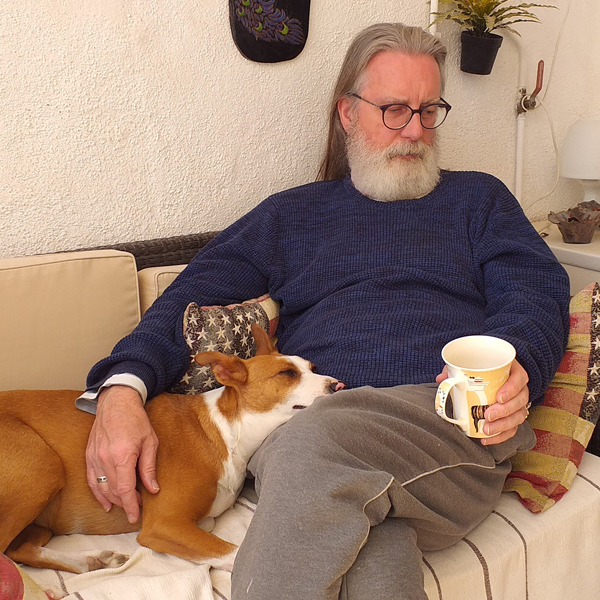
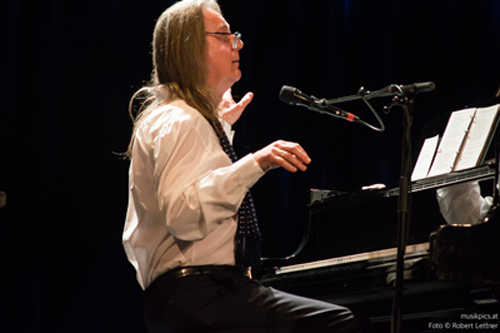
John Howard in Vienna. Photo: Robert Lettner

What have you learnt during your career? What have been the highs and lows?

JH: What have I learnt? I guess not to look back too much. I always try to look forward to the next project, the next album – though that’s sometimes difficult when people still – of course – want to talk and reminisce about Goodbye Suzie and Kid In A Big World. Nostalgia is very comforting for people, though my memories of those days are not so rosy. It was a very frustrating and disappointing period for me on the whole, in terms of what eventually happened in my career anyway.

The other thing I’ve learnt is not to have regrets. I’m still in one piece, physically and mentally – most of the time – thank goodness – which many of my contemporaries when I was starting out are not.

‘The only thing I envisaged in my twenties was becoming a gigantic star! I thought I’d be selling millions of albums and doing concerts at The Carnegie Hall, playing at huge stadia around the world’

Fame would have been fun, of course, I would’ve loved it, but would I still be around to tell the tale? I’m not sure about that! Leaving that world of recording in the mid-‘80s and ‘getting a proper job’ in the industry gave me a different perspective – a security I’d never had before.

Also, working as I did with so many established artists over those 20 years and hearing from them how their careers and the music business had treated them, often not well at all, gave me a view of life from the top. I saw it from a different angle – someone else’s experience of what fame can do to you. I think I became less selfish during that time than I had been as a recording artist, when my everyday had been all about “Me, me, me”.

Having to think about and be responsible for other artists’ careers and record releases taught me to be more considerate, more measured. It was my job not to have a meltdown when something didn’t go quite right. I became other people’s buffer, which is quite strengthening.

Now I’m a recording artist again, I happily don’t have the pressure I’d had the first time round from managers, promoters, big record execs and, deadlines. Recording now is done on my own terms, when I want to, how I want to. It’s much more relaxing and no longer about ambition. Being largely unknown does have its plusses! ‘Niche’ is good.

John Howard at The Lexington, London, in 2019. Picture by Melani.

As a professional musician, in the light of the Covid-19 crisis, are you worried about the future of gigs, tours and venues? Will things ever get back to normal? What are your hopes and fears for 2021 and beyond?

JH: I don’t actually gig very much at all – never have. I love performing, but the opportunities haven’t arisen very much in recent years, just the occasional gig in London whenever I’m invited to perform. The last one was at The Lexington in 2019, with Vinny Peculiar, Simon Love and Rogers & Butler, which was really enjoyable.

I gigged a lot in the early ‘70s when I lived with my parents in Lancashire, but once I got to London and signed with a management and record company, recording became my way of life – and it still is.

But yes, I do feel for musicians and bands who can’t gig now. Those who have been gigging for years must feel completely bereft, and financially it affects them because gigs are where most independent artists sell their albums. So a whole income stream is cut off straight away.

Who knows where this will all end? Certainly, there will be venues which close and can’t afford to open again. It’s really sad. My husband is a retired actor, and he too has seen friends in the theatre who haven’t worked for months, with no sign that things are going to change for the foreseeable future. Pretty grim.

‘I feel for musicians who can’t gig. Those who have been gigging for years must feel completely bereft, and financially it affects them because gigs are where most independent artists sell their albums’

Home shows have helped some musicians, in terms of being able to perform and staying connected to fans, and some artists have monetised their performances, which keeps some income coming in at least. Who knows when we’ll be able to step back onto a stage in front of a live audience again?

What music – new and old – have you been listening to recently? Any recommendations?

JH: A lot of the music I listen to now is old. I will always love and enjoy hearing The Beatles, The Searchers, The Kinks, Joni Mitchell, Laura Nyro, Marvin Gaye, Judee Sill, Barry White, Paul Simon, Kate Bush and Roy Harper. They never grow old in my mind – the albums still sound as fresh today as they did when I first bought them, though my vinyl collection was sold off before we moved to Spain, I’m sad to say. Finding room for over 40 boxes of LPs was no longer viable. But I replaced all my favourites with CDs, and that’s still how I listen to music most of the time.

We recently bought a record player, simply because some of my albums, new and old, were being issued and reissued on LP and I wanted to hear them in that format. That led to us buying some of our old favourites on vinyl again. Also a lot of my friends were releasing their latest albums on vinyl – Robert Rotifer and Ian Button’s Papernut Cambridge, for example – so I wanted to hear those on LP.

More recently, I’ve become a big fan of the band Ex-Norwegian – they have a lovely Syd Barrett psychedelic-pop vibe. I’ve also fallen in love with the music of the French singer-songwriter Olivier Rocabois, the highly talented Joel Little and John Cunningham, whose album Fell, is gorgeous. The Norwegian singer-songwriter-pianist Cecilie Anna, who my friend, the poet Robert Cochrane introduced me to, is also remarkable. I have two of her albums and they’re beautiful.

Finally, you’re a very prolific songwriter? What’s on the horizon? Another album? Any other projects you can tell us about?

JH: ‘Prolific’ is my middle name! Though I do often take months of doing nothing between albums, once I have a project in my head I work for weeks on end until it’s finished. I’ve been having a lovely time recently recording vocals and piano for various friends’ projects, doing tracks and writing occasional songs for them. They’re all hush-hush at the moment and due out next year, but they are very diverse!

‘The next album will be a – wait for it! – concept album! Gasp! Are there still such things? I have no idea, but I’m doing one!’

What I can give you a heads-up on is a very exciting project for me. Kool Kat Musik in the States, which issued To The Left of The Moon’s Reflection in August – my first US release – will be putting out a 2CD ‘Best of JH’ next spring. It will be my first commercially-released Best Of! Edward Rogers (of Rogers & Butler) is curating the collection, Ian Button will be mastering it and doing the artwork, and Ray Gianchetti will be releasing it on his Kool Kat Musik label. I’m very excited about it! Edward has put together an intriguing collection of tracks from across my career, some of them never released commercially on CD before. Watch this space for more details early next year.

I’ve also been sketching out some new song ideas over the past few weeks, which I will start recording probably at the end of this year, or early next. The next album will be a – wait for it! – concept album! Gasp! Are there still such things? I have no idea, but I’m doing one! The story is set in my head, the characters are developing in my mind and, the narrative is growing, I just need to sit at the piano and see if it sounds any good! It will be a challenge, but I love a challenge. Otherwise I might discover what boredom feels like. I can’t have that. Put the pipe and slippers away!

To The Left of The Moon’s Reflection by John Howard is out now on CD – in the UK, it’s released on his own label, which is also called John Howard. You can find out more information at his website: http://kidinabigworld.co.uk/

The album is also available in the US – on CD – via Kool Kat Musik, and can also be purchased from Spanish label You Are The Cosmos, which has released several of his albums already.

His latest book, Illusions of Happiness – the second volume of his three-part autobiography – is published by Fisher King Publishing.