During lockdown last year, Say It With Garage Flowers stumbled across ‘60s-obsessed, East Midlands psych-pop band The Mariners (Luke Williamson – vocals/rhythm guitar; Paul Iliffe – lead guitar; Luke Headland – bass/keys) and Richard Pine – drums) on Twitter and fell in love with their music.
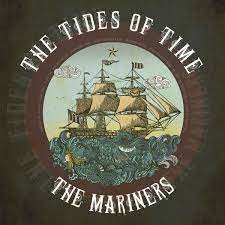
Their debut album, The Tides of Time, was one of our favourite records of 2020. A collection of unashamedly retro and nostalgic songs about girls, drinking tea, staying in bed and watching quirky characters who live down the street, it was steeped in the sounds of The Kinks, The Zombies and The Beatles, but also tipped its, er, mariner’s cap to cosmic Scousers The Coral, The La’s, John Power and Shack.
Now, only 12 months later, they’ve released the follow-up, Tales From The Great Central Line Volume One, which is less psych and more pop than its predecessor, but is essentially a similar trip down Dead End Street and Penny Lane, but with some added country rock and folk influences.
It contains no less than five songs with girls’ names in their titles – one of which, the first single, Dear Genevieve, is an irresistibly jaunty strum that’s a love letter to Luke Williamson’s young daughter. The groovy, organ-led There Before Time is a close cousin of The Zombies’ She’s Not There, the gorgeous and reflective Catch My Breath is a stripped-down acoustic ballad, while Royston’s Lament is a yearning and melancholy tale of growing older by the day that laments the loss of community and showcases a slightly darker side to The Mariners.
‘Tales From The Great Central Line Volume One is less psych and more pop than its predecessor, but essentially it’s a similar trip down Dead End Street and Penny Lane, but with some added country rock and folk influences’
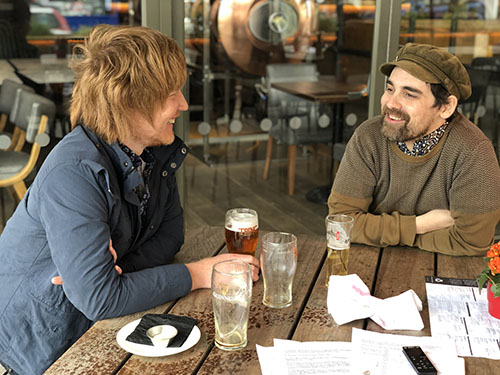
Luke Williamson, who is also the band’s main songwriter, and lead guitarist, Paul Iliffe, kindly offered to do their first ever face-to-face interview with us, so when Covid restrictions eased a few weeks ago, we met up with them in a pub in the Buckinghamshire town of Amersham, not far from Say It With Garage Flowers HQ.
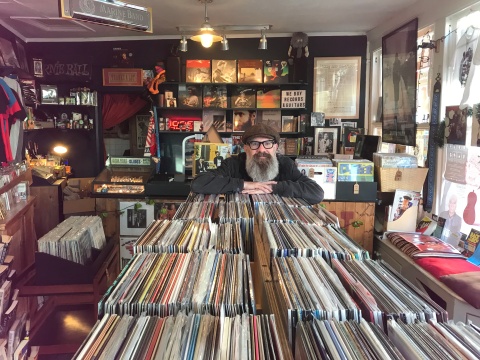
The boozer just so happened to be opposite a record shop – the brilliantly named, er, The Record Shop. Don’t you just love it when a plan comes together?
You’ll have to read all of the article to find out what records they bought…
Q&A
You’ve released two albums in a year. Did lockdown accelerate your plans?
Paul Iliffe: We didn’t have any plans! We needed to keep busy – what else was there to do?We had lots of songs from over several years that we thought were quite good, so we decided to release them. Initially it was just for us. We had a monkey on our back – all these recordings that we were doing nothing with. We didn’t think anyone was going to buy them!
LW: We released the first single [Cathy Come Home] in January last year and the rhythm tracks for the new album were recorded before lockdown. If it had been normal times, there might have been pressure to start gigging and then that might have slowed us down.
It means you now have two albums’ worth of material to play live…
LW: Exactly.
The new album is less psych than the first one, isn’t it?
PI: It’s more poppy.
You told me that the group started out as a Beatles tribute band – three of you have been playing together since 2006. You grew up with Britpop, but you’re all big fans of ‘60s music, aren’t you?
LW: We’ve let go of a lot of things from our childhood and the late ‘90s, but the ‘60s thing has always been there. When I was growing up in Nottingham, my mum and dad had The Beatles’ ‘Red Album’ and ‘Blue Album’ on vinyl – they only had about six albums, including Motown’s Greatest Hits and some Irish folk music.
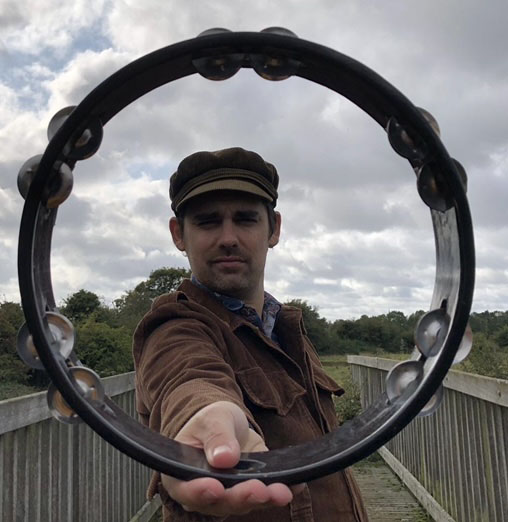
‘We’ve let go of a lot of things from our childhood and the late ‘90s, but the ‘60s thing has always been there’
I always remember listening to The Beatles. When I was 16, I started going out with a girl – I went back to her house, where she lived with her dad. He was a Beatles nut. He had a man cave before man caves were even a thing. In it, he had a projector screen on the wall and the film Yellow Submarine on loop. Not the audio – just the pictures. He also had all The Beatles albums on vinyl and CD, and he smoked weed constantly. It was really surreal.
Has he been immortalised in one of your songs yet?
LW: He hasn’t.
PI: He needs to be.
LW: My girlfriend had to do some college coursework, so I sat with her dad for a bit. He was lovely – a bit too chilled-out – but I started getting into The Beatles. Six months later, I asked my mum and dad for a Beatles album for Christmas. I expected to get the ‘Red Album’ and the ‘Blue Album’ on CD, but I got given Revolver. After nights out, I used to fall asleep listening to it.
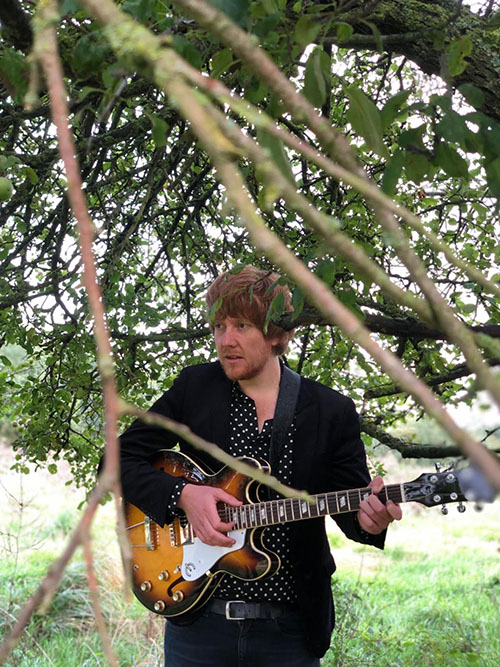
‘I was working at a supermarket that started stocking CDs – I nicked a few! I stole Rubber Soul and I really liked it’
PI: I got into Rubber Soul. My parents weren’t into music – there was never music in the house when I was growing up. I was an only child – I discovered music by myself when I was 13 or 14. I got into Britpop, and I knew of The Beatles.
When I started doing a part-time job aged 16, I bought Sgt. Pepper’s on CD from HMV – I hated it! I was working at a supermarket that started stocking CDs – I nicked a few! I stole Rubber Soul and I really liked it – then I went down a Beatles rabbit hole, and I got into Sgt. Pepper’s eventually.
Let’s go back to talking about your albums. How and where did you record them?
LW: It’s as DIY as you can get – we go into the practice room in Loughborough where we rehearse, we make sure we’re tight, and then we record a drum track and the bass in the studio. We take it away and then we do everything else [remotely].
I’ll do my vocals, but most of the mixing and production is done by Paul – I ask him to put his magic on it. I’ll add my rhythm guitar and Paul will add his electric – Luke [Headland] will put keys on it.
PI: I’m the one who’ll say ‘let’s add some glockenspiel or brass’ – the weird stuff.
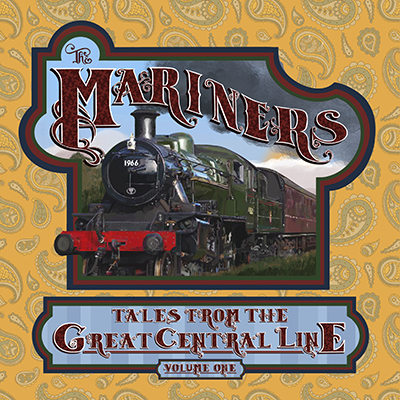
Where did the title of the new record, Tales From The Great Central Line Volume One, come from? The Great Central Main Line was the last main line railway to be built in Britain during the Victorian period, wasn’t it? It ran from Sheffield, in the North of England, southwards through Nottingham and Leicester to Marylebone, in London…
LW: Where I was living, in Loughborough, there’s still the old Great Central Railway – it’s been kept as it was. It’s around the corner from where we practise, and I had my wedding photos taken there – it’s always been in our minds.
PI: I like the idea of tales, stories, and fables – a song is a story. We like nostalgia – we don’t want to be a pastiche of anything – but we are quite nostalgic as a band and about how things were and how things should be.
‘We do have a lot of songs in the vaults that are named after girls – we did think about having an album full of them. We have lots of weird ideas’
LW: A lot of songs on the new album are tales – at one point we were playing with the idea of them all being letters. We also toyed with the idea of having one side of the album made up of songs that were all girls’ names.
PW: We do have a lot of songs in the vaults that are named after girls – we did think about having an album full of them. We have lots of weird ideas.
Is there a Tales From The Great Central Line Volume Two planned?
LW: We called the album Volume One because The Kinks did Preservation Act 1, and it also leaves it open-ended. There might be a Volume Two. Who knows?
PI: We might be like McCartney and do different volumes spanned over several decades…
LW: Volume Three will be out in 50 years’ time!
Talking of McCartney, and girls’ names… the new album starts with the song (That Girl Called) Mary Jane. Is that a nod to The Beatles’ What’s The New Mary Jane?
PI: Hopefully ours is a better song than that. As much as I love The Beatles, it’s terrible.
LW: Mary Jane was a traditional girls’ name in the ‘60s – I write songs with traditional girls’ names. We’ve kept it nostalgic.
[To Luke] How does your wife feel about you writing lots of songs with other girls’ names in them?
LW: The first time I did it, she said, jokingly, ‘Who’s that then?’ I’ve churned loads of ‘em out now, so I get away with it. I’m not writing them all about one person.
What’s your wife’s name?
LW: Vanessa – her name’s not been used in a song.
PI: The syllables don’t play well…
The second single from the new record, There Before Time, is one of my favourite songs on the album. It has a Zombies feel to it…
LW: That was intentional – we used the same chords as a Zombies song, but we don’t want to give everything away!
Dear Genevieve is another song with a girl’s name in it…
LW: But it’s different from the other songs because that’s my daughter’s name. It’s me talking to her when she was first born – I wrote it as an acoustic song a few years ago.
I’ve also written a song about my other daughter, Lola – she’s named after The Kinks song – and that should be on the third album. Genevieve is also named after a Kinks song – Sweet Lady Genevieve.
On that note, your song Ooh La La is a Kinks-style observational tale about family life and domestic struggles…
LW: Seventy-five per cent of the songs I write nowadays, from a lyrical point of view, are those sort of stories – most of them are based on people I’ve met or characters I’ve seen. Do you know when you see a man who lives 10 doors away from you on your street, but you don’t know his name, and just by looking at him, you picture his life, and you imagine what he does? It’s basically that.
My Maria has a great lead guitar sound – it’s raw and a bit country-rock and skiffle…
LW: Paul championed that one – it had to make the album because it sounded different.
PI: It’s just a good song – it only has four chords, and it goes round. It’s simple – sometimes when you’re writing songs you need to step back and say, ‘less is more’. It has a good melody and structure.
LW: It was written about someone who hurt me…
Early In The Morning is more country-rock, with some honky-tonk piano and a touch of Ob-La-Di, Ob-La-Da…
[Paul laughs].
LW: Funnily enough, Ob-La-Di, Ob-La-Da wasn’t the song we used as a reference point. Emmitt Rhodes had a song called Tame the Lion, which sounds a bit like Ob-La-Di, Ob-La-Da. Early In The Morning is us doing a version of Emmitt Rhodes doing a version of Ob-La-Di, Ob-La-Da.
‘I got away with writing songs featuring other girls’ names by asking my wife to sing on the album – I won her over’
Catch My Breath is a pretty, folky, stripped-down tune. It also has some female backing vocals on it…
LW: That’s my wife, Vanessa. I got away with writing songs featuring other girls’ names by asking her to sing on the album – I won her over.
I think the last three songs: Catch My Breath, Royston’s Lament and Hey Mister are all reflective – they feel like they’re linked thematically. Royston’s Lament is one of my favourites on the record – it’s darker than some of the other songs and it has the feel of Dead End Street by The Kinks, or something by The Coral, The La’s, or Shack. It’s a nostalgic and melancholy song, and it features the line ‘Whatever happened to the community?’
LW: Paul brought that song to the band – he had all the chords, but no words.
PI: I said to Luke, it’s about being old – off you go…
Hey Mister is a song about regret – it looks back on someone’s life after they’ve died…
LW: It’s a character song – I wrote it after I heard a story about a guy in Loughborough who’d died. No-one had gone to his funeral – it was a sad story. People then say, ‘oh – he was a nice bloke.’ Well, why did they wait until it was too late? When was alive, he was a bit of a loner and he sat on his own, in the corner of the bar.
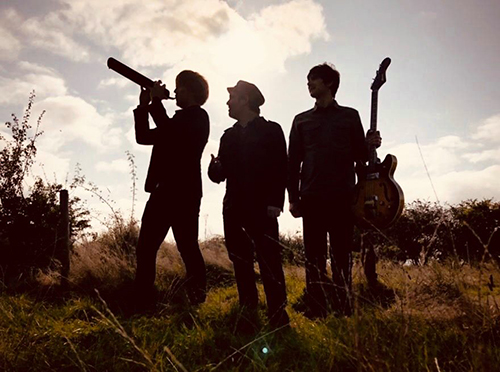
To come and do this interview, you’ve rented a cottage in the countryside and you’re staying overnight. I know you’ve brought your guitars. Does that mean your next record is going to be a pastoral, psych-pop concept record?
LW: We’ve already got the plan – it will be a concept album.
PI: Hopefully it will be out this time next year. I think the songs we’re doing for the third album are a bit more psychedelic – we don’t want to be the same.
Your first album had a ship on the cover, the new one has a train. Will the third album have a plane on it?
LW: For the next one, we’re going into space…
Tales From The Great Central Line Volume One by The Mariners is out now on CD / digital platforms – a vinyl version will be available later this year.
https://themariners.bandcamp.com/
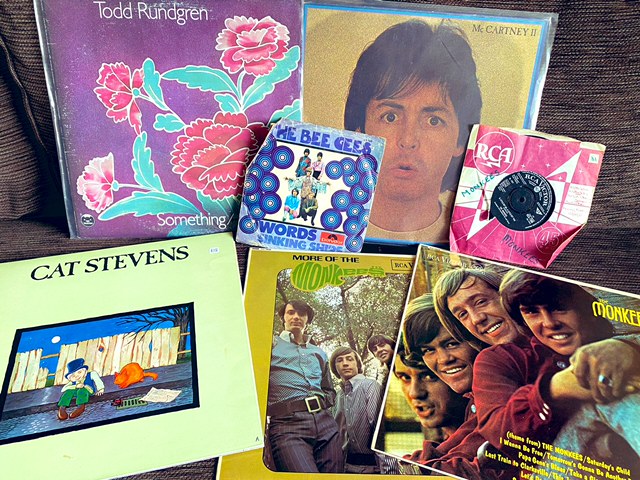
• When The Mariners visited Buckinghamshire, Say It With Garage Flowers took them record shopping in The Record Shop, Amersham and Collector’s Paradise, in Chesham. Here’s what they bought:
Paul Iliffe’s purchases:
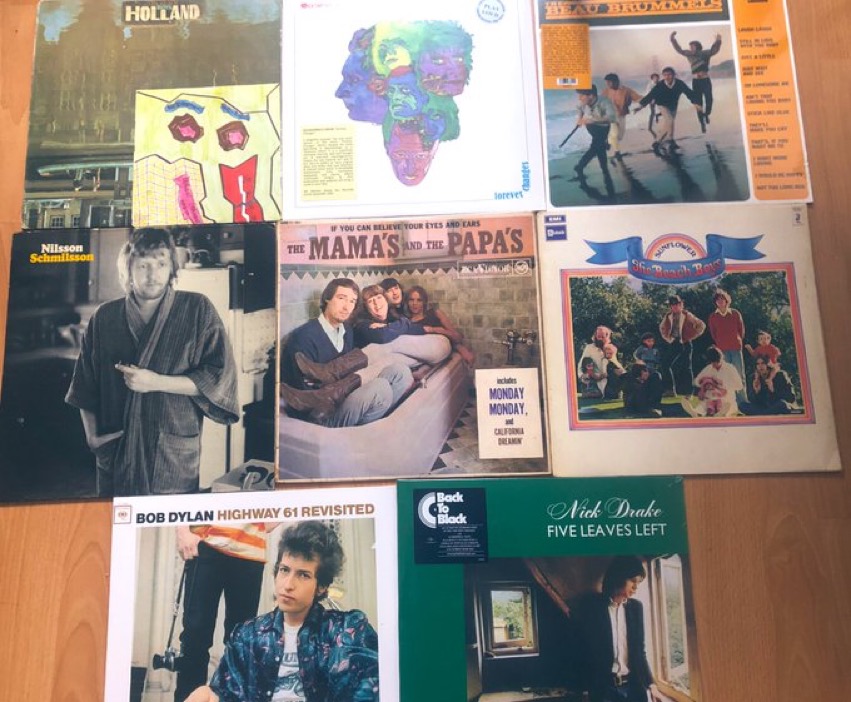
Luke Williamson’s vinyl finds:
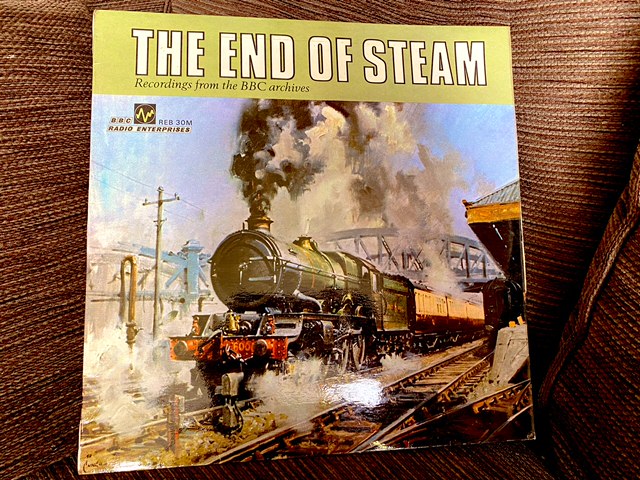
And finally, to say thanks to The Mariners for coming to see us, Say It With Garage Flowers bought them this record in the brilliant Chapter Two community bookshop, in Chesham. They were, ahem, chuffed to bits.





 Say It With Garage Flowers