‘The whole album is my attempt to make some kind of sense of all the crazy shit that’s gone on for the past six years’

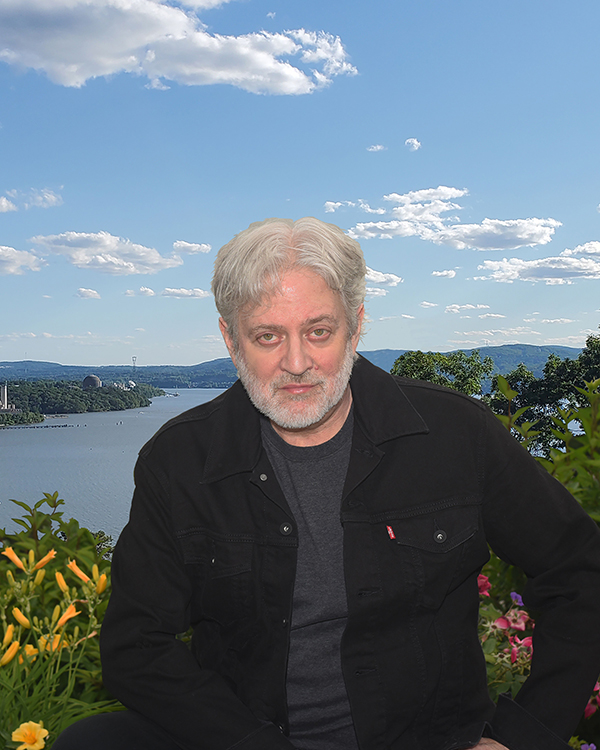
Dean Friedman


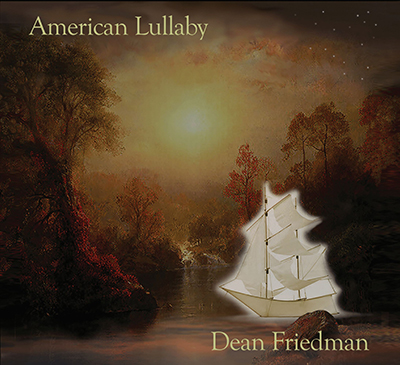
Gun culture, genocide, Covid, environmental disaster, Russian interference in the 2016 U.S. presidential election and consumerism – these are just some of the themes that inform American Lullaby, the ninth studio album by Dean Friedman.

But, as is typical of the quirky, US singer-songwriter, who is best known in the UK for his 1978 number three hit, Lucky Stars, a duet with Denise Marsa, the wildly eclectic record, which includes pop, soul, jazz and funk, is loaded with off-the-wall humour, which means that even though Friedman is often tackling dark and disturbing subjects, the album isn’t a depressing or harrowing listen.

“I was conscious that I was touching on a lot of pretty gloomy subjects, so I felt it was important to leaven that with an appropriate amount of humour and outright silliness. I’ve no problem doing that, as it’s pretty much my modus operandi,” he tells Say It With Garage Flowers, speaking to us over Zoom from his home studio in Peekskill, NY.

It starts with the majestic and epic title track, which is one of the highlights – a lush, orchestrally-aided piano ballad with shades of Rufus Wainwright – and then heads straight into jazz territory with Too Much Stuff, a wry song about hoarding.

Halfway Normal Word laments how lockdown put a stop to some of the simple pleasures of everyday life,  the ukulele-led trad-jazz of The Swing of Things is an optimistic ditty about trying to return to some sense of normality after the pandemic, while on the tight, slick and smooth funk of The Russians Are Coming, Friedman sings in a Russian accent for this tale of political corruption and shadowy goings-on in the corridors of power.

There’s more politics and funk, but with a hint of electro, on Ridin’ With Biden, and final song, On A Summer’s Night, is an atmospheric, chilled-out ballad that calms things down after all the madness.

‘I was conscious that I was touching on a lot of gloomy subjects, so I felt it was important to leaven that with an appropriate amount of humour and outright silliness. I’ve no problem doing that, as it’s pretty much my modus operandi’

We asked Friedman to tell us his thinking behind the new album and what inspired this collection of varied songs and styles, which he self-produced in his studio at home.

“I’m accused of being too eclectic, but I’ve always taken that as a compliment because I love all kinds of music,” he says.

Q&A

Did you write the majority of the new record during lockdown?

Dean Friedman: Yes – 90 per cent of it.

Were you planning on making a new album anyway, or did being stuck at home accelerate your plans?

DF: Last March, I was just about to step on a plane and do a 40-city UK tour. Within 24 hours, it was blown out of the water. I had an album planned – I’ve been crowdfunding them for years. In fact, after Marillion, I was one of the first artists to crowdfund an album.

Keeping in mind the severe suffering that so many people have endured, I would say that lockdown imposed a pause on the planet, which I think most people found really refreshing. As a musician, it gave me more time to spend on recording a new album than I ever have in my career. It was a pleasure to be able to really dig into the material. I had more time to explore and try and realise the vision that I had in my mind for how the songs should sound.

It’s a very rich-sounding album, with a lot of varied arrangements on it – strings, jazzy piano, harmonica, ukulele, soul, funk…

DF: I’m accused of being too eclectic, but I’ve always taken that as a compliment because I love all kinds of music. Every song is different, but one of the common denominators is that I think of myself as someone who writes short stories set to music.

Once I’m into the early development of a song, it will generally suggest what sort of musical idiom it is and what sort of production treatment will favour it the most. I kind of let the story guide me, but there are also lots of juncture points in that process where I find myself making a conscious design. Do I want to do it on a ukulele or a guitar?

‘Lockdown gave me more time to spend on recording a new album than I ever have in my career’

Or sing in a Russian accent, like on For the Russians Are Coming

DF [laughs]: For that, I had a tale I wanted to tell – it was a true story and I drew on source material – the Congressional Record and the Select Committee on Intelligence on Russian interference in the US election. I read a good part of a 1,000-page document and tried to make sure the song was accurate.

Once I’d written it, I tried to capture the essence of what I was trying to impart. It did occur to me that relaying it in a Russian accent would be appropriate. I’ve never done anything like that before. I took a wild shot – partly because of lockdown, the extra time and the lack of pressure, and the fact that everything was messed-up and bewildering – and in some ways it gave me the courage and licence to take chances that I might not necessarily have taken under normal circumstances. It cracks my friends up, but I’ve gotten really good responses from it so far. What’s your take on it?

SH: I think it’s fun – it made me laugh. It’s a good Russian accent.

The title track, which is the opener, is my favourite song on the album. It deals with gun culture, genocide, slavery, the 2017 Paradise shooting in Las Vegas and how America got to be in the state it is today. You then follow it with Too Much Stuff, which is a lightweight, jazzy number about being a hoarder. The first two songs are a real juxtaposition…

DF: I’ve always done that – even in my live shows. I don’t want to put people to sleep, and I want to present a broad palette of human experience and human nature. That element of humour is crucial to understanding and surviving our surreal existence here on this Earth. Without it, nothing makes sense.

The title track nicely sets up the album for some of the issues you go on to talk about, doesn’t it?

DF: It does precisely that – that was my conscious intent. The song American Lullaby talks about America’s two original sins – the massacre of the indigenous population and slavery. The common denominator is our incomprehensible obsession with guns and the degree to which they make us adept killers. Why are we the number one military power, at least for the moment? It’s cos we’re really great at killing people! It’s one of our greatest talents. Look, I love our country and I’m proud to be an American, but not for every reason. On American Lullaby [the song] I’ve tried to tell a 400-year history in a six-minute pop song, which isn’t easy to do, in as gentle as way as possible.

‘The song American Lullaby talks about America’s two original sins – the massacre of the indigenous population and slavery’

All lullabies tend to be infused with these horrible things that happen to babies – like the bough breaking and the cradle falling in Rock-A-Bye Baby. The poor kids falls out a tree and gets hit on the head by a cradle – the point being that, in a strange way, lullabies instil some kind of warning to those little humans just entering the world about all the perils that are out there in front of them, but in a way that doesn’t scare the hell out of them.

That to me is what the album is all about – to impart dire messages in comforting and soothing ways, like a lullaby. Be aware of all the horrible things that are going on in the world but try and avoid them.

The whole album is sort of my attempt, for myself and, potentially listeners, to make some kind of sense of all the crazy shit that’s gone on for the past six years – from the day America woke up to a failed gameshow host and con artist being president.

We knew that people were going to die and hundreds and thousands of them did, needlessly, because Trump was in the White House. The world has gone so far astray that any sense of normality is hard to recapture.

Myself and everyone else on the planet had this sense of befuddlement and confusion – I was incredulous at what was going on, but we had to get on with our daily lives and get stuff done. I wanted to provide a context for that and to chronicle my experiences, my understanding and my bewilderment of the past six years.

Did you write the record as a concept album?

DF: After writing the first couple of songs, I realised that inadvertently what I was doing was chronicling these surreal experiences of current events. Once it dawned on me that was the case, I did consciously address topics that fell within that brief. There are a couple of songs that aren’t 100 per cent in the script, but even then I was leavening some of that heavy, sober and difficult material with some measure of humour and silliness.

‘We knew that people were going to die and hundreds and thousands of them did, needlessly, because Trump was in the White House’

There’s been a low-key, underlying sense of anxiety about what’s going to happen next because, clearly, our leaders don’t have a fucking clue! Even if they did, they don’t have the competence to execute any kind of solution that’s appropriate.

For myself, I also felt compelled to write something that was optimistic and uplifting – a song like The Swing of Things. When you’re in a funk and you’re having a really tough time, you don’t want to get out of bed. That song tries to acknowledge that and people who are experiencing it, but also say, ‘that sucks but sometimes you’ve just got to get back into the swing of things.’

SH: We talked about lullabies earlier. What keeps you awake at night?

DF [laughs]Like every other indie artist, with rare exceptions, I serve as my own promoter for my tours and gigs. That means that all the responsibilities are down to me. So what keeps me awake at night is wondering whether I’m doing enough to let people know that I have a new album coming out, and that I have a tour coming up in April.
The other thing is that I have a little dog called Lola – she’s from the Czech Republic and she only weighs about four pounds. I live in a semi-rural part of New York State – about an hour north of New York City.

I worry that some kind of bird of prey, like a red-tailed hawk, will swoop down, see little Lola and think ‘what a tasty little snack.’  I’m always out in the backyard with an air horn to distract the hawks. So far it’s worked out okay.

Dean Friedman’s new album, American Lullaby, is released on August 27, on his Real Life Records label. 

He will be touring the UK from April 2022 – visit www.deanfriedman.com for more details.  


‘I find it interesting to explore new areas – I don’t want to stagnate’

Dot Allison

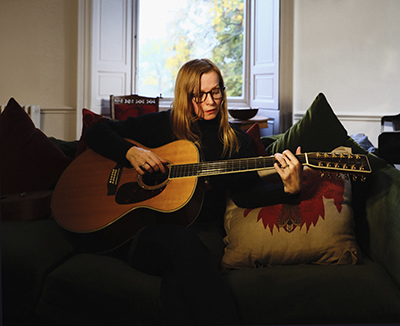
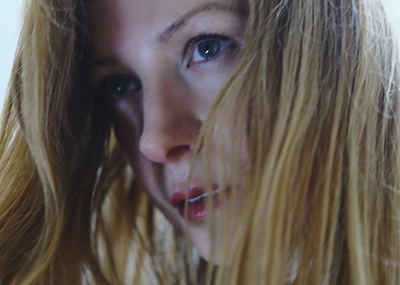
Heart-Shaped Scars, the new album by Scottish singer-songwriter, Dot Allison, just might be the most beautiful record you hear this year.

On her fifth solo outing, the former vocalist in ‘90s Scottish electronic act One Dove, who, throughout her career, has collaborated with the likes of Massive Attack, Scott Walker, Paul Weller and Pete Doherty, has gone back to nature.

Several of the gorgeous, stripped-down, pastoral folk songs feature field recordings of birdsong, rivers, and the ambience of the Hebrides, where she has a cottage.

Musically, she cites Karen Dalton, Gene Clark, Neil Young, Joni Mitchell, Carole King, Nick Drake and Brian Wilson as influences. There’s also a nod to the soundtrack of ‘70s cult folk-horror film The Wicker Man, which is set on a remote Scottish island.

“I love that soundtrack and film,” she tells Say It With Garage Flowers, speaking to us from her home in Edinburgh. “I got asked to sing a song from it, Gently Johnnny, with The Memory Band, at Glastonbury. I’ve bought the soundtrack on CD and vinyl – it’s featured in my world.”

Heart-Shaped Scars has been a long time coming – her last record, Room 7 1/2, was released 12 years ago. Since then, she’s taken time out to start a family.

Recorded at Castlesound Studios, in Edinburgh, with orchestral arranger, Hannah Peel, who worked on the last three Paul Weller albums, it’s a haunting record, musically and lyrically – quite literally, as one of the album’s prettiest moments is called The Haunting and opens with the lines “Slip inside this haunted house – tip toe silent, not a sound.”

There’s also a track called Ghost Orchid – a stately piano ballad with mournful cello. “That song started off as a poem called Church of Snow  – I wrote it when I was working with Massive Attack,” she says.

“I showed it to 3D from Massive Attack and he said he loved it. He got me to post it on their forum – that was in 2004. The song is quite different from the poem.”

In the past, Allison has dabbled with genres including pop, trip-hop, psychedelia, electronica and folk, but Heart-Shaped Scars is her most rootsy sounding album so far. “I like to try and explore new sounds and styles, so as not to stagnate. I love the evolution of The Beatles – that’s a good model. I find it interesting to explore new areas,” she says.

Four of the songs feature a string quintet, and other instruments on the record include ukulele, keyboards / synth, piano, guitar, bass, drums, harmonium and Mellotron. The vocals and the ukulele were recorded together on a Neumann U 67 microphone – the album sounds hushed and intimate.

Allison usually writes songs on piano and guitar, but the first single from the album, the fragile, cinematic and dreamy ballad, Long ExposureOrchards of cherries lie bruised on the ground” – was one of the tracks she composed on ukulele, after picking up the instrument during lockdown.

‘I wanted it to be comforting like a familiar in-utero heartbeat – a pure kind of album that musically imbues a return to nature’

Lyrically, Heart-Shaped Scars references several of Allison’s interests, including literature, science and nature. “I wanted it to be comforting like a familiar in-utero heartbeat – a pure kind of album that musically imbues a return to nature,” she says.

In fact, one of the songs is called Can You Hear Nature Sing? It’s autumnal folk and co-written with Zoë Bestel, who provides guest vocals.

The record’s most brooding and dark moment is Love Died In Our Arms, with dramatic strings and moody synth – a flashback to her trip-hop and electronica roots.

“I wanted to write a song that was like a mantra, with blocks of vocals and more primary colours – a slab of melody, ” she explains. “I wanted the vocals to be like paintbrush strokes.

“The song has a Juno-106 [synth] on it. There’s a company called BrandNewNoise that makes these interesting little, experimental wooden bits and bobs, like a weird, mutated version of a glockenspiel, which has an internal mic to record what you’re doing, but also a modulation button, so you can loop what you’ve done and then fuck about with it.

“I used that on it. It’s like a marriage between a synth and a wooden glockenspiel. It’s mental the noises you can get out of it, like a moment that sounds like a weird, distorted star. I think I’ve hopefully brought the slightly left-field dance mentality to the sounds – even though they’re quite human.”

Q&A

Heart-Shaped Scars is a beautiful record. I can’t stop playing it…

Dot Allison: Thank you so much – I really appreciate it.

It’s been 12 years since your last album. Why did the time feel right to put out a new record?

DA: The time was right because my kids are older – I had more space to work on music and I also changed my manager in early 2018, which meant I started writing again, and then the album started coming together.

How did Covid-19 affect the album?

DA: Covid altered my plans, but, thankfully, I’d started the recording process – the bass and the drum, and the bones of the songs that were going to have a fuller band sound were laid down before lockdown. When it came to further recording and production and mixing, that all got delayed.

During lockdown, I started writing on a ukulele and ended up writing four extra songs [Long Exposure, Forever’s Not Much Time, Goodbye and One Love] which changed the plan for the record, because they were strong enough to bump other songs off. In a weird way, lockdown benefited the album.

The ukulele songs began on my phone – I record everything that I play and then I listen back to it on my headphones at night and make notes of little moments. It’s like catching butterflies in a net. I get it all down, so I don’t miss anything.

Once I captured some bits and lovely moments, slowly, through repetition and playing them, the songs started to take shape and knit together in my head. I then laid them down in a studio at home – just rough recordings, with a ukulele and some harmonies on my voice. I sent voice notes on my phone to Hannah Peel and Fiona Cruickshank, who co-produced the album with me.

‘I record everything that I play and then I listen back to it on my headphones at night and make notes of little moments. It’s like catching butterflies in a net’

You’ve worked with orchestral arranger, Hannah Peel, on the record – she’s collaborated with Paul Weller on his last three albums, True Meanings, On Sunset and Fat Pop (Volume 1). How did you and her get together?

DA: I worked with Paul Weller years ago – we didn’t stay closely in touch, but I reconnected with him in 2018. I met up with him – I went to his Black Barn studio for a cup of tea, he played me some songs and he mentioned Hannah Peel. I’d been listening to his album, True Meanings, which I absolutely love. Hannah and I agreed to do something, which I was really pleased about – I love her work. Fiona Cruickshank is a really good engineer and she’d come very highly recommended as someone who could mix the album. She agreed to get involved.

You made some field recordings in the Hebrides, which found their way onto the album…

DA: I had a little handheld recorder – I went up there for the weekend, got up early one morning and went for a walk. I recorded the stream, the sea, birdsong and a rattling gate – I turned a corner around a cliff and there was a Force 7 gale! Suddenly, I couldn’t record anything. I also recorded some birds in Edinburgh – I collected a lot of sounds and created some loops in the studio.

The whole album sounds to me like it was written and recorded in a remote cottage in the Hebrides…

DA: Some of it was written there – Constellations was written on the island.

Throughout your career, you’ve collaborated with so many great artists – sadly, some of them, like Andy Weatherall and Scott Walker, are no longer with us. Did their deaths have a big effect on you?

DA:I was devastated to hear about Andy – I loved him to bits. I was very shocked. It was weird because I’m met him only a few months before it happened, for the first time in ages. He was in Edinburgh, and he was with [singer] Denise Johnson…

Who, like Andy, also died last year…

DA: I know… He asked me if I was doing any music, and I said, ‘funnily enough – I am.’ He wanted to hear some of it, but I told him it was unplayable at that time, because it was all on my phone. He said, ‘what do you mean? It’s unlistenable!’ I was like, ‘probably…’

I was planning on sending him something… It was totally shocking and so premature. I also couldn’t believe that Denise had gone too – what the hell is going on? You’ve just reminded me that I’d asked her if she’d wanted to be on this record…

Scott Walker has been a big influence on you and you worked with him…

DA: He was a creative lawbreaker – he totally did his own thing. I ended up recording with him on a song he did with Sunn O))) called Bull.  Scott talked to my managers about my voice – we had the same management – and he said that I had ‘great pipes’.  I’m having that!

What have been some of your favourite collaborations?

DA: I’m really proud that I worked with Hal David – that was just insane. He got temporarily stuck on the chorus of  Did I Imagine You? He asked me to write him a dummy chorus, but he kept one of my lines! That was amazing. I loved working with Paul Weller too – he’s so lovely and he really put me at ease. I get so shy, it’s awful – such a burden.

‘Scott Walker said that I had ‘great pipes’.  I’m having that!’

Anyone you’d like to collaborate with?

DA: I’d like to work with Linda Perhacs [American psychedelic folk singer], who made the album Parallelograms – it’s a cult classic. She’s so talented, but she was written off and she became a dental assistant. I’d love to work with Brian Wilson too.

Finally, what music – new and old – have you been enjoying recently?

DA: I’ve been listening to Parallelograms and The Wicker Man soundtrack. I also got an album by My Solid Ground – I’m quite obsessed by a song called The Executioner. It’s quite prog. I’ve also been going back to The Beatles. I decided to listen to all their albums chronologically – it’s the craftmanship of the songs. I started at the beginning and then went, ‘fuck – that’s insane!’

Heart-Shaped Scars by Dot Allison is out now on SA Recordings. It’s available digitally and as a double gatefold vinyl (limited edition pressing of 500) – pre-order it here.

https://dotallison.com/