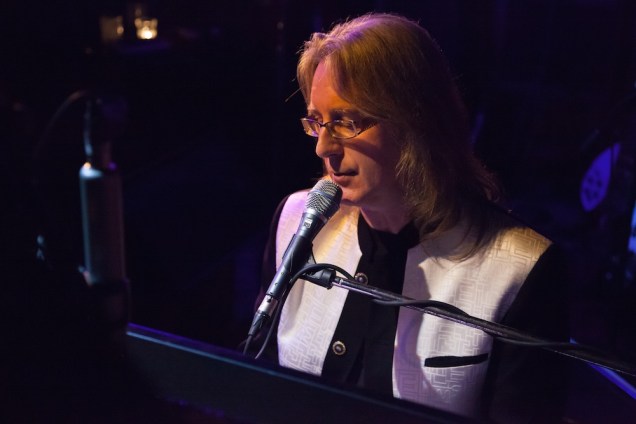
Singer-songwriter John Howard’s 2015 album, John Howard & The Night Mail, was one of my favourite records of last year.
A collaboration with musicians Robert Rotifer, Ian Button and Andy Lewis, it was a wonderful album – full of quirky, witty, intelligent, theatrical and nostalgic songs, from Zombies-like psych-pop to slinky retro mod-soul, glam-rock and observational Ray Davies-style tales of people’s everyday lives.
This month, John releases his brand new long-player, Across The Door Sill, but it’s a very different beast from its predecessor.
His latest offering is a solo voice and piano record that comprises only five songs – three at which clock in at just under 10 minutes – and it was inspired by poetry and childhood dreams.
I spoke to him to find out how the record came about…
Hi John. The last time I interviewed you – summer 2015 – you were just about to release your album John Howard & The Night Mail, which went on to have some great reviews. I saw you and your band play the album launch show in London at the Phoenix Artist Club. It was lovely to meet you after the gig. How do you feel about that record a year on? Has it been a good 12 months for you?
John Howard: It was great to meet you too, Sean, though I always feel I never have enough time after a gig to chat properly to people, so apologies if I was whisking around all over the place and looking distracted. I am still very proud of The Night Mail album. It was a delightful project to be part of – Robert Rotifer, Ian Button and Andy Lewis are so creative and responsive. Gigging with them earlier this year in Germany and Austria was a blast, but then, every time I appear on stage with them, I love it. The last 12 months have been mainly taken up with promoting The Night Mail album, but I’ve also been writing the Across The Door Sill album, too.
Your last album was very much a band record – collaborations with Andy Lewis, Ian Button, & Robert Rotifer – whereas your new album – Across The Door Sill – is a solo project. Why the decision to go it alone for this record?
JH: I’d started to write songs for Across The Door Sill before The Night Mail recording sessions in late 2014. I’d spent that year co-writing The Night Mail songs with Robert, Ian and Andy, but once they were finished, demoed and ready to record, new songs started coming through the ether. I knew as soon as the new songs started to come along they were going to be for a solo album, and of course The Night Mail songs were all co-writes with the other band members – save for our cover of Roddy Frame’s Small World.
I never plan anything really – projects tend to come to me, like The Night Mail did. It grew organically during months of conversations with Robert, initially. But all four of us do our own thing too, Robert has Rotifer, Ian has Papernut Cambridge, Andy has The Songwriters’ Collective and his solo material, plus his work with Paul Weller, so The Night Mail was never a band per se, in the way that touring bands are. We fancied writing some songs together, we were pleased with how they came out and decided to record them. It was a happy outcome that [the record label] Tapete liked them enough to sign the album. The Across The Door Sill songs came along out of the ether unbidden. Who Cares – the opening track on the album – was the first to ‘arrive’, and I knew immediately it wasn’t a ‘band song’.
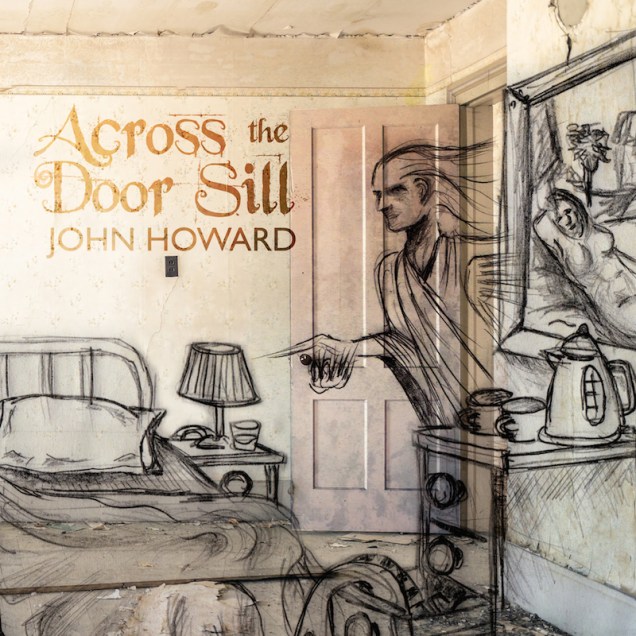
Across The Door Sill is a brave album. There are only five songs – three of which are almost 10 minutes long – and it’s just your multi-layered vocals and pianos. It’s fair to say that you’re not aiming for the mass-market with this record, isn’t it?
JH: I never have the mass market in mind when I write anything. It became obvious 40 odd years ago, when I began recording, that one never puts the words ‘mass market’ in the same sentence as ‘John Howard’, unless the sentence reads ‘John Howard is never going to be a mass market artist.’
In the years since I returned to recording, since 2004, I have always written and recorded what I want to, with no regard for whether it will sell. I just want to write good songs. I believe I write at my best that way. This of course means my music will never make it to Radio One-derful Land…
How did you approach this record? What did you have in mind when you were writing and recording it?
JH: When the words for Who Cares started to come to me and I wrote them down, a long-form, stream of consciousness poem resulted, and I fancied the idea of seeing what happened when I sat at the piano and just wrote what came to me, as I sang the words. I recorded the eventual piano piece, which was inspired by the words, then tried out various ways of singing a melody to the track, recording several takes over many days, sung in different ways. Over a few weeks, I decided which parts of the different recorded vocals worked best and put them all together in a final mix, then built that up with more pianos and backing and harmony vocals. I lived with each mix for a few days before carrying on and building on what I’d done. All through the process I didn’t know if it would work out. It was an experiment, which could have ended up as tuneless nonsense. Some people may think it did!
I knew I’d come up with something different, and liked what I heard, so I carried on working that way, with no mind as to the lengths of the songs, or whether they had choruses, verses or hooks. I just wrote words, which came to me, and then put a melody and chords to them in a free-form, very relaxed way.
I was writing and recording the album right up to the spring of this year, though as I say, I actually began writing Who Cares towards the end of 2014. I’d never worked this way before, literally seeing what happened as I went along, blindly diving in and hoping a song, a track, would come out of it.
I usually write in a much more pop way, à la McCartney – I sit at the piano, see what starts to happen, chords arrive, sometimes sounds accompany them, which become words as the song develops, and a hook emerges, which is what the song hangs on. So, writing in such a free-form way for Across The Door Sill was an experiment from start to finish. I loved working this way though – it was very liberating
What became obvious early on in the process was how the poems were very much made up of images from dreams I’d had since childhood. The closing track, Stretching Out, is made up of many images from dreams I had as a kid, which recurred for years. I have a personal attachment to that track – it affects me each time I hear it. The images and the characters feel as real to me as real life in many ways. And the older I get, the more real they feel, like revisiting old friends.
The songs were also inspired by 13th century poet Rumi’s Quatrains. Can you tell me more about that? How did that influence manifest itself on the record? Is Across The Door Sill a concept album?
JH: I wouldn’t say it’s a concept album – the songs aren’t linked together in a story and there is no narrative linking each one chronologically, but there is a theme – dreams, my dreams, and how I put them into words, albeit words which together seem to make no sense, but as a whole song they do start to form a picture.
Scenarios unfold as you listen to each song. Rumi’s Quatrains was something I found on the internet. I was searching for a phrase which encapsulated what I was trying to do – that is to give myself a new challenge, not stick to methods I’d used before, and put myself out there in a new environment creatively. I found the phrase ‘Across The Door Sill’, which led me to Rumi’s poem, where that phrase basically sums up his poem. It seemed the perfect title for the album.
You’ve said it’s an album that will take a few listens for people to get into…
JH: Oh, several listens I would imagine. Be patient, folks. Stick in there.
Outward is my favourite track on the record – it’s stunning – very moody, nostalgic and reflective. What can you tell me about that song?
JH: Thanks, Sean. Outward was written around a dream I had of waiting for a train, then, as in all dreams, the situation changed without explanation and I was travelling by car into the hills, meeting various people along the way, turning a corner and landing on a beach, turning another corner and being in the midst of a fiesta in full swing, and then finally ending up at the station again, kind of asleep, hearing the platform porter blowing his whistle. It was a dream within a dream really. Again, the vocal was recorded very loosely. I was playing the backing track over and over again, trying different vocal approaches, recording them all, and then choosing what I considered the best bits of various takes and mixing them together into the final mix.
I could hear a kind of old film vibe to the track, and recorded the ‘spooky’ falsetto voice in the background, to add some film noir atmosphere. My old 1970s producer, Paul Phillips, said he thought it sounded like a theme to a ghost or mystery thriller film, so that was a result.
Can you talk me through the other songs? There are funny moments, there are wistful recollections and stories and some wry observations…
JH: Pigs ‘n’ Pies, the shortest song on the album, brought in imagery from my growing up into a teenager through the ‘60s, my hippie years of the early ‘70s, then into working in a music business in the ‘80s, which was a decade (and a business) full of confidence, money and arrogance, then seeing a kind of realisation that, by the 21st century, we’d lost something along the way.
I liked the idea of a chorus of voices coming back as each decade ended, singing ‘It’s a crazy mixed-up world!’ each time – the mantra of the human race down the decades. My dad used to say that, my grandmother used to say it, and now I hear my own generation saying it. The difference now is that, whereas my peers poo-pooed our parents moaning about the state of the world, we were all believing back then that we were entering a golden dawn, the Hunky Dory belief in the human race, and now we too sit aghast at things like Brexit, racism becoming once more a horrific norm in our daily papers, and on our streets, the ghastly and once unbelievable possibility of a Trump presidency. It seems utterly crazy, but the 1930s, and Nazism, were equally round the bend, and similarly came from giving a voice to people who felt ignored and who were looking for scapegoats for their situation, following utter nutcases pointing them the way to the scapegoat of their choice. The blame game has been the human balm for centuries.
Preservation, as soon as I’d written it, reminded me of late 1960s/early ‘70s folk songs – the kind I’d listen to in my bedroom on a record player. It’s very much a questioning of who we are, where we are, why we are, and positioning us as floating aimlessly through a space full of dangers and unsolved mysteries. If we are part of that unsolved mystery, then where are we headed? Is there a solution? Probably not, if I am honest. Fifty years ago I would’ve said, “Of course there is, and my generation will provide it!” Now I feel rather hopeless about things, but somewhere deep down I’m thinking we could possibly avoid the precipice staring at us. There have been times in recent years that I wonder if the human race is worth preserving. It seems to have gone out its way to destroy everything it comes into contact with. Name me one good thing human beings have done for the natural world, apart from a few good people trying to right the wrongs of generations’ destructiveness? Heavens – this is getting rather heavy!
Let’s lighten things up… You’ve worked with Ian Button again on this record – he mastered it. What did he bring to that process?
JH: Ian has great ears. I’d loved what he did when he mastered Live at the Servant Jazz Quarters for me in 2014 and then, of course, The Night Mail album last year. He gets a great warmth, while also giving things an oomph sonically. I wanted Across The Door Sill to sound very warm, wide and big, and he got that – especially his work on the piano sound. He worked hard at that and I literally cheered when I heard what he’d done.
The new album is released on Occultation – how did that deal come about? Wasn’t the album going to be released on your own label?
JH: Yes, originally I was going to put it out on my own kidinabigworld.co.uk imprint and I actually had some CDs manufactured with that in mind. When I sent out review copies to you, and several other reviewers and journalists, I also sent a copy to Nick Halliwell at Occultation, simply as a thank you for all the word-of-mouth spreading he did for The Night Mail last year. I was really surprised when he emailed me a few days later to say he would like to release the album. I hadn’t expected that. I love his label and many of his other acts on Occultation are superb, so to be part of that ‘family’ is truly special. I was very flattered too that he liked the album enough to want to release it.
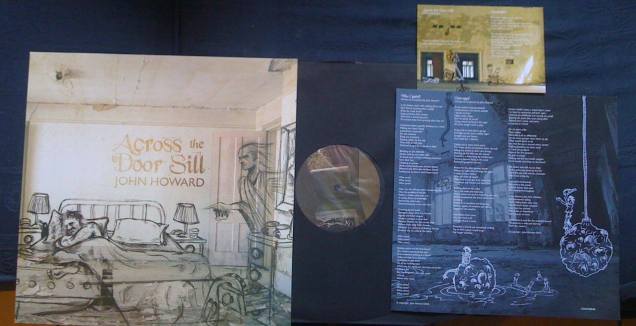
The new album will be released on vinyl, won’t it?
JH: Yes it will, in fact one of the reasons Nick gave for wanting to put it out on Occultation was that he thought it should be released on vinyl.
“This is an album which should be available on LP,” was what he said to me. That in itself was pleasing, and I’ve seen the artwork for the LP and it’s fabulous. Christian Cook of thinctanc design has done it – the same chap who designed the CD for me earlier this year, when I was going to release the album myself. Christian also designed my 2014 album Hello, My Name Is. Nick asked him to design the LP artwork and it is beautiful.
What are your plans for the rest of 2016 and 2017? Can we expect any live shows and any more records?
JH: I rarely plan, and as regards live shows, that depends if I get invited to do any and whether it’s feasible to do any of them, as I live in Spain. I don’t like being away from home for long periods anymore, so any gig would have to be a one-off, rather than a series of shows.
Nick and I are currently discussing another album for Occultation next year and I’ve started writing songs for it in the last week or so. It will again be different from what I’ve done before, and some of it will be recorded in the UK. Hopefully I’ll start recording it next year, probably for a 2018 release.
What music are you currently listening to and enjoying – old and new?
JH: I recently got hold of Judee Sill’s double album set, featuring her first two LPs. I totally adored her in the early ‘70s but hadn’t listened to her for years. It was Nick Halliwell who reawakened my love for her work when he told me he could hear Judee Sill in Across The Door Sill. I hadn’t actually considered that when I was recording it, feeling it had touches of Roy Harper and Laura Nyro in there (I don’t get through a month without listening to Harper’s Stormcock album at least once), but I also knew there was another sound, another voice in there, at the back of my mind while I was recording, which I couldn’t quite grasp. When Nick mentioned Judee to me it was like a light went on in my head – “Yes! That’s who I could hear somewhere in my memory during the Across The Door Sill sessions!” She has hardly been off my hi-fi since I got the double album recently. Glorious glorious talent.
I’ve also been enjoying Dylan’s Cutting Edge ‘65/’66 outtakes CD too. I had many of those on bootleg vinyl. which I bought in the early ‘70s, but hadn’t listened to for years, and it’s great to have those amazing tracks again. She’s Your Lover Now, I Wanna be Your Lover, wow, genius. And unreleased at the time! Amazing.

Not so new, from last year, Ralegh Long’s Hoverance album is lovely, very pastoral and rather gorgeous, Robert Rotifer’s Not Your Door is excellent, some lovely songs on that, very emotional songs, and of course Ian’s Papernut Cambridge album Love The Things Your Lover Loves is fab. He writes songs you are sure you heard back in the ‘60s and ‘70s, but they don’t sound like anybody else’s songs. Only Jeff Lynne is as good at that.
Nick has been playing me some of the new Distractions tracks, and they are lovely – some really great songs on there.
I recently acquired a record deck again – I hadn’t had one for years. An LP I have had since the mid-‘70s, Orchestra Luna, was one of the first I put on the turntable and it took me back to my days at CBS when a press lady there gave me the LP. I fell in love with it as soon as I heard it and have treasured it ever since. Their songs are full of Hollywood, Broadway, the Great American Dream, comedy, whimsy and theatrical camp, but with an air of wryness which overcomes the whimsy. It’s fun, but with a mild snarl, and it’s tremendous. As someone once said, it’s like watching a Hollywood musical you’ve never seen…
Across The Door Sill by John Howard is available this month on Occultation. For more information, please visit: http://www.occultation.co.uk/



 Say It With Garage Flowers