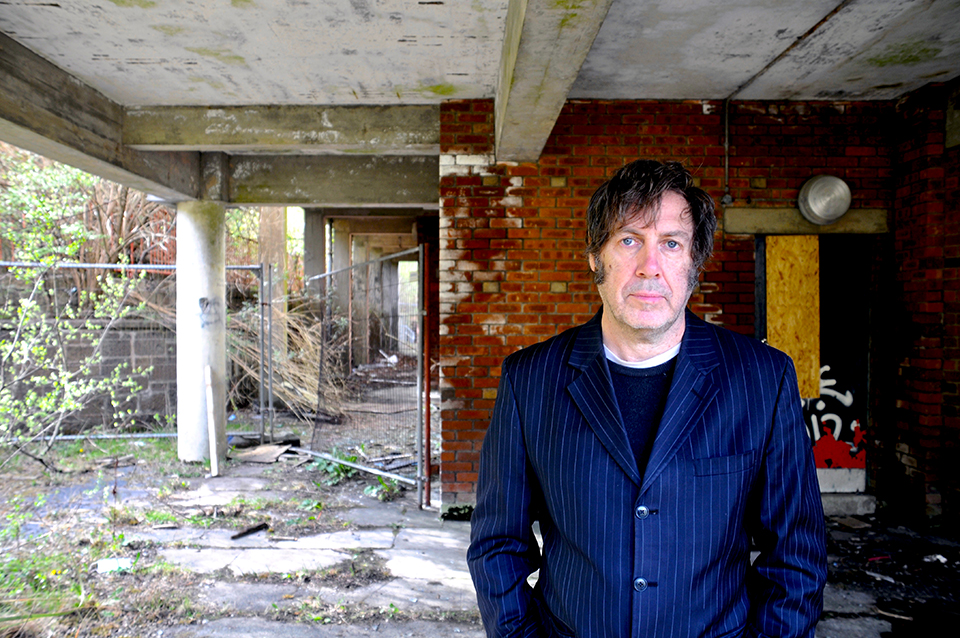
When Say It With Garage Flowers last spoke to UK-based, Americana singer-songwriter, Peter Bruntnell, he’d just emerged from the basement studio in his Devon home, where he’d been making his 2016 album, Nos Da Comrade, which was one of our favourite records of that year.
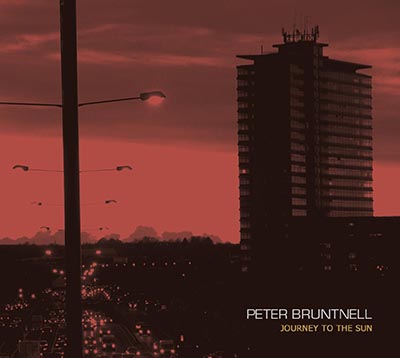
Now, five years later, he’s been busy in his basement again, working on his latest album, Journey To The Sun, which is his twelfth, and the follow-up to last year’s sublime King Of Madrid. Written and recorded during lockdown, it’s a more sparse and stripped-down sounding set than his last few releases – gorgeous, haunting and folky, but with some vintage electronica sounds and even a couple of spacey sci-fi instrumentals. Yes – that’s right, Americana fans, don’t choke on your pale ale, but there’s a lot of synth on this record…
Opener, the stunning, Dandelion, is an atmospheric folk-horror song, like Matt Deighton, or Pink Moon-era Nick Drake being produced by Brian Eno; the lovely Lucifer Morning Star has warm, burbling synths and chiming 12-string guitar, while Heart of Straw is classic Bruntnell – an aching, acoustic, country-tinged ballad – and recent single, You’d Make A Great Widow, is laced with his trademark wry humour and melancholy, but wrapped up in one of the prettiest melodies you’re likely to hear all year.
Some of the songs were co-written with Bruntnell’s long-time collaborator, Bill Ritchie, while US musician and mastering engineer, Peter Linnane, lays down some Hammond and pump organ, concertina, Mellotron and piano, and Iain Sloan plays pedal steel guitar on the track Dharma Liar.
‘Americana fans, don’t choke on your pale ale, but there’s a lot of synth on this record…’
“I felt like I wanted to make more of a solo record, which just so happened to coincide with the pandemic,” says Bruntnell. “That meant more acoustic guitar, and I bought a bouzouki in March last year, which really was a catalyst for quite a few songs being written in a very short timeframe. Oh, and I got a drum machine and a new synthesiser too.”
So is he going through an electro phase? We spoke to him to find out…
Q&A
How have you coped during the past year and a bit? Has it been tough making a living as a musician?
Peter Bruntnell: At first it was tough, but then I started doing a live stream every Thursday, which seemed to go quite well, so that was one gig to look forward to each week – once I got used to it. Oh, and then I started writing, and before I knew it, I’d written an album’s worth of stuff.
Did Covid affect your plans to make the new album?
PB: Well, it just meant that I had to record and produce it all myself, but that sort of suited the vibe of the songs.
‘Opener, the stunning, Dandelion, is an atmospheric folk-horror song, like Matt Deighton, or Pink Moon-era Nick Drake being produced by Brian Eno’
You recorded and self-produced the album at your home, in Devon, where you have a basement studio. Peter Linnane, who plays keyboards on the record, and is based in Boston, sent you his parts, didn’t he?
PB: Yeah – I sent the first song to Pete, to ask him if the light compression I had on the mix was okay for the mastering job. He came back to me saying it was fine, and he sent some pump organ and concertina parts, in case I might like to mix them in. I had a listen and liked all his parts, so I kept them, and that became the pattern for nearly every song thereafter.
Let’s talk about the sound of the record – it’s more stripped-down than some of your last few albums, with acoustic guitar, bouzouki, keys – organ, synth, Mellotron – and a drum machine. Did you set out to make a ‘back to basics’ album? Was it a reaction to your last couple, which have had more jangly, electric guitar and a fuller band sound?
PB: I did feel like I wanted to make more of a solo record, which just so happened to coincide with the pandemic. That meant more acoustic guitar, and I bought a bouzouki in March last year, which really was a catalyst for quite a few songs being written in a very short timeframe. Oh, and I had bought a drum machine and a new synthesiser too.
What inspired the album, musically?
PB: Apart from a bit of Brian Eno, I’m not sure what other influences directly inspired the songs. Maybe some Brian Wilson…
What about the synth? Are you going through a Kraftwerk, or Bowie Low phase, or doing a Neil Young Trans?
PB: Sort of. I’d been listening to Another Green World by Eno and had been thinking about doing some more ‘electro’-style stuff for a while now, so it all just fell into place. And Low has been one of my favourite records for years.
Tell me about the bouzouki? Is there a story behind it?
PB: I bought it hoping it would inspire some songwriting, which it did. Because I don’t know how to play one, it forced me to be more experimental than when I write on a guitar.
What can you tell me about the first song on the album, Dandelion, which is one of my favourites on the record? I love the arrangement – it has a haunting, folky feel, but with some lap steel on it, too. It’s a very striking and atmospheric song…
PB: It was written on the bouzouki and was maybe the first one. It has atmosphere, with just vocals and bouzouki, so I didn’t have to think too hard about its production. I have a piano in the hall which I can’t play that well, but for sparse two or three finger chords it sounds great.
Lucifer Morning Star is another one of my favourites on the album. What can you tell me about that song? It’s a lovely track…
PB: Thanks. It’s one of my favourites for some reason too. Bill Ritchie came up with most of those lyrics. It was the last song written – maybe the feel of the record was already established, so I kept it similar when arranging the parts for it.
‘I’d been listening to Another Green World by Eno and thinking about doing some ‘electro’-style stuff for a while, so it all just fell into place’
You’ve done a great cover of the traditional folk song Wild Mountain Thyme on the record. What prompted that and why did you include it?
PB: I recorded it about five years ago, because I love the song and wanted to keep busy recording. It seemed to fit among these new songs, so it made the album.
Your last album, King of Madrid, had a song called Widows Walk on it and this record has You’d Make A Great Widow. Are you now intending to have one widow-themed track on each record?
PB: Hah! No – that’s just a coincidence. My wife was talking one day about what would happen if I died and jokingly said, “I’d make a great widow”. That’s where the idea came from.
There’s a great video for the song, in which you get to play a zombie. How did that come about?
PB: I thought it would be fun to get loads of ‘widows’ in it, so I wrote a post on Facebook to see if people would film themselves miming to one of my songs, and I got a great response. And then the ghost and zombie idea just came to me.
Heart of Straw is a gorgeous track. Where did that one come from, and why did you decide to use a line from it as the title of the album?
PB: It’s another anti-government song – yawn. I just stumbled around until I found the right words. It could easily be Etonian rather than Utopian, and ‘Head of Straw’ rather than ‘Heart’. I was just looking for an album title that I liked the sound of and ‘journey to the sun’ seemed like a good idea at the time.
‘Lockdown meant that I focused on writing more than normal, as there wasn’t much else to do’
The album feels melancholy and reflective, with themes of loss, longing, regret and death. Do you think the Covid crisis affected the songwriting lyrically and also the mood of the record?
PB: Maybe – it’s difficult to say. Lockdown meant that I did focus on writing more than normal, as there wasn’t much else to do. I wasn’t really expecting to have an album written and recorded by the end of the year.
You’ve recorded some instrumentals for the album – the spacey The Antwerp Effect and Moon Committee. I think they sound like incidental music from a ‘70s sci-fi TV show, or a film soundtrack. Would you ever consider making an instrumental record, or writing and recording a soundtrack?
PB: Yes – I’d like to do more. I might go more ‘electro’ for the next album. I really don’t know yet…
‘I wasn’t really expecting to have an album written and recorded by the end of the year’
What was your lockdown soundtrack and what music – new and old – are you currently enjoying?
PB: Over lockdown I watched more TV than listening to music – all the usual stuff, like Netflix, etc. I have an Alex Chilton live in Baton Rouge album in my car at the moment, along with Jordan the Comeback by Prefab Sprout.
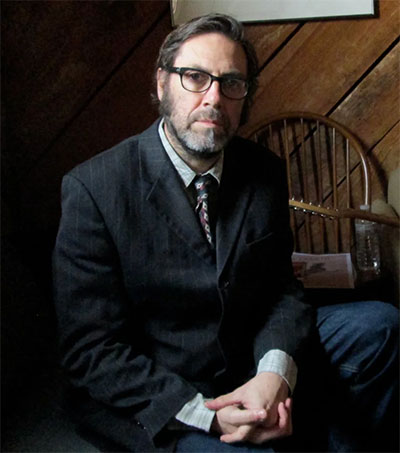
What are your plans for the rest of the year, now things are slowly returning to some kind of ‘normal?’
PB: To play live as much as I can and travel – even if it’s in the UK.
On that note, when all travel restrictions are lifted, and you’re allowed to take a ‘journey to the sun’, where would be your ideal destination – and why?
PB: Italy, Spain or France – anywhere in Europe would be great. I love Europe and hate Brexit!
Journey To The Sun is released on June 11 (Domestico Records). You can pre-order a signed copy here.


 Say It With Garage Flowers