‘I find it interesting to explore new areas – I don’t want to stagnate’

Dot Allison

Heart-Shaped Scars, the new album by Scottish singer-songwriter, Dot Allison, just might be the most beautiful record you hear this year.

On her fifth solo outing, the former vocalist in ‘90s Scottish electronic act One Dove, who, throughout her career, has collaborated with the likes of Massive Attack, Scott Walker, Paul Weller and Pete Doherty, has gone back to nature.

Several of the gorgeous, stripped-down, pastoral folk songs feature field recordings of birdsong, rivers, and the ambience of the Hebrides, where she has a cottage.

Musically, she cites Karen Dalton, Gene Clark, Neil Young, Joni Mitchell, Carole King, Nick Drake and Brian Wilson as influences. There’s also a nod to the soundtrack of ‘70s cult folk-horror film The Wicker Man, which is set on a remote Scottish island.

“I love that soundtrack and film,” she tells Say It With Garage Flowers, speaking to us from her home in Edinburgh. “I got asked to sing a song from it, Gently Johnnny, with The Memory Band, at Glastonbury. I’ve bought the soundtrack on CD and vinyl – it’s featured in my world.”

Heart-Shaped Scars has been a long time coming – her last record, Room 7 1/2, was released 12 years ago. Since then, she’s taken time out to start a family.

Recorded at Castlesound Studios, in Edinburgh, with orchestral arranger, Hannah Peel, who worked on the last three Paul Weller albums, it’s a haunting record, musically and lyrically – quite literally, as one of the album’s prettiest moments is called The Haunting and opens with the lines “Slip inside this haunted house – tip toe silent, not a sound.”

There’s also a track called Ghost Orchid – a stately piano ballad with mournful cello. “That song started off as a poem called Church of Snow  – I wrote it when I was working with Massive Attack,” she says.

“I showed it to 3D from Massive Attack and he said he loved it. He got me to post it on their forum – that was in 2004. The song is quite different from the poem.”

In the past, Allison has dabbled with genres including pop, trip-hop, psychedelia, electronica and folk, but Heart-Shaped Scars is her most rootsy sounding album so far. “I like to try and explore new sounds and styles, so as not to stagnate. I love the evolution of The Beatles – that’s a good model. I find it interesting to explore new areas,” she says.

Four of the songs feature a string quintet, and other instruments on the record include ukulele, keyboards / synth, piano, guitar, bass, drums, harmonium and Mellotron. The vocals and the ukulele were recorded together on a Neumann U 67 microphone – the album sounds hushed and intimate.

Allison usually writes songs on piano and guitar, but the first single from the album, the fragile, cinematic and dreamy ballad, Long ExposureOrchards of cherries lie bruised on the ground” – was one of the tracks she composed on ukulele, after picking up the instrument during lockdown.

‘I wanted it to be comforting like a familiar in-utero heartbeat – a pure kind of album that musically imbues a return to nature’

Lyrically, Heart-Shaped Scars references several of Allison’s interests, including literature, science and nature. “I wanted it to be comforting like a familiar in-utero heartbeat – a pure kind of album that musically imbues a return to nature,” she says.

In fact, one of the songs is called Can You Hear Nature Sing? It’s autumnal folk and co-written with Zoë Bestel, who provides guest vocals.

The record’s most brooding and dark moment is Love Died In Our Arms, with dramatic strings and moody synth – a flashback to her trip-hop and electronica roots.

“I wanted to write a song that was like a mantra, with blocks of vocals and more primary colours – a slab of melody, ” she explains. “I wanted the vocals to be like paintbrush strokes.

“The song has a Juno-106 [synth] on it. There’s a company called BrandNewNoise that makes these interesting little, experimental wooden bits and bobs, like a weird, mutated version of a glockenspiel, which has an internal mic to record what you’re doing, but also a modulation button, so you can loop what you’ve done and then fuck about with it.

“I used that on it. It’s like a marriage between a synth and a wooden glockenspiel. It’s mental the noises you can get out of it, like a moment that sounds like a weird, distorted star. I think I’ve hopefully brought the slightly left-field dance mentality to the sounds – even though they’re quite human.”

Q&A

Heart-Shaped Scars is a beautiful record. I can’t stop playing it…

Dot Allison: Thank you so much – I really appreciate it.

It’s been 12 years since your last album. Why did the time feel right to put out a new record?

DA: The time was right because my kids are older – I had more space to work on music and I also changed my manager in early 2018, which meant I started writing again, and then the album started coming together.

How did Covid-19 affect the album?

DA: Covid altered my plans, but, thankfully, I’d started the recording process – the bass and the drum, and the bones of the songs that were going to have a fuller band sound were laid down before lockdown. When it came to further recording and production and mixing, that all got delayed.

During lockdown, I started writing on a ukulele and ended up writing four extra songs [Long Exposure, Forever’s Not Much Time, Goodbye and One Love] which changed the plan for the record, because they were strong enough to bump other songs off. In a weird way, lockdown benefited the album.

The ukulele songs began on my phone – I record everything that I play and then I listen back to it on my headphones at night and make notes of little moments. It’s like catching butterflies in a net. I get it all down, so I don’t miss anything.
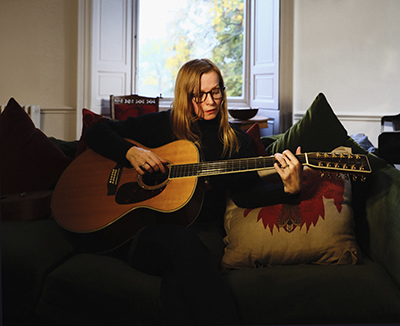
Once I captured some bits and lovely moments, slowly, through repetition and playing them, the songs started to take shape and knit together in my head. I then laid them down in a studio at home – just rough recordings, with a ukulele and some harmonies on my voice. I sent voice notes on my phone to Hannah Peel and Fiona Cruickshank, who co-produced the album with me.

‘I record everything that I play and then I listen back to it on my headphones at night and make notes of little moments. It’s like catching butterflies in a net’

You’ve worked with orchestral arranger, Hannah Peel, on the record – she’s collaborated with Paul Weller on his last three albums, True Meanings, On Sunset and Fat Pop (Volume 1). How did you and her get together?

DA: I worked with Paul Weller years ago – we didn’t stay closely in touch, but I reconnected with him in 2018. I met up with him – I went to his Black Barn studio for a cup of tea, he played me some songs and he mentioned Hannah Peel. I’d been listening to his album, True Meanings, which I absolutely love. Hannah and I agreed to do something, which I was really pleased about – I love her work. Fiona Cruickshank is a really good engineer and she’d come very highly recommended as someone who could mix the album. She agreed to get involved.

You made some field recordings in the Hebrides, which found their way onto the album…

DA: I had a little handheld recorder – I went up there for the weekend, got up early one morning and went for a walk. I recorded the stream, the sea, birdsong and a rattling gate – I turned a corner around a cliff and there was a Force 7 gale! Suddenly, I couldn’t record anything. I also recorded some birds in Edinburgh – I collected a lot of sounds and created some loops in the studio.

The whole album sounds to me like it was written and recorded in a remote cottage in the Hebrides…

DA: Some of it was written there – Constellations was written on the island.
Throughout your career, you’ve collaborated with so many great artists – sadly, some of them, like Andy Weatherall and Scott Walker, are no longer with us. Did their deaths have a big effect on you?

DA:I was devastated to hear about Andy – I loved him to bits. I was very shocked. It was weird because I’m met him only a few months before it happened, for the first time in ages. He was in Edinburgh, and he was with [singer] Denise Johnson…

Who, like Andy, also died last year…

DA: I know… He asked me if I was doing any music, and I said, ‘funnily enough – I am.’ He wanted to hear some of it, but I told him it was unplayable at that time, because it was all on my phone. He said, ‘what do you mean? It’s unlistenable!’ I was like, ‘probably…’

I was planning on sending him something… It was totally shocking and so premature. I also couldn’t believe that Denise had gone too – what the hell is going on? You’ve just reminded me that I’d asked her if she’d wanted to be on this record…

Scott Walker has been a big influence on you and you worked with him…

DA: He was a creative lawbreaker – he totally did his own thing. I ended up recording with him on a song he did with Sunn O))) called Bull.  Scott talked to my managers about my voice – we had the same management – and he said that I had ‘great pipes’.  I’m having that!

What have been some of your favourite collaborations?

DA: I’m really proud that I worked with Hal David – that was just insane. He got temporarily stuck on the chorus of  Did I Imagine You? He asked me to write him a dummy chorus, but he kept one of my lines! That was amazing. I loved working with Paul Weller too – he’s so lovely and he really put me at ease. I get so shy, it’s awful – such a burden.

‘Scott Walker said that I had ‘great pipes’.  I’m having that!’

Anyone you’d like to collaborate with?

DA: I’d like to work with Linda Perhacs [American psychedelic folk singer], who made the album Parallelograms – it’s a cult classic. She’s so talented, but she was written off and she became a dental assistant. I’d love to work with Brian Wilson too.

Finally, what music – new and old – have you been enjoying recently?

DA: I’ve been listening to Parallelograms and The Wicker Man soundtrack. I also got an album by My Solid Ground – I’m quite obsessed by a song called The Executioner. It’s quite prog. I’ve also been going back to The Beatles. I decided to listen to all their albums chronologically – it’s the craftmanship of the songs. I started at the beginning and then went, ‘fuck – that’s insane!’

Heart-Shaped Scars by Dot Allison is out now on SA Recordings. It’s available digitally and as a double gatefold vinyl (limited edition pressing of 500) – pre-order it here.

https://dotallison.com/

‘Do people want to read books or watch films about Covid? I don’t know – time will tell…’

Mark Billingham

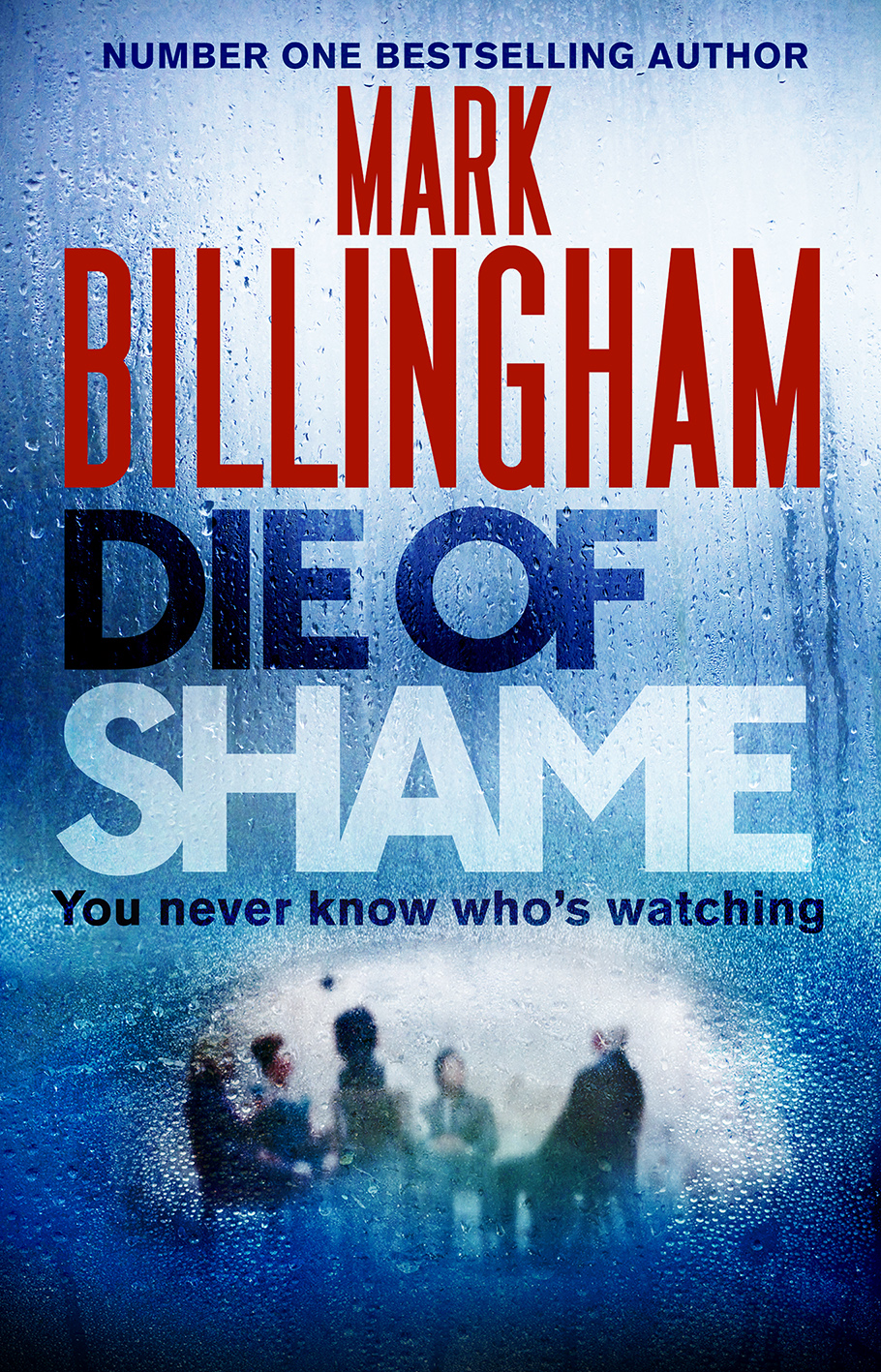
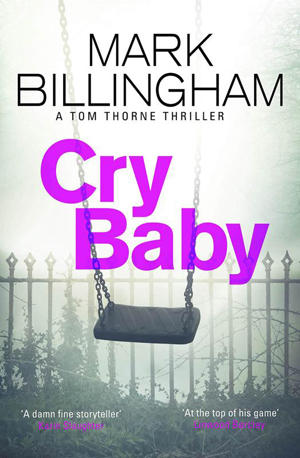
When Say It With Garage Flowers last spoke to one of our favourite authors, UK crime writer Mark Billingham, it was exactly a year ago, for the publication of his novel Cry Baby – the seventeenth entry in the Thorne series and his twentieth book, if you include his three stand-alone thrillers: In the DarkRush of Blood and Die of Shame.

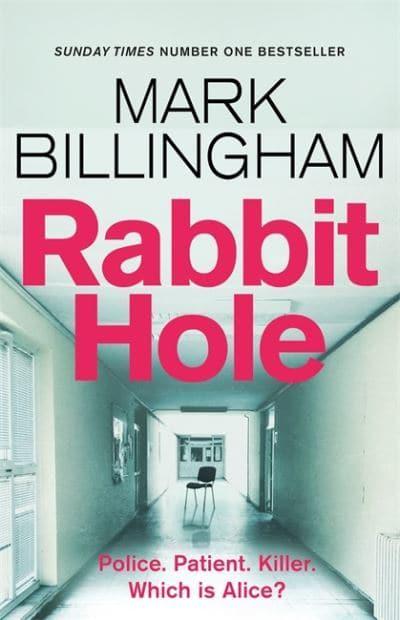
During that interview, he told us he’d written the majority of his next novel during lockdown. That book is published this month. It’s called Rabbit Hole and it’s another stand-alone, but, in typical Billingham style, it’s a highly original take on the locked-room murder mystery genre, with a great twist. No spoilers here, but it’s one of his best.

Written in the first person, it centres on the character of Detective Constable Alice Armitage, the novel’s narrator, who finds herself on the trail of a killer who has murdered a patient on an acute psychiatric ward. The problem is that Armitage is a patient too… and could she actually be the murderer? 

Despite its sensitive and often disturbing subject matter – severe mental health problems – Rabbit Hole is also a very funny book, full of darkly comedic moments.

Billingham started writing the novel in February last year – just before lockdown – and he finished it in four months. 

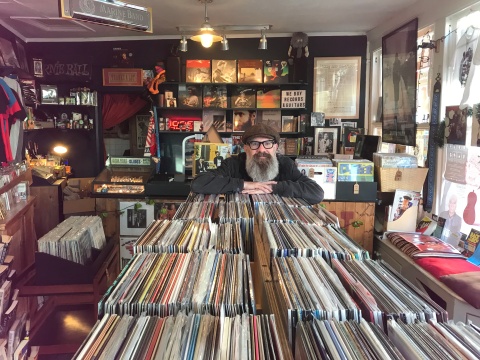
“I wrote it really quickly, because I couldn’t do anything else – I had nothing to do but write,” he tells Say It With Garage Flowers, sat outside a north London pub on a warm early evening in July. 

So did being locked-down at home while writing the novel inspire the subject matter of the book in any way? 

“It may have done subconsciously, but the more conscious decision was that I’d had some recent experience of that world, which was not something I’d known about until recently,” he says.

“It’s a personal book in many ways, because a close family member and a very close friend both spent time on an acute psychiatric ward. I had a wealth of stories.

“Graham Greene said that writers have a chip of ice in their heart – maybe crime writers have a much bigger chip of ice… I was confronted with a situation that was deeply unpleasant, traumatic, sad and disturbing, but, at the same time, there was part of me going, ‘wow – this would be a brilliant setting for a locked-room mystery.’”

He adds: “For every couple of horrible stories I heard, there were also some that were just hilarious, but in a dark way. Some of the more bizarre things in the book are completely true.”

Q&A

Mental health is a difficult subject to write about – it’s a sensitive topic. How did you approach the book to make sure you didn’t come across as patronising or ill-informed?

Mark Billingham: I was aware of that all the time – but you should always be aware, whatever you’re writing, of treating the subject with sensitivity and nuance.

I did a lot of personal research and I got to know some mental health professionals who were working in a ward and were kind enough to speak to me away from the location, off the record, as it were. There was always a conscious decision of what should I talk about, or not talk about, but you make those decisions all the time – every five minutes.

‘Graham Greene said writers have a chip of ice in their heart – maybe crime writers have a much bigger chip of ice…’

Because I’d decided to write the book in the first person, which is something I’d never done before, and I knew I wanted to be with this character, that’s a big decision, because if you’re asking your reader to spend 400 pages inside the head of the same character, you need to make that person attractive and engaging, even though they’re infuriating, frustrating and sometimes unpleasant.

Alice Armitage is an interesting character. She’s an anti-hero, isn’t she?

MB: Yes – and right off the bat she says she’s unreliable because she’s medicated and paranoid. In a way, she’s the perfect narrator for the book.

Rabbit Hole references the Covid-19 pandemic, although not in a big way, and it’s dedicated to the doctors, mental health nurses and health care assistants who lost their lives to the virus. Was it important for you to mention Covid in the book, and, if so, why?

MB: It was a difficult choice or call to make because I knew roughly when the book would be coming out and, back then [when I was writing it], like everybody else, I had no idea what the situation would be like. Would Covid have gone completely? Obviously, we know now that it hasn’t, but you can’t predict the future.

With the majority of the book being set on a mental health ward, I had to reference it, but I didn’t want to make too much of it – I didn’t want to make it a ‘Covid book’. I couldn’t pretend it hadn’t happened, or it wasn’t an issue, but I tried to make the references subtle. I didn’t want every other page to be about masks and hand sanitisers, but it’s obvious that it’s going on.

The reason I dedicated the book specifically to the medical professionals who’d lost their lives was because when I visited the ward, I got to know some of the mental health nurses – I spoke to one of them a lot outside the ward and she was very helpful.

She later told me that four of the nurses on that ward had died – nurses I’d met. What you extrapolate from that is, ‘Christ – if it’s four on one ward in North London, how many is it nationally?’ It felt like an appropriate thing to do.

‘It’s a personal book because a close family member and a very close friend both spent time on an acute psychiatric ward’

Have you read many new books by fiction authors that are referencing Covid?

MB: Yes – I have. Some have done it really well and some it’s obvious that they’ve had a last minute ‘Covid edit’. They’ve gone through it and just thrown in some references to masks, hand sanitisers and PPE to make it current, so it doesn’t appear dated. That’s kind of an odd thing to do – I think you need to do it, or not do it. You could set the book in 2021, so it’s not an issue, or in 2024, and hope Covid has gone by then, or you do what I did, and say, ‘I guess Covid is still going to be knocking around and I can’t pretend it hasn’t happened…’

I was talking to a comedian friend of mine and asked him whether comedians are doing any Covid material. He said they are, and audiences are loving it – it made me think that people want to go somewhere where they can laugh at it or about it – the experiences they’ve had. Laughing about it is one thing, but do they want to read books or watch films about it? I don’t know – time will tell.

Directly after the Second World War, people didn’t want to read about it – the golden age of crime fiction happened between the wars because people had had enough of grief and violence on a massive scale.

‘I was talking to a comedian friend of mine and asked him whether comedians are doing any Covid material. He said they are, and audiences are loving it’

Another good example is the huge explosion in recent years of Northern Irish crime fiction – while the Troubles were happening, there wasn’t any, because people were living it and they didn’t want to read about it. Now enough time has passed, and writers are looking at it and examining it – it’s really interesting. You need a little bit of distance.

Your last stand-alone novel, 2016’s Die of Shame, was also a ‘locked-room’ murder mystery, and it too dealt with people suffering from mental health issues –  a therapy group full of recovering addicts. Do you see Rabbit Hole as almost a companion book to it?

MB: Do you know what? I hadn’t until you mentioned it, but it kind of is, I suppose. They’re both takes on a locked-room mystery and they both have at their hearts the same premise.

When you have a traditional locked-room mystery, the characters are all guests in a stately home, or passengers on a cruise ship, but addiction or mental health affects anybody and everybody. That means you can have people from all sorts of different backgrounds.

In Die of Shame, I had an incredibly disparate group of people in terms of social demographics – where they’re from, and how much they earn, and what class they’re from. The same is true of people who end up sectioned.

But the mental health ward in Rabbit Hole is a ‘locked room’ which people can come in and out of…

MB: Yes – it’s an air-locked room… there are ways the patients can get out, for some periods of time, like short trips, but, essentially, you’ve got a group of half a dozen people with incredibly different stories. And I wanted to tell their stories too.

Like your other novels, there’s a lot of dark humour in Rabbit Hole. Was it an enjoyable book to write?

MB: I’m not sure I’d say it was enjoyable – it was a hard book to write, because of my personal connection to it. There were definitely moments when I had to stop and go, ‘should I be writing this?’ but I would always say, ‘yes, you should’.

The people I know who are close to this situation all told me I needed to write it. It was also time to write something different I’d written three Thorne novels on the bounce.

There are some cameo appearances by regular characters from the Thorne series in Rabbit Hole, including Thorne himself. You usually do this in your stand-alone books, don’t you? That must be fun – you’re expanding the Thorne universe…

MB: I’ve probably done it in this one more than any of the other stand-alones. I knew Thorne was going to make an appearance, and, because I was dealing with psychiatric issues, I knew Melita Perera would be in it. Hendricks gets a mention too, in a way in which readers of the series will go, ‘oh – I know who they’re talking about…’

It’s fun. You’re creating this fictional universe and characters drift in and out of it  – they come into the spotlight and then recede into the background.

It’s like the Marvel Universe…

MB: [laughs].


And your last book, Cry Baby, was an origins novel…

MB: Yes both me and [crime writer] John Connolly wrote origin stories at the same time – me with Thorne and him with Charlie Parker [The Dirty South] – without us knowing we were both doing it. You can them prequels, but it’s more trendy to call them origin stories.

Could you ever see any of the other characters from the Thorne universe, like Nicola Tanner, getting her own series of novels?

MB: YesI think that’s perfectly possible. Or maybe Hendricks will get his own book, or I might revisit a younger Thorne again. I don’t know it will be whatever idea suits the story that’s in my head.

Let’s talk about the next book after Rabbit Hole, which is another Thorne novel…

MB: The next book is done – it will be out this time next year. I’m ahead of the game because I wrote two books back-to-back very quickly.

Can you tell us anything about the next one?

MB: I can it’s not a big secret. It’s called The Murder Book. Thorne is back, but so is his worst nightmare. It couldn’t be a more different book to Rabbit Hole – it’s real pedal to the metal.

Finally, was the working title of Rabbit Hole ever Who The F*** Is Alice?

MB: I’ve had a few emails asking me that…

Rabbit Hole by Mark Billingham is out now and is published by Little, Brown.

www.markbillingham.com