The Butterfly Effecters

Picture by Richard Bardsley

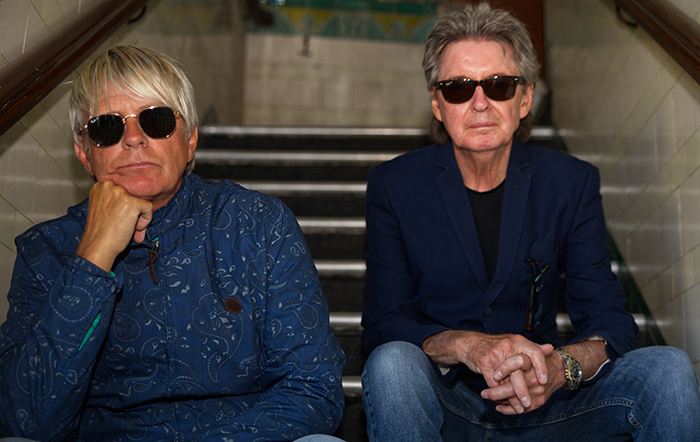
You could be forgiven for thinking that Foxton & Hastings is the name of an estate agent, but it’s actually the moniker for the side-project of Bruce Foxton, former bassist with The Jam and Stiff Little Fingers, and guitarist/vocalist Russell Hastings – both of whom can usually be found playing in mod revival band From the Jam.

This month (October 28), the duo release their third album, The Butterfly Effect – a solid and enjoyable collection of good, old-fashioned, ’60s-style guitar tunes with their roots in Revolver-era Beatles, The Small Faces, The Who, classic soul and, coughs, solo ‘90s Paul Weller.

This is the modern world, but Foxton & Hastings aren’t afraid to turn to the past for their musical influences. Listening to The Butterfly Effect is like digging into a great record collection that’s full of vintage pop, rock and soul  – the same kind of music that influenced The Jam, and, subsequently, most of the Britpop scene that emerged a few decades later.

“We all know what ‘The Butterfly Effect’ [the phrase] means, but, in basic terms, when I was listening to George Harrison or Ob-La-Di, Ob-La-Da, in 1969, as a four-year old kid – I was born in 1965 – I was inspired by George’s 12-string guitar playing… or by hearing Stevie Marriott,” says Hastings – him and Foxton are talking to us over Zoom in late September.

‘We didn’t have any perception of ‘This track’s got to sound like The Who’, or whatever – it’s just what came out of the bag’

“Bruce and I have always been inspired by stuff over the years that’s had a knock-on effect [further] down the line, without us knowing it. It’s not a conscious decision – you end up playing a song in a certain style, so, when you record it, you have no idea what it sounds like at all to other people… and then they make their comments about it. The album could’ve been called Influences, really.

“It’s funny when you hear people’s interpretations of the songs – it’s not meant to be disrespectful, but you think, ‘Wow – I wonder where they got that from?” says Hastings.

Adds Foxton: “We didn’t have any perception of ‘This track’s got to sound like The Who’, or whatever – it’s just what came out of the bag.”

Produced by Al Scott, at Brighton’s Metway studio, which is owned by folk-rockers The Levellers, The Butterfly Effect features Big Country drummer, Mark Brzezicki, and Andy Fairclough (From The Jam) on keys. It came about as a result of lockdown.

“You sit at home and there’s only so much TV you can watch,” says Hastings. “It wasn’t a definitive ‘Oh, let’s make an album’ – it started with, ‘Here’s a good little tune – how about this?’”

Adds Foxton: “We had some ideas and then we’d just work on them, but it was difficult to get a band together, because of Covid. Thank God for technology.”

“There was a good mood in the studio. We were just glad to be alive!”  

The two musicians would send ideas to each other and then, over a year later, they finally got in a room to play as a band and work on the new songs.

“I remember it well – we all had Covid test kits, even the engineers, so we could get rid of our masks when we were in the studio,” says Hastings.

“Otherwise, we would’ve had muffled vocals,” jokes Foxton.

The Butterfly Effect is largely a positive and upbeat record: “We were just glad to be alive!” says Hastings. “There was a good mood in the studio. We’re pretty positive people.”

Talking about lockdown, he says: “When I look back at it, it seems so ridiculous – we couldn’t even go round each other’s houses and do what we are supposed to do.

“By the time we could physically all be in the same room, we had four of five great ideas. In our first three-day stint, we churned it out. It was a great experience to get into the studio and play.”

The album’s opener, Electronic Lover, is throbbing, bass-driven, heavy, psych-tinged, blues-rock, with backwards Rickenbacker, and first single, Lula, is infectious, ‘60s Californian-pop-meets-The-Beatles, with a superb sax solo by Tony ‘Rico’ Richardson (Bad Manners), that was apparently recorded in his wardrobe, as Covid prevented him coming to the studio.

Feet Off the Ground is a delicious helping of funky and psychedelic, late ‘70s soul-pop, with wah-wah guitar and some great Hammond organ – it could’ve easily come off Weller’s self-titled solo album, from 1992 – while The Fab Four are back on the jangly, harmony-drenched, mid- ‘60s sound of current single, She Said – even the title nods its mop top to a Beatles song.

There’s also a track called Rain, although, to be fair, it doesn’t sound like Lennon, Macca and co, it’s a moody, late-night, cinematic and Weller-like introspective ballad.

One of the standout moments is also a ballad – the reflective and nostalgic Too Old To Cry, Too Young To Die, with a pastoral feel and a stately string arrangement.

Circles and Two of Us are mighty, Who-like power pop – the latter also throws in some Small Faces ‘sha-la-la’ backing vocals – and Time On Your Side is pure, joyous ‘60s/’70s soul with horns that bring to mind Give Me Just A Little More Time by Chairmen of the Board.

There’s more brass on the anthemic closer, Anything You Want, which sounds like The Jam having a knees-up with The Small Faces and a Motown revue, but with George Martin on the control knobs, adding some far-out studio effects for the final section.

Q&A

Feet Off The Ground and Walking With Me have a jazzy-soulful feel – they’re quite acid jazz and pastoral, and they remind me of early solo Paul Weller or The Style Council. 

Russell Hastings: Right – that’s the end of the interview! [laughs] You’re right – they probably are. The instigator of all that stuff – Bruce and I often laugh about it – was Spirogyra, in the late ‘70s. Without trying to be too arty about it, they were just grooves that we sat on – we demoed them at Water Rat Studios [in Woking, Surrey].

I like it when someone says, ‘It sounds like that…’ – that’s fine by me. There was never any deliberate attempt to make the songs sound like anything.
Picture: Richard Bardsley

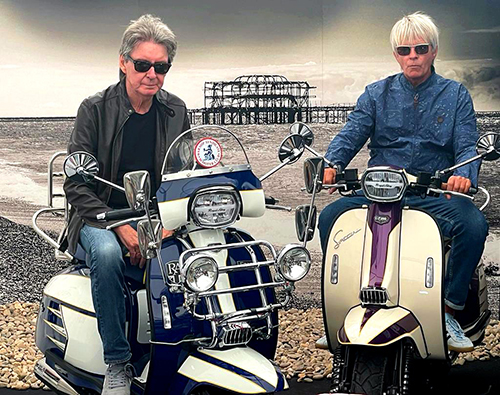
On that note, Two of Us, does have a touch of The Who about it, and some Small Faces-style ‘sha-la-la’ backing vocals… It has a ‘60s and ‘70s mod/power-pop feel, so it’s apt that you recorded it in Brighton…

RH: Unashamedly – yes! It’s got Brighton written all over it – we came up with the riff at Bruce’s house and did a demo version on a phone, while we were playing it live. It has that Who-esque / Mooney style – it’s a homage to Brighton, which is a place that we hold close to our hearts for many reasons. That whole historic thing.

‘I recorded the vocals for Time On Your Side in the morning, and then I tested positive for Covid in the afternoon, so, if they say it’s bad for your voice, it’s rubbish – my vocals sound really strong on it’

Time On Your Side is very Motown, with brass from Nicky Madern, and some great Hammond organ by Andy Fairclough…

RH: Nicky Madern plays brass on one of Liam Gallagher’s albums, and Andy’s our live player – he’s done a sterling job on the whole album. I recorded the vocals for that song in a morning, and then I didn’t feel very well in the afternoon. I tested positive for Covid, so, if they say it’s bad for your voice, it’s rubbish – my vocals sound really strong on it.

I think there’s a Revolver-era Beatles feel to some of the tracks on the album…

RH: I’ll take that.

‘There are no dour or negative messages. I’m not clever enough to write like that’

The last song, Anything You Want, has a Revolver-like psychedelic ending and Motown-style brass – like Got To Get You Into My Life, and She Said has a similar title to a Beatles song from the same album…

RH: Yeah. It’s only now you’re mentioning it… it’s funny and it makes me smile. One day, in the studio, Bruce was already there and I walked in. It was a nice, sunny, early spring morning, back in March, and I’d been listening to Across The Universe. I grabbed a guitar, and said, ‘Hold on – I can’t stop!’ I’d had an idea… Across The Universe blows my mind – it’s simple and so good.

Too Old To Cry, Too Young To Die is one of the album’s more introspective moments – a big ballad with strings – but it’s still quite a positive song, isn’t it? There’s a line in the lyrics which says: ‘Things are getting much better…’

RH: Yeah – there are no dour or negative messages. I’m not clever enough to write like that, to be honest. You get some people who are like, ‘Oh, I wrote this when, blah-blah-blah….’ Oh, fuck off – you wrote it ‘cos it ‘cos it came out like that! Unless you’re some kind of ultra-genius, like Bowie – people like that. I’ll take it from them, but not anybody else. Some people can get far too up their own arses about it.

Collectively it’s about a load of great pop songs… You walk away and you think ‘This is a great tune…’ That’s what it’s about it, innit, Bruce?

BF: Exactly.

The album almost sounds like a Best Of – it’s really varied…

RH: Yeah. I’m really excited for people to hear it. When you’ve reeled off those tracks… It’s been a while since I’ve heard it.
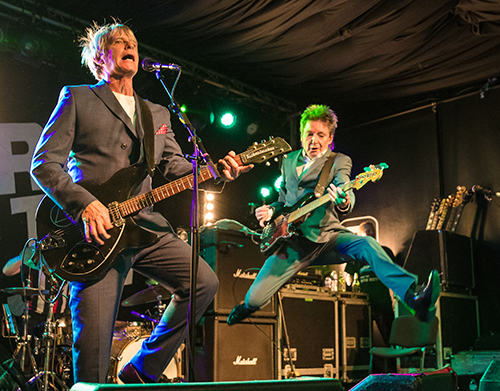
Credit: Kay Janet Photography


You’re always playing live, as From the Jam, but do you plan to play any of the songs from The Butterfly Effect in concert?

RH: We’re gonna do a couple – we’re always conscious never to bore the audience to death amongst a load of Jam songs! Possibly Lula and Feet Off The Ground, or She Said, which is a great, simple pop song, with a mandolin on it.
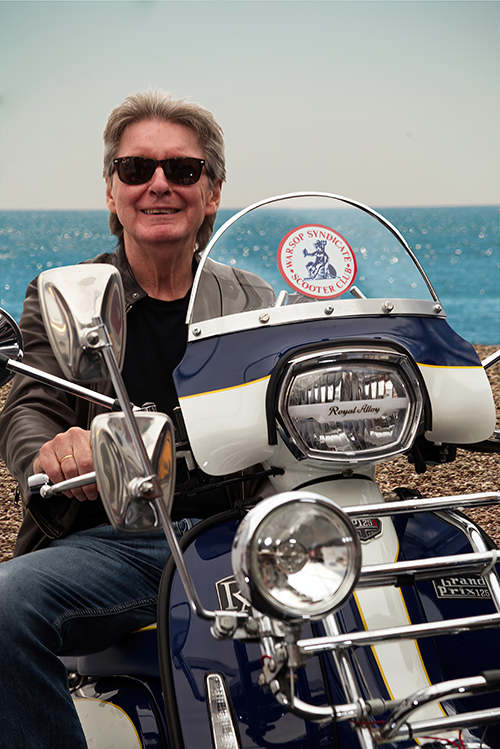
Bruce Foxton: Picture by Richard Bardsley

It’s 16/17 years since From the Jam formed, but, Bruce, it’s 48 years since you joined The Jam… 

BF: Forty eight! Which band was that? [Everyone laughs.]

It was in 1974, which was the year I was born…

BF: Wow!

How does that feel? You’ve been in From the Jam longer than you were in The Jam…

BF: I was in Stiff Little Fingers longer than I was in The Jam. It seems like another life – it doesn’t feel real, to be honest with you.

‘It was a shame that Paul and I fell out in the first place. We’re good friends again now, thankfully. Life is short – it really is. You should cherish it’

I saw you play in the band One Hundred Men, in Cowes, on the Isle of Wight. My dad took me, in the ’80s…

BF: Wow – that’s going back. It was cowboy boots then…

RH: That’s enough of that! Only cowboys should wear cowboy boots.

BF: I just wanted to keep playing – it’s what I do and what I love doing. I also played with The Rhythm Sisters during that period, before I joined Stiff Little Fingers.

[To Bruce]: It’s been well documented how you reconciled with Paul Weller more than 10 years ago – the death of your wife and his dad brought you closer together. How did that feel to renew your friendship? Was it good to let bygones be bygones?

BF: Totally – we’re too old for all that malarkey. Life is short – it really is. You should cherish it. It was a shame that we ever fell out in the first place. We’re good friends again now, thankfully.
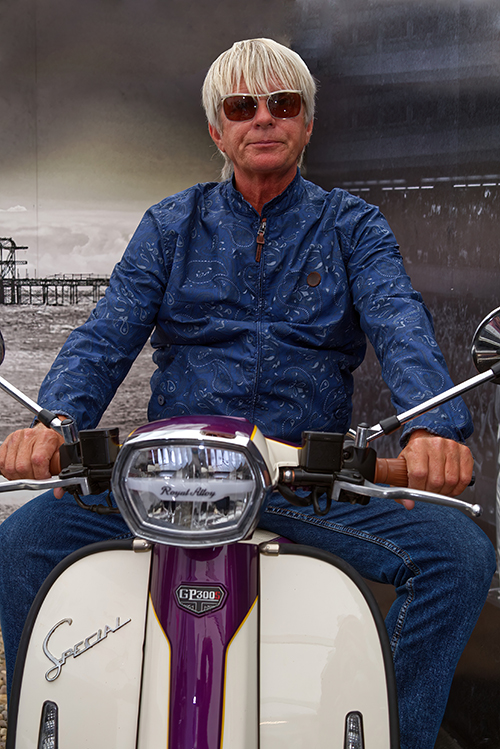
Russell Hastings: Picture by Richard Bardsley

After Covid stopped you touring, it must be good to be back on the road again with From the Jam.  You’ve got gigs lined up for this year and next…

RH: It’s great – we’ve sort of forgotten about the pandemic. We’ve both had a few health scares this year,  but we’ve got over that, which has put life into a little bit more perspective – what’s important and what’s not. What’s not important is sitting in traffic jams around the UK for days on end, to line the taxman’s pockets, so we’ve eased back a little bit as far as the workload’s confirmed. We were tending to say, ‘Yes, we’ll do that…’, and you end up chasing your own tail and you become ill.

We’re in good health now. I woke up this morning and thought,’Oh – the album comes out soon…’ I like to hear people’s opinions of it. To be honest, we’re doing this album because we liked the tunes that we came up with – we didn’t have any ulterior motives. We were free to say, ‘Fuck it – we’re going to write and whatever we want to do, we’re going to do it’. ‘If it sounds a bit country, great’ or, ‘If it’s got strings on it, great’. We weren’t afraid of anything.

‘We’ve both had a few health scares this year, which has put life into perspective – what’s important and what’s not. What’s not important is sitting in traffic jams around the UK for days on end, to line the taxman’s pockets’

Is it nice being able to do different stuff with Foxton & Hastings other than just being in From The Jam?

RH: Bruce was in The Jam, but I almost had to prove that I was a musician myself and not just a parrot-fashion one. I don’t think I’ve ever said that before. I don’t know where that came from, but it’s true. I wanted to say, ‘Go fuck yerself – I’ve cut my teeth and I can hold my own’.

Picture by Richard Bardsley


The Butterfly Effect by Foxton & Hastings is released on October 28 (Townsend Music).

https://foxtonandhastings.tmstor.es/

https://www.fromthejamofficial.com/

Halo Effect

Depeche Mode’s 1990 studio album, Violator, was an important record for 15/16-year-old me. As I wrote in a guest article for website, Eight Albums, a while back: I can remember being so excited ahead of its release. I’d loved the two singles that preceded it – the anthemic, bluesy stomp of Personal Jesus and the blissed-out, pulsing pop of Enjoy The Silence, so I couldn’t wait to hear the rest of the album. I wasn’t disappointed.

‘I bought it the day it came out (March 19, 1990) – after school I walked to the local record shop to get it on tape and then listened to it on my Walkman on the bus home. I can still recall the effect hearing the opening, moody, techno-inspired synth line of the first song, the mysterious World In My Eyes, had on me.

‘I was in a short-lived band at high school – we were a trio and were called The Massive String Thing. I sang and my friends, Chris and Dave, played keyboards and drums, respectively. We only did two gigs – our first one was during a school lunch hour and we played three songs, opening with World In My Eyes. I wore a black denim jacket and did my best Dave Gahan impression.

‘I thought we were great, but looking back on it, I think most people who saw us would’ve rather enjoyed the silence.’

Thirty two years later, I was very excited to read about a new book coming out: Halo: The Story Behind Depeche Mode’s Classic Album Violator, by Kevin May and David McElroy (Grosvenor House Publishing).

So, I decided to, *coughs*, ‘reach out’ to the authors and ask if I could talk to them about their publication, which is a great read – a brilliantly researched and well-written piece of work that goes to painstaking lengths to talk to so many people who were involved with Violator, including the engineers and studio mixer, the guest slide guitarist, the sleeve’s graphic designer, the album’s marketing and PR representative, and even two of the girls, an actress and a dancer, who featured in promotional videos for the record.

Not only that, but there are also personal stories from some of the band’s fans from all over the world, who share how much the album means to them.

In an exclusive interview, Kevin and David tell me how the book came together, share some of their insights on Violator, and also talk about the future of the band, following the recent death of keyboardist, Andy ‘Fletch’ Fletcher, and the announcement that surviving members, Dave Gahan (vocals) and Martin Gore (guitar / keys), will continue as a duo and release a new album, Memento Mori, in spring 2023, followed by a tour.

Q&A

How did the idea for the book come about? Was it as a result of lockdown?

Kevin May: It was a little while before lockdown – it’s been a while in the making. In the age of streaming, I think it’s increasingly rare to listen to an album front to back – people pick up tracks on random playlists…

It just so happened that I was travelling home from a work event quite a few years ago and decided to put Violator on – it was the first time in a long while that I’d listened to the album. At the end of it, I thought; ‘It’s so terrific – such a wonderful album’.

I’d seen the DVD documentary that had been made about it, in 2000, which does a fairly decent job of going over some of the bits and pieces, but I thought that because the album defines an era for the band – and for others – that it was worth digging into it…

I had no concept at all about how to go about writing something more than an article, which is what I used to do for my day job – it needed to be much more than that – so I asked a few people, someone said they’d written a book and they knew a publisher who was great, and they introduced me…

It started from there and it took quite a long time for me to do the first run of interviews – I had to fit them around work, and I was an editor of a travel publication, so I was pretty busy.

Then, in early 2017, David entered the fray…

Left to right: David McElroy and Kevin May

How did you guys meet?

KM: I don’t recall our first conversation. David – did I approach you about writing a contribution as a fan?

David McElroy: That’s right – I’ve run a blog for the last 10 years. In the last five or six years, it’s become Depeche Mode-focused. Kevin asked me to do one of the fan contributions for the book and then the Global Spirit tour kicked off – Depeche Mode did a BBC 6 Music show at The Barrowland in Glasgow.

I met Kevin at that gig. I’d always hoped I could see them at The Barrowland.

One of the things that impressed me most about the book was that you managed to track down and speak to a whole host of people who were involved with the making of, and the subsequent release and promotion, of Violator. You even spoke to a dancer from the Halo video… How did you go about finding everyone? Was it a challenge?

KM: When I did the first run of interviews, the vast majority of people were fairly easy to track down, either through social media or LinkedIn. There were a couple that were a bit trickier – Richard Smith, who worked for Area, which was the design agency. He’d never spoken to anyone about Violator – that was a real coup. I particularly enjoyed talking to him.

In some respects, Anton Corbijn is the creative mastermind behind Depeche Mode’s look from, 1987 onwards, with the videos and the sleeves, but Richard and Area were pivotal to it and become more influential as Anton gave them more freedom to do things.

‘The band take a very consistent line on  requests – they don’t get involved with any biographers. That applies to current band members and also Alan Wilder’

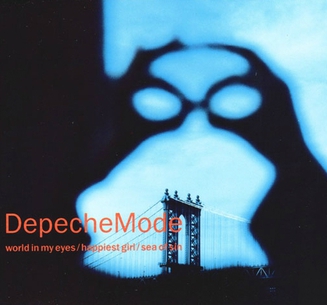
For example, the cover of Personal Jesus was an Anton brain dump, but as the singles went on, he gave more control to Richard and Area – World In My Eyes was very much Richard’s work.

I didn’t know any of that and I don’t think many people do – he’s one of the unsung heroes… Rightly, so much of the credit goes to Anton, but Richard has done a lot of work and he was just a footnote: ‘Designed by Area’.

There are no new interviews with any of the band members in the book. Did you ask them to get involved and did they decline?

DM: The band take a very consistent line on any requests – they don’t get involved with any biographers. That applies to current band members and also Alan Wilder [who left Depeche Mode in 1995]. The management didn’t get involved, either – no one in the close circle. They politely said ‘no’.

‘You’d probably get more about the story of the making of the album from the people we’ve spoken to, rather than the band, who would just say, ‘I can’t remember what I was doing in Milan, in late 1989’

When we first gave our editor the book, he thought if Depeche Mode weren’t involved, how would it come across and how would the story be told? But he said he quickly forgot that the band weren’t involved with the book because of all the other people who contributed. His view was – and I think Kevin and I agreed with him – was that you’d probably get more about the story of the making of the album from the people we’ve spoken to, rather than the band, who would just say, ‘I can’t remember what I was doing in Milan, in late 1989’…

Drugs, probably, I’d imagine…

[Everyone laughs].

Flood, who produced the album, didn’t contribute to the book either, did he? Were there quite a few ones who got away?

KM: Certainly Flood was the one who got away. It was basically a timing thing – I approached him right at the beginning and his management company, 140dB, said it sounded like something he’d be interested in, however, at the time he was working on a PJ Harvey album, at Somerset House. After that, he took a break because it had been intense.

‘Flood famously doesn’t do many interviews, but everyone else who worked with him – all the engineers and François Kevorkian – did speak to us’

This dragged on for a couple of years and then they said it probably wasn’t going to happen – he was then working with Ed O’Brien [Radiohead]… Flood famously doesn’t do many interviews, but everyone else who worked with him – all the engineers and [studio mixer] François Kevorkian – did speak to us.

Getting the fans involved was a nice touch…

DM: Kevin had had this idea and I did a thing on my blog for the 30th anniversary of Violator, which was an article a day for the whole of March – it was the one of those ideas I had and then I realised I had to follow it through…

I got quite a few fans to contribute, so the articles they wrote for me feature in the book, because we felt they were a good fit. They’re not just saying ‘Violator is the greatest album I’ve ever heard and Depeche Mode are wonderful… ‘ It’s more about their story.

Which people were the most fun to chat to for the book, and, as fans, did you learn anything that really excited you?

KM: Richard Smith was probably the person I learned the most from and, in terms of fun, the experience of interviewing Steve Lyon [engineer] was great because I actually went to his recording studio, in West London – I’d never been to a proper one before and I was a little bit overawed by that experience. He’s just a generous and very funny bloke – he was great.

I met Bruce Kirkland, who was on the marketing and publicity side, in L.A. I happened to be there for a conference, so I asked him if he was around and I caught an Uber out to his office, which was in the hills, overlooking L.A. We spoke for a couple of hours. That was genuinely a really enjoyable period of doing the book – I was talking to people about something I love and am passionate about.

DM: The things I learned the most were from reading Kevin’s interviews. If you look at the book as two halves – Kevin had done all the work on the part up until the album is released, and, as a Depeche Mode fan who, perhaps, can be a bit boring about the band, I was reading things I’d never read before. I found that fascinating.

My interviews were more based on ideas I thought we could explore for the book – I chatted to Angela Shelton, who was the actress in the Clean video. I’ve seen that video a lot of times, so that was quite surreal.

Tracking down Nils Tuxen – the slide guitar player – was quite odd. I went through his Dutch fan club – and via his daughter. It was a brief interview, but it was quite fun and part of our attempt to delve into every corner of Violator.

‘Fletch was an integral part of the band. If he hadn’t have been there, I think the band would’ve finished long ago’

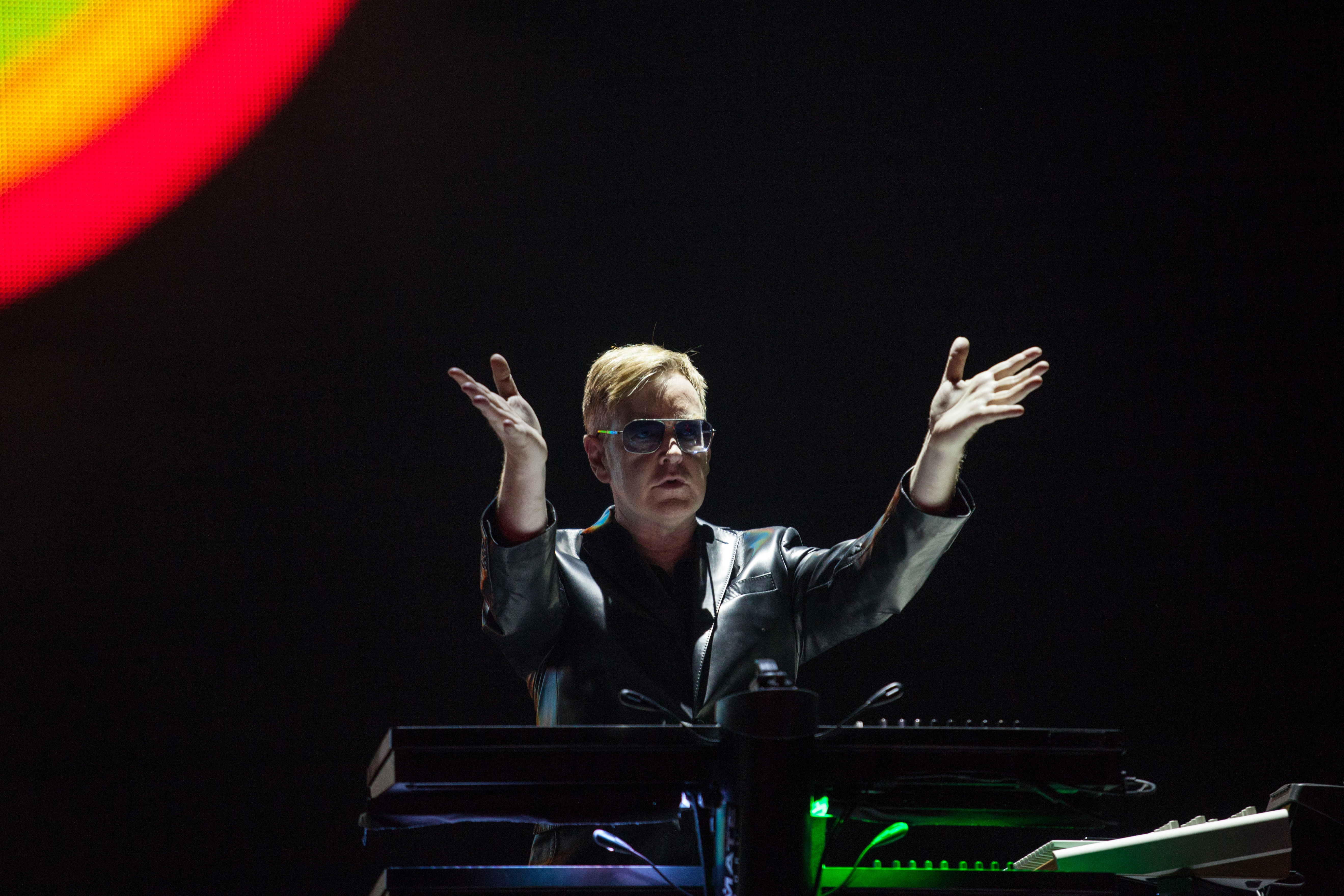
Andrew ‘Fletch’ Fletcher. Photo credit: Ivica Drusany / Shutterstock.com

Sadly, while you were in the final stages of proofing the book, band member Andrew ‘Fletch’ Fletcher died. You’ve dedicated it to him, which was a really nice gesture…

DM: Fletch was an integral part of the band. If he hadn’t have been there, I think the band would’ve finished long ago. He was a constant presence in the studio and saying, ‘I don’t think this works, you should try this’. He was very involved in the direction he thought the band should go – ultimately, he was the biggest Depeche Mode fan there is and he knew what we kind of liked. If he hadn’t have been there, I think the band would’ve finished long ago. His role was a bit like Bill Berry’s in R.E.M. He was the kind of ‘pop ear’ – when Bill left, R.E.M went more in Michael Stipe’s direction.

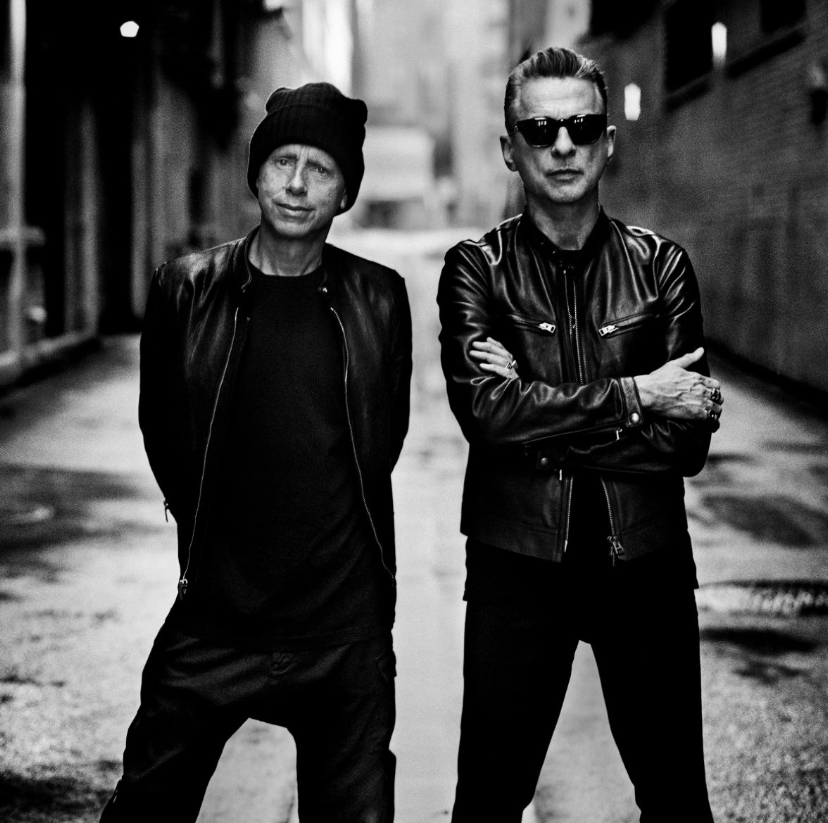
Martin Gore and Dave Gahan

And now, Depeche Mode’s remaining members, Dave Gahan and Martin Gore, have announced they’re continuing as a band and have a new album, Memento Mori, and a  world tour planned for next year. How do you feel about that?

DM: It’s strange to see them without Fletch, and you can certainly tell that both Dave and Martin are feeling his absence, but I’m not surprised they are carrying on, especially when they said how far along the album was before Fletch died. I’m glad they’ve carried on and finished the project off. It’s a nice way to pay tribute to Fletch and will allow fans to meet up and remember him.

Let’s go back to Violator – it’s an album that took the band’s sound – and status – to a whole new level. On the record, Depeche Mode embraced blues, country, techno, house and disco. I can remember where I was when I first heard it – it was on March 19, 1990, which was the day it was released. I was coming up to my sixteenth birthday, and living on the Isle of Wight. I bought the album after school, on cassette, from a local record shop, and played it on my Walkman on the bus home.

‘I listened to Violator on repeat so much that the sticker on the side of the cassette came off’

From the synth intro of the first song, World In My Eyes, it blew me away. What are your memories of hearing Violator for the first time? 

KM:I was at sixth form college, in Rochester, Kent, which is where I grew up. A friend of mine had a cassette version, we were walking to college one morning, he put his headphones on my head and said, ‘Listen to this’. That was the first song. By that time, we’d all heard Personal Jesus and Enjoy The Silence, but when I heard those first eight to 16 bars of World In My Eyes, I thought, ‘OK – this is really good’. By the end of the day, during breaks at college, I’d listened to the whole thing and when I got paid from my supermarket job later that week, I bought my own copy.

DM: I was 15 when it came out. Having fallen for Enjoy The Silence, which was the first time I properly got into Depeche Mode, I went to Woolworths, in Castle Douglas, in south west Scotland, where I’m from, and bought Violator on cassette. I took it home, and played it in my room. Like both of you, when World In My Eyes started, I thought, ‘This is something different’. I listened to the album on repeat so much that the sticker on the side of the cassette came off.

‘Depeche Mode have never received the critical acclaim they’re due. Violator is one of the most forward-thinking and innovative British albums ever released’

Violator is 32 years old and yet, if you listen to it now, it still sounds so fresh and modern. It was so ahead of its time, wasn’t it, but it doesn’t get talked about as one of the classic rock albums, does it? Why do you think that is?

DM: As far as I’m concerned, Depeche Mode have never received the critical acclaim they’re due – that’s across the piste from Speak and Spell [1981] onwards. Yeah, they made a few mistakes in the early days, like doing some daft TV appearances, but their work has always been experimental. From Speak and Spell to Violator, they’ve always moved on and done different things – they didn’t stand still. Violator crystallised all the work they’d done up until that point,

You’re right – when you read those ‘Best 500 Albums of All Time’ it’s always there, at 300 or 350, but it’s one of the most forward-thinking and innovative British albums that’s ever been released. Just because it was released by a band who was on Noel Edmonds’s Swap Shop, playing synthesisers and wearing suits eight years before that, it doesn’t mean it should be any less credible.

‘There were quite a few tracks on Violator that were a lot rockier before the final versions.You wonder if it would’ve been more like Songs of Faith and Devotion if François Kevorkian hadn’t been the overall mixer on it’

For a band who were part of an early ’80s scene where all the other bands had fallen away, split up or were releasing increasingly dull things, Depeche Mode kept on moving forward and were big all over the world.

KM: There were quite a few tracks on Violator that were a lot rockier before the final versions – you had Martin’s demos, which Flood and Alan Wilder predominantly worked on, and then François Kevorkian came along and made them a little bit more electronic in parts. One of the stories that comes out in the book is that Halo was a lot rockier than the final version, because François did his thing on it. You wonder if Violator would’ve been more like Songs of Faith and Devotion if François hadn’t been the overall mixer on it.

Violator is very contemporary – you can put it on now and if you play it to someone who doesn’t know the history of the band, or music, I contend that they would struggle to name the year it was recorded. Thirty two years later, it’s a very difficult album to pin down in terms of the genres it covers and the year it was made. That’s what makes it a unique album – it’s timelessness.

What are your favourite songs from Violator?

DM: Enjoy The Silence – it’s a fairly obvious one, but it’s the song that started off the whole Depeche Mode thing for me and, ultimately, led to me sat here, chatting to you. There’s not a bad note on Violator

KM: For me, it’s Halo and World In My Eyes. Contrary to Dave, I think there is one weak song – and we’ve discussed this before  – and it’s Sweetest Perfection.

I like that song, but, for some reason, I guessed that was the one you were going to say… I don’t know why.

KM: It just never got me in the same way as it gets people like David, I suppose.

Photo credit: Kraft74 – Shutterstock.com

Is Violator your favourite Depeche Mode album?

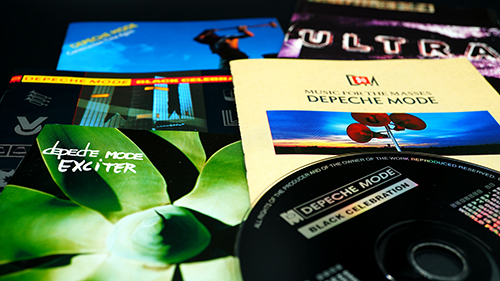
DM: For me, it’s number one – it’s what started it all off for me. Black Celebration follows a close second – it’s a manifesto for Depeche Mode fans laid out over 12 songs. I also think Songs of Faith and Devotion is superb, and I love Ultra.

KM: My other favourite Depeche Mode albums are Songs of Faith and Devotion and Black Celebration – I like Some Great Reward too, and I like Exciter and Ultra. I think Exciter is a really interesting and important album for Depeche Mode – it was the first time in a few years that they’d gone into a studio, and the first time they were going to do a big album tour after Dave had been ill, and there was another new producer [Mark Bell]. Dave was chomping at the bit to add some of his songs, but didn’t – he waited until Playing The Angel.

Photo credit: Avis De Miranda / Shutterstock.com

There was a lot going on at that time and they started to gain respect critically, as there had been a changing of the guard among the music critics who’d slated them. Fifteen years later, some people were saying: ‘Depeche Mode are quite cool, actually’. That period interests me in, dare I say it, doing a sequel book, which David and I have yet to discuss.

Finally, I’m having a night in tonight, without my family, should I enjoy the silence, or should I lift up the receiver, reach out and touch faith?

KM: It depends who’s on the other end of the phone…

DM: Take a chance to enjoy the silence, but stick Violator on loud in the background.

For more on Depeche Mode, visit David McElroy’s blog, here.