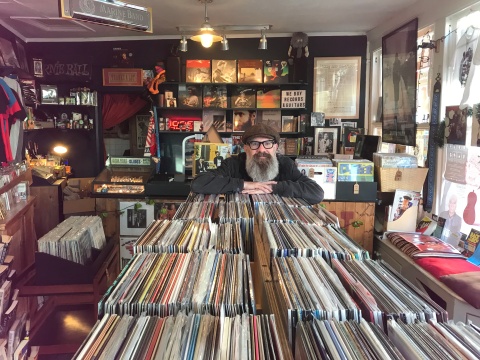

Manchester singer/songwriter and guitarist Nev Cottee has made one of the best debut albums of 2013. Describing his sound as ‘Lee Hazlewood fronting Spiritualized’, his atmospheric, late night laments are steeped in Northern melancholy and laced with psychedelic effects and gorgeous string arrangements.
I spoke to him about writing and recording the record, hanging out with Noel Gallagher at The Hacienda, supporting Neil Young, stealing a bottle of rum from Richard Hawley’s dressing room and why he’s a brown sauce man…
Congratulations on your great debut album Stations and the single, Oslo, which is one of my favourite songs of this year. Can you tell me about the inspiration behind Oslo?
Nev Cottee: Thanks for the kind words, Sean. Oslo was written about five years ago. I’d been out there in 2006 to visit a Norwegian girl I’d met while I was travelling in India. It was a disaster.
When we’d been in India, being on the beach and swimming in the sea every day, everything was easy, but reality hit when I landed in Oslo in January and it was -17 degrees! We quickly discovered that we had little in common and so it was quite a sad time. I was just wandering around on my own for three days. I guess that’s the basis of it – being really down, melancholy and thinking ‘what am I doing here?’, yet, at the same time, being confronted with this weird, magical place, full of bizarre buildings and a frozen sea. Lyrically, I was trying to write something that was a bit more abstract and non-linear. I was trying to get away from the standard love song thing.
I’d love to go to Oslo – it’s on my list….
NC: You should definitely go, although it’s £9 for a beer. Everyone goes to the shop for some bottles, then sits at home and has these little gatherings. It’s cool, actually. Everyone I met was extremely friendly and helpful – even that girl. Cool people, beautiful place.
Your deep, rich singing voice reminds me of Lee Hazlewood and Leonard Cohen. Are they big influences on you? I can imagine Lee singing Oslo…
NC: That’s a big compliment. Who doesn’t like Laughing Len? I saw him in Manchester a few weeks ago and it was one of the best gigs I’ve ever seen. What a lyricist, what a songwriter and what a performer!
I couldn’t believe it – the guy’s almost 80 and he’s down on his knees giving it his all. He’s not belting it out, but he’s putting it all in there. There were about 20,000 people there and he was almost whispering. He is the man and he has an amazing voice, which is so low these days, you almost can’t hear it. It’s not as easy at it seems – the low singing thing – and Cohen and Hazlewood are two of the best.
I’m a huge fan of Lee Hazlewood and I’m looking forward to hearing the new deluxe box set that’s coming out later this year. What do you love about him?
NC: Hazlewood was just a freak and I mean that in the kindest way – his look, the moustache, and his whole vibe. It shouldn’t work, but it does. Something like Nancy & Me – it’s just really honest and poetic and all beautifully put together with the strings and the guitars. The guy was a musical genius and he passed it off with an air of panache. It’s all there in the voice. Listen to Some Velvet Morning – it’s totally unique.
Tell me about your album Stations? How was it written and recorded?
NC: It took five years to write and a week to record. I’m a slow writer. I’m working on it. The next one won’t be so long. It was recorded inside The Magic Lantern, which is a small space in [musician] Carwyn Ellis’s home in Cardiff. I think that comes across in the sound – the intimacy of it. Mason Neely [who produced the album] and Carwyn are very talented musicians – they can play pretty much anything and they both know when not to play too much. After I’d sent them my demos, they came up to Manchester and the first thing they said was ‘Why are you singing so high?’ I’d never even thought about it too much – I just sang as I thought I should. They said ‘just sing like you’re talking’ and that was really a breakthrough moment, because I found my voice, which is quite low.
I saw Carwyn the other day and I said to him: ‘thanks for introducing me to myself…’ I’m basically a vocalist, guitar player, and sometime bassist – Mason can put together a string arrangement to melt your heart, or pick out an instrument that defines the mood of a song. I owe those two a lot. They gave me my sound.
It’s a very atmospheric record – often melancholy in tone…
NC: You just have to follow your instinct and use everything you’ve soaked up. As the record was developing, I said to Mason, ‘this is pretty sad stuff,’ and he said, ‘Yeah – great!’
I’m not 21 anymore. Those days are over for me, you know. I’m not into fake rebellion anymore – ‘I don’t need an attitude/Rebellion’s a platitude.’ I was just trying to make an honest record with no tricks. I wanted to make an album that might stand up with some of the people we’ve spoken about [Lee Hazlewood and Leonard Cohen].
The album has been described as sounding like ‘Lee Hazlewood fronting Spiritualized’, which is a brilliant comparison. It also reminds me of Richard Hawley at times…
NC: Hazlewood fronting Spiritualized? Now, that would be worth hearing. That’s just an in to get people’s attention. Hawley’s ace. I’ve met him a few times and he’s hilarious – a proper comedian. I was in his dressing room and he caught me nicking a bottle of rum. He was just laughing, saying: ‘Go for it’. He’d just sold out Shepherd’s Bush Empire and was driving home to Sheffield to take his kids to school in the morning. He’s a true gent. Everything he’s ever released is brilliant. The other time I met him he gave me a bottle of limited edition Richard Hawley Henderson’s Relish. Apparently it’s been made in Sheffield for over 100 years. It tasted awful. I’m a brown sauce man myself…
What other music are you into?
NC: Tom Waits, Scott Walker, Cohen and then people like Tony Joe White and Link Wray – old school, hard living dudes. That’s for vocals and songwriting. Musically, I love Jason Pierce and anything he’s ever done – i.e Spacemen 3 and Spiritualized. I also like The Byrds, The Flaming Lips, John Barry, Bill Callahan… plus all the big guns…
Close Your Eyes is one of the album highlights for me. Can you tell me more about that song? I think it’s beautiful. It has a ‘60s Scott Walker vibe, with gorgeous strings and rain sound effects.
NC: Yeah – I can see the Walker influence. It’s just a simple riff that builds and builds. Mason did a great job arranging it, with the bells at the end and the Mellotron choir. Wonderful stuff. It’s this idea of sweet melancholy. I’ve got a love/hate thing with Manchester and it’s just saying… the rain – it’s just a state of mind, don’t let it get to you.
Hot Air and Devils have a folk feel to them….
NC: Hot Air started off as a John Martyn guitar echo thing that just developed as we went along. Devils is a tune that we used to do with my old band, which we completely reworked.
Some of the songs, like I Want You and Nothing Is Certain, are quite psychedelic….
NC: That’s the Spacemen 3 thing. I got really into the repetitive psyche/trance/call it what you want thing a few years ago. I saw a band called Black Mountain at The Green Man Festival in Wales and it was like a door opening. I was in the zone – completely sober and straight, of course… Then there was my mate Nolan who played with Spectrum (Pete Kember from Spacemen 3) for a few years. I used to go to see them and I really got into his whole aesthetic. He’s a genius. Then I started listening to Suicide, 808 State and loads of other stuff… It all goes back to Kraftwerk, of course. I think my brother must have played Trans-Europe Express for about two years continually, when I was growing up.
You were in Proud Mary, weren’t you? What was that like? They were a Noel Gallagher-endorsed, country rock band as I recall…
NC: Yeah – a country rock band from Oldham! Get on it! Everyone was going to crappy nightclubs and listening to bad dance music, but we were at home listening to The Band, Gram Parsons and Creedence. We used to go to the Hacienda and be stood with Noel in the bar, having a beer and talking about T-Rex and Crosby, Stills and Nash, while everyone else was gurning and dancing very badly to something or other. We were very set in our ways. We did ok, but we should have gone to America. We supported Neil Young and he came over, shook our hands and said he’d been listening to the album. That was enough for me! We went out with Crazy Horse after the gig and they were these gnarly old dudes in baseball caps saying: ‘You gotta keep the flame burning, man. We’re getting old…’ and we were like, ‘Yeah, we can do that…’ Noel was very supportive – another true gent – and it was great gigging all over the place, thinking we were in The Faces. We were a good band and Greg Griffin [from Proud Mary] was – and still is – an amazing front man. He’s a natural.
After playing in bands for so long, why have you decided to go solo?
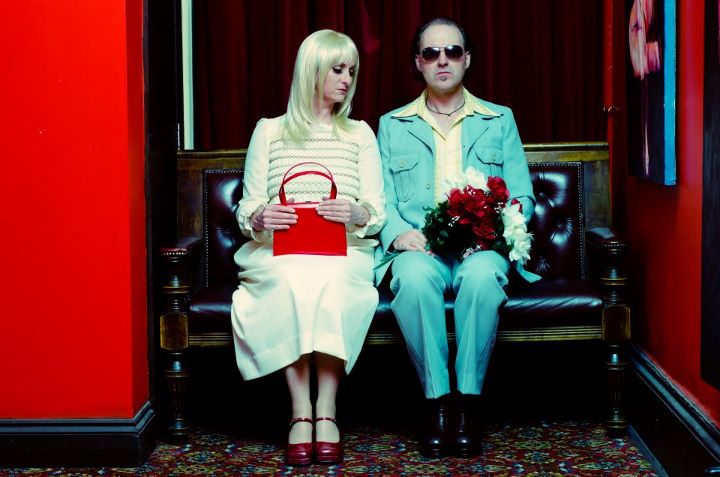
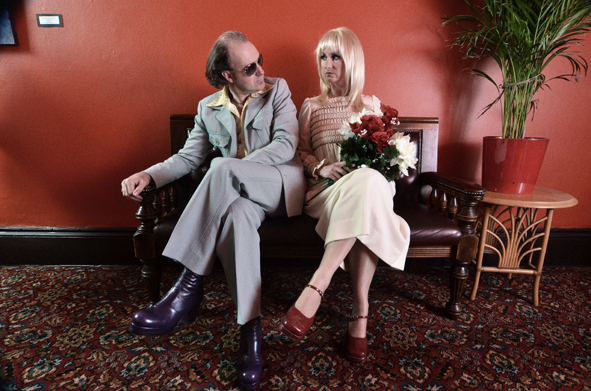
NC: I’ve been in various bands over the years – Proud Mary, The Second Floor – that’s Nolan’s band, who I mentioned before – and Folks, whose guitarist and songwriter Michael Beasley directed the video for Oslo. He’s a good friend and a very talented songwriter. Their debut album I See Cathedrals is a classic. I only work with the best…
I did a solo record because it was time. The band thing is over for me. I’m on my own now and I’m just getting going. I’m in it for the long haul…
So, what’s next? Can we expect a tour and some live dates?
NC: Not a tour, but some choice dates for the album launch. I’ve got a couple of excellent musicians backing me up and I’ll hopefully be playing some festivals next year. Watch this space.
What would you like to achieve with this record and in the future? Have you got big ambitions?
NC: Like I said before – I just want to make some music that’s true, which has something to say and that sounds amazing. I’m under no illusions about the state of the music industry. So long as people like you are digging it and spreading the word, then let’s see where it goes…
Nev Cottee’s debut album Stations is released on October 28.
http://nevcottee.bandcamp.com/album/stations


 Say It With Garage Flowers