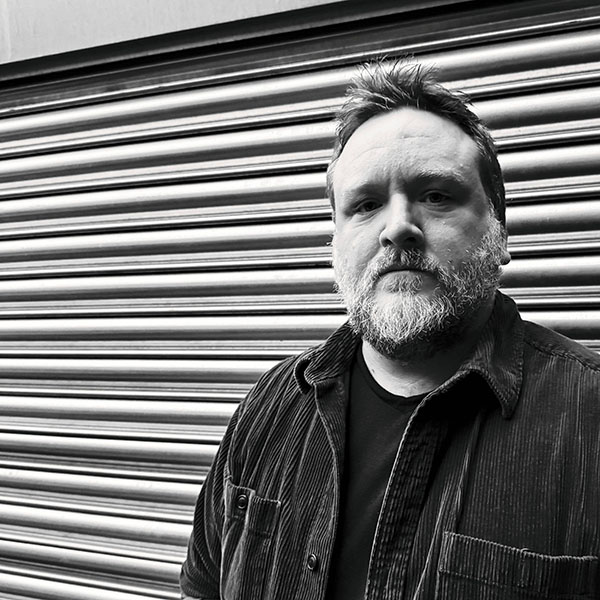
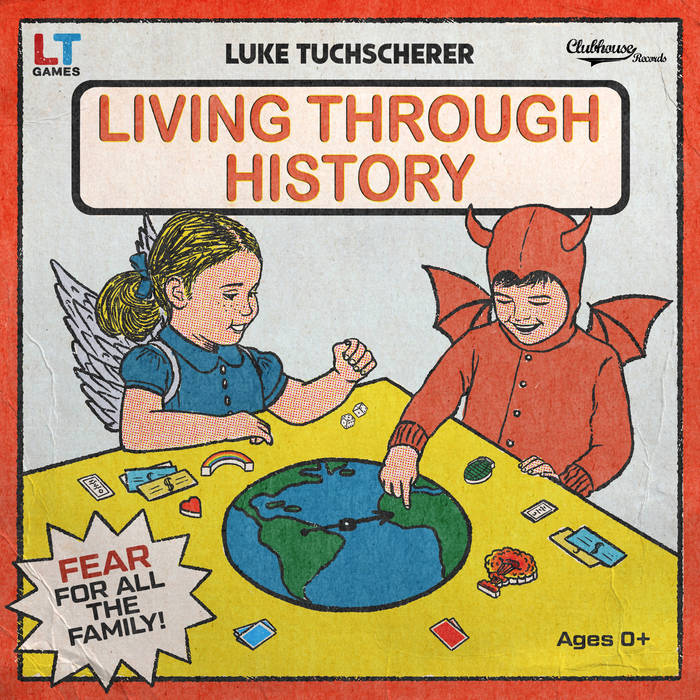
Living Through History, the new album by UK Americana singer-songwriter, Luke Tuchscherer, is his best record yet, and it’s also his angriest, his heaviest and his most political.
A mostly hard-rocking set of protest songs inspired by living in New York under Trump’s first presidency, its influences include Neil Young, Bruce Springsteen and the ’90s Seattle grunge scene.
Mastered by Jack Endino (Nirvana, Soundgarden, Mudhoney, Mark Lanegan), Living Through History was produced by Tuchscherer’s longtime collaborator, Dave Banks, who also plays in his band, The Penny Dreadfuls.
“You often hear people complain that there’s no protest music anymore,” says Tuchscherer. “Well, I don’t think that was ever true anyway, but this one is certainly a protest album.
“The last two records I’ve made have been acoustic affairs, so it’s been great to get back to the rockier side of my music on this one. And I couldn’t have picked a better person to help make it — Dave and I have known each other since we were kids and we’ve played together for years.”
Adds Banks: “The album is honest, diverse and full of righteous anger. I’m so excited for people to hear this record.”
Tuchscherer now lives in Bedford, but the majority of the album, which is his sixth, was written during his time in New York City, where he was based from 2017-2020.
‘You often hear people complain that there’s no protest music anymore. Well, I don’t think that was ever true anyway, but this one is certainly a protest album’
There are songs about capitalism (Living Through History, Whose Side Are You On?, This World is Worth Saving), workers’ rights (Gonna Be a Reckoning), and an attack on racists and the purveyors of the culture war (You Should Be Ashamed).
Amidst all the full-on rock ‘n’ roll, there are also some reflective ballads: Walls Come Tumbling, and album closer, the poignant, Goodbye, Bergen St, which is about leaving New York.
In an exclusive interview with Say It With Garage Flowers, Tuchscherer shares his thoughts on writing and recording the new album, reflects on his time in New York and tells us what he thinks of the current state of politics in the UK and the US.
“A lot of the songs are pretty old now, dating from 2018-20, but they’re just as relevant today, if not more so,” he says.
 Q&A
Q&A
Let’s talk about the new record, Living Through History. You’ve said it could be described as your ‘protest album.’ It feels like a reaction to your last two albums, Widows & Orphans, which was stripped-back, intimate and very personal, and Carousel, which was an acoustic record…
Luke Tuchscherer: I think it was definitely time for a rock album, yeah! I didn’t want to get too caught up in doing just acoustic stuff, because that’s only part of what I do. Carousel was just me, my guitar and a harmonica, and Widows & Orphans was a bit fuller, but still pretty stripped-back… so, yeah, time to break out the Telecaster.
I think when we last spoke, I had big plans of what order some of my albums were going to be released in, but obviously life got in the way. But for sure, the idea was always for the sixth one to be rocky. A lot of the songs are pretty old now, dating from 2018-20, but they’re just as relevant today, if not more so. They were written during the first Trump presidency and obviously we’re in round two now…
Was making this record cathartic? Have you got a lot of the anger out of your system by writing and recording these songs?
Luke Tuchscherer: I think it was certainly cathartic when I wrote them. Gonna Be a Reckoning is actually quite a personal song, despite the universality of it.
I never get sick of singing You Should Be Ashamed. That was written after marching in some Black Lives Matter protests in New York, but is still just as relevant.
I think one thing that’s quite nice about singing political songs is that you can still feel them pretty deeply when you sing them, whereas if you sing an old love song, it can feel a little strange to revisit that.
Interestingly, this is the first time you’ve made a record where all the songs are from the same period – all but one of them were written when you were living in Brooklyn, New York. Can you tell me about that period in your life?
Luke Tuchscherer: I lived in New York from 2017-20. I think in a lot of ways I was the happiest I’d ever been when I lived there. I felt very content, personally, which is probably why I looked outward when I wrote those songs.

‘One thing that’s quite nice about singing political songs is that you can still feel them pretty deeply when you sing them, whereas if you sing an old love song, it can feel a little strange to revisit that’
I moved back in less-than-ideal circumstances – I lost my job after we unionised our office over there, which is what Gonna Be a Reckoning is about. And, sadly, that was just the beginning of a bit of a run of bad luck, but we won’t go into that too deeply now.
How did you find it living there, and what inspired you to write protest songs while you were in New York?
Luke Tuchscherer: I absolutely loved it there. I felt really at home, like I was always supposed to be there. I never got sick of walking around the city. Even when I went back for a visit in 2022, it felt like home. I miss it every day. Like I say, I think the fact that I was personally happy made me write about the external world more, and there was plenty of inspiration.
So, you’ve held onto the songs on the new album for a while… You’re a prolific writer, aren’t you? I know you have a stockpile of songs that you dip into for each new record that might suit a particular style or theme. Have you still got a lot of songs in your vault?
Luke Tuchscherer: Well, I have been quite prolific over the years, yeah. I think I must be pushing 300 songs now. I know what songs will be going on the next three albums and there are plenty more in the vault.
But, actually, after I split from my ex-wife, I wrote some songs about that, but then I barely wrote a thing for nearly three years. That was easily the longest drought I’d ever had. I think I’d said everything I had to say about the divorce, I think I’d said everything I had to say politically, and I knew Living Through History was coming out anyway. I was in a bit of a rut life-wise, but couldn’t articulate it through songs.
‘I think I must be pushing 300 songs now. I know what songs will be going on the next three albums and there are plenty more in the vault’
I’ve written five songs in the past few months, though. I just needed a little bit of girl trouble I suppose, ha-ha. That kind of uncorked the bottle. They were sparked by this romantic situation that didn’t pan out as I’d hoped, but I think a lot of what I’d been feeling over the past few years came out with it. They’re pretty depressing.
The new record is your most political album, but it’s not the first time you’ve written protest songs. I’m thinking of Requiem, from 2018’s Pieces, which bemoaned the state of the UK – high taxes, the challenges faced by the NHS and how the rich are getting richer, and the poor are worse off. Not a lot has changed since then, has it? The UK’s still in a terrible state and it feels like the rest of the world is going to hell in a handbasket…
Luke Tuchscherer: That’s right, and there are other more political songs that have never come out too. Requiem was written after watching a Noam Chomsky documentary called Requiem For The American Dream, and then I applied it to a British context. I have no problem with taxes by the way, I just think that the super-rich and corporations should pay way more.
But yeah, I definitely agree. I probably wrote that song in 2016-17 and it’s just as relevant. It’s a live staple now – people get to see Dave Banks unleashed!
In the new song, This World Is Worth Saving, you say: ‘It’s all gone to hell – least that’s how it feels…’ You also tackle the rise of the far right, global warming, and people suffering. It’s a song that deals with most of the big issues we’re facing. It’s an angry song, but, ultimately, it’s a hopeful one, isn’t it?
Luke Tuchscherer: Hmm. Is it hopeful? That’s a good question. I think it’s more desperate. I even set the key just slightly too high for me in the chorus to make it feel more desperate in the voice, which I regret when we do it live, ha-ha. But some of the other reviews have said they found it hopeful, so maybe it is. That would be nice actually, if people can get that out of it.
Here’s an interesting little fact about that song: it features my friends Danni Nicholls and Fe Salomon on backing vocals. Danni was over from Nashville for a bit and we’d all gone to see her play somewhere in Bedford, and it turned out that might have been some sort of Covid super-spreader event! They both came round to mine to do the backing vocals and we were all ill. They nailed it, though.
‘With the UK, we ended up with a Tory-lite Labour government and we have a prime minister whose principles seem to shift with the wind’
So, what’s making you most angry about the UK now, and what’s your take on Trump’s second presidency? As someone who’s lived in the US, what do you think about what’s happening there now?
Luke Tuchscherer: With the UK, we obviously ended up with a Tory-lite Labour government and we have a prime minister whose principles seem to shift with the wind. People wanted change and Labour have offered more of the same, which makes it pretty hard to see how they’ll win the next election. If Starmer had stuck to his ten pledges, then maybe that would’ve helped. We’ve also got the pretty scary rise of Reform.
I think what’s happening in the US now is even worse, what with ICE [United States Immigration and Customs Enforcement] and all that. Or even the Trump parade with all those sponsorships and stuff.
People throw around the term “fascist”, but I really think it’s apt in this case. There’s that quote from Mussolini himself: “Fascism should more properly be called corporatism because it is the merger of state and corporate power”. How could anyone not think that’s what’s going on over there now?
And obviously both our government and the US — and the previous governments in both countries — have enabled what we’re seeing in Gaza, which is just heartbreakingly awful, and now it’s kicked off against Iran too. Truly worrying times.
Let’s talk about making the new album. You recorded it with your guitarist, Dave Banks, at the Little Red Recording Studio in Bedfordshire. How was it making the record? What were the sessions like? It’s the first record that Dave and you have made on your own, isn’t it? How was that? What did he bring to the record?
Luke Tuchscherer: I was astonished to realise that we actually recorded the drums in 2023. The past few years have really just flown by. In a bad way, ha-ha. But we did the drums in one day at Lost Boys Studio in Cranfield, then did the rest at Dave’s and I recorded my vocals at home. The sessions were great, but just spread out. In terms of actual recording, we didn’t spend much time on it, but life gets in the way sometimes.
As people know, Dave is my best friend, we were in The Whybirds together, we’ve played on each other’s records and are in each other’s solo bands — and our friendship predates any musical stuff really. So he knew what I was after. It’s like that lyric from [Springsteen’s] Bobby Jean: “We like the same music, we like the same bands, we like the same clothes.”
In terms of what he brought to the record, he brought his supreme musical gifts. I played drums and rhythm guitar on it and Tristan Tipping played bass, but everything else is Dave, bar two lead bits from me – I do the first guitar solo in There’s Gonna Be A Reckoning, and the main lick on Most Days.
The amazing guitar work, the harmonies, the organ etc, that’s all Dave. And he’s really coming into his own in terms of recording and mixing too. I think the album sounds great. He absolutely smashed it.
The record was mastered by Jack Endino, who worked with Nirvana, Soundgarden, Mudhoney and Mark Lanegan. That must be thrilling for you, as you’re a big fan of the ‘90s Seattle scene, aren’t you?
Luke Tuchscherer: Yeah – that was really one of those “if you don’t ask, you don’t get” things. I’m so glad I asked. I sent him a couple of the songs, he liked them and wanted to work on it. I was absolutely thrilled.
‘I often think that Springsteen is my favourite songwriter, but that Neil Young is my favourite artist I love the way he just does what he wants’
I’ve listened to his stuff since I first properly got into music, so to have his name on one of my albums is incredible for me. He was great to work with. Really quick, and really good. There were no revisions — it was done on the first go.
What were your musical inspirations for the new album? I think some of the songs have a Neil Young feel, particularly tracks like Gonna Be a Reckoning and Most Days – big, heavy, hard-rocking and anthemic Neil Young…
Luke Tuchscherer: Neil Young is always an influence. I think This World is Worth Saving is quite Young-esque too. I often think that Springsteen is my favourite songwriter, but that Young is my favourite artist — I love the way he just does what he wants. So, those two influenced it for sure. But I think you can hear a bit of the grunge side – there’s a bit of Seattle in Most Days, Gonna Be a Reckoning and You Should Be Ashamed.
Whose Side Are You On? has a Stones swagger – the guitar riff is so Keith Richards…
Luke Tuchscherer: I thought it would be interesting to write a Stones-style barroom brawler, where instead of the lyrics being about sex or fetishising black women, it’s actually kind of a socialist recruitment anthem, ha-ha. You can rock out to it, but there’s something else going on the lyrics. We debuted that on tour in Spain recently and it definitely had the desired effect. That was the only song that I wrote once I moved back to the UK.
The album closes with a reflective ballad, Goodbye Bergen St, which feels like the right way to end the album, after all the anger and protesting. It’s more subdued, isn’t it? It feels like it’s your ‘leaving New York’ song…
Luke Tuchscherer: That’s exactly what it is. I wrote it just before we moved back. Ultimately, it’s a big list of things I lost. I’m not gonna lie, I can’t see me playing it much live outside of the album launch. It’s just too sad for me. There are times where I think I might lose it when I’m singing it, and I don’t really want that to happen.
‘I thought it would be interesting to write a Stones-style barroom brawler, where instead of the lyrics being about sex or fetishising black women, it’s actually kind of a socialist recruitment anthem’
Obviously the chorus talks about going back there one day with my wife, but that’s not possible now. So, that adds to the sadness of it all. And in a way, it’s directly linked to Gonna Be a Reckoning. If that hadn’t happened, we wouldn’t have been forced to leave. But yeah, it was written to be bittersweet and kind of hopeful… but it’s a total bummer now.
So, you’re doing a launch show for the album at the Sound Lounge in Sutton, South London, on July 4, which is American Independence Day. Was that intentional or a coincidence? What can we expect?
Luke Tuchscherer: Ha-ha – that was a coincidence, but I’m sure we can make some reference to it. We were trying to get the actual launch date of the record, but couldn’t make it work. We’re going to be playing the album in full, which is the first time the band has ever done that with one of my records. I’m really looking forward to that. And of course we’ll play some older stuff too. We’ve got Big Reference supporting us, who are really good and lovely people, plus Hannah White and Keiron Marshall at the Sound Lounge are lovely people too.
Will you tour this album in the UK?
Luke Tuchscherer: A tour is a bit of a stretch. I do need to book some more gigs, however.
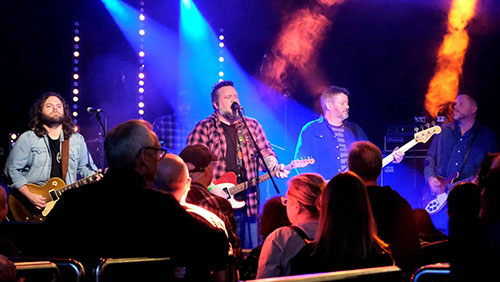
Earlier this year, you did a tour of Spain with your band, The Penny Dreadfuls. How was that?
Luke Tuchscherer: It was brilliant. To tell you the truth, I was kind of dreading it. Because of the way the past few years have gone for me, I didn’t really like leaving the flat and I thought spending that much time away from home in a van was gonna kill me. But it was actually so much fun. It was ten gigs, and sure, there were a couple of stinkers and thousands of miles, but three of the shows were the best we’ve ever done, and the rest were up there. It ended up being really good for me I think, on a personal level. I loved it. Thank you, Spain. And thank you, Dave, for organising it all.
So, after the album launch gig, what’s next? Surely, you’ve already got plans for your next album. You’re not one to rest on your laurels, are you? Where will the next record take you? Angry Luke or more chilled?
Luke Tuchscherer: There are two that are partway done. Salvation Come, as we talked about years ago, is still sitting there, and then there’s this breakup album called Liminal Space. I genuinely don’t know what will be next. The breakup album is the furthest along. But then do I really want to release it? I don’t know. There are some fucking brilliant songs on it. But would I ever want to play them live? Again, I don’t know.
I don’t have another political record planned just yet. I know people say this all the time when they have a new record out, but I think Living Through History is my best album and will be hard to top. So, going in a different direction is probably the best way to try.
Living Through History is out now on Clubhouse Records. Luke Tuchscherer and his band, The Penny Dreadfuls, play an album launch show at The Sound Lounge, Sutton on July 4: tickets are available here.
https://luketuchscherer.bandcamp.com/




 Say It With Garage Flowers